Innovative Materials in Water Resources Infrastructure: Opportunities for the Corps of Engineers (2026)
Chapter: 8 Barriers to and Drivers for the Use of Innovative Materials in Water Resources Infrastructure
8
Barriers to and Drivers for the Use of Innovative Materials in Water Resources Infrastructure
This chapter discusses impediments, or barriers, to the use of innovative materials in the water resources infrastructure owned and operated by the U.S. Army Corps of Engineers (USACE). Some of these barriers, including the incentives created by USACE budget processes, have already been discussed in Chapter 3, such as the emphasis that facility managers and district engineers may place on minimizing initial costs when developing repair and maintenance budget packages. The chapter describes these and other barriers in more detail because they will need to be identified and addressed explicitly by USACE if the aim is to further the use of innovative materials and processes through means in addition to informal experimentation by forward-looking district engineers and business line managers. The barriers that will be explained include an aversion to risk, emphasis on initial costs, procurement requirements and constraints, gaps in implementation guidance, limited awareness, and variations in workforce capacity.
The chapter discussion then turns to USACE’s deliberate efforts to address these barriers through targeted programs, policies, and processes. USACE’s large and sustained investment in the Engineer Research and Development Center (ERDC) and its materials laboratories are an example of such a deliberate effort to develop, advance, and promote innovations, but USACE has increasingly come to realize that other interventions, or “drivers,” are needed to counter barriers to the adoption of innovation. The drivers that do exist, as discussed in this chapter, include statutory and Headquarters directives, support for partnerships and collaborations, demonstration projects, and information sharing through Communities of Practice and Centers of Expertise. Because even more varied and systematic
efforts may be needed, the chapter concludes by describing steps that have been taken by infrastructure owners in other domains, including the highway field, to increase the receptivity to innovation.
USACE BARRIERS TO THE USE OF INNOVATIVE MATERIALS
This section identifies some of the most prominent barriers to the use of innovative materials and processes for the repair and maintenance of USACE water resources infrastructure. These are the barriers identified by the committee from briefings and discussions with USACE personnel at all levels, and through review of USACE and other literature. Some of the barriers are unique to USACE’s Civil Works, but many are encountered by organizations elsewhere in the public and private sectors. They include, but are not limited to:
- Emphasis on minimizing initial cost;
- Risk aversion that favors conventional approaches;
- Limited awareness of institutional experience with innovative materials;
- Varied workforce technical knowledge and skills;
- Procurement requirements and constraints; and
- Insufficient standards and guidance for implementation.
Emphasis on Minimizing Initial Costs
As discussed in Chapter 3, the budget process also can lead to decisions at the district, business line, and headquarters levels that skew in favor of projects that have low initial costs.1 Not all innovative materials involve higher initial costs, and initial costs can even be lower, as noted in Chapters 4–7, but some do have higher initial costs for some applications. Decision makers with numerous repair and maintenance needs will naturally want to fund as many projects as possible with their finite budget allocations. When innovative materials have initial costs that are higher than those of conventional materials, which is not always the case, the promise of lower life-cycle costs, or future budget savings, may not be compelling when decision makers face pressing needs. Thus, even when innovative materials such as fiber-reinforced polymer (FRP) composite materials or high-performance concrete have demonstrated the potential for improvements in performance and long-term maintenance, they may not be selected if they have higher initial costs than conventional materials owing to these budget-related constraints and considerations.
___________________
1 USACE presentation to the committee, February 27, 2025.
Part of the challenge is also that engineers may lack the information, guidance, tools, and capacity to perform life-cycle asset management and analysis that will align with USACE processes and standards and thereby default to a focus on initial cost. Estimating the stream of life-cycle cost savings that may occur over a period of decades can introduce a great deal of uncertainty about the timing of costs, means for monetizing them, and methods for discounting them to present value. In addition, USACE currently has no systematic way to consider environmental and life-cycle costs or impacts in comparing projects (discussed later in this chapter). It has been nearly 30 years since USACE set out a policy (Engineering Regulation 1110-2-8159) stating that engineers are responsible for implementing life-cycle design concepts as the basis for selecting all project elements (USACE 1997). That policy, however, was not accompanied by USACE analytical tools and engineering manuals for fulfilling this responsibility.
Risk Aversion That Favors Conventional Approaches
As explained in Chapter 2, much of USACE’s water resources infrastructure has been in place for a long time and serves important functions for communities and commerce. A base of experience has been established about what works with respect to sustaining the operation of the infrastructure within available annual budgets.2 Because water resource assets last for many decades, engineers and managers are reluctant to try new designs, materials, and processes when they lack a multidecade track record when compared with conventional approaches. As a result, facility managers may have little appetite for new repair and maintenance approaches, including use of innovative materials, that can introduce uncertainties about long-term performance and cost, especially as there is a lack of centralized funding for demonstration projects and their associated monitoring of performance. The potential downside outcomes of using unconventional materials and approaches, such as an asset underperforming or construction quality issues due to limited experience of USACE and its contractors with new materials, may weigh more than the potential upside outcomes, such as an extended service life, even when the probability of the former is quite low. By comparison, even when the shortcomings of conventional repair and maintenance approaches are well known, they have the inherent advantage of being understood and predictable. A district that invests in innovative technology may worry that if the technology does not perform as expected, there is no backstop of funding for corrective actions. A sentiment conveyed to the committee regarding this rationale from the vantage
___________________
2 Ibid.
point of the district is that “everyone wants to be second; no one wants to be first.”3
Limited Awareness of Institutional Experience with Innovative Materials
As discussed in the previous chapters, innovative materials and processes such as FRP and high-performance concrete have been used in USACE water resources infrastructure for many years. Indeed, ERDC has been at the forefront of their development, testing, and promotion, and various districts have partnered with ERDC in trial implementations. At the same time, however, facility managers and other district personnel may remain unfamiliar with these applications and their performance because they have not had direct experience with their use in the field, or because field experience elsewhere has not been systematically evaluated, documented, and communicated within and across the districts.
The interdistrict communication challenge is well recognized within USACE, and some of the efforts that have been made to overcome it are discussed later in this chapter. However, even if channels for information exchange are robust and highly effective, field applications need to be evaluated, documented, and reported in a way that enables the effective communication of experience and evidence. For instance, engineers need information that is trusted and resonates with their needs and priorities, such as how the use of innovative materials and processes in other districts and domains has solved specific challenges and translated into measurable benefits such as improved maintainability, functionality, and cost-effectiveness.
Varied Workforce Technical Knowledge and Skills
While facility managers and district engineers may be reluctant to use unconventional materials and processes because of risk aversion, budget considerations, or lack of experience and awareness—as discussed above—they may also have concern about their ability to implement these alternatives given the capabilities of the available workforce and contractors. The knowledge, skills, and technical abilities of the workforce can serve as impediments to implementing innovations that may require increased familiarity with new materials, application technologies, and specifications (NASEM 2019b). Even the many private contractors that USACE employs for repair and maintenance work may require additional technical guidance and workforce capacity building.
___________________
3 USACE presentation to the committee, August 29, 2024.
Procurement Requirements and Constraints
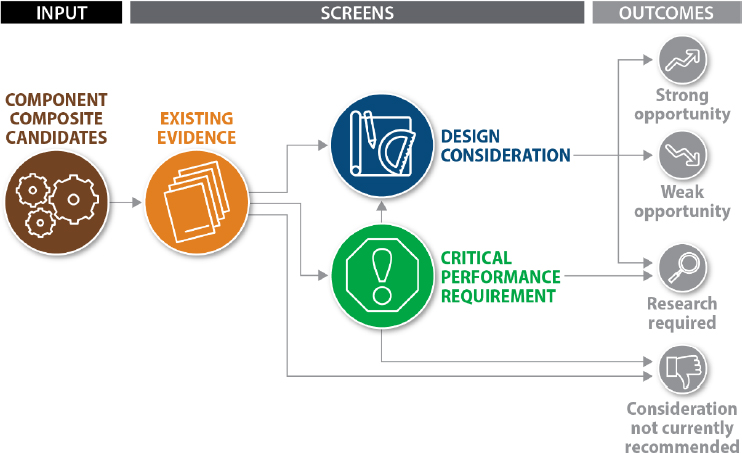
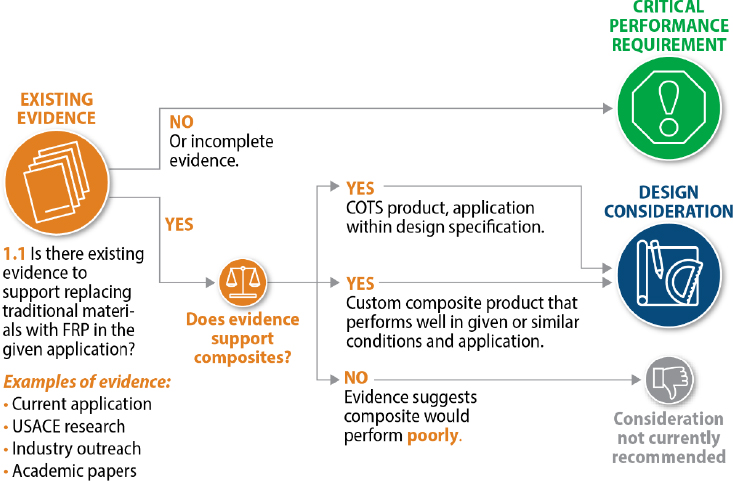
Obtaining approval to use a new or unconventional material for water resources infrastructure, in compliance with USACE and federal acquisition regulations, can be a costly and time-consuming process that discourages interest. Intended to ensure safety, durability, and compliance with engineering standards, the process is multistage and rigorous. A material’s basic suitability for performance assurance and environmental impacts must be reviewed by USACE technical and subject-matter experts. This review must be followed by laboratory testing at approved facilities such as ERDC, field testing, and evaluations of conformance to requirements in USACE technical guidance and other relevant industry standards. The proponents or manufacturers of a material being considered must submit technical data sheets, certifications, and safety data sheets for review. The USACE authority level for approval of new materials depends on the material type and risks. Routine materials may be approved at the district or division level, while novel or critical materials may require Headquarters approval and/or further evaluation by ERDC. Approved materials may be added to the USACE Approved Materials List or incorporated in standard design specifications. Although districts can, and sometimes do, proceed with nonapproved materials for maintenance work, this discretion exists mostly for very-low-cost projects (e.g., <$10,000). As examples, see Figures 8-1 and 8-2 showing ERDC’s processes for incorporating and deploying advanced composites.
Moreover, other aspects of the federal acquisition process can inhibit interest in innovation.4 For instance, limited experience with performance-based specifications and restrictions on the use of proprietary products can be barriers. Because open, low-bid contracting can make it necessary for USACE to be highly specific about the properties and functionalities of the materials to be used, this can discourage contractors from proposing the use of alternative solutions that do not meet the prescribed specifications because of the need to demonstrate comparable or superior performance, and for contractors to meet qualification requirements. In addition, there are requirements pertaining to low-cost bids that can also constrain the selection of products with higher initial costs but with lower life-cycle costs.
Insufficient Standards and Guidance for Implementation
When standards and implementation guidance for innovative materials are limited, or not directly applicable to water resources infrastructure, this can also make facility managers and district engineers hesitant to use the
___________________
4 USACE presentation to the committee, August 29, 2024.
SOURCE: Baekey et al. 2024.
SOURCE: Baekey et al. 2024.
material.5 As described in previous chapters, standards, engineer manuals, and other implementation guidance have been developed for many innovative materials, but often for applications outside the water resources infrastructure domain. As a practical matter, a robust body of experience with technologies within USACE is needed before implementation guidance can be developed. For example, the use of roller-compacted concrete in highways, ports, and dams began in the 1970s and eventually on some other USACE civil works projects. Informed by this growing experience, USACE developed an engineer manual, but not until the early 2000s (USACE 2006). Similarly, FRP materials have been used in private- and public-sector infrastructure projects for decades (as discussed in Chapter 4), resulting in an expanding body of standards and guidance. As experience with this material in water resources infrastructure has grown, USACE has likewise developed more implementation guidance. In 2018 a standardized set of construction specifications (Uniform Facilities Guide Specification UFGS-35 20 15) was issued for FRP low-head water control structures, and in 2024, Engineering and Construction Bulletin 2024-08 established interim policy and guidance for the design of FRP hydraulic composite structures (USACE 2024). The general challenge for USACE, therefore, is to build up the base of field experience with innovative materials in water resources infrastructure, which in turn will facilitate the development of more implementation guidance and UFGS harmonization to help counter practitioner hesitancy. USACE efforts in this regard could be enhanced by leveraging the routine and ongoing development of guidance and standards in the broader water sector, that is, in water supply and wastewater and stormwater management. There is much overlap of USACE water resources infrastructure with those managed publicly and privately in the water sector, which collectively is much larger than USACE. Engagement of USACE personnel with colleagues in the water sector through professional associations provides a vehicle for collaboration.
USACE DRIVERS OF INNOVATIVE MATERIALS DEPLOYMENT
In recognition of the many barriers to the use of innovative materials in water resources infrastructure, Congress and USACE have taken a number of deliberate steps intended to overcome them. Referred to here as “drivers,” they include:
- Congressional mandates and direction;
- Headquarters guidance and directives;
- Policies and guidance on consideration of life-cycle costs and impacts;
___________________
5 USACE presentation to the committee, October 21, 2024.
- Centers of Expertise and Communities of Practice;
- Demonstration projects;
- Staff incentive programs;
- Workforce education and training; and
- Research, development, and technology transfer strategies.
Congressional Mandates and Direction
On multiple occasions Congress has expressed an interest in USACE furthering the use of innovative materials and processes in its Civil Works program. Indeed, Section 1173 of the Water Resources Development Act (WRDA) of 2016, which led to this study, called for a review of statutory, fiscal, regulatory, or other barriers to the expanded use of innovative materials, including high-performance concrete, geosynthetic materials, advanced alloys and metals, and FRP materials. As far back as WRDA 1988 (Section 8), Congress directed USACE to promote both the long-term and short-term cost savings and increased efficiency, reliability, safety, and environmental benefits that can result from using innovative technology. In so doing, Congress urged USACE to use procurement and contracting procedures that encourage innovation, modify any technical and design criteria that unnecessarily impede innovation, and enhance the exchange of technical information, both within and outside USACE, to foster innovations in projects. More recently in the Infrastructure Investment and Jobs Act of 2021, Congress provided USACE with funding to develop a “roadmap” report that discusses and ranks the remaining research, development, and deployment needs and opportunities for FRP composite materials in water resources infrastructure.
Headquarters Guidance and Directives
As noted, Congress allocated funding for USACE to develop a roadmap for composite materials applications in Civil Works. That roadmap, which was completed in 2024, noted that “while there is significant interest and desire to use FRP materials in projects, the information needed to make design, maintenance, and life-cycle decisions is limited or not available. There is no comprehensive guidance on where FRP materials can or should be applied to produce the greatest operational benefits and value. This results in an inconsistent enterprise-wide application and higher maintenance, repair, and life-cycle costs” (ERDC n.d.).
The roadmap, which was led by ERDC in consultation with field engineers and academic experts, was developed from an analysis of more than 80 existing marine infrastructure applications of FRP. One of its purposes was to create an initial list of infrastructure components that should be
considered as candidates for FRP replacement, accompanied by a decision tree that could be applied nationally to help standardize the process for identifying and evaluating candidate applications. The roadmap is also intended to provide an evidence-based approach to identifying opportunities for research and development (R&D) that, once completed, would provide the knowledge and information needed to further expand the use of FRP components in Civil Works projects. Additionally, potential benefits and challenges associated with implementing FRP components are identified in the roadmap.
In conjunction with the FRP roadmap, USACE issued Engineering and Construction Bulletin 2024-08 (USACE 2024a), which establishes interim guidance for the design of FRP hydraulic composite structures such as lock gates. The bulletin notes that FRP materials offer a potential low-maintenance solution with significantly reduced life-cycle costs when compared to steel. The purpose of the bulletin is to ensure that FRP is being routinely considered by engineers for replacement components. Specifically, the bulletin states that when a new or replacement hydraulic structure is being planned, a design charrette should be developed with a 100-year life-cycle analysis that considers the operation, maintenance, and performance impacts and costs when comparing steel with FRP. When a district recommends the use of a structure made from steel or another metal rather than FRP, the results of this comparative analysis must be addressed and the proposed use of steel must be approved. Starting with the fiscal year 2027 operations and maintenance (O&M) budget cycle, the 100-year life-cycle cost analysis will be required for repair, blasting and painting, or replacement of an existing structure. A Headquarters team will work with the divisions, districts, and relevant Centers of Expertise to support project execution, while USACE personnel gain experience and as permanent guidance is developed.
As noted earlier in Chapter 3, USACE has issued other directives and guidance concerning life-cycle cost considerations to counter the emphasis that is often placed on project initial cost during the Civil Works budget process. As also noted earlier, Engineering Regulation 1110-2-8159 (USACE 1997) emphasizes that the design and selection of components and materials for Civil Works projects should be based on long-term performance. Observing that previous planning and design efforts had been inconsistent in the treatment of long-term performance, reliability, and durability, the guidance calls for cost analyses that address life cycle and deferred risk costs as well as first costs. In 2022, USACE published a strategic policy, entitled “Life Cycle Portfolio Management,” stating that Civil Works will use its asset management system to “implement life cycle portfolio management of water resources infrastructure to consistently deliver sustainable services” (USACE 2022). The guidance stresses that engineering decisions should not be made solely to minimize first costs, or to maximize reliability regardless of cost. Chapter 3 has already discussed how USACE’s asset management
system could be leveraged to identify assets that may be good candidates for innovative materials based on their condition and risk ratings.
Voluntary consensus standards developed in the private sector could also help USACE advance the use of innovative materials. Indeed, Office of Management and Budget (OMB) Circular A-119 (OMB 2016) encourages conformity of federal standards with private-sector standards. Some relevant private-sector standards from the American Association of State Highway Transportation Officials (AASHTO), ASTM, the Association for Computing Machinery, and other organizations have been noted in Chapters 4–7. Other relevant standards that could be leveraged by USACE, for example, include ASCE Standard 7-22 compilation (ASCE n.d.a) and ASCE Standard 74-23 (ASCE n.d.b), the latter of which is focused on load and resistance factor design for pultruded FRP shapes. While ASCE Standard 7-22 is focused primarily on buildings and other structures, it contains many provisions that would be applicable to USACE hydraulic structures and related infrastructure.
Policies and Guidance on Consideration of Life-Cycle Costs and Impacts
The USACE (1997) Engineer Regulation 1110-2-87159 established a policy that design engineers “are responsible for implementing life cycle design concepts” which provides a foundation to help drive use of innovative materials in O&M projects through consideration of technology costs and performance over the entire life cycle. The 1997 policy did not refer to any specific USACE tools or engineer manuals for conducting the recommended life-cycle analyses. The policy can be leveraged, however, for development of additional guidance and specific tools. USACE has experience with and is well positioned to rapidly expand use of life-cycle cost assessment. USACE has less experience with environmental life-cycle assessment (LCA) but can leverage experience in other agencies and domains. For environmental life-cycle assessments, there are established international standards that have been widely adopted, especially ISO 14040:20066 and ISO 14044:2006.7 Environmental LCA has well-established tools for the embodied impacts of a product, that is, environmental impacts or resource usage to make or construct a product or facility.
Relatedly, ISO also has standards for developing what are known as environmental product declarations (EPDs) based on ISO 14025:2006.8 EPDs are provided by a specific manufacturer for a specific product. For instance, there is an EPD for FRP utility poles manufactured in the United
___________________
6 See https://www.iso.org/standard/37456.html.
States (Creative Composites Group 2023). This EPD only focuses on the production phases of the pole’s life cycle from raw material acquisition through manufacturing. Similarly, many concrete producers also have established EPDs following the international standards. One example from California provides information on several concrete mixes, even detailing which aggregates from which particular facility are used (CEMEX 2022). This EPD also only includes production phases A1–A3. EPDs are beginning to be used for transportation procurement decisions. For instance, in 2024 PennDOT adopted the use of EPDs as part of an innovation for adding potential environmental impacts to the procurement process for asphalt starting in January 2025 based on cradle-to-gate (production phases). Other materials were not included at that time (State Transportation Innovation Council 2024).
LCA can be used in two slightly different ways with respect to freight transportation: considering mode or materials. Two studies that compare inland waterway transport to land transport of freight review various potential environmental impacts in Japan and Belgium (Hasegawa and Iqbal 2000; Merchan et al. 2017). In both cases for the particular scenarios inland waterway transportation modes tend to have fewer life-cycle potential environmental impacts, but as formerly stated, this is dependent on the commodities studied and the associated infrastructure already existing in or near the particular waterways studied. A U.S.-based study on freight transport modes overviewed road, rail, and air, with rail usually providing some additional environmental benefits in many cases (Facanha and Horvath 2007). There are few or no extensive LCA studies for specific waterways in the United States, most likely because improved economic life-cycle costs are frequently due to less energy demand and because energy production has many associated potential environmental impacts.
However, there are fewer models or data for use stage and end-of-life stages for many materials used in components applicable to inland navigation. In the case of products used in inland navigation and flood risk management infrastructure, the use-phase potential environmental impacts of materials may far outweigh the embodied impacts. For example, there have been a couple of LCA studies on the use of ultra-high-performance concrete (UHPC), based on the mix designs of the concrete, that is, the admixtures and aggregates used (Farahzadi et al. 2024; Stengel and Schießl 2014). Both focused on the production phase. An LCA study by Sameer et al. (2019) on using UHPC in bridges in Germany compared to conventional concrete originally focused on both the production phase and the use phase. However, the designs for both materials were based on the same criteria for functionality and, as such, the use phase was considered to be similar for each scenario. For the same functionality the conventional concrete design used more material than the UHPC, so the production phases (A1–A3) with
the UHPC scenario were considered to have fewer potential environmental impacts in general.
USACE already employs various risk analyses in procurement decisions, as previously mentioned. These risk analyses can include failures that may disrupt inland navigation. The economic costs of these disruptions may often also include potential environmental impacts such as with additional energy demands using alternative modes for freight transportation. Thus, there are some inherent environmental considerations already included in the procurement process. Current limitations notwithstanding, environmental LCA can provide an indication of comparative long-term environmental performance of alternative materials.
Centers of Expertise and Communities of Practice
As discussed in Chapter 2, USACE’s Civil Works has established Centers of Expertise (CXs) and collaborative peer groups for engineers from districts and all levels of USACE to share information, including about the use of innovative materials and processes. The Inland Navigation Design Center (INDC) Mandatory Center of Expertise, which was established in 2013, provides enterprise-level engineering, design, analysis, and review services for new locks and navigation dams, major rehabilitation, and significant maintenance projects.9 INDC’s role is to promote quality design and consistency in design and technical competencies. The center aids in the development of engineering standards and the transfer of knowledge for inland navigation projects by updating relevant USACE guidance documents. The INDC bridges the gap when a district may not have experience in designing and maintaining navigation infrastructure using a particular material or process. By way of example, INDC has been tasked with creating a new set of standards and guidance related to the design, inspection, evaluation, and repair of FRP hydraulic structures. Having a similar function, the Dam Safety Modification Mandatory Center of Expertise was established in 2012 to provide technical advice, oversight, and review capabilities for dam modification projects.10
USACE also supports Communities of Practice (CoPs), which are volunteer forums where engineers and other personnel from all levels of USACE regularly interact to learn from one another, solve problems, build skills, develop best practices, and exchange relevant guidance from specific fields across the Civil Works program. The Navigation CoP and its focus
___________________
9 See https://www.mvr.usace.army.mil/about/offices/inland-navigation-design-center-indc. Accessed April 24, 2025.
10 See https://www.lrd.usace.army.mil/Submit-ArticleCS/Programs/Article/3647261/dam-safety-modification-mandatory-center-of-expertise. Accessed April 24, 2025.
areas are described in Chapter 2. Another example is the materials committee of the Geotechnical, Geology, and Materials CoP, which provides support and technical guidance for new design, construction, and long-term performance of concrete, admixtures, aggregates, and other commonly used construction materials for Civil Works projects. The Materials CoP also provides in-house technical capability and support for material inspections and investigations and recommends proper repair plans for maintaining existing structures. Opportunities exist for new CoPs or integration of new topics into existing CoPs that can help support adoption of innovative materials, for example, on life-cycle tools and analytical approaches.
Demonstration Projects
Demonstration projects are well recognized within USACE as an important means for increasing practitioner and engineer experience with and awareness of innovations, as well as for monitoring and evaluating the performance of an innovation. USACE’s aforementioned 1997 life-cycle design policy, for example, states that “innovative and emerging technologies can be evaluated for Corps-wide use through monitoring of demonstration projects.” The policy specifies that a technology evaluation board should be formed to gather, evaluate, and disseminate information about demonstration projects “to facilitate Corps-wide acceptance of the innovative technology.”
Organized pilot testing and demonstration of innovative technologies, with systematic evaluation and documentation of performance, are a proven approach for advancing new technologies. Although USACE Civil Works has a long history of studying and trying innovative materials in water resources infrastructure, these efforts have been undertaken at the district level, typically without funding available for systematic, long-term monitoring of performance, and without systematic communication to other districts of the lessons learned from design, construction, and operation of the infrastructure component utilizing the innovative material. USACE attention to trial and use of FRP in water resources infrastructure is a notable exception, as discussed in Chapter 4.
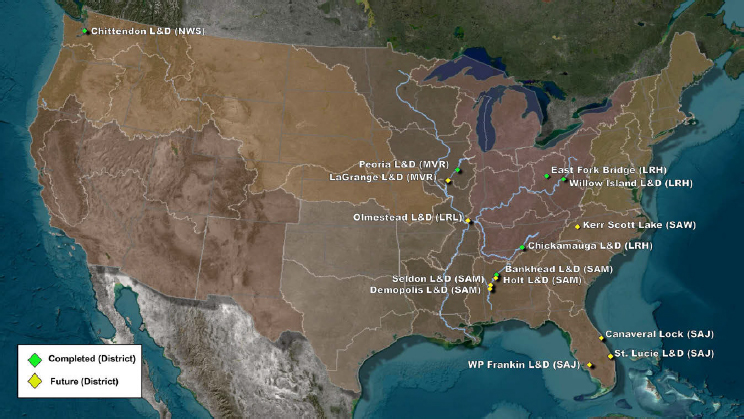
Figure 8-3 shows the locations of several completed and planned demonstration projects of FRP, including applications for lock guide walls, bulkhead panels, wicket gates, and miter blocks. The committee was informed that the completed projects have been successful in demonstrating FRP on small structures but that because of highly constrained budgets at the district level, it can be difficult to fund demonstration projects.11 Moreover even when districts are able to assemble funding for a demonstration
___________________
11 USACE presentation to the committee, February 27, 2024.
SOURCE: USACE presentation to the committee, January 15, 2025.
project, the funds may not be available for long-term performance evaluation and the dissemination of results.
Pilot testing and demonstrations of innovative technologies provide multiple benefits, including advancement of engineering experience and knowledge about the technology, development of understanding of technology performance at scale, and development of workforce familiarity and skill with operation of the technology. The knowledge and experience gained can be documented for others to study, learn from, and build on for their own projects. Within USACE, CoPs and CXs can be key agents in both planning demonstration projects and communicating the results. Expansion of pilot testing and demonstrations, for individual components or a system of components, with formalized protocols and organizational financial support or backstopping, has potential to accelerate implementation of innovative materials in USACE water resources infrastructure.
Critical to the impact of pilot testing and demonstrations of innovative technologies is development and execution of a plan for monitoring and evaluation of technology performance. The right kind of data collected in amounts and over a duration sufficient to provide convincing evidence of sustained performance is needed to advance any innovative technology. The U.S. Department of Defense (DoD) Environmental Security Technology Certification Program (ESTCP), discussed below, and the former Superfund Innovative Technology Evaluation program of the U.S. Environmental
Protection Agency are examples of two formalized federal programs designed to accelerate and encourage the use of innovative technologies.
Staff Incentive Programs
USACE’s Incentive Awards Program (IAP) recognizes excellence by both military and civilian members of USACE and is intended to motivate high levels of performance and service. The program awards civilian personnel honorary medals that parallel similar military honors as well as monetary awards to recognize superior accomplishments and performance, including scientific achievements and inventions. In this regard, the IAP provides means for USACE to recognize and reward civil works engineers and other personnel who innovate and champion innovations. The IAP has potential to be a driver for implementation of innovative materials in navigation or flood risk management infrastructure. At present the IAP awards criteria do not include explicit mention of materials.
Workforce Education and Training
USACE’s Learning Center administers the Proponent Sponsored Engineer Corps Training (PROSPECT) program, which provides classroom and distance-learning courses on various aspects of hydrologic and hydraulic engineering with support from the Institute of Water Resources and Hydrologic Engineering Center. Classroom and distance-learning courses are taught by individuals knowledgeable in hydrologic and hydraulic practice and water resources planning.12
Because the PROSPECT program’s job training is geared toward engineering practitioners, at least in principle it can be viewed as providing a systemic opportunity to familiarize the workforce with innovative technologies and processes and the benefits of their use. The committee notes, for instance, that the 2026 PROSPECT catalogue familiarizes students with composites in coursework on corrosion control.
In the case of FRP, the committee was informed that USACE has partnered with the American Composites Manufacturers Association (ACMA) to provide specialized training to district engineers and repairers on the use of composite materials and on field inspection techniques. USACE has also partnered with the University of Maine to develop training on FRP inspection and repair.
There is a great deal of other relevant activity at professional associations regarding innovative materials and their deployment in the water
___________________
12 USACE Hydrologic Training Center. “Training Overview.” https://www.hec.usace.army.mil/training/default.aspx. Accessed June 17, 2025.
sector that can be leveraged by USACE. These activities include development of guidance and standards that can be an important source of data and approaches to be considered by USACE. More systematic engagement with professional associations would facilitate broader, relevant learning about experiences throughout the water sector concerning innovative materials.
Opportunities for joint training and expanded information sharing on innovative materials exist with the U.S. Bureau of Reclamation (BuRec) which, like USACE, manages extensive infrastructure for flood risk management, water supply, and hydroelectric power production. There is a history of collaboration between USACE and BuRec in areas of shared interest such as hydropower production and dam safety. Although not a primary focus, adoption of innovative materials has been part of these collaborations as successes have been shared, for example, the adoption of greaseless bearings for wicket gates, which control the flow through turbines.
Current and former USACE personnel are involved with universities and other organizations in delivery of education and training offerings in innovative technologies and materials. These can be leveraged for USACE workforce training. The suite of Engineering With Nature courses taught at Lamar University in Texas by ERDC scientists and engineers is one example.
Research, Development, and Technology Transfer
One of USACE’s main drivers of innovation in water resources infrastructure is the R&D conducted at ERDC to advance the strategic research area of “NextGen Water Resources Infrastructure” (Wamsley 2022). ERDC provides essential initial investigations into material properties and their manufacturing, identifies opportunities for USACE implementation, and conducts ongoing research on specific matters such as abrasion resistance. That R&D, as documented in earlier chapters, has been instrumental to the advancement of innovative materials and processes in water resources infrastructure. Importantly, ERDC views technology transfer to practitioners and industry as one of its key responsibilities. In this regard, ERDC’s responsibilities span many of the stages of the technology readiness level (TRL) that are commonly used to assess when a technological innovation has matured enough for deployment (GAO 2016). Shown in Table 8-1, the TRL scales illustrate how technology readiness evolves from science to engineering and matures through basic and applied research to field testing and deployment. As discussed in Chapter 4, and illustrated in Figure 4-4, the TRL framework is used by the U.S. Navy to test innovative materials and advance them to application when appropriate.
TABLE 8-1 Technology Readiness Levels (TRLs) and Innovation Stages
| Readiness Level | Definition | Innovation Stage |
|---|---|---|
| 1 | Basic principles observed and reported. Examples include paper studies of basic properties or observations of the physical world. | Basic research |
| 2 | Technology concept and/or applications formulated. Early-stage identification of practical applications that corroborate scientific findings from TRL 1. | Applied research |
| 3 | Analytical and laboratory-scale studies or proof of concept, but short of a full-scale prototype. Laboratory tests, modeling, or simulation to measure parameters of interest and comparison of analytical predictions to performance of subsystems. | Applied research |
| 4 | Component and/or system validation in a laboratory environment. Component integration at a low level of fidelity. | Applied research |
| 5 | Laboratory or similar system validation of a near-prototype system or application. | Experimental development |
| 6 | Prototype system validation in a relevant environment. | Experimental development |
| 7 | Full-scale prototype demonstration in a relevant environment. Final design nearly complete. | Field testing |
| 8 | System completed and qualified through test and demonstration. Technology has been proven to work in its final form under expected conditions. | Ready for technology transfer |
| 9 | System operated under full range of expected conditions. | Deployed |
SOURCE: Drawn from GAO 2016, Table 15, 135–136.
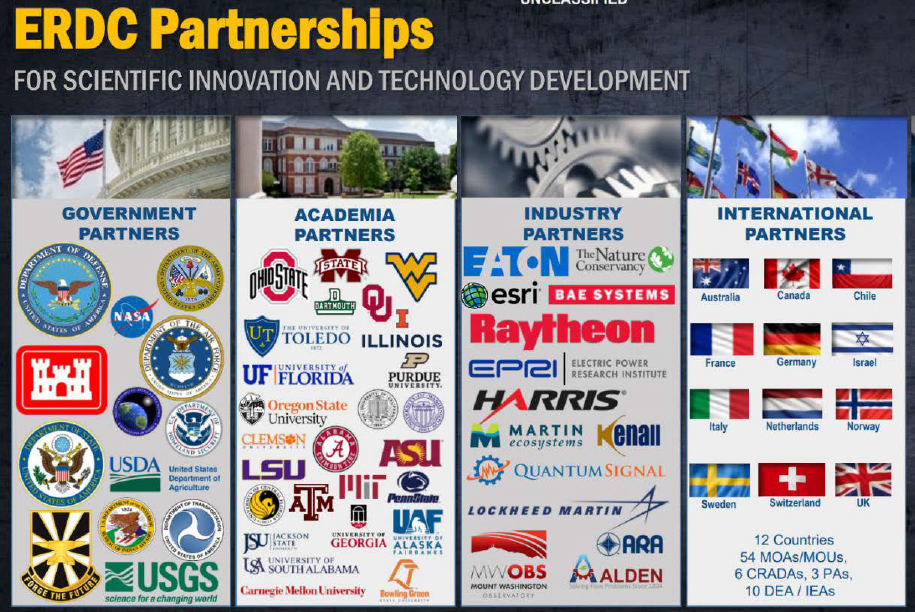
ERDC appears to understand that in circumstances where users have an aversion to risk or lack familiarity with an innovative new product or process, it is necessary for the center to actively engage in research, development, and technology (RD&T) through the later stages of TRL (i.e., 7 and 8). Indeed, to facilitate RD&T, including technology transfer, ERDC has entered into collaborative agreements with numerous government entities, private companies, and academic institutions. The workforce education and training on FRP that was developed in partnership with ACMA and the University of Maine has already been noted. As shown in Figure 8-4, the partnerships extend to international entities; for instance, USACE has
SOURCE: Courtesy of Robert Moser, “ERDC Materials and Manufacturing Overview,” presentation to the committee, January 4, 2023.
participated in the primary forum for global waterways transportation since 1902,13 and for a bilateral example, USACE has collaborated with the Netherlands’ Ministry of Infrastructure and Water Management (Rijkswaterstaat) for more than 20 years.14 This relationship has benefited USACE in a number of ways, including from the insights it has gained from learning about Rijkswaterstaat’s practical experience with using FRP materials for lock gates (Liang et al. 2019).
Organized programs to advance innovative technologies to implementation in both the private and public sectors often include some type of formal technology transition plan. The ERDC Office of Research and Technology Transfer works to identify and facilitate opportunities to share and collaborate on research and technology commercialization.15 Efforts are focused on patents and licenses for technology developed by ERDC, and on research partnerships. It appears that there are opportunities to leverage the expertise of the Office of Research and Technology Transfer for more systematic technology transition planning within USACE Civil Works. DoD has various programs to accelerate the transition of technologies from research and development into operational use by the military (DAU n.d.). These include programs ranging from definition of a technology transition transfer pathway (GAO 2016) to formal technology transition agreements (DAU n.d.). The technology transfer pathway is focused on transfer of technologies developed by DoD scientists and engineers to industry for conversion into new products and services that DoD can then procure for operational use. Technology transition agreements are developed to ensure that technologies are transitioned to operational use effectively, within budget and on schedule, by facilitating communication between the acquisition and technology communities. Elements of these and other programs may be useful to USACE Civil Works to advance the use of innovative materials in water resources infrastructure.
OTHER POTENTIAL DRIVERS OF INNOVATION: LEARNING FROM OTHER DOMAINS
Many of the barriers that have hindered USACE’s adoption of proven but underutilized materials and processes resemble those faced by infrastructure owners in other domains. This section first gives examples of such impediments from the U.S. highway industry, which, much like USACE, is expected
___________________
13 See https://pianc.us/about-us.
14 USACE. “Ministry of Transport, Public Works and Water Management of the Netherlands (RWS).” https://www.iwr.usace.army.mil/About/Partnerships/International-Partnerships/RWS. Accessed March 17, 2025.
15 See https://www.erdc.usace.army.mil. Accessed September 10, 2025.
to deliver projects faster and to upgrade, repair, and maintain a large system of aging transportation infrastructure. Of particular interest are the strategies being pursued by the FHWA and state departments of transportation (DOTs) to counter these impediments, such as by increasing user awareness of innovations, disseminating information about their utility, and creating incentives and providing technical assistance for implementation. The chapter therefore describes a number of these strategies and processes that may have relevance for USACE.
The section concludes by reviewing DoD’s efforts to increase the rate and scope of adoption of innovative environmental technologies with an emphasis on demonstration projects and related monitoring and evaluation.
Innovation Drivers in the U.S. Highway Industry
The provision of highway infrastructure in the United States is a joint public- and private-sector enterprise. As owners and operators of the highway system, hundreds of state and local transportation agencies are the primary customers of thousands of private firms that supply materials, products, and services for the design, construction, operation, and maintenance of the system (NRC 1996). While the federal government owns and operates very few miles of highway (mainly on federal lands), it has an important role in administering the federal aid that co-funds parts of the system, including the interstate highways and other major arterials. In addition to overseeing the distribution of this aid, FHWA supports states and local jurisdictions in the efficient and effective use of the funds through various means including by providing support for RD&T.
It has long been understood that certain features of the highway industry’s institutional structure can create impediments to private companies wanting to supply new and innovative material and products and for transportation agencies that are interested in using them. Important features in this regard include the public-sector practice of low-bid procurement, reliance on highly prescriptive specifications, and variability in how individual jurisdictions evaluate and accept new materials and technologies (NASEM 2019b; NRC 1984, 1996; TRB 2001). For instance, when coupled with budget constraints, low-bid procurement can discourage interest in innovative materials and products if they entail higher initial (first) costs even if they promise lower life-cycle and user costs. Prescriptive specifications can reduce an agency’s flexibility to choose a newly developed or seldom-used material, and some agencies may resist unfamiliar products and materials due to the lack of performance data and the needed workforce skills and expertise. Moreover, innovations may be viewed as presenting intolerable risks if they do not perform as expected on expensive and high-volume infrastructure. For these and other reasons, including additional barriers noted in Box 8-1, the highway industry has developed a reputation for not
BOX 8-1
Examples of Barriers to Innovation in the Highway Industry
Constraints of public-sector procurement practices—Procurement in the public sector is driven largely by a low-bid process based on specifications and procedures established to satisfy the need for open competition, accountability, and the safety, health, and well-being of the population. This process, however, can discourage contractors who have developed new products or methods because specifications determine how facilities are built, the types of materials used, the designs followed, and the construction processes used.
Low tolerance for risk—Innovation involves risk, but public-sector decision makers work in an environment that does not reward risk taking, especially for facilities that are expensive to build and can create large disruptions to the public when they are out of service or do not perform as expected. Although innovation can help achieve performance improvements or cost savings, it usually involves certain higher initial costs and uncertain future benefits, which can be a difficult combination in an atmosphere of intense public scrutiny.
Organizational limits to change—State and local highway agencies focus on managing highway construction and maintenance contracts with the private sector. They have limited staff expertise and few resources to assemble full information about what has been learned about an innovative material or technology.
being as receptive to innovation as other industries, and therefore is in need of concerted efforts to increase receptivity.
FHWA and states, acting individually and collectively—and sometimes with direction and support from Congress—have a long track record of taking positive actions to overcome the industry’s resistance to innovation. These include:
- RD&T programs, as well as technology demonstrations and field evaluations, including support for technology scanning tours and grants to state and local agencies to buy down the risks of applying new materials, technologies, and processes;
- Training and education initiatives to build the skills and knowledge base necessary to evaluate and implement new materials and technologies, coupled with the development of standards and user manuals and guidelines to aid state and local highway agencies in making appropriate choices about when and how to use innovative materials and technologies; and
- Technology information-sharing activities, including peer teams of users who champion new technologies and provide technical assistance to users.
Examples of each type of activity are given next because some of them may have applicability to USACE and its interest in furthering the use of innovative materials in its water resources infrastructure.
Research, Demonstration, and Evaluation Programs
FHWA conducts a combination of developmental and applied research in the 15 laboratories and test facilities of its Turner-Fairbank Highway Research Center (TFHRC). The center is viewed by FHWA as a key part of its innovation development and diffusion capability by supporting highway expertise and research in materials, hydraulics, structures, pavements, operations, safety, and other areas. In addition to having laboratories for highway safety and operations, TFHRC maintains infrastructure laboratories on aggregates, pavements, asphalt binder and mixtures, coatings and corrosion, geotechnology, hydraulics, structures, and nondestructive testing and sensing. Thus, in many respects, TFHRC resembles and serves functions like those of ERDC. Also like ERDC, TFHRC has come to recognize the importance of pairing R&D with technology transfer initiatives aimed at increasing the deployment of promising new technologies in the field.
Perhaps most notably, since 2009, TFHRC has administered the Every Day Counts (EDC) program, whose aim is to increase the rate of adoption by state DOTs of proven but underutilized innovations. To do this, the FHWA program managers work with state DOTs to chose among 5 to 15 deployment-ready innovations. The innovations are identified through consultations with a range of stakeholders across the highway sector, as officials from state DOTs gather at a virtual summit to discuss and identify opportunities implementing the innovations that best fit the needs of their respective state programs. Following the summit, state DOTs finalize their innovation selections and establish performance goals for implementation over a 2-year period. The participating states then commit to promoting the innovation internally with their organizations by establishing deployment teams and providing product information and implementation guidance. According to FHWA, since the EDC program’s inception, each state DOT has used at least 26 of the 57 innovations promoted through the program, and a number have deployed more than 45. A recent evaluation of the EDC program indicates that the deployment teams have played a particularly important role in fostering adoption by providing agency personnel with technical guidance (NASEM 2025).
Another means by which FHWA incentivizes the use of innovations is by providing grants to states to evaluate innovations. For instance, FHWA’s AID Demonstration Program provides grants to highway agencies that are intended to help overcome the aversion to the risk of trying new materials,
products, and techniques. Demonstration grants have been provided to states, for example, to use UHPC to accelerate construction and extend pavement service life. A related initiative, the Accelerating Market Readiness program, also provides funds for field evaluations and pilot demonstrations. A particularly noteworthy FHWA demonstration program was the Innovative Bridge Research and Construction (IBRC) Demonstration Program called for by Congress in 1998.16 From 1999 to 2005, FHWA provided $125 million in grants to states to incentivize the use of innovative materials and technologies in the construction and repair of bridges.
At the request from Congress, the National Academies convened an expert committee in 2019 to review the experience of the IRBC program nearly 20 years after the first grant was awarded (NASEM 2019a). The study committee examined data on the performance of the subject bridges in 10 states in which grants were awarded, as shown in Table 8-2. Innovative materials used included FRP composites, high-performance concrete, high-performance steel, and corrosion-resistant reinforcing bar. Informed by the case studies, the study committee concluded that incentives can be an important stimulus for the use of innovations by “buying down” risk. This was especially true for technologies that were deployment ready with a proven benefit but that had not yet become standard practice. For example, in one state where project decisions are generally made at the DOT’s district level, the availability of funding helped convince the district-level personnel to try a new technology. A consensus of the interviewed states also stated that the lack of standards and specifications was a barrier to implementation of new technologies and that experience with demonstration projects was valuable for building the evidence base for standards development.
Peer Teams and Information Sharing
While state DOTs often have their own small programs to promote innovation, AASHTO is the linchpin of state DOT efforts to support the diffusion of innovations across the highway industry. AASHTO’s main program to drive innovation is its “Innovation Management” initiative and complementary “Lead States” program. Its aim is to identify and champion the implementation of a few ready-to-use innovations. Through outreach efforts conducted each year, AASHTO identifies potentially valuable, but largely unrecognized, procedures, processes, software, devices, or other innovations that have been adopted by at least one agency, are market ready, and are available for use by other interested agencies.17 These innovation
___________________
16 See Transportation Equity Act for the 21st Century, Public Law 105-178. https://www.fhwa.dot.gov/tea21/tea21.pdf.
17 AASHTO Innovation Initiative. https://aii.transportation.org/Pages/default.aspx#more-about. Accessed September 4, 2025.
TABLE 8-2 Innovative Materials and Technologies Used in 10 Case Study States in the Innovative Bridge Research and Construction (IBRC) Program
| State | Number of IBRC Projects Employing Each Technology Category | Total Projects in Case Study States | |||||
|---|---|---|---|---|---|---|---|
| High-Performance Concrete | Fiber-Reinforced Polymer Composites | Corrosion Control | High-Performance Steel | Accelerated Bridge Construction | Other | ||
| California | 1 | 9 | 3 | 2 | 11 | ||
| Iowa | 4 | 8 | 1 | 1 | 2 | 14 | |
| Michigan | 1 | 3 | 4 | 8 | |||
| Missouri | 4 | 4 | 3 | 2 | 1 | 14 | |
| New Hampshire | 6 | 2 | 2 | 1 | 2 | 9 | |
| New York | 3 | 14 | 3 | 2 | 1 | 17 | |
| Pennsylvania | 6 | 2 | 1 | 9 | |||
| Texas | 2 | 5 | 2 | 3 | 12 | ||
| Virginia | 7 | 7 | 3 | 16 | |||
| Washington | 1 | 5 | 1 | 2 | 1 | 7 | |
SOURCE: NASEM 2019a.
polls are conducted with the assistance of AASHTO’s Special Committee on Research and Innovation, which includes members from a large number of state DOTS.18 In addition, private industry representatives work with states that have successfully used these innovative practices to nominate technologies.
In addition to identifying promising innovations, AASHTO works to assist in their implementation by interested states, local agencies, and industry. This objective is furthered by the development of white papers describing the benefits of the technology and by the formation of Lead State teams that champion the implementation of innovations. When new technologies or engineering procedures are introduced, it is often the case that some state DOTs are further along in adopting the innovation and in having a deeper understanding of the innovation and its advantages and challenges. Lead State teams, therefore, are formed from these state DOTs, as well as industry organizations, that have significant experience with an identified innovation and the ability to advise and inform agencies interested in trials or more widespread adoption.
DoD Programs for Innovation in Environmental Technologies
DoD facilitates innovation and adoption of environmental technologies through two programs: the Strategic Environmental Research and Development Program (SERDP) and ESTCP.19 SERDP seeks to develop and apply innovative technologies to reduce the costs, risks, and time required to resolve environmental challenges while sustaining and advancing military readiness. ESTCP is charged with identifying and demonstrating promising innovative and cost-effective technologies and methods that advance DoD installation strategic objectives and mission priorities. The focus of ESTCP is on technology demonstrations and documentation of performance.
The ESTCP demonstration project selection process provides one model for how USACE could select, evaluate, and disseminate research on the use of innovative materials in inland navigation and flood control projects. A program summary of ESTCP is provided in Box 8-2.
Key program features include competitive solicitations in response to expressed needs and a two-stage selection process. The first stage is open solicitation for pre-proposals, while the second stage selectively invites requests for full proposals to demonstrate an innovation. In the full proposal, applicants must submit a technology transfer plan. The plan must identify potential users of the innovative technology and develop user guidance and protocols for further deployment, monitoring, and maintenance. The
___________________
18 AASHTO Research Advisory Committee. https://transportation.org/research. Accessed May 27, 2025.
19 “DoD’s Installation Innovation Programs.” https://serdp-estcp.mil. Accessed April 30, 2025.
BOX 8-2
U.S. Department of Defense (DoD) Environmental Security Technology Certification Program (ESTCP)
The DoD ESTCP provides another example of how a federal agency stimulates and supports the development of innovative technologies. Features of the ESTCP include:
- Identification and demonstration of promising innovative technologies
- Competitive solicitation based on Statement of Needs
- Technical Committee identifies solicitation topics, reviews proposals
- Open to government, academia, and industry
- Two-phase selection process to minimize unnecessary effort
- Phase 1: Open solicitation, 5-page pre-proposal
- Phase 2: By invitation, full proposal from pre-proposals found responsive
- Full proposal must include Technology Transfer (T2) plan
- Training materials
- Workshops
- User’s guide
- Model specifications
SOURCE: Adapted from “About ESTCP.” https://serdp-estcp.mil/about/programs?id=cf88fbc0872d-4b9b-9673-d08833e7bb9a. Accessed July 14, 2025.
plan will also typically include an evaluation and feedback loop for initial users to refine these resources. Training materials developed as part of the technology transfer plan may include digital content, workshops for potential users, a user manual, and a quick reference guide providing easy access to protocols, training modules, and technical support. In short, the demonstration projects are not viewed as simple showcases of technologies, but rather as serving multiple purposes that require built-in capabilities for monitoring, evaluation, and technology transfer.
Lessons Learned from the Highway Industry and DoD Programs
FHWA, state and local DOTs, and USACE share the challenge of maintaining and repairing a large and aging transportation infrastructure. All recognize the important role that innovative materials and processes can play in meeting this challenge, and thus the need for proactive steps to overcome barriers to innovation deployment. This chapter’s discussion of the barriers to innovation in water resources infrastructure is almost identical to those found in the highway industry, such as a general aversion to risk, emphasis
on initial cost and proven approaches, gaps in guidance and standards for new materials, limited knowledge of life-cycle analysis, and limited acquisition flexibility. However, unlike the highway industry, which consists of thousands of infrastructure owners who can make their own choices, and a major federal agency (FHWA) that controls very few assets, USACE can take direct actions to prompt, and in some cases compel, the use of innovation on the civil works infrastructure that it funds, owns, and operates. A notable example that was discussed above is HQ Bulletin 2024-08, which states that when a new or replacement hydraulic structure is being planned, consideration must be given to FRP materials as an alternative to steel and other metals (USACE 2024a).
By comparison, because the highway industry is so decentralized, the approach used to promote innovation has tended to focus less on issuing “top-down” requirements (such as HQ Bulletin 2024-08) and more on achieving “bottom-up” success, such as through information sharing, demonstration activities, and the use of peer teams to champion and provide technical information to encourage the experimentation with and adoption of innovations. While FHWA has some capacity to directly influence the choices of state and local DOTs through the various restrictions on federal aid use, the agency also understands that state and local DOTs enjoy substantial autonomy that tends to favor persuasion over directives. Here too, however, there appear to be some similarities between the highway industry and USACE, where the individual districts have a considerable amount of discretion. In this regard, it may behoove USACE to explore and possibly emulate some of the collaborative and proactive approaches described in this chapter to further innovation in the highway industry.
A key takeaway from DoD’s programs to identify and demonstrate innovative environmental technologies is the emphasis placed on performance monitoring, evaluation, and technology transfer planning as part of demonstration programs.
SUMMARY
- The Composite Material Applications and Research Roadmap for USACE Civil Works (Baekey et al. 2024) and the HQ 2024-08 directive (USACE 2024a) have helped promote the consideration of FRP materials and may provide a model for the advancement of other innovative materials.
- USACE training programs for the use of FRP have been successful and may be models for other innovations.
- Barriers to adoption of innovative materials in USACE water resources infrastructure include emphasis on minimizing initial costs, limited awareness of institutional experience with innovative
- materials, varied workforce technical knowledge and skills, and procurement constraints.
- Aversion to risk can discourage the use of innovative materials and overcoming this requires measures to encourage district personnel to be more willing to innovate.
- Material certification and contractor qualification processes can impede the adoption of innovative materials.
- There is a need for further development of USACE guidance and Unified Facilities Guide Specifications (standardized construction specifications) to provide internal consistency in guidance and standards for innovative materials and processes.
- Congressional and USACE Headquarters mandates, directives, and guidance can drive the use of innovative materials.
- USACE policy encourages consideration of life cycle in design, which can help drive use of innovative materials, but specific tools and guidance for conducting life-cycle analyses have not been adopted. The policy can be leveraged for development of guidance and specific tools.
- Communities of Practice and Centers of Expertise provide opportunities for advancing knowledge and use of innovative materials, for example, to provide resources and training on life-cycle tools and analytical approaches.
- Demonstration programs, if designed appropriately, can reveal benefits of an innovative material when used in a project, increase the confidence of potential users, provide data for qualifications and acceptance, and familiarize districts with the material and implementation process. Aspects of FHWA and DoD demonstration programs for innovative technologies can be useful for USACE in developing demonstration programs for innovative materials.
- The USACE PROSPECT program is robust but does not specifically include innovative materials. An ad hoc workshop was developed for FRP outside of the PROSPECT program.
- There are opportunities to leverage the expertise of the ERDC Office of Research and Technology Transfer for more systematic technology transition planning within USACE Civil Works.
- Opportunities exist to leverage guidance and standards for the use of innovative materials from other domains, including in the broader water sector and in marine environments. Voluntary consensus standards developed in the private sector through organizations such as the American Association of State Highway Transportation Officials, the American Concrete Institute, the American Society of Civil Engineers, the American Society for Testing and Materials, and others could also help USACE advance the use of innovative materials.
REFERENCES
ASCE (American Society of Civil Engineers). n.d.a. “ASCE 7-22.” https://www.asce.org/publications-and-news/codes-and-standards/asce-sei-7-22.
ASCE. n.d.b. “Load and Resistance Factor Design (LRFD) for Pultruded Fiber Reinforced Polymer (FRP) Structures (74-23).” https://sp360.asce.org/personifyebusiness/Merchandise/Product-Details/productId/309903818.
Baekey, K. B., M. J. Hanowsky, T. M. Less, W. J. Lillycrop, P. B. Stynoski, M. D. Smith, P. J. Plews, A. Loff, and C. Parr. 2024. Composite Material Applications and Research Roadmap for US Army Corps of Engineers Civil Works (ERDC SR-24-3). Engineer Research and Development Center, U.S. Army Corps of Engineers.
CEMEX. 2022. “Environmental Product Declaration.” https://pcr-epd.s3.us-east-2.amazonaws.com/765.CEMEX_Southern_CA_Aggregate_EPD_20220421.pdf.
Creative Composites Group. 2023. “Creative Composites Group Achieves Environmental Product Declaration for StormStrong® Utility Poles.” https://www.creativecomposites-group.com.
DAU (Defense Acquisition University). n.d. “Technology Transfer | www.dau.edu.” https://www.dau.edu/cop/stm/resources/technology-transfer.
ERDC (Engineer Research and Development Center). n.d. “Composite Material Applications and Research Roadmap for US Army Corps of Engineers Civil.” https://www.erdc.usace.army.mil/Media/Publication-Notices/Article/3835596/composite-material-applications-and-research-roadmap-for-us-army-corps-of-engin/https%3A%2F%2Fwww.erdc.usace.army.mil%2FMedia%2FPublication-Notices%2FArticle%2F3835596%2Fcomposite-material-applications-and-research-roadmap-for-us-army-corps-of-engin%2F.
Facanha, C., and A. Horvath. 2007. “Evaluation of Life-Cycle Air Emission Factors of Freight Transportation.” Environmental Science & Technology 41(20):7138–7144.
Farahzadi, L., L. G. F. Tellnes, B. Shafei, and M. Kioumarsi. 2024. “Life-Cycle Environmental Assessment of Ultra-High-Performance Concrete with Sustainable Materials and Fiber Substitutions.” Cleaner Engineering and Technology 23(December):100846.
GAO (U.S. Government Accountability Office). 2016. “Appendix VI: Examples of Various TRL Definitions and Descriptions by Organization.” In Technology Readiness Assessment Guide: Best Practices for Evaluating the Readiness of Technology for use in Acquisition Programs and Products (GAO-16-410G). https://www.gao.gov/assets/680/679006.pdf.
Hasegawa, K., and K. S. Iqbal. 2000. “Inland Transportation System Planning by Life Cycle Impact Assessment: A Case Study.” Journal of Marine Science and Technology 5(1):1–8.
Liang, R. R., H. V. S. GangaRao, and J. D. Clarkson. 2019. “Worldwide Overview of Composite Applications for Waterway Infrastructure.” Paper presented at the Composites and Advanced Materials Expo 2019, Anaheim Convention Center, Anaheim, CA, September 23–26. https://par.nsf.gov/servlets/purl/10202419.
Merchan, A. L., S. Belboom, and A. Léonard. 2017. “Life Cycle Assessment of Freight Transport in Belgium.” Proceedings of BIVEC/GIBET Transport Research Days 2017: Towards an Autonomous and Interconnected Transport Future, edited by M. Cools and S. Limbourg, pp. 179–195. University Press. https://orbi.uliege.be/bitstream/2268/213283/1/Merchan%20%282017%29%20LCA%20of%20freight%20transport%20in%20Belgium.pdf.
NASEM (National Academies of Sciences, Engineering, and Medicine). 2019a. Performance of Bridges That Received Funding Under the Innovative Bridge Research and Construction Program. Washington, DC: The National Academies Press. https://doi.org/10.17226/25358.
NASEM. 2019b. The Vital Federal Role in Meeting the Highway Innovation Imperative. Washington, DC: The National Academies Press. https://doi.org/10.17226/25511.
NASEM. 2025. Evaluation of the Every Day Counts Program. Washington, DC: The National Academies Press. https://doi.org/10.17226/28871.
NRC (National Research Council). 1984. America’s Highways: Accelerating the Search for Innovation—Special Report 202. Washington, DC: National Academy Press. https://doi.org/10.17226/11374.
NRC. 1996. Building Momentum for Change: Creating a Strategic Forum for Innovation in Highway Infrastructure: Creating a Strategic Forum for Innovation in Highway Infrastructure—Special Report 249. Washington, DC: National Academy Press. https://doi.org/10.17226/11397.
OMB (Office of Management and Budget). 2016. “Federal Participation in the Development and Use of Voluntary Consensus Standards and in Conformity Assessment Activities” (OMB Circular A-119). White House.
Sameer, H., V. Weber, C. Mostert, S. Bringezu, E. Fehling, and A. Wetzel. 2019. “Environmental Assessment of Ultra-High-Performance Concrete Using Carbon, Material, and Water Footprint.” Materials 12(6):851.
State Transportation Innovation Council. 2024. “PennDOT Implementing Environmental Product Declarations to Reduce Greenhouse Gases.” Innovation in Motion. December 10. https://www.pa.gov/content/dam/copapwp-pagov/en/penndot/documents/about-us/penndot2020/documents/sept.%20e-news.pdf.
Stengel, T., and P. Schießl. 2014. “22 - Life Cycle Assessment (LCA) of Ultra High Performance Concrete (UHPC) Structures.” In Eco-Efficient Construction and Building Materials, edited by F. Pacheco-Torgal, L. F. Cabeza, J. Labrincha, and A. de Magalhães, pp. 528–564. Woodhead.
TRB (Transportation Research Board). 2001. The Federal Role in Highway Research and Technology—Special Report 261. Washington, DC: National Academy Press. https://doi.org/10.17226/10222.
USACE (U.S. Army Corps of Engineers). 1997. “Life Cycle Design and Performance” (Engineer Regulation 1110-2-8159). https://www.publications.usace.army.mil/Portals/76/Publications/EngineerRegulations/ER_1110-2-8159.pdf.
USACE. 2006. Roller Compacted Concrete (Engineer Manual 1110-2-2006). https://www.publications.usace.army.mil/Portals/76/Publications/EngineerManuals/EM_1110-2-2006.pdf.
USACE. 2022. “U.S. Army Corps of Engineers Civil Works Strategic Asset Management Plan.” https://usace.contentdm.oclc.org/utils/getfile/collection/p16021coll6/id/2358.
USACE. 2024. “Design of Fiber Reinforced Polymer Hydraulic Composite Structures” (Engineering and Construction Bulletin 2024-08). https://www.wbdg.org/FFC/ARMYCOE/COEECB/ecb_2024_8.pdf.
Wamsley, T. 2022. “ERDC Civil Works RDA 2022–2032 Program Strategy.” May.


