Innovative Materials in Water Resources Infrastructure: Opportunities for the Corps of Engineers (2026)
Chapter: 7 Opportunities for Other Innovative Materials
7
Opportunities for Other Innovative Materials
Advances in materials used for coatings, lubricants, anchorages in concrete, geosynthetics, and biogeotechnical processes may also provide opportunities that will benefit the U.S. Army Corps of Engineers’ (USACE’s) water resources infrastructure. Although this list is not exhaustive, it is based on selection criteria that include emerging technologies most applicable to water resources infrastructure, according to information gathered during the committee’s site visits and public meetings. The committee selected particular materials from the universe of available materials based on discussions with USACE personnel and others with whom the committee engaged and consulted.
The chapter begins with brief reviews of advanced materials in coatings and lubricants, two areas where USACE has embraced innovative materials and developed standards and guidance documents for implementation. USACE’s Engineer Research and Development Center (ERDC) has led these efforts. The chapter then examines the development of stainless steel and ceramic anchorages in concrete. Although both types have the potential to extend the life of anchors in concrete, substantial testing and standards development have so far only occurred for stainless steel anchors. Finally, the chapter discusses geosynthetics and biogeotechnical processes for earthen materials and earthen structures, including bio-mediated processes and bio-inspired processes. ERDC has led some promising research in this emerging area of innovative materials. However, more research and development are needed to determine the beneficial applications of biogeotechnical processes.
COATINGS
Coatings are critical to the longevity of metals and other materials used in water resources infrastructure, and USACE has stayed current on new coating technologies as well as continuing to conduct research and development. USACE’s ERDC Paint Technology Center (PTC) leads these efforts, conducting evaluations and research in the laboratory and field (ERDC 2012). PTC works closely with project managers and designers to evaluate paints and other coatings being considered for use in operation, maintenance, and rehabilitation projects (ERDC 2012, 2024a; USACE 2019). PTC conducts field testing at the Construction Engineering Research Laboratory in Champaign, Illinois, and at project sites in collaboration with districts and military installations. ERDC also operates three cold-region testing facilities for paints and coatings to investigate resistance to corrosion and to ice adhesion and damage (AMPP 2024). New coatings technologies for cold-region applications have been implemented in full-scale demonstration projects (see, e.g., USACE 2019).
USACE works to keep its specifications and guidelines current with respect to advancements in coating materials and application methods for hydraulic steel structures (USACE 2022) and other water resources infrastructure (USACE 2019). For example, USACE approved Hycrete™, a new waterproofing agent for concrete surfaces, for field usage in June 2025 (Montgomery 2025). USACE assessments showed that Hycrete can improve the resiliency of water resources infrastructure without compromising structural integrity. USACE has tested and implemented polyurea coatings for rehabilitation projects on both concrete and metal infrastructure, including some components of inland navigation. For example, USACE demonstrated a spray-on polyurea liner system on concrete and metal infrastructure at Clanending Lake, Ohio (DAU 2025).
USACE has also implemented new spray technologies for coatings. USACE published an engineering manual on thermal spraying (USACE 1999), which involves heating and spray application of a coating material. More recently, USACE has investigated and advanced cold spraying, which involves solid-state deposition of metal particles on substrates under high pressure (ERDC 2024b).
ENVIRONMENTALLY ACCEPTABLE LUBRICANTS AND SELF-LUBRICATED MATERIALS
Lubricants are used to reduce friction between moving parts and protect against material degradation. These materials, typically petroleum-based oils and greases, also provide protection against oxidation, rust, sediments,
and grit and can serve to dissipate heat between moving parts (Medina et al. 2018). Lubricants are used extensively in moving components of water resources infrastructure.
For USACE’s water resources infrastructure, the labor requirements associated with replacing greases and other lubricants in moving components, combined with concerns about the impacts on waterways of the toxic compounds in some greases and lubricants, have led USACE to research and deploy environmentally acceptable lubricants (EALs) (Medina et al. 2018) and self-lubricated materials (Jones et al. 1999; USACE 2020). As innovative materials, EALs and self-lubricated materials may produce benefits across a range of water resources infrastructure components.
USACE published an evaluation of EALs, including types, availability, and performance in 2018 (Medina et al. 2018). Examples of EALs, a term defined by the U.S. Environmental Protection Agency, include greases based on vegetable oils. In the evaluation, USACE tested a range of commercially available EALs and compared their performance to lubricants then in use, assessing the ability of EALs to meet performance requirements established in the USACE lubrication manual, Engineer Manual 1110-2-1424 (USACE 2016). Based on available information and observed data regarding their environmental and physical performance, the study identified 21 greases that met the standards for EALs and USACE performance requirements. Five EALs were already in use at some USACE dams. The study determined that costs for EALs were generally similar to traditional oil-based lubricants. Based on the study’s analysis, as well as a literature search and interviews with users of EALs, USACE concluded that EALs can perform as well as traditional oil-based lubricants for a wide range of applications.
Self-lubricated materials provide an opportunity to replace lubricating oils and greases altogether. With self-lubricated materials, solid lubricants are integrated in the parent material, such as a gate connection bushing or a roller bearing. Examples of self-lubricated materials include graphite-plugged bronze, such as for bushing sleeves and rings, and polytetrafluorethylene, which may be integrated into or coated on a material (USACE 2020).
USACE’s facilities guide specifications, “Self-Lubricated Materials, Fabrication, Handling, and Assembly” (USACE 2020), provide performance requirements for self-lubricated materials as well as notes on the performance of specific self-lubricated materials based on USACE experience. Self-lubricated materials have been used in some water infrastructure components, and many additional potential applications of self-lubricated materials exist, for example, in pin connections for trunnions (see Figure 7-1), spherical bearings, gate guide blocks, and other components at locks and dams (Whitehead 2025).

SOURCE: Whitehead 2025.
ANCHORAGES IN CONCRETE
Anchorages in concrete structures are important components of water resources infrastructure. Typically made of steel, anchors in concrete can be either pre-installed or post-installed (Eligehausen et al. 2012). Pre-installed (also known as cast-in-place) anchors or inserts are placed during forming and installation of the rebar cages. Concrete is placed around the insert and the insert achieves composite action with the concrete. Post-installed anchors require drilling into hardened concrete and placing the anchors into the drilled holes. Post-installed anchors come in two categories: adhesive or mechanical. Adhesive post-installed anchors typically use epoxy or hybrid acrylic to create a bond between the anchor and the concrete. Mechanical post-installed anchors rely on mechanical interlock or friction. Because USACE’s water resources infrastructure relies on structural concrete, post-installed anchors are typically used to affix various auxiliary components.
Anchorage in concrete is a well-developed area with numerous off-the-shelf products that incorporate innovative materials. There are guide documents and design and testing standards governing concrete anchors, such as Chapter 17 of ACI 318,1 ASTM E488,2 and ASTM E3121,3 reports of
___________________
1 American Concrete Institute. ACI CODE-318-19(22): Building Code Requirements for Structural Concrete and Commentary, Reapproved 2022.
2 ASTM International. Standard Test Methods for Strength of Anchors in Concrete Elements. ASTM E488/E488M-22, 2022.
3 ASTM International. Standard Test Methods for Field Testing of Anchors in Concrete or Masonry. ASTM E3121/E3121M-17, 2017.
ACI Committee 355,4 and acceptance criteria published by the International Code Council including AC193, AC308, and AC446.5
Given the harsh environmental conditions and exposure to water and chlorides, standard steel anchors are prone to deteriorate quickly, mainly due to corrosion (Eligehausen et al. 2012). Stainless steel anchors and environmentally resistant adhesives that prevent corrosion can be obtained off the shelf. Anchors are available in the market, along with testing methods, for wet and/or cracked concrete applications, relevant conditions for USACE’s water resources infrastructure.
The development of ceramic inserts (cast-in-place and post-installed) is a more recent advance in anchorages. These inserts provide strength in tension and shear similar to that of conventional anchors, and they are cost-competitive with stainless steel (Mechaala et al. 2025). Main advantages of ceramic anchors relevant to USACE include extended lifetimes because they are immune to corrosion, high electric insulation, and high fire resistance. Pre- and post-installed ceramic inserts are typically used with stainless steel bolts or threaded rods.
By reducing maintenance and replacement and by eliminating corrosion and thus delaying the degradation of concrete surrounding the anchor installations, stainless steel and ceramic anchorages can provide high-value investments. Further research on long-term performance and development of codes and standards for use in anchorage applications is needed.
GEOSYNTHETICS
USACE has a long history of using geosynthetic materials for new construction, maintenance, and rehabilitation, for example, guidance on slope reinforcement (Leshchinsky 1997). Much of this history is focused on infrastructure projects, including roadways, slope stabilization, and erosion control, and was developed in the Geotechnical and Structures Laboratory. However, many of the stabilization and erosion control techniques also have applications for inland hydraulic structures (e.g., lining of spillways and channels, bank protection, overtopping protection, drainage, separation, and filtration). The ERDC Coastal and Hydraulics Laboratory has
___________________
4 ACI CODE-355.2-24: Post-Installed Mechanical Anchors in Concrete—Qualification Requirements and Commentary, November 2024; ACI CODE-355.4-24: Post-Installed Adhesive Anchors in Concrete—Qualification Requirements and Commentary, November 2024; ACI CODE-355.5-24: Post-Installed Reinforcing Bar Systems in Concrete—Qualification Requirements and Commentary, November 2024.
5 AC193: Mechanical Anchors in Concrete Elements, AC308: Post-Installed Adhesive Anchors in Concrete Elements, and AC446: Headed Cast-in Specialty Inserts in Concrete are published in International Code Council, ICC-ES Acceptance Criteria: Concrete Anchor Compendium, 2023.
developed guidance on armoring slopes against overtopping with erosion control products (USACE 2011), and channel stabilization using geosynthetic materials (Miller et al. 2012).
While these applications may no longer be considered innovative, the application of geosynthetic materials is still a relatively young practice, and the industry is frequently developing new and enhanced products. Furthermore, information on the long-term durability of geosynthetic products, including strength degradation and clogging of filtration and drainage layers, is continuing to accumulate and could be considered by USACE when making design decisions and life-cycle assessments.
BIOGEOTECHNICAL PROCESSES FOR EARTHEN MATERIALS AND EARTHEN STRUCTURES
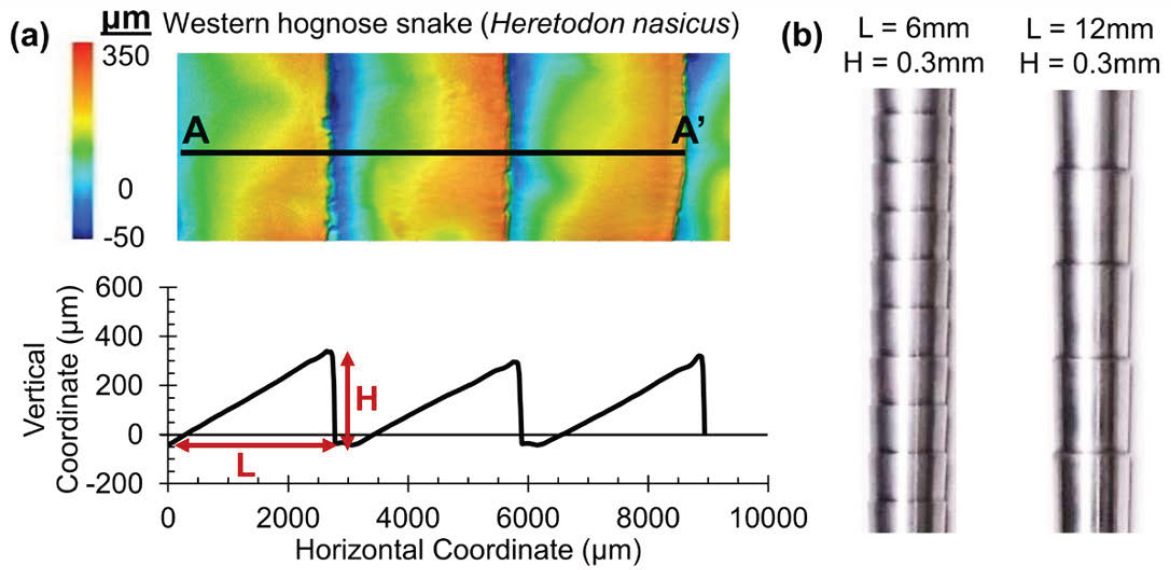
Biogeotechnology is an emerging subdiscipline in geotechnical engineering that seeks to develop nature-inspired solutions to critical infrastructure challenges (DeJong et al. 2013). These processes can be employed to modify properties of earthen materials and the performance of earthen structures such as flood risk management systems. Biogeotechnology focus areas are broadly separated into two categories: bio-mediated processes (Kavazanjian 2025) and bio-inspired processes (Martinez et al. 2022). Bio-mediated processes employ both microscale and macroscale biological processes for geotechnical purposes. Examples of microscale bio-mediated processes include biopolymer amendment and biocementation, in which soils are amended or cemented to improve their strength, stiffness, and erosion resistance, and biodesaturation, which enhances resistance to earthquake-induced soil liquefaction. Development of vegetation is a macroscale bio-mediated process used for erosion control. Bio-inspired processes employ abiotic analogs that mimic beneficial natural processes. Examples of bio-inspired processes are anisotropic surfaces patterned on snakeskin (Martinez et al. 2024), soil reinforcement and anchorage systems that mimic how roots reinforce soil (Mallett et al. 2021), penetration processes based on how organisms penetrate and tunnel through the soil (Naziri 2023), and systems that mimic the manner in which root systems resist scour (Li et al. 2024).
Limits of Bio-mediated Processes
Bio-mediated processes that are relevant to inland navigation and flood risk management systems include biopolymer amendment, biocementation, biodesaturation, and development of vegetation. To date, with the exception of development of vegetation for erosion control, bio-mediated geotechnical processes that have been shown to be effective are limited to cohesionless or low-plasticity soils due to pore size and permeability constraints, both
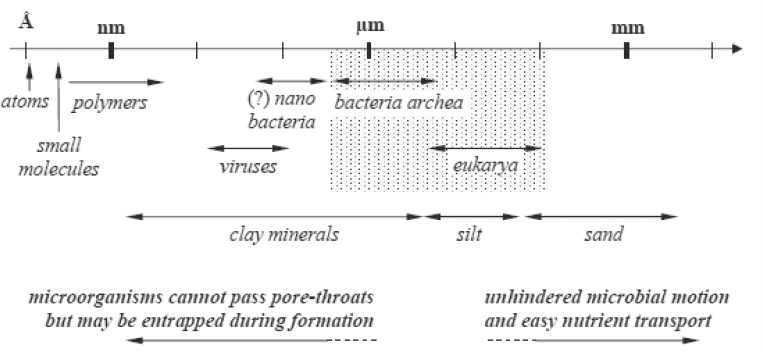
of which limit penetration of microbes and substrates into the soil. For microbes to penetrate into soil pores, they must pass through the pore throats, which are roughly one-third the pore size. This effectively limits microbial treatment of soils no finer than coarse silt (except for very low overburden pressures or slurries), as illustrated in Figure 7-2 (Mitchell and Santamarina 2005). Preferably, the soils are predominantly sand or gravel sized. Bio-mediated processes that rely on enzymes rather than microbes are subject to somewhat less-stringent pore-size constraints. However, enzyme processes are still limited by the permeability of the soil. The enzyme and substrates can take an inordinate amount of time to move through the ground in finer-grained soil, on the order of inches per day even for a coarse silt. This is generally too slow for effective soil improvement applications.
Biopolymer Amendment
Amending natural soils with microbially produced polymers by mixing and compacting the biopolymer–soil mixture or by infiltration of biopolymers in solution into the soil has been shown to enhance the performance and service lifetimes of earthen structures. Larson et al. (2012) showed that an untreated loessal silt soil experienced a 66% mass loss during simulated rainfall conditions while the same soil treated with 0.2% exopolysaccharide (EPS) from Rhizobium tropici (ATCC 49672) experienced only 1% mass loss during the same simulated rainfall conditions. R. tropici, an anaerobic, gram-negative bacteria, occurs naturally in soils and has a symbiotic relationship with plant roots. An earthen levee treated with R. tropici EPS showed root volumes that were over three times greater than a control
SOURCE: Mitchell and Santamarina 2005.
section (Larson et al. 2016), thereby enhancing the effectiveness of the vegetation in mitigating erosion on the slope.
Ko and Kang (2018) report on a series of overtopping tests on 1-m-tall levee embankment models with 2H:1V (horizontal:vertical) slopes. The model levees were constructed with a well-graded sand with 50% passing the No. 200 sieve. The crest and downstream face of the model levees were covered with 0.01, 0.03, and 0.05 m of a biopolymer–sand mixture composed of 1 g of biopolymer mixed with 10 g of water for every 50 g of soil. The composition of the biopolymer was not reported. The model levees were subjected to an overflow rate of 3 m3/s. The authors reported that, while the surface treatment retarded the time to levee breach, the overflow caused cracks on some parts of the cover, allowing water to penetrate, resulting in the cover “peeling off or inflating.” The authors concluded that the design of the biopolymer cover material needed to be adjusted to reduce its potential for cracking.
Kang et al. (2021) subsequently reported on a field-scale test of levee overtopping resistance conducted using a different biopolymer surface coating. Three overtopping tests were conducted on 2.5-m-tall 15-m-long levees with 2H:1V side slopes and a 4-m-wide crest. The levees were constructed using poorly graded sand (Case 1) and a poorly graded sand–clay mixture with 30% passing the No. 200 sieve (Cases 2 and 3). In Case 2, both sides of the levee were treated with a 0.05-m-thick sprayed-on mixture of biopolymer, soil, and grass seed, while the Case 3 levee was treated with just the soil and seed mixture. The levees were subjected to overtopping at a rate of 4 m3/s. The authors report the time to overtopping failure of the levee treated with the biopolymer mixture (Case 2) was 63 minutes, 2.7 times that of the levee treated with the soil–seed mixture (Case 3) and 7 times greater than that of the sand levee (Case 1). Unfortunately, the authors provide no information on the biopolymer composition or concentration.
ERDC has studied the application of biopolymers for both structural and geotechnical applications. Biopolymer amendment of soil in explosion protection berms at a munition plant resulted in an estimated 48% reduction in life-cycle maintenance costs over a 30-year period (USACE 2019). Rapid revegetation facilitated by the biopolymer reduced erosive soil loss in the first 12 months after construction from 6 m3 in the control area to 1 m3 in the treated area. In 2024, ERDC’s biopolymer research group conducted a field test of the ability of biopolymer amendment to enhance the resistance of soil to erosion due to embankment overtopping. An earthen embankment was constructed using locally sourced Vicksburg loess (wind-blown silt) soil. Both biopolymer-treated and untreated embankment sections were subjected to an overtopping event. According to USACE, the biopolymer treatment performed well enough that they expected to be able “to define and quantify the erosion resistance improvements that you might expect using biopolymers on embankment soils” (Scaggs 2024).
Biocementation
Biocementation via induced precipitation of carbonates and other minerals can increase the strength and stiffness of granular soils in situ. Biocementation processes include microbially induced carbonate precipitation, or MICP (DeJong et al. 2023) and enzyme-induced carbonate precipitation (EICP; Kavazanjian and Hamdan 2015). Fungal-induced carbonate precipitation (Tuckett et al. 2025) and microbially induced desaturation and precipitation (MIDP), a bio-mediated process that can induce both biocementation and biodesaturation (O’Donnell et al. 2017a,b; van Paassen et al. 2010a), are also under development. These biocementation processes generally involve precipitation of calcium carbonate (CaCO3), preferably as calcite.
The prevalence of CaCO3 studies may be attributed to its ubiquitous nature in natural and anthropogenic settings (Kavazanjian 2025), the stability of the carbonate precipitate, and the potential for significant strength gain, that is, on the order of megapascals (tens of tons per square foot). As illustrated in Figure 7-3, the strength increase from biocementation is proportional to the amount of carbonate precipitated, though the precise relationship depends on the soil being strengthened and the precipitation process (i.e., EICP or MICP). While multiple treatment cycles were often required to realize the strengths shown in Figure 7-3, in some cases strength gains of 1 to 2 MPa have been realized in a single cycle of treatment.
The most common carbonate precipitation mechanism is hydrolysis of urea, or ureolysis, wherein the enzyme urease catalyzes the hydrolysis of urea in an aqueous solution into ammonium and carbonate ions. In MICP and EICP, the carbonate ions will combine with calcium and/or magnesium and precipitate as a carbonate mineral. The precipitated carbonate can bind soil particles together and fill soil pores, increasing the strength, stiffness, and dilatancy of the soil. EICP and MICP via ureolysis are nondisruptive processes, requiring only injection and extraction wells on the boundaries of and within the treatment zone.
A major benefit of MICP and EICP technologies is the potential for application beneath and adjacent to existing facilities. However, most embodiments of these processes use calcium chloride as the calcium source, resulting in the generation of an ammonium chloride (NH4Cl) by-product at levels well in excess of groundwater quality standards. Furthermore, although it is often referred to as a sustainable alternative to portland cement for binding soil particles, life-cycle sustainability assessments indicate that, due to the reliance on urea, the carbon footprint of these technologies is on the same order of magnitude as portland cement (Faruqi et al. 2023). Despite these limitations, these technologies may be useful in applications requiring stabilization of critical infrastructure and where environmental
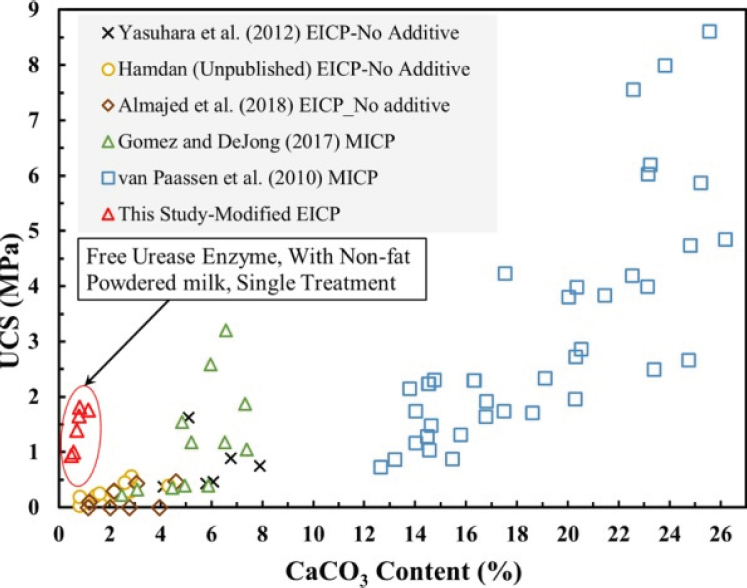
NOTE: EICP = enzyme-induced carbonate precipitation; MICP = microbially induced carbonate precipitation.
SOURCE: Almajed et al. 2019. CC BY 4.0.
conditions alleviate concerns over the NH4Cl by-product. Furthermore, development of green urea technologies (Kim et al. 2023) and development of carbon capture technologies could significantly reduce the carbon footprint of biocementation and lead to wider adoption.
MICP and EICP have been proposed as means of increasing bearing capacity, liquefaction resistance, and wind and surface water erosion resistance. MIDP has primarily been investigated for mitigation of earthquake-induced soil liquefaction (as discussed subsequently). Most studies of MICP and EICP are still at the laboratory scale, but field-scale studies include mass stabilization, remediation of mechanically stabilized earth, biocemented column construction, and fugitive dust mitigation.
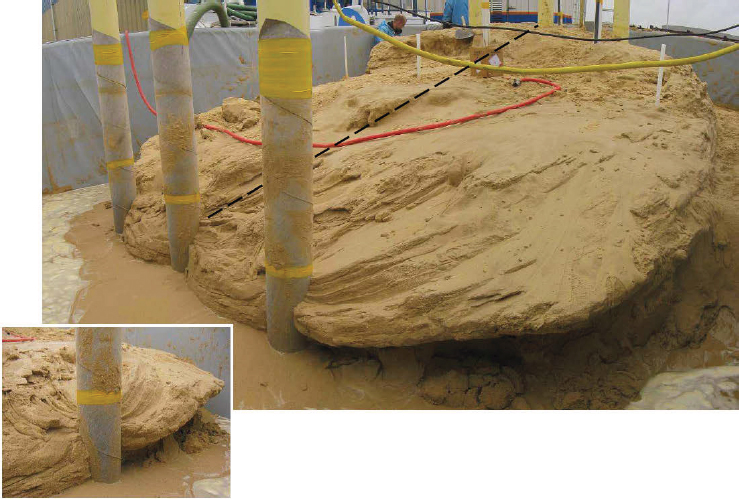
Researchers at Technical University Delft used MICP to biocement approximately 40 m3 of a poorly graded fine sand (van Paassen et al. 2010b). The experiment was conducted in a large box with three injection wells
spaced 1.5 m apart on one side of the box and three extraction wells also spaced 1.5 ms apart, 5 m away on the other side of the box. Figure 7-4 shows the biocemented sand layer after the sides of the box and the loose, uncemented soil had been removed. The yellow band at the base of the injection wells on the left side of the box shows the target height for biocementation and the yellow band at the top of the wells indicates the total height of the sand in the box during biocementation.
Darby et al. (2019) conducted centrifuge experiments on soil biocemented using MICP to mitigate soil liquefaction. Based on the centrifuge test results, recommendations on the extent of MICP treatment required for effective mitigation of liquefaction were developed.
Rivera and Bandini (2024) used EICP to treat a 2.4 m × 2.4 m plot on the face of an embankment with a slope of approximately 45 degrees using five cycles of percolation of an enzyme-induced precipitation treatment solution. The embankment soil was a silty fine sand classified SM in the Unified Soil Classification System (USCS). Simulated rainfall with an intensity of 96 mm/hr and a duration of 30 minutes was applied to the test plot and to a control (untreated) plot using a portable rainfall simulator. The average raindrop speed was 2.52 m/s and the average droplet size over the plot area was 0.85 mm. The volume of soil mobilized by erosion in the
SOURCE: van Paassen et al. 2010b.
EICP-treated plot was about 8.3 times less than that in an untreated control plot. The treated plots had an average biocemented crust thickness of 12.5 mm after being subjected to the simulated rainfall.
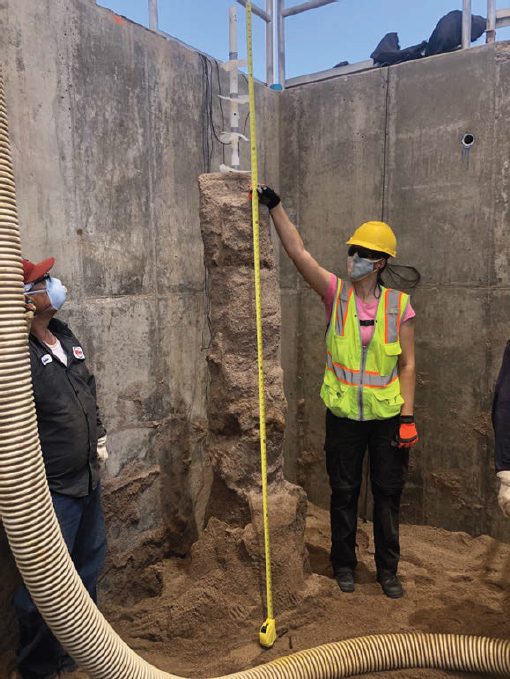
Martin et al. (2024) constructed seven biocemented columns up to 1-m diameter and 2.4 m long using EICP, conventional tube-a-manchette grouting procedures, varied application rates, and various cementation solution preparation procedures. The columns were constructed in a test pit filled with a medium-fine washed quarry sand with a mean grain size of 0.75 mm that was classified SP in the USCS. Based on laboratory test results, three cycles of treatment were applied at approximately 24-hour intervals to create a column with a minimum unconfined compressive strength of 500 kPa (5 tons per square foot). Needle penetrometer and laboratory testing on trimmed specimens from exhumed columns indicated that the target unconfined compression strength was achieved in all columns. Figure 7-5 shows one of the 0.3-m-diameter columns during exhumation.
SOURCE: Martin et al. 2024.
Alaufi et al. (2025) report on application of EICP for control of fugitive dust on a 0.4-hectare plot of fallow farmland in Pinal County, Arizona. A stabilized soil crust was formed by spraying an EICP treatment solution onto dust-prone soil. The effectiveness of the treatment was assessed using the Portable In-situ Wind Erosion Laboratory, or PI-SWERLTM (Etyemezian et al. 2007) and pocket penetrometer testing. Results of the testing indicate that the treatment has remained effective at suppressing fugitive dust for more than 180 days.
Biodesaturation
Biodesaturation can increase the resistance of granular soil to loss of strength due to cyclic loading, reducing the potential for earthquake-induced soil liquefaction. MIDP is a bio-mediated technology that holds the potential for cost-effective liquefaction mitigation via the biodesaturation component (O’Donnell et al. 2017a,b). MIDP relies on dissimilatory reduction of nitrogen, or denitrification, to generate nitrogen gas and carbonate ions in the soil (Pham et al. 2016). The relatively insoluble nitrogen gas desaturates the soil rapidly, that is, in as little as one cycle of treatment. In addition to desaturation via the generation of nitrogen gas, MIDP generates carbonate ions that can combine with calcium or other available electron acceptors to precipitate as a carbonate mineral. However, because desaturation develops at a much faster rate than biocementation, it is the primary aspect of this technology that has attracted the interest of geotechnical engineers (Hall et al. 2022).
Kavazanjian et al. (2018) suggest that in some circumstances only one cycle of treatment may be sufficient to mitigate liquefaction using biodesaturation. However, multiple treatment cycles, each cycle progressively more difficult due to an associated reduction in hydraulic conductivity, may be required for sufficient cementation via carbonate precipitation to mitigate liquefaction (Kwon et al. 2024). Furthermore, there are questions regarding the persistence of the induced desaturation and, although MIDP in a freshwater environment may be free of adverse by-products, when sulfate is present (e.g., in a saltwater environment) MIDP may produce toxic hydrogen sulfide (H2S) as a by-product. In the absence of sulfates or where the amount of H2S produced is shown to be below levels considered harmful, MIDP offers the potential for cost-effective nondisruptive mitigation of earthquake-induced soil liquefaction beneath and adjacent to existing facilities.
Hall et al. (2018) conducted centrifuge testing on biodesaturated F-65 Ottawa sand, a poorly graded fine sand with a mean grain size of 0.20 mm placed at a relative density of approximately 40%. When saturated, the soil reached initial liquefaction after 15 cycles of uniform loading at a stress
ratio of approximately 0.2. Following treatment of the soil by microbially induced desaturation to a degree of saturation between 75% and 80%, the soil was subject to a series of 15 uniform cycles of loading at shear stress ratios up to 0.44 without triggering liquefaction. In a field test in Portland, Oregon, Moug et al. (2022) were able to successfully desaturate a low-plasticity silt layer using MIDP. However, they were not able to generate significant pore pressures in either the treated zone or untreated soil with the available equipment. Subsequent testing has indicated the soil remained desaturated for at least 3 years.
Bio-inspired Processes
Bio-inspired geotechnical systems draw inspiration from biological systems to address geotechnical challenges (Martinez et al. 2022). This inspiration may take the form of isolation of a particular mechanism or development of an abiotic analog. Most bio-inspired geotechnical processes under development and applicable to inland navigation and flood risk management do not involve advanced materials, but geotechnical processes. Examples of such processes include mitigation of scour (Li et al. 2024), enhanced capacity of piles and ground anchors (Aleali et al. 2020; Mallett et al. 2021), and enhanced penetrability of probes and driven piles (Chen and Martinez 2024).
Anisotropic Shearing Surfaces
Martinez and O’Hara (2021) have employed analogs to snakeskin to create surfaces with anisotropic (direction-dependent) shear strength that may have geotechnical applications relevant to water resources infrastructure. Martinez and O’Hara used a surface texture modeled after the scales on the belly of a western hognose snake to create piles with anisotropic frictional directionality, that is, in which the side resistance is dependent on the direction of shear. Figure 7-6 illustrates the analog piles used in this study. These investigators conducted a series of 12 centrifuge load tests that highlighted the distinctively different behavior of these piles in tension and compression. Side resistance in the uplift direction was between 82% and 198% greater than side resistance in compression.
Potential USACE Applications and Limitations of Biogeotechnical Material Technologies
The 2019 USACE report on Innovative Materials and Advanced Technologies identifies the use of natural products (e.g., biopolymers) to enhance durability and stability of locally sourced soils as a critical need for
SOURCE: Martinez and O’Hara 2021. CC BY 4.0.
construction of earthen structures. USACE identified enhanced erosion resistance of the downstream face of levees and other embankments subject to overtopping to be of particular interest, and in early ERDC research some biopolymers have shown the ability to enhance the development of vegetation on the face of embankments and levees, further enhancing erosion resistance.
Potential applications of biocementation by precipitation of carbonate minerals, that is, MICP and EICP, include mitigation of undermining of hydraulic structures and bridge foundations by scour; stabilization of slopes, riverbanks, and channels; control of erosion due to wind and surface water; enhancing bearing capacity for structural support; and mitigation of the potential for earthquake-induced soil liquefaction. These applications typically rely on the increase in strength accompanying biocementation. The primary drawback hindering the adoption of biocementation processes in practice is uncertainty regarding the fate and transport of the ammonium chloride by-product—a recognized groundwater contaminant—of the cementation process.
Biodesaturation offers the potential for relatively rapid mitigation of earthquake-induced soil liquefaction (compared to MICP and EICP). The process can be applied nondisruptively beneath and adjacent to existing facilities and, in the absence of sulfates in the groundwater, this process has no adverse by-products. However, questions concerning the longevity of the process require consideration of the potential need to re-treat the ground periodically to maintain the desired level of treatment. There are also issues regarding the distribution of substrates and reaction products in the subsurface that require additional research on this technology.
Snakeskin-inspired anisotropic surfaces offer the potential for easing the installation and enhancing the capacity of ground anchors and piles whose capacity is governed by uplift loads. Realization of this potential will require additional product development and testing.
The main impediments to wider use of biogeotechnics are (1) status as an emerging technology and (2) limitation on current applications to relatively clean, cohesionless low-plasticity soil. As an emerging group of technologies, there is little guidance and there are no standards for applications. USACE is conducting appropriate research to address these deficiencies, and steady advancement can be expected.
SUMMARY
- Coatings are critical to the longevity of metals and other materials employed in water resources infrastructure. ERDC has long stayed abreast of developments in coatings technologies and issued updated guidance and standards.
- ERDC has been investigating and deploying environmentally acceptable lubricants and self-lubricated materials.
- Anchorages in concrete structures are important components of water resources infrastructure. Alternatives to carbon steel anchors, which are subject to corrosion, are needed. Ceramic anchors have been developed recently, but long-term performance needs to be studied, and codes and standards need to be developed.
- Biogeotechnology offers the potential for nondisruptively enhancing the performance of earthen structures and foundations.
- Biopolymer amendments of soil have been shown to enhance the performance and service lifetimes of earthen structures. USACE has been a leader in deploying biopolymers for enhanced erosion resistance of earthen embankments.
- Biogeotechnology offers the potential for enhancing the resilience of existing inland navigation and flood risk management infrastructure to extreme events.
- USACE has monitored innovations in geosynthetic materials, accumulating knowledge on long-term performance of geosynthetics to inform design applications and life-cycle assessments for flood control and navigation projects.
REFERENCES
Alaufi, S., E. Salifu, and E. J. Kavazanjian. 2025. “Optimization of EICP Treatment Parameters for Dust Mitigation.” Proceedings of the International Conference on Bio-mediated and Bio-inspired Geotechnics. International Society for Soil Mechanics and Geotechnical Engineering. https://www.issmge.org/publications/publication/optimization-of-eicp-treatment-parameters-for-dust-mitigation.
Aleali, S. A., P. Bandini, and C. M. Newtson. 2020. “Multifaceted Bioinspiration for Improving the Shaft Resistance of Deep Foundations.” Journal of Bionic Engineering 17(5):1059–1074.
Almajed, A., H. K. Tirkolaei, E. Kavazanjian, Jr., and N. Hamdan. 2019. “Enzyme Induced Biocementated Sand with High Strength at Low Carbonate Content.” Scientific Reports 9:1135.
AMPP (Association for Materials Protection and Performance). 2024. “New Cold-Weather Facilities Test Coatings for U.S. Army.” Materials Performance. https://content.ampp.org/materials-performance/magazine-article/2853/New-Cold-Weather-Facilities-Test-Coatings-for-U-S?.
Chen, Y., and A. Martinez. 2024. “DEM Modelling of Root Circumnutation-Inspired Penetration in Shallow Granular Materials.” Geotechnique 74(13):1780–1797.
Darby, K. M., G. L. Hernandez, J. T. DeJong, R. W. Boulanger, M. G. Gomez, and D. W. Wilson. 2019. “Centrifuge Model Testing of Liquefaction Mitigation via Microbially Induced Calcite Precipitation.” Journal of Geotechnical and Geoenvironmental Engineering 145(10).
DAU (Defense Acquisition University). 2025. “Demonstration of Polyurea Coating for Rehabilitation of Concrete and Metal Infrastructure Under Biogenic Sulfide Corrosion Conditions (Project F15AR04).” https://www.dau.edu/artifact/demonstration-polyurea-coating-rehabilitation-concrete-and-metal-infrastructure-under.
DeJong, J. T., K. S. Soga, E. Kavazanjian, S. Burns, L. van Paassen, A. Al Qabany, A. Aydilek, S. S. Bang, M. Burbank, L. Caslake, C. Y. Chen, X. Cheng, J. Chu, S. Ciurli, S. Fauriel, A. E. Filet, N. Hamdan, T. Hata, Y. Inagaki, S. Jefferis, M. Kuo, L. Laloui, J. Larrahondo, D. A. C. Manning, B. Martinez, B. M. Montoya, D. C. Nelson, A. Palomino, P. Renforth, J. C. Santamarina, E. A. Seagren, B. Tanyu, M. Tsesarsky, and T. Weaver. 2013. “Biogeochemical Processes and Geotechnical Applications: Progress, Opportunities, and Challenges.” Geotechnique 63(4):287–301.
DeJong, J. T., M. G. Gomez, A. C. M. San Pablo, C. M. R. Grady, D. C. Nelson, M. Lee, K. Ziotopoulou, M. El Kortbawi, B. Montoya, and T.-H. Kwon. 2023. “State of the Art: MICP Soil Improvement and Its Application to Liquefaction Hazard Mitigation.” In Proceedings of the 20th International Conference on Soil Mechanics and Geotechnical Engineering—State of the Art and Invited Lectures, edited by M. Rahman and M. Jaksa. Sydney: Australian Geomechanics Society.
Eligehausen, R., R. Mallee, and J. F. Silva. 2012. Anchorage in Concrete Construction, Ch. 1. John Wiley & Sons.
ERDC (Engineer Research and Development Center). 2012. “Paint Technology Center: Fact Sheet.” U.S. Army Corps of Engineers. https://www.erdc.usace.army.mil/Media/Fact-Sheets/Fact-Sheet-Article-View/Article/476731/paint-technology-center.
ERDC. 2024a. “Early Involvement of Coatings Experts Can Have a Big Impact on Project Success.” Engineer Research and Development Center, U.S. Army Corps of Engineers. https://www.erdc.usace.army.mil/Media/News-Stories/Article/3951969/early-involvement-of-coatings-experts-can-have-big-impact-on-project-success.
ERDC. 2024b. “ERDC Materials Community of Practice Update.” Engineer Research and Development Center, U.S. Army Corps of Engineers, p. 32.
Etyemezian, V., G. Nikolich, S. Ahonen, J. Gillies, A. Gertler, H. Kuhns, and D. Dubois. 2007. “The Portable In-Situ Wind Erosion Laboratory (PI-SWERL): A New Method to Measure PM10 Windblown Dust Properties and Potential for Emissions.” Atmospheric Environment 41(18):3789–3796.
Faruqi, A., C. A. Hall, and A. Kendall. 2023. “Sustainability of Bio-Mediated and Bio-Inspired Ground Improvement Techniques for Geologic Hazard Mitigation: A Systematic Literature Review.” Frontiers in Earth Science 11(July).
Hall, C. A., G. Hernandez, K. Darby, L. van Paassen, E. Kavazanjian, Jr., J. DeJong, and D. Wilson. 2018. “Centrifuge Model Testing of Liquefaction Mitigation via Denitrification-Induced Desaturation.” In Proceedings, Geotechnical Earthquake Engineering and Soil Dynamics V, edited by S. J. Brandenberg and M. T. Manzari (Geotechnical Special Publication 290), pp. 117–126.
Hall, C. A., L. A. van Paassen, S. Kamalzare, D. Parmantier, and E. Kavazanjian, Jr. 2022. “Techno-Economic Assessment of Liquefaction Mitigation by Microbially Induced Desaturation.” Proceedings, Lifelines (Infrastructure Resilience Publication 5). American Society of Civil Engineers, pp. 91–100.
Jones, J. A., R. A. Palylyk, P. Willis, and R. A. Weber. 1999. “Greaseless Bushings for Hydropower Applications: Program, Testing, and Results” (CERL TR 99/104). Engineer Research and Development Center, U.S. Army Corps of Engineers.
Kang, W., D. Ko, and J. Kang. 2021. “Erosion Resistance Performance of Surface-Reinforced Levees Using Novel Biopolymers Investigated via Real-Scale Overtopping Experiments.” Water 13(18):2482.
Kavazanjian, E., Jr. 2025. “Bio-mediated Geotechnics for Hazard Mitigation, Environmental Protection, and Infrastructure Construction—The 58th Terzaghi Lecture.” https://ceae.ku.edu/sites/ceae/files/images/2023/Kavazanjian%2C%20Edward%20-%20Terzaghi%20Lecture.pdf.
Kavazanjian, E., Jr., and N. Hamdan. 2015. “Enzyme Induced Carbonate Precipitation (EICP) Columns for Ground Improvement.” In Proceedings, International Foundation Congress and Equipment Exposition (Geotechnical Special Publication 256). American Society of Civil Engineers, pp. 2252–2261. https://doi.org/10.1061/9780784479087.209.
Kavazanjian, E., Jr., S. T. O’Donnell, B. Rittmann, N. Hamdan, C. Hall, and L. A. van Paassen. 2018. “Mitigation of Liquefaction Beneath Existing Facilities Using Microbial Denitrification.” In Proceedings, Eleventh US National Conference on Earthquake Engineering. Los Angeles, CA: Earthquake Engineering Research Institute.
Kim, H., C. Choe, A. Lee, and H. Lim. 2023. “Application of Green Hydrogen with Theoretical and Empirical Approaches of Alkaline Water Electrolysis: Life Cycle-Based Techno-Economic and Environmental Assessments of Renewable Urea Synthesis.” International Journal of Hydrogen Energy 48(43):16148–16158.
Ko, D., and J. Kang. 2018. “Experimental Studies on the Stability Assessment of a Levee Using Reinforced Soil Based on a Biopolymer.” Water 10(8):1059.
Kwon, P., D. Karmacharya, E. Kavazanjian, Jr., C. E. Zapata, and L. A. van Paassen. 2024. “Microbial-Induced Desaturation and Precipitation in Stratified Soils with Fine Sand and Silt Layers.” Acta Geotechnica 19(10):6443–6465.
Larson, S., J. Ballard, C. Griggs, J. K. Newman, and C. Nestler. 2012. “An Innovative Non-Petroleum Rhizobium tropici Biopolymer Salt for Soil Stabilization.” Conference Proceedings: ASME 2010 International Mechanical Engineering Congress and Exposition, Volume 5, Energy Systems Analysis, Thermodynamics and Sustainability; NanoEngineering for Energy; Engineering to Address Climate Change, Parts A and B. American Society of Mechanical Engineers, pp. 1279–1284. https://doi.org/10.1115/IMECE2010-38933.
Larson, S., G. Nijak, Jr., M. Corcoran, E. Lord, and C. Nestler. 2016. Evaluation of Rhizobium tropici-Derived Biopolymer for Erosion Control of Protective Berms (ERDC TR-16-5). Engineer Research and Development Center, U.S. Army Corps of Engineers. https://apps.dtic.mil/sti/tr/pdf/AD1011606.pdf.
Leshchinsky, D. 1997. Design Procedure for Geosynthetic Reinforced Steep Slopes (Technical Report REMR-GT-23). U.S. Army Corps of Engineers.
Li, J., S. Xu, Y. Durandet, W. Gao, X. Huang, and D. Ruan. 2024. “Strain Rate Dependence of 3D Printed Continuous Fiber Reinforced Composites.” Composites Part B: Engineering 277:111415.
Mallett, S. D., J. D. Frost, and J. A. Huntoon. 2021. “Root-Inspired Anchorage Systems for Uplift and Lateral Force Resistance.” In Proceedings, 2021 International Foundation Congress and Equipment Exposition (IFCEE 2021). American Society of Civil Engineers, pp. 299–307. https://doi.org/10.1061/9780784483411.029.
Martin, K. K., H. Khodadadi Tirkolaei, and E. Kavazanjian, Jr. 2024. “Field-Scale EICP Biocemented Columns for Ground Improvement.” Journal of Geotechnical and Geoenvironmental Engineering 150(8).
Martinez, A., and K. O’Hara. 2021. “Skin Friction Directionality in Monotonically- and Cyclically-Loaded Bio-inspired Piles in Sand.” DFI Journal 15(1).
Martinez, A., J. Dejong, I. Akin, A. Aleali, C. Arson, J. Atkinson, P. Bandini, T. Baser, R. Borela, R. Boulanger, M. Burrall, et al. 2022. “Bio-inspired Geotechnical Engineering: Principles, Current Work, Opportunities and Challenges.” Geotechnique 72(8).
Martinez, A., F. Zamora, and D. Wilson. 2024. “Field Evaluation of the Installation and Pullout of Snakeskin-Inspired Anchorage Elements.” Journal of Geotechnical and Geoenvironmental Engineering 150(8).
Mechaala, A., A. Belarbi, and H. Iwashita. 2025. “Evaluation of Tensile and Shear Strengths of Fine Ceramics Inserts.” Structural Journal 122(2):129–144.
Medina, V. F., M. Wynter, T. Paulus, and J. R. Wilson. 2018. Analysis of Environmentally Acceptable Lubricants for U.S. Army Corps of Engineers Dams (ERDC/EL TR-18-15). Engineer Research and Development Center, U.S. Army Corps of Engineers.
Miller, S. J., J. C. Fischenich, and C. I. Thornton. 2012. “Stability Thresholds and Performance Standards for Flexible Lining Materials in Channel and Slope Restoration Applications” (ERDC TN-EMRRP-EBA-13). Engineer Research and Development Center, U.S. Army Corps of Engineers.
Mitchell, J. K., and J. C. Santamarina. 2005. “Biological Considerations in Geotechnical Engineering.” Journal of Geotechnical and Geoenvironmental Engineering 131(10).
Montgomery, L. 2025. “Hycrete Approved for Use by the U.S. Army Corps of Engineers—ASTM C494 and ASTM C1582 Certified.” Hycrete. June 23. https://hycrete.com/hycrete-approved-for-use-by-the-u-s-army-corp-of-engineers-astm-c494-and-astm-c1582certified.
Moug, D. M., K. R. Sorenson, A. Khosravifar, M. Preciado, E. S. Young, L. van Paassen, E. Kavazanjian, Jr., B. Zhang, K. H. Stokoe, F. M. Menq, and Y. Wang. 2022. “Field Trials of Microbially Induced Desaturation in Low-Plasticity Silt.” Journal of Geotechnical and Geoenvironmental Engineering 148(11).
Naziri, S. 2023. “Earthworm-Inspired Penetration in Geomaterials.” Ph.D. dissertation, New Mexico State University.
O’Donnell, S. T., E. Kavazanjian, and B. E. Rittmann. 2017a. “MIDP: Liquefaction Mitigation via Microbial Denitrification as a Two-Stage Process. II: MICP.” Journal of Geotechnical and Geoenvironmental Engineering 143(12).
O’Donnell, S. T., B. E. Rittmann, and E. Kavazanjian. 2017b. “MIDP: Liquefaction Mitigation via Microbial Denitrification as a Two-Stage Process. I: Desaturation.” Journal of Geotechnical and Geoenvironmental Engineering 143(12).
Pham, V., A. Nakano, W. R. L. van der Star, T. Heimovaara, and L. van Paassen. 2016. “Applying MICP by Denitrification in Soils: A Process Analysis.” Environmental Geotechnics 5(2):79–93.
Rivera, L., and P. Bandini. 2024. “Erosion Testing on Sloped Ground Treated with Enzyme-Induced Carbonate Precipitation.” In Geotechnical Engineering Challenges to Meet Current and Emerging Needs of Society. CRC Press.
Scaggs, K. 2024. “ERDC’s Biopolymer Research Group Conducts Overtopping Field Study.” U.S. Army Corps of Engineers. https://www.erdc.usace.army.mil/Media/News-Stories/Article/4033127/erdcs-biopolymer-research-group-conducts-overtopping-field-study.
Tuckett, T., A. Adegoke, and E. Salifu. 2025. “Optimizing Fungal Growth Duration and Concentrations of Cementation Solutions for Fugitive Dust Mitigation via FICP.” In Geotechnical Frontiers 2025 (Geotechnical Special Publication 366). American Society of Civil Engineers.
USACE (U.S. Army Corps of Engineers). 1999. Thermal Spraying: New Construction and Maintenance (Engineer Manual EM 1110-2-3401).
USACE. 2011. “Development and Evaluation of Compost Mulch Best Management Practices for Erosion Control” (Public Works Technical Bulletin No. 200-1-100).
USACE. 2016. Lubricants and Hydraulic Fluids (Engineer Manual 1110-2-1424). U.S. Army Corps of Engineers.
USACE. 2019. Innovative Materials and Advanced Technologies Report. U.S. Army Corps of Engineers, pp. 11–12.
USACE. 2020. “Self-Lubricated Materials, Fabrication, Handling, and Assembly” (Unified Facilities Guide Specifications UFGS-35 05 40.17). U.S. Army Corps of Engineers.
USACE. 2022. Design of Hydraulic Steel Structures (Engineer Manual EM 1110-2-2107). U.S. Army Corps of Engineers, p. 45.
van Paassen, L. A., C. M. Daza, M. Staal, D. Y. Sorokin, W. van der Zon, and M. C. M. van Loosdrecht. 2010a. “Potential Soil Reinforcement by Biological Denitrification.” Ecological Engineering 36(2):168–175.
van Paassen, L. A., R. Ghose, T. J. M. van der Linden, W. R. L. van der Star, and M. C. M. van Loosdrecht. 2010b. “Quantifying Biomediated Ground Improvement by Ureolysis: Large-Scale Biogrout Experiment.” Journal of Geotechnical and Geoenvironmental Engineering 136(12):1721–1728.
Whitehead, M. 2025. “Self-Lubricated Materials. Prospect Course 412 Lubrication of Mechanical Equipment.” Portland District, U.S. Army Corps of Engineers.


