Innovative Materials in Water Resources Infrastructure: Opportunities for the Corps of Engineers (2026)
Chapter: 4 Innovation in Materials and Material Technologies for Water Resources Infrastructure: Fiber-Reinforced Polymer Composites
4
Innovation in Materials and Material Technologies for Water Resources Infrastructure: Fiber-Reinforced Polymer Composites
Having earlier described (in Chapter 2) the major assets and main material types used in the navigation and flood risk management infrastructure systems, the next three chapters describe the U.S. Army Corps of Engineers’ (USACE’s) current uses of innovative materials and the reasons for their uses, including the types of intended benefits. The focus in particular is on fiber-reinforced polymer (FRP), high-performance and ultra-high-performance concrete, and 3D-printed materials. The attention is on these materials because they are unconventional and known from deployment in various domains to confer benefits relative to traditional materials, such as in reliability, durability, life-cycle cost, and ease of implementation, depending on the application. These materials are of priority interest to USACE, which has been working on and testing them for years as discussed in Chapter 1.
OPPORTUNITIES FOR INNOVATIVE MATERIALS: FIBER-REINFORCED POLYMER COMPOSITES
FRP composite materials are made by combining a polymer matrix with reinforcing systems. As considered in this chapter, the two primary components are a polymer matrix (e.g., epoxy, vinyl ester, polyester, phenolic material, high-density polyethylene) and continuous reinforcing fibers (e.g., glass, carbon, basalt, Kevlar). These composites exhibit desirable characteristics, including being lightweight, corrosion resistant, having unique thermal and electromagnetic properties, and the ability to be tailored to specific requirements. Their lightweight nature, combined with reduced
transportation costs and accelerated construction timelines, often leads to significant overall cost savings.1
The specific types of resins and fibers chosen are determined by the properties required for the structure or component.2 Properties to be considered when determining the use of composite materials include the size and weight of a component; strength requirements; shape; fire, smoke, and toxicity requirements; water absorption properties; expected life of the component; and durability, such as the ability to resist damage from environmental exposure including from moisture, temperature, ultraviolet light, wind, and chemicals.
Evolution
The early use of FRP composite materials dates back to the 1940s, following the commercial development of glass fibers in the 1930s (Slayter 1938). One of the first applications of these materials was in military aircraft and radome construction, where their lightweight structure and electromagnetic transparency offered significant operational advantages. Following World War II, fiber-reinforced composite materials started being used across various industries, including aerospace, marine, automotive, sports, medical, and consumer products.
For civil engineering construction, research into the use of plastic materials began in the late 1940s with Richard Buckminster Fuller.3 He pioneered the geodesic dome, featuring an aluminum framework covered with a plastic skin, and he was awarded a patent for its structural framework in 1954 (Fuller 1954). That same year, the concept of constructing an entire house from fiber-reinforced composite materials emerged with the development of the Monsanto House of the Future shown in Figure 4-1. A prototype of this design was built in Disneyland’s Tomorrowland in 1957 (Los Angeles Times 1957). Guided by extensive research and development sponsored by the U.S. Department of Defense, the U.S. Federal Highway Administration began exploring composite technology for bridge design and construction in the 1980s (Plecnik and Ahmad 1989).
During the 1990s, two groundbreaking applications of FRP composite materials occurred in Europe, which highlighted the potential use of composite materials in infrastructure. In 1991, the Ibach Bridge in Luzern,
___________________
1 Expositions of topics related to FRP composite material applications, properties, analysis, design, testing, quality assurance, product reliability, repair, and recycling can be found in Volume 21 of the ASM Handbook (ASM International 2026).
2 Creative Composites Group presentation to the committee, October 20, 2024. See also Rosato et al. (1991).
3 Plastic refers to a specific kind of polymer, and many of the polymers mentioned in this report are plastics.
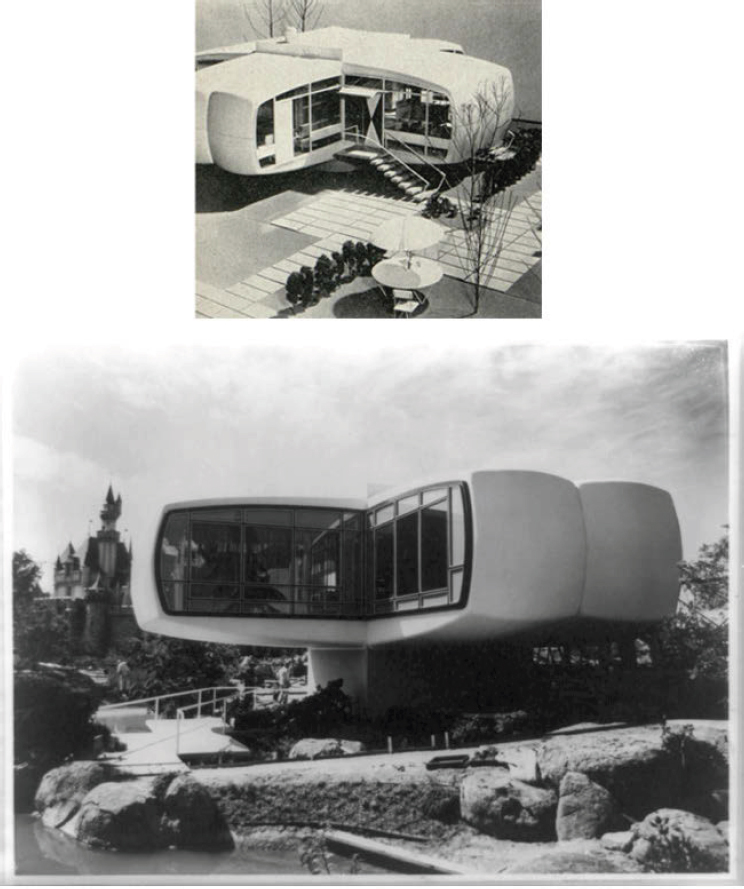
SOURCE: Library of Congress. https://loc.gov/pictures/resource/cph.3b38244.
Switzerland, was successfully strengthened using externally bonded carbon-fiber-reinforced polymer (CFRP) composite. The construction of the world’s first cable-stayed footbridge made entirely of polymer composite materials took place in 1992 in Aberfeldy, Scotland (see Figure 4-2). In the years that followed, the use of FRP composite materials in infrastructure applications grew steadily worldwide, covering both new construction and rehabilitation of existing structures. For example, following the Kobe earthquake in January 1995, Japan initiated the strengthening of reinforced concrete bridge piers using CFRP composites as part of seismic retrofitting on existing structures (Hooks et al. 1997) (see Figure 4-3).
Over the subsequent decades, universities, government agencies, and the composite industry, together with their international partners, have crafted design guidelines, standards, and specifications tailored to the integration of polymer composites in civil engineering construction projects. Some of these initial guidelines and standards for use of FRP in various kinds of infrastructure components have undergone continuous refinement and revision and have been reissued in recent years, driven by the emergence of new research and development findings (e.g., AASHTO 2023, 2025; ACI 2024; ASCE 2023; AWWA 2024). Zureick (2026) reviews the historical development of some of these guidelines, along with references to the latest consensus-based standards and specifications.
Examples from Other Domains
For more than eight decades, FRP composite materials have seen a steady increase in adoption across a broad spectrum of applications. These include
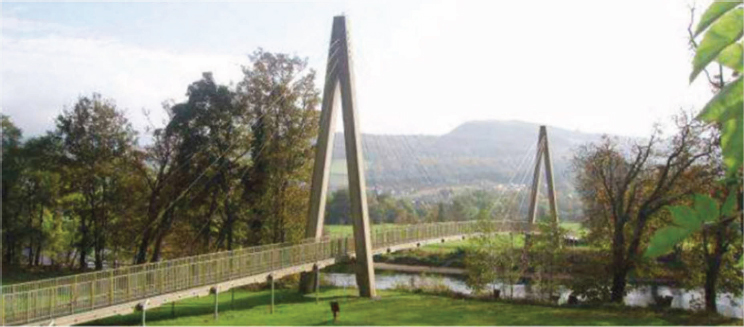
SOURCE: Drygala et al. 2023.
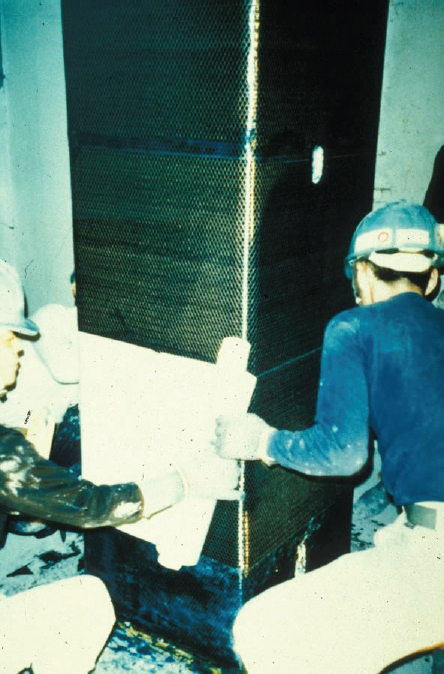
SOURCE: Courtesy of Abdul-Hamid Zureick.
military and commercial aircraft, naval vessels, leisure boats, automobiles, transportation systems, building products, consumer appliances, sports equipment, medical devices, electronic components, wind turbine blades, water supply pipes, and wastewater treatment plants, among many others. In nearly all these uses, composite materials must perform reliably within diverse loading and environmental conditions, with service lives varying from mere seconds to thousands of hours depending on the application. For example, both aircraft and naval ships typically have service lives ranging from 20 to 50 years, depending on their operational frequency and maintenance schedules. The lifespan in other applications can be significantly shorter. Water resources hydraulic structures are expected to remain in service for much longer time, targeting a 100-year lifespan in many instances.
FRP Composites in Water and Wastewater Treatment Plants
The application of FRP composite materials in water and wastewater treatment facilities dates back to the early 1960s. Their corrosion resistance made these materials attractive for a variety of plant components, including pipes, fans, stacks, chemical feed systems, walkways, stairs, railings, and other structural elements. In general, the expected service life of these components is in the range of 25–50 years. In a study conducted by Castelo et al. (2020), the performance and service life of FRP components installed in 9 water and 22 wastewater treatment plants constructed in Portugal between 1997 and 2012 were evaluated. The inspection revealed various anomalies such as fiber blooming, discoloration, cracking, debonding, and others. The study further revealed that components exposed to prolonged moisture often developed biological colonization, surface discoloration, and fiber blooming. Although these defects can be repaired and largely prevented through regular maintenance, the findings highlight the need for careful FRP material selection to guarantee both durability and strength of components in comparable facilities.
FRP DEPLOYMENTS IN THE U.S. NAVY
Because of the extensive commonalities in environmental exposures between USACE hydraulic structures and U.S. Navy ships and other marine structures, a summary of the U.S. Navy’s experience with composite materials in naval vessel fabrication is presented here.
Processes Leading to Deployment
This section takes a closer look at how the U.S. Navy, after decades of experience with composites, has taken a multipronged approach to expanding its use of this material. Experimenting with composite materials started as early as the 1940s; the Navy expanded their use over several decades, including in fiberglass-hull river patrol boats that were used extensively in the Vietnam War (Mouritz et al. 2001). Growing field experience provided insights on the advantages and limitations of FRPs. For example, it was determined that composite-based superstructures were more fire resistant than some metal structures, increased stability due to lower topside weight, and cracked less frequently to reduce the need for major repairs. The Navy also observed experience in other countries such as Sweden, which had built entire ocean-going ships from composites by the 1980s (Mouritz et al. 2001). However, building entire ships from composites was not compatible
with the U.S. military’s higher survivability standards, which necessitated more steel utilization (NavyLookout 2024).
Nevertheless, since 2000, the Naval Surface Warfare Center—Carderock Division (NSWC-CD), part of the Naval Sea Systems Command (NAVSEA), has had a research and development unit dedicated to composites and has led numerous efforts to deploy FRP components in the fleet.4 The Navy has had mixed results in replacing traditional metallic materials with composites for applications in large structures. The Navy’s largest single composite structure prior to 2022 was the masts of the San Antonio–class amphibious transport dock, but the Navy has since switched back to using steel masts for all subsequent vessels constructed because of escalating cost concerns (Trevithick 2024). In 2023, NSWC-CD partnered with the Naval Undersea Warfare Center and through their combined expertise were able to produce 61-in. × 44-in. × 0.25-in. payload fairing panels from composite materials for an experimental underwater drone.5
For any new and innovative component, NAVSEA follows a new-component flowchart (see Figure 4-4) made up of 20 processes nested in nine technology readiness levels (TRLs) that increase the likelihood of user adoption. The TRLs start with a component’s requirements definition (TRLs 1 and 2) and development (TRLs 3 and 4) through to demonstration (TRLs 5–8) and transition (TRL 9). (The usefulness of the TRL framework for testing and advancing innovative materials for USACE water resources infrastructure is discussed in Chapter 8.) The flowchart emphasizes the early involvement of stakeholders, the assessment of evidence-based benefits, and the provision of multiple opportunities for feedback and modification. Using the flowchart, the Navy has successfully deployed composites for small-scale, relatively low-risk components for the purpose of reducing corrosion damage and repairs, such as for deck grating, vent screens, electrical enclosures, and gauge panels.6 The Navy has determined that such applications can be cost-effective, because the components can be customized to individual ship needs and readily manufactured when replacements are needed. The Navy’s approach to innovative materials, therefore, is not limited to large structural applications, but is more comprehensive, accounting for the design, construction, and basic maintenance needs of the service’s fleet and other assets and their individual components.
___________________
4 U.S. Navy presentation to the committee, January 15, 2025.
5 “WAVES: Year in Review.” Naval Sea Systems Command. 2023. https://www.navsea.navy.mil/Portals/103/Documents/NSWC_Carderock/WAVES_YiR_2023.pdf?ver=W2tVGlvFYX8SS93YZTwXRw%3d%3d.
6 M. E. Foley, U.S. Navy, presentation to the committee, January 15, 2025.
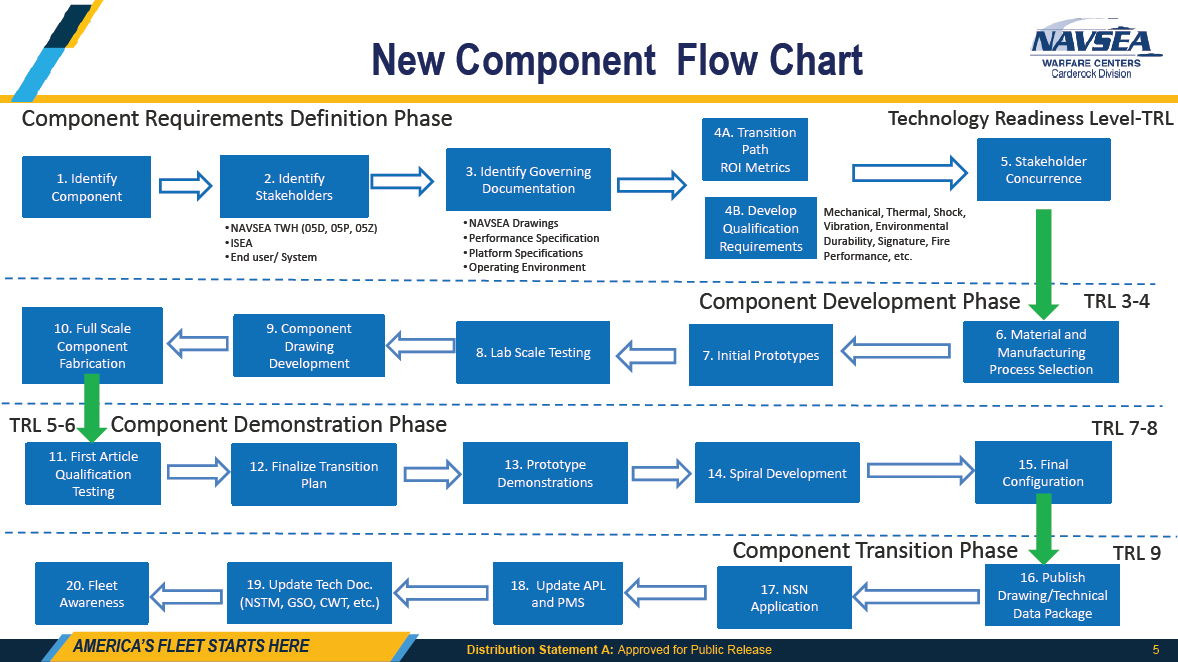
SOURCE: M. Foley, W. Manning, and B. Newsome, U.S. Navy, presentation to the committee, January 15, 2025.
Specific Naval Experiences with FRPs
Over the past 50 years, FRPs, or composite materials, have found their way into use on naval vessels.7 The use of composite materials by the U.S. Navy addresses specific needs that provide benefits over metallic materials. Whereas steel and other metallic materials, in use since the late 1800s, offer beneficial characteristics including high strength, good ductility, the ability to join (weld) large panels, corrosion resistance, good formability, and relatively low cost, FRP composite materials offer weight reduction, improved corrosion resistance, lower life-cycle costs, acoustic benefits or transparency, and the ability to be form fitted into complex structures.8 In most cases there is a significant initial cost difference between the use of metallics and composite materials; therefore, composite materials must “earn” their way onto a naval platform. Current and past applications of composites on ships include bow domes, deckhouses, and various large arrays, along with smaller components including catwalks, drain and vent cover plates, louvers, and many others.9 FRP structures are also utilized on the Navy’s shoreside installations, including frequently serving as docking camels for aircraft carriers and submarines due to their ability to absorb energy from impacts.10 For a snapshot of composite projects in naval service, see Figure 4-5.
FRP components have been featured on some of the U.S. Navy’s most advanced ships, including as bow domes for nuclear submarines in the 1950s and 1960s (Mouritz et al. 2001). These submarine bow domes are large, water filled (and therefore not required to meet the rigorous pressure strength standards of the hull), and continuously submerged, making their environments and requirements similar to much of USACE’s navigation and flood management system. FRP continues to be used on all current U.S. Navy submarines in bow dome applications
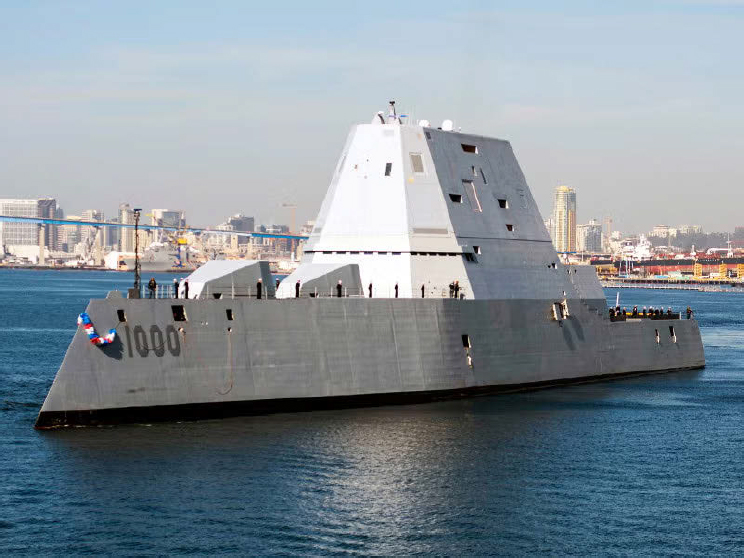
For the 21st-century fleet, composites form the large arrays on the San Antonio–class amphibious transport dock and the deckhouse on the Zumwalt-class stealth destroyer (see Figure 4-6) (LeGault 2010). The Navy identified the advantages of composites for submarines in the 2010s, when the first iterations of the Virginia-class attack submarines were over budget and needed modifications that could reduce costs without sacrificing lethality or effectiveness (Gardiner 2012). In addition to their use for bow domes, key composite-based ship components, such as the tail cone and sail cusp,
___________________
7 M. Foley, W. Manning, and B. Newsome, U.S. Navy, presentation to the committee, January 15, 2025.
8 Ibid.
9 Ibid.
10 S. Reeve and C. Sechler, Creative Composites Group, presentation to the committee, October 20, 2024.

SOURCE: Neşer 2017. CC BY-NC-ND 4.0.
replaced traditional metals that were heavier, more labor intensive to install, and required more frequent maintenance. The Navy concluded that these improvements were such a success that they will likely incorporate similar advanced composites into the design of their next major submarine upgrade program, including the Columbia-class ballistic missile ships scheduled to enter service in the 2030s (Shelbourne 2024).
USACE EXPERIENCE AND OPPORTUNITIES
In the early 1990s, as U.S. academic institutions, government agencies, and private organizations began recognizing the potential of polymer composites in infrastructure applications, USACE launched an initiative to explore FRP materials for marine and waterfront applications. This effort was conducted under the Construction Productivity Advancement Research (CPAR) program and involved collaboration with Rutgers University and the then-active Composite Institute, which represented composite manufacturers, fiber and polymer suppliers, and various government bodies. The CPAR program in the 1990s focused on evaluating construction materials made from recycled waste plastics and included testing and field demonstrations of fenders (see Figure 4-7), load-bearing piles, and bulkhead sheet piles made from both thermoset and thermoplastic composites (types of FRPs).
SOURCE: U.S. Navy 2020.
A summary of the program is provided by Lampo and Nosker (1997) and Lampo et al. (1998).
USACE continued research on recycled thermoplastic materials throughout the early 2000s, leading to several demonstration projects, most notably constructing three short-span bridges in 2008 at Camp Mackall, North Carolina (Lampo et al. 2017). Figure 4-8 shows one of these bridges being field tested with the M1 Abrams battle tank.
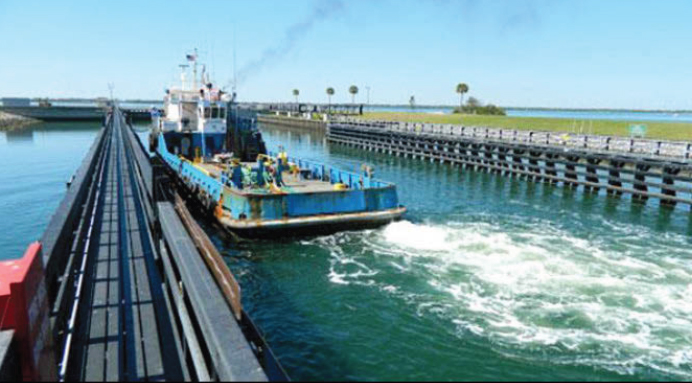
In 2003, the first lock featuring an FRP chamber wall with FRP piling and fendering was constructed in the Jacksonville District (see Figure 4-9).11
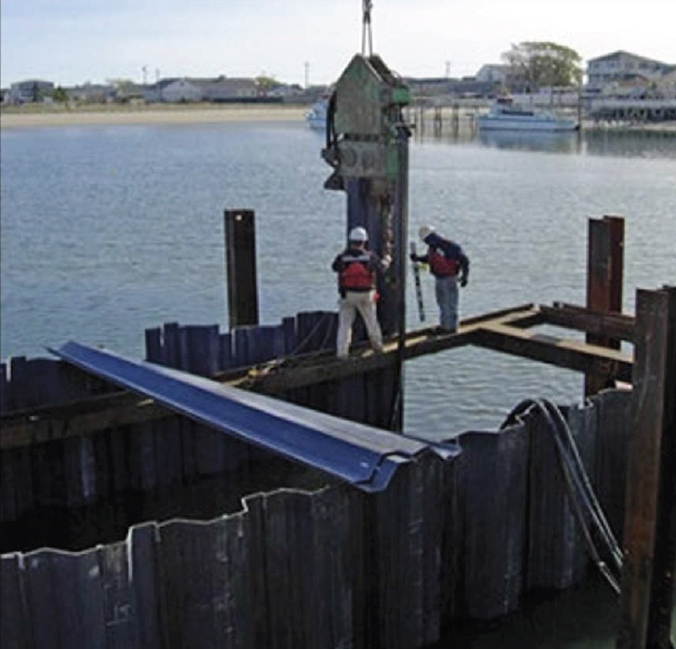
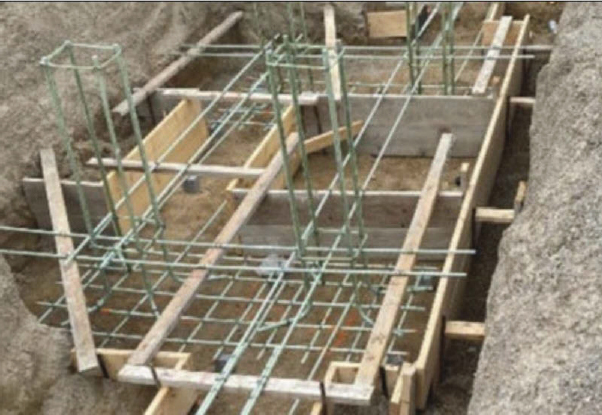
Other USACE applications of FRP composite materials included the deployment of pultruded sheet piles in waterfront facilities (see Figure 4-10) and the use of polymer composite rebars for reinforcing concrete structures12 (see Figure 4-11).
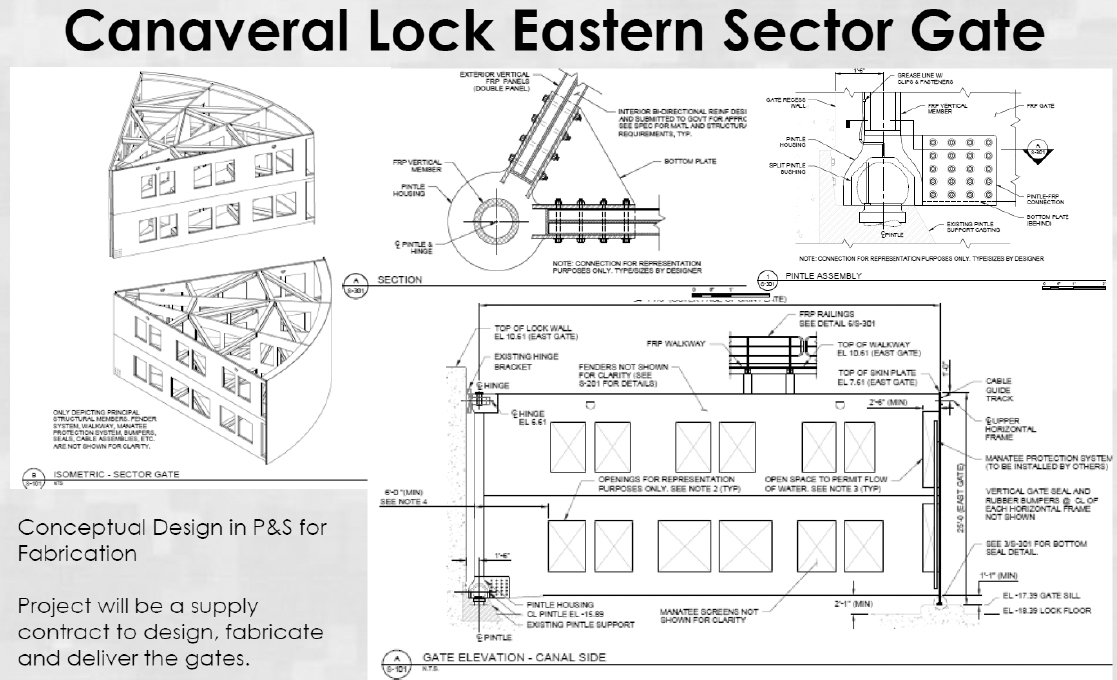
USACE’s Jacksonville District is currently in the process of replacing a steel sector gate from the 1960s with FRP (schematics in Figure 4-12),
___________________
11 USACE presentation to the committee, January 15, 2025.
12 USACE presentation to the committee, March 10, 2025.

SOURCE: Lampo et al. 1998.

SOURCE: Lampo et al. 2017.
SOURCE: https://www.saj.usace.army.mil/CanaveralLock.
SOURCE: Courtesy of Eric Johnson, USACE.
SOURCE: Courtesy of Eric Johnson, USACE.
choosing FRP because of its alleged field life of 100 years13 and limited deterioration rates from UV exposure.
As of January 2025, USACE had completed six Civil Works infrastructure projects involving the use of FRP composite materials to replace sector and dam gates, repair navigation locks, and more, with an additional 68 FRP-related projects in some form of development.14
Opportunities and Associated Knowledge Gaps
In 2024, USACE issued two key documents related to FRP composite materials: ERDC SR-24-3 (Baekey et al. 2024) and Engineering and Construction Bulletin 2024-08 (ERDC 2024). As part of its research roadmap, ERDC SR-24-3 (Baekey et al. 2024) presents a decision framework for (1) identifying civil works components suitable for replacement with FRP composites and (2) prioritizing research to support the adoption of these materials. Figure 4-13, from the research roadmap (Baekey et al. 2024), presents a portion of the findings that identified the component types recommended for consideration in designs by USACE units, using FRP materials, along with their respective counts.
___________________
13 The 100-year lifespan claim is not based on field data, because these structures have only been deployed in waterways since the 1990s.
14 USACE presentation to the committee, January 20, 2025.
SOURCE: USACE 2025.

SOURCE: Baekey et al. 2024.
The Engineering and Construction Bulletin 2024-08, on the other hand, provides interim policy and guidance for designing FRP hydraulic composite structures such as lock gates, roller gates, and spillway gates. USACE’s advocacy for the use of composite materials in hydraulic structures is based on the presumption that these materials “offer a significantly low-maintenance solution for a 100-year service life.” However, the absence of comprehensive data on the performance of composite materials adopted and used by USACE for hydraulic structures since the 1990s presents a serious limitation to substantiating this claim. The limited availability of performance data for FRP deployed in water resource applications speaks to the need for long-term monitoring.
SUMMARY
- USACE has been investigating and applying FRP composite materials for almost 30 years, yet FRP use remains limited for USACE. There is no deliberate monitoring system to assess the long-term performance of FRP that has been deployed by USACE.
- FRP has properties and performance characteristics desirable relative to some other materials, including being lightweight and corrosion resistant and the ability to be tailored to specific requirements.
- Other potential benefits of FRP are a reduction of initial and life-cycle costs and shortened construction time.
- The U.S. Navy has significant experience with use of FRP materials in marine environments that could benefit USACE.
- USACE developed a Composite Material Applications and Research Roadmap for water resources infrastructure.
- USACE developed Engineering and Construction Bulletin 2024-08, which provides interim policy and guidance that encourages FRP consideration for use in hydraulic component applications.
REFERENCES
AASHTO (American Association of State Highway and Transportation Officials). 2023. Guide Specifications for Design of Bonded FRP Systems for Repair and Strengthening of Concrete Bridge Elements, 2nd ed.
AASHTO. 2025. LRFD Guide Specifications for the Design of FRP Pedestrian Bridges, 2nd ed.
ACI (American Concrete Institute). 2024. “Strengthening Structural Concrete with Fiber-Reinforced Polymer (FRP) Systems—Code Requirements and Commentary” (ACI CODE-440.13-24).
ASCE (American Society of Civil Engineers). 2023. “Standard for Load Resistance Factor Design (LRFD) of Pultruded Fiber Reinforced Polymer (FRP) Structures” (ASCE/SEI 74-23).
ASM International. 2026. ASM Handbook, Volume 21: Composites. Edited by N. J. Gianaris and J. D. Russell. Materials Park, OH: ASM International. https://doi.org/10.31399/asm.hb.v21.a0007104.
AWWA (American Water Works Association). 2024. “Renewal and Strengthening of Prestressed Concrete Cylinder Pipe (PCCP)” (C305-24 CFPR).
Baekey, K. B., M. J. Hanowsky, T. M. Less, W. J. Lillycrop, P. B. Stynoski, M. D. Smith, P. J. Plews, A. Loff, and C. Parr. 2024. Composite Material Applications and Research Roadmap for US Army Corps of Engineers Civil Works (ERDC SR-24-3). Engineer Research and Development Center, U.S. Army Corps of Engineers.
Castelo, A., J. R. Correia, S. Cabral-Fonseca, and J. De Brito. 2020. “In-Service Performance of Fiber-Reinforced Polymer Constructions Used in Water and Sewage Treatment Plants.” Journal of Performance of Constructed Facilities 34(4):04020059.
Drygala, I. J., J. M. Dulińska, and N. Nisticò. 2023. “Vibration Serviceability of the Aberfeldy Footbridge Under Various Human-Induced Loadings.” Materials 16(7):2890.
ERDC (Engineer Research and Development Center). 2024. “Design of Fiber Reinforced Polymer Hydraulic Composite Structures” (Engineering and Construction Bulletin 2024-08). July 31.
Fuller, R. B. 1954. “Building Construction.” U.S. Patent No. 2682235.
Gardiner, G. 2012. “Composite Solutions: Cutting Cost of Nuclear-Powered Subs.” Composites World. February 1. https://www.compositesworld.com/articles/composite-solutions-cutting-cost-of-nuclear-powered-subs.
Hooks, J., J. Siebels, F. Seible, J. Busel, M. Cress, C. H. Hu, F. Isley, G. Ma, E. Munley, and J. Potter. 1997. “FHWA Study Tour for Advanced Composites in Bridges in Europe and Japan.” Federal Highway Administration, U.S. Department of Transportation. https://rosap.ntl.bts.gov/view/dot/15544/dot_15544_DS1.pdf.
Lampo, R., and T. Nosker. 1997. Construction Productivity Advancement Research (CPAR) Program: Development and Testing of Plastic Lumber Materials for Construction Applications (Final Report). U.S. Army Corps of Engineers Construction Engineering Research Laboratory, Champaign, IL.
Lampo, R., T. J. Nosker, J. Busel, A. Maher, P. K. Dutta, R. Odello, and D. Barno. 1998. “Construction Productivity Advancement Research (CPAR) Program: Development and Demonstration of FRP Composite Fender, Loadbearing, and Sheet Piling Systems” (USACERL TR 98/123). U.S. Army Corps of Engineers Construction Engineering Research Laboratory.
Lampo, R., S. B. Nemeth, T. J. Nosker, G. Nagle, K. Palutke, and L. Clark. 2017. Demonstration of Thermoplastic Composite I-Beam Design Bridge at Camp Mackall, NC: Final Report on Projects FY08-16 and FY09-31. Construction Engineering Research Laboratory, U.S. Army Engineer Research and Development Center, Champaign, IL.
LeGault, M. R. 2010. “DDG-1000 Zumwalt: Stealth Warship.” Composites World. January 18. https://www.compositesworld.com/articles/ddg-1000-zumwalt-stealth-warship.
Los Angeles Times. 1957. “1,000,000th Visitor Sees House of Future.” 76(Part 6), October 27.
Mouritz, A. P., E. Gellert, P. Burchill, and K. Challis. 2001. “Review of Advanced Composite Structures for Naval Ships and Submarines.” Composite Structures 53(1):21–42.
NavyLookout. 2024. “Constellation-Class: The US Navy’s Struggle to Forge a New Generation of Frigates.” September 4. https://www.navylookout.com/constellation-class-the-us-navys-struggle-to-forge-a-new-generation-of-frigates.
Neşer, G. 2017. “Polymer Based Composites in Marine Use: History and Future Trends. Procedia Engineering 194:19–24.
Plecnik, J. M., and S. H. Ahmad. 1989. Transfer of Composite Technology to Design and Construction of Bridges (FHWA/CSULB SL 89-9-7). Federal Highway Administration, U.S. Department of Transportation.
Rosato, D., D. P. Di Mattia, and D. V. Rosato. 1991. Designing with Plastics and Composites: A Handbook. New York: Van Nostrand Reinhold.
Shelbourne, M. 2024. “Navy Promises First Columbia-Class Boat Will ‘Be on Patrol in 2030.’” USNI News (blog). November 15. https://news.usni.org/2024/11/15/navy-promises-first-columbia-class-boat-will-be-on-patrol-in-2030.
Slayter, S. G. 1938. “Method and Apparatus for Making Glass Wool.” U.S. Patent No. 2,133,235.
Trevithick, J. 2024. “San Antonio Class Looks Very Different After Shedding Its Stealthy Masts.” The War Zone. February 6. https://www.twz.com/sea/san-antonio-class-looks-very-different-after-shedding-its-stealthy-masts.
U.S. Navy. 2020. “Navy Accepts Delivery of Destroyer USS Zumwalt.” April 27. https://www.pacom.mil/Media/News/Spotlight/Article/2166902/navy-accepts-delivery-of-destroyer-uss-zumwalt.
USACE (U.S. Army Corps of Engineers). 2025. Contract Opportunity: “Industry Day—Canaveral Fiber Reinforced Polymer (FRP) Sector Gate.” https://sam.gov/opp/dfb89c8299874ceda7f053352186f1f9/view.
Zureick, A. 2026. “Strengthening Reinforced Concrete Structures with Externally Bonded Fiber-Reinforced Polymer Composite Systems.” In ASM Handbook, Volume 21: Composites, edited by N. J. Gianaris and J. D. Russell. Materials Park, OH: ASM International. https://doi.org/10.31399/asm.hb.v21.a0007104.
This page intentionally left blank.


