Health and Safety Impacts of Aircraft Cabin Temperatures (2026)
Chapter: 1 Introduction
1
Introduction
Airline travel is recognized as one of the safest modes of transportation per passenger-mile traveled (NSC, 2026). Nevertheless, the enclosed environment of an airplane cabin can expose passengers and flight attendants to a range of environmental stressors. Among them, temperature extremes—whether excessive heat during boarding and ground delays or uncomfortably cold conditions during flight—have the potential to pose health and safety risks for cabin occupants. Extended exposure to high or low cabin temperatures may contribute to a range of physiological, cognitive, and behavioral effects and, for flight attendants, may interfere with the performance of safety-critical duties. Because airline passengers and cabin crew have a limited ability to alter or escape the cabin environment, understanding and managing temperature-related risks is an essential aspect of maintaining safe air travel. Yet there are no regulations that define temperature requirements for passenger cabins during normal (non-emergency) operations. In response to concerns about the safety of temperature conditions in passenger cabins, the Federal Aviation Administration (FAA), as directed by Congress, requested the National Academies of Sciences, Engineering, and Medicine (the National Academies) to evaluate the potential health and safety impacts of cabin temperatures. This report presents the findings, conclusions, and recommendations of the National Academies committee convened to conduct the requested study.
This introductory chapter begins with background on trends in U.S. air travel and the evolving profiles of airline passengers and cabin crew—factors that may help explain whether cabin temperature extremes are becoming more common and problematic for cabin occupants. The discussion
then turns to factors that influence thermal comfort in the airplane cabin. Next, the regulatory context for the management of thermal exposure in aircraft is discussed, including the implications of shared authorities and responsibilities for protecting passengers and crewmembers.1 The chapter concludes by outlining the study’s origin, scope, and approach as well as the organization of the report.
STUDY CONTEXT
Trends in Airline Travel and Implications for Cabin Temperature Exposures
Airline travel in the United States has become increasingly accessible, affordable, and efficiency-driven over time (A4A, 2025). These changes have led to notable increases in passenger volumes, flight load factors (percentage of seats occupied), and cabin seating densities. Such developments may have contributed to incidents of illness, anxiety, and discomfort among airline passengers and cabin crew, particularly related to cabin air temperature conditions.
Annual U.S. domestic and international airline passenger enplanements (i.e., boardings) increased from approximately 705 million in 2004 to 983 million in 2024 (see Table 1-1).2 Notably, the growth in enplanements outpaced the growth in available seats, as airlines have become more adept at filling seats through yield management and dynamic pricing strategies. While industry average load factor3 has remained relatively stable at just over 80 percent since 2010 notwithstanding a decline during the COVID19 pandemic4 (see Figure 1-1), to accommodate more passengers, airlines are increasingly adding seats to economy cabins by reducing the spacing between seat rows (i.e., pitch) (NASEM, 2025). For passengers, the reduced seat spacing and increased numbers of passengers can make airplane cabins feel more crowded. The greater number of occupants also results in higher metabolic heat generation, which can significantly impact cabin temperatures (see Chapter 2). Another consequence is that cooling equipment
___________________
1 The term “crewmembers” includes cabin crewmembers (flight attendants) and flight crewmembers (pilots, flight engineers, and flight navigators). Throughout this report, “crewmembers,” is used without a descriptor when intended to be inclusive of both cabin and flight crewmembers.
2 Passenger enplanement data are available from the FAA at https://www.faa.gov/airports/planning_capacity/passenger_allcargo_stats/passenger (accessed March 10, 2026).
3 Load factor is a measure of the percentage of available seats filled with paying passengers (IATA, 2024).
4 Load factor data are available from the DOT Bureau of Transportation Statistics at https://www.transtats.bts.gov/Data_Elements.aspx?Data=4 (accessed March 5, 2026).
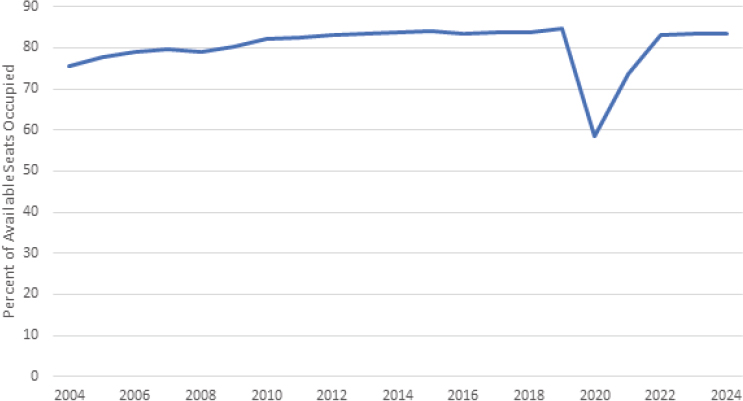
NOTE: The significant dip in 2020–2022 is attributed to the COVID-19 pandemic.
SOURCE: Data from BTS (2026).
failures, especially during delays, can have a more pronounced effect on cabin temperature, leading to heat-related incidents in the confined space of an aircraft cabin. Media reports have described incidents where passengers and flight attendants experienced heat-related illness, anxiety, and discomfort when required to remain in overheated cabins during ground delays (Cook, 2017; Fingert, 2025; Grant and Sweeney, 2023). Data from the U.S. Department of Transportation (DOT) indicate that on-time departures and arrivals have remained near 80 percent, with a brief increase during the COVID-19 pandemic and then a return to pre-pandemic levels (DOT, 2024a). However, in the 12 months ending in July 2025, delays of more than 1 hour affected 717 flights (DOT, 2025b). DOT reports that the common causes of departure delays in that 1-year period included aircraft arriving late (33 percent), air carrier delays (issues within the air carriers’ area of responsibility, such as maintenance or crew problems) (29 percent), and national aviation system delays (26 percent). Extreme weather was identified as the cause of less than 5 percent of delays (DOT, 2025b).
As seat spacing has been reduced and numbers of passengers on flights have been increasing, the geographic distribution of the nation’s air traffic activity has also shifted in response to regional population changes and to airlines’ adjustments to the locations of hub airports for their hub-and-spoke operations. As shown in Table 1-1, from 2004 to 2024, all FAA
TABLE 1-1 Changes in Passenger Enplanements by FAA Region, 2004 to 2024
| FAA region | Enplanements 2004 | Percent of total | Enplanements 2024 | Percent of total | Percent change 2004–2024 |
|---|---|---|---|---|---|
| Northwest Mountains | 58,189,121 | 8.25% | 103,531,520 | 10.5% | 77.9% |
| Southwest | 77,953,635 | 11.1% | 121,193,463 | 12.3% | 55.5% |
| Southern | 161,265,445 | 22.9% | 247,150,819 | 25.2% | 53.3% |
| Eastern | 111,087,711 | 15.8% | 149,664,716 | 15.2% | 34.7% |
| New England | 23,088,148 | 3.3% | 30,426,788 | 3.1% | 31.8% |
| Western Pacific | 146,170,006 | 20.7% | 192,142,900 | 19.6% | 31.5% |
| Central | 16,349,068 | 2.3% | 20,845,461 | 2.1% | 27.5% |
| Alaskan | 4,513,933 | 0.6% | 5,107,406 | 0.5% | 13.1% |
| Great Lakes | 106,689,596 | 15.1% | 112,541,917 | 11.5% | 5.5% |
| Total | 705,306,663 | 100.0% | 982,604,990 | 100.0% | 39.3% |
SOURCE: FAA (2025a, 2026).
regions of the United States (see Figure 1-2) experienced increases in passenger enplanements. However, some of the highest percentage growth occurred in the western and southern regions. Over this 20-year period, the absolute number of annual enplanements in the Southeast, Southwest, and Pacific West regions increased by more than 175 million. Some of the largest and fastest-growing hub airports are located in southern and western cities with long, hot (and, in some cases, humid) summers, including Las Vegas, Phoenix, Miami, Orlando, and Houston. The increase in flights and passengers traveling through these and other airports in the country’s southern latitudes may contribute to a higher incidence of elevated cabin temperatures during ground operations, given the correlation between ambient temperatures and cabin temperatures during this phase (Nicholls and Vink, 2025). Additionally, changing U.S. temperature norms and increasing frequency of extreme temperature events—both nationally and regionally (CDC, 2024; Shenoy et al., 2022)—may further heighten concerns about high cabin temperatures. Given these changes, combined with the shifting air travel trends discussed above, a fresh look at the adequacy of systems and procedures for thermal control in aircraft cabins seems timely.
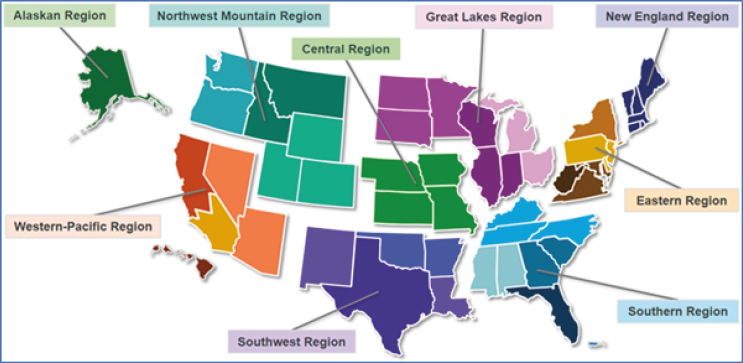
SOURCE: FAA (2022a).
Passenger and Flight Attendant Profiles and Implications for Temperature Vulnerability
Another factor influencing sensitivity to cabin temperatures is the demographic (particularly age) and health characteristics of air travelers and cabin crew. While there are no comprehensive data on the demographic, health, and anthropometric profiles of U.S. air travelers specifically, trends in the general population would suggest a heterogeneous passenger population. According to U.S. Census Bureau data, the U.S. population is aging, with the share of individuals age 65 and older increasing from 12.4 percent in 2004 to 18.0 percent in 2024 (U.S. Census Bureau, 2025). As discussed further in Chapter 3, older adults have a reduced ability to regulate temperature (Van Someren, 2007) and are more likely to have underlying health conditions (e.g., diabetes, cardiovascular disease) or disabilities or to be prescribed medications that interfere with temperature regulation. Thus, if the age distribution of air travelers is skewing older, increasing numbers of cabin occupants may experience discomfort or more serious health effects from exposure to fluctuating and extreme cabin temperatures.
On the opposite end of the age spectrum, the FAA estimates that approximately 1 percent of all passengers are children younger than age 2, although exact numbers are not available (NTSB, 2010). Extreme cabin temperatures can create unsafe conditions for infants and young children (Cook, 2017). As discussed further in Chapter 3, infants are more susceptible to extremes of temperature than adults, and for those children under 2 years old who are held on an adult’s lap, body contact with the caregiver
can cause the child to overheat more quickly, as both are producing metabolic heat.
Unlike the case with the flying public, some demographic data are available for flight attendants. Occupational data from 2023 show that the U.S. flight attendant workforce totaled 111,801 individuals, with an average age of 45.8 years (Data USA, 2023). The largest portions of the workforce were concentrated in the 55–59 age group (16,759 individuals, or 15 percent), followed by ages 50–54 (14,332, or 13 percent). Together, these two age groups accounted for about 28 percent of flight attendants. This demographic profile reflects an aging workforce (Figure 1-3).
Factors Affecting Thermal Comfort in the Cabin Environment
The thermal environment—one of several elements that affect the health, safety, and comfort of the aircraft cabin environment (see Figure 1-4)—is influenced by temperature, humidity, and air velocity (Bezold, 2021). The aircraft’s environmental control system (ECS) is the primary system for controlling cabin temperature and cooling technical equipment, although external preconditioned air (PCA) units may be used for thermal control during ground operations (NASEM, 2019). PCA units are ground-based sources of conditioned air that, for the purposes of this report, include both fixed (e.g., jet bridge–attached units) and mobile units (e.g., ground carts). These systems are described in greater detail in Chapter 2.
The increasing average age of the U.S. commercial aircraft fleet reflects a global trend that has continued since 2019 and is expected to persist (IATA, 2025), and it presents additional challenges for managing cabin temperatures. Newer aircraft are equipped with smart ECS that can adjust airflow to match occupant density. These advanced ECS are specifically designed to handle hot-day ground operations and high seating-density configurations. In contrast, older aircraft—often with fixed-capacity, non-adaptable ECS—may be more susceptible to overheating, especially at high passenger loads.
As depicted in Figure 1-5, multiple stakeholders play a role in creating the conditions necessary for optimal thermal comfort and in preventing unsafe cabin temperatures. Manufacturers are responsible for ensuring that aircraft design and system performance adhere to regulations and for providing instructions to airlines in the form of maintenance and pilot manuals to assist operators with ensuring that aircraft continue to meet airworthiness requirements. Airlines are responsible for the operation and maintenance of the aircraft systems involved in thermal control. However, responsibility for ground-based air conditioning systems varies across airports and is often shared among airlines, airport authorities, and their
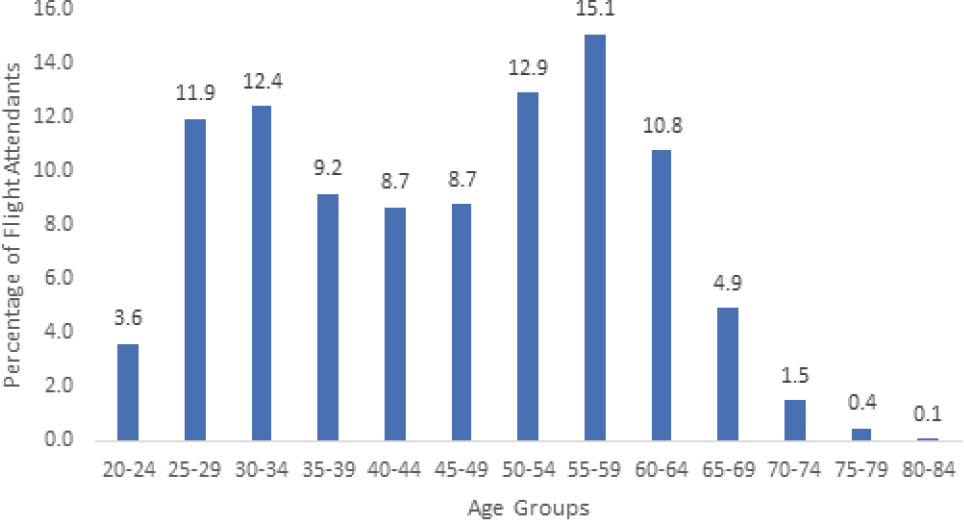
SOURCE: Data from Data USA (2023). GNU Affero General Public License, Version 3, 19 November 2007.

NOTE: Cabin occupant load/density, not represented on this figure, will affect cabin thermal environment, among other cabin conditions.
SOURCE: Adapted from Bezold (2021). © Airbus SAS 2021. All rights reserved.

NOTE: PCA = preconditioned air; SOPs = standard operating procedures.
contractors. This complexity adds to the challenges of addressing risks from thermal exposures in aircraft settings.
Regulatory Context for Managing Thermal Exposures in Aircraft Settings
An assessment of the health and safety impacts of aircraft cabin temperature must be placed within the context of the regulatory authorities responsible for the oversight of cabin occupant health and safety. The Federal Aviation Act of 1958 grants the FAA regulatory authority over the operation of civil aircraft in the United States.5 As a result, aviation safety falls primarily under the oversight of the FAA (NRC, 2002). While the FAA maintains primary regulatory authority over aviation safety, other federal entities oversee discrete aspects of the aircraft cabin environment. Specifically, the DOT’s Office of Aviation Consumer Protection (OACP) ensures that carriers meet their statutory obligation to provide a comfortable cabin temperature under 49 U.S.C. § 42301,6 and the Occupational Safety and Health Administration (OSHA) exercises limited jurisdiction over cabin crew workplace safety. This results in a complex regulatory oversight structure. The following overview summarizes current regulatory protections related to the safety and health of airplane cabin occupants.
FAA and DOT Regulatory Roles and Actions Related to Ensuring a Safe and Healthy Cabin Environment
Table 1-2 describes how the statutory and regulatory authorities for the protection of air travelers are divided between the FAA and the DOT’s OACP. The FAA is authorized by 49 U.S.C. § 40101(d) (safety considerations of public interest) and 49 U.S.C. § 44701(a) (promoting safety of civil aircraft) to protect the safety of air travel, which includes the health and safety of crewmembers and passengers. In exercising these authorities, the FAA may issue regulations and guidance. Examples of FAA regulations related to the health and safety of cabin conditions include those addressing carbon monoxide, carbon dioxide, ozone levels, cabin pressure, and—most relevant to the thermal environment—ventilation requirements (NRC, 2002). The standards for the design of aircraft ventilation systems are described in 14 CFR § 25.831 and are detailed further in Chapter 2. Notably, temperature requirements are specified only in the context of
___________________
5 P.L. 85-726. Federal Aviation Act of 1958 (85th Cong.), August 23, 1958.
6 See FAA Extension, Safety and Security Act of 2016, PL 114-190, § 2308, July 15, 2016, 130 Stat 615.
TABLE 1-2 OACP and FAA Authorities Related to Safety and Health of Cabin Occupants
| Domain | OACP authority | FAA authority |
|---|---|---|
| Regulatory Authority | Economic and consumer protection regulations and policy | Safety and operational regulations |
| Health and Safety Standards | No authority to mandate or enforce health or safety rules or standards | Prescribes minimum safety standards for air carriers and enforces safety rules |
| Passenger Protections | Enforces consumer protections (e.g., failure to adhere to tarmac delay plans) | Limited to safety-related concerns |
| Enforcement Power | Enforces consumer protection statutes and regulations | Enforces violations of safety statutes and regulations |
SOURCE: Adapted from presentation by Tvaryanas, July 10, 2025.
improbable failure conditions.7 While voluntary industry standards for cabin thermal conditions exist, such as those from the American National Standards Institute/American Society of Heating, Refrigerating and Air-Conditioning Engineers [ANSI/ASHRAE] (see Chapter 2), FAA regulations do not specify cabin temperature limits for normal operating conditions. Note that the regulations that address aircraft ventilation systems are design limits, and compliance is determined by analysis at the time of aircraft certification. Although there is currently not a requirement for onboard monitoring, robust air carrier maintenance programs help to ensure that the cabin requirements continue to be met during operation.
In 2003 the FAA published Advisory Circular (AC) 121-35, which provides guidance to air carriers regarding procedures during ground operations for providing ventilation and the use of ground-based air conditioning as well as the management of passengers in the event of cabin ventilation failure or shutdown. The AC recommends, but does not require, the removal of passengers from an aircraft no later than 30 minutes following
___________________
7 The probability of failure conditions is defined in Title 14 CFR, part 25, § 25.4(b) in terms of the likelihood of occurrence in the operational life of an individual airplane and the likelihood of occurrence in the total operational life of all airplanes of a given type. For example, a probable failure condition would be “anticipated to occur one or more times during the entire operational life of each airplane of a given type,” whereas a remote failure condition is one “that is not anticipated to occur to each airplane of a given type during its operational life but which may occur several times during the total operational life of a number of airplanes of a given type.”
a ventilation failure or shutdown on the ground (FAA, 2003).8 When making the decision to deplane, the FAA advises air carriers to consider both the adverse health effects of time spent in the cabin on the ground without ventilation and the operational and safety considerations regarding deplaning passengers.
In addition to regulations and guidance focused on specific safety hazards, the FAA also addresses aviation safety by requiring aircraft operators to have an FAA-approved safety management system (SMS), which allows operators to implement tailored systems for identifying hazards and mitigating risks (FAA, 2024). SMSs are discussed further in Chapter 6.
DOT’s OACP has broad authority related to aviation consumer protection, including the prevention of unfair and deceptive practices and enforcement of civil rights under 49 U.S.C. § 41712 and § 41705. OACP receives and investigates passenger complaints related to air travel and uses these complaints to identify trends or areas of concern. When warranted by the results of an investigation, OACP may bring enforcement action against airlines and ticket agents for violations of aviation consumer protection regulations (DOT, 2022). The committee acknowledges, however, that the health and safety of passengers is not a primary focus of OACP and it has no authority to mandate or enforce health or safety rules or standards.
With respect to cabin-temperature-related health and safety concerns, OACP enforces adherence to tarmac delay9 contingency plans, which air carriers are required to adopt under federal law.10 A tarmac delay, as defined in 14 CFR § 259.3, is the period of time when an aircraft is on the ground with passengers and the passengers have no opportunity to deplane.11 Under 49 U.S.C. § 42301, as amended by Section 415 of the FAA Modernization and Reform Act of 2012 (P.L. 112-95),12 air carriers are required to submit to DOT an emergency contingency plan for tarmac delays. These plans must describe how the carrier will provide a comfortable cabin temperature, adequate food, and potable water when a flight’s
___________________
8 An AC is not mandatory or regulatory in nature. It does not constitute a regulation. Rather an AC describes acceptable means, but not the only ones, for demonstrating compliance with a regulation. The contents of an AC do not have the force and effect of law and are not meant to be binding. An AC is intended only to provide clarity regarding requirements under the law or an agency’s policies.
9 When discussing DOT regulations, the committee refers to “tarmac delays” for consistency with the regulatory language but otherwise uses the term “ground delay” throughout this report.
10 49 U.S.C. § 42301.
11 49 U.S.C. § 42301(i)(3) defines a tarmac delay as the period during which passengers are on board an aircraft on the tarmac (A) awaiting takeoff after the aircraft doors have been closed or after passengers have been boarded if the passengers have not been advised they are free to deplane; or (B) awaiting deplaning after the aircraft has landed.
12 Available at https://www.congress.gov/bill/112th-congress/house-bill/658/text.
departure or passenger disembarkation is delayed.13 Plans must also address passenger deplaning rights (within 3 hours for domestic flights and 4 hours for international flights), timely updates about the delay, and access to medical treatment for passengers.14 OACP further regulates and enforces these requirements through the Tarmac Delay Rule, 14 CFR § 259.4.
In its response to a committee request for information, OACP indicated that it reviews and investigates all written descriptions of tarmac delay incidents submitted by covered operating carriers pursuant to 49 U.S.C. § 42301(h) and 14 CFR § 259.4(g) and that these investigations include assessing whether the carrier maintained a comfortable cabin temperature during the incident through a totality of the circumstances evidentiary standard (DOT, 2025a). However, a 2014 DOT Inspector General report found that DOT had not defined “comfortable cabin temperature,” making the requirement difficult to enforce; the report recommended that DOT “define comfortable cabin temperature and include the requirement in DOT regulations” (DOT, 2014, p. 12). Without such requirements, the report stated, “DOT cannot be sure that passengers are being afforded the relief intended during lengthy flight delays” (p. 3), and, as of this writing, this recommendation has not been implemented.
In a 2018 consent order from DOT concerning violations by Allegiant Air, OACP explained that it “considered written passenger complaints, crewmember statements, temperature readings, reported medical incidents, operational considerations such as the use of external cooling units or air carts during the delays, and decisions to deplane passengers” to determine whether a comfortable cabin temperature violation occurred (DOT, 2018). This order was referenced by OACP for industry to consider in determining the meaning of “comfortable cabin temperature” (DOT, 2025a).
FAA and OSHA Regulatory Roles Related to Occupational Safety and Health Protections for Flight Attendants
Flight attendants play a critical role in ensuring the safety and health of air travelers. The aircraft cabin is a unique work environment where flight attendants encounter a range of environmental exposures, work irregular hours, and face significant physical demands (e.g., standing and walking for long periods in confined spaces, moving and securing heavy beverage carts,
___________________
13 DOT did not include the comfortable cabin requirement in its final regulation but enforces it pursuant to 49 USC § 42301.
14 See U.S.C. § 42301; see also 14 CFR § 259.4.
maintaining balance during turbulence). Before becoming certificated,15 flight attendants must complete intensive initial training on a wide range of subjects, including emergency procedures (such as evacuations and firefighting), passenger safety, first aid, and cabin decompression scenarios. After completing an FAA-approved initial training course, flight attendants are required to complete regular recurrent training to maintain proficiency and update their knowledge and skills. While passenger safety and security are flight attendants’ highest priority, their own health and safety must also be safeguarded to ensure they can fulfill safety-critical duties during all phases of flight.
The Occupational Safety and Health Act of 1970 (“OSH Act”)16 established OSHA as the primary U.S. federal agency responsible for occupational safety and health for U.S. workers. However, the OSH Act preempts OSHA from regulating the working conditions for workers over whom another federal agency exercises statutory authority to regulate occupational safety and health. In the case of cockpit and cabin crews operating in civil aircraft, the FAA asserted its jurisdiction in 1975 (40 FR 29114), stating that its authority to promote the safety of civil aircraft operations “completely encompass[ed] the safety and health aspects of the work environments of aircraft crewmembers.” As a result, “OSHA was preempted from regulating the working conditions of aircraft cabin crew members onboard aircraft in operation.”17
Consequently, most OSHA standards do not apply to flight attendants while they are working in an aircraft in operation (defined as the period of arrival of the first cabin crewmember on the aircraft to the departure of the last cabin crewmember after completion of the flight) (FAA, 2013). However, in 2013 the then FAA Administrator published a policy statement clarifying that the FAA had not exercised statutory authority to cover all working conditions affecting cabin crewmembers and that OSHA could apply some of its occupational safety and health standards (FAA, 2013). In 2014, OSHA and the FAA entered into a memorandum of understanding that allows a limited number of OSHA standards to be enforced for cabin crewmembers, including standards on hazard communication, bloodborne pathogen exposure, and occupational noise exposure (FAA and OSHA, 2014). OSHA does not have a standard for either heat or cold in the work environment, however. Finally, while OSHA’s authority is preempted from
___________________
15 In response to the 2003 Vision 100—Century of Aviation Reauthorization Act, FAA implemented a certification process to ensure no person serves as a flight attendant aboard an aircraft of an air carrier unless that individual holds a Certificate Of Demonstrated Proficiency issued by the FAA (FAA, 2008).
16 P.L. 91-596. Occupational Safety and Health Act (91st Cong.), April 28, 1971. 84 Stat. 1590.
17 84 FR 68947.
regulating occupational safety and health, the agency retains the authority to enforce its regulations on recordkeeping and access to employee exposure and medical records.18 The applicability of this recordkeeping requirement, though limited, is relevant as OSHA records of occupational injuries and illnesses may serve as a potential source of data on the health and safety impacts of cabin temperatures.
The OSH Act also grants OSHA-approved state plans the authority to regulate working conditions of employees in the private sector.19 The FAA has expressed concern that with state plans, airlines could be subject to different sets of rules when flying in and out of different states.20 In 2019, OSHA required the state plans to elect whether to amend their plans to include coverage of aircraft cabin crew or to decline such authority; all 22 OSHA-approved state plans declined to cover the working conditions of aircraft cabin crewmembers aboard aircraft.21
Of note, in 2022 the FAA established a Thermal Stress Prevention Program (TSPP) to protect its aviation safety (AVS) employees (e.g., aviation safety inspectors, accident investigators) from exposure to heat and cold stress (FAA, 2022b). The FAA’s TSPP establishes requirements for the protection of AVS employees working under a variety of thermal conditions, both indoors and outdoors, that can impair physical health and ensures that covered FAA employees understand how to protect themselves against thermal stress and exposure. The TSPP does not apply to airline employees, including flight attendants.
Previous National Academies Studies on the Aircraft Cabin Environment
Two previous National Academies reports addressed health and safety issues related to exposures in the aircraft cabin (NRC, 1986, 2002). Of particular relevance to the current study, the 2002 report Airliner Cabin Environment and the Health of Passengers and Crew made recommendations to the FAA regarding research on and surveillance of environmental factors in the aircraft cabin that may impact occupant health (NRC, 2002). Following these recommendations, a congressional mandate22 required the FAA to initiate a research program in response to input from the National Academies and other stakeholders, such as ASHRAE’s Technical Committee 9.3 Aviation Research Subcommittee, which included representatives
___________________
18 29 CFR § 1904 and 29 CFR § 1910.1020.
19 84 FR 68947.
20 78 FR 52848.
21 84 FR 68947.
22 P.L. 108–176. Vision 100—Century of Aviation Reauthorization Act (108th Cong.), December 12, 2003.
from regulators, unions, industry, academics, and independent researchers (Space et al., 2000). This congressional mandate led to the establishment of the FAA Centers of Excellence for Airliner Cabin Environment Research (ACER) (Chen et al., 2010). Although the research recommendations were largely focused on air contaminants (e.g., ozone, pesticides), air pressure, and altitude, the FAA-supported research program also considered multiple other interacting environmental and operational factors in its flight research, including temperature and humidity. Many of the resulting aircraft cabin environment data were captured in an ASHRAE Research Project (RP-1262), which sought to relate air quality and other factors to comfort and health-related symptoms reported by airplane passengers and crewmembers (Battelle, 2018). Additional details on cabin temperature and other relevant data from ACER and ASHRAE RP-1262 can be found in Chapter 5.
STUDY ORIGIN AND SCOPE
In the FAA Reauthorization Act of 2024,23 Congress directed the FAA to commission an independent National Academies study to assess the health and safety impacts of unsafe temperatures in the passenger cabins of commercial aircraft.24 The committee’s full Statement of Task is presented in Box 1-1.
In accordance with the Statement of Task, this report examines the health and safety impacts of temperatures (both hot and cold) on cabin occupants, defined as passengers and cabin crewmembers (i.e., flight attendants), in airlines operating under a Part 121 certificate of the FAA. Nonhuman occupants (e.g., pets or service animals) were excluded from the study. The committee recognizes that other workers, including pilots, cleaning staff, and maintenance workers, may also be exposed to very hot or cold temperatures while working on aircraft.25 While these other workers are not within the formal study scope, the committee’s findings, conclusions, and recommendations may also be relevant to this broader set of workers.
___________________
23 The congressional language requesting this consensus study can be found in Section 323 of the FAA Reauthorization Act of 2024, (P. L. 118-63) here: https://www.govinfo.gov/content/pkg/BILLS-118hr3935enr/pdf/BILLS-118hr3935enr.pdf (accessed September 5, 2025).
24 The FAA Reauthorization Act of 2024 also included requests that FAA commission National Academies studies on radiation exposures to crewmembers aboard aircraft operated by airlines under a Part 121 certificate of the FAA (Section 322) and risks to passengers and crewmembers from fume or smoke events that impact air quality onboard passenger-carrying aircraft (Section 362).
25 In 2026, the Transportation Research Board of the National Academies initiated an effort to develop guidance for airports to mitigate outdoor worker exposure to extreme temperature conditions (TRB, 2026).
BOX 1-1
Statement of Task
An ad hoc committee of the National Academies of Sciences, Engineering, and Medicine will assess the health and safety impacts of temperatures in the passenger cabins of airlines operating under a Part 121 certificate of the Federal Aviation Administration. Specifically, the committee will:
- Identify and review available data from Part 121 operators on cabin air temperatures and available evidence on potential health and safety impacts on passengers and cabin crewmembers.
- Review existing standards on safe air temperatures and humidity levels in enclosed environments intended for public occupancy and consider their applicability to ensuring the health and safety of occupants of aircraft operated by Part 121 airlines.
- Examine the feasibility of applying identified temperature and humidity standards to aircraft cabin environments, considering input gathered from aircraft manufacturers.
- Seek input from Part 121 operators, aviation labor organizations, and other interested parties on health and safety impact of cabin temperatures.
Based on this review, the committee will develop a short consensus report with its findings and conclusions and, as appropriate, recommendations to inform strategies for monitoring, assessing, and managing passenger cabin air temperature levels and any associated health and safety impacts.
As directed by Congress in Section 323 of the 2024 FAA Reauthorization Act,26 the term “covered aircraft” refers to an aircraft operated under Part 121 of title 14, Code of Federal Regulations. Air carriers authorized to operate under a Part 121 certificate are generally large, U.S.-based airlines and regional air carriers27 as well as all-cargo operators. Part 121
___________________
26 P.L. No. 118-63. FAA Reauthorization Act of 2024 (118th Cong.), May 16, 2024.
27 Major Part 121 air carriers, defined for this purpose as those with at least 0.5 percent of total domestic scheduled-service passenger revenue, include Alaska Airlines, Allegiant Air, American Airlines, Delta Air Lines, Envoy Air, Frontier Airlines, Hawaiian Airlines, JetBlue Airways, PSA Airways, Republic Airways, SkyWest Airlines, Southwest Airlines, Spirit Airlines, and United Airlines (DOT, 2024b). DOT publishes a complete list of certificated U.S. air carriers (DOT, 2025c).
operations do not include private, not-for-hire flights (Part 91) or commercial on-demand air charter services for passengers and cargo (Part 135). Although large cargo operators are certificated under Part 121, certificated flight attendants are not assigned to cargo operations, and passengers do not purchase seats on cargo flights. Therefore, the committee’s assessment did not include data from or consideration of Part 121 cargo operators.
The primary focus of the study was health and safety. However, the impact on thermal comfort was also considered, given the potential for discomfort to contribute to cognitive or behavioral issues that affect health and safety (see Chapter 3). Health impacts are understood broadly, encompassing physical discomfort, illness, or medical symptoms as well as mental health effects. These may not immediately affect flight safety but can pose cumulative risk and degrade passenger or crewmember well-being. While health effects for most passengers would be expected to be acute, cabin temperature exposures for flight attendants may be recurring. Consequently, the committee considered both acute and long-term health effects. Safety impacts were defined as conditions that could lead to injury or hazards affecting the safe completion of a flight, including impacts on aircraft performance, cabin crew functioning, and passenger behavior.
The aircraft cabin is a unique environment, with myriad other environmental factors besides temperature (Figure 1-4) that can have physiologic and psychologic effects and that may interact with temperature. Humidity is a relevant example. While health effects of very low humidity have been identified (Morse, 2013; Nagda and Hodgson, 2001; Nagda and Koontz, 2003), the committee addressed humidity only in the context of its impact on the physiological effects of temperature. Interactions between temperature and other cabin environmental factors (e.g., carbon dioxide levels) were similarly considered only in terms of how they modify the impacts of temperature. Issues of cabin temperature and humidity overlap to some degree with broader issues of cabin air quality. Cabin air quality events have been the focus of ongoing concern and evaluation within the aviation industry and several previous National Academies studies (NRC, 1986, 2002), but they are not a focus of this report.28
As discussed later in this report, several scenarios can contribute to abnormally high or low cabin temperatures. During the first committee meeting, the FAA representative clarified that the committee is not being
___________________
28 While issues related to airborne contaminants (e.g., fumes, tobacco smoke, carbon dioxide, ozone) are not addressed in this report, cabin air quality remains a topic of concern. At the direction of Congress, the FAA commissioned a National Academies study in 2025 that is being conducted in parallel with the study described in this report and investigates the risk of persistent and accidental fume or smoke events in the aircraft cabin. More information can be found at https://www.nationalacademies.org/projects/DELS-BEST-25-01 (accessed January 31, 2026).
asked to address extreme cabin conditions resulting from catastrophic equipment malfunctions.
In aviation, an emergency is any situation that significantly threatens the safety of the aircraft or its occupants. Emergencies can include mechanical failures, severe weather, medical emergencies, or security threats. When such a situation arises, the highest priority for the crewmembers is to ensure the safety of everyone on board.
The FAA classifies emergencies into two main categories: distress and urgency (FAA, 2025b). A distress situation is the most serious type of emergency, indicating that the aircraft is in immediate and grave danger and requires urgent assistance. Examples include engine failure, an onboard fire, or loss of control of the aircraft. Distress situations also include critical medical emergencies, such as a passenger or crewmember experiencing a life-threatening condition (e.g., heart attack or stroke). In such cases, immediate medical attention is required, and the pilot may declare an emergency to expedite landing at the nearest suitable airport.
Urgency situations, while serious, do not pose an immediate threat to the aircraft’s safety but still require prompt attention to prevent escalation. Examples include partial engine failure, fuel shortage, bird strike, or landing gear malfunction. An urgency situation could also involve a non-critical medical issue, such as a passenger or crewmember falling ill without an immediate life-threatening condition. In these cases, the pilot may decide to continue to the intended destination and request that first responders meet the flight upon landing.
In this report, the term “emergency” may refer to both distress and urgency situations, as both can potentially impact the safety of the aircraft and its occupants. This includes scenarios caused by mechanical or system failures that could result in an untenable cabin condition.
The committee was asked to review existing standards and guidelines on safe air temperatures and humidity levels in enclosed environments intended for public occupancy and to consider their feasibility of implementation and their applicability to protecting the health and safety of occupants on aircraft operated by Part 121 air carriers. Importantly, the committee was not asked to recommend a specific standard. As a result, this report does not provide specific temperature and humidity ranges that the committee believes the FAA should adopt into regulation. Instead, it outlines the risks associated with cabin temperatures and provides the FAA with information that can guide its efforts in managing these risks.
STUDY APPROACH
Committee Formation
To address the Statement of Task, the National Academies convened a 13-member committee of individuals with expertise in cabin and aviation safety, aircraft environmental control systems, measurement and monitoring of thermal environments in aircraft cabins, airline operations (from both cabin crew and airline executive perspectives), human factors, occupational safety and health and occupational medicine, human physiology and psychology in response to the thermal environment and thermoregulation in extreme environments, geriatric and pediatric populations, environmental health, standards development, and data analytics for human health and performance. Biographies of the committee members can be found in Appendix C.
Information Gathering
The Statement of Task explicitly charged the committee with seeking input from a range of stakeholders, including Part 121 operators, aircraft manufacturers, and aviation labor organizations, among others. To fulfill this charge, the committee employed a multi-pronged approach to stakeholder engagement, which included direct engagement during public meetings and solicitation of information through targeted data requests. In addition, the committee conducted targeted reviews of both peer-reviewed and gray literature and gathered and analyzed additional data from public databases (e.g., aviation safety reporting databases). More detailed information on the committee’s information gathering approach—including descriptions of public meetings, information requests, and methods for collection and analysis—can be found in Appendix A.
REPORT ORGANIZATION
This report is organized into six chapters and several appendixes. Following this introductory chapter, Chapter 2 describes systems and processes for thermal control in the aircraft cabin environment. Chapter 3 provides an overview of the physiological, cognitive, and behavioral impacts of thermal exposure. Chapter 4 describes the application of standards and guidelines for thermal comfort and for heat and cold stress as they pertain to aircraft cabin occupants. Chapter 5 examines the evidence on health and safety impacts of cabin temperatures. Chapter 6 presents strategies for managing cabin temperatures and mitigating associated health and safety risks. As noted previously, Appendix A details the methods used by the committee
for data collection and analysis. Appendix B provides additional supporting data for the assessment of temperature-related health and safety impacts presented in Chapter 5. Biographical sketches of the committee members and disclosures regarding members’ conflicts of interest can be found in Appendix C and Appendix D, respectively.
REFERENCES
A4A (Airlines for America). 2025. Air travelers in America: Annual survey. https://www.airlines.org/dataset/air-travelers-in-america-annual-survey/ (accessed March 5, 2026).
Battelle. 2018. Relate air quality and other factors to comfort and health related symptoms reported by passengers and crew on commercial transport aircraft (part 2). Atlanta, Georgia: ASHRAE.
Bezold, A. 2021. Cabin air quality—Key to a comfortable flight. https://www.aircraft.airbus.com/sites/g/files/jlcbta126/files/2021-08/FAST-article-Cabin-air-Jan-2021.pdf (accessed May 7, 2025).
BTS (U.S. Bureau of Transportation Statistics). 2026. Passengers: All carriers—All airports. https://www.transtats.bts.gov/data_elements.aspx (accessed May 1, 2026).
CDC (Centers for Disease Control and Prevention). 2024. Temperature extremes. https://www.cdc.gov/climate-health/php/effects/temperature-extremes.html (accessed May 15, 2026).
Chen, Q., B. W. Jones, S. M. Loo, W. W. Nazaroff, W.W., R. A. Overfelt, C. P. Weisel, and C. J. Weschler. 2010. Report to the FAA on the airliner cabin environment. Report No. RITE-ACER-CoE-2010-1. National Air Transportation Center of Excellence for Research in the Intermodal Transport Environment (RITE)–Airliner Cabin Environmental Research (ACER) Program. https://www.faa.gov/sites/faa.gov/files/data_research/research/med_humanfacs/cer/AirlinerCabinEnvironmentReport.pdf (accessed March 15, 2026).
Cook, J. 2017. Mom angered with United Airlines after she says baby overheated during tarmac delay. ABC News, June 28. https://abcnews.com/US/mom-angered-united-airlinesbaby-overheated-tarmac-delay/story?id=48300724 (accessed March 5, 2026).
Data USA. 2023. Flight attendants. https://datausa.io/profile/soc/flight-attendants#demographic (accessed October 1, 2025).
DOT (U.S. Department of Transportation). 2014. Oversight weaknesses limit DOT’s ability to ensure passenger protections during long, on-board flight delays. Audit Reports: Project AV2015001. October 9. https://www.oig.dot.gov/library-item/32185 (accessed March 15, 2026).
DOT. 2018. Order 2018-10-7. https://www.transportation.gov/sites/dot.gov/files/docs/resources/individuals/aviation-consumer-protection/322421/allegiant-order-2018-10-7.pdf (accessed March 15, 2026).
DOT. 2022. Notice Regarding Investigatory and Enforcement Policies and Procedures. https://www.transportation.gov/sites/dot.gov/files/2023-01/OACP%20Enforcement%20and%20Sanction%20Practices%20Notice%2012%202022.pdf (accessed May 15, 2026).
DOT. 2024a. Transportation statistics annual report 2024. Washington, D.C.: U.S. Department of Transportation. https://rosap.ntl.bts.gov/view/dot/79039 (accessed March 5, 2026).
DOT. 2024b. Number 39: Technical directive reporting on time performance 2025. https://www.bts.gov/explore-topics-and-geography/modes/aviation/number-39-technical-directive-reporting-time (accessed March 5, 2026).
DOT. 2025a. Request for information from the Office of Aviation Consumer Protection (OACP). Document provided to the Committee on Health and Safety Impacts of Aircraft Cabin Temperatures on October 21, 2025. Available by request through the National Academies’ Public Access Records Office.
DOT. 2025b. Air Travel Consumer Report. Office of Aviation Consumer Protection. https://www.transportation.gov/sites/dot.gov/files/2025-09/August%202025%20ATCR%20-%20June%202025%20and%20Jan-Jun%20Data.pdf (accessed March 5, 2026).
DOT. 2025c. Certified air carriers list. https://www.transportation.gov/policy/aviation-policy/certificated-air-carriers-list (accessed March 5, 2026).
FAA (Federal Aviation Administration). 2003. Management of passengers during ground operations without cabin ventilation. https://www.faa.gov/documentLibrary/media/Advisory_Circular/AC121-35.pdf (accessed March 15, 2026).
FAA. 2008. Flight attendant certificate of demonstrated proficiency: Information on the Web. InFO 08016. https://www.faa.gov/sites/faa.gov/files/other_visit/aviation_industry/airline_operators/airline_safety/inFO08016.pdf (accessed May 19, 2026).
FAA. 2013. Occupational safety and health standards for aircraft cabin crewmembers. https://www.faa.gov/sites/faa.gov/files/about/initiatives/ashp/OSH-standards-aircraft-cabin-crewmembers.pdf (accessed March 15, 2026).
FAA. 2022a. Regional airports offices. https://www.faa.gov/airports/regions (accessed January 20, 2026).
FAA. 2022b. Aviation Safety (AVS) Thermal Stress Prevention Program (TSPP). https://www.faa.gov/regulations_policies/orders_notices/index.cfm/go/document.information/documentID/1040716 (accessed March 15, 2026).
FAA. 2024. Safety management systems for aviation service providers. https://www.faa.gov/documentLibrary/media/Advisory_Circular/AC_120-92D_FAA_Web.pdf (accessed March 5, 2026).
FAA. 2025a. Passenger boarding (enplanement) and all-cargo data for U.S. airports—Previous years. https://www.faa.gov/airports/planning_capacity/passenger_allcargo_stats/passenger/previous_years (accessed January 20, 2026).
FAA. 2025b. Order JO 7110.65BB: Air traffic control. https://www.faa.gov/documentLibrary/media/Order/7110.65BB_Bsc_w_Chg_1_and_2_dtd_1-22-26_Final.pdf (accessed May 1, 2026).
FAA. 2026. Passenger boarding (enplanement) and all-cargo data for U.S. airports. https://www.faa.gov/airports/planning_capacity/passenger_allcargo_stats/passenger (accessed March 10, 2026).
FAA and OSHA (U.S. Occupational Safety and Health Administration). 2014. Memorandum of understanding: Occupational safety and health standards for aircraft cabin crewmembers. https://www.osha.gov/laws-regs/mou/2014-08-26 (accessed March 15, 2026).
Fingert, T. 2025. Delta Air Lines faces scrutiny over cabin heat issues following emergency hospitalization. https://www.fox5atlanta.com/news/delta-air-lines-faces-scrutiny-over-cabin-heat-issues-following-emergency-hospitalization (accessed March 5, 2026).
Grant, T., and Sweeney, S. 2023. Delta passengers fall sick while waiting on Vegas tarmac in triple-digit temperatures; DOT investigating. https://abcnews.com/US/delta-passengers-fall-sick-waiting-vegas-tarmac-triple/story?id=101497953 (accessed March 5, 2026).
IATA (International Air Transport Association). 2024. Understanding air traffic metrics. https://www.iata.org/en/publications/newsletters/iata-knowledge-hub/understanding-air-traffic-metrics/ (accessed March 5, 2026).
IATA. 2025. The global commercial aircraft fleet: Shortages cap growth. https://www.iata.org/en/iata-repository/publications/economic-reports/the-global-commercial-aircraft-fleet/ (accessed March 6, 2026).
Morse, R. P. 2013. The effect of flying and low humidity on the admittance of the tympanic membrane and middle ear system. Journal of the Association for Research in Otolaryngology 14(5):623–633.
Nagda, N. L., and M. Hodgson. 2001. Low relative humidity and aircraft cabin air quality. Indoor Air 11(3):200–214.
Nagda, N. L., and M. D. Koontz. 2003. Review of studies on flight attendant health and comfort in airliner cabins. Aviation, Space, and Environmental Medicine 74(2):101–109.
NASEM (National Academies of Sciences, Engineering, and Medicine). 2019. Optimizing the use of electric preconditioned air (PCA) and ground power systems for airports. Washington, DC: The National Academies Press.
NASEM. 2025. Peer review of the Federal Aviation Administration’s study of the effects of passenger seat width and pitch on airplane evacuation performance. Washington, DC: The National Academies Press. https://doi.org/10.17226/29070.
Nicholls, M., and P. Vink. 2025. Perceived and recorded temperature in aircraft cabins during 143 flights. Journal of Aviation Technology and Engineering 14(2):1.
NRC (National Research Council). 1986. The airliner cabin environment: Air quality and safety. Washington, DC: National Academy Press.
NRC. 2002. The airliner cabin environment and the health of passengers and crew. Washington, DC: The National Academies Press.
NSC (National Safety Council). 2026. Deaths by transportation mode. https://injuryfacts.nsc.org/home-and-community/safety-topics/deaths-by-transportation-mode/ (accessed May 1, 2026).
NTSB (National Transportation Safety Board). 2010. Child passenger safety forum—Summary report. https://downloads.regulations.gov/FAA-2014-0205-0007/attachment_1.pdf (accessed March 15, 2026).
Shenoy, S., D. Gorinevsky, K. E. Trenberth, and S. Chu. 2022. Trends of extreme U.S. weather events in the changing climate. Proceedings of the National Academy of Sciences. 119 (47): e2207536119.
Space, D., R. Johnson, W. Rankin, and N. Nagda. 2000. The airplane cabin environment: Past, present and future research. In N. Nadga (ed.), Air quality and comfort in airliner cabins ASTM STP 1393. West Conshohocken, PA: American Society for Testing Materials. Pp. 189–214.
TRB (Transportation Research Board). 2026. Guide for airports to mitigate outdoor worker exposure to extreme temperature conditions. National Academies of Sciences, Engineering, and Medicine. https://apps.trb.org/cmsfeed/TRBNetProjectDisplay.asp?ProjectID=5956 (accessed March 5, 2026).
Tvaryanas, A. 2025. Presentation of the Charge to the Committee. Presentation to the Committee on Health and Safety Impacts of Aircraft Cabin Temperatures, Virtual. July 10. Guidance for requesting available at https://www8.nationalacademies.org/pa/managerequest.aspx?key=HMD-HSP-24-18.
U.S. Census Bureau. 2025. Older adults outnumber children in 11 states and nearly half of U.S. counties. https://www.census.gov/newsroom/press-releases/2025/older-adults-outnumber-children.html (accessed March 5, 2026).
Van Someren, E. J. W. 2007. Thermoregulation and aging. American Journal of Physiology—Regulatory, Integrative and Comparative Physiology 292(1): R99–R102.


