Health and Safety Impacts of Aircraft Cabin Temperatures (2026)
Chapter: 3 Physiological, Cognitive, and Behavioral Effects Related to Thermal Exposure
3
Physiological, Cognitive, and Behavioral Effects Related to Thermal Exposure
This chapter reviews the potential physiological, cognitive, and behavioral effects of cabin air temperature on both passengers and flight attendants and discusses the factors that may modify these effects. Here, thermal exposure is defined as the cabin air temperature experienced during three primary phases of a flight: while an aircraft is parked at the gate, while operating under its own power such as when it is taxiing or parked away from the gate, and while in the air. In each of these scenarios, it should be acknowledged that passengers and flight attendants often face additional stressors, such as overcrowding, travel-related stress, sleep deprivation, and hunger. In addition to these considerations, flight attendant work includes stressful conditions such as schedule irregularity, continuously changing crewmember composition and dynamics, time zone changes, a confined work environment (the aircraft), elevated altitudes, turbulence, and noise (NRC, 2002; Ross, 2008). Flight attendants also must continually meet passenger needs, and they increasingly deal with unruly passenger behavior (FAA, n.d.; NASEM, 2025). Flight attendants often experience fatigue as a result of these conditions (see Box 3-1). This chapter focuses on the primary impacts of hot or cold cabin air temperatures on physiological, cognitive, and behavioral responses that influence health and safety. Where relevant, the chapter distinguishes between effects on passengers and on flight attendants.
The effects of hot or cold cabin air temperatures on physiological, cognitive, and behavioral responses are likely to differ between passengers and flight attendants. Passengers are generally sedentary and may be able to adjust their clothing for thermal comfort, depending on how they dressed
for travel. Additionally, the passenger population is more heterogenous, likely with a wider range of underlying chronic diseases or disabilities—factors that can further modify the health and safety impacts of thermal exposures in the aircraft cabin. In contrast, flight attendants are required to perform low to moderate physical exertion while wearing a standardized uniform, limiting their ability to adapt to temperature change.
The risks associated with thermal exposure do not occur only at specific threshold temperatures; rather, they exist on a continuum. Personal and situational risk factors can worsen or alleviate the health and safety impacts of thermal exposures. These modifying factors—including age, health status, activity level, and clothing—are discussed throughout this chapter. Finally, it is worth emphasizing that the scientific evidence base specific to the health and safety effects of aircraft cabin temperatures is limited (see Chapter 5). While there is little reason to believe that the physiological effects of hot and cold cabin air temperatures are fundamentally different in aircraft than in other environments, the cognitive and behavioral responses may be amplified due to the elevated baseline stress levels commonly experienced in the enclosed, high-stress setting of air travel.
EFFECTS RELATED TO HEAT
Heat exposure can produce a range of physiological, cognitive, and behavioral effects, all of which may impact the health and safety of aircraft cabin occupants, both passengers and flight attendants. While these effects are described separately below, it is important to recognize that they often act in concert—physiological strain can influence cognitive performance and behavior, which in turn may affect safety outcomes. Numerous studies across diverse occupational settings have demonstrated that exposure to hot environments increases the risk of occupational injury as well as of unsafe work behavior (Ramsey et al.,1983; Spector et al., 2019; Varghese et al., 2018). This elevated risk is attributed to a combination of factors, including impaired concentration, reduced psychomotor performance, increased sweating and discomfort, heightened fatigue, diminished alertness, and altered behavior (Dillender, 2019; Park et al., 2021). These findings are highly relevant to the aircraft cabin environment, where both passengers and flight attendants may be exposed to elevated temperatures, particularly during ground operations.
A review of available data—including flight attendant complaints and incident reports (see Chapter 5)—shows that the majority of temperature-related complaints and safety issues arise from hot, rather than cold, cabin conditions. These incidents are especially prevalent when the aircraft is on the ground, such as when parked at the gate or during ramp operations. This pattern underscores both the importance of hot temperatures as a
BOX 3-1
Flight Attendant Fatigue as an Aviation Safety Issue
Fatigue is a significant symptom of heat stress, yet it is challenging to measure and is defined in various ways. The Federal Aviation Administration (FAA) describes fatigue as “a condition characterized by increased discomfort with lessened capacity for work, reduced efficiency of accomplishment, loss of power or capacity to respond to stimulation, and is usually accompanied by a feeling of weariness and tiredness” (FAA, 2020). Fatigue reflects a decline in performance with continued exposure. Decreased cognitive capacity and increased variability in performance as a function of time on task are recognized characteristics of fatigue (FAA, 2010). In the scientific literature, fatigue has been defined as a psychophysiological condition characterized by a decreased motor or cognitive performance or an increased perception of effort—a multidimensional phenomenon in which temperature is acknowledged to play a role (Behrens et al., 2023).
In a questionnaire study of 9,180 flight attendants, 84 percent of respondents said they experienced fatigue while on duty (Avers et al., 2009). Among those who experienced fatigue, 60 percent reported that fatigue impacted their ability to respond to passenger needs, including both service- and safety-related tasks. Furthermore, 36 percent reported that their cabin safety performance (e.g., arming/disarming doors, verifying fastened seatbelts) was impacted, 34 percent noted reduced vigilance regarding cabin security, and 14 percent stated that preflight safety briefings were affected (Avers et al., 2009). High cabin temperatures were identified as a contributing factor to fatigue in this study. However, since fatigue can result from a variety of causes, the extent to which thermal exposures directly contributed to these reports remains unclear.
Given its impact on the performance of safety-critical duties by flight attendants, fatigue is recognized as an important aviation safety issue. FAA regulations described in 14 CFR § 121.467 address flight attendant duty period limitations and rest requirements, the intent of which is to minimize fatigue.
contributor to health and safety risks in the aircraft environment and the fact that ground operations represent a period of particular concern for thermal exposures.
Physiological Effects
Heat exposure contributes to heat stress, defined as the total heat load experienced by the body (Lim, 2020). This total heat load is determined by a combination of environmental conditions (temperature and humidity), clothing insulation, and the rate of internal (metabolic) heat production (Cramer et al., 2022). Notably, flight attendants—due to their active duties—typically have higher metabolic heat production than passengers, who are mostly sedentary. Elevated levels of heat stress increase the likelihood of developing heat strain, which is the body’s physiological response to excessive heat load. Heat strain is characterized by elevations in core (internal) temperature (hyperthermia) and the activation of physiological mechanisms to maintain heat balance. It is the development of heat strain—not just heat stress—that underlies the potential health and safety impacts of heat exposure.
Heat strain may lead to a heat-related illness, which can range from mild clinical symptoms to severe, life-threatening conditions, such as heat stroke. Early signs and symptoms of heat strain include muscle weakness, dizziness, headaches, nausea, rapid breathing, and muscle cramps. These clinical manifestations result from physiological disturbances such as fluid and electrolyte imbalance, cardiovascular strain, and central nervous system activation as the body attempts to maintain heat balance under excessive thermal load. If heat strain is prolonged or sufficiently intense, it can progress to heat exhaustion, a severe but not immediately life-threatening condition characterized by elevated core temperature (typically less than 40ºC [104ºF]) and the inability of the cardiovascular system to adequately supply blood flow to vital organs (Casa et al., 2015; Cramer et al., 2022). Heat exhaustion may further progress to heat injury, which is defined as heat exhaustion with evidence of organ dysfunction and injury (Cramer et al., 2022). In the most severe circumstances, heat strain can lead to heat stroke, a life-threatening emergency that can be fatal if not recognized and treated promptly. Heat stroke is characterized by core temperature exceeding 40.5ºC (104.9ºF) and central nervous system dysfunction (such as confusion, seizures, or loss of consciousness) (Bouchama et al., 2022; Casa et al., 2015).
Under heat stress, the body activates physiological cooling mechanisms to prevent dangerous rises in core temperature. The primary cooling responses are:
- Cutaneous vasodilation: This increases blood flow to the skin, enhancing convective heat exchange with the environment.
- Sweating and evaporation: The evaporation of sweat is the main avenue for dissipating excess body heat.
Activation of these thermoregulatory responses leads to cardiovascular changes, including elevated heart rate, increased cardiac output, and altered blood volume distribution (Desai et al., 2023). These changes can challenge blood pressure regulation, even in healthy adults, and may manifest as dizziness or an increased likelihood of syncope (fainting) (Schlader et al., 2016). Collectively, this physiological milieu increases the workload of the heart, thereby raising the risk of cardiovascular morbidity and mortality and aggravating existing chronic cardiovascular conditions (Desai et al., 2023). Importantly, cardiovascular strain (elevated heart rate and workload) can occur at lower levels of heat strain, before core temperatures reach thresholds associated with heat exhaustion, heat injury, or heat stroke (Cottle et al., 2023). Prolonged sweating without adequate fluid intake leads to dehydration—a state of reduced body water and blood volume—which further exacerbates cardiovascular strain (Ebi et al., 2021). In the aircraft environment, limited fluid intake (due to flight duration, access, or personal choices) can increase the risk of dehydration, even independent of heat stress, and may worsen the effects of heat exposure (Hashiguchi et al., 2013; Zubac et al., 2020). Excessive alcohol intake can exacerbate fluid loss under heat stress although moderate alcohol consumption does not meaningfully alter hydration (Morris et al., 2024).
Finally, even in the absence of heat illness, heat strain can lead to physiological fatigue (e.g., reduction in physical performance) (CDC, 2024). This fatigue results from cardiovascular strain and changes in both central and peripheral nervous system function (Chen et al., 2003; Wälde et al., 2024).
Cognitive Effects
Heat stress is known to increase perceptions of fatigue (Appukutti and Sharma, 2022; Chen et al., 2003; NIH, n.d.), which is an important consideration in the aircraft cabin environment (see Box 3-1). Beyond fatigue, heat stress can impair a range of cognitive processes including processing speed, memory, decision making, and concentration (NIH, n.d.). These impairments can diminish the ability of flight attendants to perform safety-critical and routine activities. The impact of heat stress on cognitive abilities and activity performance is likely to differ between passengers and flight attendants due to differences in their roles and activities.
For example, heat stress may impair the ability of flight attendants to efficiently recall safety routines or make timely decisions regarding
passenger safety during emergencies such as extreme turbulence. Heat stress can also reduce concentration, distracting flight attendants from their primary duties such as monitoring the cabin, assisting passengers, or responding to urgent situations.
For passengers, heat stress may diminish the ability to follow or respond quickly to safety instructions or operational announcements, such as deplaning procedures, connecting gate information, or missed connection instructions. This, in turn, can increase the workload for flight attendants, who may need to provide additional guidance or assistance. However, the extent to which heat stress impacts cognition and subsequent performance in flight attendants versus passengers is difficult to estimate, given the limited available data specific to the aircraft cabin environment.
Although the findings are somewhat mixed (Schlader et al., 2015), multiple studies have identified associations between elevated ambient temperatures and cognitive impairment (Byun et al., 2024; Dupont et al., 2023; Krebs, 2024; Yin et al., 2024). Documented impairments include reduced accuracy in understanding or interpreting information, impaired performance on visual perception tasks, slower reaction times, difficulties concentrating, diminished processing speed, and overall cognitive decline (Chen et al., 2020; Dupont et al., 2023; Hancock et al., 2007; Yin et al., 2024). The degree of cognitive impact varies depending on such factors as the nature of the task, activity level, exposure duration, and the severity of the temperature. Prolonged or more extreme heat exposures further exacerbate cognitive decline (Chen et al., 2020; Hancock et al., 2007; Yin et al., 2024).
Behavioral Effects
Heat stress has been shown to negatively affect emotional states (Li et al., 2021; Meidenbauer et al., 2024), leading to increased stress (Amasuomo and Amasuomo, 2016), anxiety, irritability, and anger (Fang et al., 2023; Li et al., 2021; Meidenbauer et al., 2024). Notably, these negative effects on mood occur even before any measurable increase in core body temperature (Gaoua et al., 2012; Meidenbauer et al., 2024). Heat stress–related increases in irritability and anger may contribute to aggressive behaviors and interpersonal conflict (Anderson, 2001; Choi et al., 2024). In some cases, heat-related aggression can arise from altered social perceptions, as individuals experiencing heat stress are more likely to perceive hostility from others (Anderson, 2001). Elevated temperatures can also amplify risky and impulsive behaviors, which may be further exacerbated by alcohol consumption. For example, research has linked hotter ambient temperatures to
- increased alcohol use (MacLean et al., 2024);
- higher rates of drug overdoses (Roy et al., 2022);
- more emergency department visits for self-harm behaviors (Nori-Sarma et al., 2022); and
- increased incidence of accidental injuries (Otte im Kampe et al., 2016).
These behavioral effects are particularly relevant in the aircraft cabin environment, where stress, close quarters, and a limited ability to escape discomfort may heighten the risk of disruptive or unsafe behaviors.
The effects of heat stress on impulsivity, aggression, and negative emotions may manifest as disruptive passenger behavior in the aircraft cabin (EASA, 2025; FAA, 2022). Both thermal discomfort and the negative emotional response it provokes are amplified when individuals are already in a high-stress situation (FAA, 2022), such as during air travel, which may increase the likelihood of disruptive or aggressive incidents among passengers already experiencing significant stress or anxiety. While there is no direct research demonstrating that travel-related stress or flight anxiety specifically worsens behavioral responses to heat stress in the aircraft cabin, this remains a plausible contributing factor. Additionally, prior work on heat stress shows that its effects on aggressive behaviors are intensified in situations where escape is not possible (Bell, 1992). Although there is no direct evidence that the inability to leave the cabin increases the risk of disruptive or aggressive passenger behavior, the confined environment of an aircraft likely contributes to this risk.
In 2021 the Federal Aviation Administration (FAA) sponsored a working group to recommend the development of and/or updates and improvements to de-escalation training for flight attendants (FAA, 2022). In its review of crewmember reports from the National Aeronautics and Space Administration’s Aviation Safety Reporting System, the working group identified 67 reports with clear evidence of onboard misconduct. Among these reports, “cabin temperature” was cited as a trigger of passenger misconduct in four reports (6 percent) (FAA, 2022). The extent to which thermal discomfort leads to greater adverse behavioral effects in flight attendants versus passengers is difficult to estimate, given the limited data. However, available accounts support the idea that heat stress and discomfort can provoke emotional changes with direct or indirect implications for health and safety across both groups. For example, reports submitted through the Association of Flight Attendant’s 2Hot2Cold app (see Chapter 5 and Appendix A) describe how hot cabin environments led to passengers becoming “visibly upset, hot, and crying . . . had a minor anxiety attack due to the heat” and expressing “anger about heat and wanting to deplane but were unable to” (AFA, 2025). Similarly, several reports describe flight attendants who were extremely uncomfortable and upset about their inability to control the cabin environment or meaningfully cool down the airplane.
Beyond emotional distress, fatigue is noted for both passengers and flight attendants. Some flight attendants reported that heat-related fatigue made it “very hard to fly in these situations” and described “confusion, stumbling . . . could not perform clearly or quickly in an emergency event” (AFA, 2025). Thus, exposure to heat and the inability to leave the hot environment appear to emotionally impact both groups, though the effects on safety may manifest differently between them—disruptive behaviors for passengers and impaired ability to perform safety-critical duties for flight attendants.
Implications for the Aircraft Cabin Environment
In summary, hot cabin temperatures sufficient to generate complaints are notably more common than those for cold temperatures, and these hot cabin conditions are especially likely to occur when the aircraft is on the ground, such as when parked at the gate or on the ramp, rather than during flight. Because flight attendants are typically much more physically active than passengers, their metabolic rate during work is approximately 1.5 to 2 times higher, although some adjustment of pace of work may be possible as flight attendants move about the cabin. Additionally, flight attendants have limited autonomy over clothing choices due to uniform requirements, which restrict their ability to use cooling behaviors such as removing layers. As a result, for any given cabin temperature, the level of heat stress experienced is likely to be higher in flight attendants than in passengers. By extension, compared with a passenger of the same age and underlying health status, a flight attendant is more likely to experience heat strain, such as an elevation in core temperature. In contrast to passengers who have to request beverages, however, flight attendants have ready access to cool water to help mitigate heat stress.
Numerous physiological, cognitive, and behavioral effects of hot air temperatures have been identified, and the likelihood and severity of these effects increase with magnitude of heat strain and are further worsened by prolonged exposure. Examples of these effects include cardiovascular strain, dehydration, fatigue, and, in extreme cases, heat illness. Even at less severe levels of heat stress, thermal discomfort is prevalent. This is important because thermal discomfort contributes to many of the cognitive and behavioral effects of hot temperatures, which often occur prior to any physiological manifestations. Notably, these cognitive and behavioral impacts are important in their own right, as they represent direct health concerns and have implications for safety through potential impairments in attention and decision making or increases in disruptive behaviors.
EFFECTS RELATED TO COLD
Like heat exposure, cold exposure can have physiological, cognitive, and behavioral effects, all of which have the potential to impact the health and safety of aircraft cabin occupants, including both passengers and flight attendants. However, an analysis of available datasets and incident reports (see Chapter 5) indicates that complaints and adverse events related to cold are much less frequent than those related to heat. This difference is likely explained by the powerful role of clothing and behavioral adaptation in mitigating the effects of cold; passengers and flight attendants can add layers or use blankets to maintain comfort, making it easier to alleviate the health and safety impacts of a cold cabin environment.
Cold complaints can occur both on ground and in flight (see Figure B-7 in Appendix B). Even so, at temperatures typically experienced in aircraft cabins—outside of catastrophic equipment failures or emergencies—the effects of cold are more likely to impact thermal comfort than to challenge the physiological limits of thermoregulation. Accordingly, the physiological, cognitive, and behavioral effects of cold cabin air temperatures are described briefly below. Given the lower prevalence of cold-related complaints, the level of detail provided here is somewhat less than that for hot cabin air temperatures.
Physiological Effects
Exposure to cold environments contributes to cold stress, defined as the total cold load experienced by the body. In response, the body activates heat conservation and production mechanisms including:
- Cutaneous vasoconstriction: Blood flow to the extremities (hands and feet) is reduced to protect the central organs, increasing heat conservation.
- Increased metabolic heat production: The body generates additional heat through shivering and non-shivering thermogenesis (IOM, 1996).
Even mild cold stress can cause cold discomfort due to reductions in skin temperature in the extremities, primarily as a result of vasoconstriction. This systemic vasoconstriction response to even mild cold stress increases cardiac workload by elevating blood pressure (Wilson et al., 2007). As such, individuals with pre-existing cardiac conditions who are exposed to cold environments may face higher morbidity and mortality rates due to this additional cardiovascular stress (Ikäheimo, 2018).
Extremely cold air can compromise the respiratory system, particularly in individuals with chronic respiratory diseases such as asthma and chronic obstructive pulmonary disorder. Cold, dry air can irritate the airways, triggering bronchospasms that exacerbate chronic respiratory conditions. This can lead to clinical symptoms such as shortness of breath, coughing, and wheezing (D’Amato et al., 2018; Haman et al., 2022).
In the context of a cold aircraft cabin, exposures are unlikely to cause hypothermia (a fall in core body temperature). However, even mild cold exposure, especially when prolonged, can impair manual dexterity. This impairment is primarily due to reduced skin temperatures in the fingers, hands, and forearms (Chapman et al., 2025). Decreased dexterity can reduce motor coordination and movement speed, which, when experienced by flight attendants, may adversely impact the execution of service and vital safety tasks.
Cognitive Effects
While research on the cognitive effects of cold stress is more limited than for heat stress, available studies indicate that cold exposure can increase the risk of mental and neurological conditions (Byun et al., 2024). Experimental and field studies have documented that cold exposure can lead to decreased vigilance, impaired decision making, slowed reaction times, and reduced short-term memory (Donnan et al., 2021; Haman et al., 2022; Ramsey et al., 1983; Sun et al., 2022).
In extremely cold environments, additional consequences include reduced selective attention, diminished perceived judgment response speed, and further declines in short-term memory compared with neutral conditions (Falla et al., 2021). The extent of cognitive impairment caused by cold stress depends on individual differences, the severity of cold exposure, and its duration (Falla et al., 2021).
Experimental studies have shown that exposure to 10°C (50°F) can result in decrements in memory (complex tasks), vigilance (complex tasks), reaction time (simple tasks), and decision making (complex tasks) (Falla et al., 2021; Taylor et al., 2016). Notably, cognitive impairments may persist up to 60 minutes into the recovery period, even after many physiological parameters have returned to normal (Falla et al., 2021). Difficulty maintaining attention has also been observed at relatively mild cold air temperatures, such as at 16°C (60.8°F) (Baniassadi et al., 2025).
Overall, attention, processing speed, executive function, and memory appear to be the cognitive domains most affected by cold exposure, with the severity and duration of cold stress playing key roles in the magnitude of the effect (Falla et al., 2021). Impairments can emerge within 30 to 120 minutes of exposure and can significantly affect these domains, although
reasoning appears to remain intact (Falla et al., 2021). Such impairments may translate into tangible safety risks, with acute injury rates rising under both heat and cold exposure and being more sensitive to cold than to heat (Fogleman et al., 2005). However, findings across studies have not been entirely consistent for nonhypothermic cold exposures, where contrasting results have been reported for attention and memory (Palinkas, 2001). While cold stress may impair the cognitive function of both passengers and flight attendants, the impact may be especially important for flight attendants, who are responsible for passenger safety. It should also be noted that some passengers engage in cognitively demanding activities (e.g., working or reading) while flying, and these activities may also be affected by exposure to extreme cold.
Behavioral Effects
Uncomfortable cold air temperatures can worsen emotional states, including overall mood, vigilance, and tension (Lieberman et al., 2009). The evidence for these effects is considerably stronger for situations of extreme cold—especially when combined with other stressors or complex tasks—than it is for moderate cold exposures (Palinkas, 2001; Sun et al., 2022). Even after a 40-minute recovery period, cold exposure has been shown to result in feelings of confusion, bewilderment, anger, and reduced vitality (Sun et al., 2022). There is some preliminary evidence that cold discomfort may also lead to aggression (Morris and Pilcher, 2016), but very few studies have investigated these effects. Ultimately, while exposure to uncomfortably cold environments can lead to some cognitive, affective, and behavioral responses similar to those resulting from heat, the research supporting these effects is somewhat limited compared with research on the effects of heat.
Implications for the Aircraft Cabin Environment
In summary, while the prevalence of cold exposure sufficient to generate complaints is lower than that for hot cabin air temperatures (see Chapter 5), cold exposure can still have physiological, cognitive, and behavioral effects that may impact the health and safety of both passengers and flight attendants. Behavioral and cognitive challenges associated with cold exposure are most often related to thermal discomfort, which can arise even at mild cold temperatures and is exacerbated by longer durations of exposure, such as during long-haul flights (typically 7–12 hours in duration). Cold discomfort is more likely in passengers than in flight attendants, as the latter typically sustain higher metabolic rates while performing their duties, which helps mitigate the effects of cold. Passengers generally have some opportunity to mitigate cold exposure through adaptive behaviors such as putting on
additional layers of clothing, blankets, or accessories (e.g., scarves, gloves) or redirecting personal air outlets to reduce airflow, although the ability to increase metabolic heat production is limited by the constraints of seated travel. While hypothermia is unlikely under most scenarios, skin cooling on the fingers, hands, and forearms can impair dexterity. This may present a particular challenge for flight attendants, who rely on fine motor skills to perform service and safety-related tasks. Overall, even though cold-related complaints are less frequent and generally less severe than those related to heat, the potential for cold exposure to impair comfort, cognitive function, and task performance—especially during prolonged exposure—remains an important consideration for cabin safety and operations.
FACTORS THAT AFFECT RISKS FROM THERMAL EXPOSURE
Physiological responses to thermal exposure are influenced by multiple factors, including ambient humidity, physical activity level and metabolic rate, clothing, age (lifespan), and the presence of chronic medical conditions or disabilities (Table 3-1). While acclimatization and habituation are also important modifiers of thermal response in occupational settings with sustained exposure (Box 3-2), these factors are less relevant in the aircraft environment due to the intermittent and varied nature of air travel for both passengers and flight attendants. Within the aircraft cabin, modest elevations in carbon dioxide may interact with thermal stress to influence physiological responses. While some evidence indicates a minor amplification of central nervous system responses to heat under elevated carbon dioxide conditions, these effects are limited in magnitude and do not appear to impact subjective thermal perception or behavioral outcomes (Tu et al., 2021; Yang et al., 2026). Exposure duration is a key determinant of the health and safety impacts of thermal stress (Hancock et al., 2007). The longer the exposure, the greater the potential for negative health effects and the greater their associated severity. For example, a longer yet less extreme thermal environment may result in adverse health and safety effects that are equivalent to or greater than the effects of a shorter-duration exposure to more extreme thermal environments. This is particularly important in the context of potential extreme temperatures during ground delays, as regulations1 require that passengers be allowed to deplane after 3 hours for domestic flights or 4 hours for international flights, as discussed in Chapter 1. Physiological responses to thermal exposures also vary based on multiple environmental and individual-level factors, thereby influencing safe temperature thresholds. The following section outlines these considerations, which are summarized in Table 3-1.
___________________
1 See 14 CFR 259.4, Contingency Plan for Lengthy Tarmac Delays.
TABLE 3-1 Environmental and Personal Factors that Influence Risks from Thermal Exposures
| Cold Air Temperatures | Hot Air Temperatures | |
|---|---|---|
| Humidity | ||
| High humidity | Equivocal risk | Worsened risk |
| Low humidity | Equivocal risk | Lowered risk |
| Metabolic rate | ||
| High metabolic rate | Lowered risk | Worsened risk |
| Low metabolic rate | Worsened risk | Lowered risk |
| Clothing | ||
| Heavier clothing | Lowered risk | Worsened risk |
| Lighter clothing | Worsened risk | Lowered risk |
| Life stage | ||
| Infants and children | Worsened risk | Worsened risk |
| Pregnant individuals (and fetus) | Equivocal risk | Worsened risk |
| Older adults | Worsened risk | Worsened risk |
| Chronic medical conditions & disabilities | ||
| Cardiovascular diseases | Worsened risk | Worsened risk |
| Metabolic diseases | Worsened risk | Worsened risk |
| Respiratory diseases | Worsened risk | Worsened risk |
| Kidney diseases | Equivocal risk | Worsened risk |
| Neurological diseases and injuries | Worsened risk | Worsened risk |
| Certain prescription medications | Worsened risk | Worsened risk |
Humidity
Humidity is the amount of water vapor in the air. High-absolute-humidity environments impair heat loss by impeding the evaporation of sweat from the skin. Therefore, increasing humidity levels can worsen heat stress, aggravate heat strain, and elevate the risk of adverse health outcomes (Baldwin et al., 2023).
Even though low humidity can compromise various bodily functions, including respiratory function and skin integrity (Baldwin et al., 2023), when considering the effects of humidity on people’s physiological reactions to temperature in the aircraft cabin environment, it is primarily relevant to high-temperature conditions. Low humidity during a flight may contribute to dehydration during heat exposure by enhancing the rate of sweat
BOX 3-2
Acclimatization and Habituation
Heat acclimatization is a physiological adaptation that improves an individual’s ability to tolerate heat stress through repeated exposures, partly by enhancing sweating response (CDC, 2026). The ability to acclimatize to heat varies widely among individuals. Heat acclimatization in an individual may be achieved by 2 continuous hours of heat stress exposure for 5 consecutive days, with maximal heat acclimation occurring over approximately 14 consecutive days of heat stress exposure (Jacklitsch et al., 2016). This adaptation declines when heat exposure stops (noticeable loss after 4 days, complete loss in 3 weeks) and may be insufficient for sudden increases in heat stress (Pandolf, 1998).
Cold habituation is a physiological and perceptual adaptation to repeated cold exposure that is not sufficient to reduce core temperature (Yurkevicius et al., 2021). This adaptation results in lower levels of cold discomfort and can be induced in as few as five cold exposures (Leppäluoto et al., 2001); however, unlike heat acclimatization, there is no consensus on an optimal protocol or schedule for inducing cold habituation. Cold habituation often occurs naturally during winter months in colder climates (Yurkevicius et al., 2021).
While there is evidence that heat acclimatization (Casa et al., 2015) and cold habituation (Yurkevicius et al., 2021) can modify the risk of adverse health and safety outcomes during exposure to hot or cold environments, respectively, the relevance of heat acclimatization and cold habituation in the context of the aircraft cabin environment is unclear. Given the variability in routes among flight attendants and the ability to travel between climate regions within hours, it is difficult to determine who is heat acclimatized or cold habituated. Moreover, it is inaccurate to assume heat acclimatization or cold habituation status based solely on time of year (Jacklitsch et al., 2016).
evaporation. In cold environments, dehydration can also occur through increased respiratory water loss, as the gradient between the saturated air in the lungs and the lower water vapor pressure of ambient air drives greater moisture loss with each breath (IOM, 1996). This mechanism may be relevant during both short-duration flights (<3 hours) and especially during long-duration exposures (>13 hours), where cumulative respiratory water loss may contribute meaningfully to dehydration risk.
Physical Activity and Clothing
Heat is a byproduct of cellular respiration, and increased physical activity generates a greater amount of internal heat in proportion to the increase in metabolism (ACGIH, 2022). The metabolic rate associated with physical activity can be categorized as ranging from rest to light, moderate, heavy, and very heavy levels. During heat exposure, higher activity levels worsen heat stress because the body produces more internal heat, increasing heat strain and related health effects. During cold exposure, increased physical activity can help lessen cold stress, as the additional metabolic heat production helps maintain core body temperature.
Clothing provides insulation and contributes to heat stress by impeding heat dissipation to the surrounding environment (ACGIH, 2022). Clothing can be adjusted to maintain comfort in moderately warm environments. However, in a controlled office environment study of 12 individuals, Lan and colleagues (2020) found that even when individuals were allowed to adjust their clothing to achieve comfort, a moderately warm environment (27oC [80.6oF]) still resulted in some decrease in cognitive performance. Interestingly, the subjects did not adjust to the same level of thermal neutrality, with a 0.7-point higher average thermal sensation at 27oC [80.6oF] than at 23oC (73.4oF). In cold environments, clothing and accessories (e.g., scarves, gloves) can be beneficial since the insulation reduces heat loss to the surrounding environment (Blachowicz et al., 2024). It is important to note that flight attendants are usually required to wear company-issued uniforms and follow strict grooming protocols when on duty. For instance, some airlines require flight attendants to wear blazers, scarves, berets, or hats during boarding. Uniform pieces are often made of wrinkle-resistant synthetic fibers. Characteristics of clothing fabric, including subjective attributes such as the feel of synthetic fibers, may contribute to thermal discomfort independent of temperature. Additionally, some airlines do not allow flight attendants to wear sweaters during food and beverage service, which can be problematic when the aircraft cabin is cold.
Aircraft seats also contribute to thermal insulation, particularly for passengers who remain seated for most of a flight. The effects of physical activity levels and insulation from clothing and aircraft seats are illustrated in Chapter 4 in the context of applying standards for thermal comfort and heat stress.
Susceptibility Across Populations
Susceptibility to the negative health and safety-related effects of extreme temperatures varies widely among different populations. Certain subgroups, such as infants and young children, older adults, pregnant individuals, and
people with chronic medical conditions or disabilities as well as those with specific co-exposures or medication use, may have altered thermoregulatory capacity and thus face greater risks from thermal stress in the aircraft cabin environment. This section highlights key populations that are more vulnerable to the health and safety risks posed by thermal stress on aircraft; it is not intended to be comprehensive, but rather to illustrate the range of factors that can increase risk. Of note, though there is some evidence for lessened thermal comfort in cold temperatures in women (Vellei et al., 2025), the evidence for gender differences in heat discomfort, or health risks associated with being too hot or too cold, is relatively mixed and inconclusive (Kruger and Drach, 2017). Similarly, while body size and morphology may impact general comfort in a constricted space, and there is some evidence that perceptions of thermal comfort can be modestly impacted by body size (Zhou et al., 2023), there is little to no evidence that this meaningfully translates to modifications in health risks from heat or cold. Accordingly, gender differences and effects of body size are not discussed further.
The lack of studies specifically examining physiological responses to thermal stress among susceptible groups during air travel limits the committee’s ability to determine the extent to which these factors may influence safe temperature thresholds. Therefore, it is prudent that airline crewmembers receive training to identify individuals who may be at greater risk of thermal stress, be able to recognize relevant signs and symptoms, and have access to interventions that address the unique needs of these subpopulations whenever possible (discussed further in Chapter 6).
Infants and Children
Although understanding and recognition of the health-related impacts of extreme temperature exposures in children is growing, there are currently no studies that have specifically attempted to establish causal relationships between air temperatures and negative health outcomes in pediatric populations. This gap is due in part to ethical barriers, since such studies would require exposing young children, who cannot provide informed consent, to potentially harmful physiological limits. Despite the paucity of direct evidence, observational studies in infants and children have examined associations between extreme ambient temperature environments and health. These findings can help inform pediatric considerations for this report.
Numerous studies have highlighted the vulnerability of children, particularly infants, to adverse thermal conditions at both high and low extreme temperatures (Lakhoo et al., 2022). Both Basagaña et al. (2011) and Basu and Ostro (2008) investigated the association between extreme heat exposure and infant mortality, finding an increased risk of mortality with higher temperatures. These findings have been reinforced by case-crossover studies
conducted during heatwaves in various geographic settings, which have consistently demonstrated elevated risks for infants and young children (Basu et al., 2015; Fouillet et al., 2006; Schinasi et al., 2020; Son et al., 2017). Temperature-related mortality risks vary considerably with age (Lakhoo et al., 2022). Infants are at the greatest risk of mortality from cold exposures, while for heat exposures mortality risk peaks in children aged 1–4 years old (Silveira et al., 2025). Beyond mortality, exposure to high temperatures is also associated with increased all-cause morbidity for infants and neonates (Lakhoo et al., 2022). These findings underscore the critical need for increased attention to extreme thermal exposures and the unique risks they pose for pediatric populations.
Symptoms of heat or cold stress in pediatric populations often present differently than in adults, and this is further complicated by the fact that children are inherently reliant on their caretakers to identify, report, and address these signs and symptoms (van de Kamp and Daanen, 2025). Diagnostic complexity is increased by the nonspecific nature of symptoms related to temperature exposures, which may overlap with a variety of other stressors commonly encountered during air travel, such as lack of sleep, ear pressure, concurrent illness, family stress, or the unfamiliar environment of flying.
Infants and children under 4 years of age are uniquely vulnerable to extreme ambient temperatures due to the immaturity of their thermoregulatory systems, which limits their ability to effectively regulate body temperature. Several other factors contribute to this vulnerability:
- Larger body surface area relative to body mass: This increases heat exchange with the environment, making infants and young children more susceptible to both heat gain and heat loss, with this effect being most pronounced in infants.
- Higher thresholds for sweating and lower sweat rates: Young children often have a reduced ability to dissipate heat through sweating, which is the primary mechanism for cooling the body.
- Comparatively higher metabolic rates: This leads to greater internal heat production for a given level of activity or exposure.
- Immature autonomic and cardiopulmonary regulation: Infants and young children have less mature heart rate and thermoregulatory responses to temperature stress. Cold exposure may precipitate bradycardia, whereas heat stress more commonly results in tachycardia. For infants especially, cardiac output is heavily dependent on heart rate because stroke volume is relatively constrained; thus, temperature-related cardiovascular stress in this group may more quickly overwhelm compensatory mechanisms and lead to decompensation (Saikia and Mahanta, 2019).
These physiological characteristics place infants and young children at heightened risk for heat strain under the same environmental conditions that might be tolerated by older children or adults (van de Kamp and Daanen, 2025). Among this heterogenous population, infants represent the highest-risk subgroup because of their limited physiological reserves and the potential for increased risk related to prematurity or other underlying conditions. This risk of heat strain may be further exacerbated in infants and children under 2 years old who sit in an adult’s lap instead of their own seat for the duration of a flight—something the FAA permits for this age range—due to conductive heat transfer between the child and the caregiver. Conversely, this process may support thermal stability in cooler environments.
Heat illness–related symptoms in infants and children may present as changes in sleep patterns, poor feeding, lethargy, skin changes (such as decreased skin turgor or flushing), tachypnea, reduced tear production, or decreased urine output as reflected by fewer wet diapers (Berger et al., 2023; Xu et al., 2012). In addition, extreme heat has been associated with an increased prevalence of ear infections, electrolyte disturbances, gastrointestinal illness, and respiratory symptoms (particularly in children with asthma) (Basu et al., 2012; Bernstein et al., 2022; Lakhoo et al., 2022; Sheffield et al., 2018; Soneja et al., 2016; Uibel et al., 2022). While the cognitive impact of extreme temperature exposures in younger age groups is more difficult to characterize, studies in older children (10–18 years) have demonstrated reduced concentration and slower cognitive processing in extreme heat conditions (Park, 2022; Wargocki et al., 2019).
In cold environments, the larger relative body surface area of infants and young children exacerbates heat loss, increasing the child’s vulnerability to cold stress (van de Kamp and Daanen, 2025). Health risks associated with cold temperatures are particularly significant for newborns and infants, who are at increased risk of hypothermia even under moderate cold exposure (Dang et al., 2023; Lei, 2023). The effects of cold exposure in children may present with symptoms similar to heat stress, including fussiness, lethargy, changes in skin color, and poor feeding (Schimelpfenig and Jacobsen, 2022). Hypothermia also increases the risk of infection, respiratory distress, and metabolic disturbances such as hypoglycemia (Lei, 2023).
Pregnant Individuals
Pregnant individuals present unique considerations when exposed to extreme ambient temperatures. Pregnancy induces several protective physiological adaptations to help mitigate the negative effects of heat exposure, including a lower core temperature, increased plasma volume, and a lower threshold for sweating to enhance heat dissipation (Samuels et al., 2022). But while the ability of pregnant individuals to thermoregulate during heat
exposure generally remains intact (Smallcombe et al., 2021), the physiological adaptations can be overwhelmed under certain conditions, potentially posing health risks to both the pregnant individual and the developing fetus (Meltzer et al., 2024).
Numerous studies have demonstrated that high ambient temperatures are associated with negative maternal and fetal outcomes, including, but not limited to, stillbirth, low birthweight, pre-eclampsia, and gestational diabetes (Chersich et al., 2020; Lakhoo et al., 2025; Yang et al., 2022). Animal studies have further shown that extreme heat conditions can decrease uterine–placental blood flow, which is particularly concerning for the developing fetus, as fetal oxygen and nutrient supply is entirely dependent on maternal circulation (Cowell et al., 2023).
Studies examining the effects of low ambient temperatures and maternal–fetal health outcomes have found an increased risk of pre-term birth, low birthweight, and stillbirth (Basagaña et al., 2011; Ruan et al., 2023). These adverse outcomes are more pronounced at the extreme ends of the temperature spectrum and when exposures occur during the third trimester. However, the overall risk of pregnancy complications appears to be greater with extreme heat than with extreme cold (Basagaña et al., 2011; Ruan et al., 2023).
Older Adults
As adults age, physiological changes that reduce their bodies’ ability to regulate temperature cause them to become more vulnerable to temperature extremes (Van Someren, 2007). This vulnerability is further compounded by the increased likelihood of underlying health conditions, disabilities, or the use of medications that interfere with temperature regulation. For example, older adults have a diminished capacity to increase skin blood flow and tend to sweat less during heat stress, resulting in a greater magnitude of heat strain for a given level of heat exposure compared with younger adults (Cottle et al., 2024). Furthermore, older adults are more susceptible to heat-related illness, such as heat exhaustion and heat stroke, due to the high prevalence of chronic conditions (e.g., diabetes, thyroid disorders, Parkinson’s disease, arthritis) (Coon and Low, 2018; Kenny et al., 2010; Zhang et al., 2026) and the use of medications that impair thermoregulation in this population (Fastl et al., 2024).
Older adults have a reduced cutaneous thermal sensitivity and a diminished subjective perception of temperature, which increases their vulnerability to cold environments. The cutaneous vasoconstriction response to cold—an important mechanism for conserving body heat—is impaired in older adults compared with younger individuals, likely due in part to reduced skin vasomotor sensitivity to sympathetic stimulation (Greaney et
al., 2015). Additionally, the cold-induced rise in metabolic rate, which normally helps protect against hypothermia, is attenuated with age (DeGroot and Kenney, 2007). Both central and peripheral components seem to contribute to these age-related changes in thermoregulatory effector function (Byun et al. 2024). Cold exposure has also been shown to decrease physical performance measures in older adults (Lindemann et al., 2014).
Heat and cold stress have been associated with impaired cognitive ability in older adults (Baniassadi et al., 2025; Byun et al., 2024; Dolcini et al., 2020; Muller et al., 2012), although there is some inconsistency in the literature (Schlader et al., 2016).
It is important to note that older adults, including those in the oldest cohorts, are common aircraft passengers. Many flight attendants can also be considered older workers, typically defined as over 65 years of age, though some definitions start at age 55. In the United States there is no upper age limit for flight attendants. Middle-aged (age 40–64 years) and older (more than 65 years old) flight attendants may experience slightly reduced thermoregulatory abilities (Leach et al., 2024). Furthermore, flight attendant crews may include both younger and older workers, and younger flight attendants may not always be aware when their older teammates are experiencing thermal duress during communications or duty handoffs.
Chronic Medical Conditions and Disabilities
Several chronic medical conditions can impact how an individual responds to hot or cold cabin air temperatures. Table 3-2 lists several common chronic medical conditions and disabilities and their effects on vulnerability to hot or cold cabin air temperatures. The conditions discussed were selected based on their relatively high prevalence in the general population, their known physiological effects on thermoregulation, and their potential to affect aircraft cabin occupants. It should be noted that this is not a comprehensive summary of the impact of all chronic medical conditions and disabilities on thermoregulation. For a more comprehensive discussion, readers are referred to a recent review by Cramer and colleagues (2022). Moreover, the comparative importance of these conditions relative to other factors in determining risk during exposure to thermal extremes is largely unknown.
Hearing loss warrants separate consideration because the mechanism of concern differs. Elevated temperature, humidity, and sweat can degrade hearing assistive devices, including hearing aids and cochlear implant sound processors, through corrosion and the moisture-related failure of electronic components (Asikainen et al., 2025; Yadav et al., 2021). For passengers and crew who rely on these devices, degraded performance may impair the ability to hear safety announcements or emergency commands. Other
| Chronic Condition Category | Example Condition(s) of Relevance | Potential Effects on Risks from Thermal Exposures |
|---|---|---|
| Cardiovascular diseases | Coronary artery disease | Increased risk of a heart attack from, for example, increased heart rate during heat stress or cold-induced elevations in blood pressure (Barry et al., 2024; Hess et al., 2009). |
| Metabolic diseases | Diabetes | Increased risk of heat strain or hypothermia during heat or cold stress, respectively, due to thermoregulatory impairment associated with metabolic diseases (Cramer et al., 2022; Kenny, 2016). Impaired regulation of blood sugar for people with diabetes (Cramer et al., 2022). |
| Kidney diseases | Chronic kidney disease | Reduction in kidney function in proportion to the magnitude of heat strain and potential for acute kidney injury in extreme conditions (Chapman et al., 2021; Zhang et al., 2024). |
| Respiratory diseases | Asthma, chronic obstructive pulmonary disorder | Aggravation of respiratory conditions with exposure to hot air (McCormack et al., 2016) or cold dry air (Donaldson et al., 1999). |
| Neurological diseases and injuries | Parkinson’s disease, multiple sclerosis, spinal cord injury | Increased risk of heat strain or hypothermia due to impaired thermoregulation in both heat and cold stress conditions (Coon and Low, 2018; Davis et al., 2018; Frohman et al., 2013; Handrakis et al., 2017). |
disability-related medical equipment may be similarly affected by cabin thermal conditions.
In addition to specific conditions, several prescription drugs can impact the thermoregulatory response to heat and cold exposure. For example, anticholinergic medications can limit sweating, thereby reducing the body’s ability to dissipate heat. Diuretics can indirectly increase the likelihood of heat strain by promoting dehydration. Moreover, dopaminergic medications may further impair thermoregulation.
CONCLUDING REMARKS
The goals of this chapter were to outline the health and safety effects of air temperature as they may impact passengers and flight attendants in the aircraft cabin and to present the factors that modify these effects. While research specific to aircraft cabin environments is limited, available evidence suggests that the physiological, cognitive, and behavioral effects of thermal exposure in the cabin are likely similar to those observed in other settings. However, these cognitive and behavioral effects may be amplified, as compared with other environments, by the unique characteristics of the aircraft environment, such as an enclosed space, a limited ability to escape discomfort, and the presence of additional stressors. This chapter described the physiological, cognitive, and behavioral effects of both hot and cold cabin air temperatures and discussed how these factors may contribute to the development of fatigue. Special attention was given to modifying factors such as age, underlying health conditions, activity level, clothing, and medication use, all of which can influence individual susceptibility to thermal stress. A synopsis of the findings is depicted in Figure 3-1.
There are two key takeaways from this chapter based on the research described. First, perceptual perturbations (e.g., discomfort) occur at less severe deviations in air temperatures than do the more profound physiological responses associated with heat strain and physical health-related medical conditions. The evidence base for these psychological impacts is smaller than that for physiological effects and the associated health risks of hyperthermia, and these psychological effects appear to be more influenced by context and individual differences. In particular, research on the cognitive and behavioral effects of discomfort is primarily based on individual studies, whereas the evidence for physiological impacts is bolstered by systematic reviews and authoritative reports from such organizations as the National Institute for Occupational Safety and Health. Nevertheless, these impacts are important to note: Inferential evidence suggests that increasing discomfort is associated with alterations in perceived well-being, decision making, irritability, heightened perceptions of fatigue, and other behavioral manifestations. In the aircraft cabin environment, these changes may manifest as impairments in decision-making abilities, increased fatigue, and passenger disruptions or aggression, which may have direct or downstream effects on safety. Thus, while discomfort on its own may not be a major concern, protecting against the proximal cognitive and behavioral effects arising from discomfort is of vital importance to ensuring the health and safety of passengers and crewmembers alike.
Second, the risks associated with extreme air temperatures are modified by numerous factors, including duration of exposure, age, personal health characteristics, physical activity level, and other environmental factors, such as humidity and air movement. As a result, the health and safety impacts of cabin air temperatures are numerous, multifactorial, and heterogeneously distributed across both passengers and flight attendants. These considerations provide the foundation for the following conclusions.
Conclusion 3-1: Health issues associated with extreme heat and cold in aircraft cabins are relatively rare. Thermal discomfort, both hot and cold, occurs at less extreme temperatures than those associated with heat stress or cold stress and may have important behavioral and cognitive effects with implications for safety-related factors such as decision-making abilities, flight attendant fatigue, and passenger disruptions or aggression. Protecting against the proximal cognitive and behavioral effects arising from discomfort is therefore of vital importance to ensuring the health and safety of passengers and crewmembers.
Conclusion 3-2: In addition to air temperature, other environmental factors (such as humidity and air movement) as well as characteristics of the flight attendants and passengers will affect thermal comfort and alter risk for adverse impacts of hot or cold cabin temperatures. Relevant characteristics of crew and passengers include, but are not limited to, pregnancy, age (both young children/infants and older adults), and certain medical conditions and disabilities.
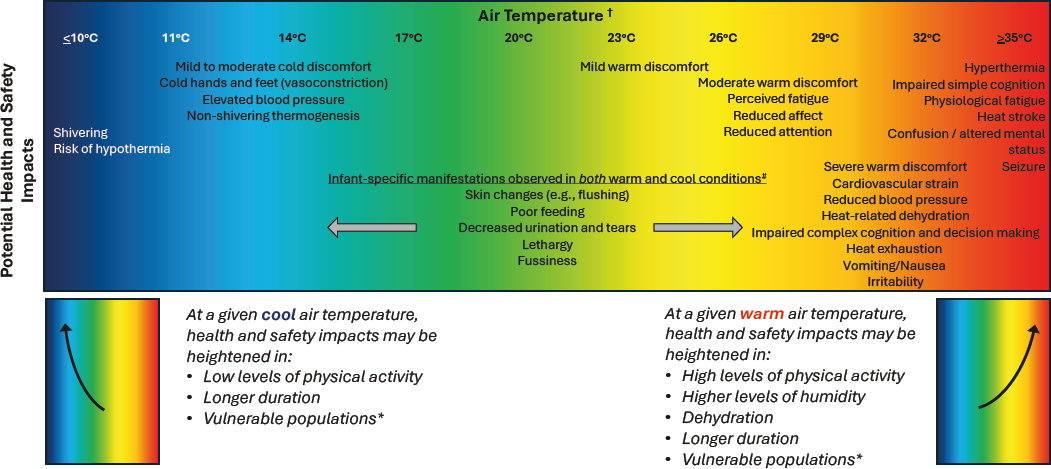
† The stated air temperatures are general guidelines. The potential health and safety impacts exist on a continuum and are modified by multiple factors (see chapter text).
* Identified vulnerable populations include infants and young children, older adults, and people who are pregnant, taking certain medications, or with medical conditions that have primary or secondary effects on behavioral or autonomic thermoregulation.
# Infant-specific manifestations are highlighted separately but may occur across the full temperature spectrum. There is currently insufficient evidence to define temperature-specific thresholds for onset.
REFERENCES
ACGIH (American Conference of Governmental Industrial Hygienists). 2022. Heat stress and strain: TLV® physical agents 7th edition documentation. https://www.acgih.org/heat-stress-and-strain-2/ (accessed May 21, 2026).
AFA (Association of Flight Attendants). 2025. 2HOT2COLD data through 2025-07-31 redacted for NAS. Document provided to the Committee on Health and Safety Impacts of Aircraft Cabin Temperature on September 9, 2025. Available by request through the National Academies’ Public Access Records Office.
Amasuomo, T. T., and J. O. Amasuomo. 2016. Perceived thermal discomfort and stress behaviors affecting students’ learning in lecture theatres in the humid tropics. Buildings 6(2):18.
Anderson, C. A. 2001. Heat and violence. Current Directions in Psychological Science 10(1):33–38.
Appukutti, S., and N. Sharma. 2022. Analysis of human discomfort due to thermal and respiratory factors in a foundry environment. International Journal of Environmental Health Engineering 11(1):6.
Asikainen, M., A. Yadav, B. Freels, and R. Ambat. 2025. A systematic corrosion failure analysis of Li-ion powered hearing aids from various markets. Corrosion Engineering, Science and Technology 60(2):92–110.
Avers, K. B., S. J. King, T. E. Nesthus, S. Thomas, and J. Banks. 2009. Flight attendant fatigue, part I: National duty, rest, and fatigue survey. Oklahoma City, OK: Civil Aerospace Medical Institution.
Baldwin, J. W., T. Benmarhnia, K. L. Ebi, O. Jay, N. J. Lutsko, and J. K. Vanos. 2023. Humidity’s role in heat-related health outcomes: A heated debate. Environmental Health Perspectives 131(5):55001.
Baniassadi, A., W. Yu, T. Travison, R. Day, L. Lipsitz, and B. Manor. 2025. Home ambient temperature and self-reported attention in community-dwelling older adults. The Journals of Gerontology: Series A 80(4):glae286.
Barry, H., J. Iglesies-Grau, G. K. Chaseling, J. Paul, C. Gosselin, C. D’Oliviera-Sousa, M. Juneau, F. Harel, D. Kaiser, M. Pelletier-Galarneau, and D. Gagnon. 2024. The effect of heat exposure on myocardial blood flow and cardiovascular function. Annals of Internal Medicine 177(7):901–910.
Basagaña, X., C. Sartini, J. Barrera-Gómez, P. Dadvand, J. Cunillera, B. Ostro, J. Sunyer, and M. Medina-Ramón. 2011. Heat waves and cause-specific mortality at all ages. Epidemiology 22(6):765–772.
Basu, R., and B. D. Ostro. 2008. A multicounty analysis identifying the populations vulnerable to mortality associated with high ambient temperature in California. American Journal of Epidemiology 168(6):632–637.
Basu, R., D. Pearson, B. Malig, R. Broadwin, and R. Green. 2012. The effect of high ambient temperature on emergency room visits. Epidemiology 23(6):813–820.
Basu, R., D. Pearson, L. Sie, and R. Broadwin. 2015. A case-crossover study of temperature and infant mortality in California. Paediatric and Perinatal Epidemiology 29(5):407–415.
Behrens, M., M. Gube, H. Chaabene, O. Prieske, A. Zenon, K.-C. Broscheid, L. Schega, F. Husmann, and M. Weippert. 2023. Fatigue and human performance: An updated framework. Sports Medicine 53(1):7–31.
Bell, P. A. 1992. In defense of the negative affect escape model of heat and aggression. Psychological Bulletin 111(2):342–346.
Berger, S. E., M. R. Ordway, E. Schoneveld, M. Lucchini, S. Thakur, T. Anders, L. Natale, and N. Barnett. 2023. The impact of extreme summer temperatures in the United Kingdom on infant sleep: Implications for learning and development. Scientific Reports 13(1):10061.
Bernstein, A. S., S. Sun, K. R. Weinberger, K. R. Spangler, P. E. Sheffield, and G. A. Wellenius. 2022. Warm season and emergency department visits to U.S. children’s hospitals. Environmental Health Perspectives 130(1):17001.
Blachowicz, T., M. Malczyk, I. Kola, G. Ehrmann, E. Schwenzfeier-Hellkamp, and A. Ehrmann. 2024. Textiles for very cold environments. Processes 12(5):927.
Bouchama, A., B. Abuyassin, C. Lehe, O. Laitano, O. Jay, F. G. O’Connor, and L. R. Leon. 2022. Classic and exertional heatstroke. Nature Reviews Disease Primers 8(1):8.
Byun, G., Y. Choi, D. Foo, R. Stewart, Y. Song, J. Y. Son, S. Heo, X. Ning, C. Clark, H. Kim, H. Michelle Choi, S. Kim, S.-Y. Kim, K. Burrows, J. T. Lee, N. C. Deziel, and M. L. Bell. 2024. Effects of ambient temperature on mental and neurological conditions in older adults: A systematic review and meta-analysis. Environment International 194:109166.
Casa, D. J., J. K. DeMartini, M. F. Bergeron, D. Csillan, E. R. Eichner, R. M. Lopez, M. S. Ferrara, K. C. Miller, F. O’Connor, M. N. Sawka, and S. W. Yeargin. 2015. National Athletic Trainers’ Association position statement: Exertional heat illnesses. Journal of Athletic Training 50(9):986–1000.
CDC (Centers for Disease Control and Prevention). 2024. About fatigue and work. https://www.cdc.gov/niosh/fatigue/about/index.html (accessed December 14, 2025).
CDC. 2026. Acclimatization. https://www.cdc.gov/niosh/heat-stress/recommendations/acclimatization.html (accessed April 18, 2026).
Chapman, C. L., B. D. Johnson, M. D. Parker, D. Hostler, R. R. Pryor, and Z. Schlader. 2021. Kidney physiology and pathophysiology during heat stress and the modification by exercise, dehydration, heat acclimation and aging. Temperature (Austin) 8(2):108–159.
Chapman, C. L., B. M. Roberts, E. A. Schafer, J. W. Castellani, K. E. Friedl, A. W. Potter, and D. P. Looney. 2025. Occupational cold stress and rewarming alters skin temperature thresholds for manual dexterity decrements: An exploratory study. Physiological Reports 13(9):e70342.
Chen, M. L., C. J. Chen, W. Y. Yeh, J. W. Huang, and I. F. Mao. 2003. Heat stress evaluation and worker fatigue in a steel plant. AIHA Journal 64(3):352–359.
Chen, Y., M. Tao, and W. Liu. 2020. High temperature impairs cognitive performance during a moderate intensity activity. Building and Environment 186:107372.
Chersich, M. F., M. D. Pham, A. Areal, M. M. Haghighi, A. Manyuchi, C. P. Swift, B. Wernecke, M. Robinson, R. Hetem, M. Boeckmann, and S. Hajat. 2020. Associations between high temperatures in pregnancy and risk of preterm birth, low birth weight, and stillbirths: Systematic review and meta-analysis. BMJ 371:m3811.
Choi, H. M., S. Heo, D. Foo, Y. Song, R. Stewart, J. Son, and M. L. Bell. 2024. Temperature, crime, and violence: A systematic review and meta-analysis. Environmental Health Perspectives 132(10):106001.
Coon, E. A., and P. A. Low. 2018. Thermoregulation in Parkinson disease. Handbook of Clinical Neurology 157:715–725.
Cottle, R. M., K. G. Fisher, S. T. Wolf, and W. L. Kenney. 2023. Onset of cardiovascular drift during progressive heat stress in young adults (PSU Heat Project). Journal of Applied Physiology (1985) 135(2):292–299.
Cottle, R. M., K. G. Fisher, O. K. Leach, S. T. Wolf, and W. L. Kenney. 2024. Critical environmental core temperature limits and heart rate thresholds across the adult age span (PSU Heat Project). Journal of Applied Physiology 137(1):145–153.
Cowell, W., N. Ard, T. Herrera, E. A. Medley, and L. Trasande. 2023. Ambient temperature, heat stress and fetal growth: A review of placenta-mediated mechanisms. Molecular and Cellular Endocrinology 576:112000.
Cramer, M. N., D. Gagnon, O. Laitano, and C. G. Crandall. 2022. Human temperature regulation under heat stress in health, disease, and injury. Physiological Reviews 102(4):1907–1989.
D’Amato, M., A. Molino, G. Calabrese, L. Cecchi, I. Annesi-Maesano, and G. D’Amato. 2018. The impact of cold on the respiratory tract and its consequences to respiratory health. Clinical and Translational Allergy 8(1):20.
Dang, R., A. I. Patel, Y. Weng, A. R. Schroeder, H. C. Lee, J. Aby, and A. Frymoyer. 2023. Incidence of neonatal hypothermia in the newborn nursery and associated factors. JAMA Network Open 6(8):e2331011.
Davis, S. L., O. Jay, and T. E. Wilson. 2018. Thermoregulatory dysfunction in multiple sclerosis. Handbook of Clinical Neurology 157:701–714.
DeGroot, D. W., and W. L. Kenney. 2007. Impaired defense of core temperature in aged humans during mild cold stress. American Journal of Physiology—Regulatory, Integrative, and Comparative Physiology 292(1):R103–R108.
Desai, Y., H. Khraishah, and B. Alahmad. 2023. Heat and the heart. Yale Journal of Biology and Medicine 96(2):197–203.
Dillender, M. 2019. Climate change and occupational health: Are there limits to our ability to adapt? Journal of Human Resources 56(1):184–224.
Dolcini, J., M.-A. Kioumourtzoglou, A. Cayir, M. Sanchez-Guerra, K. J. Brennan, A. E. Dereix, B. A. Coull, A. Spiro, III, P. Vokonas, J. Schwartz, and A. A. Baccarelli. 2020. Age and mitochondrial DNA copy number influence the association between outdoor temperature and cognitive function: Insights from the VA Normative Aging Study. Environmental Epidemiology 4(4):e0108.
Donaldson, G. C., T. Seemungal, D. J. Jeffries, and J. A. Wedzicha. 1999. Effect of temperature on lung function and symptoms in chronic obstructive pulmonary disease. European Respiratory Journal 13(4):844–849.
Donnan, K., E. L. Williams, J. L. Morris, and N. Stanger. 2021. The effects of exercise at different temperatures on cognitive function: A systematic review. Psychology of Sport and Exercise 54:101908.
Dupont, L., F. Bouckaert, and J. Detraux. 2023. The impact of high indoor temperatures on cognitive performance within the work setting: A systematic review. Tijdschrift Psychiatrie 65(5):316–322.
EASA (European Union Aviation Safety Agency). 2025. Hot cabins. https://www.easa.europa.eu/community/topics/hot-cabins (accessed January 9, 2026).
Ebi, K. L., A. Capon, P. Berry, C. Broderick, R. de Dear, G. Havenith, Y. Honda, R. S. Kovats, W. Ma, A. Malik, N. B. Morris, L. Nybo, S. I. Seneviratne, J. Vanos, and O. Jay. 2021. Hot weather and heat extremes: Health risks. The Lancet 398(10301):698–708.
FAA (Federal Aviation Administration). n.d. Unruly passenger statistics. https://www.faa.gov/unruly (accessed May 18, 2026).
FAA. 2010. Basics of aviation fatigue. Advisory circular no. 120-100. https://www.faa.gov/documentLibrary/media/Advisory_Circular/AC%20120-100.pdf (accessed April 18, 2026).
FAA. 2020. Fatigue in aviation. https://www.faa.gov/sites/faa.gov/files/pilots/safety/pilotsafety-brochures/Fatigue_Aviation.pdf (accessed March 12, 2026).
FAA. 2022. Air Carrier Training Aviation Rulemaking Committee (ACT ARC): ACT ARC recommendation 21-13: Identification of cabin misconduct triggers. https://www.faa.gov/sites/faa.gov/files/2022-01/ACT-ARC_Rec_21-13a.pdf (accessed March 12, 2026).
Falla, M., A. Micarelli, K. Hüfner, and G. Strapazzon. 2021. The effect of cold exposure on cognitive performance in healthy adults: A systematic review. International Journal of Environmental Research and Public Health 18(18):9725.
Fang, W., L. Liu, B. Yin, L. Ke, Y. Su, F. Liu, X. Ma, and Q. Di. 2023. Heat exposure intervention, anxiety level, and multi-omic profiles: A randomized crossover study. Environment International 181:108247.
Fastl, C., A. Arnberger, V. Gallistl, V. K. Stein, and T. E. Dorner. 2024. Heat vulnerability: Health impacts of heat on older people in urban and rural areas in Europe. Wiener Klinische Wochenschrift 136(17):507–514.
Fogleman, M., L. Fakhrzadeh, and T. E. Bernard. 2005. The relationship between outdoor thermal conditions and acute kidney injury in an aluminum smelter. International Journal of Industrial Ergonomics 35(1):47–55.
Fouillet, A., G. Rey, F. Laurent, G. Pavillon, S. Bellec, C. Guihenneuc-Jouyaux, J. Clavel, E. Jougla, and D. Hémon. 2006. Excess mortality related to the August 2003 heat wave in France. International Archive of Occupational and Environmental Health 80(1):16–24.
Frohman, T. C., S. L. Davis, S. Beh, B. M. Greenberg, G. Remington, and E. M. Frohman. 2013. Uhthoff’s phenomena in MS—Clinical features and pathophysiology. Nature Reviews Neurology 9(9):535–540.
Gaoua, N., J. Grantham, S. Racinais, and F. El Massioui. 2012. Sensory displeasure reduces complex cognitive performance in the heat. Journal of Environmental Psychology 32(2):158–163.
Greaney, J. L., A. E. Stanhewicz, W. L. Kenney, and L. M. Alexander. 2015. Impaired increases in skin sympathetic nerve activity contribute to age-related decrements in reflex cutaneous vasoconstriction. Journal of Physiology 593(9):2199–2211.
Haman, F., S. C. S. Souza, J. W. Castellani, M. P. Dupuis, K. E. Friedl, W. Sullivan-Kwantes, and B. R. M. Kingma. 2022. Human vulnerability and variability in the cold: Establishing individual risks for cold weather injuries. Temperature 9(2):158–195.
Hancock, P. A., J. M. Ross, and J. L. Szalma. 2007. A meta-analysis of performance response under thermal stressors. Human Factors 49(5):851–877.
Handrakis, J. P., M. Trbovich, E. M. Hagen, and M. Price. 2017. Thermodysregulation in persons with spinal cord injury: Case series on use of the autonomic standards. Spinal Cord Series and Cases 3(1):17086.
Hashiguchi, N., A. Takeda, Y. Yasuyama, A. Chishaki, and Y. Tochihara. 2013. Effects of 6-h exposure to low relative humidity and low air pressure on body fluid loss and blood viscosity. Indoor Air 23(5):430–436.
Hess, K. L., T. E. Wilson, C. L. Sauder, Z. Gao, C. A. Ray, and K. D. Monahan. 2009. Aging affects the cardiovascular responses to cold stress in humans. Journal of Applied Physiology (1985) 107(4):1076–1082.
Ikäheimo, T. M. 2018. Cardiovascular diseases, cold exposure and exercise. Temperature 5(2):123–146.
IOM (Institute of Medicine). 1996. Nutritional needs in cold and in high-altitude environments: Applications for military personnel in field operations. Washington, DC: National Academy Press.
Jacklitsch, B., J. Williams, K. Musolin, A. Coca, J. H. Kim, and N. Turner. 2016. NIOSH criteria for a recommended standard: Occupational exposure to heat and hot environments. NIOSH publication no. 2016-106. Washington, DC: U.S. Department of Health and Human Services, Centers for Disease Control and Prevention, National Institute for Occupational Safety and Health. https://www.cdc.gov/niosh/docs/2016-106/ (accessed March 18, 2026).
Kenny, G. P., J. Yardley, C. Brown, R. J. Sigal, and O. Jay. 2010. Heat stress in older individuals and patients with common chronic diseases. CMAJ 182(10):1053–1060.
Kenny, G. P., R. J. Sigal, and R. McGinn. 2016. Body temperature regulation in diabetes. Temperature 3(1):119–145.
Krebs, B. 2024. Temperature and cognitive performance: Evidence from mental arithmetic training. Environmental and Resource Economics 87(7):2035–2065.
Kruger, E. L. and P. Drach. 2017. Identifying potential effects from anthropometric variables on outdoor thermal comfort. Building and Environment 117:230–237.
Lakhoo, D. P., H. A. Blake, M. F. Chersich, B. Nakstad, and S. Kovats. 2022. The effect of high and low ambient temperature on infant health: A systematic review. International Journal of Environmental Research and Public Health 19(15):9109.
Lakhoo, D. P., N. Brink, L. Radebe, M. H. Craig, M. D. Pham, M. M. Haghighi, A. Wise, I. Solarin, S. Luchters, G. Maimela, and M. F. Chersich. 2025. A systematic review and meta-analysis of heat exposure impacts on maternal, fetal and neonatal health. Nature Medicine 31(2):684–694.
Lan, L., L. Xia, R. Hejjo, D. P. Wyon, and P. Wargocki. 2020. Perceived air quality and cognitive performance decrease at moderately raised indoor temperatures even when clothed for comfort. Indoor Air 30(5):841–859.
Leach, O. K., R. M. Cottle, K. G. Fisher, S. T. Wolf, and W. L. Kenney. 2024. Sex differences in heat stress vulnerability among middle-aged and older adults (PSU Heat Project). American Journal of Physiology— Regulatory, Integrative, and Comparative Physiology 327(3):R320–R327.
Lei, L. 2023. Neonatal hypothermia: Understanding the dangers and importance of temperature control in newborns. Journal of Neonatal Studies 6(3):85–87.
Leppäluoto, J., I. Korhonen, and J. Hassi. 2001. Habituation of thermal sensations, skin temperatures, and norepinephrine in men exposed to cold air. Journal of Applied Physiology 90(4):1211–1218.
Li, G., C. Liu, and Y. He. 2021. The effect of thermal discomfort on human well-being, psychological response and performance. Science and Technology for the Built Environment 27(7):960–970.
Lieberman, H. R., J. W. Castellani, and A. J. Young. 2009. Cognitive function and mood during acute cold stress after extended military training and recovery. Aviation, Space, and Environmental Medicine 80(7):629–636.
Lim, C. L. 2020. Fundamental concepts of human thermoregulation and adaptation to heat: A review in the context of global warming. International Journal of Environmental Research and Public Health 17(21):7795.
Lindemann, U., J. Oksa, D. A. Skelton, N. Beyer, J. Klenk, J. Zscheile, and C. Becker. 2014. Effect of cold indoor environment on physical performance of older women living in the community. Age and Ageing 43(4):571–575.
MacLean, S., J. de Nicola, K. Cooper, H. Downey, J. Theobald, L. de Kleyn, T. Denham, E. Costello, and L. Rickards. 2024. How does climate change impact people who use alcohol and other drugs? A scoping review of peer reviewed literature. International Journal of Drug Policy 134:104649.
McCormack, M. C., A. J. Belli, D. Waugh, E. C. Matsui, R. D. Peng, D. L. Williams, L. Paulin, A. Saha, C. M. Aloe, G. B. Diette, P. N. Breysse, and N. N. Hansel. 2016. Respiratory effects of indoor heat and the interaction with air pollution in chronic obstructive pulmonary disease. Annals of the American Thoracic Society 13(12):2125–2131.
Meidenbauer, K. L., K. E. Schertz, P. Li, A. Sharma, T. R. Freeman, E. A. Janey, A. J. Stier, A. L. Samtani, K. Gehrke, and M. G. Berman. 2024. Variable and dynamic associations between hot weather, thermal comfort, and individuals’ emotional states during summertime. BMC Psychology 12(1):504.
Meltzer, G. Y., P. Factor-Litvak, J. B. Herbstman, B. J. Wylie, and D. Hernández. 2024. Indoor temperature and energy insecurity: Implications for prenatal health disparities in extreme heat events. Environmental Health Perspectives 132(3):35001.
Morris, D. M., and J. J. Pilcher. 2016. Psychological response not physiological response predicts aggression behind the wheel during cold stress. Proceedings of the Human Factors and Ergonomics Society Annual Meeting 59(1):1702–1706.
Morris, N. B., N. Ravanelli, and G. K. Chaseling. 2024. The effects of alcohol consumption on human physiological and perceptual response to heat stress: A systematic scoping review. Environmental Health 23:73.
Muller, M. D., J. Gunstad, M. L. Alosco, L. A. Miller, J. Updegraff, M. B. Spitznagel, and E. L. Glickman. 2012. Acute cold exposure and cognitive function: Evidence for sustained impairment. Ergonomics 55(7):792–798.
NASEM (National Academies of Sciences, Engineering, and Medicine). 2025. Reducing and managing disruptive and unruly behavior in airports: A guide. Washington, DC: The National Academies Press.
NIH (National Institutes of Health). n.d. Cognitive impairment. https://www.cancer.gov/publications/dictionaries/cancer-terms/def/cognitive-impairment (accessed March 12, 2026).
Nori-Sarma, A., S. Sun, Y. Sun, K. R. Spangler, R. Oblath, S. Galea, J. L. Gradus, and G. A. Wellenius. 2022. Association between ambient heat and risk of emergency department visits for mental health among US adults, 2010 to 2019. JAMA Psychiatry 79(4):341–349.
NRC (National Research Council). 2002. The airliner cabin environment and the health of passengers and crew. Washington, DC: The National Academies Press.
Otte im Kampe, E., S. Kovats, and S. Hajat. 2016. Impact of high ambient temperature on unintentional injuries in high-income countries: A narrative systematic literature review. BMJ Open 6(2):e010399.
Palinkas, L. A. 2001. Mental and cognitive performance in the cold. International Journal of Circumpolar Health 60(3):430–439.
Pandolf, K. B. 1998. Time course of heat acclimation and its decay. International Journal of Sports Medicine 19(Suppl 2):S157–S160.
Park, R. J. 2022. Hot temperature and high-stakes performance. Journal of Human Resources 57(2):400–434.
Park, R. J., N. Pankratz, and A. P. Behrer. 2021. Temperature, workplace safety, and labor market inequality. Germany: Institute of Labor Economics
Ramsey, J. D., C. L. Burford, M. Y. Beshir, and R. C. Jensen. 1983. Effects of workplace thermal conditions on safe work behavior. Journal of Safety Research 14(3):105–114.
Ross, S.M., 2008. Cognitive function following exposure to contaminated air on commercial aircraft: A case series of 27 pilots seen for clinical purposes. Journal of Nutritional and Environmental Medicine 17(2):111–126.
Roy, A., M. A. Alam, Y. Kim, and M. Hashizume. 2022. Association between daily ambient temperature and drug overdose in Tokyo: A time-series study. Environmental Health and Preventive Medicine 27:36.
Ruan, T., Y. Yue, W. Lu, R. Zhou, T. Xiong, Y. Jiang, J. Ying, J. Tang, J. Shi, H. Wang, G. Xiao, J. Li, Y. Qu, and D. Mu. 2023. Association between low ambient temperature during pregnancy and adverse birth outcomes: A systematic review and meta-analysis. Chinese Medical Journal 136(19):2307–2315.
Saikia, D., and B. Mahanta. 2019. Cardiovascular and respiratory physiology in children. Indian Journal of Anaesthesia 63(9):690–697.
Samuels, L., B. Nakstad, N. Roos, A. Bonell, M. Chersich, G. Havenith, S. Luchters, L.-T. Day, J. E. Hirst, T. Singh, K. Elliott-Sale, R. Hetem, C. Part, S. Sawry, J. Le Roux, and S. Kovats. 2022. Physiological mechanisms of the impact of heat during pregnancy and the clinical implications: Review of the evidence from an expert group meeting. International Journal of Biometeorology 66(8):1505–1513.
Schimelpfenig, S. S. and B. Jacobsen. 2022. Pediatric environmental cold injuries. Pediatrics in Review 43(8):449–457.
Schinasi, L. H., J. R. Bloch, S. Melly, Y. Zhao, K. Moore, and A. J. De Roos. 2020. High ambient temperature and infant mortality in Philadelphia, Pennsylvania: A case-crossover study. American Journal of Public Health 110(2):189–195.
Schlader, Z. J., D. Gagnon, A. Adams, E. Rivas, C. M. Cullum, and C. G. Crandall. 2015. Cognitive and perceptual responses during passive heat stress in younger and older adults. American Journal of Physiology—Regulatory, Integrative, and Comparative Physiology 308(10):R847–R854.
Schlader, Z. J., T. E. Wilson, and C. G. Crandall. 2016. Mechanisms of orthostatic intolerance during heat stress. Autonomic Neuroscience 196:37–46.
Sheffield, P. E., M. T. Herrera, E. J. Kinnee, and J. E. Clougherty. 2018. Not so little differences: Variation in hot weather risk to young children in New York City. Public Health 161:119–126.
Silveira, I. H., P. Rebouças, J. Pescarini, T. R. Cortes, B. F. A. Oliveira, D. J. D. Neves, A. d. S. Rocha, R. d. C. Ribeiro-Silva, M. L. Barreto, O. T. Ranzani, and E. S. Paixao. 2025. Effects of ambient temperature on under-five mortality: A nationwide space-time-stratified case-crossover study in Brazil. Environmental Research 285:122683.
Smallcombe, J. W., A. Puhenthirar, W. Casasola, D. S. Inoue, G. K. Chaseling, N. Ravanelli, K. M. Edwards, and O. Jay. 2021. Thermoregulation during pregnancy: A controlled trial investigating the risk of maternal hyperthermia during exercise in the heat. Sports Medicine 51(12):2655–2664.
Son, J. Y., J. T. Lee, and M. L. Bell. 2017. Is ambient temperature associated with risk of infant mortality? A multi-city study in Korea. Environmental Research 158:748–752.
Soneja, S., C. Jiang, J. Fisher, C. R. Upperman, C. Mitchell, and A. Sapkota. 2016. Exposure to extreme heat and precipitation events associated with increased risk of hospitalization for asthma in Maryland, U.S.A. Environmental Health 15(1):57.
Spector J. T., Y. J. Masuda, N. H. Wolff, M. Calkins, and N. Seixas. 2019. Heat exposure and occupational injuries: Review of the literature and implications. Current Environmental Health Reports 6(4):286–296.
Sun, B., J. Wu, Z. Hu, R. Wang, F. Gao, and X. Hu. 2022. Human mood and cognitive function after different extreme cold exposure. International Journal of Industrial Ergonomics 91:103336.
Taylor, L., S. L. Watkins, H. Marshall, B. J. Dascombe, and J. Foster. 2016. The impact of different environmental conditions on cognitive function: A focused review. Frontiers in Physiology 6:372.
Tu, Z., Y. Li, S. Geng, K. Zhou, R. Wang, and X. Dong. 2021. Human responses to high levels of carbon dioxide and air temperature. Indoor Air 31(3):872–886.
Uibel, D., R. Sharma, D. Piontkowski, P. E. Sheffield, and J. E. Clougherty. 2022. Association of ambient extreme heat with pediatric morbidity: A scoping review. International Journal of Biometeorology 66(8):1683–1698.
van de Kamp, E., and H. Daanen. 2025. Narrative review on infants’ thermoregulatory response to heat. International Journal of Environmental Research and Public Health 22(8):1265.
Van Someren, E. J. W. 2007. Thermoregulation and aging. American Journal of Physiology—Regulatory, Integrative, and Comparative Physiology 292(1):R99–R102.
Varghese, B. M., A. Hansen, P. Bi, and D. Pisaniello. 2018. Are workers at risk of occupational injuries due to heat exposure? A comprehensive literature review. Safety Science 110:380–392.
Vellei, M., H. Pallubinsky, D. Khovalyg, S. Carter, and G. Chinazzo. 2025. Do women feel colder by nature? A systematic literature review and meta-analysis of sex differences in physiological and subjective thermal responses. Building and Environment 277:112936.
Wälde, J., G. Amesberger, S. Würth, and T. Finkenzeller. 2024. Decision-making under heat stress: Examining risk-taking and reflection impulsivity dynamics in the context of fatigue and vitality. Current Issues in Sport Science 9(4):012.
Wargocki, P., J. A. Porras-Salazar, and S. Contreras-Espinoza. 2019. The relationship between classroom temperature and children’s performance in school. Building and Environment 157:197–204.
Wilson, T. E., C. L. Sauder, M. L. Kearney, N. T. Kuipers, U. A. Leuenberger, K. D. Monahan, and C. A. Ray. 2007. Skin-surface cooling elicits peripheral and visceral vasoconstriction in humans. Journal of Applied Physiology (1985) 103(4):1257–1262.
Xu, Z., R. A. Etzel, H. Su, C. Huang, Y. Guo, and S. Tong. 2012. Impact of ambient temperature on children’s health: A systematic review. Environmental Research 117:120–131.
Yadav, A., K. K. Gupta, R. Ambat, and M. Løgstrup Christensen. 2021. Statistical analysis of corrosion failures in hearing aid devices from tropical regions. Engineering Failure Analysis 130:105758.
Yang, H. Y., J. K. W. Lee, and C. P. Chio. 2022. Extreme temperature increases the risk of stillbirth in the third trimester of pregnancy. Scientific Reports 12(1):18474.
Yang, Y., H. Dong, N. Wang, J. Zhang, Z. Zhang, Q. Sun, W. Zhang, J. Wang, J. Liu, Y. Liu, and D. Wang. 2026. Impact of experimentally elevated CO2 concentrations and temperature on cognitive function: An EEG-based study under constant ventilation. Ecotoxicology and Environmental Safety 309:119578.
Yin, B., W. Fang, L. Liu, Y. Guo, X. Ma, and Q. Di. 2024. Effect of extreme high temperature on cognitive function at different time scales: A national difference-in-differences analysis. Ecotoxicology and Environmental Safety 275:116238.
Yurkevicius, B. R., B. K. Alba, A. D. Seeley, and J. W. Castellani. 2021. Human cold habituation: Physiology, timeline, and modifiers. Temperature (Austin) 9(2):122–157.
Zhang, Y., W. Yu, N. Gao, H. Zhou, C. Sekhar, and X. Yang. 2026. Sensitive thresholds of indoor temperature-humidity on arthritis in older adults: A year-round cohort time-series study with PELT change-point detection. Building and Environment 287(A):113781.
Zhang, Z., H. J. L. Heerspink, G. M. Chertow, R. Correa-Rotter, A. Gasparrini, N. Jongs, A. M. Langkilde, J. J. V. McMurray, M. N. Mistry, P. Rossing, R. D. Toto, P. Vart, D. Nitsch, D. C. Wheeler, and B. Caplin. 2024. Ambient heat exposure and kidney function in patients with chronic kidney disease: A post-hoc analysis of the DAPA-CKD trial. The Lancet Planetary Health 8(4):e225–e233.
Zhou, H., D. Xie, and P. Xiao. 2023. Research on thermal comfort of obese and overweight people during indoor running exercise. Building and Environment 242:110574.
Zubac, D., A. Buoite Stella, and S. A. Morrison. 2020. Up in the air: Evidence of dehydration risk and long-haul flight on athletic performance. Nutrients 12(9):2574.


