Submarine Exposure Guidance Levels for Selected Hydrofluorocarbons: HFC-236fa, HFC-23,and HFC-404a (2000)
Chapter: CONCLUSIONS AND RECOMMENDATIONS
the NRC titled Toxicity of Alternatives to Chlorofluorocarbons: HFC-134a and HCFC-123, which provides a toxicity assessment and establishes EEGLs and CEGLs for HFC-134a, a component of HFC-404a
CONCLUSIONS AND RECOMMENDATIONS
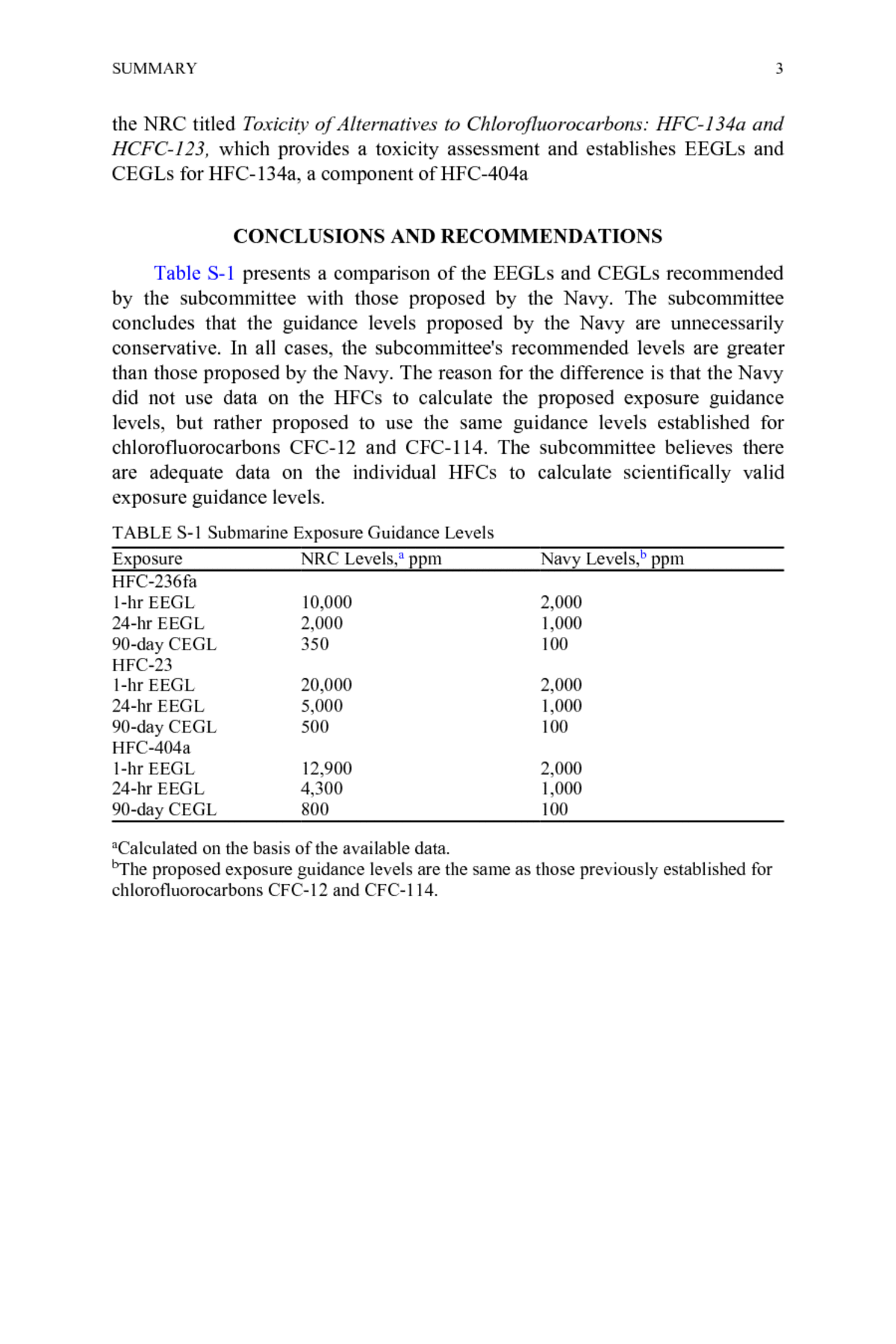
Table S-1 presents a comparison of the EEGLs and CEGLs recommended by the subcommittee with those proposed by the Navy. The subcommittee concludes that the guidance levels proposed by the Navy are unnecessarily conservative. In all cases, the subcommittee's recommended levels are greater than those proposed by the Navy. The reason for the difference is that the Navy did not use data on the HFCs to calculate the proposed exposure guidance levels, but rather proposed to use the same guidance levels established for chlorofluorocarbons CFC-12 and CFC-114. The subcommittee believes there are adequate data on the individual HFCs to calculate scientifically valid exposure guidance levels.
TABLE S-1 Submarine Exposure Guidance Levels
Exposure | NRC Levels,a ppm | Navy Levels,b ppm |
HFC-236fa | ||
1-hr EEGL | 10,000 | 2,000 |
24-hr EEGL | 2,000 | 1,000 |
90-day CEGL | 350 | 100 |
HFC-23 | ||
1-hr EEGL | 20,000 | 2,000 |
24-hr EEGL | 5,000 | 1,000 |
90-day CEGL | 500 | 100 |
HFC-404a | ||
1-hr EEGL | 12,900 | 2,000 |
24-hr EEGL | 4,300 | 1,000 |
90-day CEGL | 800 | 100 |
aCalculated on the basis of the available data. bThe proposed exposure guidance levels are the same as those previously established for chlorofluorocarbons CFC-12 and CFC-114. | ||