Improving Transit Customer Perception of Personal Security (2025)
Chapter: 2 Literature Review and Industry Scan

CHAPTER 2
Literature Review and Industry Scan
The perception of personal security among transit riders is one of the crucial factors influencing their willingness to use these services and the overall reputation of the public transit system. Security concerns encompass a wide range of issues, including personal safety from crimes, terrorism, and crashes, and the reliability of the service. This literature review aimed to explore the factors contributing to transit customersʼ security perceptions and the strategies employed by transit agencies to improve transit customer perceptions of personal security.
Method
A review of the literature—focused on academic and professional research—was conducted to document the current practices transit systems use to improve customer perceptions of personal security. This review included an online search of TRID, standard peer-reviewed and non-peer-reviewed literature databases, and other sources recommended by panel members. In addition, the team conducted an industry scan as part of this task. The literature review and industry scan included U.S. and international studies and agency examples.
Keeping the objectives of the synthesis in mind, the project team focused on strategies to improve the perception of security, studies evaluating the effectiveness of these strategies, how the strategies are communicated to the public, and how customersʼ perceptions changed with the implementation of the strategies.
Of particular interest for the literature review, the team identified drivers for the perception of security; partnerships between transit agencies and others working to address issues of homelessness, mental health, and drug use; agencies that employ customer experience officers, ambassadors, technology, etc., and the impact these have had on the perception of safety; how agencies communicate what they are doing; and recordkeeping practices and measures of success for these strategies. A close look at strategies to address security perception among populations who have unique safety concerns was also part of this task. Finally, the team documented how strategies have changed over the last 10 years.
Factors Influencing Security Perception
Understanding factors associated with transit customersʼ perception of personal security is useful to devise effective strategies to enhance the perception of personal security and promote trust among passengers. Key factors identified in the literature review fall into five categories: (1) personal experiences, (2) environmental factors, (3) social factors, (4) demographics, and (5) other.
Personal Experiences
Personal experience with the operation of the transit agency is a key driver highlighted by multiple studies (Ding et al. 2020). Previous experiences of harassment or crime can shape individualsʼ perceptions of security while using public transportation. Knowing when to expect the next transit vehicle in real time reduces wait time and increases feelings of security (Sundling and Ceccato 2022; Chowdhury and van Wee 2020).
Environmental Factors
Environmental characteristics such as good lighting, transparent shelter design (Loukaitou-Sideris and Peters 2020), or physical barriers such as fences (Sundling and Ceccato 2022) can improve transit customer perceptions of security.
Social Factors
Perceptions of security in transit systems can be shaped by various social factors. Societal norms, such as the stigmatization of unhoused populations, play a significant role in how individuals perceive their safety (Wang et al. 2020). The literature points out that the stigmatization of unhoused populations—associating them with crime and disorderly conduct—significantly contributes to the negative perception of their presence in transit systems. This is a common challenge faced by many transit agencies (Zapata et al. 2024). Media coverage and movements like #MeToo have increased public awareness of harassment and concerns about security (Ait Bihi Ouali and Graham 2021).
Demographics
Transit riders from different demographics have experienced different levels of fear and anxiety in transit. Loukaitou-Sideris and Fink (2009) and Loukaitou-Sideris et al. (2009) reveal that women are more likely to experience fear and crime while using public transit. Women from minority populations, low-income women, and women with disabilities often face higher levels of fear (Gekoski et al. 2017; Loukaitou-Sideris 2005). A few studies have also found that older adults, minorities, and individuals with lower incomes feel less secure in transit environments (Loukaitou-Sideris 2009; Loukaitou-Sideris and Eck 2007; McKee and Milner 2000).
Other Factors
Factors such as camera surveillance and the behavior of others have varying effects on security perception across different demographic groups (Ceccato and Loukaitou-Sideris 2020, pp. 297–304). For example, Yavuz and Welch (2010) studied data from the 2003 Chicago Transit Authority (CTA) customer satisfaction survey and found that “while the presence of video cameras has a lower effect on womenʼs feelings of safety compared with men, frequent and on-time service matters more to male passengers.” Furthermore, the experience of being a victim of or witnessing a transit crime affects women more than men.
Evolution of Strategies
The evolution of strategies in public transportation security over the past decade (2015–2024) reflects a significant shift from exclusion to more compassionate and comprehensive approaches, recognizing the complex factors that affect safety perception. During the COVID-19 pandemic
in 2020, agencies took action to reduce the spread of the virus like frequently cleaning vehicles, enacting social distancing rules, and installing barriers. Ridership dropped significantly. In this same period when many transit agencies saw a drop in ridership, they also saw a spike in transit crime rates even though in some cases the actual number of crimes was lower. Low ridership left passengers feeling more vulnerable. Agencies recognized that they needed to focus on bringing people back to taking transit and address security at the same time. The shift from the exclusion to the compassion approach gained traction as transit agencies were faced with the need to address societal concerns.
Exclusion policies, which ban violators from using the transit system for a period of time, are a common tool for transit agencies in response to inappropriate behavior by transit riders that disrupts safety and orderliness. These policies aim to deter misconduct and promote responsible behavior among passengers. Typical target offenses range from noise concerns and consumption of food and drinks to criminal behavior, such as vandalism and violence (Bye and Matherly 2024). Transit agencies often address security offenders in the transit facilities and vehicles with policing and removal strategies (TransitCenter 2021). However, these policies vary in consistency of implementation and efficacy. Specifically, exclusion offenses defined by agencies vary in their passenger codes of conduct, and enforcement approaches vary based on state and local laws. Data on the effectiveness of exclusion policies is also limited, though many agencies view them as necessary deterrents to crime and behavioral issues in transit.
In recent years, agencies have begun to adopt more compassion-based strategies over heavy policing efforts. These strategies have moved beyond enforcement and exclusion of offenders to emphasize more sustainable solutions, like supporting the unhoused population and addressing the root causes of security issues. Strategies include forming external partnerships, engaging customers directly, and focusing on the specific needs of populations who have unique safety concerns (FTA 2023).
During the past decade, transit agencies have embraced various methods to enhance safety and improve the overall commuting experience by leveraging technological advancements. Incorporating advanced surveillance systems and real-time threat detection technologies reduced incident rates, enhanced passengersʼ perception of safety, and added to agenciesʼ effectiveness in responding to security incidents (FTA 2023).
Initiatives like SEPTAʼs SCOPE program and BARTʼs Not One More Girl campaign illustrate the shift toward community-oriented security strategies (TransitCenter 2021). These programs not only aim to safeguard passengers but also foster a supportive environment by addressing broader social issues affecting safety and security.
Proactively engaging customers through digital platforms and technology has also been crucial. These platforms facilitate real-time reporting and surveillance, empowering passengers to contribute actively to their security. This collective approach has not only improved safety measures but also heightened public trust and satisfaction, underscoring the success of these evolving strategies in public transportation systems (FTA 2023).
Comprehensive Approaches to Improve Perceptions of Security
Among the growing number of agencies that have adopted more compassionate and comprehensive approaches to improve the perception of personal security is the CTA.
Environmental Design
Crime prevention through environmental design (CPTED) is an effective approach to improving security perceptions in transit environments. By designing spaces that deter criminal behavior and enhance the feeling of safety, transit agencies can create more secure and welcoming environments for riders. CPTED requires various design principles:
- Ensuring all transit areas are well-lit with clear sightlines and strategically placed closed-circuit television (CCTV) cameras to enhance visibility and security
- Designing stations and stops with controlled entry and exit points, using barriers and landscaping to direct pedestrian traffic and prevent access to restricted areas
- Clearly defining public, semipublic, and private spaces with signage, landscaping, and pavement treatments
- Maintaining transit facilities to promote a sense of ownership and deter vandalism, and establishing quick-response systems to address maintenance issues and safety concerns
- Designing spaces to encourage legitimate activities, such as comfortable waiting areas and community events, and ensuring a visible presence of transit staff and security personnel to enhance safety
Policing
Transit agencies in the United States employ a variety of models to ensure security across their systems, using a mix of sworn police officers and nonsworn security personnel to improve the perception of security for transit riders. Dedicated transit police forces or specialized units in existing law enforcement agencies play a crucial role in maintaining security in transit environments. These officers are trained to handle the challenges of transit policing and often work in partnership with local law enforcement to bolster security measures. Their presence deters criminal activity and ensures rapid responses to incidents. Visible patrols by uniformed transit police or nonsworn security personnel provide a sense of safety and act as a deterrent to potential criminals.
External Partnerships to Address Social Concerns
A significant driver of the perception of security in transit environments is the presence of people experiencing homelessness, suffering from mental health problems, and/or using drugs. These complex social challenges necessitate comprehensive solutions beyond the scope of transit authorities alone. Research shows that strategies such as fostering external partnerships, keeping law enforcement distinct from routine homeless outreach, educating the public, and training transit staff are some of the ways transit agencies are working to reduce homelessness on public transit (Loukaitou-Sideris et al. 2021b). Forging these external partnerships with governmental and nongovernmental organizations specializing in social services, healthcare, and law enforcement has become crucial. Such collaborations aim to provide support and intervention for individuals facing these challenges, thereby reducing their impact on the transit environment and improving the overall perception of security among customers (FTA 2023; Sotero 2023b; TriMet 2020b). SEPTA and the Central Ohio Transit Authority (COTA) provide examples of external partnerships.
During the COVID-19 pandemic, there was a significant increase in hate incidents toward Asian people, which had profound impacts on Asian communities and their transit use. Many transit agencies joined the Stop AAPI Hate campaign to provide a safe transit environment for Asian communities. For instance, BART partnered with the Asian Womenʼs Shelter and launched a domestic violence prevention campaign, “Letʼs Talk About Us” (BART, n.d.-b). Another example is the LA Metro partnership with LA vs. Hate to stop discrimination in public transportation (LA vs. Hate, n.d.).
The partnership also allows SEPTA to drastically lower the cost to reach the desired program efficacy due to the publicity, experience, training, and organizational mission alignment with the program partners. The program is fully funded by the agency, without any federal funding. SEPTA advises that smaller, newer, fare-free, and rural transit agencies take full advantage of the potential partnerships available to them in their service region. The partnerships can give these agencies a boost in public trust and encourage ridership.
SEPTA reports a 70% resolution rate for system security incidents without escalating to police involvement, with 10,500 individuals removed from the system on average each month. Since the programʼs implementation in 2016, 35% of unhoused population hotspots in the agency facilities have been removed (FTA 2023).
Deploying Customer Experience Officers and Ambassadors
One direct approach to enhancing the perception of security in the transit environment is deploying customer experience officers and ambassadors in transit systems. These personnel are not security enforcers but play a critical role in providing customer service, offering assistance, and ensuring a welcoming environment for all transit users. Their presence serves as a deterrent to potential security issues and fosters the perception of safety and community among passengers (TransitCenter 2021). Los Angeles Metro (LA Metro) provides one example of an ambassador program.
Leveraging Technology for Enhanced Security
Advancements in technology offer transformative potential for improving personal security perceptions. Installing surveillance cameras, emergency call buttons, and real-time communication platforms enables swift responses to security incidents and gives customers tangible evidence of the transit agencyʼs commitment to safety. Additionally, mobile applications and social media platforms offer channels for passengers to report concerns directly and receive timely updates on security matters (FTA 2023).
Policies
Transit agencies also adopt various policy changes to improve transit security for riders, including fare evasion, stop on demand, and code of conduct enforcement policies.
Transit agencies implement fare evasion policies as a critical measure to enhance security and maintain revenue integrity. These policies typically include increased enforcement, where fare inspectors or transit police conduct random fare checks to deter evasion and issue fines to offenders. Public awareness campaigns educate passengers on the consequences of fare evasion and collaborating with law enforcement ensures enforcement of fare evasion cases, integrating transit security with broader community safety efforts.
To enhance passenger security at night, transit agencies may allow buses to stop between designated stops so passengers can disembark closer to their destinations. Clear guidelines and training ensure drivers can make informed decisions, and passengers are encouraged to communicate their requests in advance. This policy particularly protects passengers traveling alone or in unfamiliar areas.
Enforcing codes of conduct is essential for maintaining a safe and comfortable environment for all transit passengers. Transit agencies establish clear rules that outline acceptable and unacceptable behaviors, such as prohibiting smoking, eating, drinking, loud music, harassment, and vandalism. Transit personnel are authorized to remove violators immediately to prevent disruptions and maintain security. Penalties range from warnings to permanent bans, with more severe consequences for repeat offenders. For individuals who have unique safety concerns, transit agencies may collaborate with social services to provide support, ensuring a balanced approach that combines security with compassion.
In 2023, the California State Legislature signed Senate Bill (SB) 434, Public Transit for All: Improving Safety and Increasing Ridership. The bill went into effect January 1, 2024, and requires the top 10 transit agencies in California to collect voluntary data to better understand ridersʼ experiences with street harassment and to conduct outreach activities with groups who have unique safety concerns (Tamanaha 2023). This law was particularly important during the pandemic, as people of specific backgrounds were being targeted and experiencing hate crimes. The information from groups who have unique safety concerns can come from a survey, focus group, or other method to get feedback about perceptions.
Strategies Targeting Women
Being a woman or man significantly shapes experiences and vulnerabilities in transit environments, with women facing disproportionate risks (Ceccato and Loukaitou-Sideris 2022; Chowdhury and van Wee 2020). Furthermore, safer transit environments are crucial for women, who make up a significant portion of transit riders and the labor force, enabling them to access economic and educational opportunities. Scholars have noted that strategies improve
the transit experience of riders who are women and their perceptions of security (Ceccato and Loukaitou-Sideris 2020, pp. 305–328). Strategies may include training transit personnel to recognize and respond to security incidents specific to women; collaborating with local communities; getting feedback from womenʼs advocacy groups and grassroots organizations to understand safety concerns; and offering safe escort services during late hours or in high-risk areas through partnerships with ride-sharing companies, community volunteers, or security personnel (Ceccato and Loukaitou-Sideris 2022; Chowdhury and van Wee 2020; Loukaitou-Sideris and Eck 2007). BARTʼs Not One More Girl initiative is one example of strategies targeting young women as a vulnerable population group.
Communication Strategies to Inform and Educate the Community
Effective communication strategies are essential to enhancing the perception of personal security in public transportation systems. These strategies serve not only to inform and educate the community about safety measures and resources but also to engage passengers in a dialogue that reinforces their role in maintaining a secure transit environment. Components of such strategies include diverse media channels, community engagement initiatives, educational campaigns, real-time communication tools, feedback mechanisms, and staff training.
Diverse Media Channels
By leveraging diverse media channels such as digital signage, social media, traditional print, public service announcements, and mobile apps, transit authorities can reach a broad audience more efficiently. This approach allows for disseminating safety information in a timely manner. Integrating various communication channels ensures that safety messages are accessible across demographic groups, fostering a culture of shared responsibility and enhancing trust among transit riders. This strategy is vital in building a proactive safety culture and giving users the necessary information and tools for safe travel (Ceccato et al. 2022).
Community Engagement Initiatives
By implementing programs that actively involve community members in discussions about safety, transit agencies can foster a collaborative environment that empowers passengers. Workshops, town hall meetings, and feedback sessions serve as platforms where passengers can voice their concerns, offer suggestions, and gain insights into the security measures being implemented to protect them. This approach not only helps address specific security concerns raised by community members but also promotes transparency and trust between the transit authorities and the public. Engaging the community in this manner ensures that the measures taken are well-informed and reflect the communityʼs needs, leading to more effective and sustainable safety solutions.
Educational Campaigns
Educational campaigns focus on specific aspects of transit security, such as reporting procedures for suspicious behavior or the importance of mental health awareness. These campaigns can include interactive online content, information booths at transit stations, and partnerships with local schools and community organizations.
Educational campaigns are a pivotal communication strategy for transit agencies aiming to enhance customer safety perception. These campaigns are designed to inform passengers about
safety protocols, emergency procedures, and actions to take in potentially hazardous situations, increasing awareness and preparedness among riders. By using communication channels such as brochures, digital signage, online videos, and interactive apps, transit agencies can ensure crucial safety information reaches a broad audience in an engaging manner. For instance, implementing educational campaigns has been linked to improved passenger safety behaviors and heightened awareness of security measures in the transit environment. Research indicates that well-constructed educational campaigns can significantly influence passenger perceptions, fostering a sense of security that enhances overall rider satisfaction and trust in the transit system (Balog et al. 2003; Hu et al. 2024). The national See Something, Say Something campaign is an example of a successful educational campaign.
(continued on next page)
Real-Time Communication Tools
Real-time communication tools provide immediate updates about transit conditions, security incidents, or changes in service. Apps, text alert systems, and digital displays in transit stations can keep passengers informed and prepared (Yiğitcanlar et al. 2025).
For instance, LA Metro uses a Transit Watch app for real-time interaction with riders, transit information, and incident reporting.
Feedback Mechanisms
Easy-to-use feedback mechanisms allow passengers to report security concerns, share experiences, and suggest improvements. This feedback could be received through mobile apps, online forms, or dedicated phone lines, ensuring that passengers feel heard and valued (Melnik et al. 2024).
Staff Training
Training transit staff on effective communication techniques, especially in crisis situations, gives transit workers the confidence to talk to riders and better handle security concerns.
Empowering staff with the skills to communicate calmly and clearly can significantly impact the overall perception of security among passengers (Melnik et al. 2024).
Measuring the Outcomes or Impacts of Strategies
Measuring the outcomes or impacts of strategies in public transportation systems is critical to assessing their effectiveness and making necessary adjustments. This process typically involves collecting and analyzing data on various metrics such as incident rates, passenger feedback, and compliance levels. For instance, transit agencies might track changes in the frequency of reported incidents before and after implementing new security measures to gauge their impact. Customer satisfaction surveys can provide insights into passenger perceptions of safety, while compliance monitoring ensures the strategies are being properly implemented and adhered to. This data-driven approach allows agencies to refine their strategies, ensuring they remain effective in enhancing passenger safety and security. Moreover, systematically analyzing outcomes helps show accountability and supports the case for ongoing investment in safety initiatives. Two examples of monitoring programs are TriMet and SEPTAʼs SCOPE program.
Industry Scan
Results from the industry scan include strategies implemented by transit agencies, the effectiveness of these strategies, and links to additional information. Appendix A summarizes how these strategies have changed in the past 10 years (2015–2024).
Transit agencies implemented a variety of strategies to increase the perception of security. Many agencies increased the presence of transit police and transit ambassadors. Others focused on outreach and education. San Diego Metropolitan Transit System (MTS) developed a program called Ride Check, where part-time employees ride to evaluate transit performance. These employees take transit in plain clothes using the same pass as other riders so they are not identified as employees. They have a checklist on their phone and are responsible for riding certain routes over the course of a month. It is a relatively low-cost way to receive feedback about customer experience.
As technology advances, many transit agencies have updated their surveillance systems, covering almost all their vehicles. Surveillance has proven effective in improving the perception of safety, and the video recording can serve as evidence for future investigations. Many agencies also use emerging mobile apps like Transit Watch App for crime reporting. Some agencies are actively engaged with local communities, partnering with other agencies to address the needs of certain groups, such as BARTʼs Not One More Girl campaign (see Figure 2), the SEPTAʼs SCOPE program, and the See Something, Say Something campaign.
Denver Regional Transportation District (RTD) piloted a customer experience elevator program where elevator doors were reprogrammed to rest in the open position. This adjustment was focused on “limiting and deterring illegal and unwanted activities inside public elevators” (Broghammer 2024). This low-cost solution saw notable reductions in calls for service during the pilot. RTD will continue this operational adjustment and expand the program to other station elevators (the agency owns and operates 79 public-facing elevators).
The project team did an online search of small and rural transit agency activities related to customer perception of security. There is little information on these agency websites, which likely means they do not have robust security practices. This may be because these agencies have
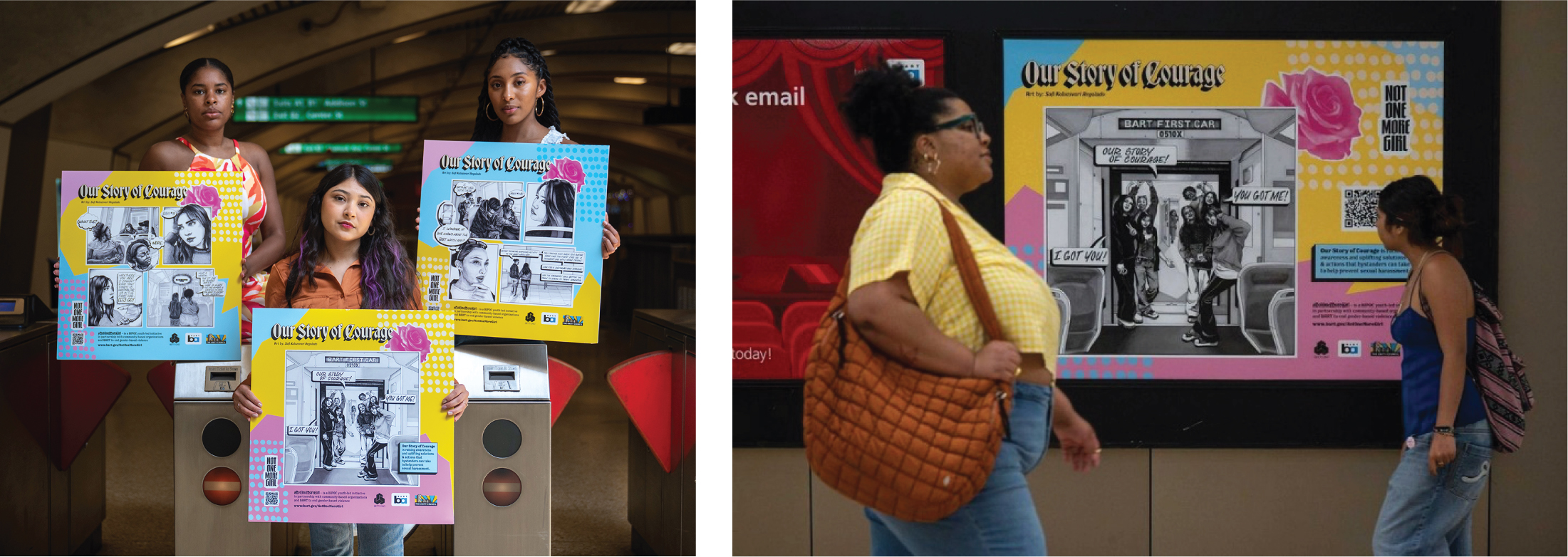
Source: BART.
Long Description.
Left: Three young women stand inside a transit station, each holding a colorful poster titled “Our Story of Courage.” The posters show comic-style stories of women, with illustrations and speech bubbles. Right: Two women walk past a large wall installation of one of the posters displayed prominently in a public area. While one woman notices the poster, the other woman walks past it.
limited resources or fewer security concerns in the community where they operate. The strategies that were found include codes of conduct and video surveillance. For example, the Livermore Amador Valley Transit Authority (LAVTA) in California adopted Passenger Rules of Conduct which clearly states expectations (LAVTA, n.d.) and the consequences of violations. The agency also has cameras on buses that record activity and are used in the event of an incident. Pine Bluff Transit in Pine Bluff, AR, has a rider code of conduct that specifically mentions major violations such as sexual touch or inappropriate comments, spitting, and language intentionally used to threaten or intimidate another passenger or transit driver (https://www.cityofpinebluff-ar.gov//upages.php?id=149).
Summary of Literature Review and Industry Scan Results
Enhancing the perception of security among passengers on public transportation is a multifaceted endeavor influenced by a range of factors, including demographic considerations, past experiences, and the physical and social environment. Research has illuminated the essential role these factors play and how an evolution toward more compassionate and inclusive strategies has yielded positive outcomes.
There is a relationship between fare evasion and personal security as people become more anxious about having the fare to ride and the enforcement of fare payment by the transit workers (operators and fare collectors). The anxiety may lead to more aggressive or violent behavior.
The transition since 2015 from exclusionary policies to more inclusive, compassionate approaches has marked a significant shift in how public transportation systems address personal safety. These strategies prioritize empathy, inclusivity, and understanding of the diverse needs of all passengers, particularly populations who have unique safety concerns. Adopting these methods has not only improved the immediate perception of safety but has also fostered a greater sense of community and belonging among users, contributing to a sustainable and positive safety culture in public transportation networks.
This report underscores the critical role of communication and monitoring in maintaining and enhancing safety perception. Effective communication strategies that encompass both traditional and digital media have proven essential in keeping passengers informed and engaged, enhancing their sense of security. Monitoring and feedback mechanisms, meanwhile, are crucial for ensuring that safety measures are continually adjusted to meet the evolving needs of passengers and to integrate new insights from safety data analytics.
The transit agencies mentioned in this report demonstrate the practical application of compassionate strategies and the significant impact they can have on enhancing passengersʼ safety perception. These examples provide evidence that such approaches are not only feasible but effective in fostering an environment where passengers feel secure and valued.
The journey toward improved safety perception on public transportation is ongoing. It requires a dedicated commitment to adapting and refining strategies as new challenges emerge and as our understanding of what constitutes effective safety measures evolves. By focusing on continuous improvement and fostering an inclusive environment, public transportation authorities can ensure that all passengers, regardless of their background or abilities, can experience a safe and welcoming travel environment.
This commitment to enhancing safety perception through compassionate, inclusive strategies not only benefits passengers but also contributes to the broader social and economic well-being of communities. As public transportation becomes perceived as a safer, more reliable option,
increased usage can lead to reduced traffic congestion, lower emissions, and improved urban mobility. The ripple effects of these improvements speak to the profound impact that a focus on safety perception can have, extending far beyond the confines of the vehicles and stations themselves to touch every aspect of urban life.
There is a broader policy perspective of adding an ambassador program or increasing security personnel and the costs of taking this approach compared to a lower-cost educational or outreach program that may be less effective but is more attainable. Some agencies do not have the funding for a more intensive but expensive mitigation strategy. In addition, the public perception of spending limited transit funding on strategies that address societal concerns instead of improving the transit service may not be easy to overcome.


