Einstein's Unfinished Symphony: Listening to the Sounds of Space-Time (2000)
Chapter: Bars and Measures
Bars and Measures
 hroughout the 1960s a certain question was regularly heard drifting through the hallways at general relativity conferences: “Has Joe Weber seen anything yet?”
Years before Joseph Taylor started obtaining indirect evidence for gravity waves, Joseph Weber was resolutely trying to catch one directly. It was a utopian crusade, and he knew it. At the time he started on his venture at the University of Maryland, his fellow physicists expected it would require a full century of experimental work to attain such a goal. Even Weber admitted that “the probability of success under these circumstances had to be regarded as very small. ” But they admired his moxie.
Before Weber no one had even contemplated pursuing such an experiment. And there was good reason: “It had to scare any sane person,” says Peter Saulson, for a gravity wave is such an incredibly tiny effect in our local surroundings. It was once calculated that if the great ocean liner Titanic were spinning once a second, it would generate less
than a million billion billionth of a watt of gravity power. An atom bomb just 10 yards from a detector would generate a gravity wave signal a billion trillion times weaker than the one you could detect from a distant supernova exploding in our galaxy. It shows how difficult a task it is to create gravity waves that are detectable enough to run an experiment. Only events on a cosmic scale can provide the sources.
By convention the strength of a gravity wave is usually stated in terms of its “strain,” a term borrowed from engineering. It's the fractional change in length—the magnitude of stretch—the wave would impart either in the distance between two masses or in a block of material. Two black holes merging in the center of our galaxy would certainly emit a sizable series of gravity waves. In fact, they would be deadly if you happened to be there. The waves would alternately stretch and squeeze any object nearby by as much as the object's size. A 6-foot man would be stretched to 12 feet and within a millisecond squeezed to 3, before being stretched out once again. Ignoring all the other forces at work when black holes collide, any planets and moons in the vicinity could be torn asunder under the stress of gravity wave power alone. It's a frightening prospect. But, fortunately, by the time those waves reached us here on Earth after traveling some tens of thousands of light-years, their strain (in the metric units that are the lingua franca of science) would be a paltry 10-18 meter per meter. In other words, each meter along a rod would have its length changed by 10-18 (a millionth trillionth) of a meter, a span a thousand times smaller than the width or a proton.* The cosmic tsunami is reduced to a quantum quiver. It's a cumulative effect. The longer the measured span, the greater the overall effect. It builds up over distance. How would such a strain, for example, affect the 93-million-mile distance between the Earth and the Sun? With a strain on the order of 10-18 the gravity waves would expand and contract that space-time by a span about equal to the width of a germ.
|
*For those unfamiliar with scientific notation, 1018 means 1,000,000,000,000,000,000, a 1 followed by 18 zeros, an enormous number. Conversely, 10-18, read as “10 to the minus 18,” means 1/1,000,000,000,000,000,000, an extremely tiny number. 10-19 is a number ten times smaller than that, 10-20 is a hundred times smaller than 10-18, and so on. |
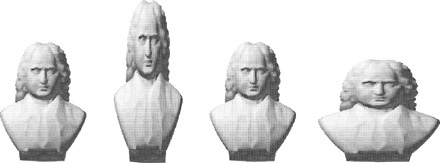
Isaac Newton never imagined the existence of gravity waves, which alternately stretch and compress space-time as they pass by.
Detecting such miniscule changes seemed an impossible task, but Weber fearlessly thought otherwise. He was partly sparked by his work at Maryland, teaching electrical engineering. “It seemed to me that if you could build an electromagnetic antenna to receive electromagnetic waves, you might be able to build a gravitational wave antenna to receive gravitational waves,” he says in recalling his thinking at the time. “I didn't know where they might come from. I just thought I'd start looking.” In a way he wanted to be the Heinrich Hertz of gravity. Inspired by Maxwell's equations of electromagnetism, Hertz had confirmed Maxwell's prediction that electromagnetic waves existed. Weber was similarly determined to catch one of Einstein's predicted ripples in space-time. Astronomy was undergoing such a revolution after World War II, with the emergence of new disciplines such as radio and x-ray astronomy, that it was getting easier to contemplate finding the impossible. In the violent universe then being unveiled, nature might indeed be generating gravity waves capable of detection. Moreover, being the one to clinch one of the last predictions of general relativity was a powerful motivation.
Weber started seriously pursuing relativity research during the 1955-56 academic year while on sabbatical at the University of Leiden in the Netherlands, where John Wheeler was spending some time, and at the Institute for Advanced Study in Princeton, New Jersey, Einstein 's old haunt. Both J. Robert Oppenheimer, then the institute's director,
and Wheeler encouraged Weber's new interest. Later, his hopes would be nurtured by institute physicist Freeman Dyson, who calculated the gravitational waves emitted by the collapsing stellar core at the heart of a supernova. Dyson's results suggested at the time that the gravity wave signal would be far stronger than previously expected. Weber published his daring scheme for detecting gravitational radiation in 1960 in Physical Review. In that and subsequent papers he outlined a clever technological trick for trapping a gravity wave. He surmised that a burst of gravitational energy moving through a solid cylinder would alternately squeeze and expand it ever so slightly, like an accordion in motion. The change would be incredibly small—as mentioned earlier, far less than the width of a nuclear particle. But then, long after the wave passed through, the bar would continue to “ring.” This phenomenon is similar to the vibrations that can be produced in a tuning fork when it is struck by sound waves. Similarly, a gravity wave that is “tuned” to the bar's natural acoustic frequency sets off a resonance, much like a gong continuing to ring after being struck. In both cases the dimensions and material of the bar or the gong determine which frequency of wave will trigger the ringing. Weber reasoned that he could position electronic devices on the sides of the cylinder and convert the extremely tiny gravity wave-induced movements into electrical signals that would then be recorded and scrutinized. This was not the first time Weber ventured into virgin scientific territory. Charting new waters was in his bones.
Weber was born in Paterson, New Jersey, in 1919 and named Jonas Weber. His father was Lithuanian, his mother Latvian. The family name was originally Gerber, but that changed when his father, eager to immigrate to the United States, took the visa of another man who had decided at the last minute to stay in Lithuania. Jonas mistakenly turned into Joseph when his mother first registered him for school. Like many of his generation, Weber became fascinated by radios as an adolescent. He obtained his ham radio operator license at the age of 11. Working as a golf caddie during the Depression for a dollar a day, he saved enough money for a book on electronics and started repairing radios after school. He was the youngest of four children, which he says was a blessing. While his older siblings were put to work early to help sup-
port the family, he was left alone to focus on his schoolwork. He decided to enter the U.S. Naval Academy to break away from his immigrant roots and applied to a New Jersey senator, who relied on tests to make his appointment. Weber excelled and got the slot. Soon after graduating in 1940 with a degree in engineering, he was thrust into World War II. Assigned to the aircraft carrier Lexington as its radar officer, Weber shipped out of Pearl Harbor on December 5, 1941, two days before the Japanese attack. The following year he survived the carrier's sinking in the Battle of the Coral Sea. He finished out the war as commander of a submarine chaser in the Mediterranean. He also married his high school sweetheart, Anita Strauss, with whom he had four sons.
After the war Weber extended his mastery of the new science of radar technology as head of the electronic countermeasures section of the Department of the Navy's Bureau of Ships. So great was his expertise that the University of Maryland hired him in 1948 at the age of 29 as a professor of electrical engineering, with the stipulation that he also pursue his Ph.D. He did this at nearby Catholic University, where he obtained his degree in microwave spectroscopy in 1951. While completing his doctorate he worked out the concept of what later came to be known as a maser, the trailblazing forerunner of the laser. Instead of emitting visible light, a maser generates a beam of pure microwave energy—electromagnetic waves intermediate in length between infrared and radar. Weber says he was inspired by a course in atomic physics. He was the first to publicly mention the maser principle at a meeting in Ottawa in 1952, the Electron Tube Research Conference, a yearly gathering devoted to the cutting edge of electronics. Weber never built his proposed device, though. For one, his calculations suggested that its performance would be minimal. Moreover, he had no research funds to construct a working model. Nobel prizes went to those who did—the U.S. physicist Charles Townes and two Russians, Nikolai Basov and Aleksandr Prokhorov—based on alternate mechanisms: “I was only a student in a way,” says Weber. “I didn't know how the world worked.”
Hearing visiting scholars lecture on general relativity at the university, Weber decided to use his 1955 sabbatical to study the subject in
more depth. He did this, he says, because he “had wide interests and no money for quantum electronics.” During this time he worked with Wheeler on the theory of gravitational radiation. It was a time when the debate was still raging on whether gravity waves truly existed or were just an artifact of the mathematics. “My philosophy,” says Weber, “was to act like Galileo: build something, make it work, and see if you find anything.” He spent nearly two years thinking of scheme after scheme for catching a gravity wave. He filled four 300-page notebooks with possible detector designs. His 1960 Physical Review paper presented his most promising method for a gravity wave receiver: a gravity wave would hit an object—specifically, a piezoelectric crystal—whose vibrations would be converted into electrical signals and recorded. Piezoelectric crystals have the interesting property of generating a voltage when squeezed. Quartz is such a crystal. Pierre Curie first noticed this effect (and named it) in 1880. Finding it too costly to obtain a sizable bar of piezoelectric material, Weber and his lab associates came to realize they could bond the crystals to a much larger mass, a solid aluminum bar, which was cheap, easy to work with, and vibrated well. For a while Weber also wondered whether the entire Earth could be used as a detector. The Earth, if “plucked,” has various modes of oscillation, starting at one cycle every 54 minutes. Using a gravimeter, an instrument that measures the motion of the Earth's surface, Weber hoped to “tune into” the Earth's natural frequencies and see if it had been excited by a passing gravity wave. But background noises such as earthquakes, the motion of the oceans, and atmospheric events simply overwhelmed any potential signal. (Weber did persuade NASA to have Apollo 17 astronauts place a gravimeter on the Moon, where some thought there was a better chance of detecting a wave because of the Moon's lack of weather, quakes, or oceanic disturbances.) But in the end Weber concluded that his best bet was building a detector in his laboratory.
Robert L. Forward, an employee of Hughes Aircraft Research Laboratories based in California, had arrived on the Maryland campus in 1958 to begin work toward a doctoral degree. Originally intending to do research on masers, Forward heard about Weber's pioneering venture and signed on. He obtained his Ph.D. by constructing the first
gravitational wave antenna, along with David Zipoy. According to Forward, choosing its size was straightforward: “The reason for its particular length is that I said, ‘Well, if I am going to have to manhandle that monster, let's make it this big.' I spread out my hands to what I could grasp, and we decided to make it 5 feet.” Its width was 2 feet. The bar's total weight came to about 2,600 pounds. It was a fortunate choice of size. As soon as neutron stars and black holes moved from the realm of science fiction to real science over the 1960s, crude calculations (which largely still hold up) suggested that gravity waves emanating from these new celestial creatures would likely have frequencies of a few thousand hertz (a few thousand waves passing by each second), frequencies that could be picked up by solid cylinders of aluminum several feet long. (Before that the Maryland team had expected its future bars would have to be hundreds of yards long to record the longer waves emanating from ordinary binary star systems.) To isolate it from seismic disturbances, the bar was suspended on a fine steel wire in a vacuum tank, which rested on acoustic filters that shielded it from environmental disturbances. Surrounding the “waist” of the cylinder, like some bejeweled belt, were the piezoelectric crystals. According to Weber's strategy, once the bar was deformed by a wave—a gravitational burst—it would continue to oscillate and convert those vibrations into electrical signals. That's why these systems are also known as resonant bar antennas. The bars resonate like a bell in response to the passing gravitational wave.
Forward went back to Hughes in 1962, upon completing the bar's construction. Afterward, the bar operated on the Maryland campus from 1963 to 1966. Pulses were recorded on a chart recorder and scanned by eyeball. (Later, computers would be brought in for better hands-off analysis.) But interpretation was difficult with one bar alone. The very motions of the atoms in the bar (on the quantum level, atoms are continually shaking) can swamp any gravity-induced signal. Weber believed he could get around this problem by operating two bars simultaneously. He reasoned the chances were low that the atoms would rattle around in each bar in the exact same way at the exact same time. Tremors occurring in both at once would then likely be due to an outside disturbance.
Additional bars were built and placed in a garagelike laboratory, what Weber called his gravitational wave observatory, about a mile away. Small numbers of coincident pulses were observed. These results were reported in 1968, but interpretation was difficult. When a car accidentally ran into his outpost, generating a huge pulse, Weber realized that his detectors needed to be much farther apart, so local disturbances could be ruled out as a possible source of interference as well. “Suppose you see a big pulse on one detector,” notes Weber. “You can't be sure whether that pulse was due to a garbage truck colliding with the building, a lightning strike, or student unrest. ” During the turbulent 1960s, student protesters painted obscene graffiti on his observatory.
Weber's realization led to the construction of two identical bars. Each was 5 feet long and 2 feet wide and weighed about 3,100 pounds. One was stationed on the Maryland campus, the other at the Argonne National Laboratory near Chicago, some 700 miles westward. The two detectors were linked by telephone line. If one of the detectors surpassed a certain threshold—what was determined to be the thermal background noise—the system was programmed to emit a pulse. If the other detector crossed that threshold at the same time, within 0.44 second, a coincidence marker was triggered. Most of the time the needle traces on their ever-moving chart paper displayed what was expected: random wiggles. But for a brief instant in December 1968, the needles on both detectors jumped at the same time. Over the next 81 days, Weber's team observed 17 significant events shared by the two separated detectors. The researchers went through an exhaustive process to make sure the signal was real. They inserted time delays into their electronics to rule out random coincidences. If the signals were truly random, then inserting a time delay in one bar's circuits wouldn't have affected the coincidences at all. But the count fell, suggesting it was more than chance at work. They made sure it wasn't some kind of electromagnetic disturbance, such as a solar flare or lightning. They monitored cosmic-ray showers and seismic disturbances at each site. In their estimation, nothing could explain the coincidences except the momentary passing of a gravitational wave. The size of the cylinders determined the frequency. It was 1,660 hertz (cycles per second), in the range of frequencies expected to emanate from an exploding star.
It was 10 years of work altogether, first arriving at a strategy and then setting up his instrumentation. It was difficult for Weber to keep the discovery under his hat. He made his move at the Relativity Conference in the Midwest, a meeting held in Cincinnati in June 1969 and attended by America's top relativists. Kip Thorne was there, giving a report on the possible gravitational radiation generated by newly formed neutron stars. “And then Weber got up and announced that he had seen gravitational waves. It was quite a shocker to people, ” recalls the Caltech physicist. Thorne had known Weber for years and was highly interested in the techniques he was pioneering. “ So I took it very seriously, as did nearly everyone else,” he says. Conferees greeted the announcement with applause and tributes. Two weeks later Weber's official report was published in Physical Review Letters, the journal of choice for quick dissemination of a major discovery throughout the physics community. For a time Weber was headline news. His picture was hard to miss, with his piercing eyes, resolute mouth, and a precision crewcut that had his hair standing at attention. The popular press wondered aloud in its stories whether Weber's discovery was the most important event in physics over the last half century. Weber's laboratory certainly became a magnet and an inspiration for physicists over the following months. Signing his visitor logbook in 1970 were William Fairbank of Stanford University and Ronald Drever from the University of Glasgow, who would soon establish their own gravity wave detection programs.
Weber was particularly interested in applying his find to astronomy. His announced detection came only two years after pulsars had been discovered, and he already had his eye on that phenomenon as a possible source for his gravity waves. By noting the period when his events were most prolific, Weber concluded that the gravity waves were arriving from the center of the Milky Way galaxy. His proclamation was eerily reminiscent of Karl Jansky's announcement in 1932 that radio waves were emanating from the galactic center, an event that marks the birth of radio astronomy; at the time no one had ever expected such radio energies to be emanating from the galactic core. According to the Weber team, the position of its two detectors offered a crude method for tracing the source of the alleged signal. At each site the long axis of each cylinder faced east-west. Situated this way, the
strongest signals would occur when the source was straight overhead (or straight below the Earth, which poses no obstacle to a wave). Thus, the Sun could not be the source, they concluded; the signal didn't noticeably increase at noon or midnight when the Sun was directly overhead or below. According to their initial statistics, the gravity wave signals did peak when the center of our galaxy, located in the direction of the constellation Sagittarius, was in those prime positions. No one knew what events might be causing the “blips” on Weber's moving graph, but there were guesses: supernovas going off in the galaxy, colliding neutron stars, or matter falling into black holes, a term just coming into use.
Initial media coverage of Weber's announcement, even in the specialized physics press, was highly enthusiastic. It seemed that everyone was caught up in this new endeavor. It added a bit of élan to the field of general relativity. Here was a novel technique to plumb the depths of the universe in a whole new way. Suddenly, any conference on relativity (normally a quiet affair) became a hot ticket; it was practically standing room only as people gathered to hear the latest news, exchange ideas, and compare notes. The response was not unlike the rush in 1989 to confirm the purported discovery of cold fusion. Within a year of Weber's discovery, at least 10 groups were either proposing or already mounting similar searches. Work began in the Soviet Union, Scotland, Italy, Germany, Japan, and England. In the United States, gravitational wave detector groups were eventually assembled at Bell Laboratories in New Jersey, IBM in New York, the University of Rochester, Louisiana State University, and Stanford University in California. Due to their fixed size, Weber 's detectors were limited to recording one frequency, 1,660 hertz. The newcomers' goal was to make detectors both more sensitive and tuned to additional frequencies, in order to extend the science. At the time there were also a number of competing theories of relativity avidly being discussed, and some of them, like the Brans-Dicke theory, predicted different effects when a gravity wave passed through a bar. So some hoped to use their new gravitational wave detectors to test whether Einstein was right or wrong.
One of the first to put a detector together and check Weber's claim was Vladimir Braginsky, Dicke's counterpart in the Soviet Union.
Stimulated by Weber's prediscovery publications on gravity wave instrumentation, Braginsky began to write papers on possible sources and methods of detection as well. Early on he recognized that thermal noise—the incessant jostling of a bar's very atoms—would produce major interference. By 1968 he was testing other types of bar materials, such as sapphire crystal, to see if this noise could be reduced. Given this head start, he was able to construct a detector fairly quickly after Weber's pivotal announcement. Braginsky's group at Moscow State University later imagined building a series of bars of differing sizes—a sort of xylophone —to register different frequencies of waves at the same time. More than that, the Soviets began thinking of rocketing detectors into space. One scheme involved taking a detector shaped like a dumbbell far above Earth and rotating it. Theory suggested that a passing gravity wave would alter the rotation.
Elsewhere other imaginative schemes were being devised. In Colorado researchers led by Judah Levine of the Joint Institute for Laboratory Astrophysics ran tests in an abandoned mine, the Poor Man Relief mine located several miles west of Boulder in Four-Mile Canyon. There they reflected a laser light between two mirrors, mounted on piers 30 yards part. It was a crude setup. Supposedly, a standing wave could be set up between the mirrors, which a disturbance would alter. The changes would be noted by comparing the wave with a laser set to a constant frequency. R. Tucker Stebbins worked on the laser experiment while a graduate student at Colorado. “It used the Earth as the resonant bar, with a laser interferometer to detect the resonance,” explains Stebbins. The instrument had already been set in place earlier to measure the speed of light more precisely, which required a quiet spot. The gravity wave experiment ran a year or two but detected nothing, except for some earthquakes and underground nuclear tests. The seismic interference was far too overwhelming.
Besides the solid cylinders of aluminum, now called Weber bars, designers came up with new configurations, such as hollow squares, hoops, and U shapes. Others, such as Fairbank, world renowned for his work in low-temperature physics, began thinking about cooling the bar. The detector would be placed in a dewar, in effect a huge Thermos bottle. By lowering the bar's temperature to diminish atomic
jitter, its sensitivity could increase thousands of times over Weber 's room-temperature system. Meanwhile, new researchers in the field began to switch to a new type of sensor to increase their sensitivity. A small diaphragm was placed at the end of the bar. Physics decrees that any energy oscillating in the big mass will eventually transfer to the tiny mass on the end. But with that energy entering a smaller mass, the motion amplifies, making it easier to measure. While these new strategies were being developed, Weber worked on improving his own detectors.
Theorists were not immune to the excitement surrounding this newfound field. They were immediately drawn to figuring out what Weber was seeing, including British theorist Stephen Hawking. One of his earliest scientific papers analyzes the type of signal a gravitational wave detector could register. He and his coauthor Gary Gibbons argued that the sort of bursts recorded by Weber could be coming from stars undergoing gravitational collapse to become neutron stars. But in working out the numbers, they cast one of the first dark clouds on Weber's work. They had to question the myriad events being reported. For the energies being detected, the newborn neutron stars had to be located within 300 light-years of Earth. But by then the Maryland group was saying it was seeing an event each day; there simply weren 't that many neutron stars nearby. What if the feeble signals were actually emanating from the Milky Way's center, some 30,000 light-years distant, as Weber was claiming? Then the energies had to grow tremendously. The energies had to be high enough to maintain any detectable strength by the time the waves reached Earth in the far suburbs of the galaxy. It was necessary for each pulse, radiating outward from the galactic core, to involve the conversion of roughly a Sun's worth of mass into pure gravitational energy. But with such events occurring daily that meant the galaxy would be losing mass at a tremendous rate, far too rapid to keep our galaxy intact from its birth more than 10 billion years ago to the present day. The galaxy would be imploding at its center, long on its way to gravitational annihilation. If that was truly the source of Weber's signals, the galaxy should have been gobbled up by now. With such results theorists started to become highly skeptical of Weber's assertions. “Either Joe Weber was wrong,” commented one theorist, “or the whole universe is cockeyed.”
By 1972 William Press and Kip Thorne wrote a review article of the field's accomplishments that posed the possibility that Weber might be wrong. But they did not yet reject Weber outright. They did offer some alternate possibilities: for one, the energy of the alleged gravity wave source might be less than it appeared. Maybe an unknown source was nearer or the radiation somehow “beamed” in only one direction. Or perhaps the gravitational radiation in the universe was far stronger than previously suspected. Could it be originating from outside the galaxy? “If these excitations are caused by gravitational radiation, ” wrote Press and Thorne, “then the characteristics of each burst are about what one expects from a ‘strong' supernova or stellar collapse somewhere in our Galaxy; but the number of bursts observed is at least 1000 times greater than current astrophysical ideas predict! Weber's observations lead one to consider the possibility that gravitational-wave astronomy will yield not just new data on known astrophysical phenomena (binary stars, pulsars, supernovae) but also entirely new phenomena (colliding black holes, cosmological gravitational waves, ???).” Their question marks left the door open to the unexpected.
By then the experimentalists were beginning to experience grave doubts about Weber's discovery as well. Braginsky registered no signals and simply shut his detector off. He felt his energies would be better spent developing more sensitive detectors. David Douglass at Rochester and J. Anthony Tyson at Bell Laboratories also came up empty-handed. Tyson had been fascinated by the possibility of detecting gravity waves for nearly a decade, ever since he read a small monograph by Weber entitled “General Relativity and Gravitational Waves” as a graduate student at the University of Chicago. Upon completion of a postdoctoral project in 1969, he was hired by Bell Labs to conduct research in low-temperature physics, his specialty, but Weber's historic announcement that year was too tempting to ignore. To corroborate Weber's detection, Tyson secretly set up two small bar detectors—each about 3 feet long and 1 foot wide—in his laboratory, which was large enough for added equipment to get lost in the clutter. Though his bars were smaller than Weber's, he did use extremely low-noise amplifiers. Tyson ran his detectors covertly for about a year. “And I didn't see a thing,” he says. At last getting his employer's blessing to continue the investigation, Tyson built another bar that was appreciably larger than
Weber's original detectors. It was roughly 12 feet long and 2 feet wide and weighed almost 4 tons. According to Tyson, it was capable of observing gravity wave pulses that were far weaker than the events first recorded by Weber. But after steadily operating for a month in the summer of 1972, it registered no special signal. Any surge that did appear was not beyond that expected from the random motions of the bar's atoms. Furthermore, Tyson arranged to observe the galactic center with one of the optical telescopes at the Cerro Tololo Observatory in Chile the very same time he was running his test. Nothing out of the ordinary was observed; no visual bursts matched up to the events Weber reported he was seeing over that same period. Based on the signal Weber was allegedly receiving, says Tyson today, “ there should have been enough energy in other forms, such as electromagnetic waves, to knock your socks off. All you should have needed were binoculars. ”
Reporting his findings at the 1972 Texas symposium held in New York City that year, Tyson got into a heated argument with Weber. Tyson had been supplied with four months of data taken earlier by Weber 's group. The Bell Lab team tested for correlations with sunspots, temperature and barometric pressure differences near Weber's Maryland laboratory, as well as earth strains midway between Argonne and Maryland because of lunar and solar tide effects. In the process Tyson and his colleagues discovered that with high probability the detected signals over that period aligned with changes in the Earth's magnetic field at the equator, an anomaly known as the disturbed storm-time factor. It is thought to be related to the ring current in the ionosphere around the equator. This was not proof that the Earth's magnetic field was the source of Weber's signals, but it opened up the question of whether some of Weber's events were of terrestrial origin.
Responding to Tyson, Weber stressed that his group did run magnetic tests on his bars, with field strengths far larger than the Earth 's, and that his bars did not respond. He also countered that detecting a signal requires at least two detectors as “coincidences are the result of externally produced signals small compared with the noise of each detector.” You must compare to see anything, he said. At that same meeting Weber was upping the ante. He reported that his group was now seeing two or three coincidences per day.
Tyson conceded that he didn't as yet have a second detector for comparisons but stressed that his one detector was receiving nothing; there were no glitches of any kind above the normal noise levels. He was particularly distressed by Weber's lack of calibration. Weber had not yet tested his bar with a known source of energy to determine the exact strain it could see. Tyson himself used an electrostatic calibration. He applied a set voltage to the bar and noted the response. Amid this growing criticism, Weber continually offered one major rebuttal: all the other groups were simply not building the same instrumentation. He firmly believed the sensors had to be placed around the waist of the bar, not on its side. “The scheme that works is not very difficult to set up,” he declared. “[Until] you have reproduced the experiment that is known to work, I don't think I believe anything.” He also contended that his competitors had inadequate temperature controls in their labs, burying any signals in excess noise.
Observers sympathetic to Weber's efforts sounded a similar refrain. Perhaps only Weber's bar, they noted, was actually “tuned” to the events erupting daily. Cardiff University sociologist Harry Collins, who has been conducting a sociological study of the field 's development for nearly three decades, even came across some overreaching supporters who briefly wondered whether psychokinesis was at work, with Weber as a focus.
The Maryland physicist did have more expertise. By then Weber had spent a dozen years designing, building, and testing his equipment before claiming his first signal. His competitors had spent, in some cases, less than a year. A colleague of Weber's told Collins that “one of the things that Weber gives his system, that none of the others do, is dedication—personal dedication—as an electrical engineer, which most of the other guys are not.”
But eventually other bars identical to Weber's were constructed, and the news was not good for the founding father of the field. A collaboration in Europe—one group in Frascati, Italy, the other in Munich—built detectors that closely matched Weber's original design, including having the sensors wrapped around the bar's waist. One of their tests ran for 150 days, intermittently from July 1973 to May 1974. Expecting to see at least one pulse a day, like Weber, they ended up seeing nothing at all. The barrage of these negative reports eventually
reached a critical mass, erupting in a confrontation that has become legendary in the history of the field.
Richard Garwin, a maverick physicist at IBM known for his scientific crusades and a gravitational wave novice, decided to build an antenna to settle the issue once and for all. Garwin, who in his early twenties had helped design the first hydrogen bomb, was very suspicious of Weber's statements and wary of his statistics. With a colleague at IBM, James Levine, he built a 260-pound detector within six months. Running a month in 1973, the small aluminum bar picked up one pulse, likely a noise. Garwin later learned from David Douglass that at least some of Weber's daily signals may have been the result of a computer mistake. Douglass had noticed a programming error that would register a coincidence between Weber's two antennas, when none actually occurred. Nearly all the “real” coincidences reported by Weber over one five-day period could be traced to this error. He was seeing a signal in what most likely was pure noise. Weber was also claiming to see coincidences between his detectors and an independent detector run by Douglass in Rochester. But that couldn't have been possible. The two labs, it was discovered, used different time standards. One lab used Eastern Standard Time, the other Greenwich Mean Time. The data that Weber had been comparing (and which appeared to show coincidences) were in reality four hours apart. For Garwin and others this seemed to prove that Weber was selectively biasing his data to suit his claims.
In a surprise attack, Garwin verbally confronted Weber with this information at the Fifth Cambridge Conference on Relativity held at MIT in June 1974. An acrimonious exchange ensued at the front of the lecture hall. As the two approached each other with clenched fists, moderator Philip Morrison, disabled by childhood polio, raised his cane to keep them apart until the tension subsided. Their battle continued, though, in an exchange of terse letters in Physics Today, the magazine of record for the American Institute of Physics. Garwin contended that the very way in which Weber defined a coincidence introduced errors. Analyzed in a different manner, the purported signal went away. Garwin and his associates carried out a computer simulation to demonstrate this effect. Though their data were random, they could coax what looked like a signal out of sheer noise.
For many, this confrontation reminded them of an earlier contretemps in 1970, when Weber first claimed his signals were emanating from the galactic center. At a lecture, he announced that the peak reception occurred every 24 hours, at a time when the Milky Way's center was overhead. Then someone in the audience pointed out that Weber's reception should also be good when the galactic center was directly below his antennas (the Earth being no barrier to a gravity wave). It wasn 't long before Weber was reporting that his peaks were indeed arriving every 12 hours. (To boost the event rate for a better statistical analysis, Weber contends his group had been “folding” the second 12 hours of data over the first 12 hours since those scans above and below the Earth match each other. This, he says, resulted in his initial misstatement.)
Though not backing down from his conclusions, Weber did initiate a number of checks and balances at his laboratory both before and after this confrontation with his critics. First of all, he removed himself from direct participation in the data reduction to eliminate any personal bias. He put it into the hands of graduate students, postdocs, and associates. Any data recorded on pen-and-ink charts or signals picked out by eye were now cross-checked with automatic computer systems. Artificial pulses were inserted and identified by programmers, unaware of the timing. Telephone circuits connecting Maryland and Argonne were checked for spurious noises. From Weber 's point of view, he answered all criticisms and corrected all possible sources of error, but the damage was done. From that point on, his announcements and papers were viewed with growing distrust by others in the field. They were leery of his scientific methods and frustrated that his publications at times were hazy on details.
Just two weeks after the infamous Cambridge meeting, the Seventh International Conference on General Relativity and Gravitation was held in Tel Aviv. The final session gathered four key participants in the bar experiments: Joe Weber, Tony Tyson, Ron Drever from Glasgow, and Peter Kafka from Munich. Kafka reported on the negative Munich-Frascati results, while Tyson talked about his latest effort. In collaboration with colleagues from the University of Rochester, he had constructed an even larger bar and began operating it in 1973. This bar would eventually run, off and on, for some eight years. Partway
through that period, its twin was built by Douglass at Rochester, and the two detectors ran in coincidence for some 440 days from 1979 to 1981. Again, not one cosmic shiver was registered. Tyson jokingly called his last gravity wave antenna “the most expensive thermometer in the world.”
During the Tel Aviv panel discussion, Drever reported on his ongoing work in Glasgow. His device was fairly different from others then in operation; he set up two separate masses and had them linked by piezoelectric transducers. Each mass weighed about 600 pounds. He and his colleagues conducted a seven-month run and saw no sign of a signal. “My aim,” he told the conferees, “was not to try to find out if Weber's work was right or wrong but to find out more about gravitational waves.” Meanwhile, Weber used his time to defend his methods, answering his critics over computer programming, his choice of algorithms in analyzing data, and the calibration of his detectors.
At the end of the session, Drever pondered the meaning of the differing results. “You have heard about Joseph Weber's experiments getting positive results. You have heard about three other experiments getting negative results and there are others too getting negative results, and what does all this mean? . . . [Is there] any way to fit all of these apparently discordant results together?” There were potential loopholes. Drever's experiment was not sensitive to long pulses. Perhaps that's why he was missing a signal. Kafka and Tyson were sensitive to certain waveforms, the ones most expected by theorists. But maybe nature wasn't acting according to the script. On the other hand, Drever's design would have caught unusual waveforms, since it could capture a broader range of frequencies. “I think that when you put all these different experiments together, because they are different, most loopholes are closed,” he concluded.
For some the Tel Aviv conference marked the end of their involvement in gravitational wave physics. Their interest swiftly waned when Weber's findings were put into doubt. But the field was hardly reaching an endpoint. To the contrary, the atmosphere in Tel Aviv was one of great excitement and eager expectations. Other participants felt they had only scratched the surface of the field's potential. Many were excitedly talking about the possibility of increasing the sensitivity of the
bars to detect supernovas out to the Virgo cluster of galaxies, some 50 million light-years away. So instead of waiting for a Milky Way supernova to go off every 30 years or so, they would enlarge their territory and possibly catch several events a year. To do that, though, sensitivities had to increase a million to 10 billion times over 1974 standards. But such a sizable leap was hardly deterring the newcomers to this new brand of astronomy. Now that they had dipped their toes into the water, they were ready to plunge in headfirst.
Nearly everyone was coming to agree that Weber was mistaken. “We are not certain, but it is probable,” noted Drever in his concluding remarks in Tel Aviv. But he pointed out that, even with null results, the field had broadened. People were beginning to bubble with ideas on what else could be done to improve their chances of seeing a bona fide wave. Some were choosing the low-temperature route. Others thought of using crystals with large resonances, enabling the detectors to ring for longer times. “Another technique which is coming into view now,” noted Drever, “is the quite different possibility of having separate masses which are a long distance apart. . . . One may monitor the separations using laser techniques.” But their desire was more than to just push the technological envelope. Science was always on their minds. “ From a confirmed initial discovery that can be reproduced readily, I think the thing could rapidly spread to where we would have a real astronomy and we would be producing maps of the sky of gravitational wave sources,” said Drever. “Every time we have looked into the sky with a new kind of detector, a new black box, we have found something which we did not expect,” added Tyson.
In later years Weber would occasionally have his hopes built up. A week's worth of data from the University of Rome, taken with a supercooled bar in July 1978, were compared to Maryland data taken at the same time with one of the room-temperature bars. In a 1982 paper in Physical Review D, a claim was made that correlations were seen between the two detectors. Weber immediately announced that this was additional confirmation that he and others were seeing gravity waves. The Rome researchers, however, preferred to describe it as a background. Their conclusion in the paper was cautious: “The observation of a small background of coincidental excitations tells us nothing con-
cerning the origin. Detection is statistical. There is no way of separating the coincidences which are due to chance and those due to external excitations. And we cannot be sure what fraction of the external excitations are of terrestrial or nongravitational origin. ”
Despite their doubts over Weber's methods, even his harshest critics recognized the tremendous engine that the Maryland physicist had set into motion. “It is clear,” said Tyson in 1972, “that if it were not for Weber's work, we would not be as near as we are today to the possible detection of gravitational radiation . . . with the use of supersensitive, low-noise antennas.” Weber had created a momentum that could not be stopped.
Within 10 years of the Tel Aviv conference, scientists had developed the second generation of bar detectors, each cooled with streams of liquid helium to a chilly -456° Fahrenheit, near absolute zero. This cuts down on the thermal noise inside a bar, which creates motions hundreds of times larger than a gravity wave displacement itself. For a while one of the most ambitious of these projects was located at Stanford University, under the guidance of the late William Fairbank. His 5-ton aluminum bar was situated in a hulking metal tank within a vast room that was once an end station for the original linear accelerator laboratory at Stanford. When conditions were good, the supercooled bar could at times detect a strain of around 10-18. That meant it could register a shiver that changed the bar's dimensions by one part in a billion billion. This was a 10,000-fold improvement over Weber's first instruments. The use of superconducting instrumentation, as well as the cooling of the bar, contributed to this sensitive performance. Such sensitivity put supernovas exploding all over the galaxy within their reach. Unfortunately, the 1989 Loma Prieta earthquake seriously damaged the Stanford detector. Too expensive to rebuild from scratch, the entire operation closed down.
But the work continues at Louisiana State University, which had been working hand in hand with Stanford and had a detector identical to the Stanford bar, 10 feet long and 3 feet wide. In 1970 William Hamilton, a protégé of Fairbank's, had arrived at Louisiana State to supervise the construction of both bars at a nearby NASA facility just past the border in Mississippi. He is now teamed with Warren Johnson
in running the gravity research effort at LSU. Around 1980 they switched to a new aluminum alloy with a far better resonance. Slimmer than their old bar at a mass of 5,000 pounds, this detector is known by the musical name of Allegro, which stands for “A Louisiana Low-temperature Experiment and Gravitational Radiation Observatory.” It's an apt moniker for an instrument listening for a gravity wave's tones, which happen to fall in the audio range. The bar is tuned to 907 hertz and at its best can detect a quiver smaller than 10-18 meter.
In a florescent-lit basement laboratory at LSU, an enormous vacuum chamber sits in a corner, its pumps regularly chugging away. The lab is a prime example of organized clutter: cranes, ladders, barrels are scattered pell-mell. Inside the chamber the Allegro bar anticipates a gentle push from space-time. It has been a long wait. Banks of electronic equipment sit right by the tank, monitoring the bar's every movement. If a wave does come in, it will cause the ends of the bar to go in and out, ever so slightly. Those small movements will then be transferred to a secondary resonator attached to one end; this causes the tiny motion of the big mass to translate into a bigger motion of the small mass. Nicknamed “The Mushroom,” because of its shape, this resonator amplifies the signal. Allegro first came on the air in 1991 and, except for a short period to perform an upgrade, has been on ever since—24 hours a day, 7 days a week, a significant achievement. Its operation has served as an incubator for training a whole new generation of bar experts. “We're not seeing gravity waves,” says Hamilton, “but we do have some enigmatic noises. ” Adds Johnson, “We have several events per day, things outside normal stochastic noise, but we can usually track them to local occurrences.” On one spring day some pile drivers working down the street could be detected in the continual computer record kept on the bar's output.
Allegro is not alone. Similar ultracold bars have been operating around the world. Together, they form a gravity wave detection network. The frequencies to which they are tuned range from roughly 700 to 1,000 hertz. The Louisiana State detector is joined by the “Nautilus ” in Frascati, Italy, near Rome; the “Auriga” at the Legnaro National Laboratories near Venice; the “Explorer” at CERN (European Center for Nuclear Research) in Switzerland; and in western Australia the “Niobe”
(so named because it is made of niobium, a metal more resonant than aluminum. Indeed, the niobium can ring for several days once activated). All are capable of seeing either a supernova go off or two neutron stars merging within our galaxy, but they also have a chance of detecting other events as well, though far rarer. Out to a distance of a million light-years (halfway to our closest spiraling neighbor, the Andromeda galaxy), they might be able to observe two massive black holes colliding. While up and running, they are attempting to track down and comprehend all possible sources of interference: electromagnetic disturbances, cosmic rays, and seismic tremors. The Nautilus, cooled to within a tenth of a degree of absolute zero, has actually recorded the vibrations generated by sporadic bursts of energetic particles passing through the bar, showers created whenever cosmic rays strike Earth's atmosphere. Once such noises are understood and subtracted out, bar researchers can then focus on the unexplained events. Data comparisons are under way. Allegro and Explorer, for example, have had their data compared from a 107-day period in 1991. No coincidences were revealed, but scientists at both sites are now looking for continuous waves that might arrive from pulsars. Tucanae 47, a globular cluster with lots of pulsars in it, might be a rich source. Indeed, all the detectors are beginning to coordinate their searches and check for identical signals. Data from Explorer and Nautilus were compared over a period when there were a number of gamma-ray bursts, which are suspected to involve the collision or explosion of massive stellar objects in the far universe. As yet no unambiguous gravity wave signals have been noticed, but the search continues.
The next advance in bar design is an ambitious concept: a spherical detector. For a while several projects were being planned. In the Netherlands a consortium of Dutch universities and institutes (Amsterdam University, Eindhoven University, Leiden University, Twente University, and NIKHEF, the Nuclear Physics and High Energy Physics Institute) had organized the Grail Project. This would have been a 3-meter-wide sphere, 110 tons of copper alloy, suspended and cooled to within thousandths of a degree of absolute zero. The huge sphere was to be cast by a company experienced in manufacturing ship propellers. To minimize cosmic-ray impacts, it was to be placed underground, at least half a mile down. (Both the added size and the
increased sensitivity of the sphere make cosmic-ray impacts far more troublesome.) Their biggest challenge would have been getting efficient cooling and yet still remain quiet enough to listen for a passing gravity wave. The vibration would have been detected by placing a set of sensors over the surface of the sphere, a placement that would enable it to see a signal from any cosmic direction. Lack of funding, however, canceled the project.
But Italy is carrying out a similar endeavor called the Sfera Project. Physicists at the INFN (Istituto Nazionale di Fisica Nucleare) in Frascati hope to construct a 100-ton sphere composed of copper and aluminum. They expect to build a smaller version at first, perhaps a 10-ton prototype. If this new approach is finally launched, it could reignite the field of resonant detectors. The increased sensitivity that a sphere would offer, perhaps a level 10,000 times better than current bars, has the potential to make it competitive as an observatory that could study far more than supernovas.
The bar detectors now in operation have a very good chance at seeing a supernova, if the explosion is close enough. As luck would have it, though, no second-generation detector was “on the air” on February 23, 1987, when the light from Supernova 1987A, which had exploded in the Large Magellanic Cloud right here in our own galactic neighborhood, at last arrived. And, on average, astronomers only get to see such nearby events every 30 to 50 years. Bar detectors are not yet a working science but still more like an ongoing technological project. The advanced bars were temporarily offline to make improvements. But certain room-temperature bars were working. While Weber no longer publishes his data regularly, he will occasionally surface to make a report. At the American Physical Society's spring meeting in 1987, he announced that one of his detectors registered excess noise—vibrations stronger than background—for a few hours around the time of the explosion. A gravitational wave detector operated at CERN by University of Rome physicists also reported seeing events at that time. The alleged pulses occurred over a period that particle detectors situated in Italy's Mont Blanc, in an Ohio salt mine, and in Japan recorded an extra burst of neutrinos. The probability that such a coincidence could happen, claimed Weber and the Italian researchers, was one in 1,000 to 10,000.
Was the detection real? The rest of the community is nearly unanimous in saying no. Other physicists have closely examined the data and have concluded that the Maryland-Rome statistics are highly flawed. For one the Mont Blanc neutrino detection remains an enigma. The neutrino detectors in the United States and Japan saw the supernova go off four and a half hours later than Mont Blanc. It's hard to understand how a supernova—a violent and abrupt event—could persist for several hours, as the Maryland and Rome bars seemed to suggest. The Maryland-Rome collaborators even reported, “It is possible that new physics [is] needed,” to explain the origin of the correlations.
Weber lost his longtime support from the National Science Foundation shortly after the announcement of his supernova claim. One gets the impression that if Weber had not taken such a hard line over these years—refusing to at least consider the possibility that his data might be spurious—he would have remained an honored member of the gravitational wave detection community rather than moved to its sidelines. “It is one of Weber's failings, but a fatal one,” says Saulson. “He will stick to his guns, despite all the mounting evidence.” Today, Weber's hair has thinned and whitened, but he's no less a striking presence with black glasses that frame his intense blue-gray eyes. For visitors he dresses formally: gray suit, white shirt, and solid red tie. He was always an avid jogger and mountain climber, boasting that he has climbed all the 14,000-foot-high mountains in Colorado. Now in his eighties and still trim, maintaining his Naval Academy weight, he continues to be vigorous and quick to defend. Knowing a reporter is about to visit, he amasses an organized defense, laying out his argument paper by paper in chronological order. Textbooks now take a uniform stand on his work; all state that gravity waves have never been confirmed. He picks up a representative book and recites aloud the offending section: “Other scientists have built more sensitive instruments and yet gravity waves have not been detected.” He is clearly dismayed.
Weber now holds the title of senior research scientist at both the University of Maryland and the University of California at Irvine. He likes to say he was fired when he reached retirement age at 70, but he continues to keep watch over his experiment when he can. His first wife died of a heart attack after 29 years of marriage. In 1972 Weber
married astronomer Virginia Trimble and began a bicoastal arrangement, spending part of the year in Irvine, where Trimble has a post, and the remainder in Maryland. His Maryland office looks more like a storage closet, filled to the brim with 17 file cabinets, which have been pushed together at the center of the room. Boxes of papers and bookcases line the walls. Only one tiny aisle is left open to reach his small desk, situated against the far wall by the blackboard. Anyone dropping by must sit knee to knee with Weber. Placed prominently over the desk is a picture of Einstein, one that Weber was told was Einstein's favorite portrait. It is a serious pose of the physicist as a young man that best accentuates his compelling eyes.
Weber is obviously disappointed at his inability to catch the brass ring. First with masers and now with gravity waves, he is the man who would be king. A scientist once prone to volatile outbursts at physics meetings, Weber displays no anger today, at least not visibly. His voice and manner remain matter-of-fact as he discusses his current point of view. He now concedes that his original estimates of signal strengths, based on classical physics, were wrong, since they implied energies being emitted in our galactic core that are hard to imagine. But that does not mean there were no gravity waves, he stresses. He has since devised a new way to think about how his bars are receiving a signal. “When our work first started, it was based solely on Einstein, ” says Weber. “But around 1984 I started asking how Niels Bohr would have done it. ” In other words, he wondered whether quantum mechanics—how his bar was receiving the signal on the atomic level—might better explain what he was seeing. Just as classical theory cannot explain how a metal can superconduct or exhibit the photoelectric effect, argues Weber, so does classical theory fail in explaining how a gravity wave interacts with the bar. He claims that a gravity wave can couple to individual atoms and, as a result, interact far more strongly. This, he says, explains how he can see events a billion times fainter than once thought: “My theory says that a bar is made up of 1029 atoms, coupled by chemical forces and described by quantum mechanics. It's no longer a single big mass.” The atoms, according to this scheme, all work in concert with one another to amplify the signal, making it a billion times stronger than the older theory could account for. According to Weber, the excitation
bounces from end to end, with his center electronics best seeing the energy with each pass. Other bars have missed this effect, he contends, because their sensors are situated on the end. Few physicists, though, agree with this hypothesis. Weber still wonders whether some of the groups contesting his claims spent enough time to confirm his findings. “If your objective is to show that the effect is null, ” he says, “you don't have to spend five years trying to get the experiment to produce a null result. You turn it on, and it produces a null result. They didn't give it enough time, enough care.”
Tyson, who today keeps his hand in gravitational physics by finding and studying gravitational lenses throughout the universe, applauds Weber's ingenuity. “Joe came up with a fantastic idea, which, to this day, is state of the art for bar detection,” he says. “You have to praise Weber for figuring out how to do that.” Where they part company is in the interpretation of the bar's response. Tyson has concluded, along with others in the field, that Weber misunderstands the exact nature of the natural noises emanating within a bar, which leads him to interpret what are really false alarms—simultaneous but random vibrations in the bars—as coincident signals.
Weber's observatory is still operating. He drives to it in a 1972 powder-blue Volvo (his wife's). It's situated at the edge of the campus in a thick grove of trees, near the college golf course. The boxy white structure could easily be mistaken for a small garage. Inside, a small overhead bulb casts a dim light. One detector is half hidden behind a jumble of odds and ends. It looks like a giant red oil tank. A second detector is about 20 feet away against the back wall, looking like an aluminum water heater. The aisle is too cluttered to reach it easily. The state of Maryland continues to pay for the electricity and special environmental controls to maintain a stable temperature in the room. When asked about other expenses, Weber silently answers by putting his hand into his suitcoat and pulling out his leather wallet. He did receive a NASA grant a few years ago, which allowed him to purchase a computer to keep track of his data. His bars continue to operate 24 hours a day. A data point is registered every tenth of a second. Weber pays for the storage disks himself. Once they're turned on, the vibrant computer monitor screens add the only touch of modern technology
in a room filled with aging equipment. Two jagged lines—the ongoing signals from each detector—silently scroll from right to left. The red tank contains a cylindrical bar 2 feet wide; the gray tank at the end of the room holds a fatter bar, 38 inches wide. Both have been running since 1969, three full decades. Weber admits these bars are deteriorating. The mounts are worn, and sensitivity is down. But he's determined to keep them running somehow until the latest gravitational wave observatories are online. He's sure their data will coincide. “This observatory is important,” he says pointing to the two detectors, “because it's producing data.” Judging those data, however, is a matter of great disagreement —between Weber and nearly the entire gravity wave community that he has spawned.
Inspired by a suggestion from his astronomer wife, Weber went to NASA in the mid-1990s to suggest that the signals from his ever-working bars be compared to data received from BATSE (Burst and Transient Source Experiment), an all-sky monitor mounted on NASA's Compton Gamma-Ray Observatory launched in 1991. BATSE has been observing gamma-ray bursts over the entire celestial sky. Receiving a $10,000 NASA grant, Weber used it to pay for a postdoc to carry out the statistical comparison. Of 80 gamma-ray bursts registered by BATSE between June 1991 and March 1992 the postdoc found that 20 of these events coincided within half a second to pulses from the larger of Weber's bars. Weber claims the probability of that being coincidental is one in 600,000. Some gamma-ray bursts are thought to arise when a newly formed black hole ferociously “eats” its surrounding gas, in the process shooting out an intense pulse of energy from its poles. Other bursts may occur when binary neutron stars collide, a star explodes, or a lone pulsar is hit with cosmic debris. “After the data were written up and submitted for publication, I took the list down to NASA,” says Weber. “NASA identified 11 out of the sample as due to one particular bursting pulsar near the galactic center. There's every reason to believe that source has operated sporadically over the years.” When asked why other gravitational wave detectors—instruments far more sensitive than his own—are not registering the same waves, Weber simply shrugs and suggests that no one is allowed to discover a signal until LIGO is up and running.
This recent work on gamma-ray bursts fuels Weber's hope that he will eventually be vindicated. He now admits that it is hard to explain some of the signals he was originally seeing. “It could have been noise,” he concedes, perhaps even an atmospheric phenomenon that affected both separated sites. But for him the gamma-ray bursts now offer a definitive cosmic source. “I'm sure of two things,” says Weber. “Death and taxes. But the evidence that I've seen gravity waves is overwhelming.” NASA no longer supports Weber's data comparison, but the work was reported in an Italian journal, Il Nuovo Cimento, noted for its liberal policy of publishing controversial results. No one listened, and no one followed up. Like the reaction to the fabled boy who cried wolf once too often, the rest of the community simply ignores Weber's work. They don't believe that room-temperature bars, antiques by present-day standards of technology, could be recording anything more than local noises. Outsiders are sympathetic to his tale. Scientists in the field are less understanding. No one will take away his historic stature, though. His first bar now resides in the Smithsonian Institution in Washington, D.C.