Cooperating with Nature: Confronting Natural Hazards with Land-Use Planning for Sustainable Communities (1998)
Chapter: 7 The Third Sector: Evolving Partnerships in Hazard Mitigation
CHAPTER SEVEN
The Third Sector: Evolving Partnerships in Hazard Mitigation
ROBERT G. PATERSON
LAND USE PLANNING AND management are widely recognized by scholars as effective ways to prevent loss of life and lessen property damage from natural hazards, but many local governments have a poor track record in actually using them, as we noted in the previous chapter. Obstacles include deficiencies in commitment to implementing land use measures and shortfalls in local capacity. Several natural hazard researchers, however, suggest that nongovernmental groups (the so-called third sector) can play a significant role in creating pressure and support for land use measures (Futrell, 1986; Kusler and Larson, 1993; Lecomte, 1992). While third sector organizations are not newcomers to the field of natural hazards, their roles as agents or advocates for land use approaches to hazard mitigation have been limited.
This chapter explains how the third sector can play a wider role in promoting the use of land use measures to reduce losses from natural hazards. The following section describes the growth and significance of the third sector in policy making and explains why the third sector offers promise for promoting hazard mitigation. Issues surrounding the design of
third sector partnerships are also explored. The chapter concludes by examining some of the more promising partnerships that policymakers and planners can pursue through the third sector.
THE PROMISE OF THE THIRD SECTOR
The third sector—also known as the nonprofit, nongovernmental, independent, or voluntary sector—encompasses everything from large-scale nonprofit institutions with paid professional staffs (e.g., the American Red Cross) to informal grassroots entities with no budget, no real legal status, and only good will and volunteerism as their principal resources (Van Til, 1988). From a global perspective, the United States is unique in the role that the third sector plays in articulating and mediating public policy and in providing public service (Carnegie Commission, 1993; Salamon, 1994). The explosive growth of the third sector over the last three decades springs from a variety of pressures, ranging from individual citizen demands, foundation and corporate support, and direct government action (Salamon, 1994). At present, there are more than one million nonprofit entities in the United States, and they continue to grow at a rate of about 30,000 a year (Clifton and Dahms, 1993).
Some scholars have argued that the recent rise of third sector influence is not a short-term phenomenon, but marks a revolutionary change in the importance of this sector relative to the government and market (Boulding, 1991; Gurin and Van Til, 1989; Ronfeldt and Thorup, 1995). The third sector has become more important in part because government's ability to act has become more constrained by ever increasing demands, legal rules, limited resources, and low public confidence, and because the for-profits are either not trusted or not willing to meet many pressing public needs. Lacking a profit motive and endowed with high levels of public trust, third sector entities have been thrust into a myriad of roles—catalyst for policy change, collaborator, and coordinator; adaptive and innovative deliverer of services; resource provider; and agent for local empowerment (Brown, 1991; Ronfeldt and Thorup, 1995; Uphoff, 1993). Third sector entities are often highly effective in these roles, and some researchers argue that third sector collaboration is an essential ingredient for solving seemingly intractable problems in government, business, and civil society (Ronfeldt and Thorup, 1995).
CONSIDERATIONS OF FUNCTION, SCALE, AND METHOD
Three basic design choices determine the efficacy of third sector partnerships—(1) functions; (2) scale of operation (e.g., state, regional, or local); and (3) the method used to enlist the third sector in land use approaches to hazard mitigation. Third sector functions can include building local commitment to change by acting as a policy advocate and collaborative problem solver, building alliances for change, and easing coordination of the activities of citizens and government. The third sector also has been effective in building local capacity for change by acting as an innovative and flexible deliverer of services, a research and educational resource, and a financial supporter of local efforts. Table 7-1, on the following pages, elaborates on these functions and provides examples of how they can be employed effectively for hazard mitigation.
While third sector entities can perform a wide variety of functions, if the number of functions performed by any one entity becomes too large, conflicting responsibilities can diminish their effectiveness. The network of third sector entities that formed to promote the restoration of the Chesapeake Bay provides an excellent example of this situation (see Table 7-2). The Chesapeake Bay Foundation, the largest of the three nonprofits, serves an important role as a watchdog of public agencies and polluters. However, because of that role, it is not as effective in providing a neutral forum for education and policy dialogue and is limited in its ability to attract government and corporate financial support. The Alliance for Chesapeake Bay has assumed the neutral forum function, sponsoring workshops and conferences to raise awareness and support for restoration efforts at the household, community, and state levels. The Chesapeake Bay Trust's primary role is resource provider: it has charter provisions that restrict its range of operation to activities that have broad public support in order to avoid jeopardizing the willingness of private corporations, foundations, and private donors to contribute funds (U.S. Environmental Protection Agency, 1993).
The second critical choice is the scale of third sector operations: at what level should the functions be applied—national, state, regional, local or some combination thereof? Hazards researchers Berke and Beatley's (1995) recent adaptation of local institutional development theory (Uphoff, 1993) to the hazards context suggests that land use mitigation strategies are most likely to be successful when solutions are crafted, broadly supported, and implemented at the local level, with capacity-building support from higher levels of government and other or-
TABLE 7-1 Third Sector Functions That Build Local Capacity and Commitment for Land Use Approaches to Mitigation
Functions | Examples |
Commitment Building | |
Issue advocacy and mobilization of public opinion. The third sector is the locus of many of the most significant social movements in the U.S.: civil rights, the environment, and government reform (Van Til, 1988). It has a proven track record in its ability to lend legitimacy to an issue, to create political leadership, to increase the quality of debate, to generate political will, and to create an attentive public by raising awareness (Carnegie Commission, 1993; Hofner, 1990; Van Til, 1988; Wapner, 1995). | Insurance Institute for Property Loss Reduction, lobbying and support of mitigation strategies (Lecomte, 1992); Insurance Service Office, public awareness program to generate pressure on localities to improve building and zoning code effectiveness (Insurance Service Office, 1998); American Red Cross, mitigation initiative (Deutsch, 1996). |
Policy form/collaborative problem-solving. Third sector entities enjoy a higher level of public trust, on average, than government and private sector entities. They can create neutral, informal forums where power and status are not required for participation. These are settings where all stakeholders are encouraged to discuss their interests openly and to search collaboratively for solutions to satisfy all stakeholders' interests to the greatest degree possible. As independent nonprofits, third sector entities may be trusted to play a facilitating or mediating role in re- solving conflicts or in attempting to build consensus on policy issues (Maser, 1995; Mawlawi, 1993). | In situations where scientific uncertainty is high and the risk of a hazard is contested, nongovernmental organizations (NGOs) can facilitate dialogue or mediate solutions (Carnegie Commission, 1993). |
Coordination and partnership building. Because they have neither a commercial interest nor governmental status to protect, third sector entities have become the key brokers and intermediaries in establishing networks, alliances, and partnerships across government, industry, and communities (Brown, 1991; Gurin and Van Til, 1989). | Colorado Mitigation Council and Foundation coordinates state mitigation activities (Fred Sibley, State of Colorado, personal communication, 1995). Earthquake hazard reduction consortia coordinate on a multistate basis and support regional projects (Durham, 1993). |
Capacity Building | |
Trusted, innovative, and flexible service delivery. Third sector entities can try new ideas and services in ways that many public agencies may not because of statutory constraints or lack of knowledge. As independent nonprofits, they can try out new ideas too controversial for government to deal with and that the public would not entrust to profit-minded private entities. Given the lack of regulatory restrictions, the third sector can also adapt to changing circumstances and opportunities rapidly without concern for such issues as competitive bids or procurement regulations (Gurin and Van Til, 1989; U.S. EPA, 1993). | Standard-setting for public service professional associations, including the National Fire Protection Association, the Applied Technology Council, and Building Seismic Safety Council. Mitigation and recovery planning of hazard- prone areas (American Institute of Architects, 1991). Acquisition or donation of hazard-prone lands (Hocker, 1996). |
Capacity Building | |
Providing, attracting, and leveraging resources. Third sector entities entitled to IRS 501(3)(c) status are uniquely positioned to attract funding from a multitude of sources, including foundations, corporations, private donors, and government. They are increasingly obtaining funding through more traditional means such as subsidiary for-profit enterprises. Voluntary contributions of in-kind services also represent significant resources that can be leveraged for public purposes (Gurin and Van Til, 1989; Salamon, 1994; U.S. EPA, 1993). | Volunteer professional services for mitigation planning (American Institute of Architects, 1991). Specially created foundations to attract tax deductible contributions from larger foundations and corporate giving programs. |
Research, education, and information dissemination. Information is the primary currency of the third sector, and effective organizations become adept at creating and disseminating information to target audiences. Third sector entities play key roles in technology diffusion and information exchange at all levels of government and across all sectors of society (Boulding, 1991; Carnegie Commission, 1993; Gurin and Van Til, 1989; U.S. EPA, 1993). | Hazard mapping programs, conferences and symposia on mitigation; targeted publications and workshops to disseminate new technology and land use practice; model hazard mitigation plans and implementing ordinances. |
TABLE 7-2 Third Sector Roles in Building Local Capacity and Commitment to Chesapeake Bay Restoration Efforts
| Chesapeake Bay NGOs | ||
Third Sector Functions | Alliance for Chesapeake Bay | Chesapeake Bay Trust | Chesapeake Bay Foundation |
Capacity Building | |||
Information clearinghouse | X |
|
|
Policy, planning, and regulation |
|
| X |
Implementation |
|
| X |
Grant-making and funding support |
| X |
|
Commitment Building | |||
Forum for all interested parties | X |
|
|
Public and professional education | X | X | X |
Research and monitoring | X |
|
|
Lobbying |
|
| X |
Watchdog and litigation |
|
| X |
SOURCE: Adapted from U.S. Environmental Protection Agency, 1993. | |||
ganizations. A comparative case study of post-disaster mitigation planning by Berke et al. (1993) supports this theory. The researchers note that third sector entities were essential players in developing problem-solving capacity in local institutions and groups, linking community groups in common purpose, and finding support for mitigation from higher-level organizations (e.g., foundations, government, and corporations).
The nongovernmental organization (NGO) network dedicated to the Chesapeake Bay restoration is instructive on this design issue as well. For example, at the local level, all three organizations are effective in building local capacity and commitment to restoration efforts through public education programs. The Chesapeake Bay Trust also builds local capacity for restoration by providing grants to qualified community associations, civic groups, environmental groups, and local governments. The Alliance for Chesapeake Bay's networking activities and its volunteer monitoring program create a cadre of technically knowledgeable and committed citizens at the local level. Likewise, the Chesapeake Bay Foundation's 17 education centers have provided environmental field training to an estimated 33,000 students and have effectively advocated land use planning in numerous jurisdictions in the area of the Bay.
The Chesapeake Bay network also has been effective in finding and maintaining support from corporations, foundations, and the state and federal government. For example, the Chesapeake Bay Trust gathers support from key legislative, executive, and state agencies through its broad-based and powerfully placed 19-member board of trustees. The Alliance for Chesapeake Bay, a specialized networking entity, eases communications and gathers technical assistance and support from a broad range of entities, including the Environmental Protection Agency; foundations in Virginia, Maryland, and Pennsylvania; and large corporations. The Chesapeake Bay Foundation, with its more than 78,000 members nationwide, keeps Bay restoration efforts a high priority in government through sustained lobbying and litigation.
The third design choice—the method policymakers and planners use to enlist the third sector—includes the following options: (1) creating new third sector entities tailored to specific mitigation needs; (2) fostering an environment that spurs the independent formation of new entities by providing technical assistance, funding, and other forms of support; or (3) working with existing third sector entities whose interests are closely aligned with the goals of land use planning and management.
The direct approach, government creating new NGOs, is well established at all levels of government and in many policy arenas. There is considerable diversity in how these NGOs are created and in the nature of their relationship with government. Governmentally organized NGOs, or GONGOs, rely on significant levels of direct governmental financial support. They can be created through a variety of legal means including special acts, executive orders, or voluntary agreements. However, they must still seek out and qualify for Internal Revenue Service certification as 501(3)(c) organizations in order to enjoy many third sector benefits. In the Chesapeake Bay network example, the Chesapeake Bay Trust is a GONGO: it was established by a special act of the Maryland General Assembly and then sought and received a 501(3)(c) classification from the Internal Revenue Service. The American Red Cross is an example of another breed of governmentally sanctioned NGO known as a ''QUANGO" (a quasi-nongovernmental organization). While the American Red Cross still enjoys the privileges and benefits of an independently governed nonprofit entity, its close ties to the federal government (it is congressionally chartered and plays a unique role in federal disaster relief) and substantial federal funding place it in a unique position, falling somewhere between the public sector and the third sector (Carnegie Commission, 1993).
Government policymakers and planners may also elect to operate in a more indirect fashion by creating an environment that has a high probability of fostering the formation of new third sector entities. Citizen participation scholars (Haeberle, 1989), community empowerment scholars (Prestby et al., 1990) and hazards researchers (Quarantelli et al., 1983) have identified a number of factors that are important for stimulating this kind of activism. For example, to mobilize interest and keep members active, grassroots organizations must be able to perceive and articulate a threat or problem that members have a real stake in solving (Haeberle, 1989). Government projects that disseminate historical accounts of community disasters, case studies of near misses that could have been disastrous, or even well-targeted community hazard mapping programs disseminated to the most at-risk local groups help create the prerequisite awareness needed for group mobilization.
Another important ingredient for grassroots activism is the belief that citizen action may be effective (Haeberle, 1989; Quarantelli et al., 1983). Thus, programs that acknowledge the concerns of grassroots groups and offer technical assistance or support in networking (e.g., a mitigation hotline, a clearinghouse information center, or a state hazard mitigation expert contact list) help spur activism. In addition, while most grassroots groups rely on volunteers and local expertise to accomplish their missions, financial support and assistance with organizational development (e.g., directions on how to incorporate and file for nonprofit status) help limit recurring problems such as participant burnout and disillusionment when early accomplishments are limited (Quarantelli et al., 1983; Di Smith, 1994). In the Chesapeake Bay network example, the Chesapeake Bay Trust is a designated funding agency that seeks to build both local capacity and commitment to restoration by allowing localities and NGOs to take on special projects and by helping local NGOs sustain their operations.
In many ways the last method of enlisting the third sector—collaborating with existing NGOs whose interests are closely aligned with land use approaches to hazard mitigation—may be the most important of all. Working with existing third sector entities offers a number of advantages over government formation of NGOs or fostering the spontaneous formation of third sector organizations. These advantages include avoiding start-up costs, capitalizing on existing contacts, enjoying immediate name recognition, and gaining instant public credibility. Moreover, given the growth and diversity of the third sector, this option offers a wide variety of opportunities for creating partnerships.
THIRD SECTOR PARTNERSHIPS: FUTURE CHOICES
Four of the more promising partnerships that government policymakers and planners can pursue with existing NGOs to promote land use approaches to hazard mitigation include: (1) existing preparedness and response organizations within the hazards field; (2) environmental NGOs; (3) public service professional associations; and (4) universities and foundations. Each has promise, but none of them has been used widely. Here I note the possible role of each group and suggest ways in which government can collaborate more effectively with each of them. Next, governmentally created hazard mitigation NGO models are examined as well as alternative models of how government can enable grassroots formation of hazard mitigation NGOs.
Preparedness and Response Organizations
Nonprofit organizations play an important role in disaster preparedness, response, and recovery in the United States. An umbrella organization known as the National Voluntary Organizations Active in Disasters (NVOAD) coordinates voluntary groups responding to disasters. Significant third sector relief organizations include the American Red Cross, the United Way, Church World Services, and the Salvation Army. Among these, the American Red Cross stands out as the largest nonprofit in terms of institutional resources (spending nearly $1.5 billion on disasters between 1982 to 1992), scope of action (it has nearly 2,500 local chapters active nationwide), and importance to federal efforts (the Red Cross is the only nongovernmental member of the federal emergency response system).
While the Red Cross is best known for disaster preparedness and response activities, in early 1994 it announced a new "Disaster Mitigation Initiative" to work with government and private organizations. In May of 1994, the Red Cross Board of Governors adopted policy 2.6.5, which states: "The American Red Cross will advocate programs and legislation which mitigate disaster damage and loss of life, such as the adoption of land use regulations, improved building codes and appropriate construction standards. It will also advocate effective federal, state and local government programs that meet the recovery needs of disaster victims" (emphasis added; Deutsch, 1996). Its current mitigation plans include activities to build local commitment to land use strategies through awareness and education programs, as well as advocacy of local adop-
tion and enforcement of building codes and land use rules in hazard-prone communities (Deutsch, 1996). A recent example of efforts along these lines is the Next Big Earthquake newspaper supplement that was disseminated to all households in the San Francisco Bay area. The newspaper supplement, sponsored by the American Red Cross, the United Way, and the U.S. Geological Survey (USGS), included a discussion on the role of land use planning techniques, the use of hazard maps, and additional references to regional planning approaches (USGS, 1994). Plans to build local capacity for hazard mitigation include helping disaster victims identify resources to fund mitigation projects (e.g., relocating and elevating homes from floods) and, as a last resort, direct funding of local mitigation efforts.
Because efforts of the Red Cross to foster mitigation are recent, it remains unclear how aggressively and effectively the new objectives will be pursued. Land use, which is significantly far afield of the American Red Cross experience, may present problems (e.g., lack of in-house expertise, staff, and/or chapter resistance; donor complaints; and donor-funding restrictions). Nevertheless, education and advocacy by the Red Cross can create a broad base of support for more effective hazard mitigation. Since many relief organizations enjoy strong public credibility and goodwill, these organizations seem especially well suited to act as ambassadors for land use approaches to mitigation. Federal financial support, technical support, and assistance in linking relief organizations with other NGOs having land use mitigation expertise may overcome some of the likely problems of staff commitment and capacity noted above.
Environmental Groups
Policymakers and planners may find further support for land use approaches to mitigation from organizations that advocate environmental sustainability. Hazard reduction and environmental protection are mutually reinforcing activities that often promote more sustainable communities (Berke and Beatley, 1995; Hamilton, 1992). The complementary relationships between hazard mitigation efforts, environmental protection, and, ultimately, sustainability become clear when consideration is given to how healthy natural systems often serve to protect communities from hazards and how land use strategies in turn often serve to keep those natural systems healthy. For example, natural coral reefs and barrier islands provide physical protection to low coastlines against damaging waves, tidal surges, and storm damage. Similarly, mangrove stands
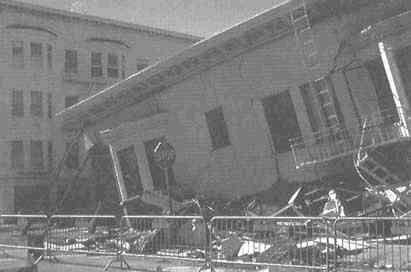
The Loma Prieta Earthquake, 1989, San Francisco. The city's Marina district, built on 1906 rubble, sustained heavy damage in the 1989 Loma Prieta earthquake. The first story of this three-story building collapsed because of ground shaking and liquefaction. The second story also collapsed, leaving only the third story (NOAA).
and coastal forests help to dampen waves and high winds from tropical storms and lessen the impacts of tsunamis by absorbing part of the wave energy (Bender, 1995). Marshes and wetlands are also valued buffers for upland sites during hurricanes and coastal storms and provide natural storage for riverine flooding. Heavily vegetated or forested hillsides help to prevent mudslides and facilitate run-off infiltration which can reduce downstream flood stages.
While natural features can lessen the severity of hazards, many of these features face destruction because of their location in areas desirable for new development (e.g., at the water's edge or in places with a view). Land use planning and management can protect these natural features. Coastal construction setback lines serve to protect natural dune systems and barrier islands; land acquisition and transfer of development rights allow marshes, mangroves, and wetlands to stay in their natural state in perpetuity; and land management activities such as prescribed burns allow fire regime ecosystems to function more naturally. Development regulations can also limit the amount of development permitted on envi-
ronmentally sensitive and hazard-prone land, minimize the level of vegetative disturbance, and prohibit uses of hazard-prone areas that could lead to unpredictable releases of hazardous substances when an earthquake, flood, hurricane, or another hazardous event occurs.
Developing relationships between groups interested in hazards and environmental management is not a new idea. In the early 1980s, the Conservation Foundation undertook a collaborative effort with federal and state governments to build local government capacity and commitment to conserve coastal resources and to prevent loss of life and property from coastal storms and hurricanes. In one instance, the Conservation Foundation, with support from state and local governments, helped Franklin County, Florida, develop a state-of-the-art shoreline protection strategy which includes the following elements: ( 1) guidance for site planning and structural integrity of development in high-hazard zones; (2) restoration of sand dunes degraded by random beach access and insensitive development; (3) guidance on the rate and amount of growth that barrier islands and flood hazard areas can safely accommodate, taking
SIDEBAR 7-1Land Use Advocates and Partners: Land Trusts, Watershed Associations, and Professional Organizations The Nature Conservancy (TNC) incorporated in 1951 for scientific and educational purposes. Its mission is to preserve the full array of species, communities, and ecosystems in the world by saving the land and water on which their survival depends. TNC has over $1 billion in assets, protects or owns over 6 million acres, and operates the largest nature preserve system in the world, with over 1,300 separate preserves. It accomplishes its mission through identification and mapping of rare species and communities, land acquisition and protection (gift, easement, lease, purchase, or other means), and land use planning and management (with the aid of 20,000 volunteers and 1,400 staff) (Murray, 1995). TNC has a reputation as a collaborator that avoids confrontations while searching for levers such as interorganizational partnerships, volunteer action, and technological breakthroughs to advance its mission. One of its core prin- |
into account environmental and evacuation constraints; and (4) guidance on land use policies to protect the ecological integrity of the Apalachicola Bay system (McCreary and Clark, 1983).
Examples such as the Franklin County, Florida, case are rare, but opportunities to create such relationships are perhaps greater now than before, as more and more environmental organizations adopt principles of environmental sustainability as part of their organizational mission. The challenge to policymakers and planners is to identify organizations with the greatest potential to advocate and support land use strategies.
Land trusts (a type of environmental organization) deserve special attention as promising partners in helping governments promote land use approaches to mitigation. A land trust is a nonprofit organization working toward the protection or conservation of important natural and/ or cultural resources typically through purchase of land or conservation easements. Land trusts may be single purpose or pursue multiple objectives. These include preserving the environment, agricultural lands, forest lands, recreational lands, viewsheds, open space, scientific sites, ar-
ciples is that it is essential to involve other participants: no one institution possesses the full complement of talents, skill, knowledge, and interests to implement environmental protection programs. TNC worked with the U.S. Forest Service to create a cost-share program to bring private dollars to match government funds for specific conservation projects. It also has engaged over 5,000 volunteers in Northern California in riparian reforestation efforts, and has strong land use planning expertise as a result of its extensive mapping and preserve management programs. The conservancy will work with any legitimate group, whether government, NGO, university, or corporation so long as it shares similar goals (Murray, 1995). TNC does not take positions on public policy issues (with only few exceptions) so that it can continue to effectively interact with diverse organizations (Williamson, 1994), and it has a history of reaching out to different groups (Skolnick, 1993). The Brandywine Conservancy was created in 1967 out of concern for the future of the natural and cultural resources of the rural Chadds Ford, Pennsylva- |
cheological sites, historic sites, and opportunities for affordable housing. Land trusts vary considerably in scale and sophistication. They range from major national environmental organizations such as the Nature Conservancy—whose combined assets, professional staff, and high-level contacts place its capabilities on par with many major multinational corporations (see Sidebar 7-1)—to small-scale local groups such as the Mendocino California Coastal Land Trust, which depend solely on part-time voluntary efforts to succeed (Land Trust Alliance, 1995; Murray, 1995).
Interest in land trusts is a relatively new phenomenon. Approximately half of all land trusts were formed within the last 15 years. The fastest growth is occurring in the Western and Mid-Atlantic regions (Land Trust Alliance, 1991). While exact figures are difficult to find, the best estimate is that the more than 1,100 land trusts in the United States have protected somewhere on the order of 6.2 million acres (Elfring, 1989; Hocker, 1996). Land trusts have significantly bolstered local government capacity to implement land use approaches to mitigation. For
nia, area outside of Philadelphia. After a short period of operation, the organization expanded its area of interest to include the entire Wilmington-Philadelphia region of Pennsylvania, with emphasis on protecting Brandywine Valley resources. Over the last 30 years, the Brandywine Conservancy has established itself as a respected advocate and supporter of environmentally responsible growth and resource conservation. The conservancy has protected over 25,000 acres through conservation easements and direct acquisition (Land Trust Alliance, 1995). Much of this land is in the floodplain and the conservancy also has promoted responsible floodplain management by helping 35 communities across 6 counties to develop land use controls that protect natural features (Kusler, 1982; Mantell et al., 1990). The conservancy also runs a land stewardship program that helps private and public landowners to develop short- and long-range plans for protecting and improving their farmland, waterways, and historic sites. The conservancy accomplishes its mission with a trained professional staff which includes planners, landscape architects, natural resource managers, and specialists in historic preservation and environmental engineering. As of 1995, the trust had 17 |
example, acquisitions by land trusts often do double duty by preserving sensitive riverine, coastal, mountain, and forested areas and by helping to prevent inappropriate development in hazard-prone locations. A recent analysis of the mission statements of the members of the Land Trust Alliance revealed that over 226 land trusts nationwide include coastlines and floodplains as priority protection areas (Paterson, 1996). However, acquisitions and easements for conservation are not the only avenues through which land trusts can serve hazard mitigation purposes. According to a 1990 survey by the Land Trust Alliance (1991), better than 67 percent of all land trusts also engage in education campaigns, 42 percent conduct or assist in community land use planning, and 40 percent actively lobby on land conservation issues within their service areas. Thus, land trusts may also play an important role in bolstering local commitment to land use strategies.
California's Greenbelt Alliance, Connecticut's Housatonic Valley Association, and Pennsylvania's Brandywine Conservancy have been particularly successful in spurring land use planning and management
full-time staff, 7 part-time staff, 3,300 dues-paying members, and an annual operating budget of $1 million (Land Trust Alliance, 1995) The Charles River Watershed Association formed in 1965 to promote integrated watershed management in the Charles River Basin of Massachusetts. It participates in public studies and projects relating to the river and its resources, and promotes public awareness and education on river basin issues through conferences and publications (Platt, 1987). In addition to its efforts to improve water quality, enhance development of greenbelt and river-front parks, and increase public access to the river, the CRWA has been a strong supporter and participant in the development of a unique floodplain management program that combines a natural storage system of upland wetlands and marshes with downstream structural controls. The original plan called for purchase of full title or easements on 8,500 acres of wetlands that would store in excess of 50,000 acre-feet of water (comparable to a medium-sized reservoir). Approximately 57 percent of that total was actually protected (National Park Service, 1991). The re- |
that is sensitive to both environmental and natural hazard concerns (see Sidebar 7.1). All three organizations stand out as exemplars of what multifaceted regional-scale land trusts can accomplish through acquisition programs, grassroots organizing, education, technical assistance, fund-raising, interorganizational collaboration, and active lobbying (Greenbelt Alliance, 1996; Mantell et al., 1990). However, only about one in five land trusts nationwide enjoys the resource base and staff expertise of trusts like the Brandywine Conservancy (Land Trust Alliance, 1991). Efforts to enhance the capacity of existing land trusts to implement projects consistent with hazard reduction may be an effective avenue for promoting more widespread hazard mitigation activity.
Private watershed associations and conservation organizations perform similar functions as land trusts and offer comparable promise as partners for promoting land use approaches to hazard mitigation (see Sidebar 7-1). Although systematic information on these entities is lacking, efforts such as the Environmental Protection Agency's watershed protection approach (U.S. EPA, 1994) may substantially increase the
mainder of the floodplain is protected largely through local zoning controls. Nearly three-quarters of the localities within the Charles River watershed have floodplain regulations in place. The CRWA closely monitors proposed major developments in the watershed to safeguard the integrity of the floodplain management program (Platt, 1987). The Upper Arkansas Valley Wildfire Council (UAVWC) and Foundation were created in 1992 and 1993 (respectively) to use land use planning, public education, and hazard reduction and response planning to reduce or prevent the loss of lives, property, and natural resources due to wildfire (UAVWC, 1993b). The forerunner of the UAVWC was a separate Urban-Wildland Interface Fire Committee in Lake County and Chaffe County, Colorado. The two counties combined their resources into a regional approach because of their proximity, and because they share similar lifestyles, attitudes, fuel types, weather patterns, topography, ignition sources, and values at risk. The impetus to these early urban-wildland committees came from local foresters and fire professionals whose awareness of and concern for wildland hazards in their own |
number and potential of these entities. An exploratory investigation of seven watershed associations suggests that they have been particularly effective in promoting public awareness, stimulating the creation of grassroots constituencies, and providing neutral forums where complex policy issues can be debated and addressed creatively (Platt, 1987).
Clearly land trusts and watershed associations are just two examples within the larger pool of possible partnerships that can be explored with environmental organizations. Collaboration with major national environmental organizations that have extensive and highly active state and local networks, such as the Audubon Society and the Sierra Club, could have considerable impact on local mitigation efforts across the nation. Working with existing environmental networking organizations such as the Coastal Alliance would ease communications at all levels of environmental activism and across all sectors. Additionally, joining up with ongoing federal initiatives such as the National Park Service's Heritage Partnerships program (NPS, 1991) and the Department of Housing and Urban Development's empowerment community program offers prom-
communities were strengthened by participating in several wildland fire suppression efforts from 1988 to 1992 (several of which were out-of-state blazes) (Paul Summerfelt, Director, UAVWC, personal communication, 1996). The UAVWC has been endorsed by both county governments but relies largely on volunteer efforts to undertake its mitigation efforts. The UAVWC Foundation [an IRS 501 (c)(3)] was established to facilitate application for and receipt of grant money for mitigation efforts. Current mitigation strategies include: wildland fire hazard mapping; development of a ''building permit kit" detailing prevention and mitigation measures for construction; new subdivision and building code changes; subdivision mitigation plans for existing high-hazard areas; and development of a dry hydrant plan for the Upper Arkansas Valley. The UAVWC has been nominated for several awards and has received requests for information from California, Texas, New Hampshire, Oregon, and Wyoming, which were interested in establishing similar councils (UAVWC, 1993a). |
ise as well (all of these programs have embraced locally based planning as well as collaboration with NGOs as key ingredients of their success).
SCIENTIFIC, TECHNICAL, AND PROFESSIONAL ASSOCIATIONS
Scientific, technical, and professional associations have a long and distinguished record of creating and diffusing knowledge and thus helping to resolve or mitigate many social ills. Indeed, many researchers consider scientific, professional, and technical associations to be critically important for raising public awareness of natural hazards and for building support for mitigation strategies among policymakers (Alesch and Petak, 1986; Berke and Beatley, 1992a; Dynes, 1993b; May, 1991; Schulz, 1993).
There is some empirical evidence supporting the importance of these organizations in local policy development. For example, in the early 1980s, Bingham and his colleagues (1981) tested a linear process model of the influence of professional associations on innovation by local governments. They evaluated the impact of 15 public service professional associations on the speed with which innovations were adopted by a random sample of 323 cities. Virtually all professional associations received favorable evaluations by city officials in terms of their effectiveness in increasing awareness and providing data that fostered the adoption of innovations. However, all but 2 of the 15 professional associations received low ratings on their usefulness in helping line professionals and executives foster a climate of acceptance for innovations (which led Bingham and colleagues to suggest that this is an area where professional associations should increase their capabilities).
There is also some empirical evidence pointing to public service professionals and professional associations as important sources of information about hazard mitigation (see Sidebar 7-1). For example, Bolton and Orians' (1992) study of mitigation efforts after the Loma Prieta earthquake in the San Francisco Bay area identified professional associations as among the top two sources that provided the most useful technical assistance to local governments both before and after the earthquake. Alesch and Petak's study (1986) of seismic mitigation efforts in three California communities led them to propose (among other things) that the probability that mitigation measures would be adopted is in direct proportion to the extent that there are credible, persistent inside policy advocates (e.g., line professionals and executives) and that professional
associations are a primary vehicle for communicating innovations in hazard mitigation among jurisdictions. Gori's analysis (1991) of the U.S. Geological Survey capacity-building experiment, involving the placement of geologists at the local level, shows that scientific professionals can be effective in influencing local agendas, increasing awareness of hazards, and easing implementation of mitigation measures. Furthermore, Schulz (1993) in summarizing studies on the transfer of earthquake loss reduction information noted that the most successful use of a product results from a personal contact between the information provider and the target user, and that the most effective programs are institutionalized in some manner, or they establish linkages with professional societies and organizations.
While there are a great many partnerships that could be pursued to foster land use approaches to hazard mitigation, public service professional associations which typically serve local government are an obvious target (see Table 7-3). They offer a number of advantages, including: high participation rates among local line and executive professionals and cities (which translate into multiple channels through which to diffuse mitigation messages), high credibility among local government decision makers, and the potential of expanding their organizational focus to promote land use strategies under the guise of their public service function (Bingham et al., 1981; Campbell, 1988; Waldo, 1973).
There are several examples at the federal level of efforts to engage these organizations. For example, the American Institute of Architects and the American Planning Association have been able to increase hazard mitigation awareness and professional competency through FEMA-funded seismic design workshops, educational development grants, and hazard mitigation research. In addition, FEMA also has worked with the National Sheriffs' Association to incorporate disaster preparedness materials into the National Neighborhood Watch program and worked with the National Emergency Management Association to create emergency planning guidelines for utilities and businesses. However, these efforts tend to be episodic at best and have had limited impact in terms of the total number of professionals contacted; have failed to be multi-hazard in focus; have not fully addressed land use mitigation alternatives; and have reached just a few of the professional groups that could influence local land use decision making.
The key question confronting policymakers and planners is how to better work with these highly credible and seemingly effective associations. Given that coordination and cooperation among professional as-
TABLE 7-3 Public Service Professional Associations Impacting Local Government Policy Making
Group | Title |
Chief Executive Associations | American Society for Public Administration International City/County Management Association National Association of County Governments National League of Cities National Municipal League U.S. Conference of Mayors |
Line Professional Associations | American Institute of Architects American Institute of Certified Planners American Planning Association American Public Health Association American Public Works Association American Society of Civil Engineers American Society of Landscape Architects American Society of Professional Engineers Government Finance Officers Association International Association of Chiefs of Police International Association of Fire Chiefs National Emergency Management Association National Institute of Municipal Legal Officials National Recreation and Park Association National Sheriffs' Association |
sociations working on hazard reduction has been less than ideal to date (May and Stark, 1992; Schulz, 1993), perhaps a more sustained and coordinated approach would produce better results. For example, a formal hazard mitigation coordinating or umbrella organization could be used to create forums where representatives of professional associations could learn about federal, state, and regional mitigation priorities, while at the same time allowing government officials to better understand the organizational capabilities and synergies that may be possible by working in partnership with a variety of professional associations.
One of the more promising areas to spur greater collaboration among public service professions is within the design professions (e.g., architects, planners, urban designers, and landscape architects). Design professionals can have a profound influence on a community's exposure to hazards through their own professional practice and the lobbying activities and educational programs of their professional associations. Collective efforts among these professions to delineate "best mitigation prac-
tices" (encompassing a land use planning approach) or to establish principles for "disaster-resistant community design," could lend considerable legitimacy to land use efforts to reduce susceptibility to hazards. In addition, a number of new hazard-related policy networks could result from these forums, as well as new information dissemination resources to speed the transfer of knowledge about effective land use techniques. While perhaps not easy to achieve, the likely benefits of a broad-based multidisciplinary coalition of public service professionals certainly warrant further experimentation.
Universities and Foundations
Universities have made important contributions to efforts to reduce losses from natural hazards, but they could expand their influence further in the area of hazard mitigation. Universities contribute information to policy debate, influence public opinion through a variety of educational and information channels, and shape the intellectual focus and technical training of professionals and others who operate government and affect the built environment (Carnegie Commission, 1993). A number of universities support specialized hazard research centers which serve as clearinghouses on mitigation techniques, provide symposia and conferences, and offer hazard-related education and training. However, Schulz (1993), in a review of hazard reduction research efforts, argues that these centers, and that universities more generally, should expand their efforts to include training and education of local officials and other groups that ordinarily do not seek out hazard mitigation information but who are central to policy change.
Universities could also do more, as noted by Schulz (1993) and other investigators (e.g., Ender and Kim et al., 1988; Havlick and Dorsey, 1993) to increase the capacity and commitment of design professionals to use land use strategies to reduce losses from hazards. At present, hazard reduction curricula are not well integrated into undergraduate and graduate design profession programs. For example, a recent survey of graduate planning programs found no courses specifically focusing on natural hazards and hazard mitigation (Havlik and Dorsey, 1993). An earlier investigation by Miller and Westerlund (1990) identified only three courses across 57 graduate planning programs in the United States and Canada that specialized in hazard mitigation. While there have been some recent efforts to address this shortcoming, effort is required in schools, universities, and professional certification programs to ensure a
future constituency for mitigation and a competent population of professional staff to implement mitigation measures (Schulz, 1993).
Foundations also could play a stronger role in promoting hazard mitigation. Foundations motivate, organize, and finance a variety of institutions that bring information and affected stakeholders together; engage universities and think tanks in policy-relevant research; fund natural experiments to evaluate new but untested ideas; and create forums where experts and citizens can collaborate to resolve problems (John A. Smith, 1989). However, foundations have yet to endorse mitigation of natural hazards as a priority. According to the Foundation Center's National Guide to Funding series, which combines information from five major grant-giving databases, less than one-half of 1 percent of all community development giving was targeted for disaster-related issues in 1993-1994 (Foundation Center, 1995). This amounted to just under $2 million, which is a relatively small amount when compared to the total of $635 million in grants awarded by the approximately 2,500 largest private, corporate, and community foundations in the United States. Furthermore, of the 44 disaster-related grants awarded in 1993-1994, virtually all of the giving was relief aid for recent disasters (see Table 7-4). Only two projects focused directly on preventing future losses through mitigation, and just one had a strong land use emphasis. That project, supported by the Knight Foundation, involved a series of post-hurricane design charettes and conferences to create plans for the redevelopment of 28 communities over a 140-square-mile area. The charettes and the planning process considered several ways to minimize flood and wind damage from the next hurricane (Vonier, 1993). Policymakers, planners, and perhaps newly created hazard mitigation nonprofits (see following section) can alert foundations to the benefits of land use strategies to reduce losses from natural disasters.
CREATING AND ENABLING THE FORMATION OF NEW THIRD SECTOR ENTITIES
Federal, state, and local policymakers are not newcomers to creating or sponsoring new third sector support organizations. Indeed, in the hazards context, most of the existing earthquake consortia, including the Central U.S. Earthquake Consortium, the Western States Seismic Policy Council, and the New England States Earthquake Consortium, rely largely on FEMA sponsorship to cover significant portions of their expenses (Durham, 1993). These organizations foster and coordinate
TABLE 7-4 Examples of Disaster-Related Giving, 1993-1994
Disaster | Foundation | Grant Purpose |
Hurricane Iniki | Hawaii Community | Repair damage to foundation facilities American Express Foundation Repair damage to facilities |
Hurricane Andrew | Knight Foundation | Community charette for recovery Ryder System Charitable Foundation Repair damage to low-income homes |
Northridge Earthquake | Weingart Foundation | Repair damage to facilities California Community Foundation Repair damage to facilities and aid those made homeless Ahmanson Foundation Repair damage to low-income homes |
Mississippi Floods | Needmor Fund | Relief aid McKnight Foundation Community organizing for relief and recovery, needs assessment for recovery |
SOURCE: Foundation Center, 1995. | ||
implementation of hazard- and risk-reduction policies through symposia, conferences, workshops, demonstration projects, and publications (Durham, 1995). However, their focus is narrow in that they only address earthquake hazards, and their multistate focus limits the extent to which they can affect local-level mitigation efforts.
A better model is California's Bay Area Regional Earthquake Preparedness Project (BAREPP). BAREPP was created through a cooperative agreement between FEMA and the State of California in 1984. The agreement set the following objectives for the project: "(1) promoting comprehensive earthquake preparedness actions by local jurisdictions, volunteer agencies and associations and the private sector; (2) providing planning assistance and coordination in the development of improved regional response capabilities for predicted and unpredicted major earthquakes, including programs of test and exercises; (3) providing technical and planning assistance to local jurisdictions in the development and
implementation of programs of hazard mitigation and prevention to reduce earthquake vulnerability; and (4) establishing a local incentive grant program to promote demonstration projects in comprehensive earthquake preparedness" (Orians and Bolton, 1992). A policy advisory board, consisting of major organizations and groups with an active interest in improved earthquake safety, consulted and advised the project staff on goals, objectives, and policies.
BAREPP worked hard to gain visibility and credibility within the communities it serves (Orians and Bolton, 1992). A survey of Bay area jurisdictions found that BAREPP was one of the two most often used and valued sources of information and technical assistance for both pre- and post-earthquake mitigation planning (Bolton and Orians, 1992). Furthermore, Eisner (1991) argued that BAREPP's work in the Bay region had a significant positive influence in reducing losses in the 1989 Loma Prieta earthquake because local governments knew what to do, many had mitigation programs in place before the earthquake, trained staff responded as planned, and hazardous structures were identified well in advance.
SIDEBAR 7-2A State-Level GONGO and a National NGO Outreach Model The Colorado Natural Hazard Mitigation Council and Foundation. Since its inception, the council has supported over 100 projects ranging from hazard-vulnerability mapping to post-disaster mitigation projects. The council is composed of almost 300 appointed, ex officio, and volunteer committee members. Thirty-five members and a chairperson are appointed directly by the governor. The council has six hazard subcommittees that give in-depth attention to mitigation of the following conditions statewide: severe weather, drought, geologic hazards, dam safety, wildfire, and floods. By far the greatest portion of the council's work relies on volunteer efforts and collaboration with other voluntary and governmental agencies. For example, in 1994, the council collaborated with the National Civilian Community Corps to provide a post-disaster mitigation workshop and post-disaster mitigation field work in the community of Lyons, Colorado (Fred Sibley, Office of Local Government Affairs, State of Colorado, personal communication, 1995). The establishment of the Colorado Natural Hazard Mitigation Foundation in 1991 [a 501(3)(c) certified organization], gave |
It is important to note that while BAREPP was a promising regional model suitable for replication or adaptation in other states (perhaps on a broader multi-hazard basis), it was not a third sector entity. While it would have been quite easy for BAREPP to be formed as a third sector entity under the original agreement (and it could have become one), it operated as a project controlled by the California Governor's Office of Emergency Services and essentially went out of business when state resources were withdrawn.
Another model that encompasses broader hazard mitigation objectives is a state-level innovation—the Colorado Natural Hazard Mitigation Council (CNHMC) and Foundation (see Sidebar 7-2). The Colorado Natural Hazard Mitigation Council was created by executive order of the Colorado governor in 1989 in order to evaluate, prioritize, and implement hazard mitigation projects. This council, the first organization of its kind in the country, coordinates natural hazards research and loss reduction strategies throughout the state of Colorado and integrates the plans and resources of local, state, and federal agencies (Colorado
the council an additional vehicle for forming coalitions, attracting foundation support, and other public-private partnerships to fund recommended hazard mitigation projects (Colorado Office of Emergency Management, 1993). The National Trust's Main Street Program. The National Trust was created by congressional charter in 1949 to encourage public participation in the preservation of historically and culturally significant sites, buildings, and objects. Since its inception, the National Trust has expanded its mission to serve as a central source of information on preservation technology, a forum for the exchange of ideas, a funding source for preservation planning, and a direct provider of services for preservation planning. In 1977, the National Trust launched three Main Street demonstration projects in the Midwest to find ways to preserve and revitalize small downtowns. Over a three-year period, it developed a four-point strategy that has been successfully replicated in over 1,100 towns and cities in 40 states since the program expanded to a full-scale operation in 1980. The approach is based on community self-determination and gradual transformation, with small changes in the early years as revitalization efforts strengthen local capacity to tackle more complex challenges. The four points of the strategy, |
Office of Emergency Management, 1994). It provides information and technical assistance to local governments and individuals, identifying specific mitigation measures for a given area, and then assists in implementation. Volunteer committee members, who are challenged to obtain funding and in-kind support for their projects, accomplish the bulk of the council's work. In 1991, the council created the Colorado Natural Hazard Mitigation Foundation to provide a funding conduit for its efforts and to make the council more competitive for federal, corporate, and foundation support. The council has accomplished a great deal in its short existence (over 100 projects), and in 1996 it instituted a re-engineering process to ensure its continued effectiveness (Fred Sibley, Office of Local Government Affairs, State of Colorado, personal communication, 1995). The council and foundation present a promising model for other states to consider because of the multi-hazard mitigation emphasis and the excellent level of voluntary participation experienced to date.
A highly successful national-level model that has inspired widespread local activism and enhanced local planning capabilities (but that falls outside the hazards context) is the Main Street program of the National
on which work is performed simultaneously, are: (1) economic restructuring—strengthening the downtown's existing economic base while gradually expanding it; (2) design—improving the downtown's physical environment, rehabilitating historic buildings, building architecturally sensitive buildings, and ensuring that streets, sidewalks, signs and lighting, and other elements function well and support the overall design of the commercial district; (3) promotion—marketing the downtown's assets to residents, visitors, and investors; and (4) organization—building collaborative partnerships among a broad range of public and private organizations, agencies, businesses, and individuals. To introduce the program to other communities, in 1980 the trust created a National Main Street Center, which includes a revitalization learning center and information clearinghouse. It has served as a model for similar programs in Canada, Venezuela, the United Kingdom, Australia, and New Zealand. In 1995, the program expanded to include neighborhood commercial districts as well as small and medium-sized city downtowns. By the end of 1993, for every dollar a community spent on its Main Street program, it leveraged an additional $25 in new investment (on average) (Keith Smith, 1995). |
Trust for Historic Preservation. The Main Street program provides an excellent example of how a large, governmentally organized nonprofit can successfully expand its mission and operations to become an effective policy advocate and capacity builder at the local level (see Sidebar 7-2). The National Trust's Main Street coordinators provide technical support and other services to local voluntary preservation efforts. What makes this model especially interesting from a land use perspective is how Main Street coordinators place as much emphasis on planning what can be changed as on planning what must be preserved. Preservation is simply one component of a local Main Street revitalization plan, albeit an important one. Perhaps this model can work equally well in hazard-prone communities. However, as in the Main Street model, hazard mitigation would need to be linked to other important community development objectives.
Another promising model is New York State's Hudson River Valley Greenways Community Council and Conservancy. The New York state legislature created the council so that it can operate as a designated regional planning agency (it has official status as a governmental planning entity), as a public benefit corporation (to fulfill nonprofit implementation efforts), and as a 501(3)(c) (so it can attract funding from foundations and corporate giving programs). The Council and Conservancy created a model communities program that aims to foster a voluntary regional planning compact across 10 counties to protect the assets of the river valley. Ten model community planning projects were under way by 1996, involving 23 communities. The greenway's planning process builds local planning capacity by supporting the creation of planning committees, developing community planning profiles, and subsequently forming a vision based on several public meetings (Diamond and Noonan, 1996). Much of the planning focuses on the Hudson River, and floodplain management considerations are interwoven into the planning process. Strong state statutes that allow prohibition of most uses in the 100-year floodplain support planning for the floodplain. Interest in floodplain management issues took on greater urgency in 1996 when the Hudson River Valley suffered its worst flooding in over 70 years.
Both the Main Street and Hudson Valley model communities programs aim to stimulate grassroots activism and enhance local problem-solving capabilities by building local capacity and commitment to land use planning processes. In both cases, the program's primary planning emphasis—historic preservation and environmental conservation, respectively—is embedded within the larger framework of community plan-
ning. This allows stakeholders within communities to balance a number of competing community objectives, and to craft locally acceptable, creative solutions to meet as many of those objectives as possible.
CONCLUSIONS
Implementation of land use strategies for hazard mitigation has been difficult. Lack of public understanding, professional support, and political leadership have been significant barriers. The third sector can help overcome these obstacles through its ability to mobilize public and political support, shape public opinion, attract diverse funding, and leverage scarce resources. The third sector has been especially effective in stimulating, supporting, and sustaining community-based planning programs, but these efforts have given little attention to hazard mitigation. Several promising third sector partnerships to expand support for land use approaches to hazard mitigation have been explored in this chapter. They include: working with existing NGOs that have already started to branch out into the hazard mitigation field; attempting to build support for mitigation in cooperation with NGOs that have complementary missions (such as environmental organizations and public service professional associations); and creating or enabling new hazard mitigation entities. Policymakers and planners may replicate or adapt these models to suit their specific mitigation goals. However, because of limited third sector participation in the hazard mitigation field and lack of evaluative information on the third sector in general, it is difficult to say which options will prove most effective. For those reasons, past experiences and current experiments with differing NGO-government structures should be evaluated further to identify ways to leverage the best and minimize the worst aspects of these relationships. While the challenges to implementing greater use of land use strategies are formidable, the potential rewards certainly warrant greater experimentation with partnerships between government and the third sector.