Past
Each year, Space Science Week brings together leaders across the space science disciplines to explore the latest developments and discuss the future of the field from a variety of perspectives, from planetary protection to astrophysics to Earth science and applications from space. Join us for Space Science Week 2026 from March 23 to 27.
Access a digital agenda and a pdf version with links to the seven discipline committee meetings, the plenary session, and the public lecture below.
How to Register
How to Register
Featured
Events
Plenary Session - Tues., March 24 from 10 AM – 6 PM ET
Visit Event Page
Joint Session: Artificial Intelligence for the Space Sciences - Wed., March 25 from 9 AM to 12 PM ET
Visit Event Page
Joint Session: Dark and Quiet Skies for Astronomy - Wed., March 25 from 1 PM to 3:30PM ET
Visit Event Page
Wednesday, March 25, at 7:00 PM ET
Scientific breakthroughs rarely start with answers. They start when we imagine things we can't yet see. In this keynote, join singer Jewel as she shares her latest work and how her collaboration with NASA's data and use of open science come together to show how creativity helps people connect more deeply to their environment by making science more visible, tangible, and participatory.
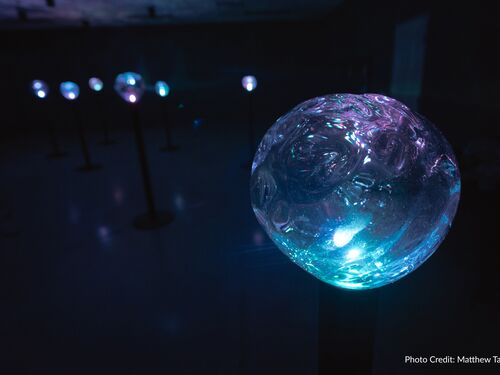
Discipline Committee Meetings
March 23-27, 2026
Engage with experts across seven Space Studies Board committees as they discuss a spectrum of space science topics. These sessions offer a deep dive into the current state and future directions of space science, from recent scientific discoveries and technological advancements to updates from federal agencies and the commercial space flight industry.
Meeting times vary from committee to committee. For more information and meeting agendas, please visit their individual event pages below.
Agenda
Agenda
Materials
-
SSW 2026 Parallel Agenda
This agenda has information on all seven committee meetings, the plenary session, and the public lecture. It is still subject to change.
Above is a digital agenda sorted by day with links to the event pages for all seven committee meetings, the plenary session, and the public lecture.
- Update from NASA Science Mission Directorate
- Update from the U.S. Department of Energy
- Update from the NSF Directorate for Mathematical and Physical Sciences
- Update from NOAA National Environmental Satellite, Data, and Information Services
- Indian Space Research Organization - Science Highlights
- Japanese Aerospace Exploration Agency - Science Highlights
Location
National Academy of Sciences Building
2101 Constitution Ave NW
Washington DC 20418, USA
Disclaimer
Organizers
Contact
More like this