Preparing the Transportation Workforce for Emerging Technologies: Developing a Guide (2026)
Chapter: 4 Workforce Gap Analysis
Chapter 4: Workforce Gap Analysis
Once the foundation was set by past work, the next step in the research approach was synthesizing available information to build an understanding of the most prominent challenges faced by transportation agencies and their partners. This chapter summarizes the identified workforce gaps into matrices. These matrices detail root causes of observed challenges and their associated resource gaps. The purpose of these matrices was to narrow in on the resources that could be most valuable to produce within the NCHRP 20-102(20) guide.
Workforce Gap Analysis Approach
The workforce gap analysis identified persisting workforce needs and resource gaps for all levels of staff responsible for planning, designing, operating, and maintaining emerging technologies. The project team analyzed the data collected through the literature review and stakeholder outreach to identify the root causes that lead to workforce gaps such as, the availability of resources, challenges with agency organizational structures, and areas of improvement related to recruiting, hiring, developing, and retaining staff. The diverse geographies, agencies/organizations, and staff levels represented in the stakeholder outreach, enabled the project team to understand the challenges that impact agencies and the industries’ ability to prepare/preparedness for emerging technologies. These challenges were categorized into workforce gaps and their root causes as defined below:
- Root Causes – Challenges or tensions experienced as organizations prepare for emerging technologies based on the literature review or stakeholder outreach.
- Workforce Gaps – The manifestation of the root causes in the workforce and the gaps that are created/worsened. One root cause may result in multiple workforce gaps.
Additionally, this chapter identifies gaps in available resources for agencies, providing insights into the types of resources and materials that may be most desired and useful for agencies. The findings from this analysis informed the content and presentation of information in the workforce preparedness guide.
Overarching Themes
As the project team synthesized identified issues and workforce gaps, three overarching themes emerged defined in Table 4. Figure 12 details the root causes within each of the emerging themes. The following matrices, Table 5–Table 7 are organized by theme and root cause and provide insight into how these challenges affect the workforce and the availability of literature and resources for each. In general, stakeholders validated the barriers in the stakeholder webinar. The root causes stakeholders selected that most resonated with their experiences are denoted with a ★.
Table 4: Workforce Gap Analysis Emerging Themes
| Institutional Agility | Staffing Adaptability | Workforce Pipeline |
|---|---|---|
| Challenges that impact an organization or agency’s ability to respond quickly to evolving technologies through its policies, organization, and culture. | Challenges associated with quickly evolving skillset requirements to support emerging technologies, adapt hiring processes to introduce new candidate pools, and retain the existing workforce by upskilling. | Challenges associated with bolstering the workforce pipeline by encouraging engagement between industry and academic or trade educational programs. |
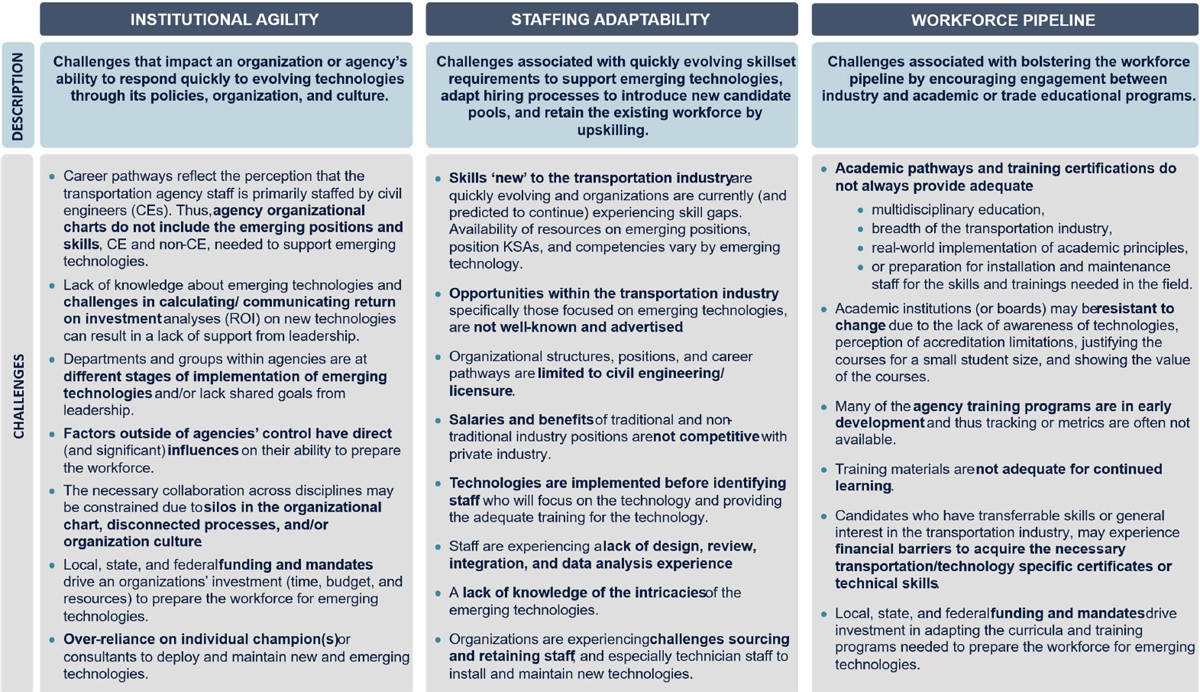
Table 5: Institutional Agility Root Causes and Workforce Gaps Matrix
| Root Causes | Related Workforce Gaps | Source | Resource Availability for Organizations | |
|---|---|---|---|---|
| Literature Review | Stakeholder Outreach | |||
| Career pathways largely reflect the perception that the transportation agency staff is primarily staffed by civil engineers (CEs). Thus, agency organizational charts do not include the emerging positions and skills, CE and non-CE, needed to support emerging technologies. |
|
✓ | ✓ |
|
| Limited knowledge of emerging technologies and challenges in calculating/communicating return on investment |
|
✓ | Limited existing resources provide concise and graphic information to inform leadership about the necessary steps to plan the overall organization for emerging technologies and the potential benefits to workforce efficiency that could be gained through the implementation of new | |
| Root Causes | Related Workforce Gaps | Source | Resource Availability for Organizations | |
|---|---|---|---|---|
| Literature Review | Stakeholder Outreach | |||
| analyses (ROI) on new technologies can result in a lack of support from leadership. |
|
technologies. Few resources are available to guide agencies to frame discussions about traditional return-on-investment discussions. Resources such as the Building Information Model (BIM) ROI Study provide frameworks for evaluating ROI. | ||
| Departments and groups within agencies are at different stages of implementation of emerging technologies and/or lack shared goals from leadership. |
|
✓ | Available resources provide general strategies for agencies considering different types of technologies and at varying levels of implementation. | |
| Root Causes | Related Workforce Gaps | Source | Resource Availability for Organizations | |
|---|---|---|---|---|
| Literature Review | Stakeholder Outreach | |||
| Factors outside of agencies’ control have direct (and significant) influences on their ability to prepare the workforce. ★ |
|
✓ | ✓ | While available resources discuss the impacts and influence of these outside factors, the ability to address the root cause of the issue is limited as the resources provide context to mitigate negative impacts and do not change the structure that creates the issues. Available resources include (16), (18), and (25). |
| The necessary collaboration across disciplines may be constrained due to silos in the organizational chart, disconnected processes, and/or organization culture. |
|
✓ | ✓ | Existing resources provide strategies to integrate teams for emerging technologies. Stakeholders highlighted the implementation barriers and adaptations to process and culture that could support the implementation of existing research and strategies. Available resources include (20) and (25). |
| Root Causes | Related Workforce Gaps | Source | Resource Availability for Organizations | |
|---|---|---|---|---|
| Literature Review | Stakeholder Outreach | |||
| Local, state, and federal funding and mandates drive an organization’s investment (time, budget, and resources) to prepare the workforce for emerging technologies. |
|
✓ | ✓ | Existing resources emphasize the importance of identifying and exploring funding opportunities. Some organizations provide lists of funding sources; they are often not included in combination with the strategies, which may create a hurdle for agencies to identify their available options. |
| Over-reliance on individual champion(s) or consultants to deploy and maintain new and emerging technologies. ★ |
|
✓ | Existing resources discuss the benefits of identifying champion(s) for emerging technologies and strategies to improve staff retention. | |
| Root Causes | Related Workforce Gaps | Source | Resource Availability for Organizations | |
|---|---|---|---|---|
| Literature review | Stakeholder Outreach | |||
| Skills ‘new’ to the transportation industry are quickly evolving and organizations are currently (and predicted to continue) experiencing skill gaps. Availability of resources on emerging positions, position KSAs, and competencies varies by emerging technology. |
|
✓ | ✓ | Available resources provide new and emerging positions, KSAs, and roles broadly for emerging technologies and more specifically for TSMO, EVs, and other technologies. Resources are not available for all technologies and some may be outdated. Available resources include (18), (19), (20), (25), (28), (29), (31), (37), and (47). |
| Root Causes | Related Workforce Gaps | Source | Resource Availability for Organizations | |
|---|---|---|---|---|
| Literature review | Stakeholder Outreach | |||
| Opportunities within the transportation industry, specifically emerging technologies, are not well-known and advertised. |
|
✓ | ✓ |
Existing resources discuss the importance and strategies to better advertise opportunities within the transportation industry. Available resources include (19), (20), (25), (33), (34), (39), and (61). |
| Organizational structures, positions, and career pathways are limited to civil engineering/licensure. ★ |
|
✓ | ✓ | Available resources provide strategies to increase the candidate pool while recruiting. Available resources include (16), (19), (20), (33), and (34). |
| Root Causes | Related Workforce Gaps | Source | Resource Availability for Organizations | |
|---|---|---|---|---|
| Literature review | Stakeholder Outreach | |||
| Salaries and benefits of traditional and nontraditional industry positions are not competitive with private industry. ★ |
|
✓ | Few existing resources provide salary benchmarks for positions related to emerging technologies. | |
| Technologies are implemented before identifying staff who will focus on the technology and providing adequate training for the technology. |
|
✓ | ✓ | Available resources discuss best practices for implementing emerging technologies, some of which include strategies to prepare the workforce. There are challenges with the sequential implementation of the strategies. Available resources include (28). |
| Root Causes | Related Workforce Gaps | Source | Resource Availability for Organizations | |
|---|---|---|---|---|
| Literature review | Stakeholder Outreach | |||
| Staff have limited design, review, integration, and data analysis experience. |
|
✓ | Existing resources focus on the technical and non-technical skills needed to implement emerging technologies. Management skills are implied, but often not explicitly stated or strategized. | |
| Limited knowledge of the intricacies of the emerging technologies. |
|
✓ | Available resources provide strategies for emerging technologies. The intricacies of each technology in combination with the uniqueness of each jurisdiction is challenging to integrate into resources accessible and useable by a wide audience. | |
| Root Causes | Related Workforce Gaps | Source | Resource Availability for Organizations | |
|---|---|---|---|---|
| Literature review | Stakeholder Outreach | |||
| Organizations are experiencing challenges sourcing and retaining staff, and especially technician staff to install and maintain new technologies. ★ |
|
✓ | Existing resources are limited in providing a range of actionable strategies to better source and retain technician level staff. | |
Table 7: Fostering the Workforce Pipeline Gaps Matrix
| Root Causes | Related Workforce Gaps | Source | Resource Availability for Organizations | |
|---|---|---|---|---|
| Literature Review | Stakeholder Outreach | |||
Academic pathways and training certifications do not always provide adequate:
|
|
✓ | ✓ | Resources emphasize the need to improve curricula and programs to respond to new technologies. Resources provide emerging skill sets and associated programs. Resources with specific curricula or academic resources for universities are limited. Resources are available to foster and bolster STEM and transportation careers in K-12 programs. There are limited to no resources available to develop installation, maintenance, and technician training programs. There are also limited available widely accepted technician training programs for some emerging technologies. Available resources include (31), (34), and (39). |
| Root Causes | Related Workforce Gaps | Source | Resource Availability for Organizations | |
|---|---|---|---|---|
| Literature Review | Stakeholder Outreach | |||
| Academic institutions (and boards) may be resistant to change due to the lack of awareness of technologies, perception of accreditation limitations, justifying the courses for a small student size, and showing the value of the courses. ★ |
|
✓ | Existing resources are limited in identifying the return on investment and/or justification of program and curriculum changes. | |
| Many of the agency training programs are in early development and thus tracking or metrics are often not available. |
|
✓ | Few available resources with metrics to track the impact of training programs and potential refinements. | |
| Training materials are not adequate for continued learning. ★ |
|
✓ | Training materials are available for a wide range of technologies and staffing levels, though trainings are not available for all emerging technologies. There is a desire for more management-level training programs from technician to leader and/or team leader roles. |
|
| Root Causes | Related Workforce Gaps | Source | Resource Availability for Organizations | |
|---|---|---|---|---|
| Literature Review | Stakeholder Outreach | |||
|
Available resources include (31), (36), (43), (47), (62), (63), and (64). | |||
| Candidates who have transferable skills or general interest in the transportation industry, may experience financial barriers to acquiring the necessary transportation/technology specific certificates or technical skills. |
|
✓ | Few resources on how to provide incentives for candidates to upskill before joining an organization. Non-technical training is less available. | |
| Local, state, and federal funding and mandates drive investment in adapting the curricula and training programs needed to prepare the workforce for emerging technologies. |
|
✓ | ✓ | Some organizations provide lists of funding sources, though they are not specific for academic and other educational organizations and often not included in combination with strategies, which may create a hurdle for agencies to identify their available options. |


