Developing a Guide for Local Truck Parking Regulations (2026)
Chapter: 1 Literature Review

CHAPTER 1
Literature Review
Introduction
Truck parking is a critical transportation problem nationwide. A lack of truck parking for the number of trucks operating on the nationʼs highways leads to safety problems and supply chain inefficiencies (FHWA 2015). There are too many trucks for the number of spaces available, or parking is not available where and when it is needed (FHWA 2022b). This is expected to continue as e-commerce and consumer demand for goods increases the number of trucks on the roads (FHWA 2022b).
Truck parking is a problem in every state, during every month, and every day of the week. Further, shortages exist in metropolitan areas and along key freight corridors. Truck parking is often full when drivers need it, and there are few options for drivers to get information on alternatives. Developing more truck parking is problematic due to costs and opposition by communities (FHWA 2015). It would be beneficial to engage stakeholders to support creative business arrangements, land use and zoning decisionmaking, and innovative uses of property to support parking (FHWA 2020).
Local governments are key stakeholders in the truck parking discussion. Lack of truck parking in areas can impact the cost of doing business and economic prosperity (FHWA 2018b). It can create a de facto truck parking tax because goods cost more as a result of parking challenges that are burdensome and waste time and fuel (Katsikides 2022a). Despite parkingʼs connection to the economy and economic development, many local governments ban parking because of constituent protests. The resultant policies make it harder for trucks to park. Constituents complain about trucks operating in the community, especially when they operate or park and idle in residential areas. Truck drivers generally park in residential areas either because they live in the neighborhood or there are no safe alternatives for sleeping in their truck. These same communities often oppose new truck parking development (FHWA 2015; FHWA 2020; and FHWA 2022b).
FHWA states that local governments should facilitate truck parking as a priority (FHWA 2018b). The National Coalition on Truck Parking (NCTP) found that there are safety, commerce, traffic congestion, and planning implications. For example, drivers need a safe place to meet hours-of-service (HOS) requirements, and when parking is unavailable, they park in places not designated for them that may create safety hazards for other motorists. This can obstruct vehicle and bike lanes and impact line of sight. These safety issues are often handled by local safety personnel. Local governments can include truck parking in development codes to ensure that the community is able to manage how and where trucks are staging that best supports local businesses and consumer access to goods. The extra travel in looking for parking adds to congestion, much of which is on local roadways. Additionally, lack of parking may force drivers into residential areas, causing citizen concerns and complaints, and it may affect air quality due to idling and burning fuel in searching for parking. Finally, in community planning for the future,
local governments will want to incorporate truck parking to set standards for siting and design that will ensure compatibility with surrounding land uses and community goals (FHWA 2018b).
To date, the majority of responsibility for truck parking, especially with federal resources and funding eligibility, has been on states, but states do not have power over most land use and circulation decisions (FHWA 2022a). Local jurisdictions hold the key to development and land use decisions, which are often to ban parking due to constituent concerns.
Therefore, efforts by FHWA to advance discussions on truck parking solutions recently turned to how to support local governments through using federal resources or best practices to add parking capacity and parking information (FHWA 2022b). These efforts include model practices, codes, talking points, citizen education, and design guidelines (FHWA 2022b).
This literature review identifies how truck parking decisions are currently being made by local municipalities, counties, and metropolitan planning organizations (MPOs), and to uncover ordinances that have been successfully implemented to address truck parking demand, including staging. The ultimate product of this project is a guide that includes a range of model truck parking and staging ordinances, rules, and regulations suitable for consideration and adoption by local municipalities. The findings detailed illuminate the state of practice for local governments related to truck parking and strategies that can shape the future.
The trucking industry plays a pivotal role in supporting the everyday needs of communities and businesses, from retail food items to manufacturing equipment and critical medical supplies (FHWA 2022b). For the operational livelihood of the industry, truck drivers need adequate rest in safe parking places. Figure 2 includes some of the reasons truck drivers need to park (FHWA 2022b). The purpose of this literature review is to inventory local government practices related to truck parking, including a review of any related legislation and codes, stated policies, and standard practices.
This effort includes a review of barriers to action or inaction and situations where other legislation, policies, or agreements negatively affected parking. This literature review has two objectives:
- Identify the local truck parking issues, problems, and gaps.
- Identify potential policies, solutions, recommendations, and success stories.
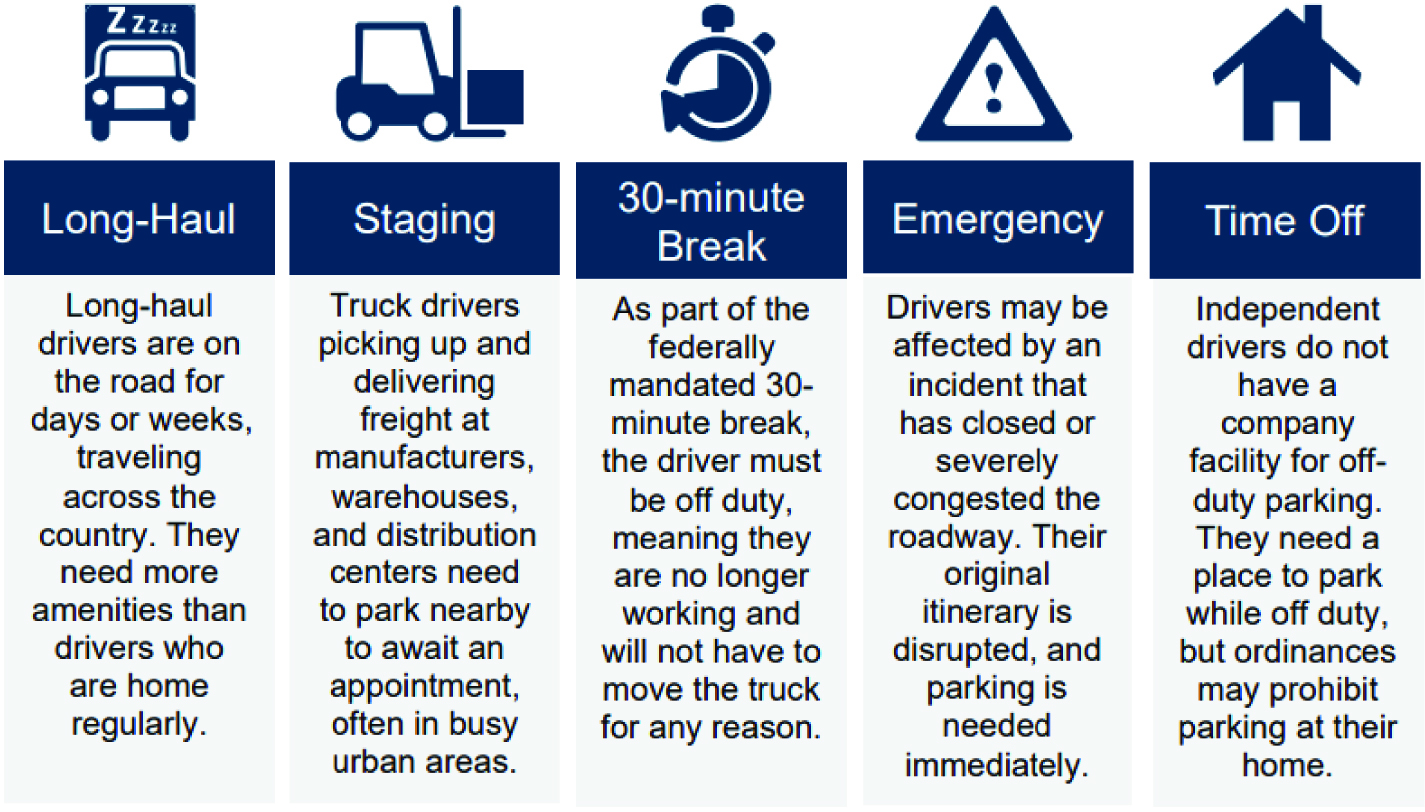
Long Description.
The graphic shows why truck drivers park in five different scenarios. In long-haul parking, long-haul drivers are on the roads for days or weeks, traveling across the country. They need more amenities than drivers who are home regularly. In staging, truck drivers picking up and delivering freight at manufacturers, warehouses, and distribution centers need to park nearby to await an appointment, often in busy urban areas. For 30-minute breaks, as part of the federally mandated 30-minute break, the driver must be off duty, meaning they are no longer working and will not have to move the truck for any reason. In emergency parking, drivers may be affected by an incident that has closed or severely congested the roadway. Their original itinerary is disrupted, and parking is needed immediately. For time off, independent drivers do not have a company facility for off-duty parking. They need a place to park while off duty, but ordinances may prohibit parking at their home.
To address these objectives, this literature review has two areas of focus. First, it identifies material that demonstrates how local governments interact with truck parking through various policies, programs, studies, and other actions. Local governments with recent studies or plans are listed, and strategies that have been identified in these plans are discussed. Second, it provides details on codes and regulations related to truck parking.
Methodology
The methodology for this literature review is as follows:
- The Texas A&M Transportation Institute (TTI) research librarian provided a bibliography search of relevant resources that identified local government and truck interaction or studies from cities, counties, MPOs, and other local focused organizations.
- A scan of federal resources from FHWA provided information from NCTP and other publications detailing local actions related to truck parking.
- The 2015 Jasonʼs Law Survey report and the 2020 Jasonʼs Law Update provided the national overview of truck parking issues and had content on local government issues.
- An extensive internet search helped reveal studies, codes, policies, and reports or doctrines from local governments on truck parking and routing that was relevant for this work.
- A review of recent studies conducted by subject matter experts, including the FHWAʼs 2019 Jasonʼs Law desk scan (FHWA 2020) and the Safety Through Disruption (Safe-D) University Transportation Centerʼs (UTCʼs) analysis of local government and MPO truck parking actions, supplemented the latest literature and provided additional context.
- Materials from industry groups provided context on local government interaction with industry.
- News articles provided background on specific local government actions.
Local Governments and Truck Parking
This section explores truck parking as it relates to local governments, their roles, the types of issues they face, and some of the strategies being developed.
Local Government Standing
An important element of understanding the relationship between truck parking and local governments is to understand local government standing among stakeholders. Local jurisdictions are a critical part of the diverse set of stakeholders; although, they are only recently identified as the group holding significant power in the discussion (FHWA 2022a).
The truck parking discussion developed over the past several decades, beginning with an identification of driver rest needs and related parking scarcity. One of the earliest reports on truck parking dates to 1996, investigating the need for parking facilities and differentiating between public and private supply (FHWA 1996). This was followed by the 2002 study from FHWA exploring how parking is underserved by existing supply and trucks parking in places not designed for them, such as freeway on- and off-ramps and shoulders (FHWA 2015).
Increased focus on truck parking occurred with the passage of Jasonʼs Law, and the subsequent study released by FHWA in 2015 identified truck parking challenges in all states, months of the year, and days of the week. Many states reported challenges with truck parking, while drivers cited issues in many states and key freight corridors. Urban areas were among the regions cited with many challenges (FHWA 2015).
The first Jasonʼs Law report identified local governments as a critical stakeholder in the truck parking discussion. The report characterized local governments as critical to citing new parking options due to “challenges in identifying parcels for parking, especially near major retail areas, which are heavily mixed with residential land uses. Often this results in Not in My Backyard (NIMBY) reactions from the community” and in “understanding needs for parking and the contrast with local land uses.” Further, it described “building support for new or expanded facilities from municipalities” as a challenge. “Suburban towns have a negative perception of truck stops, and in urban areas issues such as property tax rates often make a truck stop less attractive than other land uses.” Further, “many municipal governments want to keep trucks outside their borders, even out of private industrial facilities that are served by trucks. Truck route restrictions have an impact on the success of off-highway truck stops” (FHWA 2015).
However, states were labeled as having the most authority or responsibility. This was especially so when the Fixing Americaʼs Surface Transportation Act (FAST Act) made truck parking an eligible activity for the National Highway Freight Network (NHFN) formula funding accessible by states (Fixing Americaʼs Surface Transportation Act 2015).
Recent discussions among truck parking stakeholders focus on the role of local governments (FHWA 2022b). This is because states are finding that even with resources to build truck parking, the biggest impediments are getting any truck parking development through local governments and past citizen opposition (Katsikides 2022b). Local governments have significant control when it comes to development or expansion of existing facilities. Citizens are often in opposition (FHWA 2020; FHWA 2022b).
Based on this literature review, most local government policies related to parking are restrictive with respect to routing or areas where trucks can park. The focus is less on the relationship between economies as a function of a healthy supply chain and more on the impacts of trucks, especially as reported by constituents.
Given the prominence of local governments in the discussion, solutions are needed to support local governments through education, governing options, and partnerships to improve the scarcity of truck parking. Local governments are responsible for a diversity of actions from potholes to education to social services and are crucial to solving truck parking. Therefore, this research seeks information that can support developing options for local governments to consider as they are pressed to solve truck parking issues.
Local Government Truck Parking Actions, Policies, Programs, and Solutions
This next section focuses on existing local government actions, policies, and programs related to truck parking; and solutions or options that might help local governments.
The literature review found that the most common action related to truck parking among local governments is creating restrictions and bans on where trucks can go and where they can park. Most restrictions are due to citizen concerns and complaints about trucks including noise, exhaust, and perceived negative activity associated with truck parking.
After implementation of truck parking restrictions and bans, the focus typically shifts to space requirements for loading and unloading goods, and curb space management. In urban areas, parking is necessary for commerce, which supports the local economy.
Some local governments are allowing parking on municipal property, which includes allowing parking on unused municipal properties, identifying locations using publicly owned property, building lots, or making them available. These jurisdictions report that these efforts are helpful
in reducing citizen complaints; however, some constituents do not believe truck parking is the highest and best use of public property.
There are a small number of local governments that have studies, plans, and collaborative efforts to share information, inform the public, consider truck parking in land use decisionmaking and zoning, and solve parking issues through partnerships. Some actions are either recent or still in development. The categories identified that capture existing local government truck parking actions are
- Restrictions and bans,
- Curb space and deliveries,
- Use of property/return on investment,
- Information sharing/parking system,
- Zoning, and
- Partnerships.
Restrictions and Bans
The most common findings related to local government actions are related to restrictions in routing and bans. Many cities and counties have ordinances or codes detailing restrictions for where trucks can go and park as well as how long they can park for delivery or for long-term/overnight parking. Many impose fines on drivers violating the restrictions.
Parking and Truck Routes. Many restrictions and bans on truck parking in communities appear to be born from citizen complaints; however, the root cause is often because drivers cannot find parking elsewhere or drivers cannot find a place to store their truck when not in use or during rest in the area where they live. For example, in Baltimore County, Maryland, the county council banned trucks from parking, especially in residential areas but in other areas as well, due to constituent concerns (Maryland Motor Truck Association 2020; Bevins 2020). The social media post shown in Figure 3 is an example of one county council memberʼs reasoning for wanting to ban parking. Citizens routinely complain about truck staging for Baltimoreʼs freight-intensive industries as well as trucks parked in and near residential neighborhoods by drivers who live in these areas (Campion 2020).
Ordinances for truck parking in residential areas started in 1966 when it was much less regulated. At that time, many agencies did not regulate the types of vehicles that could park in residential areas, but several municipalities did not think commercial vehicles were compatible with residential areas. There were ordinances that banned commercial vehicles in residential areas,
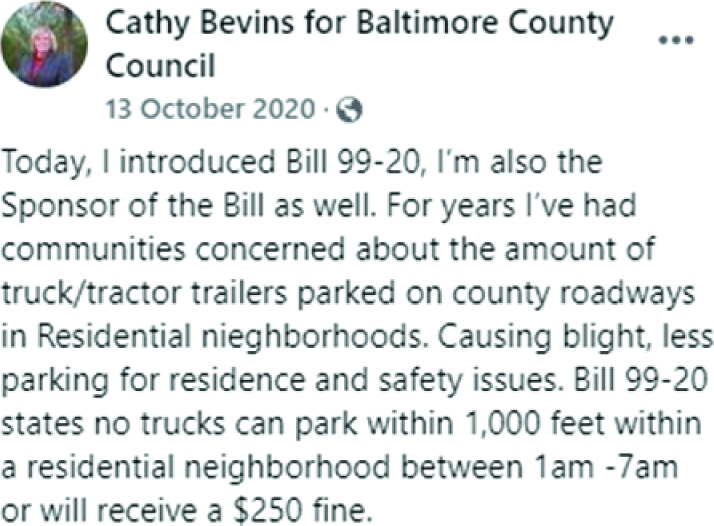
Source: Bevins 2020.
Long Description.
A social media post from Cathy Bevins for Baltimore County Council from October 13, 2020 that reads “Today, I introduced Bill 99-20, I'm also the Sponsor of the Bill as well. For years I’ve had communities concerned about the amount of truck and tractor trailers parked on county roadways in Residential neighborhoods [sic]. Causing blight, less parking for residence [sic] and safety issues. Bill 99-20 states no trucks can park within 1,000 feet within [sic] a residential neighborhood between 1am-7am or will receive a $250 fine.”
and there were others that limited the number and size of the vehicles permitted, such as only one lightweight truck (American Planning Association 1966).
One example of an early ordinance restricting truck parking in residential areas comes from Chicago, Illinois. The ordinance allowed for the creation of special use commercial parking lots in residential areas, but they could not exceed 75 feet in width and needed to be located adjacent to a business, commercial or manufacturing district, or railroad right-of-way. Another example is found in Dearborn, Michigan, which allowed commercial vehicles to park in residential areas, provided they did not weigh more than 4,000 pounds and they were operated by customers of nearby business districts (American Planning Association 1966).
More recently, commercial parking in residential areas has become a bigger issue, because residents have increasingly expressed a desire not to have truck parking in or near residential areas. For example, in Texas, a commercial vehicle cannot park in front of a public or private driveway, within 20 feet of a crosswalk at an intersection, or within 30 feet of a traffic control signal or sign, unless they are loading or unloading deliveries. However, the state encourages local governments to adopt ordinances that allow for temporary parking to make deliveries and improve economic development (Texas Department of Transportation 2019). If truck parking is not available, truck drivers will continue to park in residential areas because they have nowhere else to go (Giron-Valderrama et al. 2018).
Other restrictions include those that prohibit trucks of a certain weight, parking on select roadways, time-of-day requirements, and trucks with hazardous materials. Table 1 shows local truck parking regulations for cities in Texas.
Routing Impacts on Truck Bans. Local ordinances dictating which roadways trucks can use affect truck parking, since sufficient truck parking may not be located on the roadways they are allowed to use. For example, a 2009 study conducted by the North Jersey Transportation Planning Authority highlighted the issue that zoning ordinances limit which roadways trucks can use and therefore limit parking. The study recommended collaborating with the private sector, such as warehouses and distribution centers, to evaluate opportunities for additional truck parking (North Jersey Transportation Planning Authority 2009).
West Oakland, California, an area of intense port related activity, has a truck parking management plan that specifically targets truck routes and parking with restrictions and bans. It references fines and coordination with law enforcement as part of the improvement for truck management (City of Oakland/Port of Oakland 2019).
These types of restrictions and bans are punitive in nature and seek to control truck movements and parking in communities. They include coordination with law enforcement to carry out the fines and citations that are the stick used by the public sector to control truck movement and parking behavior. One intent of this approach is to support trucks parking in safer areas for them and other motorists to reduce the safety challenges of mixed traffic. However, these seem to be a result of complaints or perceived problems and negativity with parking.
Banning Due to Community Perceptions. A recent restriction occurred in Washington County, Maryland, where county commissioners banned truck parking development and warehouse space over 1,000,000 square feet due to perceived quality of life issues (Washington County Government 2022). Trucking company, D.M. Bowman, has developed paid truck parking locations in the Hagerstown area at the crossroads of I-81 and I-70. An attempt to build another lot was stopped by county commissioners who voted to create an ordinance that banned construction of new truck stops and warehouses over 1,000,000 square feet because constituents complained that it was not fair. Citizens opposed the development of truck stops and supported a ban, since they felt that with four locations in the region (a major interstate crossroad) they already had
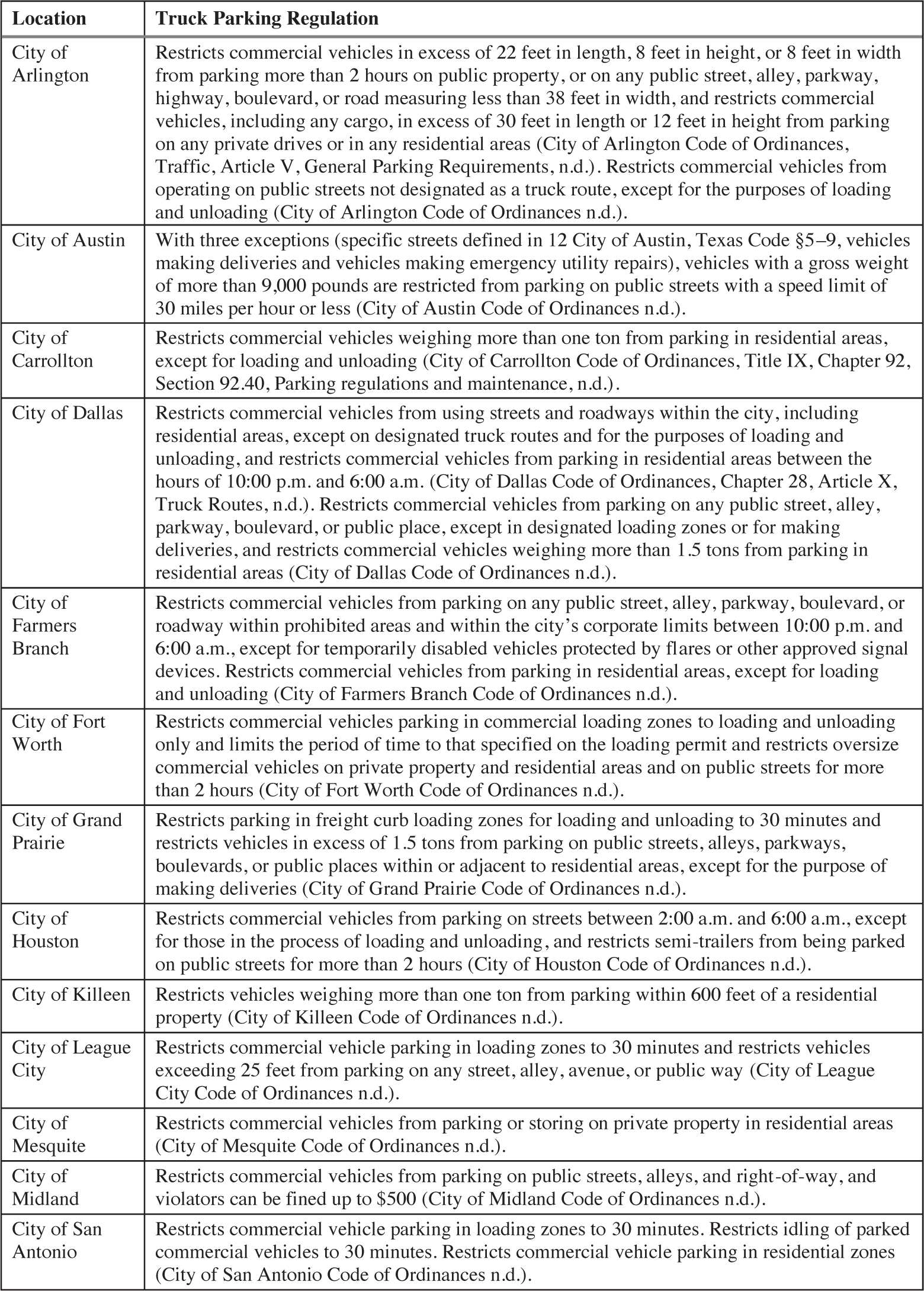
Long Description.
The table has 2 columns and 14 rows. The column headers in Row 1 are: Location; Truck Parking Regulation. Row 2: City of Austin; With three exceptions (specific streets defined in 12 City of Arlington; Restricts commercial vehicles in excess of 22 feet in length, 8 feet in height, or 8 feet in width from parking more than two hours on public property, or on any public street, alley, parkway, highway, boulevard, or road measuring less than 38 feet in width, and restricts commercial vehicles, including any cargo, in excess of 30 feet in length or 12 feet in height from parking on any private drives or in any residential areas (City of Arlington Code of Ordinances, Traffic, Article 5, General Parking Requirements, n.d.). Restricts commercial vehicles from operating on public streets not designated as a truck route, except for the purposes of loading and unloading (City of Arlington Code of Ordinances n.d.). Row 3: City of Austin; With three exceptions (specific streets defined in 12 City of Austin, Texas Code Section 5 to 9, vehicles making deliveries, and vehicles making emergency utility repairs), vehicles with a gross weight of more than 9,000 pounds are restricted from parking on public streets with a speed limit of 30 miles per hour or less (City of Austin Code of Ordinances n.d.). Row 4: City of Carrollton; Restricts commercial vehicles weighing more than one ton from parking in residential areas, except for loading and unloading (City of Carrollton Code of Ordinances, Title 9, Chapter 92, Section 92.40, Parking regulations and maintenance, n.d.). Row 5: City of Dallas; Restricts commercial vehicles from using streets and roadways within the city, including residential areas, except on designated truck routes and for the purposes of loading and unloading, and restricts commercial vehicles from parking in residential areas between the hours of 10:00 p.m. and 6:00 a.m. (City of Dallas Code of Ordinances n.d.). Restricts commercial vehicles from parking on any public street, alley, parkway, boulevard, or public place, except in designated loading zones or for making deliveries, and restricts commercial vehicles weighing more than 1.5 tons from parking in residential areas (City of Dallas Code of Ordinances n.d.). Row 6: City of Farmers Branch; Restricts commercial vehicles from parking in commercial loading zones while loading and unloading within public roads and within the city’s corporate limits between 6:00 a.m. and 6:00 p.m., except for temporarily disabled vehicles protected by barriers or other approved signal devices (City of Farmers Branch Code of Ordinances n.d.). Row 7: City of Fort Worth; Restricts parking of commercial vehicles in commercial loading zones to loading and unloading and limits the period to the time specified in the loading permit, and restricts commercial vehicles on public property and residential areas and on public streets for more than two hours (City of Fort Worth Code of Ordinances n.d.). Row 8: City of Grand Prairie; Restricts parking in freight curb loading zones for loading and unloading to 30 minutes, and restricts vehicles in excess of 1.5 tons from parking on public streets, alleys, parkways, boulevards, or public places within or adjacent to residential areas, except for the purpose of making deliveries (City of Grand Prairie Code of Ordinances n.d.). Row 9: City of Houston; Restricts commercial vehicles from parking on streets between 2:00 a.m. and 6:00 a.m., except for those in the process of loading and unloading, and restricts semi-trailers from being parked on public streets for more than two hours (City of Houston Code of Ordinances n.d.). Row 10: City of Killeen; Restricts vehicles weighing more than one ton from parking within 600 feet of a residential property (City of Killeen Code of Ordinances n.d.). Row 11: City of League City; Restricts commercial vehicle parking in loading zones to 30 minutes and restricts vehicles exceeding 25 feet from parking on any street, alley, avenue, or public way (City of League City Ordinances n.d.). Row 12: City of Mesquite; Restricts commercial vehicles from parking or storing on private property in residential areas (City of Mesquite Code of Ordinances n.d.). Row 13: City of Midland; Restricts commercial vehicles from parking on public streets, alleys, and right-of-way, and violators can be fined up to 500 dollars (City of Midland Code of Ordinances n.d.). Row 14: City of San Antonio; Restricts commercial vehicle parking in loading zones to 30 minutes. Restricts idling of parked commercial vehicles to 30 minutes. Restricts commercial vehicle parking in residential zones (City of San Antonio Code of Ordinances n.d.).
their fair share of truck parking, and that neighboring Pennsylvania and West Virginia should bear the burden. Complaints about truck parking ranged from it being noisy and polluting to it bringing human trafficking and prostitution, causing cancer, and many other negative attributes. While citizens supported the ban on larger warehousing, the testimony revealed a disconnect between the commissionʼs recent economic development growth decisions and the need for parking. At the time of this literature review, the commission decision is headed to court and is being challenged by D.M. Bowman (Washington County Government 2022).
The Washington County case raises key issues that should be addressed as part of the restriction and ban discussion. What is fair share? What should communities absorb due to economic growth? What is the relationship between economic growth in one community and the demand for parking in a community up- or downstream? What ways can truck parking be mitigated to gain citizen support instead of restrictions and bans? What planning and zoning tools or practices will support truck parking consideration as part of the necessary supply chain network that will be accepted or appreciated in the community? These questions illustrate some of the complexities involved in solving for truck parking.
Curb Space and Deliveries
Many local government policies focus on urban delivery and curb space. These policies aim to reduce congestion and competition when trucks are making deliveries. Often, when trucks compete for curb space to make deliveries, they will double-park causing problems for through traffic on busy urban streets. This presents safety challenges and congestion issues. These policies deviate from restrictions and bans in that they are the first to acknowledge the issues to supply chains by trucks competing for curb space. These policies are less about punitive actions, even though they involve some fines for double-parking, and more about solving the issues that make it difficult to make deliveries.
As early as the 1950s, planners recognized the need to accommodate truck parking for deliveries in new development on the periphery of urban centers. The growth of shopping centers in suburban areas moved commercial activity from increasingly congested central business districts and provided convenient access to goods and services serving a growing population. Municipalities considered truck parking requirements and those for customer vehicles and developed guidelines to provide truck parking facilities to support the retail businesses without negatively affecting the storesʼ appearance from the customer parking area or affecting vehicular and pedestrian access. Underground tunnels with loading berths for each store could serve large centers, but the more widespread practice was to provide loading and unloading berths alongside the stores themselves. Depressed loading spaces were proposed to provide access to a ground-level loading dock for ease of unloading and to better separate pedestrian activity from the movement and unloading of trucks (American Planning Association 1954). Off-street truck-loading berths sized for the types of vehicles served were recommended, with spaces of at least 12 feet in width and 45 feet in depth for larger trucks and 10 feet by 25 feet for smaller trucks, with overhead clearance of 14 feet (Levin 1952).
To reduce problems caused by trucks competing for curb space, communities are employing different programs to create delivery zones, permitting options, colored curb space, and delivery schemes for urban towers that reduce the time a truck is present during a delivery.
Loading Zone Reform and Curb Management. The City of Chicago implemented the Downtown Loading Zone Reform Pilot in 2017. This is a parking pricing strategy where commercial vehicles using the zones pay $14 hourly. Previously, businesses paid for loading zones, and space was taken up making it hard for trucks to make deliveries. This pilot is to help turnover of the curb real estate to support deliveries. This converted all business-paid commercial curbside loading zones to user-paid curbside loading zones in the central business district. The outcome helped balance parking supply and demand, improve traffic flow, and increase availability of parking. It proved successful, and the initiative was expanded to other congested areas and was added to the municipal Code of Chicago (Chicago Metropolitan Agency for Planning 2017).
Similarly, Washington, DC, implemented the Curbside Management Program to help improve impacts of deliveries and conflicts with the use of curb space. This program includes permits and demand-based pricing to alleviate challenges with deliveries in the curb space (District of Columbia 2017). Before this program, officials were fining trucks and implementing punitive
activities without an understanding of the importance of freight. Use of performance measures helped identify issues in freight fluidity throughout the District of Columbia such that it helped justify the need for a curbside program (Katsikides 2019).
Another method is coding the curbs and developing permit systems. The San Francisco Municipal Transportation Agency (SFMTA) implemented a color curb program to regulate curbside parking in the urban area. The goal for the program was to improve traffic flow and eliminate double-parking during peak periods. The program has been successful in identifying new locations that SFMTA can add to improve other commercial deliveries, further improving traffic flow and congestion flow (FHWA 2018c; San Francisco Municipal Transportation Agency 2022). The City of Miami Beach, Florida, also implemented a loading zone permitting system that expanded freight loading zones and alley loading areas. As a result, there was a significant decrease in the number of double-parked trucks, improving traffic flow (FHWA 2018c; City of Miami Beach 2023).
The New Orleans City Council implemented an ordinance prohibiting trucks from driving or parking on sidewalks and curbs and banning vehicles longer than 36 feet from operating within the French Quarter. The ordinance was implemented to prevent infrastructure damage to the historical neighborhood and to reduce congestion. Trucks found in violation of the ordinance are fined $500 for the first penalty and $1,000 for each additional violation (FHWA 2018c).
In addition to local governments, several states have developed regulations to address parking during local deliveries that also allow for an emergency parking exception. For example, Arkansas (27 Arkansas Code §51-1301 n.d.), Florida (Florida Statute §316-195 n.d.), Louisiana (32 Louisiana Statute §143 n.d.), New Mexico (66 New Mexico Statute §7-352 n.d.), Oklahoma (47 Oklahoma Statute §47-11-1004 n.d.), and Texas (7 Texas Statute §545 n.d.) all have parking regulations that clearly define where a truck cannot park when making deliveries. Each of these regulations also provides an exemption for temporary emergency parking due to unplanned events, such as severe weather, vehicle malfunctions, or accidents. While the regulations allow for emergency parking, running out of HOS may not qualify for emergency parking (Texas Department of Transportation 2019).
Curb Space Alternatives (Off Hours and Alternative Delivery). Like others, New York City employs curb management and related strategies, such as off-hours delivery (OHD), to reduce curb demand. New York City created the Delivering New York plan to focus on transforming the last mile of trucking by
- Accommodating growth in truck traffic;
- Expanding intermodal delivery methods, including programs that reduce freight travel demand like OHD;
- Providing better access to the curb to support deliveries;
- Testing innovative delivery methods to reduce truck traffic;
- Improving routing of trucks throughout the city; and
- Streamlining regulations for smarter, data-driven governance (New York City 2022).
A notable component of the strategy is varying delivery times to reduce curb space competition. New York City is well-known for its OHD program as part of these efforts to improve truck flow. The OHD program encourages goods delivery during the off-peak hours between 7:00 p.m. and 6:00 a.m. in efforts to decrease congestion and truck emissions (New York City 2022).
Off-hours or off-peak delivery is a strategy that researchers tout as beneficial for curb space management. For example, LaBelle and Frève (2015) conducted a 2015 pilot project in Chicago, Illinois, to evaluate whether off-peak deliveries could improve truck parking in the city. The study found that there is no ordinance in Chicago that prevents overnight deliveries and the program could save truck drivers time (savings estimated at 48 minutes for travel and 1 to 3 hours
in total service time) and money (cost savings estimated at 30% to 40%); however, costs to the business increased due to having staff on-site at times they would not normally be there (LaBelle and Frève 2015). Other pilot programs have shown comparable results. For example, the off-peak delivery program in New York City found that the program could lead to all drivers saving approximately 3 to 5 minutes per trip, as well as the reduction in parking fines, which at the time of the study averaged $1,000 per month for trucks in the city. During the pilot program, truck drivers also expressed a desire to continue the program because their deliveries were more reliable (Holguín-Veras 2010).
While off-peak deliveries may improve congestion in urban areas, it could increase noise in off-peak periods, due to trucks idling, as well as loading and unloading products. The Chicago pilot project determined that incentives were needed to compel businesses to participate (LaBelle and Frève 2015).
There are other demand management solutions. Seattle, Washington, has long been a leader in urban freight movement improvements, including mitigating truck parking. Seattle has partnered with academia to evaluate improvements in deliveries to alleviate curb space competition. Some of these fixes include improving fluidity of driver deliveries for urban towers, use of freight lockers, and e-bike freight delivery (Katsikides 2019).
There are also issues with curb space management. Despite efforts to manage curb space, results may not always support freight movement, especially as growth and consumer preferences for deliveries evolve. A study comparing commercial vehicle parking violations and regulations in New York City indicates that current curb parking regulations do not accommodate the increased demand for deliveries in residential areas, such as those associated with the growth of e-commerce (Chen et al. 2017).
Use of Property
Some local governments are using municipal or public property to solve truck parking capacity shortages. The following examples are of cities engaged in adding capacity or using city-owned property for parking.
The City of Weed in California created municipal truck parking for 30 trucks on two pieces of city-owned land zoned for industrial use. The City did this because it recognized the role that drivers play in the economy. It has not received complaints from residents in the community. Trucks are permitted to park up to 72 hours (City of Weed 2015–2016).
The City of Elmira in New York created a municipal truck parking area from an existing industrial-zoned adjacent lot to a carpool lot. It provides 25 spaces and charges $5 per day. Trucks can stay up to 30 days. Once the facility was created, resident complaints of parking throughout the city decreased (FHWA 2018b; Fisher 2016).
Carson, California, designated specific areas where trucks can park for up to 72 hours and where trucks can load and unload goods. The City also designated specific truck routes to provide a means to carry vehicles between state highways and commercial zones in the city (Carson 2021).
Highest and Best Use Issues with Municipal Property. The use of public property to support parking, especially in urban areas, is not accepted by all. It is met with criticism since some view use of urban property for truck parking as not the best use of publicly owned real estate in these areas. They believe that cities could make more money by selling the property or using it for other more revenue-generating opportunities (Henry and Schwebke 2022).
For example, the City of Commerce near the Port of Los Angeles and the Port of Long Beach rented out as many as 26 acres of city-owned land for pennies on the dollar to a local businessman
capitalizing on truck parking need. He paid as little as $1,000 per month to lease 14.4 acres. This was criticized because real estate should generate as much as $30K to $50K per month, since it is valuable land that is hard to find. A developer said that few cities want truck parking in their communities because it is perceived as not creating employment and puts more trucks on the road (Henry and Schwebke 2022).
One company paid $2 million in fees to Carson to offset the impact from trucks parking on 60 acres of privately owned land (Henry and Schwebke 2022). There is an opportunity to create truck parking and profit from it.
Some cities are finding ways to profit from creating truck parking, and there are discussions about the use of public-private partnerships whereby public property is provided to a private sector entity to develop and operate a truck parking facility. These types of solutions may help spur the development of truck parking by the private sector. Jasonʼs Law found that private entities do not make their profit from parking; they make it from amenities and fuel. However, if there are partnerships where public property can be developed by the private sector, it may be more lucrative or successful to create parking options (FHWA 2015).
Despite the criticism of using public property for truck parking, the need for parking was exacerbated by the pandemic and supply chain issues of 2020 and 2021. The Caltrans Truck Parking Study found a need for parking to support supply chains and gaps in parking in and around areas like Los Angeles. Many in supply chain roles, like truck drivers, cited the need to have more parking during and after the pandemic. In the case of the City of Commerce example, the leasing business cleaned up the property and added value (Henry and Schwebke 2022). An unknown, too, is how much value truck parking has for supply chains, and whether solving the parking issue has a higher cost benefit than critics realize.
Issues with Codified Development Requirements. Some local regulations and development requirements may get in the way of developing parking. Many cities require commercial parking lots to have asphalt, lighting, and other attributes, making it harder, more difficult, and longer to develop. This is when parking could be located on dirt lots or less developed property. Dirt lots do not conform to the city code that requires parking operators to install lighting and pave every space with “asphalt concrete or Portland cement” (Henry and Schwebke 2022).
Information Sharing. Many local jurisdictions share information with the truck driving community. These types of resources include pamphlets, web-based resources, and other materials to help truckers navigate areas.
New York City, for example, offers truck drivers a Truck Smart Guide that is an official resource to safe truck driving in the city. It has tips and information to keep freight moving throughout the city. In addition, New York City offers numerous links to information on appropriate routes, clearances, and a truck route map. Specifically for parking, New York City offers information on what is considered a commercial vehicle, and the rules and restrictions (New York City Department of Transportation n.d.).
In the next section on strategies, there are discussions among the local governments studying parking to implement real-time parking awareness or information systems. These systems exist in various parts of the nation, but they have mostly been developed at a corridor or state level.
Zoning. Most zoning related to truck parking is for restrictions or bans; however, the incorporation of truck parking into zoning and development review is a concept that some local governments are considering. There are few examples or models in which truck parking is considered as an adequate public facility or as a requirement in development.
There are many examples of planning and zoning decisions made without incorporating truck routing, staging, delivery bays, or parking. With a flood of activity in urban areas to prioritize walkability and bike-friendliness as well as urban redevelopment, cities often neglect freight logistics that support the commercial elements of these plans (Snyder 2014). This is leading to unplanned freight movement and chaos in urban areas where loading and unloading slows traffic and takes up space. Some urban advocates argue that loading docks take up valuable space for other perceived better uses and that trucks create noise pollution, air pollution, and safety issues. Others state that cities run on goods, and trucks deliver these goods and take away garbage, so solving freight routing and parking in cities is important for the city to thrive. Genevieve Giuliano, a former member of the national Freight Advisory Committee and professor of public policy at the University of Southern California, opined that, “Smart growth is all about moving up that curve to become more dense. And the more you move up the curve to become more dense, the more all these challenges will kick in. And in smart growth, nobody ever thinks about freight” (Snyder 2014).
For example, in Baltimoreʼs Harbor East Development, there are no adequate delivery bays for the many restaurants and retail shops, so big trucks are forced to enter heavily pedestrian areas around a center circle with a fountain to make deliveries. Many restaurants, strip malls, and other freight-intensive locations are permitted in small, street-facing lots with a lack of consideration for truck movements and parking to deliver goods. Figure 4 shows a truck blocking a roadway to deliver to a restaurant that has no delivery space.
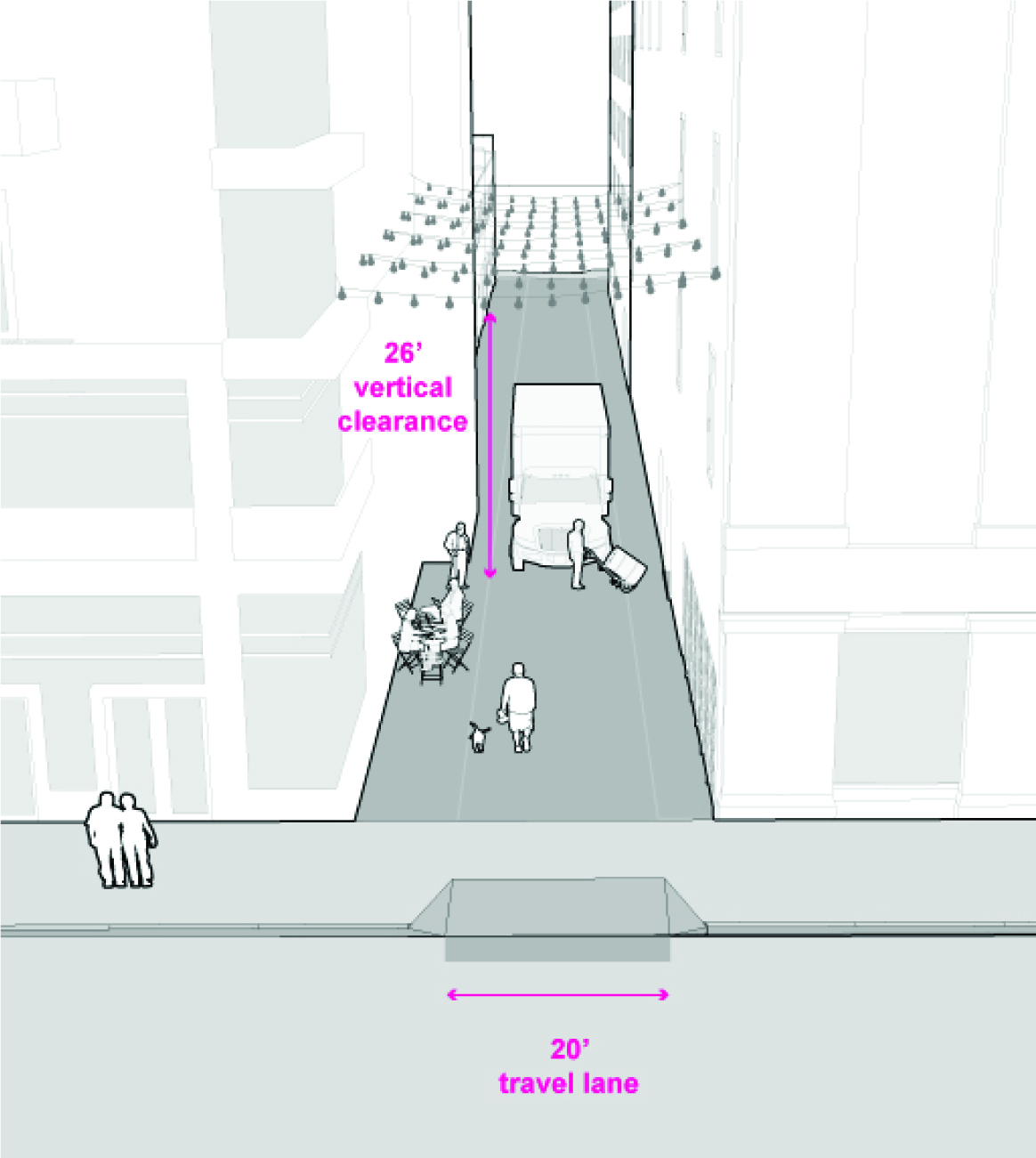
Some cities have policies on truck routing to support trucks maneuvering in cities. Seattle has the Right-of-Way Improvements Manual that provides design standards for streets and includes freight. However, there is no mention of truck parking standards. Commercial alleys are listed as providing access for freight loading and waste collection for commercial uses, and they may provide access to parking. Notably, Seattle mentions that these alleys may also play a role for pedestrians and bicyclists in and around commercial areas (see Figure 5). Given the freight needs and dangers of mixing freight and other traffic, this appears a contradictory practice or recommendation, and freight needs, like delivery space and parking, are relegated even in the alleys that are primarily designated for them. Seattle includes a separate industrial access section and there is minimal reference to curbside design for trucks in urban village areas (City of Seattle 2017).
The truck parking discussion among stakeholders like those in the NCTP includes ideas about local governments requiring truck parking for industrial development and evaluating parking using an adequate public facilities or traffic impact analysis. There are no examples of this in practice. Many truck parking studies—federal, state, and local ones—describe incorporating truck parking space into economic development projects, but standards and practices for doing so do not exist.
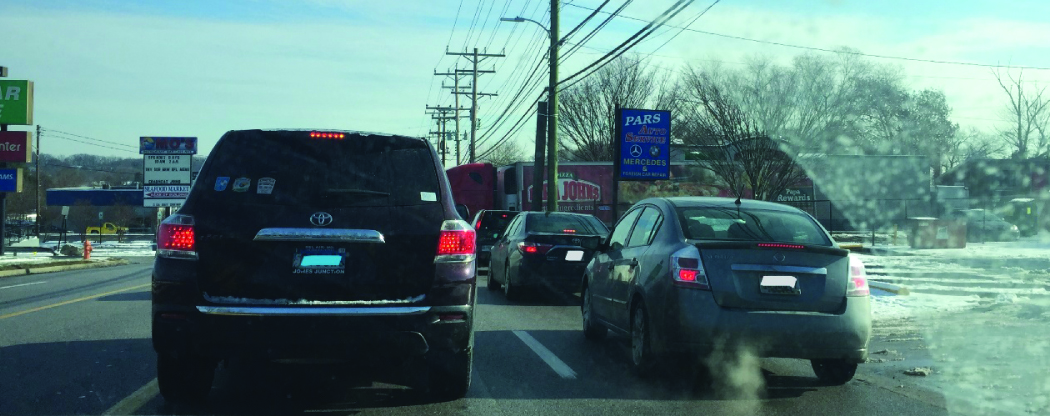
Photo courtesy of Nicole Katsikides.
Long Description.
A picture showing traffic blocked on the roadway because a truck has to back into a restaurant location to make a delivery.
Long Description.
A graphic showing Seattle’s Right-of-Way Improvements Manual with a freight and pedestrian mix, which would need to be at least 20 feet wide with a 26 foot vertical clearance.
To support the development and consideration of truck parking in zoning and land use decisionmaking, FHWA released the Truck Parking Development Handbook in September 2022. This handbook includes information on quantifying truck parking needs, benefits, and costs; siting and designing truck parking facilities; and encouraging and requiring truck parking (FHWA 2022b).
In the section on encouraging and requiring truck parking facilities, FHWA notes that when land use and zoning decisions allow for new commercial and industrial development but do not consider the increased demand for truck parking, mitigation costs that may occur due to lack of parking to support these facilities are passed to the local jurisdiction. This makes a case for local governments to focus on truck parking as much as on access, jobs, and other elements associated with economic development. FHWA cites costs that local jurisdictions might encounter as truck parking capacity development, safety issues, congestion, and community disruption. FHWA also mentions redistribution in that a common reaction to these issues is to pass ordinances restricting truck parking. This pushes trucks to neighboring jurisdictions, thus redistributing the problem to others (FHWA 2022b).
FHWA offers the following suggestions for incorporating parking:
- Review traffic impact assessment processes to include anticipated truck volumes at a site and the impacts of staging near the site.
- Evaluate the ripple effect of truck parking (how much demand a site may have in other communities, regions, and states).
- Use the previously mentioned information to develop an evaluation of parking options.
- Consider how project design can mitigate parking.
- Consider requiring truck parking in development (FHWA 2022b).
A challenge for the public sector is to understand how much parking is needed in relation to development. FHWAʼs handbook provides direction for considering truck parking demand in relation to economic development. There are two types of needs: (1) staging and delivery/pickup area parking that is most needed near freight-intensive locations or generators and (2) the ripple effect of parking demand. The ripple effect is parking that is required further out along the transportation links of supply chains. TTI developed this concept for the FHWA handbook by looking at truck stops before and after a pickup or delivery at different types of freight generators. INRIX Trips data showed where trucks were stopping on their routes in and out of freight generator locations, like a freight cluster, warehouse and distribution center, or port. Different types of generators have different demand ripples. Some are more local than others. Truck probe data can help communities understand the impact of parking demand locally and regionally so that coordination can occur both in the immediate area and along supply chain routes to increase parking (Katsikides et al. 2021).
Partnerships and Collaboration
Many local governments are engaging stakeholders to discuss truck parking issues and identify solutions through partnerships and collaboration. These discussions benefit from having public and private sector perspectives to determine solutions.
National Coalition on Truck Parking. Though not local in nature, one of the most prominent collaboration opportunities is NCTP. NCTP formed after the release of the first Jasonʼs Law study as a conduit to bring together stakeholders, such as public sector actors, truck drivers, and truck stop owners. NCTP quickly went from a national-level meeting to regional discussions and the identification of needs and solutions for more granular jurisdictions like cities and counties. NCTP spurs the discussion and serves as a means for education to improve everyoneʼs understanding of how truck parking fits within supply chains and transportation networks (FHWA 2017).
Stakeholder Collaboration. The FAST Act required state departments of transportation (DOTs) and MPOs to be more involved in freight planning, resulting in studies that include truck parking. Several studies at the MPO and local level focus on truck parking or truck management plans.
For example, the North Central Texas Council of Governments (NCTCOG) completed a dedicated truck parking study that documented existing conditions and identified areas where truck parking was inadequate. As a result, NCTCOG developed local, regional, and state recommendations to address truck parking in the region and improve the stateʼs freight system (North Central Texas Council of Governments 2018).
In New York City, the Trucking Association of New York and state leaders are addressing a shortage of truck parking in the New York City area that led to trucks being towed and booted. The State Legislature had a motion to increase fines for trucks parked illegally in residential areas, but stakeholders acknowledged that this is not going to solve the problem, and they had to do more (Witkowski 2022).
The president of the Trucking Association of New York, Ms. Kendra Hems, stated that:
Heavy enforcement alone has not worked in the past and will not work now absent available commercial vehicle parking. Operation Heavy Duty Enforcement targeted overnight parking of commercial vehicles in residential neighborhoods of southern Queens. While we in no way condone parking on residential streets where it is illegal to do so, we feel it is imperative to understand that we cannot ticket our way out of this problem. The reality is that drivers—many of them our neighbors, family, and friends—simply
have nowhere to park. The industry is taking steps, but we cannot do this alone. We need our partners in government to dedicate the time and resources to resolve this problem. The industry must be part of this process and we are eager to work with this administration to finally find meaningful, long-term solutions that benefit all New Yorkers, drivers included (Witkowski 2022).
In response, the city formed a truck parking task force that has been considering expanding parking on city-owned land at the South Brooklyn Marine Terminal, Brooklyn Navy Yard, and John F. Kennedy International (JFK) airport. New York City Council member, Selvena Brooks-Powers, said, “We have to find the balance and continue the conversations to find alternative options for our trucks to be able to park, while at the same time not impacting the quality of life for the residents of this community” (Witkowski 2022).
Many of the studies and plans reviewed recommend stakeholder collaboration, if nothing else, to help resolve parking problems. As Jasonʼs Law found, the issue of truck parking is complex and multifaceted with a diversity of stakeholders (FHWA 2015). Discussions and collaborations are important to help improve awareness, understanding, and implementation of appropriate, right-sized solutions.
Understanding Needs of Independent Driver Truck Storage and Off Hours. Through conversations with stakeholders, opposing sides can begin to see the multifaceted and complex nature of truck parking. For example, while constituents will complain of noise and pollution related to trucks, these conversations show that often truck parking, especially in residential areas, is done by drivers who live in these communities. While fleet drivers will likely park a truck at a fleet facility when not on the road, a substantial portion of truck movements occur by owner-operator drivers who are independent. These people are often in a position of needing a place to park their truck when not in service, and many will park in their neighborhoods or in areas near communities. Problems for independent drivers not having a place to park their truck in off hours is documented in Atlanta, Georgia; communities in Florida; Bayonne, New Jersey; Minneapolis, Minnesota; and many other locations (Lockie 2022).
Communicating and Engaging Stakeholders. Truck parking can be difficult to conceptualize and visualize. Politicians may hear from constituents upset about trucks in their community, but there is little evidence that they hear from the businesses in their jurisdictions that are the reason for the truck parking demand. Further, there is little evidence that politicians have an awareness of the role their community plays in supporting truck parking for businesses in other communities further down the road in supply chain networks (and likewise, the role other communities play in their business parking needs).
Some communities are developing specific truck parking plans and studies. These studies engage stakeholders. Generally, there will be some data collection effort and a meeting of minds on problems and potential solutions.
Data analytics in plans and studies illuminate and illustrate the issue. For example, to estimate usage at publicly owned truck parking facilities, the Maryland Department of Transportation (MDOT) used INRIX Trips data from its congestion analysis work to map non-moving trips. MDOT found that mapping non-moving trips was useful in estimating usage, as well as to see where trucks were parking throughout the state (Katsikides et al. 2020). This information helped show Baltimore County council members who were banning trucks based on constituent issues that the demand was supporting local businesses. This moved the discussion from truck parking bans to trying to identify opportunities for parking at locations like malls or other lots because the county leadership could see the relationship of parking to businesses (Katsikides 2020).
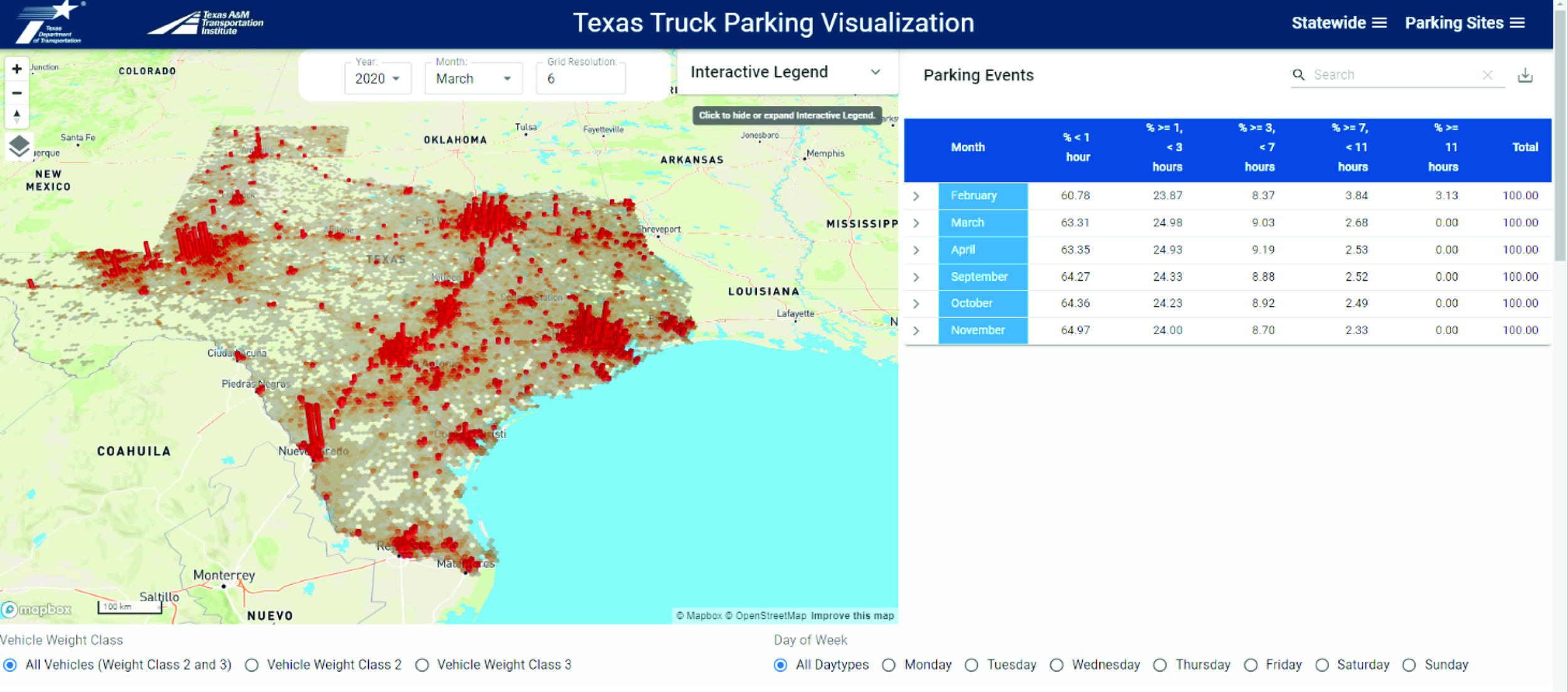
Both Texas and Maryland now have truck parking visualization tools using truck probe data to show where trucks are parking and to help with stakeholder collaboration (see Figure 6). These resources help people see the relationship of parking to freight generators and to understand
Source: https://trkparkingtx.tti.tamu.edu/.
Long Description.
An example of the Texas Truck Parking Visualization that shows statewide truck parking events by vehicle class, day of the week, month, and duration.
parking behaviors. One way these resources help is in seeing trucks by different weight classes, which has helped understand the permeation of e-commerce impacts and related parking in recent years (Texas Department of Transportation 2023).
Notable Studies
The following are summaries of notable studies by local governments for truck parking.
Mississippi Valley Freight Coalition
The Mississippi Valley Freight Coalition (MVFC) studied truck parking in 2009 because of shortages in member states. Findings were that urban areas had the most critical need, especially in Chicago, Illinois; Detroit, Michigan; Louisville, Kentucky; Milwaukee, Wisconsin; Minneapolis/St. Paul, Minnesota; Kansas City, Missouri; and Indianapolis, Indiana. The study also identified the following corridors with major truck parking shortages:
- I-90, I-94, I-55, I-57, and I-80 near Chicago, Illinois;
- I-39, I-90, and I-43 near Rockford, Illinois;
- I-24 near Paducah, Kentucky;
- I-74 and I-80 near Davenport, Iowa;
- I-43 and I-94 near Milwaukee, Wisconsin;
- I-70, I-35, and I-29 near Kansas City, Kansas, and Missouri;
- I-65, I-69, I-70, and I-74 near Indianapolis, Indiana;
- I-72 between Decatur and Springfield, Illinois;
- I-74 between Decatur and Peoria, Illinois; and
- I-55 between Peoria and Springfield, Illinois.
In addition to the locations described, drivers mentioned security concerns and poor design and maintenance at several existing parking facilities (Adams et al. 2009).
Atlanta Regional Commission
The Atlanta Regional Commission (ARC) Truck Parking Study assessed truck parking in the metropolitan region in 2017. The study was completed after a recommendation in the 2016 Atlanta Regional Freight Mobility Plan Update that identified truck parking challenges in the region. ARC worked with the Georgia DOT, FHWA, transportation planners and engineers in the region, community improvement districts, and the private sector to study parking and develop recommendations for improvements. Strategies identified by ARC include the following:
- Add or expand truck parking supply.
- Develop truck parking policies in the region to support parking (not just punitive restrictions).
- Develop truck parking partnerships (public and private partnerships) to advance parking development and options.
- Improve the sharing of truck parking information to support awareness of parking and demand.
- Monitor and integrate future technology to advance parking.
One strategy identified by ARC is for local jurisdictions to review codes and ordinances to determine how they affect parking. This would help identify where parking is made more difficult due to restrictions and where there are opportunities to improve zoning or policies to improve parking options (Atlanta Regional Commission 2018).
Killeen-Temple Metropolitan Planning Organization, Mobility 2045
The Killeen-Temple Metropolitan Planning Organization developed a freight plan, which included truck parking. Some of the findings and strategies recommended include the following:
- Increasing public awareness of the need for and economic benefits from truck parking;
- Improving enforcement and identifying alternative sites for unauthorized parking;
- Integrating truck parking site development guidelines into land use plans, providing buffers along truck parking locations to reduce problems like residential concerns, and finding or establishing shared-use parking permits with suitable locations; and
- Providing incentives to private developers for developing essential amenities at parking locations (Killeen-Temple Metropolitan Planning Organization 2019).
Lehigh Valley Truck Action Plan
The Lehigh Valley Truck Action Plan, developed in 2020, acknowledged issues with growing freight activity and related demand for parking. Drivers and communities both suffer when drivers cannot find parking, and there are costs of doing business and community impacts from parking challenges. The study brought together a diverse set of stakeholders with local townships to review the issue and identify recommendations. Recommendations include the following:
- Expand parking capacity throughout the region to meet demand.
- Use alternative lots, big-box, and mall locations at night, and other similar options.
- Develop a real-time parking information system.
- Develop local government guidance and resources to support zoning code and truck parking inclusion in development decisions.
- Create a public education campaign to raise awareness about the importance of trucks.
- Establish multiuse truck parking and driver training locations (use training facilities at night for parking).
- Provide data sharing opportunities to analyze and visualize parking.
- Work with the insurance industry and agencies on parking.
- Plan for hazard mitigation and include the freight industry to determine how parking needs are met in these circumstances (Lehigh Valley Planning Commission 2020).
City of New York, Delivering New York
New York City has several efforts in place to support truck drivers and to address congested freight issues including curb space and parking throughout the city. Delivering New York is a resource to focus on the last-mile activities that fall with the city jurisdiction. Some of the activities include the following:
- Accommodate growth in truck traffic through resources and policies aimed at making it more efficient.
- Expand intermodal delivery methods, including programs to reduce freight travel demand, such as OHD (deliveries at night and not during peak hours).
- Provide better access to curb space as well as more organized, safer, and more efficient use of curb space.
- Test innovative delivery methods to find alternatives to traditional delivery and related issues.
- Improve truck routing for efficiency.
- Streamline regulations for smarter, data-driven governance in the region and better decisionmaking (Delivering New York 2021).
City of Portland Truck Parking and Loading Plan
The City of Portland developed a Truck Parking and Loading Plan in 2016 to define common truck parking and loading problems and to develop a toolbox of strategies for areas within the city. The goal of this is to increase efficiency and effectiveness of last-mile local freight delivery operations (City of Portland 2016).
The plan is comprehensive and focuses on an array of routing and parking issues. There are three key policies worth noting:
- Policy 3.14 Loading. Support the delivery of goods in the Central City. Pursue strategies that bring new ways of delivering goods to the Central City in a way that optimizes loading and freight access and makes efficient use of limited urban space.
- Policy 3.DT-2 Parking. Recognize that parking is an important asset for downtown to support regional activity and growth, while encouraging alternative modes and controlling traffic, design, and environmental impacts. Continue to limit the growth of parking as redevelopment occurs and better use parking resources for existing and future uses.
- Policy 3.CE-3 Parking. Establish an efficient parking system (in the Central Eastside) to address existing needs and create new parking strategies to share and manage parking across the district to meet the needs of employment and residential growth and major attractors in the district (City of Portland 2016).
These policies highlight truck parking as an important asset for downtown to support the economy. However, Portland, through mention of overall parking reduction strategies, prioritizes people movement in the city by alternative modes of transport. A goal is to reduce car and truck traffic, so Policy 3.14 is focused on identifying new ways of delivering goods in limited urban space (City of Portland 2016).
Further, Portland divided parking into two types: on-street management and off-street management. Portland identified options for on-street management as follows:
- Addressing small-scale or site-specific parking issues (e.g., curb space in a specific area);
- Creating more complex or area-wide parking issues (e.g., prohibition of trucks in a larger area/district);
- Creating regulated time stays;
- Developing parking for special user types;
- Establishing parking permits; and
- Enforcing curb space/parking issues (City of Portland 2016).
Off-street management is focused on access to freight facilities and off-street loading facilities. In these cases, the city determines requirements based on size and use of the development and the location relative to transit facilities and services. Portland has ingress and egress requirements for these (City of Portland 2016).
Despite the details that went into the types of policies and strategies in the plan, there is a recognition that the requirements may not always fit. Portland may need to make modifications since some policies may not align or allow uses that work with adjacent street uses (City of Portland 2016).
Additionally, interviews with freight stakeholders found that some considerations the local government could have when setting policies include the following:
- Information for freight users is important. Operators cannot always find specified loading zones.
- In some cases, loading zones specified may not be available when needed such as during a delivery window. Also, operators may be constrained due to the nature of the delivery, and the specified spaces for truck parking may not work.
- The city-designed loading zones do not always fit the truckʼs physical characteristics.
- Unauthorized vehicles are sometimes parked in places designated for trucks.
- Off hours can help, but deliveries are set by the business ownerʼs needs.
- There are challenges balancing bike and pedestrian lanes with freight delivery areas (City of Portland 2016).
Alameda County, California
In 2008, the Alameda County Congestion Management Agency created the Truck Parking Facility Feasibility and Location Study to better understand the needs of truck parking to lessen congestion in Alameda County (Alameda County Congestion Management Agency 2008). It found the following:
- There is a shortage of truck parking facilities because they are not being provided.
- Drivers that are not domiciled locally prefer to leave the Bay Area at the end of the work assignment because there are no adequate parking facilities. They do not want to be stuck.
- Public agencies are reactive to complaints one by one instead of addressing the overall problem as an important part of the community and a community requirement.
- Commercial truck stop operators cannot find suitable sites to develop parking. If they do, it is met with local objection.
This study identified some local government specific issues worth noting:
- “Local land use decisions are resulting in rezoning of potential desirable truck parking sites away from industrial uses adjacent to highways where truck parking is most likely to be implemented.
- Truck parking is a regional, state, and national issue, but establishing places for them to park is a local decision.
- Receiving goods and services via trucks is key to regional economic stability and job diversification” (Alameda County Congestion Management Agency 2008).
West Oakland Truck Management Plan
The West Oakland Truck Management Plan (TMP) was designed in 2019 to reduce the effects of transport trucks on local streets in the West Oakland, California, area. It was developed jointly with the Port of Oakland and City of Oakland with input from residents (especially underrepresented community members), workers, trucking companies, community groups, businesses, and other stakeholders (City of Oakland/Port of Oakland 2019).
The need for this plan came from the California Environmental Quality Act (CEQA) analysis completed in 2002, and again, in 2012. It was important to consider environmental mitigation of issues like truck movements in the area to reduce negative effects (City of Oakland/Port of Oakland 2019).
For truck parking, the plan identified the following strategies:
- Address truck and trailer parking by improving enforcement and changing regulations.
- Increase effectiveness of enforcement (City of Oakland/Port of Oakland 2019).
In addition, another notable action in the plan was recommending urban design to encourage trucks to use alternative routes. While this is not a parking strategy, it is one that encourages traffic calming and other things on streets, making it more difficult for trucks to use certain residential streets.
This plan, unlike other efforts, is enforcement and fine heavy. It also implemented several actions to drive truck routing and parking behavior. Expansion was not identified in the plan to support parking (City of Oakland/Port of Oakland 2019).
Maricopa Association of Governments
The Maricopa Association of Governments (MAG) developed a plan as a road map for future truck parking solutions. Recognizing freight is an essential part of Arizonaʼs economy and critical for food, clothing, gas, medicine, and other important goods, MAG wanted to address truck parking patterns, freight demand, safety regulations, and the impact of future technologies on parking (Maricopa Association of Governments 2021). MAG identified several strategies and implementation actions including the following:
- Implement real-time truck parking availability signage and communication.
- Increase visible no parking signage in unsafe parking areas.
- Explore expansion of existing truck stops.
- Redesign existing truck stops and rest areas.
- Increase enforcement of parking restrictions in conjunction with other solutions.
- Reach out to owners of vacant parcels to encourage temporary truck parking use.
- Cooperate with owners of underused malls and shopping areas.
- Create parking agreements with facilities that have in-house fleets.
- Modify zoning ordinances to require a provision for truck parking.
- Form public-private partnerships to build additional truck parking.
- Leverage vacant commercial and retail space.
North Central Texas Council of Governments
NCTCOG studied truck parking to assess the overnight and temporary truck parking needs in North Texas. The results of this work were key findings about where additional truck parking is needed, as well as identification of areas with the most critical truck parking priorities. These areas were labeled corridors of concern (North Central Texas Council of Governments 2018). Recommendations from the study include the following:
- Make current truck parking location information more readily available.
- Make use of underused public land.
- Develop new safety rest areas.
- Improve truck parking ordinances and land use analysis (North Central Texas Council of Governments 2018).
The study focused on partnership opportunities, recent technology enhancements, modifying ordinances, and using data for decisionmaking.
Review of Truck Parking Regulations in Local Codes and Ordinances
Local governments control and regulate land development through zoning and subdivision regulations. This authority extends to operations of public rights-of-way within their jurisdiction, such as regulating on-street parking and truck routes. In the United States, these ordinances are powerful tools to implement a communityʼs vision to be livable and thriving built environments. Typically, these ordinances include general site development standards including parking regulations that limit or facilitate the availability of commercial truck parking. Many jurisdictions view truck parking as a threat or nuisance to local residents and take action to prohibit or strongly limit it. The intent is to curb such issues as noise, air pollution, visual impact on adjacent uses, traffic congestion, and other community impacts caused by commercial freight vehicles. On the other hand, communities that proactively accommodate efficient truck parking, loading, and maneuvering provisions within their zoning help facilitate efficient movement of cargo and provide a safe and secure environment for all users, including truck drivers.
There are few empirical studies on the effect of land use policies on truck parking. The purpose of this literature review is to highlight leading communities who have proactively addressed truck parking. The review summarizes published research, technical reports, and a sample of emerging best practices implemented through local zoning codes in the United States. The findings provide steps to better understanding truck parking practices in relation to zoning codes and site development practices. First, the review establishes a foundation for considering the direct role actual zoning and site development standards play in facilitating or hindering commercial freight deliveries to communities. Second, through this foundation, the review can identify and guide best practices for codifying the essential elements in the preparation of a zoning code provision for truck parking.
The remainder of this literature review outlines tools and strategies that local zoning codes and land use have implemented to integrate truck parking. To address the growing issue of inadequate truck parking in the United States caused by zoning regulations, this review highlights the role local zoning requirements play in the effective provision of space needed for improving safety, reducing congestion, and promoting efficient use of resources.
A Call to Action
In the time since the passage of the 2012 Jasonʼs Law as part of the MAP-21 transportation bill, reports and empirical research projects have identified the benefits and needs for a safer and more effective system of truck parking in the United States. This body of work has centered on identifying best practices and recommendations for improving how local governments provide design and implementation of truck parking and staging. A common conclusion among these reports is that local regulations, specifically provisions of the zoning code, play a critical function in the provision and design of safe and effective truck parking facilities.
An FHWA and U.S. DOT survey looked at a variety of factors contributing to truck parking shortages (FHWA 2015). A central conclusion from the survey indicated the issue has been aggravated by difficulties in building new parking facilities caused by zoning and land values. The survey found that more than 75% of truck drivers and almost 66% of logistics personnel reported regularly experiencing problems with finding safe parking locations when rest was needed. Additionally, 90% reported struggling to find safe and available parking during night hours. In a follow up to the 2015 study, a 2020 comparative report from U.S. DOT/FHWA found that 98% of drivers regularly experienced problems finding safe parking, a 30% increase from just 4 years earlier (FHWA 2020).
Building upon this knowledge, a 2022 report published through FHWA, Truck Parking Development Handbook, explored a number of best practices to facilitate the integration of truck parking needed to support local industry and commerce (FHWA 2022b). The report highlighted a few practices related to improving zoning and site design standards that integrate parking needs with truck demand generating facilities. A more thorough reference to model standards from the handbook is covered in a subsequent section on the provision of design quality for off-street parking.
Another study analyzed data from Chicago to explore whether districts specifically zoned for manufacturing, established as planned manufacturing districts (PMDs), accommodated truck traffic, deliveries, and off-street parking better than other zoning districts (Kawamura and Menninger 2018). Their findings based on analyzing data related to truck parking and deliveries, such as lane widths, highway access time, and parking citations, produced mixed results. The study found that the PMDs outperformed other districts, but manufacturing zoned districts fared much better with their study criteria. The inconsistent results from the studyʼs findings provide mixed outcomes in relation to promoting the cityʼs industrial base.
There is a gap in the body of research on the link between consistent truck parking provisions and adequate zoning regulations. The material highlighted in this section identifies key findings from limited data on the practice of truck parking within cities. Several studies concern the practice of loading, a related function, but they leave an opportunity for developing further knowledge on what requirements best suit the safe and effective provision of truck parking (McDonald and Yuan 2021; McDonald et al. 2021). The next section provides an introductory step in understanding how some communities have begun to provide examples of best practices of truck parking with zoning codes in the United States.
Spatial Requirements for Off-Street Parking
The most common regulation within local zoning codes is the routine establishment of prohibitions for parking heavy trucks within residential districts. However, those communities that prioritize specific regulations establish a conducive environment for reducing conflicts and facilitating safe and efficient freight movement. In the context of truck parking, zoning codes specify the location and size of parking spaces, as well as the number of spaces required for specific uses. Other factors, such as lighting, adequate space for maneuvering, stationing, or even providing resting lounges, all contribute to further best practices in regulating truck parking.
Requirements Tied to Loading Space
The City of Carson, California, has developed one of the most comprehensive set of requirements explicitly addressing truck parking and loading (Carson 2021). The city has prioritized the role of efficient truck movement by codifying clear and thorough standards for truck maneuvering, loading, parking, and stacking areas. For industrial and commercial uses, these components are directly tied to a defined typology of loading docks, including large dock-high, small dock-high, large grade level, small grade level, and mini- or self-storage loading docks. Each of these facilities include specific parking requirements in conjunction with truck-loading facilities required for industrially zoned properties. For example, a warehouse with a large dock-high loading facility, as defined within the provision, is required to provide one parking space per 1,500 square feet of gross floor area. Additionally, warehouse uses must provide one space per seven loading docks, ramps, doors, zones, wells, or areas for meeting, stacking, or parking requirements (Carson 2021).
In 2017, the Township of Upper Macungie, Pennsylvania, located in the Lehigh Valley of eastern Pennsylvania enacted a set of regulations explicitly mandating a model approach to truck parking allocation (Township of Upper Macungie n.d.). In addition to the minimum parking spaces required for employees at sites proposed for a warehouse, distribution center, truck terminal, or similar use in industrial zones, the developer must provide one truck staging parking space, allocated as a 10-foot by 80-foot space, for every two loading docks. Furthermore, the integration of language into the zoning code that requires developers of commercial or industrial property to adequately accommodate the growing demand for truck parking sets Upper Macungie apart from other communities.
The Chicago area suburb of Franklin Park, Illinois, is another example of tying parking requirements to loading functions (Franklin Park n.d.). The city establishes a one-for-one parking-to-loading ratio with a separate truck parking space connected to uses in the commercial flex, commercial manufacturing, and light industrial zoning districts, and the standards set a parking maximum for truck parking as well. With this approach, Franklin Park provides options. The use may either dedicate one space per 2,500 square feet of gross floor area or two-and-a-half parking spaces for each loading dock serving the principal use. In addition, the ordinance considers other factors affecting the efficient movement of freight through a community. The
parking spaces for semi-trucks or trailers must be located immediately adjacent to the loading bay and serve as temporary outdoor stationing 7 days before or after loading the trailer.
Requirements Tied to Minimum Size of Use or Site
Huron, California, establishes specific requirements for truck parking in relation to the parcel size of the development site within its industrial design districts (City of Huron n.d.). In addition to the minimum parking requirements for employees, service providers, and visitors, each site plan must designate one on-site truck parking space per quarter acre. Each of these spaces must be designed to accommodate a tractor trailer, though the ordinance is not specific about the dimensions of that space nor any design requirements associated with the parking provision.
San Joaquin County, California, has established use-related development standards that ensure adequate truck parking and loading (San Joaquin County n.d.). The county has allocated space in progressive values tied to gross floor area of the principal structure. As gross floor area increases, so does the number of loading spaces. For example, each commercial use assigns one space per 3,000 square feet of gross floor area required, while industrial uses are required to provide a minimum of one space for up to 20,000 square feet of gross floor area, two spaces for up to 40,000 square feet of gross floor area, and for every increment of 20,000 square feet after 40,000 square feet, the developer must provide one additional space (San Joaquin County n.d.).
These ordinances are among the few which establish at least a guaranteed and dedicated parking space directly connected to truck stationing purposes, thus providing a safe and secure parking space for truck drivers on the delivery site. Cities and counties in the United States have different minimum and maximum parking requirements based on a variety of factors, including the type of vehicle, the number of loading docks, or the nature of the land use.
Design Quality of Off-Street Parking
In general, local government regulations routinely establish prohibitions for parking heavy trucks within residential districts. However, those communities that prioritize specific regulations establish a conducive environment for reducing conflicts and facilitating safe and efficient freight movement. FHWAʼs Truck Parking Handbook identifies options communities should consider for establishing a standard of quality for off-street truck parking (FHWA 2022b). Among those practices, the handbook establishes the following suggested minimum standards:
- Define the expected minimum size of truck parking space dimensions.
- Establish sufficient maneuvering room on-site to prevent interference with other vehicular and truck traffic.
- Create the maneuvering space in a manner that shall be located entirely on the lot being served and outside required buffer areas, paved area setbacks, and street rights-of-way.
- Ensure an appropriate means of access to a street (e.g., adequate driveway widths and curb radii).
- Require adequate paving, grading, drainage, and lighting standards for loading areas.
- Prevent truck parking spaces from being used as storage or any other use (FHWA 2022b).
As acknowledged by the handbook authors, each community establishes their own unique requirements dependent on local conditions. Few communities have established off-street truck parking provisions to support stationing, staging, and driver rest periods. It is uncommon for zoning codes to contain design standards for safe and effective off-street truck parking. However, in recent years, a few forward-thinking communities have adopted modern standards more closely aligned with the recommended approach to designing high-quality truck parking facilities on commercial and industrial land uses.
One of the most comprehensive approaches within a zoning code addressing safe and efficient truck parking and loading is the City of Rancho Cucamonga, California (City of Rancho Cucamonga n.d.). The cityʼs 2022 update to the parking and loading standards set forth standards for industrial uses allocated for loading and queuing space, ensuring safe and efficient movement in the space. First, all industrial uses must provide a minimum of one loading space per proposed loading bay. Next, for every 10 loading bays proposed, a minimum of one on-site truck queuing space must be provided. In addition, the regulation stipulates clear on-site truck circulation requirements. For each on-site truck queuing space, there must be a minimum of 9 feet in width and 65 feet in length for each truck. These truck queuing spaces have to be grouped together in a designated area with clear access to loading bays. To avoid truck traffic spilling into the public right-of-way, the entrance gate to all industrial buildings must be situated a minimum of 135 feet from the access road. Loading spaces shall be located behind or to the interior side of industrial buildings and screened from public view. Finally, a comprehensive regulation must consider other factors that meet truck driversʼ needs. As such, the city requires that new commercial or industrial developments where heavy-duty diesel trucks idle on-site shall install electric auxiliary power connections at loading docks or bays and parking areas (City of Rancho Cucamonga n.d.).
Merced County, California, integrates clear and specific requirements for truck parking and loading into its off-street parking requirements within its zoning code (Merced County n.d.). Like the examples in the previous section, Merced County also ties its parking mandate to the square footage of the commercial or industrial useʼs gross floor area. The provisions focus on a safe and quality environment for drivers. All parking areas must be provided for at least one foot-candle, equally across the site, yet fully shielded to protect against light pollution on neighboring properties and public right-of-way.
It is rare for zoning ordinances to specify any amenities beyond the basic minimums of allocating for truck parking, loading, maneuvering, and stacking. Additionally, the requirement of facilities that allow truck drivers to rest either during their stationing or post-delivery period is even rarer. The Township of Upper Macungie, Pennsylvania, serves as an exception and provides a model example. The township requires that the development of any industrial warehouse must include amenities expressively reserved for truck drivers visiting the facility. Truck driver rest lounge provisions proportionate to the number of loading docks are required by code. The ordinance establishes the standard of a minimum of five seats or a space equal to 10% of the number of loading docks. Furthermore, there must be at least one 12-foot by 80-foot parking space provided near the lounge for each seat dedicated in the lounge area (Township of Upper Macungie n.d.).
These examples demonstrate a model approach for communities to emulate and integrate the needs of truck driversʼ wellness in relation to their mandated time for rest in a safe and secure location at their delivery site.
Exceptions for On-Street Parking
In general, local zoning regulations routinely restrict the location of truck parking based on the proximity to residential areas, schools, and other sensitive areas. However, with truck parking being a critical aspect of the trucking industry, and with the increasing demand for goods transportation, urban streets have become important areas for meeting this demand. As summarized in this section, several large U.S. cities, including Chicago, Los Angeles, and Seattle, have demonstrated the important consideration for meeting this demand with clear regulations permitting on-street truck parking for commercial and industrial land uses.
The City of Chicago has long authorized a means for on-street truck parking within industrial zoning districts (City of Chicago n.d.). The industrial permit parking provision within the cityʼs
code of ordinances sets forth the opportunity for property owners or operators within a block of an industrial zone to designate an on-street permit parking zone related to the business. When applying, the business owner or operator must identify the boundaries of the proposed zone within a street block, the types of property uses located in the zone, and the hours of the day, days of the week, or months of the year that the proposed zone functions. At least 60% of the trucks parked for a consecutive eight-hour period must be connected to the adjacent industrial use of the dedicated parking zone. Once approved for the zone, the city marks the spaces with official signs restricting the space to service and delivery trucks operating in that designated area. Any business located on either side of a commercial block that is immediately adjacent to an industrial permit parking zone qualifies for permits to park in the adjacent zone (City of Chicago n.d.).
Los Angeles, California, has also provided a way for oversized vehicles to be parked on designated streets (City of Los Angeles n.d.). Oversized vehicles, as defined, refer to tractor trailers more than 22 feet in length or over 84 inches in height. These streets, otherwise prohibiting truck traffic in the overnight hours between 2:00 a.m. and 6:00 a.m., allow a permitting process to legally park. With a valid permit, truck drivers may park in on-street spaces during the restricted hours. The ordinance prohibits certain locations, including beneath overpasses within 150 feet on blocks where the majority of buildings are residential uses (City of Los Angeles n.d.).
Similar to Chicago and Los Angeles, Seattle has also legalized the use of public street right-of-way as a key means for expanding parking and stationing options in the city (City of Seattle n.d.). Seattleʼs ordinance permits trucks with a trailer to park on any street or alley within an industrially zoned property between midnight and 6:00 a.m. Many of these spaces are protected by ordinance, permitting only truck tractor on-street parking during specific hours and spaces as allocated by the Seattle Department of Transportation (SDOT).
The explicit permitting of trucks within a communityʼs rights-of-way for any defined duration of time is not a common approach. As indicated in the introduction of this section, the most common approach is to set strict prohibitions to park trucks anywhere within residentially zoned areas. Both Los Angeles and Chicago demonstrate that allocating space within public right-of-way is a key means for expanding parking and stationing options in commercially and industry zoned urban areas. One key difference between the Chicago and Los Angeles ordinances is Chicagoʼs describes who qualifies for a permit. By spelling out who may apply for the permit, which zoning districts an applicant may qualify for, the duration of time, and clear linkages to adjacent business, the city establishes one example of how public spaces within street rights-of-way may help meet demand for truck parking space within cities.
Findings of a Comprehensive Scan of Local Truck Parking Regulations
Truck parking standards for safe, off-street truck parking are almost nonexistent in the hundreds of local codes researched across the country for this study. Zoning codes are essential for ensuring safe and efficient transportation of goods in cities and counties in the United States. As summarized in this literature review, the best practices of truck parking regulations must include minimum parking requirements, quality site design standards, location restrictions or specifications, and other factors that ensure safety, such as lighting and maneuvering. The best practices highlighted provide a foundational reference for the state of truck parking within zoning codes. Truck parking standards within local zoning codes are important policy tools that influence the availability of truck parking spaces in a community. The limitations established or lack of articulated standards for commercially and industrially zoned properties have challenged the supply of the safe and effective provision of truck parking.
Furthermore, many of the communities identified are located in key trucking corridors and within areas highlighted in Jasonʼs Law Truck Parking Survey Results and Comparative Analysis
that lack adequate parking facilities (FHWA 2015). Communities, such as Carson, California, Rancho Cucamonga, California, and Upper Macungie, Pennsylvania, provide contemporary zoning code approaches that have considered emerging issues related to truck parking and loading needs. However, too many local ordinances remain silent or vague on specific requirements for minimum dimensional standards, maneuvering, and loading requirements. Communities that proactively establish clear truck parking regulations mitigate congestion, improve safety, and promote efficient use of resources not only for each community but for the transportation industry as a whole.
Local Government Strategies for Solving Parking
These plans, as well as the literature review conducted, revealed strategies suggested that could improve truck parking issues through local government action.
Stakeholder Collaboration
Many of the local government actions on truck parking often began with stakeholder discussions and collaboration on solving a problem, usually congestion (as in the case of Alameda County, California) or constituent complaints about residential parking. From there, the communities could identify the appropriate solutions. Many communities identified capacity expansion, but some (Oakland, California) remained in the lane of enforcement and restrictions (City of Oakland/Port of Oakland 2019).
Continued stakeholder collaboration can help solve truck parking issues through discussions between affected parties: the public and the private sector. Additionally, these discussions served as a mechanism to get information out and visualize the problem with anecdotal information and data visualization.
Often, the public sector must provide incentives to the private sector to assist in developing more truck parking. For example, when Vermont had to close one public rest area, it worked with a private truck stop and provided signage directing trucks to that nearby location in exchange for the truck stop providing tourism information and access to amenities at all hours of the day. As a result, the truck stop received increased business (Adams et al. 2009). In Louisiana, qualifying truck stops may install up to 50 gambling devices, which could increase the truck stopʼs revenue, if they provide specific amenities to truck drivers (27 Louisiana Statute §416 n.d.). To qualify, a truck stop must have at least 50 truck parking spaces, a truck maintenance facility, kitchen facilities, fuel, and at least four other amenities, such as a lounge, laundry, showers, convenience store, or scales (27 Louisiana Statute §416 n.d.; Texas Department of Transportation 2019).
Workshops can be a successful strategy to bring together truck parking stakeholders and planners to evaluate strategies and opportunities to alleviate truck parking issues. For example, in 2018, FHWA conducted a workshop in the Central Plains/Heartland region, which included transportation stakeholders from central and southern Illinois, Iowa, Kansas, Missouri, and Nebraska. Participants discussed several strategies to address truck parking. Davonna Moore, former assistant bureau chief of transportation planning at Kansas DOT, provided an overview of the Mid America Association of State Transportation Officials Truck Parking Information and Management System project. The goal of this project was to provide truck drivers with real-time truck parking availability information using dynamic message signs (DMSs). At the time, the project consisted of 132 public and private truck parking facilities located in Kansas, Iowa, Minnesota, Wisconsin, Indiana, Ohio, Michigan, and Kentucky. One success story from the project was that it put data collected from the state partners into a single data repository and provided valuable information to truck drivers. The workshop participants also discussed the barriers to develop new truck parking facilities. One participant noted that high real estate costs
were preventing the private sector from purchasing land to develop truck parking facilities. The participant suggested that the DOT purchase the land and lease it to the private sector to develop new truck parking facilities (FHWA 2018a).
Promote the Relationship to the Economy
Several studies promoted the importance of truck parking to economies and encouraged public education campaigns to change citizen perspectives. Few communities acknowledged any relationship to the economy in the actions taken for truck parking. Most actions were restrictive in nature. Many communities did not make a connection among business sustainability, growth, and truck parking as part of a strong supply chain.
Developing materials and guidance to explain the role of parking (e.g., delivering goods) may induce citizens, community leaders, and others to engage in solving for parking instead of opposing it. It is also important, as in Washington County, Maryland, to quantify the need or to justify the demand for parking in land use decisions and to demonstrate how communities benefit or lose in the parking discussion (Washington County Government 2022).
Relax Some Development Standards
Though there are questions about the highest and best use of public property for truck parking that need to be answered, design, siting, and building standards for developing truck stops or other truck parking facilities also serve as a barrier to development. In California, there were post-pandemic examples where the governor was calling for supply chain support, such as truck parking. However, even temporary permits for truck parking were denied due to local design requirements (Henry and Schwebke 2022). There may be a need to create emergency, temporary, or special exceptions to support truck parking.
Increasing Capacity
Increasing capacity is observed in all strategies except for the Oakland area. Capacity increases are recommended in the form of additions to existing facilities, new facilities, use of low-use or unused property (auxiliary uses) such as mall or university parking lots at night, and mixed-use facility functions (training facilities that allow parking at night).
Several studies identify opportunities for new truck parking locations in local jurisdictions. Studies and plans highlighted collaboration between DOTs, MPOs, and other local governments to identify opportunities for new truck parking facilities, such as at vacant industrial lots and brownfields. This approach could help locate truck parking facilities away from areas that may not be ideal for truck parking, such as residential areas and hospitals. Vacant lots and brownfields may cost less as well, helping to justify the investment over a higher revenue-generating use. Further, advanced technology can support development of algorithms to identify truck parking opportunities based on satellite imagery and other attributes needed for truck parking, such as vacancy status, land use, and land value. Ground truthing with local personnel to evaluate technology results in a collaborative approach that may be successful (Vorhes 2021).
Estimating truck parking demand and identifying opportunities for truck parking using big data can help transportation planners understand where truck parking is needed most and where it could feasibly be developed based on current land use and availability. A 2022 study completed by TTI and the Virginia Tech Transportation Institute (VTTI) for the Safe-D UTC program evaluated truck parking demand and identified opportunities for the development of new truck parking locations in Howard County, Maryland, an area with significant truck traffic and freight
generators. This effort included interviewing stakeholders, such as transportation planners, technology providers, and truck drivers, to determine effective ways for sharing information about truck parking availability. The results of the study provided a method for state DOTs and other transportation planners to evaluate truck parking demand using big data and overlaying that information with opportunities for new development, such as vacant land and brownfields (Gick 2022).
Another strategy to address inadequate truck parking is to allow truck parking at warehouses, distribution centers, and businesses during off-peak periods, such as overnight hours. Some municipalities have banned truck parking in some of these optimal locations. For example, a 2008 study conducted by FHWA for the I-95 Coalition highlighted the impact that municipal bans on truck parking at private businesses, warehouses, and distribution centers overnight had on truck parking, even though prime vacant land was available when truck drivers needed it most. Often these bans cite concerns related to security, emissions, and noise. The study developed a primer and sought to conduct outreach and education to local businesses to highlight the need and benefits of truck parking at their facilities (FHWA 2008).
FHWA has promoted capacity expansion using parking lots for major national retailers since 2012, and some of these locations were beginning to allow truck drivers to park at their facilities when they were closed or when customer traffic was lower, such as the overnight periods (FHWA 2012). However, more recently, drivers indicate that some major retailers are banning truck parking in several locations (Gick 2022). This creates further challenges for drivers who must now determine which locations are acceptable to park in or be at risk of having law enforcement or retail establishments asking them to move when they are already fatigued or out of legal driving hours of service.
Another form of increasing capacity is recommended through information sharing. Providing real-time data to truck drivers spreads awareness of available parking, services, and amenities. It also alerts drivers to lots that are over capacity. The MVFC study recommended the use of real-time technology to count the number of available spaces at truck parking facilities. The study notes that while vehicle detection technology can be highly accurate, it can also be costly to install and maintain. The study identifies DMSs and web-based tools as additional methods to alert truck drivers to available truck parking nearby (Adams et al. 2009). However, the TTI and VTTI Safe-D study found that truck drivers prefer to have an application they can use in every state, as opposed to a web-based tool or application that is specific to one state only. The truck drivers interviewed also expressed concern and displeasure with DMSs, as they have been inaccurate and unreliable (Gick 2022).
Related to providing truck parking availability information to truck drivers, Florida DOT implemented a Truck Parking Availability System (TPAS) along I-4, I-10, I-75, and I-95 at rest areas, weigh stations, and welcome centers that reportedly helped drivers. The system uses parking space sensors and DMSs to notify truck drivers about the number of available truck parking spaces. As a result, Florida DOT claimed that truck drivers were better able to manage their HOS and decrease the amount of time spent looking for truck parking. Florida DOT has considered deploying TPAS throughout the Florida interstate system flow (FHWA 2018c). There are other uses of TPAS throughout the nation that could be coordinated with local governments to improve awareness of parking options (FHWA 2020).
At existing park and rides, there may be opportunities to retrofit or use spaces differently to support truck parking at night. Cherry et al. (2016) undertook a study to evaluate the use at truck parking facilities in Tennessee to understand why trucks were parking on ramps. The study found that because of trucks parking on ramps, other trucks were unable to appropriately accelerate and decelerate and the likelihood of crashes was higher. The research team conducted
truck parking counts at various facilities and determined that between the hours of 12:00 a.m. and 5:00 a.m., 90% of the truck parking spaces were full (Cherry et al. 2016).
As a result of the need for more truck parking capacity, the study recommended several strategies for increasing truck parking at rest areas, such as the following:
- Modification strategies, including using some of the car parking areas for trucks in late evening hours or using commuter lots for nighttime parking;
- Renovation strategies, including modifying current rest areas to allow for more pull-through spaces or conducting major renovation to add additional capacity;
- New construction strategies, including using existing right-of-way as pull-off areas or building new rest areas;
- Partnership strategies, including working groups and public-private partnerships to address truck parking shortages or provide low-interest loans or grants to private facilities to increase truck parking capacity;
- Education strategies, including improving methods to inform truck drivers of accurate and reliable truck parking locations or advocating in communities the importance of truck parking and removing related stigmas; and
- Enforcement strategies, including more stringent enforcement of dangerous parking, such as on ramps and shoulders or removing time limitations for trucks parking at rest areas (Cherry et al. 2016).
Inadvertent Truck Parking Impact Due to Local Government Activity
While not specifically found in the literature review, there may be issues with other policies inadvertently limiting parking. It is important to review idling and emissions, noise, and dust-related policies to determine how these may be restricting truck routing and freight flow and what the impact on parking may be. There may be limitations related to these negative externalities of truck operations that cause drivers to be in a position where routing did not go as planned so parking plans were also affected. While there is little research on these elements, future research should consider how other policies affect parking.
Reviewing Codes and Ordinances
The ARC study recommended that cities and counties review their codes and ordinances to determine whether they affect parking (Atlanta Regional Commission 2018). Like the design standards previously mentioned or restrictions and bans, it is important for local governments to review existing codes to identify the relationship of these codes to parking. In some cases, these may be necessary because a community might want to buffer or protect a residential area. In other cases, they may be impeding deliveries or access and efficient freight flows.
Concluding Ideas
Several themes emerge from the literature review that may aid in developing resources for local governments on truck parking. These include the following:
- Review codes and ordinances to understand how they may affect truck parking.
- Amend zoning codes to incorporate off-street truck parking provisions for truck-generating uses. These standards should consider safe parking for trucks waiting to load or unload and for drivers that have reached their HOS limits. Furthermore, equitable truck driver access to restrooms and break areas could also be required, as could auxiliary power at the parking spaces to allow trucks to access heating and air conditioning without running their engines.
- Develop truck parking awareness campaigns to improve the publicʼs understanding and acceptance of parking.
- Develop economic analysis to demonstrate the importance or cost/benefit of truck parking in economic development decisions and supply chains. This may help justify the use of public property to support parking instead of parking being perceived as not the most profitable use.
- Relax some development standards to support alternative truck parking development; not all parking needs to be on asphalt or with various amenities.
- Create business recipes and strategies to support private sector partnerships in parking development.
- Continue exploring the curb space and urban delivery environment, and investigate design options, delivery mechanisms and alternatives, and enforcement actions to ensure urban delivery is safe and efficient.


