Protecting Maternal Heart Health: Prevention and Care Before, During, and After Pregnancy (2026)
Chapter: 2 Cardiovascular Disease and Pregnancy
2
Cardiovascular Disease and Pregnancy
INTRODUCTION
Cardiovascular disease (CVD)—including coronary heart disease, heart failure, stroke, and other cardiac and vascular conditions—is the leading cause of premature morbidity and mortality among women (CDC, 2024a). Pregnancy has been described as a cardiovascular “stress test,” revealing subclinical CVD in some women and accelerating disease progression in others (Morales-Suarez-Varela and Guillen-Grima, 2025).
The American Heart Association has identified key adverse pregnancy outcomes (APOs)—gestational hypertension (HTN), preeclampsia, gestational diabetes mellitus (GDM), preterm delivery, small-for-gestational age infants, placental abruption, and pregnancy loss—as being associated with increased later-life CVD risk (Parikh et al., 2021). Evidence links APOs to poor maternal and fetal health during pregnancy and identifies women who are more likely to develop traditional CVD risk factors and therefore face a higher lifetime risk of related conditions, including atherosclerotic CVD (heart attack and stroke), heart failure, chronic kidney disease, and vascular dementia (Lewey et al., 2024; Wu et al., 2017). Thus, pregnancy offers an opportunity to initiate long-term preventive health care strategies to protect cardiovascular health (Yee et al., 2022).
This chapter describes the physiological adaptations of pregnancy and mechanisms linking pregnancy and CVD; conditions and risk factors associated with cardiovascular health in pregnancy; trends in pregnancy-related morbidity and mortality, including the contribution of cardiovascular conditions; prepregnancy, prenatal, labor and delivery, postpartum, and
interpregnancy care; health care use and access to preventive services for women; and cardio-obstetrics and community-based models of maternity care. These topics provide clinical and epidemiologic context for Chapter 3, which examines preventive clinical services relevant to CVD and pregnancy; Chapters 4 and 5, which review the evidence on specific interventions; and Chapter 6, which examines crosscutting barriers to accessing care.
PHYSIOLOGIC ADAPTATIONS OF PREGNANCY AND MECHANISMS LINKING PREGNANCY AND CARDIOVASCULAR DISEASE
Pregnancy is associated with major physiological changes in the cardiovascular system. Blood volume, cardiac output, and heart rate increase, while systemic vascular resistance decreases to meet the new metabolic demands and support uteroplacental perfusion (Mehta et al., 2020). These physiological adaptations are generally well tolerated in women without preexisting conditions, but the associated stress may trigger or accelerate pathological processes, including endothelial dysfunction, systemic inflammation, and vascular remodeling (Brown et al., 2013; Parikh et al., 2021). These processes are implicated in the development of both APOs and long-term CVD. For example, endothelial dysfunction and an antiangiogenic state are prominent in preeclampsia (Powe et al., 2011), and insulin resistance with inadequate beta-cell compensation underlies GDM (McElwain et al., 2020). After pregnancy, both conditions are associated with increased long-term risk of CVD and cardiometabolic disorders (Parikh et al., 2021).
Mental health can indirectly affect cardiovascular health during pregnancy through chronic stress pathways, dysregulation of blood pressure, and autonomic imbalance (Ackerman-Banks et al., 2023; Liu et al., 2025). Adverse psychological health has been linked to increased risk of certain APOs, such as preeclampsia (Sharma, 2025). Maternal mental health conditions, including perinatal depression and anxiety, may further contribute to maternal morbidity by reducing engagement with recommended care (Masters et al., 2025).
Taken together, the physiological, metabolic, and psychosocial changes of pregnancy create a period of heightened cardiovascular demand that can reveal underlying CVD risk factors and shape future CVD trajectories.
CONDITIONS AND RISK FACTORS ASSOCIATED WITH CARDIOVASCULAR DISEASE IN PREGNANCY
Cardiovascular risk during pregnancy reflects the interplay between preexisting cardiometabolic risk factors, pregnancy-related conditions, such as APOs, and broader social policies and systems. See Box 2-1 for a summary of why pregnancy matters for cardiovascular health.
BOX 2-1
Why Pregnancy Matters for Cardiovascular Health
- Cardiovascular disease (CVD) is a leading cause of maternal mortality (pregnancy-related death), with the highest rates observed in the postpartum period (7–365 days postpartum) (Briller et al., 2024).
- Pregnancy functions as a physiological stress test, revealing underlying cardiovascular and metabolic vulnerabilities that may not be apparent before pregnancy (Morales-Suarez-Varela and Guillen-Grima, 2025).
- After adverse pregnancy outcomes (APOs), women have higher incidence of chronic hypertension and are more likely to develop adverse cardiometabolic risk profiles, including dyslipidemia (e.g., elevated triglycerides/low high-density lipoprotein [HDL]), impaired glucose metabolism/diabetes, obesity, and metabolic syndrome (Kramer et al., 2019; Lei et al., 2016; Lu et al., 2023; Parikh et al., 2021; Shah et al., 2021).
- Many women who experience APOs have underlying cardiometabolic risk factors years before pregnancy—including elevated blood pressure, adverse lipid profiles (e.g., high triglycerides or low HDL cholesterol), impaired glucose metabolism, obesity, or metabolic syndrome—pointing to opportunities for earlier prevention (Birnie et al., 2025).
- Since most women seek health care during pregnancy, this offers a critical window for identifying CVD risk early and initiating prevention across the life course (Yee et al., 2022).
Preexisting Cardiometabolic Risk Factors
Prepregnancy risk factors that increase the likelihood of cardiovascular complications during pregnancy include maternal age of 35 years or older; chronic HTN; obesity and other cardiometabolic risk factors, such as diabetes and dyslipidemia (including familial hypercholesterolemia); a personal history of CVD; and a family history of premature CVD (Iftikhar SF, 2023; Shakra et al., 2024). Recent cardiovascular literature has described the interconnected nature of obesity, chronic hypertension, diabetes, and kidney disease as part of a broader cardiovascular–kidney–metabolic framework, emphasizing shared pathophysiology and cumulative risk across organ systems. This integrated perspective reinforces the importance of early identification and management of cardiometabolic risk before, during, and after pregnancy (Ndumele et al., 2023). These risk factors often cluster and interact across the life course, with pregnancy representing a period in which underlying vulnerability may be amplified by physiologic stress and social context.
Autoimmune diseases (e.g., systemic lupus erythematosus) and prior exposure to chest radiation or cardiotoxic chemotherapy also increase risk (Mehta et al., 2020). Substance use disorders, including alcohol and other drugs, may further contribute to cardiovascular complications and interact with pregnancy-related hemodynamic stress (Evans et al., 2023). Postpartum weight retention has been associated with increased risk of long-term obesity, chronic HTN, and type 2 diabetes and represents a potentially modifiable contributor to cardiovascular risk across the reproductive life course (Rooney and Schauberger, 2002). At the population level, the increasing use of assisted reproductive technologies, particularly among women of advanced maternal age, may contribute to higher rates of pregnancy complications associated with cardiovascular risk, including hypertensive disorders of pregnancy (HDPs) and multiple gestation (Mauricio et al., 2025). Although assisted reproduction itself is not a cardiovascular condition, its association with advanced maternal age and cardiometabolic risk underscores the importance of comprehensive cardiovascular risk assessment in these pregnancies. Race and ethnicity, while not biological risk factors, are strongly associated with differences in access to health care and exposure to cardiovascular risk factors, reflecting the effects of historical and contemporary policies, resource allocation, and community conditions (AMA, 2020; Cerdeña et al., 2024). CVD during pregnancy or postpartum may be preexisting and already diagnosed, preexisting and first recognized, or newly acquired. An increasing number of women enter pregnancy with established CVD, such as congenital heart disease (repaired or unrepaired), cardiomyopathy, coronary artery disease, aortopathies, and heritable arrhythmia syndromes (e.g., long QT and other channelopathies) (Mehta et al., 2020; Tognola et al., 2025). Prior to pregnancy, clinicians can use CVD risk assessment tools, such as the modified World Health Organization classification, Cardiac Disease in Pregnancy Risk Evaluation II (CARPREG II), and Zwangerschap bij Aangeboren HARtAfwijkingen (ZAHARA), to stratify cardiovascular risk and guide counseling and management for women with heart disease considering pregnancy (Davis et al., 2021; Silversides et al., 2018; van Hagen et al., 2016).
Women with preexisting CVD are also at elevated risk of APOs, including HDPs, gestational diabetes, and preterm birth. These complications may further compound long-term cardiometabolic risk, underscoring the bidirectional relationship between preexisting CVD and pregnancy-related risk enhancers. This pattern has been described among women with congenital heart disease and other forms of preexisting CVD, in whom pregnancy complications may both reflect and amplify underlying cardiovascular vulnerability (Goldstein et al., 2022).
Adverse Pregnancy Outcomes as Cardiovascular Risk Enhancers
APOs are important indicators of cardiovascular risk during the pregnancy in which they occur, as well as during the postpartum period and over the long term (see Table 2-1). As noted, APOs are linked to increased maternal lifetime risk of atherosclerotic CVD, heart failure, stroke, and other adverse health outcomes, often through the development or persistence of traditional risk factors, such as chronic HTN, diabetes, and dyslipidemia (Lewey et al., 2024; Wu et al., 2017). Although APOs are strongly associated with future cardiovascular disease, they are generally considered risk markers or risk enhancers rather than proven causal drivers. In many cases, underlying cardiometabolic risk factors—such as chronic HTN, obesity, and insulin resistance—appear to mediate much of the long-term association, with pregnancy serving as a physiological stressor that may unmask preexisting vulnerability. Because APOs can only be identified after a pregnancy, cardiovascular risk assessment during pregnancy cannot rely solely on pregnancy history. For first-time mothers and women without prior APOs, risk stratification needs to incorporate baseline cardiometabolic risk factors, symptoms, and, where feasible, structured cardiovascular screening approaches to ensure timely identification of elevated risk.
Among APOs, HDPs and GDM are particularly common and have substantial implications for long-term cardiometabolic risk. HDPs affect approximately one in seven delivery hospitalizations, with prevalence increasing from about 13 percent in 2017 to nearly 16 percent in 2019 (Ford et al., 2022). A 2024 meta-analysis including 13 million women found that those with a history of preeclampsia had a twofold increased risk of cardiovascular death, coronary artery disease, heart failure, and stroke later in life (Inversetti et al., 2024). In addition to long-term risk, HDPs are associated with increased rates of severe maternal morbidity (SMM) during pregnancy and postpartum. Emerging evidence also suggests that offspring of pregnancies complicated by hypertensive disorders may have higher risks of elevated blood pressure, adverse cardiometabolic profiles, and earlier development of CVD later in life, highlighting the potential intergenerational implications of timely recognition and management (Huang et al., 2021; Karatza and Dimitriou, 2020; Niu et al., 2025). One recent cohort study found that SMM occurred most often among women with preeclampsia with or without chronic HTN versus those without preeclampsia, and intermediate SMM rates were also observed among women with gestational HTN compared to those without an HDP. This highlights the importance of preventing, identifying, and managing the full spectrum of HDPs—from gestational HTN to preeclampsia with severe features (Gunderson et al., 2025).
GDM prevalence has been reported to be 6.9 percent in the United States and Canada and up to 14 percent worldwide (Eades et al., 2024;
TABLE 2-1 Adverse Pregnancy Outcomes and Long-Term Maternal Cardiovascular Risk
| APO | Definition/examples | Short-term implications | Long-term maternal CVD risk |
|---|---|---|---|
| HDPs | Gestational HTN, preeclampsia; chronic HTN with superimposed preeclampsia* | ↑ SMM, stroke, pulmonary eclampsia, HELLP syndrome, edema, placental abruption, PTB, fetal growth restriction | ~2x risk of later CV death, CAD, HF, stroke; ↑ chronic HTN, CKD, vascular dementia |
| GDM | Glucose intolerance first recognized in pregnancy | Macrosomia, neonatal hypoglycemia, shoulder dystocia, ↑ cesarean delivery | ~8x risk future diabetes; ↑ HTN, stroke, ischemic heart disease |
| Preterm delivery | Birth <37 weeks’ gestation | Neonatal morbidity and mortality, NICU admission | ↑ maternal risk of ischemic heart disease and HF |
| Fetal growth restriction/SGA | Birth weight <10th percentile for gestational age | Stillbirth, neonatal complications | ↑ maternal risk later of ischemic heart disease, shared vascular/metabolic pathology |
| Placental abruption | Premature separation of placenta | Maternal hemorrhage, DIC, fetal hypoxia | ↑ later maternal ischemic events, chronic HTN |
| Pregnancy loss (miscarriage, stillbirth) | Spontaneous pregnancy loss before/after 20 weeks | Physical and psychological morbidity | ↑ maternal ischemic heart disease and stroke risk, especially with three or more miscarriages |
NOTES: * Chronic HTN is considered an HDP but not typically classified as an APO unless complicated by superimposed preeclampsia. APO = adverse pregnancy outcome; CAD = coronary artery disease; CKD = chronic kidney disease; CV = cardiovascular; CVD = cardiovascular disease; DIC = disseminated intravascular coagulation; GDM = gestational diabetes mellitus; HDP = hypertensive disorder of pregnancy; HELLP = hemolysis, elevated liver enzymes, low platelets syndrome; HF = heart failure; HTN = hypertension; NICU = neonatal intensive care unit; PTB = preterm birth; SGA = small for gestational age; SMM = severe maternal morbidity.
SOURCES: Auvinen et al., 2020; Daly et al., 2018; Dassanayake et al., 2020; Dennison et al., 2021; Eades et al., 2024; Grandi et al., 2019; Inversetti et al., 2024; Lewey et al., 2024; O’Kelly et al., 2022; Parikh et al., 2021; Selen et al., 2023; Wu et al., 2017.
Sweeting et al., 2024). Key risk factors include prepregnancy insulin resistance, a family history of diabetes, and elevated blood pressure (ADA, 2022; Parikh et al., 2021). Meta-analyses have shown that women with a history of GDM have markedly elevated risk of future CVD (Kramer et al., 2019), in part because they are approximately eight times more likely to develop type 2 diabetes after pregnancy than women without that history (Dennison et al., 2021; Parikh et al., 2021). A U.K. study found that women with prior GDM had a 1.4- to 20-fold increased risk of type 2 diabetes, a twofold increased risk of HTN and stroke, and a 2.8-fold increased risk of ischemic heart disease (Daly et al., 2018). The U.S. Preventive Services Task Force, American Diabetes Association, American College of Obstetricians and Gynecologists (ACOG), and other organizations have guidelines on screening for diabetes during pregnancy and screening women with GDM for persistence of diabetes postpartum (see Appendix A and B).
PREGNANCY-RELATED MORTALITY AND MORBIDITY
Pregnancy-related morbidity and mortality—defined as health complications and deaths resulting from or aggravated by pregnancy or its management—remain major U.S. public health concerns (NICHD, 2021). The United States continues to report higher maternal mortality rates than other high-income nations, although direct comparisons are limited by differences in definitions, data collection, and reporting (Collier and Molina, 2019; Gunja et al., 2024). The Centers for Disease Control and Prevention (CDC) reported that 665 women died of maternal causes in 2024, with a pregnancy-related ratio of 18.4 deaths per 100,000 live births (see Figure 2-1) (CDC, 2025b).
In contrast, other high-income countries have low rates, including Australia and Japan, which in 2023 reported 2 and 3 deaths per 100,000 live births, respectively (WHO, 2025). Lower rates in highly developed nations have been associated with health care systems and policy factors that support perinatal health and family well-being, such as midwifery care, paid parental leave, and universal health insurance (Gunja et al., 2024; HHS, 2019). (See Box 2-2 for a summary of the leading cardiovascular causes of pregnancy-related death.)
Data Sources
In the United States, the National Vital Statistics System (NVSS), Pregnancy Mortality Surveillance System (PMSS), and Maternal Mortality Review Information Application (MMRIA) are key sources of data on pregnancy-related deaths. CDC operates all three of these (CDC, 2025a,b; Declercq and Thoma, 2023; NCHS, 2022). Although all are appropriate

NOTE: The increase in pregnancy-related mortality observed in 2020–2021 may be due to COVID-19-related factors. Data from the Pregnancy Mortality Surveillance System.
SOURCE: CDC, 2025b.
BOX 2-2
Leading Cardiovascular Causes of Pregnancy-Related Death (Maternal Mortality Review Committee [MMRC] Data)
- Cardiac and coronary conditions (e.g., coronary artery, valvular, or aortic disease)
- Cardiomyopathy, including peripartum cardiomyopathy
- Hypertensive disorders of pregnancy, including preeclampsia/eclampsia
- Cerebrovascular events, such as stroke
Key Patterns Identified by MMRCs:
- Over 75 percent of cardiovascular deaths reviewed are deemed potentially preventable.
- Nearly one-third to one-half of pregnancy-related cardiovascular deaths occur in the late postpartum period (43–365 days postpartum), depending on the underlying cardiovascular condition (e.g., about 53 percent for cardiomyopathy and 31 percent for other cardiovascular conditions).
- The most frequent contributing factors include delayed diagnosis, gaps in continuity of care, clinical management issues, and access barriers.
SOURCES: Briller et al., 2024; CDC, 2024c.
sources of data on maternal deaths, the rates cannot be compared directly, as they are derived from different datasets and serve different purposes (CDC, 2024b).
NVSS uses information from death certificates and International Classification of Diseases (ICD-10) codes from all 50 states and the District of Columbia (NCHS, 2025b) to identify maternal deaths and calculate maternal mortality rates, defined as deaths while pregnant or within 42 days postpartum per 100,000 live births (CDC, 2022; NCHS, 2024). CDC’s National Center for Health Statistics compiles NVSS data and provides relatively timely estimates of national- and state-level maternal mortality.
PMSS links death records for deaths occurring during pregnancy and up to 1 year postpartum (from any cause related to or aggravated by the pregnancy) to birth certificates and fetal death certificates (CDC, 2025b).1
___________________
1 “Beginning in 2020, data from Puerto Rico are included, and in 2021, data from Northern Mariana Islands are included in PMSS. In 2023, Washington DC is not included in PMSS. In 2024, North Dakota, South Dakota, and Washington DC are not included in PMSS” (CDC, 2025b).
Trained epidemiologists review available information to determine whether the death was pregnancy related. PMSS data are typically released with a longer lag than NVSS data (Declercq, 2023).
MMRIA data come from state Maternal Mortality Review Committees (MMRCs), most supported by CDC, which conduct in-depth reviews of all pregnancy-associated deaths in their state, and the data are shared with CDC and aggregated. In 2021, the latest year compiled by CDC, data came from 46 states, though a rate was not provided, given that not all participating states had completely reviewed the deaths in those years (CDC, 2025a). MMRCs collect and review standardized clinical and nonclinical data for each death, including information from vital, medical, and social service records (CDC, 2024c, 2025a). Typically, MMRCs are multidisciplinary and include experts in obstetrics and gynecology, maternal-fetal medicine (MFM), nursing, midwifery, forensic pathology, mental and behavioral health, public health, social work, and patient advocates (CDC, 2025a).
For each pregnancy-associated death, MMRCs assess whether it was pregnancy related, determine an underlying cause, and identify contributing factors and potentially preventable elements. A standardized approach for coding underlying cause of death, which CDC and the ACOG Maternal Mortality Study Group developed, includes 20 major categories and 69 subcategories (Building U.S. Capacity to Review and Prevent Maternal Deaths, 2018). MMRCs evaluate patient, family, clinician, facility, system, and community factors that contribute to each death, including issues such as lack of knowledge, delayed diagnosis, failure to seek or provide consultation, and poor coordination of care. They also characterize contextual factors, such as obesity, substance use disorders, and mental health conditions (Building U.S. Capacity to Review and Prevent Maternal Deaths, 2018).
In addition to identifying contributing factors, MMRCs determine whether a death was preventable, defined as whether at least some chance that the death could have been averted through changes in clinical care, patient actions, health system processes, or community conditions. Preventability determinations are made through multidisciplinary case review and reflect whether there was at least some chance the death could have been averted through one or more reasonable changes in clinical care and other factors at the patient, health system, facility, or community level.
Typically, MMRC summary data are available several years later than NVSS or PMSS estimates because of the time required to abstract and review individual cases. Differences in methods may also lead to discrepancies in the ranking of leading causes of pregnancy-related death across NVSS, PMSS, and MMRC data. For example, NVSS and PMSS generally exclude external-cause deaths (e.g., injuries and poisonings, including drug overdose) from pregnancy-related/maternal death classifications; by contrast, MMRCs review pregnancy-associated deaths, including injuries and
overdoses, and may determine that some are pregnancy related (NCHS, 2024; Trost et al., 2023). MMRCs also review clinical records in detail and may identify an underlying cause of death that differs from what is listed on the death certificate. As a result, MMRCs may classify a death as cardiovascular related (or not) differently than other sources.
Trends in Pregnancy-Related Morbidity and Mortality
As noted, in 2024, the U.S. pregnancy-related mortality rate was 18.4 maternal deaths per 100,000 live births based on PMSS data. This represents a notable decline from 2021, when the rate peaked at 32.2 during the height of the COVID-19 pandemic; however, rates have not yet returned to prepandemic levels (CDC, 2025b). Even before the pandemic, maternal deaths increased 1999–2019 (CDC, 2025b). In addition, rates remain disproportionally high for women who identify as non-Hispanic Black (45.0 per 100,000 live births) and non-Hispanic American Indian and Alaska Native (AIAN) (54.6 per 100,000 live births) (CDC, 2025b). Non-Hispanic Black and AIAN women experienced 2.8- and 3.8-times higher pregnancy-related mortality rates, respectively, than non-Hispanic White women (Chen et al., 2025). Analyses of CDC natality (live birth) data linked with death certificate data show substantial variation in pregnancy-related mortality across states. In 2018–2022, aggregated rates ranged from 18.5 to 59.7 deaths per 100,000 live births, with higher rates generally concentrated in the southeastern United States (Chen et al., 2025), where higher rates of CVD also occur (CDC, 2025c).
MMRC data indicate that most pregnancy-related deaths occur after delivery: 57 percent occur between 7 days and 1 year postpartum, and 23 percent occur during delivery or within the first 6 days postpartum (see Figure 2-2).
Although increasing maternal age is associated with higher cardiovascular risk and may contribute to population-level trends in pregnancy-related morbidity and mortality (Hoyert, 2025), age alone does not fully explain the observed increases (HHS, 2024). The increasing prevalence of cardiometabolic conditions (e.g., chronic HTN, diabetes, obesity) (Ford et al., 2022) and system-level factors affecting access to timely and coordinated care also play important roles (Building U.S. Capacity to Review and Prevent Maternal Deaths, 2018).
Cardiovascular-Related Maternal Morbidity and Mortality
Cardiovascular conditions are among the leading causes of maternal mortality in the United States (see Figure 2-3). PMSS data for 2024 indicate that these causes collectively accounted for the largest share of
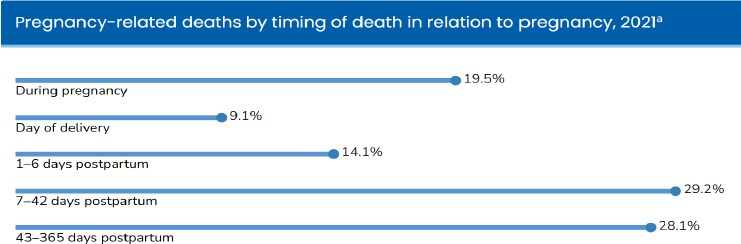
NOTES: a Percentages might not sum to 100 because of rounding; data from Maternal Mortality Review Information Application. Pregnancy-related death is defined as “the death of a woman during pregnancy or within 1 year of the end of pregnancy from a pregnancy complication, a chain of events initiated by pregnancy, or the aggravation of an unrelated condition by the physiologic effects of pregnancy” (CDC, 2024d).
SOURCE: CDC, 2025e.
pregnancy-related deaths, including cardiovascular conditions (22.2 percent [N = 146], including 10.7 due to cardiomyopathy [10.7 percent, N = 71]), HDP (7.7 percent, N = 51), and cerebrovascular accident [stroke] (3.8 percent, N = 25) (CDC, 2025b). MMRIA data show a similar pattern, though the most recent data are from 2021 (CDC, 2024c).
For non-Hispanic Black women, cardiac and coronary conditions were the leading cause of pregnancy-related death in MMRC data 2017–2019 (CDC, 2025e). In an analysis of MMRC data from 32 states, among all pregnancy-related deaths due to cardiomyopathy 2017–2019, 51.2 percent were among non-Hispanic Black women (Briller et al., 2024; CDC, 2025e). Women under 35 accounted for 66 percent of cardiovascular deaths, and 53 percent of cardiomyopathy deaths and 31 percent of other cardiovascular deaths were 43–365 days postpartum (Briller et al., 2024). This highlights the importance of extended postpartum surveillance.
MMRC reviews from 32 states revealed that over 75 percent of 2017–2019 pregnancy-related deaths resulting from cardiomyopathy and other cardiovascular conditions (excluding HDP and cerebrovascular accidents) were preventable; the MMRC considers a death preventable if it determines death could have been averted by one or more reasonable changes to patient, family, provider, facility, systems factors, and/or community (Briller et al., 2024). The five most frequent contributing factor classes
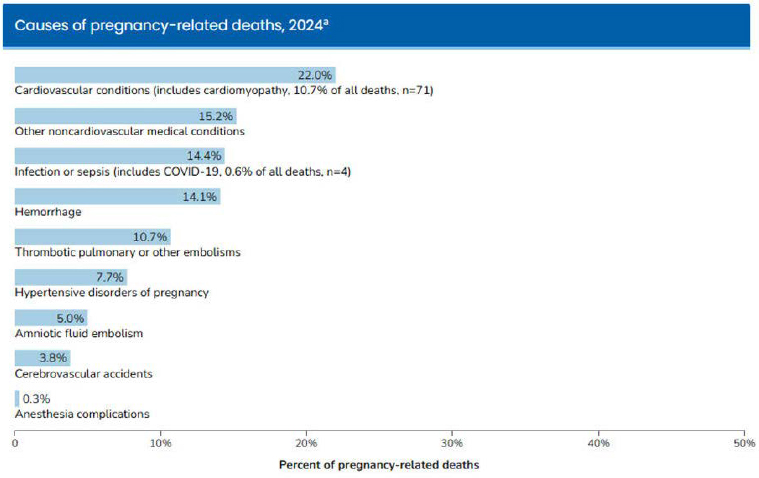
NOTES: a The cause of death is unknown for 6.9 percent of all 2024 pregnancy-related deaths; data from the CDC Pregnancy Mortality Surveillance System. Pregnancy-related death is defined as “the death of a woman during pregnancy or within 1 year of the end of pregnancy from a pregnancy complication, a chain of events initiated by pregnancy, or the aggravation of an unrelated condition by the physiologic effects of pregnancy” (CDC, 2024d).
SOURCE: CDC, 2025b.
to potentially preventable deaths were knowledge, clinical skill and quality of care, continuity of care and care coordination, chronic disease, and access and financial barriers, together accounting for half of all identified contributing factors. On average, MMRC reviews identified six contributing factors for each death, underscoring the multifactorial nature of these events and the need to address multiple domains simultaneously to reduce maternal mortality from CVD (Briller et al., 2024). The multifactorial nature of these deaths suggests that clinical preventive services, while essential, may not be sufficient on their own and would benefit from alignment with broader systems, workforce, and community-level efforts to achieve meaningful reductions in maternal cardiovascular mortality.
Maternal cardiovascular deaths arise through multiple pathways. First, some occur among women with known, high-risk preexisting cardiovascular disease—such as cardiomyopathy, congenital heart disease, or significant
valvular disease—where opportunities may exist to optimize evidence-based management, coordination, and delivery planning. Second, other deaths result from delayed recognition or missed diagnosis of new-onset conditions during pregnancy or the postpartum period, including hypertensive emergencies, stroke, pulmonary embolism, or peripartum cardiomyopathy. Delayed recognition and escalation of care are commonly identified contributing factors in reviews of pregnancy-related cardiovascular deaths. Third, deaths occur in women without established disease but with elevated risk profiles in whom improved risk stratification and preventive management may reduce morbidity. Distinguishing among these pathways helps clarify how different preventive strategies—optimization of known disease, improved diagnostic vigilance, and structured risk assessment—can complement one another.
Cardiovascular-Related Severe Maternal Morbidity
Maternal morbidity—particularly SMM—is associated strongly with subsequent health care use, long-term disability, and increased risk of maternal mortality (Kern-Goldberger et al., 2023; Malhamé et al., 2022). Rates of cardiovascular-related SMM according to the CDC definition (ICD codes), including cardiac rhythm conversion, cerebrovascular disorders, pulmonary edema, and acute myocardial infarction, rose from 7.76 to 8.38 per 10,000 delivery hospitalizations between 1999 and 2015 (Malhamé et al., 2022). Black and Hispanic women and women with Medicaid coverage had significantly higher odds of mortality associated with cardiovascular SMM (Hill et al., 2025; Malhamé et al., 2022). Given the central contribution of cardiovascular conditions to maternal morbidity and mortality, understanding the association between pregnancy, APOs, and long-term cardiovascular risk—and how risk can be mitigated—is critical for designing effective preventive services to reduce maternal morbidity and mortality and improve health across the reproductive life course.
Population Considerations
Women with worse prepregnancy health status—including chronic conditions, cardiometabolic risk factors, preexisting CVD, genetic predispositions, and exposure to environmental stressors—are at higher risk of APOs, which contribute to pregnancy-related morbidity and mortality (Hill et al., 2025; Parikh et al., 2021). Social factors—including socioeconomic disadvantage, low health literacy, transportation barriers, limited access to
health care, food insecurity, and psychosocial stressors—also have cascading effects on APOs and long-term cardiovascular health (Shah et al., 2021).
Variation in pregnancy-related mortality and morbidity across racial and ethnic groups is well documented. As described, non-Hispanic AIAN and Black women experience substantially higher than average mortality (Chen et al., 2025; Fleszar et al., 2023), with 3–4 times the risk per 100,000 live births (54.6 for AIAN, 45.0 for Black, and13.6 for White women in 2024) (CDC, 2025b). Rates for Hispanic and Asian women were 13.9 and 15.0, respectively. In 2017–2019, Native Hawaiian and Pacific Islander (NHPI) women had the highest rates of pregnancy-related mortality (CDC, 2025b). With respect to maternal morbidity, Black women are at significant higher risk for SMM and preeclampsia. Compared to White women, Black, AIAN, and NHPI women have higher shares of births that are preterm, low birth weight, or associated with late or no prenatal care (Hill et al., 2025). More than two-thirds of births to women who are Black or AIAN are covered by Medicaid, and Black, Hispanic, and AIAN women are at highest risk of being uninsured before pregnancy (Hill et al., 2025). Other factors, such as geography (including rurality, distance from care site, and region) (Haiman and Cubbin, 2023), insurance status, income, nativity, and immigration status also influence disparities in cardiovascular and pregnancy-related outcomes (Hill et al., 2025). For example, women who are uninsured or covered by Medicaid may have more limited access to specialty care and high-volume obstetric facilities offering advanced or tertiary care, and rural residents may face greater travel distances and fewer local resources.
Certain populations, including AIAN, NHPI, and some Latina subgroups, are underrepresented in clinical research and administrative data systems (NASEM, 2022; Taira et al., 2024). Misclassification and incomplete reporting may obscure the true burden of cardiovascular and pregnancy-related morbidity and mortality in these populations. For example, when data on Latina populations are disaggregated by country of origin, language, or immigration status, distinct patterns of risk and access often emerge that are not visible in aggregate analyses (Alcántara et al., 2021).
These patterns reflect the cumulative effects of social, economic, and health system conditions that shape exposure to risk and access to care across the life course. These differences have practical implications for care delivery. Preventive strategies could prioritize timely follow-up, targeted outreach, and partnerships with community-based programs in populations with the highest burden to ensure that resources reach those most likely to benefit.
PREPREGNANCY, PRENATAL, POSTPARTUM, AND INTERPREGNANCY CARE
Pregnancy-related cardiovascular risk is closely linked to cardiovascular health before and between pregnancies. Strategies to reduce this risk during pregnancy and postpartum need to be timed before, during, after, and between pregnancies. To better understand opportunities for improved care, this section provides a high-level overview of clinical care across the reproductive life course, with a focus on cardiovascular risk assessment and preventive care.
Prepregnancy and Interpregnancy Care
Optimizing health before pregnancy can improve pregnancy outcomes and may reduce the risk of APOs and subsequent CVD. This report focuses on clinical services to prevent cardiovascular conditions and reduce pregnancy-related morbidity and mortality; prepregnancy and interpregnancy care are part of that prevention strategy. However, improving cardiovascular comorbidities and health status can take time, and 41 percent of pregnancies are not planned in advance (CDC, n.d.). Accordingly, CDC and ACOG recommend that efforts to improve prepregnancy health be broad and occur across the entire reproductive lifespan, rather than focusing solely on women actively planning pregnancy (ACOG, 2019; Stanhope and Kramer, 2021).
Prepregnancy care includes preventive services recommended for all adults, such as screening and counseling to reduce use of harmful substances; screening and management of mental health conditions; support for appropriate weight, nutrition, and exercise; and optimizing chronic conditions, such as HTN, diabetes, and hyperlipidemia (USPSTF, n.d.). Additional services relevant for women who may become pregnant include folic acid supplementation (CDC, 2025d), avoiding teratogenic medications when pregnancy is possible, and patient-centered contraceptive counseling (ACOG, 2019; Frayne, 2017; HHS, 2025). The American Academy of Family Physicians similarly recommends that prepregnancy care include family planning, achieving and maintaining an optimal body weight, screening and treatment for infectious diseases, and controlling chronic diseases to optimize pregnancy outcomes (Close et al., 2023; Farahi and Zolotor, 2013). Receiving such care before pregnancy has also been associated with higher odds of prenatal care during a future pregnancy (Wally et al., 2018).
For women with known CVD or CVD risk factors, prepregnancy care can include counseling on how these conditions may affect cardiovascular risk in planned and unplanned pregnancies, medication adjustment and optimization, and multidisciplinary planning for management during
pregnancy and delivery (Davis et al., 2021). In women with multiple atherosclerotic CVD risk factors or higher-risk clinical profiles, prepregnancy evaluation may also include formal risk stratification and, when clinically indicated, referral for additional cardiovascular assessment consistent with specialty guidelines. Because pregnancy can reveal underlying cardiovascular and metabolic vulnerability and contribute to APOs (Dassanayake et al., 2020), counseling in advance can also address strategies to reduce risk during pregnancy. For example, it might include the potential indications (e.g., prior preeclampsia, chronic HTN, age 35+) and timing of low-dose aspirin to reduce risk for preeclampsia so that women are aware before pregnancy (ADA Professional Practice Committee for Diabetes, 2026). Both ACOG and the American Diabetes Association recommend prepregnancy counseling and blood sugar optimization for women with preexisting diabetes (ACOG, 2019; ADA Professional Practice Committee for Diabetes, 2026; Wyckoff et al., 2025).
The interpregnancy period provides an additional opportunity to reassess cardiovascular risk and address conditions identified during or after the index pregnancy. APOs are associated with elevated risk of future CVD events, some of which occur within a few years later (Dassanayake et al., 2020) (see Figure 2-4). For women with prior APOs or other CVD risk factors, interpregnancy care can include follow-up evaluation of blood pressure and glucose, assessment of ongoing symptoms (e.g., dyspnea, palpitations), medication review with attention to pregnancy safety when future pregnancy is possible, and connection to primary care and specialty follow-up (ACOG and SMFM, 2019; Davis et al., 2021). This period can also support behavior change and chronic disease management (e.g., weight management, HTN and diabetes control, nutrition and physical activity counseling, and smoking cessation) and provide patient-centered contraceptive counseling to support pregnancy timing and spacing in alignment with a woman’s preferences and health status (Davis et al., 2021). Women who experience one or more APOs may desire additional pregnancies, and a history of APOs may complicate future childbearing. Prepregnancy planning can help determine whether specialists such as MFM and cardiology teams need to be involved before a subsequent pregnancy (Davis et al., 2021).
Despite the importance of prepregnancy care as a preventive health service that can optimize health before pregnancy, improve maternal and birth outcomes, and address health risk implications for future pregnancies (AAFP, 2022; ACOG, 2019; Dean et al., 2014), many women do not receive optimal care (Frey and Files, 2006; Marshall et al., 2021; Steel et al., 2015). Even for women with preexisting conditions, such as HTN or diabetes, prepregnancy counseling is suboptimal. In one Pregnancy Risk

NOTES: Pregnancy can reveal subclinical trajectories and identify new opportunities for chronic disease prevention. A: Women at high risk of future cardiovascular disease are identifiable during pregnancy, when subclinical vascular risk may become clinically evident. B: The risk revealed by pregnancy can be used to target high-risk women for screening and early intervention by lifestyle modification and treatment, altering their chronic disease trajectories as they enter middle age.
SOURCE: Reprinted from Rich-Edwards et al., 2010.
Assessment Monitoring System (PRAMS)2 analysis (2016–2018), women with both diabetes and HTN were not more likely than women without either condition to report receiving any prepregnancy counseling topics during a health care visit in the 12 months prior to pregnancy (Marshall et al., 2021). Many women do not interact with clinicians immediately before pregnancy and may enter pregnancy without a full understanding of their cardiovascular risk or its implications (Stanhope and Kramer, 2021). Additionally, data further suggest that cardiovascular risk assessment during the prepregnancy period is inconsistently performed, and female-specific risk factors or enhancers, including APOs, are not systematically incorporated into routine risk stratification outside of pregnancy (Salehi Omran and Leppert, 2024). This likely reflects multiple factors, including fragmentation in care—where clinicians providing preventive services may not provide obstetric care—and broader structural barriers, time constraints, and reimbursement policies in primary care settings. Preventive visits for reproductive-age women often emphasize sex-specific services, such as cervical cancer screening and contraception, and may not incorporate broader cardiometabolic risk assessment.
Identifying the prepregnancy period itself can be challenging, as pregnancy intentions and attitudes often change (Geist et al., 2021) and many pregnancies occur without prior planning (ACOG, 2019). Even when cardiovascular risk is addressed, patient-centered contraceptive counseling may not be offered, which can be particularly challenging for women with preexisting conditions for whom some contraceptive options may be contraindicated (Lindley et al., 2021). Together, these patterns highlight persistent structural and clinical gaps in integrating cardiovascular risk assessment into prepregnancy care.
It should be possible to identify and optimize several cardiometabolic risk factors present before pregnancy—including elevated blood pressure, dyslipidemia, elevated blood glucose, tobacco exposure, and sedentary behavior (ACOG, 2019; Close et al., 2023; Preda et al., 2024)—potentially reducing pregnancy morbidity and mortality. Large European cohort studies have shown that women who experience APOs often have adverse cardiometabolic profiles years in advance (Birnie et al., 2025). These findings suggest that routine screening and management of cardiovascular risk in women capable of conceiving, regardless of pregnancy intention, represent an important yet underused opportunity to prevent both pregnancy-related complications and later-life CVD outcomes. Targeted efforts may be particularly important for women with female-specific CVD risk factors, including APOs (O’Kelly et al., 2022).
A related challenge is the assumption that cardiovascular risk factors normalize after delivery. Although blood pressure and other cardiometabolic
___________________
2 In March 2025, CDC paused data collection through PRAMS.
measures may fall into ranges considered “normal” postpartum, women with a history of preeclampsia often continue to have higher blood pressures than women without such histories, reflecting persistent subclinical risk (Cusimano et al., 2014; Xue et al., 2023). In addition, younger women who meet diagnostic criteria for HTN in the postpartum period are less likely to be treated with antihypertensive medications, further contributing to delayed risk recognition and management of cardiovascular risk (Brush and Lu, 2025; Schmittdiel et al., 2011).
Prenatal Care and Cardiovascular Management
Prenatal care—also called antenatal care—is a common preventive service; in 2024, 75.5 percent of U.S. women began prenatal care in the first trimester (Osterman et al., 2026). Previously, ACOG and the American Academy of Pediatrics, in collaboration with other professional organizations, developed shared clinical guidelines for perinatal care (AAP and ACOG, 2017). However, in April 2025, ACOG released a Clinical Consensus Statement recommending a tailored, “transformative” approach to prenatal care that includes addressing unmet social needs, tailoring the frequency and content of prenatal visits, and incorporating innovative modalities, such as telehealth (ACOG, 2025b). These guidelines have not been fully implemented in clinical practice. However, they recommend that prenatal care should begin in the first trimester, ideally before 10 weeks’ gestation. In 2023, 24 percent of U.S. live births were to women who received no prenatal care in the first trimester (March of Dimes, 2024) with Black, AIAN, and NHPI women at greatest risk of late or no prenatal care (Hill et al., 2025). Additional details on rates and barriers to prenatal care are discussed later in this chapter.
Among women at average risk with uncomplicated pregnancies, targeted prenatal care schedules of 6–10 visits have shown equivalent maternal and neonatal outcomes compared with standard visit schedules and an overall positive care experience (Balk et al., 2023; Barrera et al., 2021; Dowswell et al., 2015). Women with preexisting CVD (e.g., congenital heart disease, cardiomyopathy, or prior myocardial infarction) often require early risk stratification, referral to specialized cardio-obstetrics expertise, and care in settings equipped to manage higher-acuity conditions. Some visits need to be conducted in person to allow for recommended blood pressure, heart rate, and weight measurements, laboratory screening, vaccinations, and fetal assessment (e.g., Doppler evaluation and ultrasonography). Telehealth visits can supplement in-person care when fetal movement is reassuring based on patient report, laboratory or ultrasound testing is not needed, and recommended blood pressure monitoring can be conducted remotely (ACOG, 2025b).
For women with known CVD or at elevated CVD risk, prenatal care provides a critical opportunity to monitor and manage conditions such as blood pressure, blood glucose, and other risk factors; identify early signs of decompensation (such as heart failure symptoms or arrhythmias); and coordinate obstetric, cardiology, and anesthesiology care plans. When care teams use home or telehealth-supported blood pressure monitoring, they need to prioritize validated blood pressure devices (e.g., guided by resources such as the American Medical Association’s ValidateBP.org) and patient education on proper measurement technique, recognizing that not all devices are validated for use in pregnancy (AHA, 2025). Structured risk assessment and multidisciplinary cardio-obstetric teams (discussed further later) can support individualized management of high-risk pregnancies.
Postpartum Care and Long-Term Cardiovascular Risk
Clinical guidance increasingly emphasizes the postpartum period as a critical phase for ongoing care rather than a single follow-up visit. It recommends an initial contact with a member of the maternity care team within the first 3 weeks after delivery, followed by additional visits as needed, and a comprehensive assessment completed no later than 12 weeks postpartum (ACOG, 2018). The initial contact is intended to address possible acute issues (e.g., healing, bleeding, infection) and may occur by phone, telehealth, or in person. It should include review of symptoms and, when appropriate, assessment of vital signs (e.g., blood pressure) and laboratory testing. For women who have experienced an HDP during the delivery hospitalization, a blood pressure check 7–10 days postpartum is recommended. The comprehensive assessment is intended to address physical recovery, mental health, and social needs and facilitate transition to primary care and specialty care for long-term management of chronic conditions, such as hypertensive disorders, dyslipidemia, and diabetes. As many as 40 percent of women do not attend a postpartum visit (ACOG, 2018), and attendance varies across populations (Attanasio et al., 2022).
HEALTH CARE USE AND ACCESS TO PREVENTIVE SERVICES FOR WOMEN
Access to cardiovascular and maternity-related preventive services is shaped by insurance coverage, income, availability of health care professionals, and the affordability of care and health insurance (Long et al., 2022).
Insurance Status
Health status is closely linked to income and insurance type. A larger proportion of women with low income or covered by Medicaid report worse self-rated health compared with women with higher incomes and private insurance coverage (Long et al., 2021). Insurance coverage affects access to screening and management of cardiovascular risk factors (e.g., HTN and diabetes), and uninsured adults with low income have worse health care access and cardiovascular risk-factor monitoring and treatment than insured adults (Oseran et al., 2022). In the postpartum period, loss or gaps in coverage—historically common after pregnancy-related Medicaid eligibility ends—can disrupt follow-up and cardiometabolic screening needed to identify and manage cardiovascular risk factors (Luther et al., 2021). These coverage differences are also reflected in where women seek care.
A 2020 report found that most women obtain health care from private physician practices, but women from underserved communities—including those who are uninsured or have Medicaid—are more likely to use clinics, such as community health centers, urgent care facilities, or clinics inside stores or pharmacies (Long et al., 2021). Overall, four in five women reported receiving care from a doctor’s office, while 17 percent reported doing so in a clinic setting (Long et al., 2021). By insurance type, 23 percent of women with Medicaid and 30 percent of uninsured women received care in clinics, compared with 85 percent of women with private insurance who used private physician practices (Long et al., 2021). Use patterns also varied by race and ethnicity, with Hispanic (21 percent) and Black (22 percent) women being more likely to receive care from clinics than White (14 percent) and Asian (11 percent) women (Long et al., 2021). Uninsured women and those with Medicaid were also more likely to use community-based or public health centers compared with women with private insurance (Long et al., 2021). As discussed, rates of uninsurance or coverage by Medicaid are highest among Black, Hispanic, and AIAN women (Hill et al., 2025).
Adherence to Prepregnancy, Prenatal, and Postpartum Care
Prepregnancy care refers broadly to health care received before pregnancy, and prenatal (antenatal) care refers to preventive care provided during pregnancy (NICHD, n.d.). U.S. data on prenatal care are derived from birth certificates in all states and the District of Columbia (NCHS, 2025a). Data on quality and quantity of prepregnancy and postpartum care are typically assessed using billing data and PRAMS self-report items.
Data on prepregnancy care are limited and measured inconsistently across surveillance and administrative data sources. Core prepregnancy
health indicators rely largely on PRAMS and the Behavioral Risk Factor Surveillance System, which provide state-based (not fully national) estimates for women of reproductive age (CDC, 2025f; Robbins et al., 2014) that vary by definition and population. Among Medicaid-covered births in 26 states (2012), about one-quarter of women reported receiving prepregnancy care in the year before pregnancy (23.6 percent in PRAMS), and a similar share had claims-based evidence of at least one prepregnancy service (28.1 percent) (Stulberg et al., 2023). In selected states, 33.2 percent of women with a recent live birth (2–9 months postpartum) reported that, before their most recent pregnancy, they talked with a health professional about improving their health (Bello et al., 2015). Visit-based national ambulatory care data suggest that prepregnancy-related services are delivered in a small share of encounters: in 2009–2010, only 14 percent of ambulatory visits by nonpregnant women aged 15–44 included contraceptive and/or prepregnancy care (Bello et al., 2015). Overall, data are limited and, across multiple sources and definitions, suggest that prepregnancy care reaches only a minority of women or encounters, underscoring both measurement limitations and missed opportunities to address risk before pregnancy.
PRAMS-based analyses also indicate that even among women with preexisting chronic conditions, such as diabetes or HTN, receipt of prepregnancy counseling regarding medication management, glycemic control, or cardiovascular risk is inconsistent and often low, with variation by insurance coverage and sociodemographic factors. These findings suggest that missed opportunities for risk optimization prior to pregnancy are not limited to the general population but extend to women already known to be at elevated cardiometabolic risk (Marshall et al., 2021; McLaughlin et al., 2025).
Rates of inadequate prenatal care—defined as beginning in the fifth month of pregnancy or later or fewer than 50 percent of the recommended number of visits for gestational age—ranged from 14.5 to 15.7 percent of live births 2018–2023 (March of Dimes, 2024). Most live births (76.1 percent) were to women who started prenatal care in the first trimester; 16.9 percent began in the second trimester, and 7.0 percent began in the third trimester or received no prenatal care (March of Dimes, 2024). In the most recent NVSS report, the lowest percentage of first-trimester prenatal care initiation was observed among NHPI mothers (49.7 percent), followed by AIAN (64.8 percent), Black (67.6 percent), and Hispanic (70.5 percent) mothers, all below the overall average of 77.0 percent (Osterman et al., 2024). These groups also had the highest rates of late or no prenatal care (Osterman et al., 2024).
Studies have identified environmental, interpersonal, and intrapersonal barriers and facilitators to first-trimester prenatal care initiation at multiple
levels. At the environmental level, policies such as Medicaid expansion, availability of prenatal care visits, and reimbursement and clinical guidance for telehealth-based prenatal services have been associated with improved access and earlier initiation of care (Eggen et al., 2025). At the interpersonal level, language barriers, misunderstandings, and barriers to trust can impede access to care (Deering, 2023). At the intrapersonal level, factors such as increased psychosocial and social needs, unintended pregnancy, undocumented immigration status, lower English proficiency, and substance use disorder have been associated with delayed initiation of prenatal care (Barber and Terplan, 2023; Deering, 2023; Holt et al., 2024; Nidey et al., 2022; Wolff et al., 2008).
Similar to prepregnancy care, postpartum care use is commonly measured using PRAMS self-report items and administrative claims, which can yield different estimates. In PRAMS-based national reporting in 2023, 90.3 percent of women with a recent live birth reported receiving a postpartum visit (United Health Foundation, 2023). However, published estimates vary substantially across studies and data sources; a systematic review found postpartum visit attendance of 24.9–96.5 percent (mean 72.1 percent), with rates generally higher in self-report data than administrative data (Attanasio et al., 2022). Insurance continuity may affect postpartum follow-up: among Medicaid enrollees with a live birth in 2018, 31 percent were disenrolled within 6 months and 40 percent within 12 months after delivery, and other analyses have found postpartum coverage gaps are common among women insured by Medicaid at delivery (ASPE, 2021; Corallo et al., 2022) (see Box 2-3).
These use patterns occur within a broader maternity care delivery landscape characterized by variability in types of clinicians, insurance coverage, and geographic access.
A National Academies of Sciences, Engineering, and Medicine report highlighted that U.S. maternity care is delivered by multiple provider types with varied training, licensure, and credentials, including obstetrician-gynecologists, family physicians, and certified nurse midwives and midwives (NASEM, 2020). Insurance coverage (e.g., private, Medicaid, Medicare, self-pay), state policies and regulations, the settings in which care is delivered, and broader contextual factors, such as social factors, biases, and medical risk factors, all influence the availability and type of clinical providers (Kreuter et al., 2021; NASEM, 2020).
A key March of Dimes report found that 35.1 percent of U.S. counties are “maternity care deserts,” defined as having no hospitals or birth centers offering obstetric care, no obstetric clinicians per 10,000 births, and any proportion of women without health insurance (Stoneburner et al., 2024) (see Figure 2-5). In addition, one in two counties lacks a hospital that provides obstetric care (Stoneburner et al., 2024). Women living in maternity
BOX 2-3
Use of Prepregnancy, Prenatal, and Postpartum Care in the United States
- Only 24–28 percent of Medicaid-covered women report or have claims evidence of prepregnancy care in the year before pregnancy (Stulberg et al., 2023).
- Among women with preexisting chronic conditions (e.g., diabetes, hypertension), prepregnancy counseling remains inconsistent (Marshall et al., 2021; McLaughlin et al., 2025).
- 14–16 percent of live births involve inadequate prenatal care (late initiation or insufficient visits) (March of Dimes, 2024).
- 7 percent of women begin prenatal care in the third trimester or receive no prenatal care (March of Dimes, 2024).
- Postpartum visit attendance varies widely across data sources: PRAMS-based national reporting estimates 90 percent attendance, whereas a systematic review found attendance ranging from 24.9 to 96.5 percent (mean 72.1 percent), with higher rates generally observed in self-report compared to administrative data (Attanasio et al., 2022; United Health Foundation, 2023).
- Medicaid coverage disruptions are common postpartum (31 percent disenrolled within 6 months; 40 percent within 12 months in 2018) (ASPE, 2021; Corallo et al., 2022).
shortage areas are more likely to have poorer health before pregnancy, receive less prenatal care, and experience higher rates of preterm birth. In addition, they travel on average 2.6 times farther to reach a birthing hospital compared with those in counties with full access to maternal care (Stoneburner et al., 2024). Infant mortality risk is also highest in counties with low or no access to maternity care (Lucas et al., 2025).
National frameworks define levels of maternal care (Levels I–IV) to describe hospital capabilities for managing increasingly complex and high-risk pregnancies, including those complicated by cardiovascular conditions (ACOG, 2025a). These frameworks emphasize identifying clinical risk and aligning pregnant women with delivery sites that have appropriate expertise, infrastructure, and referral relationships (Lau et al., 2024). Access to risk-appropriate delivery care depends on not only the presence of obstetric services but also regional coordination, referral networks, and hospital capacity. Gaps in access to higher levels of maternal care—driven by hospital closures, workforce shortages, and geographic barriers—provide important context for understanding how maternity care deserts may contribute to pregnancy-related cardiovascular morbidity and mortality.
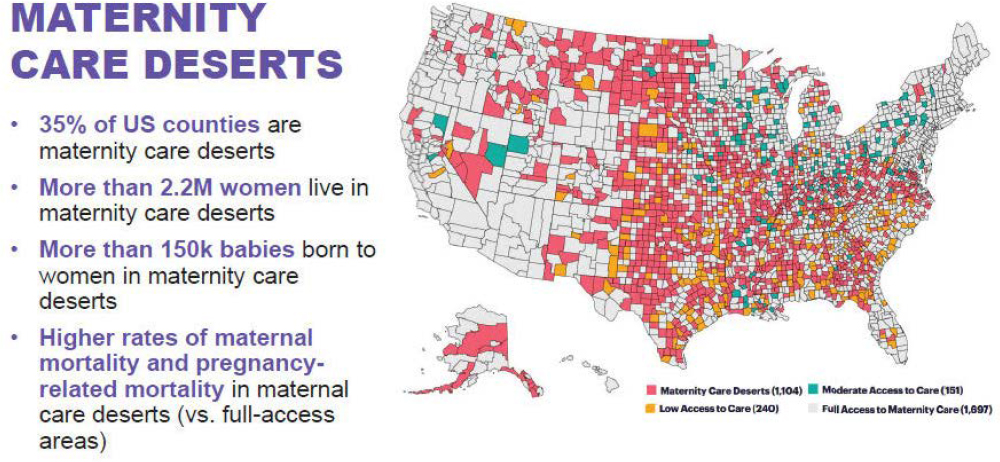
NOTE: Data from U.S. Health Resources and Services Administration, Area Health Resources Files, 2022–2023 file; American Board of Family Medicine, 2019–2022; American Association of Birth Centers, 2023; Centers for Medicare & Medicaid Services, National Plan and Provider Enumeration System, November 2023 file; National Center for Health Statistics, 2022 final natality data; U.S. Census Bureau, 2022 American Community Survey 5-Year Estimates; American Hospital Association, 2022.
SOURCE: Reprinted from Stoneburner et al., 2024, adapted by Warren, 2025 (presented on August 27, 2025).
Reproductive health care shortage areas—including limited access to family planning services—often overlap with maternity care shortage areas (Collins et al., 2024; National Women’s Law Center, 2025; Wallace et al., 2024). Many women live in “contraceptive deserts,” where few or no health centers offer the full range of contraceptive methods (Axelson et al., 2022; Day et al., 2025), limiting the ability to plan and space pregnancies and potentially contributing to adverse maternal and infant outcomes. Chapter 6 discusses the social drivers that influence access to prepregnancy, prenatal, and postpartum care and create barriers to care.
COMMUNITY-BASED MODELS OF MATERNITY CARE AND CARDIO-OBSTETRICS
Community-Based Models
In response to the persistent maternal mortality and morbidity crisis, community-based models of maternity care have become more prominent. Community-based doulas and midwives build on long-standing traditions of women supporting women during pregnancy and childbirth (Dawley, 2003; Zephyrin et al., 2021). Community-based doulas are trained nonclinical professionals, often working within community health worker–style models, who are rooted in the communities they serve. They provide psychosocial, emotional, and educational support during pregnancy, labor and delivery, and the postpartum period, including in homes and community settings, and in coordination with clinical care teams (Prenatal-to-3 Policy Impact Center, 2024; Rubenstein, 2025; Zephyrin et al., 2021). Midwives are trained clinicians who provide prenatal, intrapartum, and postpartum care. The midwifery model promotes health across the lifespan, compassionate partnerships with patients, interdisciplinary collaboration, respect of individual autonomy, therapeutic human presence, and excellent communication, among other values (ACNM, 2023). Community health workers also play important roles in supporting pregnant and postpartum women with community-based and culturally appropriate education, care coordination, and navigation of health and social services.
Cardio-Obstetrics
The subspecialty of cardio-obstetrics has expanded over the past decade in response to rising rates of cardiovascular morbidity and mortality in pregnancy and postpartum (Davis et al., 2023). These teams, sometimes called “pregnancy heart teams” (Hart et al., 2024), provide care to patients with heart disease or CVD risk factors across the pregnancy continuum, from prepregnancy through postpartum and, in some models, across the
life course (Davis et al., 2023; Wolfe and Guerrero, 2025). The field aims to reduce cardiovascular risk among pregnant and postpartum women through prepregnancy counseling, risk stratification, coordination of prenatal and intrapartum care, and structured postpartum follow-up (Wolfe and Guerrero, 2025).
Cardio-obstetrics models involve multidisciplinary teams that may include experts in cardio-obstetrics, cardiovascular medicine, MFM, general obstetrics, primary care, anesthesiology, nursing, pharmacy, social work, and/or other specialties (Virani et al., 2023) (see Chapter 5 section on Integrated Cardio-Obstetrics Care Models for more information). A life-course approach, integrating primary medical and gynecologic care both before and after pregnancy, has been emphasized as a strategy to sustain cardiovascular prevention efforts beyond the perinatal period (Bond et al., 2024).
CONCLUDING CONSIDERATIONS
CVD is a major contributor to U.S. pregnancy-related morbidity and mortality and central driver of disparities across populations. Pregnancy is a physiologic stress test that can reveal latent cardiovascular risk, and APOs serve as important indicators of future CVD. Cardiovascular conditions contribute substantially to maternal mortality and SMM and are often preventable, with multiple contributing factors identified at the patient, provider, facility, and system levels.
To identify priorities for prevention, it is essential to understand the physiological adaptations of pregnancy; spectrum of cardiovascular conditions and risk factors; current preventive services offered before, during, and after pregnancy; and epidemiology of pregnancy-related morbidity and mortality—including population-level disparities. The life-course perspective presented in this chapter underscores the importance of cardiovascular risk assessment and preventive care before, during, and after pregnancy.
REFERENCES
AAFP (American Academy of Family Physicians). 2022. Preconception Care (Position Paper). https://www.aafp.org/about/policies/all/preconception-care.html (accessed February 24, 2026).
AAP (American Academy of Pediatrics) and ACOG (American College of Obstetricians and Gynecologists). 2017. Guidelines for perinatal care, 8th ed. Elk Grove Village, IL: American Academy of Pediatrics.
Ackerman-Banks, C. M., H. S. Lipkind, K. Palmsten, M. Pfeiffer, C. Gelsinger, and K. A. Ahrens. 2023. Association of prenatal depression with new cardiovascular disease within 24 months postpartum. Journal of the American Heart Association 12(9):e028133. https://doi.org/10.1161/JAHA.122.028133.
ACNM (American College of Nurse-Midwives). 2023. American College of Nurse-Midwives Philosophy of Midwifery. https://midwife.org/wp-content/uploads/2024/10/American-College-of-Nurse-Midwives-Philosophy-of-Midwifery.pdf (accessed January 7, 2026).
ACOG (American College of Obstetricians and Gynecologists). 2018. ACOG Committee Opinion No. 736: Optimizing postpartum care. Obstetrics & Gynecology 131(5). https://doi.org/10.1097/AOG.0000000000002633.
ACOG. 2019. Prepregnancy counseling. Committee Opinion No. 762. Washington, DC: American College of Obstetricians and Gynecologists.
ACOG. 2025a. Levels of Maternal Care. https://www.acog.org/clinical/clinical-guidance/obstetric-care-consensus/articles/2019/08/levels-of-maternal-care (accessed February 17, 2026).
ACOG. 2025b. Tailored prenatal care delivery for pregnant individuals: ACOG Clinical Consensus No. 8. Obstetrics & Gynecology 145(5):565–577. https://doi.org/10.1097/AOG.0000000000005889.
ACOG and SMFM (Society for Maternal-Fetal Medicine). 2019. Interpregnancy care. American Journal of Obstetrics and Gynecology 220(1):B2–B18. https://doi.org/10.1016/j.ajog.2018.11.1098.
ADA (American Diabetes Association). 2022. Standards of medical care in diabetes—2022 abridged for primary care providers. Clinical Diabetes 40(1):10–38. https://doi.org/10.2337/cd22-as01.
ADA Professional Practice Committee for Diabetes. 2026. 15. Management of diabetes in pregnancy: Standards of care in diabetes—2026. Diabetes Care 49(1). https://doi.org/10.2337/dc26-S015.
AHA (American Heart Association). 2025. Home Blood Pressure Monitoring. https://www.heart.org/en/health-topics/high-blood-pressure/understanding-blood-pressure-readings/monitoring-your-blood-pressure-at-home (accessed February 24, 2026).
Alcántara, C., S. F. Suglia, I. P. Ibarra, A. L. Falzon, E. McCullough, T. Alvi, and L. J. Cabassa. 2021. Disaggregation of Latina/o child and adult health data: A systematic review of public health surveillance surveys in the United States. Population Research and Policy Review 40(1):61–79. https://doi.org/10.1007/s11113-020-09633-4.
AMA (American Medical Association). 2020. New AMA Policies Recognize Race as a Social, Not Biological, Construct. https://www.ama-assn.org/press-center/ama-press-releases/new-ama-policies-recognize-race-social-not-biological-construct (accessed February 24, 2026).
ASPE (Assistant Secretary for Planning and Evaluation). 2021. Medicaid churning and continuity of care: Evidence and policy considerations before and after the COVID-19 pandemic. Washington, DC: ASPE. https://aspe.hhs.gov/sites/default/files/documents/5f6e4d78d867b6691df12d1512787470/medicaid-churning-ib.pdf (accessed March 6, 2026).
Attanasio, L. B., B. L. Ranchoff, M. I. Cooper, and K. H. Geissler. 2022. Postpartum visit attendance in the United States: A systematic review. Women’s Health Issues 32(4):369–375. https://doi.org/10.1016/j.whi.2022.02.002.
Auvinen, A. M., K. Luiro, J. Jokelainen, I. Järvelä, M. Knip, J. Auvinen, and J. S. Tapanainen. 2020. Type 1 and type 2 diabetes after gestational diabetes: A 23 year cohort study. Diabetologia 63(10):2123–2128. https://doi.org/10.1007/s00125-020-05215-3.
Axelson, S. M., G. A. Sealy, and R. E. McDonald-Mosley. 2022. Reproductive well-being: A framework for expanding contraceptive access. American Journal of Public Health 112(S5):S504–s507. https://doi.org/10.2105/ajph.2022.306898.
Balk, E. M., V. A. Danilack, M. R. Bhuma, W. Cao, G. P. Adam, K. J. Konnyu, and A. F. Peahl. 2023. Reduced compared with traditional schedules for routine antenatal visits: A systematic review. Obstetrics & Gynecology 142(1):8–18. https://doi.org/10.1097/aog.0000000000005193.
Barber, C. M., and M. Terplan. 2023. Principles of care for pregnant and parenting people with substance use disorder: The obstetrician gynecologist perspective. Frontiers in Pediatrics 11:1045745. https://doi.org/10.3389/fped.2023.1045745.
Barrera, C. M., A. R. Powell, C. R. Biermann, J. Y. Siden, B. H. Nguyen, S. J. Roberts, L. James, V. Chopra, and A. Peahl. 2021. A review of prenatal care delivery to inform the Michigan plan for appropriate tailored healthcare in pregnancy panel. Obstetrics & Gynecology 138(4):603–615. https://doi.org/10.1097/aog.0000000000004535.
Bello, J. K., G. Rao, and D. B. Stulberg. 2015. Trends in contraceptive and preconception care in United States ambulatory practices. Family Medicine 47(4):264–271. https://www.stfm.org/FamilyMedicine/Vol47Issue4/Bello264 (accessed March 10, 2026).
Birnie, K., L. D. Howe, T. Jones, P. Madley-Dowd, F. Z. Martin, H. Forbes, M. T. Redaniel, R. Cornish, M. C. Magnus, N. M. Davies, K. Tilling, A. D. Hughes, D. A. Lawlor, and A. Fraser. 2025. Life course trajectories of maternal cardiovascular disease risk factors by obstetric history: A UK cohort study using electronic health records. BMC Medicine 23(1):91. https://doi.org/10.1186/s12916-025-03937-y.
Bond, R. M., N. A. Bello, A. Ansong, and K. C. Ferdinand. 2024. Public health and system approach in eliminating disparities in hypertensive disorders and cardiovascular outcomes in non-Hispanic Black women across the pregnancy life course. American Heart Journal Plus 46:100445. https://doi.org/10.1016/j.ahjo.2024.100445.
Briller, J., S. L. Trost, A. Busacker, N. T. Joseph, N. L. Davis, E. E. Petersen, D. A. Goodman, and L. M. Hollier. 2024. Pregnancy-related mortality due to cardiovascular conditions: Maternal Mortality Review Committees in 32 U.S. states, 2017 to 2019. JACC: Advances 3(12):101382. https://doi.org/10.1016/j.jacadv.2024.101382.
Brown, M. C., K. E. Best, M. S. Pearce, J. Waugh, S. C. Robson, and R. Bell. 2013. Cardiovascular disease risk in women with pre-eclampsia: Systematic review and meta-analysis. European Journal of Epidemiology 28(1):1–19. https://doi.org/10.1007/s10654-013-9762-6.
Brush, J. E., and Y. Lu. 2025. The noise problem. JACC 86(18):1485–1487. https://doi.org/10.1016/j.jacc.2025.08.068.
Building U.S. Capacity to Review and Prevent Maternal Deaths. 2018. Report from Nine Maternal Mortality Review Committees. Atlanta, GA. https://stacks.cdc.gov/view/cdc/51660 (accessed March 2, 2026).
CDC (Centers for Disease Control and Prevention). n.d. Unintended Pregnancy. https://www.cdc.gov/reproductive-health/hcp/unintended-pregnancy/index.html (accessed January 6, 2026).
CDC. 2022. A Reference Guide for Certification of Deaths Associated with Pregnancy on Death Certificates. https://www.cdc.gov/nchs/data/nvss/vsrg/vsrg004.pdf (accessed November 3, 2025).
CDC. 2024a. About Women and Heart Disease. https://www.cdc.gov/heart-disease/about/women-and-heart-disease.html (accessed December 1, 2025).
CDC. 2024b. PMSS: Frequently Asked Questions. https://www.cdc.gov/maternal-mortality/php/pregnancy-mortality-surveillance-data/faqs.html (accessed January 8, 2026).
CDC. 2024c. Pregnancy-Related Deaths: Data from Maternal Mortality Review Committees in 36 U.S. States, 2017–2019. https://www.cdc.gov/maternal-mortality/php/data-research/mmrc-2017-2019.html (accessed March 17, 2025).
CDC. 2024d. Preventing Pregnancy-Related Deaths. https://www.cdc.gov/maternal-mortality/preventing-pregnancy-related-deaths/index.html (accessed November 26, 2025).
CDC. 2025a. About the Data: MMRIA. https://www.cdc.gov/maternal-mortality/php/dataresearch/mmria-methods/index.html (accessed November 3, 2025).
CDC. 2025b. Data from the Pregnancy Mortality Surveillance System. https://www.cdc.gov/maternal-mortality/php/pregnancy-mortality-surveillance-data/index.html (accessed November 3, 2025).
CDC. 2025c. Heart Disease Mortality. https://www.cdc.gov/nchs/state-stats/deaths/heart-disease.html (accessed January 8, 2026).
CDC. 2025d. Planning for Pregnancy. https://www.cdc.gov/pregnancy/about/index.html (accessed November 2, 2025).
CDC. 2025e. Pregnancy-Related Deaths: Data from Maternal Mortality Review Committees. https://www.cdc.gov/maternal-mortality/php/data-research/mmrc/index.html (accessed December 19, 2025).
CDC. 2025f. Pregnancy Risk Assessment Monitoring System (PRAMS). https://www.cdc.gov/prams/index.html (accessed January 8, 2026).
Cerdeña, J. P., M. V. Plaisime, and L. N. Borrell. 2024. Race as a risk marker, not a risk factor: Revising race-based algorithms to protect racially oppressed patients. Journal of General Internal Medicine 39(13):2565–2570. https://doi.org/10.1007/s11606-024-08919-z.
Chen, Y., M. S. Shiels, T. Uribe-Leitz, R. L. Molina, W. R. Lawrence, N. D. Freedman, and C. C. Abnet. 2025. Pregnancy-related deaths in the U.S., 2018–2022. JAMA Network Open 8(4):e254325. https://doi.org/10.1001/jamanetworkopen.2025.4325.
Close, E. D., A. O. Gunn, and A. Cooke. 2023. Preconception counseling and care. American Journal of Family Physicians 108(6):605–613. https://www.aafp.org/pubs/afp/issues/2023/1200/preconception-counseling-care.pdf (accessed March 10, 2026).
Collier, A. Y., and R. L. Molina. 2019. Maternal mortality in the United States: Updates on trends, causes, and solutions. Neoreviews 20(10):e561–e574. https://doi.org/10.1542/neo.20-10-e561.
Collins, S. R., D. C. Radley, S. Roy, L. C. Zephyrin, and A. Shah. 2024. 2024 State Scorecard on Women’s Health and Reproductive Care. https://www.commonwealthfund.org/publications/scorecard/2024/jul/2024-state-scorecard-womens-health-and-reproductive-care (accessed December 31, 2025).
Corallo, B., J. Tolbert, H. Saunders, and B. Frederiksen. 2022. Medicaid Enrollment Patterns During the Postpartum Year. https://www.kff.org/medicaid/medicaid-enrollment-patterns-during-the-postpartum-year/ (accessed January 8, 2026).
Cusimano, M. C., J. Pudwell, M. Roddy, C.-K. J. Cho, and G. N. Smith. 2014. The maternal health clinic: An initiative for cardiovascular risk identification in women with pregnancy-related complications. American Journal of Obstetrics & Gynecology 210(5):438. e431–438.e439. https://doi.org/10.1016/j.ajog.2013.12.001.
Daly, B., K. A. Toulis, N. Thomas, K. Gokhale, J. Martin, J. Webber, D. Keerthy, K. Jolly, P. Saravanan, and K. Nirantharakumar. 2018. Increased risk of ischemic heart disease, hypertension, and type 2 diabetes in women with previous gestational diabetes mellitus, a target group in general practice for preventive interventions: A population-based cohort study. PLOS Medicine 15(1):e1002488. https://doi.org/10.1371/journal.pmed.1002488.
Dassanayake, M., E. Langen, and M. B. Davis. 2020. Pregnancy complications as a window to future cardiovascular disease. Cardiology in Review 28(1):14–19. https://doi.org/10.1097/crd.0000000000000253.
Davis, M. B., K. Arendt, N. A. Bello, H. Brown, J. Briller, K. Epps, L. Hollier, E. Langen, K. Park, M. N. Walsh, D. Williams, M. Wood, C. K. Silversides, K. J. Lindley, American College of Cardiology Cardiovascular Disease in Women Committee, and the Cardio-Obstetrics Work Group. 2021. Team-based care of women with cardiovascular disease from pre-conception through pregnancy and postpartum: JACC focus seminar 1/5. Journal of the American College of Cardiology 77(14):1763–1777. https://doi.org/10.1016/j.jacc.2021.02.033.
Davis, M. B., N. A. Bello, K. Berlacher, C. M. Harrington, J. P. Lin, K. J. Lindley, L. G. Panah, K. E. Park, C. K. Silversides, M. N. Walsh, G. Weissman, D. DeFaria Yeh, and J. B. Damp. 2023. Cardiovascular fellowship training in cardio-obstetrics: JACC review topic of the week. Journal of the American College of Cardiology 82(18):1792–1803. https://doi.org/10.1016/j.jacc.2023.08.049.
Dawley, K. 2003. Origins of nurse-midwifery in the United States and its expansion in the 1940s. Journal of Midwifery & Women’s Health 48(2):86–95. https://doi.org/10.1016/s1526-9523(03)00002-3.
Day, Z., K. Meyer, A. Britt, and H. Robins. 2025. An Overview of Federally Funded Contraceptive Programs. https://www.commonwealthfund.org/publications/issue-briefs/2025/dec/overview-federally-funded-contraceptive-programs (accessed December 22, 2025).
Dean, S. V., Z. S. Lassi, A. M. Imam, and Z. A. Bhutta. 2014. Preconception care: Closing the gap in the continuum of care to accelerate improvements in maternal, newborn and child health. Reproductive Health 11(Suppl 3):S1. https://doi.org/10.1186/1742-4755-11-s3-s1.
Declercq, E., and M. Thoma. 2023. Measuring U.S. maternal mortality. JAMA 330(18):1731–1732. https://doi.org/10.1001/jama.2023.19945.
Deering, M. 2023. Addressing Language Barriers in Healthcare. https://nursejournal.org/articles/language-barriers-in-healthcare/ (accessed December 19, 2025).
Dennison, R. A., E. S. Chen, M. E. Green, C. Legard, D. Kotecha, G. Farmer, S. J. Sharp, R. J. Ward, J. A. Usher-Smith, and S. J. Griffin. 2021. The absolute and relative risk of type 2 diabetes after gestational diabetes: A systematic review and meta-analysis of 129 studies. Diabetes Research and Clinical Practice 171:108625. https://doi.org/10.1016/j.diabres.2020.108625.
Dowswell, T., G. Carroli, L. Duley, S. Gates, A. M. Gülmezoglu, D. Khan-Neelofur, and G. Piaggio. 2015. Alternative versus standard packages of antenatal care for low-risk pregnancy. Cochrane Database of Systematic Reviews 2015(7):Cd000934. https://doi.org/10.1002/14651858.CD000934.pub3.
Eades, C. E., K. A. Burrows, R. Andreeva, D. R. Stansfield, and J. M. Evans. 2024. Prevalence of gestational diabetes in the United States and Canada: A systematic review and meta-analysis. BMC Pregnancy and Childbirth 24(1):204. https://doi.org/10.1186/s12884-024-06378-2.
Eggen, M. B., D. LaPreze, S. Karimi, L. Creel, B. Little, and B. B. Ibrahim. 2025. Factors associated with first-trimester prenatal care initiation in the United States: A scoping review. Journal of Midwifery & Women’s Health 70(2):259–269. https://doi.org/10.1111/jmwh.13724.
Evans, K., P. Wu, M. A. Mamas, C. Irwin, P. Kang, J. H. Perlow, M. Foley, and M. Gulati. 2023. Substance use in pregnancy and its association with cardiovascular events. JACC Advances 2(8):100619. https://doi.org/10.1016/j.jacadv.2023.100619.
Farahi, N., and A. Zolotor. 2013. Recommendations for preconception counseling and care. American Family Physician 88(8):499–506. https://www.aafp.org/pubs/afp/issues/2013/1015/p499.pdf (accessed March 10, 2026).
Fleszar, L. G., A. S. Bryant, C. O. Johnson, B. F. Blacker, A. Aravkin, M. Baumann, L. Dwyer-Lindgren, Y. O. Kelly, K. Maass, P. Zheng, and G. A. Roth. 2023. Trends in state-level maternal mortality by racial and ethnic group in the United States. JAMA 330(1):52–61. https://doi.org/10.1001/jama.2023.9043.
Ford, N. D., S. Cox, J. Y. Ko, L. Ouyang, L. Romero, T. Colarusso, C. D. Ferre, C. D. Kroelinger, D. K. Hayes, and W. D. Barfield. 2022. Hypertensive disorders in pregnancy and mortality at delivery hospitalization—United States, 2017–2019. Morbidity and Mortality Weekly Report 71(17):585–591. https://doi.org/10.15585/mmwr.mm7117a1.
Frayne, D. J. 2017. Preconception care is primary care: A call to action. American Family Physician 96(8):492–494. https://www.aafp.org/pubs/afp/issues/2017/1015/p492.pdf (accessed March 10, 2026).
Frey, K. A., and J. A. Files. 2006. Preconception healthcare: What women know and believe. Maternal and Child Health Journal 10(5 Suppl):S73–77. https://doi.org/10.1007/s10995-006-0110-2.
Geist, C., B. G. Everett, R. G. Simmons, J. N. Sanders, L. M. Gawron, K. Myers, and D. K. Turok. 2021. Changing lives, dynamic plans: Prospective assessment of 12-month changes in pregnancy timing intentions and personal circumstances using data from HER Salt Lake. PloS One 16(9):e0257411. https://doi.org/10.1371/journal.pone.0257411.
Goldstein, S. A., A. Savu, S. Islam, C. C. Ward, R. A. Krasuski, C. A. Grotegut, L. K. Newby, L. K. Hornberger, J. Windram, and P. Kaul. 2022. Risk factors and outcomes associated with hypertensive disorders of pregnancy in maternal congenital heart disease. JACC: Advances 1(2):100036. https://doi.org/10.1016/j.jacadv.2022.100036.
Grandi, S. M., K. B. Filion, S. Yoon, H. T. Ayele, C. M. Doyle, J. A. Hutcheon, G. N. Smith, G. C. Gore, J. G. Ray, K. Nerenberg, and R. W. Platt. 2019. Cardiovascular disease-related morbidity and mortality in women with a history of pregnancy complications. Circulation 139(8):1069–1079. https://doi.org/10.1161/CIRCULATIONAHA.118.036748.
Gunderson, E. P., M. Greenberg, M. Najem, B. Sun, S. E. Alexeeff, J. Alexander, M. N. Nguyen-Huynh, and J. M. Roberts. 2025. Severe maternal morbidity associated with chronic hypertension, preeclampsia, and gestational hypertension. JAMA Network Open 8(1):e2451406. https://doi.org/10.1001/jamanetworkopen.2024.51406.
Gunja, M. Z., E. D. Gumas, R. Masitha, and L. C. Zephyrin. 2024. Insights into the U.S. Maternal Mortality Crisis: An International Comparison. https://www.commonwealthfund.org/publications/issue-briefs/2024/jun/insights-us-maternal-mortality-crisis-international-comparison (accessed April 16, 2025).
Haiman, M. D., and C. Cubbin. 2023. Impact of geography and rurality on preconception health status in the United States. Preventing Chronic Disease 20:E101. https://doi.org/10.5888/pcd20.230104.
Hart, W. M., B. Cobb, J. Quist-Nelson, and K. P. Tully. 2024. Development and implementation of a pregnancy heart team at a southeastern United States tertiary hospital: A qualitative study. American Journal of Obstetrics & Gynecology MFM 6(4). https://doi.org/10.1016/j.ajogmf.2024.101336.
HHS (U.S. Department of Health and Human Services). 2019. HRSA maternal mortality summit: Promising global practices to improve maternal health outcomes. Washington, DC: HHS.
HHS. 2024. Addressing the Maternal Health Crisis in the United States: An Update from the U.S. Department of Health and Human Services. https://aspe.hhs.gov/sites/default/files/documents/3c79dd97c5a9330173bd033f30fb7ba6/rtc-maternal-health.pdf (accessed February 17, 2026).
HHS. 2025. Preconception Health. https://womenshealth.gov/pregnancy/you-get-pregnant/preconception-health (accessed November 2, 2025).
Hill, L., A. Rao, S. Artiga, and U. Ranji. 2025. Racial Disparities in Maternal and Infant Health: Current Status and Key Issues. https://www.kff.org/racial-equity-and-health-policy/racial-disparities-in-maternal-and-infant-health-current-status-and-key-issues/ (accessed December 26, 2025).
Holt, V. N., E. Pelegrí, M. Hardy, L. Buchin, I. Dapkins, and M. Chuang. 2024. Patient-perceived barriers to early initiation of prenatal care at a large, urban federally qualified health center: A mixed-methods study. BMC Pregnancy and Childbirth 24(1):436. 10.1186/s12884-024-06630-9.
Hoyert, D. L. 2025. Maternal Mortality Rates in the United States, 2023. https://www.cdc.gov/nchs/data/hestat/maternal-mortality/2023/Estat-maternal-mortality.pdf (accessed December 1, 2025).
Huang, C., J. Li, G. Qin, Z. Liew, J. Hu, K. D. László, F. Tao, C. Obel, J. Olsen, and Y. Yu. 2021. Maternal hypertensive disorder of pregnancy and offspring early-onset cardiovascular disease in childhood, adolescence, and young adulthood: A national population-based cohort study. PLOS Medicine 18(9):e1003805. https://doi.org/10.1371/journal.pmed.1003805.
Iftikhar, S. F. B. M. 2023. Cardiac disease in pregnancy. Treasure Island, FL: StatPearls Publishing. https://www.ncbi.nlm.nih.gov/sites/books/NBK537261/ (accessed March 6, 2026).
Inversetti, A., C. A. Pivato, M. Cristodoro, A. C. Latini, G. Condorelli, N. Di Simone, and G. Stefanini. 2024. Update on long-term cardiovascular risk after pre-eclampsia: A systematic review and meta-analysis. European Heart Journal 10(1):4–13. https://doi.org/10.1093/ehjqcco/qcad065.
Karatza, A. A., and G. Dimitriou. 2020. Preeclampsia emerging as a novel risk factor for cardiovascular disease in the offspring. Current Pediatric Reviews 16(3):194–199. https://doi.org/10.2174/1573396316666191224092405.
Kern-Goldberger, A. R., E. A. Howell, S. K. Srinivas, and L. D. Levine. 2023. What we talk about when we talk about severe maternal morbidity: A call to action to critically review severe maternal morbidity as an outcome measure. American Journal of Obstetrics & Gynecology MFM 5(5):100882. https://doi.org/10.1016/j.ajogmf.2023.100882.
Kramer, C. K., S. Campbell, and R. Retnakaran. 2019. Gestational diabetes and the risk of cardiovascular disease in women: A systematic review and meta-analysis. Diabetologia 62(6):905–914. https://doi.org/10.1007/s00125-019-4840-2.
Kreuter, M. W., T. Thompson, A. McQueen, and R. Garg. 2021. Addressing social needs in health care settings: Evidence, challenges, and opportunities for public health. Annual Review of Public Health 42:329–344. https://doi.org/10.1146/annurev-publhealth-090419-102204.
Lau, E. S., N. R. Aggarwal, J. E. Briller, D. R. Crousillat, K. E. Economy, C. M. Harrington, K. J. Lindley, I. Malhame, D. J. Mattina, M. L. Meng, S. F. Mohammed, O. Quesada, N. S. Scott, and ACC Cardiovascular Disease in Women Committee Panel. 2024. Recommendations for the management of high-risk cardiac delivery: ACC Cardiovascular Disease in Women Committee panel. JACC Advances 3(4):100901. https://doi.org/10.1016/j.jacadv.2024.100901.
Lei, Q., J. Niu, L. Lv, D. Duan, J. Wen, X. Lin, C. Mai, and Y. Zhou. 2016. Clustering of metabolic risk factors and adverse pregnancy outcomes: A prospective cohort study. Diabetes/Metabolism Research and Reviews 32(8):835–842. https://doi.org/10.1002/dmrr.2803.
Lewey, J., T. M. Beckie, H. L. Brown, S. D. Brown, V. D. Garovic, S. S. Khan, E. C. Miller, G. Sharma, and L. S. Mehta. 2024. Opportunities in the postpartum period to reduce cardiovascular disease risk after adverse pregnancy outcomes: A scientific statement from the American Heart Association. Circulation 149(7):e330–e346. https://doi.org/10.1161/CIR.0000000000001212.
Lindley, K. J., C. N. Bairey Merz, M. B. Davis, T. Madden, K. Park, N. A. Bello, American College of Cardiology Cardiovascular Disease in Women Committee, and the Cardio-Obstetrics Work Group. 2021. Contraception and reproductive planning for women with cardiovascular disease: JACC focus seminar 5/5. Journal of the American College of Cardiology 77(14):1823–1834. https://doi.org/10.1016/j.jacc.2021.02.025.
Liu, C. H., H. Y. Zhang, F. Wang, S. S. Mu, and F. Y. Wen. 2025. Anxiety and hypertensive disorders of pregnancy: Epidemiology, mechanisms, and management strategies. World Journal of Psychiatry 15(6):105944. https://doi.org/10.5498/wjp.v15.i6.105944.
Long, M., B. Frederiksen, U. Ranji, and A. Salganicoff. 2021. Women’s Health Care Utilization and Costs: Findings from the 2020 KFF Women’s Health Survey. https://www.kff.org/womens-health-policy/womens-health-care-utilization-and-costs-findings-from-the-2020-kff-womens-health-survey/ (accessed April 21, 2025).
Long, M., B. Frederiksen, U. Ranji, A. Salganicoff, and K. Diep. 2022. Experiences with Health Care Access, Cost, and Coverage: Findings from the 2022 KFF Women’s Health Survey. https://www.kff.org/womens-health-policy/experiences-with-health-care-access-cost-and-coverage-findings-from-the-2022-kff-womens-health-survey/ (accessed April 21, 2025).
Lu, D. H., Y. F. Yu, J. F. Ludvigsson, A. S. Oberg, H. T. Sorensen, K. D. László, J. Li, and S. Cnattingius. 2023. Birth weight, gestational age, and risk of cardiovascular disease in early adulthood: Influence of familial factors. American Journal of Epidemiology 192(6):866–877. https://doi.org/10.1093/aje/kwac223.
Lucas, R., T. Thames, J. F. Chestnut, A. L. DeMaria, and A. Stoneburner. 2025. Maternity care access and infant mortality. JAMA Network Open 8(11):e2542831. https://doi.org/10.1001/jamanetworkopen.2025.42831.
Luther, J. P., D. Y. Johnson, K. E. Joynt Maddox, and K. J. Lindley. 2021. Reducing cardiovascular maternal mortality by extending Medicaid for postpartum women. Journal of the American Heart Association 10(15):e022040. https://doi.org/10.1161/JAHA.121.022040.
Malhamé, I., N. Czuzoj-Shulman, and H. A. Abenhaim. 2022. Cardiovascular severe maternal morbidity and mortality at delivery in the United States: A population-based study. JACC: Advances 1(4):100121. https://doi.org/10.1016/j.jacadv.2022.100121.
March of Dimes. 2024. Prenatal Care. https://www.marchofdimes.org/peristats/data?reg=99&top=5&stop=34&lev=1&slev=4&obj=1 (accessed June 11, 2025).
Marshall, C. J., Z. Huma, J. Deardorff, and L. E. Britton. 2021. Prepregnancy counseling among U.S. women with diabetes and hypertension, 2016–2018. American Journal of Preventive Medicine 61(4):529–536. https://doi.org/10.1016/j.amepre.2021.03.021.
Masters, C., R. R. Carandang, J. A. Rojina, J. B. Lewis, J. R. Ickovics, S. D. Cunningham, and A. Hagaman. 2025. Association between prenatal depressive symptoms and receipt of recommended maternal and infant care postpartum. Journal of Affective Disorders 375:174–179. https://doi.org/10.1016/j.jad.2025.01.111.
Mauricio, R., G. Sharma, J. Lewey, R. Tompkins, T. Plowden, K. Rexrode, M. Canobbio, J. Skowronski, A. Hameed, C. Silversides, H. Reynolds, A. Vaught, American Heart Association Cardiovascular Disease and Stroke in Women and Underrepresented Populations Committee of the Council on Clinical Cardiology, Council on Cardiovascular and Stroke Nursing, and Council on Lifelong Congenital Heart Disease and Heart Health in the Young. 2025. Assessing and addressing cardiovascular and obstetric risks in patients undergoing assisted reproductive technology: A scientific statement from the American Heart Association. Circulation 151(8):e661–e676. https://doi.org/10.1161/CIR.0000000000001292.
McElwain, C. J., E. Tuboly, F. P. McCarthy, and C. M. McCarthy. 2020. Mechanisms of endothelial dysfunction in pre-eclampsia and gestational diabetes mellitus: Windows into future cardiometabolic health? Frontiers in Endocrinology 11:655. https://doi.org/10.3389/fendo.2020.00655.
McLaughlin, M. M., C. Lee, N. Ghaffari, J. M. Gonzalez Velez, and A. L. Beatty. 2025. National trends in prepregnancy cardiometabolic risk and counseling: An analysis of the Pregnancy Risk Assessment Monitoring System, 2016–2022. Obstetrics & Gynecology 146(3):422–433. https://doi.org/10.1097/aog.0000000000005990.
Mehta, L. S., C. A. Warnes, E. Bradley, T. Burton, K. Economy, R. Mehran, B. Safdar, G. Sharma, M. Wood, A. M. Valente, and A. S. Volgman. 2020. Cardiovascular considerations in caring for pregnant patients: A scientific statement from the American Heart Association. Circulation 141(23):e884–e903. https://doi.org/10.1161/CIR.0000000000000772.
Morales-Suarez-Varela, M., and F. Guillen-Grima. 2025. Cardiovascular risk during pregnancy: Scoping review on the clinical implications and long-term consequences. Journal of Clinical Medicine 14(21):7516. https://doi.org/10.3390/jcm14217516.
NASEM (National Academies of Sciences, Engineering, and Medicine). 2020. Birth settings in America: Outcomes, quality, access, and choice. Washington, DC: The National Academies Press. https://doi.org/10.17226/25636.
NASEM. 2022. Improving representation in clinical trials and research: Building research equity for women and underrepresented groups. Washington, DC: The National Academies Press. https://doi.org/10.17226/26479.
National Women’s Law Center. 2025. When Women Are Deserted: The Prevalence and Intersection of Abortion Care Deserts, Pregnancy Care Deserts, Broadband Internet Deserts, and Food Deserts in the United States. https://nwlc.org/wp-content/uploads/2025/04/Updated-Deserts-Report-1.pdf (accessed December 22, 2025).
NCHS (National Center for Health Statistics). 2022. Maternal Mortality. https://www.cdc.gov/nchs/maternal-mortality/index.htm (accessed January 9, 2026).
NCHS. 2024. Frequently Asked Questions. https://www.cdc.gov/nchs/maternal-mortality/faq.htm (accessed February 24, 2026).
NCHS. 2025a. Birth Data. https://www.cdc.gov/nchs/nvss/births.htm (accessed June 11, 2025).
NCHS. 2025b. National Vital Statistics System (NVSS). https://www.cdc.gov/nchs/hus/sources-definitions/nvss.htm (accessed February 24, 2026).
Ndumele, C. E., J. Rangaswami, S. L. Chow, I. J. Neeland, K. R. Tuttle, S. S. Khan, J. Coresh, R. O. Mathew, C. M. Baker-Smith, M. R. Carnethon, J.-P. Despres, J. E. Ho, J. J. Joseph, W. N. Kernan, A. Khera, M. N. Kosiborod, C. L. Lekavich, E. F. Lewis, K. B. Lo, B. Ozkan, L. P. Palaniappan, S. S. Patel, M. J. Pencina, T. M. Powell-Wiley, L. S. Sperling, S. S. Virani, J. T. Wright, R. Rajgopal Singh, M. S. V. Elkind, and American Heart Association. 2023. Cardiovascular-kidney-metabolic health: A presidential advisory from the American Heart Association. Circulation 148(20):1606–1635. https://doi.org/10.1161/CIR.0000000000001184.
NICHD (Eunice Kennedy Shriver National Institute of Child Health and Human Development). n.d. Pre-Pregnancy Care and Prenatal Care. https://www.nichd.nih.gov/health/topics/factsheets/preconceptioncare (accessed April 21, 2025).
NICHD. 2021. Maternal Morbidity and Mortality. https://www.nichd.nih.gov/health/topics/maternal-morbidity-mortality (accessed March 17, 2025).
Nidey, N., L. R. Kair, C. Wilder, T. E. Froehlich, S. Weber, A. Folger, M. Marcotte, K. Tabb, and K. Bowers. 2022. Substance use and utilization of prenatal and postpartum care. Journal of Addiction Medicine 16(1):84–92. https://doi.org/10.1097/adm.0000000000000843.
Niu, Z., A. A. Ako, S. D. Geiger, C. G. Howe, W. Perng, R. Singh, M. R. Karagas, A. J. Elliott, A. Cassidy-Bushrow, C. A. Camargo, K. Sanderson, C. T. McEvoy, E. Oken, D. Dabelea, T. V. Hartert, B. Carter, A. Stroustrup, A. Lampland, T. G. O’Connor, S. Gogcu, M. L. Hudak, L. E. Shorey-Kendrick, Q. Zhao, Y. Ni, J. VanWormer, A. Ferrara, M. Hedderson, Y. Zhu, A. Alshawabkeh, J. Cordero, D. Koinis-Mitchell, S. Carnell, C. V. Breton, T. M. Bastain, S. F. Farzan, and ECHO Cohort Consortium. 2025. Maternal cardiometabolic risk factors in pregnancy and offspring blood pressure at age 2 to 18 years. JAMA Network Open 8(5):e259205–e259205. https://doi.org/10.1001/jamanetworkopen.2025.9205.
O’Kelly, A. C., E. D. Michos, C. L. Shufelt, J. V. Vermunt, M. B. Minissian, O. Quesada, G. N. Smith, J. W. Rich-Edwards, V. D. Garovic, S. R. El Khoudary, and M. C. Honigberg. 2022. Pregnancy and reproductive risk factors for cardiovascular disease in women. Circulation Research 130(4):652–672. https://doi.org/10.1161/CIRCRESAHA.121.319895.
Oseran, A. S., T. Sun, and R. K. Wadhera. 2022. Health care access and management of cardiovascular risk factors among working-age adults with low income by state Medicaid expansion status. JAMA Cardiology 7(7):708–714. https://doi.org/10.1001/jamacardio.2022.1282.
Osterman, M. J. K., B. E. Hamilton, J. A. Martin, A. K. Driscoll, and C. P. Valenzuela. 2024. Births: Final data for 2022. National Vital Statistics Report 73(2):1–56. https://www.cdc.gov/nchs/data/nvsr/nvsr73/nvsr73-02.pdf (accessed March 6, 2026).
Osterman, M. J. K., Martin and A. M. Joyce. 2026. Changes in Timing of Prenatal Care Initiation: United States, 2021–2024. https://www.cdc.gov/nchs/data/databriefs/db550.pdf (accessed March 6, 2026).
Parikh, N. I., J. M. Gonzalez, C. A. M. Anderson, S. E. Judd, K. M. Rexrode, M. A. Hlatky, E. P. Gunderson, J. J. Stuart, D. Vaidya, American Heart Association, Council on Epidemiology and Prevention, Council on Arteriosclerosis Thrombosis and Vascular Biology, Council on Cardiovascular and Stroke Nursing, and Stroke Council. 2021. Adverse pregnancy outcomes and cardiovascular disease risk: Unique opportunities for cardiovascular disease prevention in women: A scientific statement from the American Heart Association. Circulation 143(18):e902–e916. https://doi.org/10.1161/CIR.0000000000000961.
Powe, C. E., R. J. Levine, and S. A. Karumanchi. 2011. Preeclampsia, a disease of the maternal endothelium: The role of antiangiogenic factors and implications for later cardiovascular disease. Circulation 123(24):2856–2869. https://doi.org/10.1161/circulationaha.109.853127.
Preda, A., S. D. Preda, M. Mota, D. G. Iliescu, L. G. Zorila, A. C. Comanescu, A. Mitrea, D. Clenciu, E. Mota, and I. M. Vladu. 2024. Dyslipidemia in pregnancy: A systematic review of molecular alterations and clinical implications. Biomedicines 12(10). https://doi.org/10.3390/biomedicines12102252.
Prenatal-to-3 Policy Impact Center. 2024. Community-Based Doula Policies Across States. https://pn3policy.org/wp-content/uploads/2024/11/PN3-Snapshot_doulas_Final-2.pdf (accessed December 22, 2025).
Rich-Edwards, J. W., T. F. McElrath, S. A. Karumanchi, and E. W. Seely. 2010. Breathing life into the lifecourse approach. Hypertension 56(3):331–334. https://doi.org/10.1161/HYPERTENSIONAHA.110.156810.
Robbins, C. L., L. B. Zapata, S. L. Farr, C. D. Kroelinger, B. Morrow, I. Ahluwalia, D. V. D’Angelo, D. Barradas, S. Cox, D. Goodman, L. Williams, V. Grigorescu, W. D. Barfield, and CDC. 2014. Core state preconception health indicators—Pregnancy Risk Assessment Monitoring System and Behavioral Risk Factor Surveillance System, 2009. Morbidity and Mortality Weekly Report 63(3):1–62.
Rooney, B. L., and C. W. Schauberger. 2002. Excess pregnancy weight gain and long-term obesity: One decade later. Obstetrics & Gynecology 100(2):245–252. https://doi.org/10.1016/s0029-7844(02)02125-7.
Rubenstein, J. 2025. Community-Based Doulas. https://www.countyhealthrankings.org/strategies-and-solutions/what-works-for-health/strategies/community-based-doulas (accessed December 22, 2025).
Salehi Omran, S., and M. Leppert. 2024. Female-specific risk factors in cardiovascular disease: Important or superfluous? Circulation 17(12):e011666. https://doi.org/10.1161/CIRCOUTCOMES.124.011666.
Schmittdiel, J., J. V. Selby, B. Swain, S. L. Daugherty, T. K. Leong, M. Ho, K. L. Margolis, P. O’Connor, D. J. Magid, and K. Bibbins-Domingo. 2011. Missed opportunities in cardiovascular disease prevention?: Low rates of hypertension recognition for women at medicine and obstetrics-gynecology clinics. Hypertension 57(4):717–722. https://doi.org/10.1161/hypertensionaha.110.168195.
Selen, D. J., T. Thaweethai, C. C. Schulte, S. Hsu, W. He, K. James, A. Kaimal, J. B. Meigs, and C. E. Powe. 2023. Gestational glucose intolerance and risk of future diabetes. Diabetes Care 46(1):83–91. https://doi.org/10.2337/dc22-1390.
Shah, L. M., B. Varma, K. Nasir, M. N. Walsh, R. S. Blumenthal, L. S. Mehta, and G. Sharma. 2021. Reducing disparities in adverse pregnancy outcomes in the United States. American Heart Journal 242:92–102. https://doi.org/10.1016/j.ahj.2021.08.019.
Shakra, N., A. Vajramani, P. Pillai, and A. Kulkarni. 2024. Optimizing Cardiovascular Health in Pregnancy: Strategies for Preventing Maternal Mortality and Adverse Pregnancy Outcomes in the United States. https://www.acc.org/latest-in-cardiology/articles/2024/11/25/13/58/optimizing-cardiovascular-health-in-pregnancy (accessed February 24, 2026).
Sharma, G., A. E. Gaffey, A. Hameed, N. A. Kasparian, R. Mauricio, E. Breese Marsh, D. Beck, J. Skowronski, D. Wolfe, and G. N. Levine; on behalf of the American Heart Association Women’s Health Science Committee of the Council on Clinical Cardiology and the Stroke Council, Council on Cardiovascular and Stroke Nursing, Council on Cardiovascular Radiology and Intervention, Council on Cardiovascular Surgery and Anesthesia, Council on Lifelong Congenital Heart Disease and Heart Health in the Young, Council on Lifestyle and Cardiometabolic Health, and Council on Quality of Care and Outcomes Research. 2025. Optimizing psychological health across the perinatal period: An update on maternal cardiovascular health: A scientific statement from the American Heart Association. Journal of the American Heart Association 14(5):e041369. https://doi.org/10.1161/JAHA.125.041369.
Silversides, C. K., J. Grewal, J. Mason, M. Sermer, M. Kiess, V. Rychel, R. M. Wald, J. M. Colman, and S. C. Siu. 2018. Pregnancy outcomes in women with heart disease: The CARPREG II study. Journal of the American College of Cardiology 71(21):2419–2430. https://doi.org/10.1016/j.jacc.2018.02.076.
Stanhope, K. K., and M. R. Kramer. 2021. Association between recommended preconception health behaviors and screenings and improvements in cardiometabolic outcomes of pregnancy. Preventing Chronic Disease 18:E06. https://doi.org/10.5888/pcd18.200481.
Steel, A., J. Lucke, and J. Adams. 2015. The prevalence and nature of the use of preconception services by women with chronic health conditions: An integrative review. BMC Women’s Health 15:14. https://doi.org/10.1186/s12905-015-0165-6.
Stoneburner, A., R. Lucas, J. Fontenot, C. Brigance, E. Jones, and A. L. DeMaria. 2024. Nowhere to go: Maternity care deserts across the US. Arlington, VA: March of Dimes. https://www.marchofdimes.org/sites/default/files/2024-09/2024_MoD_MCD_Report.pdf (accessed March 9, 2026).
Stulberg, D. B., L. P. Schumm, K. Schueler, M. Giurcanu, and M. E. Peek. 2023. Preconception care utilization: Self-report versus claims-based measures among women with Medicaid. PLOS Global Public Health 3(11):e0002592. https://doi.org/10.1371/journal.pgph.0002592.
Sweeting, A., W. Hannah, H. Backman, P. Catalano, M. Feghali, W. H. Herman, M. F. Hivert, J. Immanuel, C. Meek, M. L. Oppermann, C. J. Nolan, U. Ram, M. I. Schmidt, D. Simmons, T. Chivese, and K. Benhalima. 2024. Epidemiology and management of gestational diabetes. Lancet 404(10448):175–192. https://doi.org/10.1016/s0140-6736(24)00825-0.
Taira, D. A., M. S. Ranken, B. K. Seto, J. Davis, A. H. Hermosura, C. Porter, T. L. Sentell, M. Taafaki, J. Takata, K. Tengan, C. M. Trinacty, and T. B. Seto. 2024. Representation of Native Hawaiian and Pacific Islander individuals in clinical trials. JAMA Network Open 7(10):e2442204. https://doi.org/10.1001/jamanetworkopen.2024.42204.
Tognola, C., F. Brucato, A. Maloberti, M. Varrenti, A. Preda, P. Mazzone, C. Giannattasio, and F. Guarracini. 2025. Cardiovascular disease in pregnancy: When two hearts beat as one. Diagnostics 15(22):2921. https://doi.org/10.3390/diagnostics15222921.
Trost, S. L., J. Beauregard, E. E. Petersen, S. Cox, G. Chandra, A. St Pierre, M. Rodriguez, and D. Goodman. 2023. Identifying deaths during and after pregnancy: New approaches to a perennial challenge. Public Health Reports 138(4):567–572. https://doi.org/10.1177/00333549221110487.
United Health Foundation. 2023. Postpartum Visit in United States. https://www.americashealthrankings.org/explore/measures/postpartum_visit (accessed February 17, 2026).
USPSTF (U.S. Preventive Services Task Force). n.d. A & B Recommendations. https://www.uspreventiveservicestaskforce.org/uspstf/recommendation-topics/uspstf-a-and-b-recommendations (accessed March 5, 2025).
van Hagen, I. M., E. Boersma, M. R. Johnson, S. A. Thorne, W. A. Parsonage, P. Escribano Subias, A. Leśniak-Sobelga, O. Irtyuga, K. A. Sorour, and N. Taha. 2016. Global cardiac risk assessment in the Registry of Pregnancy and Cardiac Disease: Results of a registry from the European Society of Cardiology. European Journal of Heart Failure 18(5):523–533. https://doi.org/10.1002/ejhf.501.
Virani, S. S., L. K. Newby, S. V. Arnold, V. Bittner, L. C. Brewer, S. H. Demeter, D. L. Dixon, W. F. Fearon, B. Hess, H. M. Johnson, D. S. Kazi, D. Kolte, D. J. Kumbhani, J. LoFaso, D. Mahtta, D. B. Mark, M. Minissian, A. M. Navar, A. R. Patel, M. R. Piano, F. Rodriguez, A. W. Talbot, V. R. Taqueti, R. J. Thomas, S. van Diepen, B. Wiggins, and M. S. Williams. 2023. 2023 AHA/ACC/ACCP/ASPC/NLA/PCNA guideline for the management of patients with chronic coronary disease: A report of the American Heart Association/American College of Cardiology Joint Committee on Clinical Practice Guidelines. Circulation 148(9):e9–e119. https://doi.org/10.1161/CIR.0000000000001168.
Wallace, M. E., D. Vilda, L. Dyer, I. Johnson, and L. Funke. 2024. Health care use and health consequences of geographic lack of access to abortion and maternity care. Birth 51(2):363–372. https://doi.org/10.1111/birt.12792.
Wally, M. K., L. R. B. Huber, L. M. Issel, and M. E. Thompson. 2018. The association between preconception care receipt and the timeliness and adequacy of prenatal care: An examination of multistate data from Pregnancy Risk Assessment Monitoring System (PRAMS) 2009–2011. Maternal and Child Health Journal 22(1):41–50. https://doi.org/10.1007/s10995-017-2352-6.
Warren, M. 2025.Presentation to Committee on Clinical Preventive Services for Addressing Cardiovascular Disease Risk to Reduce Pregnancy-Related Deaths Among Women, Meeting 4, Part 3 (August 27, 2025). https://www.nationalacademies.org/cdn/materials/a0573bd0-d428-4414-b76f-92ef97c1aab4 (accessed March 11, 2026).
WHO (World Health Organization). 2025. Maternal Mortality Ratio (per 100,000 live births). https://data.who.int/indicators/i/C071DCB/AC597B1 (accessed January 6, 2026).
Wolfe, D. S., and K. Guerrero. 2025. The contemporary cardio-obstetrics team: The path to improving maternal outcomes in high-risk patients. American Heart Journal 281:140–148. https://doi.org/10.1016/j.ahj.2024.12.001.
Wolff, H., M. Epiney, A. P. Lourenco, M. C. Costanza, J. Delieutraz-Marchand, N. Andreoli, J. B. Dubuisson, J. M. Gaspoz, and O. Irion. 2008. Undocumented migrants lack access to pregnancy care and prevention. BMC Public Health 8:93. https://doi.org/10.1186/1471-2458-8-93.
Wu, P., R. Haththotuwa, C. S. Kwok, A. Babu, R. A. Kotronias, C. Rushton, A. Zaman, A. A. Fryer, U. Kadam, C. A. Chew-Graham, and M. A. Mamas. 2017. Preeclampsia and future cardiovascular health. Circulation: Cardiovascular Quality and Outcomes 10(2):e003497. https://doi.org/10.1161/CIRCOUTCOMES.116.003497.
Wyckoff, J. A., A. Lapolla, B. D. Asias-Dinh, L. A. Barbour, F. M. Brown, P. M. Catalano, R. Corcoy, G. C. Di Renzo, N. Drobycki, A. Kautzky-Willer, M. H. Murad, M. Stephenson-Gray, A. G. Tabák, E. Weatherup, C. Zera, and N. Singh-Ospina. 2025. Preexisting diabetes and pregnancy: An Endocrine Society and European Society of Endocrinology joint clinical practice guideline. European Journal of Endocrinology 193(1):G1–G48. https://doi.org/10.1093/ejendo/lvaf116.
Xue, Q., G. Li, Y. Gao, Y. Deng, B. Xu, Y. Chen, Y. Gao, and Q. Chen. 2023. Analysis of postpartum hypertension in women with preeclampsia. Journal of Human Hypertension 37(12):1063–1069. https://doi.org/10.1038/s41371-023-00849-3.
Yee, L. M., E. C. Miller, and P. Greenland. 2022. Mitigating the long-term health risks of adverse pregnancy outcomes. JAMA 327(5):421–422. https://doi.org/10.1001/jama.2021.23870.
Zephyrin, L. C., S. Seervai, C. Lewis, and J. G. Katon. 2021. Community-Based Models to Improve Maternal Health Outcomes and Promote Health Equity. https://www.commonwealthfund.org/publications/issue-briefs/2021/mar/community-models-improve-maternal-outcomes-equity (accessed April 21, 2025).
This page intentionally left blank.


