Protecting Maternal Heart Health: Prevention and Care Before, During, and After Pregnancy (2026)
Chapter: 3 Overview of Existing Clinical Guidelines and Coverage and Gaps
3
Overview of Existing Clinical Guidelines and Coverage and Gaps
INTRODUCTION
This chapter describes the current landscape of clinical preventive services that relate to cardiovascular risk in and around pregnancy and where important gaps remain. Building on the background Chapter 1 provided, this chapter focuses on preventive services that are relevant across the reproductive life course—from prepregnancy and pregnancy through the postpartum and interpregnancy periods—and have implications for cardiovascular health.
This chapter has three main goals. First, it briefly outlines the guideline and coverage infrastructure that shapes which clinical preventive services are routinely offered to women who are of reproductive age, pregnant, or postpartum. Second, it highlights selected services that are especially important for cardiovascular risk around pregnancy, such as hypertension (HTN) screening and treatment; diabetes, lifestyle, and behavioral counseling; lipid management; contraception; and lactation support, and summarizes how current guidelines and coverage policies address these services, along with remaining gaps and opportunities to strengthen practice and coverage. Third, it identifies crosscutting gaps in preventive services guidance and explains how the committee used those gaps, together with its guiding principles in Chapter 1, to identify priority clinical services and associated research questions for formal evidence review.
The examples in this chapter are not intended as a comprehensive catalog of all existing guidelines or preventive services that might influence cardiovascular risk around pregnancy. Rather, they illustrate the kinds of
services that matter most for this report’s charge and show how guidance and coverage align—or fail to align—with women’s needs across the reproductive life course.
GUIDELINE AND COVERAGE LANDSCAPE
As Chapter 1 described, several national guideline bodies play key roles in determining which preventive services are recommended and often which services are covered without cost-sharing. The U.S. Preventive Services Task Force (USPSTF) issues recommendations on clinical preventive services for asymptomatic adults and children, including screening, counseling, and preventive medications (USPSTF, n.d.). The Women’s Preventive Services Initiative (WPSI) develops recommendations on preventive services for women’s health (WPSI, n.d.-a), and Bright Futures provides guidance on pediatric and adolescent preventive care (AAP, 2024). Under the Affordable Care Act (ACA), most private health plans and Medicaid expansion programs are required to cover, without patient cost-sharing, services that receive an A or B grade from USPSTF, are WPSI recommended, or are endorsed by Bright Futures.
Other professional societies also issue guidelines that strongly influence clinical practice but do not directly determine coverage requirements. For pregnancy and cardiovascular disease (CVD), these include the American College of Cardiology and American Heart Association (ACC/AHA), American Heart Association/American Stroke Association (AHA/ASA), American College of Obstetricians and Gynecologists (ACOG), Society for Maternal-Fetal Medicine (SMFM), American College of Nurse Midwives, American Academy of Family Physicians (AAFP), American Academy of Pediatrics (AAP), American Diabetes Association (ADA), and Endocrine Society. These organizations provide detailed recommendations on topics such as managing hypertensive disorders of pregnancy (HDPs), diabetes care before and during pregnancy, lipid management, and lifestyle counseling. Their guidance frequently but not always aligns with USPSTF, WPSI, or Bright Futures recommendations. Therefore, how well these organizations’ recommendations have translated into coverage can vary across payers and states.
A patchwork of payers and programs shapes coverage. Coverage for preventive or primary care before and after pregnancy may change or even be nonexistent for some women, compared to the source or extent during pregnancy. For many women of reproductive age, preventive services are financed through employer-sponsored or marketplace plans that are subject to the ACA’s coverage requirements (CMS, 2025). In contrast, Medicaid plays a central role for pregnant and postpartum women, particularly in states that have expanded eligibility and adopted extended postpartum coverage. Chapter 6 describes these coverage arrangements. In this chapter,
the committee focuses on how these coverage frameworks interact with specific preventive services, such as whether a service is tied to a USPSTF A or B grade or WPSI recommendation, and whether postpartum women retain coverage long enough to receive recommended follow-up services months or even years after.
COMMITTEE APPROACH TO REVIEWING GUIDELINES AND IDENTIFYING GAPS
Consistent with its guiding principles in Chapter 1—including taking a life-course perspective, emphasizing the postpartum period, focusing on services with the potential to reduce severe maternal morbidity (SMM) and mortality, and attending to women who face the greatest barriers to care—the committee systematically reviewed preventive services guidance relevant to cardiovascular risk in and around pregnancy. This review centered on USPSTF, WPSI, and Bright Futures recommendations, given their direct connection to coverage, and also drew on guidelines from professional societies, such as ACC/AHA, ACOG, SMFM, AAFP, ADA, Endocrine, and AHA/ASA, and international guidance from government-affiliated bodies, such as the U.K. National Institute for Health and Care Excellence (NICE).
For each guideline source, the committee examined how recommendations addressed women who are of reproductive age, pregnant, or postpartum; whether adverse pregnancy outcomes (APOs) were explicitly recognized as indicators of elevated cardiovascular risk; and how timing, frequency, and setting of services were specified across the prepregnancy, prenatal, and postpartum periods. The committee also considered how recommendations aligned with or diverged from each other and with the coverage frameworks described.
In addition to formal guideline documents, the committee drew on its clinical and research expertise, information from stakeholder input and public comment, and the epidemiologic patterns summarized in Chapters 1 and 2. These inputs helped the committee identify where clear, actionable preventive services guidance already exists and where gaps or inconsistencies limit the ability of clinicians and health systems to deliver coordinated, evidence-informed care for cardiovascular risk around pregnancy. This review revealed that while many preventive services relevant to cardiovascular risk are addressed in existing guidelines, they are often fragmented across disciplines, inconsistently incorporate pregnancy-related risk enhancers, or lack clarity regarding timing and coordination across the reproductive life course. These observations provide the foundation for the focused discussion that follows.
The sections that follow use selected clinical preventive services to illustrate this landscape, highlighting both alignment and gaps. The chapter
then synthesizes what is known about crosscutting limitations and time period–specific gaps in preventive services guidance and describes how these findings informed the committee’s identification of potential research topics and, ultimately, nine priority clinical services for formal evidence review in Chapter 4.
EXISTING CLINICAL PREVENTIVE SERVICES AND RELATED GAPS
As noted in the introduction, this section does not catalog every preventive service relevant to pregnancy-related cardiovascular risk. Instead, it highlights selected services that are central to this report’s charge and illustrates how guidelines and coverage do—or do not—support coordinated cardiovascular risk prevention around pregnancy. For each topic—cardiometabolic risk, medications and services, lifestyle and behavior services, substance use disorders, and reproductive planning—the committee considered why the service matters for CVD risk, what guidelines and coverage frameworks provide, how the service is used, the main implementation barriers, and where gaps remain in guidance in that area. See Appendix A for a table summarizing relevant USPSTF, WPSI, and Bright Futures covered services and Appendix B for a table on recommendations/clinical care guidelines from relevant professional societies.
Cardiometabolic Risk Detection and Management
Hypertension and Cardiovascular Optimization Around Pregnancy
Why This Matters for CVD and Pregnancy
Chronic HTN that begins before pregnancy increases the risk of maternal death, stroke, myocardial infarction, pulmonary edema, renal insufficiency, preeclampsia, placental abruption, postpartum hemorrhage, cesarean delivery, and gestational diabetes mellitus (GDM) (diabetes that develops during pregnancy) and fetal stillbirth, growth restriction, preterm birth, and congenital abnormalities (ACOG, 2019b). HDPs are blood pressure–related conditions that occur before, during, or after pregnancy, including chronic HTN, gestational HTN, preeclampsia, and chronic HTN with superimposed preeclampsia. They are common, increasing in prevalence, and a leading cause of U.S. maternal morbidity and mortality (CDC, 2025b). Women diagnosed with HDP are at increased risk of chronic HTN and CVD postpartum and later in life (Honigberg et al., 2019; Melamed et al., 2014).
Existing Covered Preventive Services and Guidelines
USPSTF recommends screening all asymptomatic adults 18+ years for HTN and universal
screening for HDP via blood pressure measurement throughout pregnancy (USPSTF, 2021d, 2023c). As long as women have insurance and access to primary care, these services are generally covered and available.
The 2025 AHA/ACC/ACOG HTN guidelines include recommendations for management in pregnancy. To prevent maternal morbidity and mortality, the guidelines advise treating pregnant women with chronic HTN to achieve a goal blood pressure of <140/90 mmHg (ACOG Committee on Clinical Practice Guidelines et al., 2025; Jones et al., 2025; Tita et al., 2022). AHA/ACC and other sources recommend against atenolol, ACE inhibitors, angiotensin II receptor blockers, direct renin inhibitors, dual endothelin receptor antagonists, and mineralocorticoid receptor antagonists in women planning pregnancy or who are pregnant and switching to labetalol or extended-release nifedipine for blood pressure control if possible (Abalos et al., 2018; Bellos et al., 2020; Bennett et al., 2025; Easterling et al., 2001; Jones et al., 2025; Moretti et al., 2012; Park et al., 2021; Pucci et al., 2015).
Current Use
Most pregnant women receive blood pressure checks during prenatal care, consistent with USPSTF recommendations. However, prepregnancy optimization of blood pressure and cardiovascular medications and structured postpartum follow-up are more variable. Many women with chronic HTN enter pregnancy without prepregnancy counseling, and treatment (Marshall et al., 2021) thresholds for women who develop gestational HTN and target blood pressures are not well defined (see Prenatal Blood Pressure Target section in Chapter 4). Additionally, women with HDP often do not receive systematic postpartum blood pressure monitoring or linkage to primary care and cardiology.
Implementation Barriers
Lack of insurance access or coverage is a primary barrier to screening and optimizing blood pressure before, during, and after pregnancy. Attending multiple visits, obtaining laboratory testing, affording medications, and purchasing home blood pressure monitors all are facilitated by adequate insurance coverage. Transitions of care—from obstetric to primary care and cardiology—are another barrier, as patients’ long-term clinicians may not become aware of HDP diagnoses without effective communication between obstetric teams and primary care or cardiology (Bryant et al., 2010; Malhotra et al., 2025; Slater et al., 2025).
Guideline and Coverage Gaps
USPSTF recommendations clearly address screening before and during pregnancy. However, they do not have a recommendation on postpartum blood pressure monitoring or enhanced postpartum HTN management programs, even though HDPs are strongly associated with CVD later in life. Preventive services guidance does not specify the optimal timing, frequency, or modality (i.e., clinic visits, home
blood pressure monitoring, or telehealth) for postpartum surveillance or screening or explicitly integrate HDP history into long-term preventive services frameworks.
Diabetes Screening and Treatment Before, During, and After Pregnancy
Why This Matters for CVD and Pregnancy
For women with preexisting type 1 or type 2 diabetes, prepregnancy counseling and optimizing blood sugar control are necessary to optimize maternal and fetal health. They are at increased risk for miscarriage, congenital malformations and heart defects, intrauterine fetal demise, HDP, macrosomia, cesarean delivery, and CVD later in life, regardless of glycemic control, although achieving strict glycemic targets before and during pregnancy can mitigate these risks (ACOG and ASRM, 2019; ADA Professional Practice Committee for Diabetes, 2026b; Holmes et al., 2011; Jovanovič et al., 2015; Wang et al., 2025). According to a systematic review, higher periconceptional hemoglobin A1c (HbA1c) levels are associated with an increased risk of a pregnancy affected by a congenital anomaly (Guerin et al., 2007).
GDM is common, affecting 5–9 percent of U.S. pregnancies (CDC, 2024b). It is associated with a substantially increased risk of future diabetes and CVD, with cumulative diabetes incidence approaching 50 percent within 5–10 years (Selen et al., 2023) and an approximately twofold increased risk of subsequent cardiovascular events (Bellamy et al., 2009; Selen et al., 2023; Yu et al., 2019).
Existing Covered Preventive Services and Guidelines
Diabetes and obstetric societies recommend that clinicians routinely ask women of reproductive age with diabetes about pregnancy intentions during primary care, diabetes, and gynecologic visits and that those considering it receive prepregnancy counseling and care to achieve HbA1c targets (<6.5 percent per ADA; <6 percent per ACOG) (ACOG, 2018a; ADA Professional Practice Committee, 2025; Wyckoff et al., 2025). Such prepregnancy care improves maternal and fetal outcomes (ADA Professional Practice Committee for Diabetes, 2026b; Wahabi et al., 2020).
USPSTF recommends universal screening for GDM during pregnancy (USPSTF et al., 2021b) and screening adults aged 35–70 who are overweight or obese for diabetes or prediabetes (USPSTF et al., 2021a). Since women diagnosed with GDM are at an increased risk of future diabetes diagnosis, “WPSI recommends screening for type 2 diabetes in women with a history of GDM who are not currently pregnant and who have not previously been diagnosed with type 2 diabetes; initial testing is ideally within the first year postpartum and can be done as early as 4–6 weeks postpartum” (WPSI, 2022b). ACA-compliant plans generally cover these services without cost-sharing.
Current Use
Despite clear recommendations for diabetes screening and treatment, uptake is incomplete. Postpartum diabetes screening with a 2-hour oral glucose tolerance is recommended, but completion is low (Kim et al., 2006; Shah et al., 2011; Smirnakis et al., 2005; Zera et al., 2015); in a large insured managed-care cohort, only about 23 percent completed postpartum glucose testing in the 6–12-week window, and oral glucose tolerance testing was uncommon relative to fasting glucose (Lawrence et al., 2010). ADA recommends that women diagnosed with GDM are aware of their future metabolic risk and that continued diabetes screening with an initial 2-hour oral glucose tolerance testing and then HbA1c at least every 3 years are necessary after pregnancy (ADA Professional Practice Committee for Diabetes, 2026b). Prepregnancy care for women with preexisting diabetes is also underused, with studies demonstrating low rates of documented preconception counseling and glycemic optimization prior to pregnancy despite clear guideline recommendations (ACOG, 2019b; Kachoria and Oza-Frank, 2014; Magdaleno et al., 2020; Roberts et al., 2023).
Implementation Barriers
Key barriers to recommended screening, treatment, and postpartum follow-up include lack of insurance coverage before and after pregnancy; limited access to primary care and postpartum care; limited access to endocrinology, maternal-fetal medicine, and cardiology specialty care in some parts of the country; and residence in areas medically underserved for maternity care where specialists familiar with diabetes in pregnancy are scarce. Even when coverage exists, attending multiple visits, obtaining laboratory testing, and affording medications can be difficult. Telemedicine interventions have been shown to support glycemic management during pregnancy and may help expand access to clinicians experienced in diabetes care (ADA Professional Practice Committee for Diabetes, 2026a). Emerging technologies, such as continuous glucose monitoring, may support remote blood sugar monitoring but require smartphones, connectivity, and coverage for the device—which can be prohibitive (Polsky and Garcetti, 2017). Some insurers require patients to need intensive insulin regimens before they will cover continuous glucose monitoring (Oser and Oser, 2024), though this modality may be particularly useful for postpartum patients who have irregular sleeping and eating schedules.
Transitions of care are another barrier. Primary care clinicians may not always be aware that their patients had GDM during pregnancy, and women may not be counseled about the need for ongoing diabetes and cardiovascular screening postpartum. Proposed strategies include postpartum “passports” and explicit handoffs between obstetric and primary care clinicians (ACOG, 2018b; ADA Professional Practice Committee, 2024a).
On a patient level, competing demands, lack of time, child care issues, challenges with fasting while lactating and caring for an infant, and
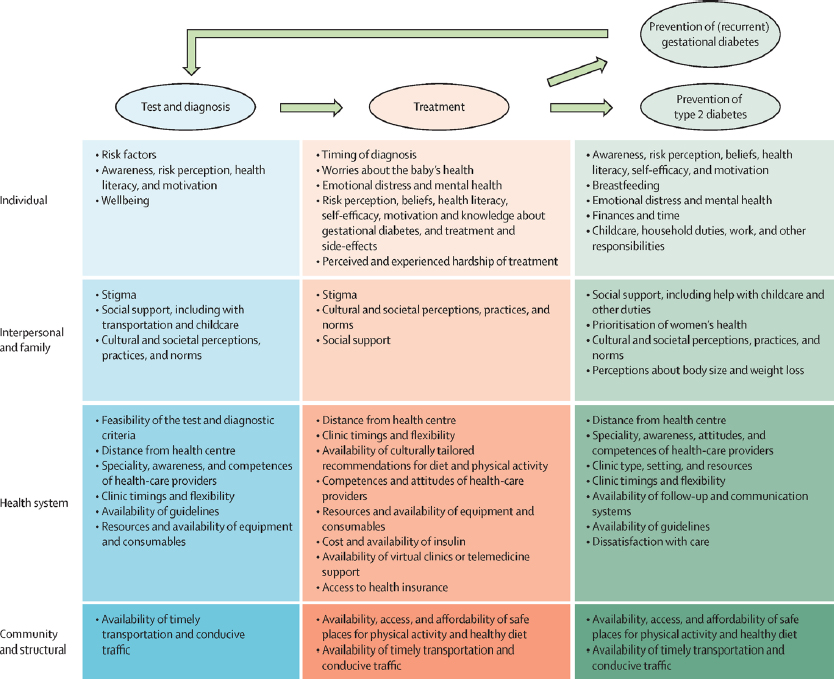
inadequate knowledge about the risk for diabetes are also factors. These barriers and facilitators occur across individual, interpersonal, health system, and community levels and affect GDM testing, treatment, and postpartum follow-up (see Figure 3-1) (Simmons et al., 2024).
Guideline and Coverage Gaps
USPSTF and WPSI recommendations complement each other but leave gaps. USPSTF does not explicitly address postpartum diabetes screening or long-term follow-up after GDM, despite the elevated risk to future pregnancies and infants and the high long-term risk of diabetes. In addition, USPSTF guidance on screening for prediabetes and type 2 diabetes focuses on nonpregnant adults ages 35–70 with overweight or obesity (USPSTF, 2021e) and concludes that evidence is insufficient to assess the balance of benefits and harms of screening asymptomatic children and adolescents (USPSTF, 2022b)—leaving less clarity for many adolescents and younger adults of reproductive age and adults who may be at risk despite having normal body mass index (BMI). Preventive services guidance does not specify how best to bundle postpartum diabetes screening with other cardiometabolic assessments or integrate intensive lifestyle interventions and metformin—both of which reduce diabetes incidence after GDM by about 50 percent—into routine postpartum care (ADA Professional Practice Committee, 2025; Ratner et al., 2008). A life-course model of care for GDM illustrates how prevention, screening, treatment, and postpartum follow-up could be organized to improve both short-term pregnancy outcomes and long-term cardiometabolic health for women and their children (see Figure 3-2).
Lipid Assessment and Management
Why This Matters for CVD and Pregnancy
Dyslipidemia, or abnormal levels of lipids in the bloodstream, before or during pregnancy is associated with APOs, including preeclampsia, GDM, preterm birth, and fetal overgrowth (Agarwala et al., 2024). APOs and cardiometabolic conditions, such as polycystic ovary syndrome (PCOS), diabetes, and obesity, are associated with elevated lifetime atherosclerotic CVD (ASCVD) risk (Alvarez et al., 2023; Teede et al., 2023a). Women with PCOS frequently have atherogenic dyslipidemia, insulin resistance, HTN, and central obesity, contributing to higher risks of type 2 diabetes and ASCVD over time; these metabolic features also have implications for diabetes risk (Alvarez et al., 2023; Teede et al., 2023a).
For women with familial hypercholesterolemia, prior premature ASCVD, or other high-risk profiles, lipid assessment and management before and after pregnancy are important components of long-term cardiovascular prevention (Arnett et al., 2019; Grundy et al., 2019). They may
SOURCE: Reprinted from Simmons et al., 2024. Used with permission from Elsevier and reprinted from The Lancet.
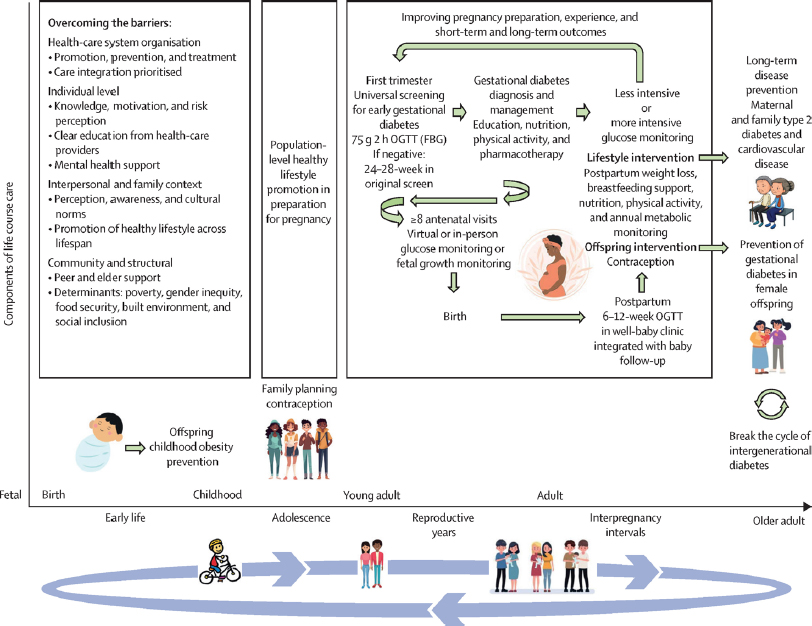
NOTES: Metabolic monitoring includes OGTT, FBG, glycated hemoglobin, and cardiovascular disease risk factors (blood pressure, lipids, and waist size). FBG = fasting blood glucose; OGTT = oral glucose tolerance test.
SOURCE: Reprinted from Simmons et al., 2024. Used with permission from Elsevier and reprinted from The Lancet.
need ongoing low-density lipoprotein (LDL)-lowering therapy across the reproductive years, yet pregnancy and breastfeeding raise complex questions about when to stop, modify, or restart therapy. This underscores the critical need for shared decision-making and thorough risk–benefit discussions in this population, akin to those for women with established ASCVD.
Existing Guidance
USPSTF does not have an active stand-alone recommendation on lipid disorder screening; its prior screening statement is archived, and current guidance focuses on statin use for the primary prevention of CVD—an approach that assumes lipid measurement as part of CVD assessment (USPSTF, 2013, 2022c). USPSTF provides clearer direction on when to initiate statins than on screening intervals and related implementation questions (e.g., how often to rescreen), which may be particularly relevant for younger adults of reproductive age. It recommends statins for primary prevention in nonpregnant adults aged 40–75 with at least one cardiovascular risk factor and elevated estimated 10-year risk, but its recommendations do not address pregnancy or prior APOs (USPSTF, 2022c). Bright Futures recommends universal lipid screening during adolescence and again in young adulthood (AAP, 2025), and WPSI recommends an annual well-woman preventive visit to provide age- and risk-appropriate preventive services, which may include lipid screening when clinically indicated (WSPI, 2025).
ACC/AHA cholesterol guidelines and National Lipid Association consensus documents acknowledge pregnancy considerations, generally advising discontinuation of most systemic lipid-lowering agents before and during pregnancy, with bile acid sequestrants as a potential option when treatment is necessary (AHA, n.d.; National Lipid Association, n.d.). In 2021, the U.S. Food and Drug Administration (FDA) removed the contraindication against statins in pregnancy but continues to advise that most patients stop statins once they learn they are pregnant, with continuation considered only in select very high-risk cases (FDA, 2021). Breastfeeding is generally not recommended if statins are required.
These guidance documents recognize pregnancy and reproductive plans as important in lipid management (Kirkpatrick et al., n.d.). However, they do not provide detailed, pregnancy-specific drug algorithms or standardized approaches to lipid screening and counseling before, during, and after pregnancy.
Practice Patterns and Gaps
In practice, general adult prevention guidelines rather than pregnancy-specific considerations often drive lipid assessment and management for women of reproductive age. Lipids may be checked as part of routine primary care, diabetes, or PCOS evaluation, but prepregnancy and infertility care pathways do not consistently include structured cardiovascular risk assessment or lipid counseling.
Women with familial hypercholesterolemia or other very high-risk phenotypes may be on statins, nonstatin therapies (i.e., ezetimibe, PCSK9 inhibitors, and bempedoic acid), or other agents when they decide to attempt pregnancy, and unplanned pregnancies while on lipid-lowering therapies can occur. Evolving guidance and limited pregnancy-specific safety data contribute to uncertainty regarding when to discontinue statins before pregnancy, whether continuation is appropriate in select high-risk cases, which non-statin options may be considered, and how to manage therapy in the postpartum period, particularly during breastfeeding (FDA, 2021; Henry et al., n.d.; National Lipid Association, n.d.). Hydrophilic statins, such as pravastatin, have been studied in pregnancy because their physicochemical properties and placental transport suggest more limited fetal exposure than some lipophilic statins, but evidence directly comparing placental transfer across agents remains limited (Chang et al., 2021; Fokina et al., 2022; Nanovskaya et al., 2013; Vahedian-Azimi et al., 2021). Recent meta-analyses found no significant association between first-trimester exposure to statins and congenital malformations (Christensen et al., 2025; Karadas et al., 2022).
Practical issues that preventive services guidance do not address adequately include:
- Screening and treatment in women of reproductive age under 40 at increased risk of CVD who desire pregnancy or are not using reliable contraception;
- How to approach lipid screening and treatment for women with PCOS or infertility before assisted reproduction;
- How to manage statins and other lipid-lowering therapies in women with very high cardiovascular risk who are planning pregnancy or have unplanned pregnancies, including when to continue statins, when to use LDL apheresis, and which nonstatin agents have sufficient pregnancy safety data); and
- How and when to restart statin therapy in the postpartum period, especially for women who are breastfeeding, and what counseling language to use.
These challenges are magnified because physiologic lipid levels rise substantially during pregnancy (Agarwala et al., 2024)—even in women without preexisting dyslipidemia—and evidence to guide interpretation and treatment thresholds in this setting is limited.
Guideline and Coverage Gaps
From a preventive services perspective, several gaps emerge:
- No pregnancy-focused preventive service for lipid assessment. USPSTF and WPSI recommendations on screening and statins are framed for general adult populations and do not address the timing, frequency, or interpretation of testing as part of prepregnancy care, in the immediate postpartum period, or between pregnancies for women with APOs.
- Limited integration of pregnancy history and reproductive plans into lipid management. While some cardiology and lipid guidelines describe pregnancy complications and PCOS as risk-enhancing factors, this information has not been incorporated systematically into preventive services guidance that drives coverage decisions and routine screening and counseling (Agarwala et al., 2024; Safwan et al., 2024; Teede et al., 2023b).
- Unclear pathways for high-risk women. For women with familial hypercholesterolemia or established ASCVD, expert reviews and consensus statements suggest approaches such as prepregnancy counseling, temporary discontinuation of statins before pregnancy, use of bile acid sequestrants or omega-3 fatty acids in pregnancy, and LDL apheresis in selected cases, but these strategies are not framed as standard preventive services and depend highly on local specialist availability (Henry et al., n.d.).
- Postpartum and lactation uncertainty. Guidance on when to recheck lipids postpartum, how to integrate testing into broader cardiometabolic follow-up after APOs, and how to counsel women about restarting statins or other agents while breastfeeding remains limited and is not reflected in USPSTF or WPSI recommendations.
Given the limited and evolving evidence on lipid-lowering therapy during pregnancy and lactation, that the mainstay method (statins) is generally not recommended during breastfeeding in the United States and the lack of trials that directly link lipid-focused interventions around pregnancy to maternal cardiovascular events or pregnancy outcomes, the committee judged that lipid assessment and management would be difficult to address as a discrete preventive clinical service within this report. Nevertheless, lipid disorders remain an important part of the cardiovascular risk profile for many women of reproductive age, particularly those with PCOS, diabetes, familial hypercholesterolemia, prior APOs, or established ASCVD. The committee therefore viewed lipid assessment and counseling—especially in the context of prepregnancy and postpartum care—as an area where future preventive services guidance could more explicitly incorporate pregnancy history and reproductive plans into cardiovascular risk management.
Pregnancy-Specific Preventive Medications and Services
Low-Dose Aspirin to Prevent Preeclampsia
Why This Matters for CVD and Pregnancy
Recent data indicate that HDP, including preeclampsia, is becoming increasingly common, with prevalence among hospitalized deliveries increasing from 13.3 percent to 15.9 percent 2017–2019 (Ford et al., 2022). Nearly one-third (31.6 percent) of deaths during delivery hospitalization had a documented diagnosis code for HDP (Ford et al., 2022). Preeclampsia is associated with substantially elevated long-term ASCVD risk (Parikh et al., 2021). Prevention is critical because delivery of the placenta is the only definitive treatment for preeclampsia during pregnancy, although hypertensive complications may persist or emerge postpartum. Low-dose aspirin is an inexpensive, guideline-recommended preventive therapy that reduces preeclampsia and related adverse outcomes for women with known risk factors.
Existing Preventive Services and Coverage
In 2021, USPSTF assigned a grade B to prescribing low-dose aspirin (81 mg/day) after 12 weeks’ gestation in women at high risk for preeclampsia (USPSTF, 2021a), defined by the presence of at least one high risk factor (e.g., history of preeclampsia, multifetal gestation, chronic HTN, pregestational diabetes, kidney disease, and autoimmune disease) or two or more moderate risk factors (e.g., nulliparity, BMI ≥30, family history of preeclampsia, Black race [as a proxy for social factors], lower income, aged 35+, pregnancy via in vitro conception, and certain prior pregnancy outcomes) (see Box 3-1). Low-dose aspirin is also recommended to be considered for women with only one moderate risk factor. WPSI does not issue a separate recommendation but adopts the USPSTF guidance and includes aspirin for preeclampsia prevention in its women’s preventive health care recommendations. Under ACA, aspirin prophylaxis for eligible pregnant women is covered without cost-sharing when prescribed.
Current Use and Gaps
Despite clear recommendations, available data suggest that fewer than half of eligible women receive low-dose aspirin prophylaxis (Wheeler et al., 2022). Because moderate risk factors are common in the obstetric population, a substantial proportion of pregnant women meet criteria for consideration of aspirin therapy under current guidelines (McElrath et al., 2025; Wheeler et al., 2022). Use appears to vary by setting, clinician awareness, and clinician comfort with risk assessment. Aspirin is inexpensive and available over the counter, but the need for a prescription to ensure no-cost coverage can create practical barriers. Evidence from randomized trials and systematic reviews has not demonstrated statistically
BOX 3-1
Risk Factors for Evaluating Preeclampsia Risk for Low-Dose Aspirin
High
- History of preeclampsia
- Multifetal gestation
- Chronic hypertension
- Pregestational diabetes
- Kidney disease
- Autoimmune disease (systemic lupus erythematosus, antiphospholipid syndrome)
- Two or more moderate risk factors (see below)
Moderate
- Nulliparity
- Body mass index ≥30 kg/m2
- Family history of preeclampsia
- Black race (as a proxy for social factors)
- Lower income
- Age 35+
- Personal history factors (e.g., low birth weight, small gestational age, previous adverse pregnancy outcomes, or interpregnancy interval greater than 10 years)
- In vitro conception
SOURCES: ACOG, 2021; USPSTF, 2021a.
significant increases in placental abruption, postpartum hemorrhage, fetal intracranial bleeding, or congenital anomalies with daily low-dose aspirin. Overall maternal and fetal harms appear to be small, particularly when used in women at increased risk for preeclampsia (Henderson et al., 2014; USPSTF, 2021a). Questions remain about optimal dosing; relative benefits in different risk profiles, including women with obesity and different HDP phenotypes; and best strategies to systematically identify and offer low-dose aspirin to all eligible women.
Lactation
Why This Matters for CVD and Pregnancy
In general, lactation benefits both maternal and infant health and may be particularly important for
women with cardiovascular risk factors or pregnancy complications. A meta-analysis of eight studies that included over 1 million women found that breastfeeding compared to no breastfeeding was associated with a 10–12 percent risk reduction for future CVD, coronary heart disease, stroke, and fatal CVD (Tschiderer et al., 2022). An immediate protective effect has also been shown for women with cardiometabolic pregnancy complications; during the postpartum period, those who breastfed ≥6 months had significantly lower triglycerides, fasting serum glucose, ratio of cholesterol to HDL-C, and higher HDL-C compared to those who did not (Yu et al., 2020). Thus, there is a growing body of evidence linking longer durations of breastfeeding (e.g., greater than 6 months) to improved maternal cardiometabolic health, potentially through hormonal effects of oxytocin and prolactin on vascular remodeling and metabolic profiles, suggesting the importance of breastfeeding for maternal health (Villarreal et al., 2025). Observational studies suggest that the potential benefits for maternal health span multiple systems, including metabolic, cardiovascular, endocrine, and hematologic domains, and may extend to long-term health outcomes (see Figure 3-3), although the strength of evidence varies and may be influenced by confounding factors.
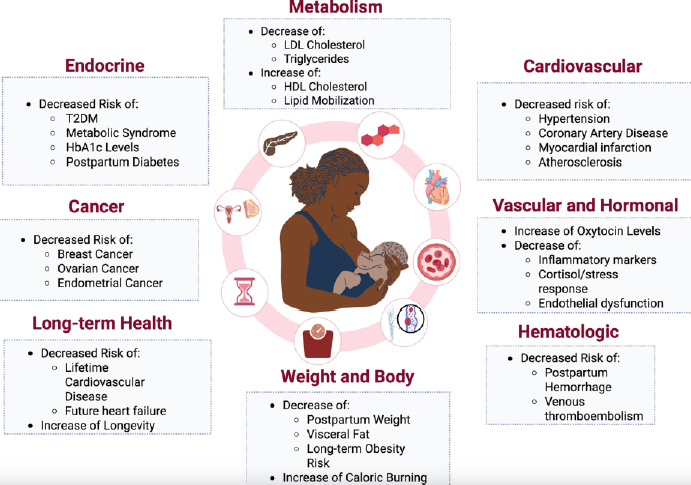
NOTE: HbA1c = hemoglobin A1c; HDL = high-density lipoprotein; LDL = low-density lipoprotein; T2DM = type 2 diabetes mellitus.
SOURCE: Reprinted from Villarreal et al., 2025; CC BY-NC 4.0.
Existing Preventive Services
Clinical guidelines based on numerous scientific reports encourage asking pregnant women about their intentions early in pregnancy and at delivery and providing counseling and support to initiate and continue breastfeeding. USPSTF recommends providing supportive interventions, and WPSI recommends comprehensive support services across the antenatal, perinatal, and postpartum periods, including counseling, peer support, and provision of equipment such as breast pumps (USPSTF, 2025a; WPSI, 2022a). In general, ACA-compliant plans cover these services.
Current Use and Barriers
While breastfeeding intention and initiation rates are approximately 85 percent, only about 25 percent of women continue exclusive breastfeeding through 6 months (CDC, 2025a). This is especially low among women who require increased medical attention or had pregnancy complications (Burgess et al., 2021; Collins et al., 2023) as well as women from disadvantaged backgrounds (Roess and Robert, 2025). Although all women who breastfeed can benefit, these subpopulations are particularly vulnerable and may need targeted support (Merewood et al., 2007). Barriers reported in the literature associated with no or short breastfeeding duration include latching problems and mastitis; concerns about infant growth; medication use after delivery; lack of support from family and clinicians; cultural norms; postpartum depression; and limited maternity leave, pay for pumping time during work, and access to equipment for pumping and storage (OTSG, 2011). Limited paid maternity leave and early return to work are among the most important workplace and policy barriers: national reports identify the former as significant, particularly for women with lower incomes (CDC, 2022), and observational studies show that women with shorter leave are less likely to continue breastfeeding, whereas paid family leave policies are associated with higher rates and longer duration (Kortsmit et al., 2021; Rosenberg et al., 2024). Increased clinical support in the postpartum period can help address these barriers and may be particularly important for women with cardiovascular risk.
These barriers occur at multiple levels—including the health system, workplace, community, and clinical training—and have potential strategies to address them (see Figure 3-4). Because these barriers are largely structural—encompassing workplace policies, insurance coverage, access to trained support, and health system practices—lactation continuation should not be framed solely as an individual choice or responsibility. Efforts to improve maternal cardiovascular outcomes through lactation support therefore require coordinated action across policy, health systems, and community settings rather than reliance on individual behavior change alone. In many clinical settings, nurses, midwives, and lactation consultants provide much of the hands-on breastfeeding education and support; therefore, gaps
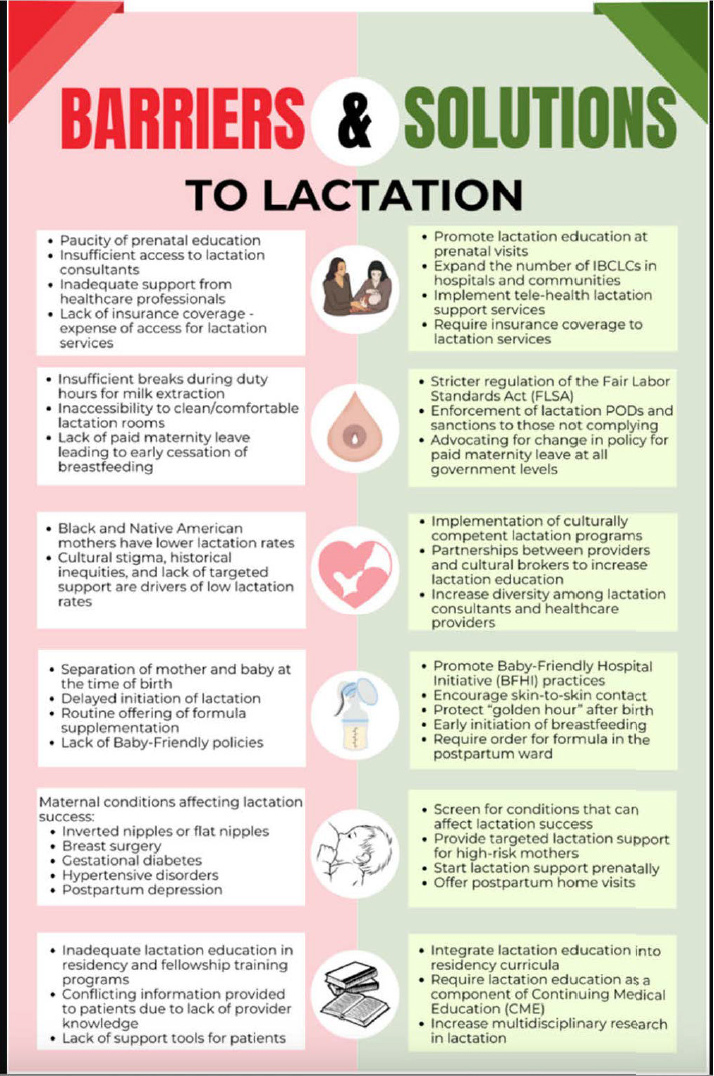
NOTE: IBCLCs = International Board Certified Lactation Consultants.
SOURCE: Reprinted from Villarreal et al., 2025, CC BY-NC 4.0.
in training, resources, and institutional support across the broader maternity care team—not only physicians—can affect lactation success.
A 2025 consensus report from the National Academies of Sciences, Engineering, and Medicine provides a comprehensive review of breastfeeding, and the policies, programs, and investments to better understand the landscape of breastfeeding promotion, initiation, and support across the United States (NASEM, 2025).
Guideline and Coverage Gaps
Existing preventive services guidance endorses lactation support. However, it does not specifically target women with pregnancy complications or explicitly address how support might be integrated with postpartum cardiometabolic care and medication management for women who need ongoing treatment for HTN, diabetes, or dyslipidemia.
Lifestyle and Behavioral Services
Lifestyle Behaviors (Diet, Physical Activity, Weight, Sleep, and Stress)
Why This Matters for CVD and Pregnancy
Substantial evidence links lifestyle behaviors to CVD risk factors (Kaminsky et al., 2022; Rippe and Angelopoulos, 2019). Key elements include dietary quality, physical activity, sleep patterns, and stress and anxiety management. Diets rich in plant-based foods and diverse protein sources, such as fish, seafood, lean meats, beans, legumes, and low-fat dairy, and low in red and processed meats, saturated fats, refined sugars, and sodium are recommended to reduce cardiovascular risk (Lichtenstein et al., 2021). Similar principles apply during pregnancy, with additional guidance to avoid foods that increase risk of foodborne illness and substances harmful to fetal development, such as alcohol (Procter and Campbell, 2014). Sedentary behavior has been consistently associated with adverse cardiovascular outcomes, and maintaining appropriate physical activity during pregnancy is recommended (Gascoigne et al., 2023). Emerging evidence also links poor sleep quality and high stress or anxiety to increased cardiovascular risk (Eshera et al., 2024).
Existing Preventive Services
Clinical guidelines recommend screening for lifestyle behaviors and offering behavioral counseling to promote healthy diet and physical activity and prevent excess gestational weight gain. This is reflected in USPSTF recommendations on behavioral counseling to promote healthy weight gain in pregnancy and broader adult diet and physical activity counseling (Gascoigne et al., 2023; Meander et al., 2021; USPSTF, 2021c). WPSI and well-woman visit recommendations also provide a framework for delivering lifestyle counseling across the reproductive life course.
Current Use and Barriers
Most women of reproductive age do not meet federal recommendations for diet or physical activity levels, and fewer than one in three meet both aerobic and muscle-strengthening activity guidelines (CDC, 2023; HHS, 2018; USDA, 2020). During pregnancy, counseling on gestational weight gain, physical activity, and diet is inconsistent, and postpartum lifestyle interventions are uncommon, in part because only about two-thirds of women attend a postpartum visit (Attanasio et al., 2022). Barriers include limited time during visits, variable coverage for intensive behavioral interventions, and access challenges, such as transportation, child care, and limited availability of affordable nutritious foods and safe settings for physical activity. These are particularly pronounced for women who live in areas with fewer resources or have pregnancy complications.
Guideline and Coverage Gaps
Preventive services guidance endorses lifestyle counseling but does not consistently specify how to tailor interventions for women who are pregnant and postpartum or have recent HDP or GDM. ADA recommends referral to intensive lifestyle intervention programs, such as the National Diabetes Prevention Program (DPP), for women with prior gestational diabetes. In DPP and its follow-up studies, intensive lifestyle intervention and metformin reduced progression to type 2 diabetes by approximately 50 percent among women with a history of GDM (ADA Professional Practice Committee, 2024b; Aroda et al., 2015; Ratner et al., 2008). Limited evidence guides the design and delivery of postpartum lifestyle programs that can be integrated with other cardiometabolic services. In addition, participation in DPP remains limited in many communities, and postpartum women may face logistical barriers, such as child care responsibilities, work demands, and limited availability of in-person programs (Ely et al., 2017; Ferrara et al., 2014). Strategies that prioritize scalability and reach—such as group-based or telehealth-enabled DPP models—may be particularly important for reaching women after GDM, including those facing logistical or geographic barriers; however, further research is needed to determine how best to integrate these approaches into routine postpartum care (Ritchie et al., 2023).
Tobacco and Alcohol Use
Why This Matters for CVD and Pregnancy
Tobacco and alcohol use are major modifiable risk factors for CVD and APOs. Tobacco use in any form during pregnancy is associated with increased risks of placenta previa, placental abruption, preterm and prelabor rupture of membranes, fetal growth restriction, low birth weight, preterm birth, stillbirth, perinatal mortality, and sudden infant death syndrome (ACOG, 2020b; Kipling et al., 2024; Wells and Lotfipour, 2023). Tobacco smoke exposure also contributes to
long-term cardiovascular risk through endothelial dysfunction, oxidative stress, and promotion of atherosclerosis (Gould et al., 2020; Messner and Bernhard, 2014).
Excessive alcohol use increases the risk of HTN, coronary artery disease, stroke, arrhythmias, cardiomyopathy, and heart failure (Georgescu et al., 2024; Piano et al., 2025). During pregnancy, any alcohol use is considered unsafe and is a leading preventable cause of miscarriage, stillbirth, and fetal alcohol spectrum disorders. Recent surveillance indicates that roughly 1 in 7 pregnant women report current alcohol use and about 1 in 20 report binge drinking in the last 30 days (CDC, n.d.; Green et al., 2023). These exposures can also complicate efforts to manage other cardiovascular risk factors, including blood pressure, weight, glucose, and mental health (Evans et al., 2023; Habersham et al., 2025).
Existing Preventive Services
USPSTF recommends that clinicians ask all adults, including pregnant women, about tobacco use, advise them to stop, and provide behavioral interventions to support cessation (Grade A) (USPSTF, 2021f). For nonpregnant adults, USPSTF also recommends FDA-approved pharmacotherapy. For pregnant women, the evidence is considered insufficient to determine the balance of benefits and harms of pharmacotherapy and e-cigarettes, so behavioral interventions are the main recommended approach. The 2021 USPSTF recommendation remains in effect while the Task Force conducts an updated review of this topic.
USPSTF recommends screening adults 18+ years, including pregnant women, for unhealthy alcohol use in primary care and providing brief behavioral counseling interventions to those engaged in risky or hazardous drinking (Grade B) (USPSTF, 2018). Professional societies and public health agencies similarly recommend routine use of validated alcohol screening tools (e.g., AUDITC and single-question screeners) and brief interventions for women of reproductive age and throughout pregnancy and the postpartum period (AWHONN, 2023; Graves et al., 2020; Green et al., 2023). USPSTF issued the current operative recommendation statement in 2018 and is updating this topic.
These recommendations are tied to coverage requirements in many ACA-compliant plans when delivered in eligible settings and can be incorporated into well-woman, prenatal, and postpartum visits.
Implementation Barriers and Gaps
Despite clear recommendations, tobacco and alcohol use remain common in and around pregnancy. Recent data from the Pregnancy Risk Assessment Monitoring System (PRAMS) indicate that in 2021, 12.1 percent of women reported smoking in the 3 months before pregnancy, 5.4 percent during the last 3 months of pregnancy, and 7.2 percent in the postpartum period, with substantial variation across
states and evidence of relapse after delivery (Kipling et al., 2024). Counseling and pregnancy-specific self-help materials can substantially increase cessation rates (ACOG, 2020b), but underreporting of tobacco use, limited time in visits, and competing priorities can impede consistent delivery of intensive behavioral support.
For alcohol, national surveys suggest that screening is performed for many pregnant women, but USPSTF-recommended validated tools and structured brief interventions are used less consistently (Green et al., 2023; Luong et al., 2023). Obstetric and primary care clinicians report variable training and confidence in addressing alcohol and other substance use, and screening rates are lower among women with less formal education, pointing to disparities in implementation (Luong et al., 2023; Thomson et al., 2024).
From a preventive services perspective, recommendations clearly endorse tobacco cessation counseling and alcohol screening and brief interventions, but they are not integrated consistently with broader cardiometabolic risk management around pregnancy. Clinicians may not be aware of the specific Current Procedural Terminology codes related to tobacco and alcohol cessation counseling and screening and brief interventions, which are reimbursed in addition to traditional Evaluation & Management visit codes. Tobacco and alcohol use are often addressed separately from blood pressure, lipids, weight, diabetes risk, and mental health, and postpartum visits may not systematically revisit tobacco and alcohol use even though relapse and ongoing use are common (Kipling et al., 2024). This fragmentation limits opportunities to deliver coordinated, life course–oriented cardiovascular prevention for women who use tobacco or alcohol before, during, and after pregnancy.
Behavioral Health and Substance Use
Substance Use Disorders
Why This Matters for CVD and Pregnancy
Women’s experiences with substance use disorders are shaped by interacting biological, psychological, and social factors (O’Hagan and Wilson, 2018). Women experience more acute and chronic pain than men and have been prescribed opioids in greater numbers (Darnall and Stacey, 2012), and prescribed opioids are a major pathway to misuse and addiction (Goetz et al., 2021). Sex hormones, such as estrogens and progestins, may modulate both endogenous and exogenous opioid systems—animal and human studies suggest they can enhance opioid-mediated pain relief and alter drug reward pathways—which may contribute to sex differences in analgesic response and vulnerability to misuse (O’Hagan and Wilson, 2018; Shimu and Islam, 2025). Biological
differences, including hormonal influences and sex-specific neurobiologic responses, have been associated with more rapid progression from initiation to dependence, greater withdrawal severity, and differential treatment response among women, particularly for nicotine and alcohol use disorders (Bawor et al., 2015; Greenfield et al., 2010; O’Hagan and Wilson, 2018; Perkins and Scott, 2008; Quigley et al., 2021).
Opioid misuse has cardiovascular consequences, including increased risk of infective endocarditis, coronary heart disease, cardiac arrhythmias, and stroke (Evans et al., 2023). Nonacute opioid use is strongly associated with infective endocarditis and myocardial infarction (Singleton et al., 2021) and may contribute to cardiovascular aging through arterial stiffness and changes in heart rate variability (Toska and Mayrovitz, 2023). Opioid use disorder is associated with higher rates of preterm birth, low birth weight, and neonatal abstinence syndrome than in births to women without opioid use disorder. Women with opioid use disorder have high rates of co-occurring mental health conditions and frequently experience social vulnerabilities, including housing instability, intimate partner violence, and delayed or inadequate prenatal care (Barbosa-Leiker et al., 2021; Hahn et al., 2018; Haight et al., 2018; Khan et al., 2022).
Existing Preventive Services
ACOG recommends screening for substance use disorders as part of routine preventive care and at the first prenatal visit, with additional screening when clinically indicated (ACOG, 2017, 2019a). ACOG guidance also addresses the role of laboratory testing, brief intervention, and referral to treatment. USPSTF and WPSI recommend screening and brief intervention for substance use in adults, including women of reproductive age and pregnant women (USPSTF, 2018, 2020). However, these recommendations do not provide detailed pregnancy-specific implementation guidance for obstetric care settings.
Implementation Barriers and Gaps
Stigma, fear of legal or child welfare involvement, variable coverage for treatment, and scarcity of programs designed for pregnant women and new mothers limit screening and treatment for substance use disorders in pregnant and postpartum women. Preventive services guidance does not address integrated models that combine substance use treatment with cardiovascular risk management during pregnancy and postpartum or how to ensure that women with substance use disorders receive other preventive services discussed in this chapter.
Mental Health
Why This Matters for CVD and Pregnancy
Perinatal mental health conditions, particularly depression and anxiety, are among the most common
complications of pregnancy and the postpartum period. An estimated 10–20 percent of U.S. women experience perinatal depression (Van Niel and Payne, 2020), and a similar proportion have perinatal anxiety (Thornton and O’Conner, 2022). Maternal mental health conditions are now recognized as leading contributors to pregnancy-related morbidity and mortality (CDC, 2025c; Gimbel et al., 2024; Parekh et al., 2025). These conditions are also associated with adverse infant outcomes and impaired bonding and child development (O’Dea et al., 2023; Rogers et al., 2020). At delivery hospitalizations, a mental health diagnosis has also been associated with increased rates of cardiovascular SMM and other cardiovascular conditions and complications (Parekh et al., 2025). Recent expert reviews and AHA scientific statements further emphasize that perinatal mental health conditions are closely linked with maternal cardiovascular health across pregnancy and the postpartum period, including through shared risk factors, physiologic stress responses, and effects on engagement in preventive care (Jowell et al., 2022; Lewey et al., 2024; Sharma, 2025).
Depression and anxiety influence cardiovascular risk indirectly through behavioral pathways. They are associated with higher rates of tobacco and alcohol use, poorer diet and physical activity, sleep disturbance, reduced medication adherence, and lower engagement in preventive and chronic disease care, which collectively contribute to worse blood pressure, glycemic, and lipid control over time (Conner et al., 2009; Davidson, 2012; DiMatteo et al., 2000; Grenard et al., 2011). For women with pregnancy complications that signal elevated long-term cardiovascular risk, such as HDP or GDM, untreated perinatal depression or anxiety can further impede efforts to address cardiometabolic risk in the postpartum and interpregnancy periods.
Existing Preventive Services
USPSTF recommends screening all adults, including pregnant and postpartum women, for depression in settings where systems are in place to ensure accurate diagnosis, effective treatment, and appropriate follow-up (Grade B). In 2023, it issued an updated final recommendation on screening for depression and suicide risk in adults that continues to support routine depression screening for all adults, including in pregnancy and postpartum (USPSTF, 2023b). USPSTF also recommends screening for anxiety disorders in adults ages 19–64 (including pregnant and postpartum women) and in children and adolescents ages 8–18 (both Grade B) (USPSTF, 2022a, 2023a). USPSTF also recommends that clinicians provide or refer pregnant and postpartum women at increased risk of perinatal depression to counseling interventions, such as cognitive behavioral or interpersonal therapy (Grade B) (USPSTF, 2019). That 2019 recommendation remains in effect while USPSTF updates this topic, with it releasing a draft updated recommendation and evidence review for public comment.
Bright Futures guidelines recommend routine depression screening in adolescents and structured maternal depression screening at specific well-child visits (e.g., at 1, 2, 4, and 6 months postpartum), recognizing the close link between maternal mental health and child development (AAP, 2025).
WPSI includes depression and anxiety screening as part of its well-woman care framework and highlights perinatal depression preventive interventions in its Well-Woman Chart. These include counseling for women with risk factors, such as a history of depression, current subthreshold depressive symptoms, socioeconomic adversity, recent intimate partner violence, or elevated anxiety symptoms (WPSI, n.d.-b; WSPI, 2025). The WPSI resource guide on screening for anxiety and depression in women explicitly includes pregnancy and postpartum as periods when these conditions are more common. It emphasizes periodic universal screening with appropriate follow-up care (WPSI, n.d.-b; WSPI, 2025).
Implementation Gaps and Implications for Cardiovascular Prevention
Despite professional recommendations for universal screening, implementation remains incomplete. Centers for Disease Control and Prevention (CDC) analyses of PRAMS data indicate that a substantial proportion of women with postpartum depressive symptoms report not being asked about depression during prenatal or postpartum visits (CDC, 2020; Ko et al., 2012). Screening practices and access to treatment vary by geography, insurance status, and race and ethnicity (CDC, 2020; HRSA, 2026; KFF, 2024; Olisaeloka et al., 2025).
From a cardiovascular prevention perspective, current guidelines clearly support screening and preventive counseling for perinatal depression and anxiety but do not explicitly integrate mental health conditions into risk follow-up pathways for women with pregnancy complications. Depression and anxiety are not incorporated systematically into protocols for postpartum HTN management, diabetes follow-up after GDM, or broader cardiometabolic risk assessment after APOs. As a result, women who are both at elevated cardiovascular risk and experiencing perinatal mental health conditions may be less likely to engage in the very preventive services, such as lifestyle interventions, medication management, and longitudinal primary care, needed to reduce their long-term risk. In addition, evidence remains limited on whether interventions to address stress, depression, or anxiety during the postpartum period reduce the development or progression of HTN or CVD or how best to design and integrate behavioral health services into postpartum and longer-term cardiovascular preventive care.
Reproductive Planning
Contraception and Contraceptive Care
Why This Matters for CVD
One of the most important strategies to prevent pregnancy-related morbidity and mortality is ensuring that women and families have the tools they need to achieve their reproductive goals and avoid unwanted or mistimed pregnancies (Askew et al., 2024). Globally, if everyone wanting to avoid pregnancy had access to modern contraception, maternal deaths would decrease by an estimated 23 percent annually (Sully et al., 2020). For women who desire pregnancy, improved access to contraception and family planning can allow them to delay it to optimize health and cardiovascular risk first. Among U.S. births covered by Medicaid, women who received contraceptive services in the year before pregnancy had lower rates of SMM, with even greater benefits among women with chronic conditions (Dude et al., 2022).
Existing Preventive Services and Coverage
Since 2016, WPSI has recommended that adolescent and adult women be provided access to the full range of contraceptives and contraceptive care, including counseling, education, FDA-approved contraceptives, and follow-up care, to prevent unintended pregnancies and improve health outcomes (WPSI, 2016, 2024). This recommendation, which includes women with cardiovascular risk factors and conditions, is consistent with long-standing guidance from CDC, AAFP, ACOG, ADA, AAP, and the American Medical Association (AAFP, n.d.; ACOG, 2022; CDC, 2024d; Cleary, 2024; Ott et al., 2025). The Institute of Medicine committee on preventive services for women recommended coverage without copayments for the full range of FDA-approved contraceptives, sterilization procedures, and patient education and counseling, which was adopted under the ACA (IOM, 2011). The federal Title X program also provides contraceptive services for under- or uninsured women (HHS, n.d.).
Current Use
U.S. access to contraception is relatively high, and cost barriers decreased after implementing no-cost-sharing coverage. However, a 2022 nationally representative survey found ongoing barriers: 25 percent of privately insured respondents reported some out-of-pocket costs; 20 percent of uninsured respondents had stopped a method because of cost; 25 percent were not using their preferred method; and 70 percent reported not receiving all the information they needed to choose a method (Frederiksen et al., 2022). Geographic access varies widely. In some states, almost half the population lives in areas with minimal access, with poorer access more common among rural-dwelling, lower-income, and non-White populations (Kreitzer et al., 2021).
For women with cardiac disease, a systematic review estimated that only 63 percent reported receiving contraceptive counseling and 64 percent were using contraception (Feyissa et al., 2024). Many women were not using highly effective methods, and more than half misestimated their pregnancy-related CVD risk. Changes in access to contraception and family planning services may have important implications for cardiovascular risk among women of reproductive age, particularly for those with underlying cardiac conditions for whom pregnancy carries substantial health risks. Reduced access to effective contraception could increase rates of unintended and high-risk pregnancies; evidence suggests that family planning use is associated with fewer high-risk pregnancies overall (Jahanfar et al., 2024).
Implementation Barriers
Women with chronic conditions report fragmented reproductive care that does not address chronic conditions and fragmented chronic disease care that does not incorporate reproductive goals (Verbiest et al., 2022). Clinician-related barriers include limited familiarity with evidence-based contraceptive eligibility guidelines and uncertainty in counseling patients with complex medical conditions such as HTN, cardiomyopathy, or prior thromboembolism (Lindley et al., 2021). CDC’s Medical Eligibility Criteria classifies adequately controlled HTN as Category 3 for combined hormonal contraceptives, indicating that risks usually outweigh benefits but that use may be considered in selected circumstances when other methods are not appropriate. In such cases, clinical decision-making may reasonably weigh contraceptive risks against the potential harms of an unintended high-risk pregnancy (CDC, 2024a). Competing priorities during visits and demands on patients’ time may also make it difficult to prioritize contraceptive counseling.
Women with CVD and CVD risk factors who take potentially teratogenic medications need access to contraceptive counseling that supports their preferences and reproductive goals. Because this includes some cardiovascular, HTN, lipid-lowering, and diabetes medications, contraceptive and family planning counseling is an essential component of care (ADA Professional Practice Committee, 2026; Lindley et al., 2021; Lindley and Teal, 2022; Minga and Dastmalchi, 2025). Ethical and clinical guidance on contraception emphasizes person-centered, noncoercive counseling (ACOG, 2022, 2024, 2025; CDC, 2024c), in recognition of a history of reproductive coercion in health care and evidence that some patients feel pressured by clinicians to start, continue, or stop specific methods (Scholars Strategy Network, 2024; Swan and Cannon, 2024). For women with conditions characterized as modified World Health Organization (mWHO) class IV, where pregnancy carries an unacceptably high risk of maternal mortality, the imperative for highly effective contraception is clear. Women classified as mWHO class III also face substantially elevated maternal cardiovascular
risk, often requiring expert multidisciplinary counseling and careful risk–benefit discussion regarding pregnancy; in these cases, shared decision-making and proactive reproductive planning are particularly important. However, the trade-offs between the risks and side effects need to be considered (see Figure 3-5), underscoring the need for careful shared decision-making in selecting the most appropriate method.
Guideline and Coverage Gaps
WPSI and other guidelines establish a strong foundation for contraceptive coverage. However, they do not fully address implementation challenges for women with cardiovascular conditions, such as how to integrate contraceptive counseling into chronic disease care or support shared decision-making in the face of complex risk–benefit tradeoffs. WPSI and other guideline bodies could explicitly highlight the need for coordinated, patient-centered contraceptive and family planning counseling in women with CVD and CVD risk factors and attention to reproductive goals when prescribing teratogenic cardiovascular medications.
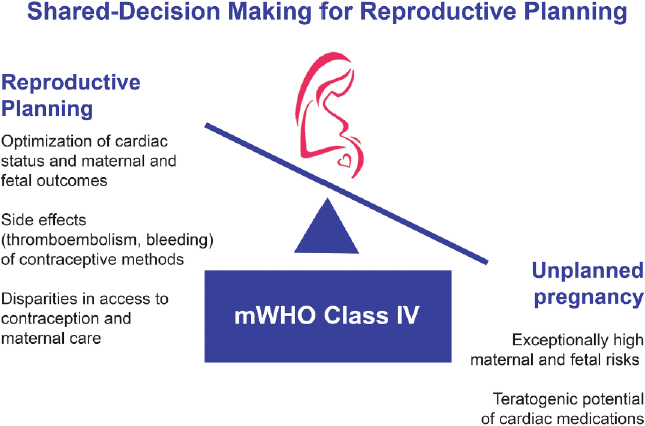
SOURCE: Reprinted from Cho et al., 2025, CC BY NC. 4.0.
GAPS IN EXISTING PREVENTIVE SERVICES GUIDANCE FOR PREGNANCY AND CARDIOVASCULAR RISK
In addition to the insurance and cost barriers noted in the previous section, the committee found that gaps and misalignments across clinical preventive service guidelines create added challenges for implementing evidence-based practices to reduce cardiovascular risk around pregnancy. For example, USPSTF offers separate recommendations on screening for HDP and low-dose aspirin for preeclampsia prevention in women at high risk, and most private health plans and Medicaid expansion programs are required to cover these services without cost-sharing. In contrast, guidelines such as those from NICE provide more detailed recommendations on exercise counseling and other behavioral strategies in pregnancy (National Institute for Health and Care Excellence, 2019), whereas USPSTF does not offer pregnancy-specific counseling recommendations for preventing or treating HDP. Similarly, WPSI recommends early GDM screening for pregnant women with risk factors and postpartum diabetes screening for women with a history of GDM (HRSA, 2025), whereas USPSTF concludes that evidence is insufficient to support universal early GDM screening before 24 weeks and does not address the postpartum period in its diabetes guidance (USPSTF, 2021b). In other areas, such as glycemic targets before pregnancy or lipid management in women of reproductive age, professional societies offer varying recommendations. Collectively, these gaps and misalignments contribute to uncertainty for clinicians and patients and can hinder coordinated prevention efforts.
The discussion in the earlier sections of this chapter illustrates these issues within specific clinical service areas. The committee’s review highlighted several crosscutting limitations and time period–specific gaps that shaped the long list of research topics and ultimately the priority clinical services selected for formal evidence review this report presents in subsequent chapters.
Crosscutting Limitations
Across guideline sources, the committee identified three overarching limitations. First, pregnancy and the early postpartum period are not consistently framed as key opportunities for CVD prevention. Many recommendations are written for the general adult population, with pregnant and postpartum women either implicitly included, explicitly excluded, or not mentioned. For example, adult recommendations for blood pressure, diabetes, and lipid screening apply in principle to women of reproductive age but rarely address how to implement them before, during, and after complicated pregnancies or use pregnancy history to guide prevention across the life course.
Second, APOs, such as HDP, GDM, preterm birth, and placental disorders, are not incorporated consistently as risk-enhancing factors in preventive services guidance. Some cardiovascular and stroke guidelines recommend taking a history of APOs when assessing risk and managing HTN or stroke prevention, but this approach is not uniformly reflected in the recommendations that drive screening and counseling in primary care and obstetric settings. In addition, although APOs are associated with elevated long-term cardiovascular risk, incorporation of APO history into formal risk prediction models has not yet consistently demonstrated improved prediction of future cardiovascular events.
Third, guidelines offer limited direction on implementing and coordinating care across specialties and settings. Several professional societies encourage multidisciplinary cardio-obstetrics teams or enhanced postpartum follow-up for women with pregnancy complications, yet the guidance offers little detail on how to operationalize these models, which clinicians are responsible for specific services, and how to manage transitions between obstetrics, primary care, and cardiology or other specialists.
These crosscutting gaps highlight the need for the guiding principles developed by this committee. These principles emphasize a coordinated, longitudinal approach to cardiovascular risk related to pregnancy and the importance of addressing system barriers that contribute to differences in outcomes by geography, insurance coverage, and access to care. The following sections discuss several specific gaps the committee identified in the areas of prepregnancy and prenatal care and postpartum and interpregnancy care and several implementation and system-level areas where preventive services guidance is limited.
Prepregnancy and Prenatal Gaps
Prepregnancy Counseling and Comprehensive Cardiovascular Risk Assessment
WPSI recommends annual well-woman visits to deliver preventive services based on age and risk, and ADA, Endocrine, and other societies provide guidance on prepregnancy counseling for women with diabetes. However, no dedicated preventive services recommendation focuses on comprehensive prepregnancy cardiovascular risk assessment for women who are planning pregnancy, particularly those with chronic conditions (e.g., HTN, diabetes, and kidney disease) or prior APOs. Questions remain regarding the optimal timing, content, and responsible clinician(s) for such visits and whether a structured prepregnancy cardiovascular assessment improves maternal or neonatal outcomes.
Risk-Stratified Screening During Pregnancy
Existing guidelines address specific components of prenatal care, including screening for gestational diabetes at 24–28 weeks’ gestation (ADA Professional Practice Committee for Diabetes, 2026b) and recommending low-dose aspirin for women at increased risk of preeclampsia, initiated between 12 and 28 weeks and ideally before 16 weeks’ gestation (ACOG, 2021; USPSTF, 2021a). At the same time, evidence remains limited or insufficient to support improved maternal or neonatal outcomes from earlier gestational diabetes screening among high-risk women, more intensive blood pressure surveillance beyond routine office measurement in asymptomatic patients, or the routine use of angiogenic biomarker testing or Doppler ultrasound to refine risk stratification for preeclampsia (ACOG, 2020a; Burwick and Rodriguez, 2024; USPSTF, 2021b).
Models of Prenatal Care Delivery
Group prenatal care, multidisciplinary care for pregnant women with cardiovascular risk factors, and telehealth-supported remote monitoring of blood pressure and glucose have been proposed or used in practice. However, these models are not the focus of preventive service recommendations, and their impact on cardiovascular and pregnancy outcomes remains uncertain. These gaps intersect with guiding principles related to aligning with existing preventive service frameworks while giving particular attention to women with higher baseline risk and interventions that could be integrated into routine prenatal care.
Postpartum and Interpregnancy Gaps
Postpartum Blood Pressure Monitoring and Hypertension Management
Despite the well-documented link between HDP and both short- and long-term cardiovascular risk, no USPSTF or WPSI recommendations or reviews of related evidence specifically address postpartum blood pressure monitoring—whether clinic based, home based, or telehealth supported—for women with HTN identified during pregnancy. Questions remain about the most effective frequency, modality, and duration of postpartum blood pressure surveillance and the impact of enhanced postpartum HTN programs on SMM, rehospitalization, and long-term cardiovascular outcomes.
Postpartum Cardiometabolic Screening and Long-Term Risk Assessment
WPSI and ADA provide guidance for diabetes screening after GDM, including early postpartum glucose testing and periodic screening thereafter,
but with less clarity on how to bundle postpartum cardiometabolic services—including blood pressure evaluation, lipid testing, and risk-based initiation of statins or antihypertensive therapy—and define the timing and frequency of such assessments for women with APOs. Guidance also provides limited direction on how clinicians can communicate the long-term cardiovascular implications of pregnancy complications and ensure linkage to ongoing primary care and cardiology or other specialists.
Recognition and Response to Postpartum Warning Signs
The committee noted a lack of preventive services guidance on structured approaches to identifying and responding to postpartum warning signs and symptoms of cardiovascular complications. Examples of such approaches include algorithms for emergency departments or urgent care settings and electronic health record (EHR) alerts for recently pregnant women presenting with chest pain, dyspnea, or neurologic symptoms. These approaches are not addressed by USPSTF, WPSI, or Bright Futures.
Implementation and System-Level Gaps
Care Coordination and Transitions
Transitions from delivery hospitalization to outpatient care and from obstetrics to primary care and cardiology or other specialists are only addressed sparsely in existing guidelines. The committee noted potential roles for discharge checklists, patient “passports” or action plans, structured referral pathways, and health information technology (e.g., patient portal tools or EHR-based prompts) to support safe transitions, but these strategies are not framed as preventive services with an evidence base for cardiovascular and pregnancy outcomes.
Community-Based Supports and Navigation
Nurse home visiting programs, doulas, community health workers, promotoras, and patient navigators are used in some settings to support postpartum women, particularly those facing social and economic barriers. However, major preventive service guideline bodies do not provide recommendations that link these services to cardiovascular outcomes in the context of pregnancy, and the evidence base for such linkages remains limited. WPSI recently issued its first recommendation related to patient navigation—focused on breast and cervical cancer screening—which is scheduled to take effect in 2026 (HRSA, 2025).
Screening for Social Needs
USPSTF has concluded that evidence is insufficient to determine the balance of benefits and harms of screening for food insecurity in primary care (USPSTF, 2025b), with similarly limited preventive service–oriented guidance on screening for other social needs in prenatal or postpartum care. However, ACOG recommends comprehensive assessments that include social and environmental factors. This disconnect highlights a gap between recognition of social barriers in clinical guidance and the evidence needed to support formal preventive service recommendations.
Mental Health and Cardiovascular Risk
USPSTF and WPSI support screening for depression and anxiety in pregnant and postpartum women. However, existing recommendations do not explicitly address how mental health conditions intersect with cardiovascular risk after complicated pregnancies or integrated approaches to mental health and cardiovascular follow-up might influence outcomes.
COMMITTEE PROCESS FOR IDENTIFYING PRIORITY CLINICAL SERVICES AND RESEARCH QUESTIONS
The committee used its gap scan as a starting point to identify specific clinical services that could meaningfully reduce cardiovascular risk around pregnancy. Consistent with the guiding principles in Chapter 1, it focused on services that (1) address conditions that contribute substantially to pregnancy-related morbidity and mortality, (2) emphasize the postpartum and interpregnancy periods while maintaining a life-course perspective, (3) can be delivered as part of routine clinical care, and (4) could improve outcomes for women who face the greatest barriers to high-quality care.
Drawing on the guideline review summarized earlier in this chapter, the committee compiled an initial list of potential clinical services. Members considered services that directly target cardiovascular risk factors, such as blood pressure, glucose, and lipids; address pregnancy-related complications with long-term cardiovascular implications; or strengthen care coordination and follow-up after complicated pregnancies. To ensure this list reflected the real-world context in which pregnant and postpartum women receive care, the committee also drew on its own clinical and research experience, information from public comment and stakeholder input, and the epidemiologic patterns Chapters 1 and 2 describe.
The committee then organized potential research topics by period (e.g., prepregnancy, prenatal, postpartum, and interpregnancy) and type of service, including screening and management for specific risk factors, bundled
postpartum cardiometabolic care, models of integrated or multidisciplinary care, and approaches to improving transitions and follow-up. This resulted in a list of 20 potential research topics (see Box 3-2); for each, the committee noted whether components were already addressed by USPSTF, WPSI, or other guideline bodies and where important gaps remained, such as on the timing or intensity of services, use of pregnancy history to guide long-term prevention, or implementation models, such as telehealth and team-based care.
To narrow this list, the committee applied the guiding principles as explicit prioritization criteria. In particular, the committee considered the following:
- Burden and potential impact—the extent to which the service addresses conditions that are major contributors to SMM, pregnancy-related death, or long-term CVD in women.
- Alignment with preventive service frameworks—whether the service could be conceptualized and implemented as a clinical preventive service delivered in routine care via screening, counseling, or structured follow-up, for example, rather than as a complex program that depends entirely on local resources.
- Focus on postpartum and interpregnancy care—the degree to which the service capitalizes on the early postpartum period and the years after a complicated pregnancy as opportunities to identify and modify cardiovascular risk.
- Feasibility and actionability—whether the service could be delivered in diverse settings—including primary care, obstetrics, cardiology, and safety-net practices—without requiring highly specialized infrastructure.
- Attention to women facing the greatest barriers—the potential to improve outcomes among women who experience higher rates of cardiovascular complications because of factors such as geography, race or ethnicity, insurance coverage, access to specialists, or other system barriers.
Using these criteria and considering both the biological plausibility of benefit and likelihood of an actionable evidence base, the committee refined its long list into a set of 20 topics representing the most promising and policy-relevant opportunities to improve cardiovascular health around pregnancy (see Box 3-2). Committee members reviewed, discussed, and ranked these topics, with particular attention to how each one addressed the gaps identified in this chapter and aligned with the charge to focus on clinical preventive services.
BOX 3-2
Clinical Preventive Service Topics Considered by the Committee
Inclusion in this box indicates that a service was considered by the committee to be part of its evidence review, not that it is recommended. Research questions with an asterisk were chosen by the committee for its evidence review (see Chapters 4 and 5). Recommendations are presented separately in Chapter 7 and limited to areas where the committee determined that evidence was sufficient to support implementation guidance.
Prepregnancy and Interpregnancy Screening and Risk Reduction
- Prepregnancy cardiovascular risk assessment and counseling
- Does structured prepregnancy screening and counseling to address cardiovascular risk factors improve maternal and pregnancy outcomes?
- Pre/interpregnancy lipid screening and treatment
- Does lipid screening and intervention before or between pregnancies improve long-term cardiovascular outcomes, particularly for women with prior pregnancy complications?
- Pre/interpregnancy glucose screening and treatment in women with high body mass index (BMI)
- Does blood glucose screening and intervention before or between pregnancies for women with high BMI improve long-term cardiovascular outcomes, particularly for those with prior pregnancy complications?
- Screening and intervention using Life’s Essential 8*
- For women of reproductive age at increased risk of cardiovascular disease (CVD), does comprehensive screening and intervention for risk factors underlying cardiovascular health (specifically, using Life’s Essential 8 screening tool) reduce risk of pregnancy-related cardiovascular morbidity and mortality?
Prenatal Care and Pregnancy Management
- Group prenatal care for women with cardiovascular risk factors
- In pregnant women with cardiovascular risk factors, do group prenatal visits improve maternal and pregnancy outcomes?
- Multidisciplinary prenatal care for women with cardiovascular risk factors*
- In pregnant women with cardiovascular risk factors, does multidisciplinary prenatal care (with a defined core team of clinicians and other providers such as social workers and case managers tailored to an individual’s needs) improve outcomes?
- Blood pressure targets during pregnancy*
- Does treating blood pressure to a target of <140/90 mmHg during pregnancy improve maternal outcomes compared with a higher target?
- Self-monitored blood pressure during pregnancy
- For women with hypertensive disorders of pregnancy (HDPs), including chronic hypertension, does prenatal hypertension management that incorporates self-measured blood pressure improve outcomes?
- Medically tailored meals in pregnancy
- For pregnant women with cardiovascular risk factors, do medically tailored meals improve maternal or pregnancy outcomes?
- Tight glycemic control in pregnancy
- Does strict glycemic control during pregnancy for women with gestational diabetes or preexisting diabetes reduce the risk of preeclampsia or other HDPs?
- Biomarker testing to predict preeclampsia/eclampsia
- Does biomarker testing to predict risk of preeclampsia or eclampsia improve maternal or pregnancy outcomes?
Postpartum and Interpregnancy Cardiometabolic Screening and Risk Reduction
- Enhanced postpartum hypertension management*
- For women with HDPs, including chronic hypertension, does enhanced postpartum hypertension management improve outcomes?
- Postpartum sleep health
- Among postpartum women at increased risk for CVD, does screening and intervention to improve sleep health reduce long-term cardiovascular events and/or adverse pregnancy outcomes (APOs) in future pregnancies?
- Postpartum lipid screening and treatment
- Among postpartum women at increased risk for CVD, does screening and intervention for lipid disorders reduce long-term cardiovascular events and/or APOs in future pregnancies?
- Postpartum glucose screening and treatment
- Among postpartum women at increased risk for CVD, does screening and intervention for high blood glucose reduce long-term cardiovascular events and/or APOs in future pregnancies?
- Screening for urgent cardiovascular warning signs*
- Does screening for urgent cardiovascular warning signs—and counseling women to self-monitor for such signs—during pregnancy and through 12 months postpartum reduce severe maternal morbidity or mortality?
Care Models, Supportive Services, Telehealth, and Transitions of Care
- Supportive services during pregnancy and postpartum*
- Do supportive services such as doulas, peer navigators, or community health workers improve cardiovascular-related outcomes for pregnant and postpartum women with cardiovascular risk factors?
- Telehealth-enabled care*
- Does the use of telehealth approaches in the prepregnancy, prenatal, or postpartum period improve cardiovascular outcomes?
- Transition from delivery hospitalization to outpatient postpartum care*
- Do interventions to improve the transition from hospital to outpatient postpartum care for women with cardiovascular risk factors reduce cardiovascular morbidity and mortality and/or APOs in subsequent pregnancies?
- Structured cardiovascular risk assessment tools in pregnancy and postpartum*
- Does screening with tools such as the California Maternal Quality Care Collaborative Cardiovascular Disease in Pregnancy toolkit or the Malhamé et al. cardiovascular risk assessment tools during pregnancy and postpartum improve identification of women with previously unrecognized CVD and improve cardiovascular outcomes?
Through this iterative process, the committee identified nine priority clinical services and associated research questions for formal evidence review. These priority services span the prepregnancy, prenatal, postpartum, and interpregnancy periods and collectively address both individual risk-factor management and the organization of care. The next chapters (Chapters 4 and 5) describe the evidence review methods and present the committee’s findings and conclusions for each of these nine clinical services.
REFERENCES
AAFP (American Academy of Family Physicians). n.d. Family Planning and Contraception. https://www.aafp.org/pubs/afp/topics/by-topic.family-planning-and-contraception.html (accessed February 23, 2026).
AAP (American Academy of Pediatrics). 2024. About Bright Futures. https://www.aap.org/en/practice-management/bright-futures/about-bright-futures/ (accessed February 17, 2026).
AAP. 2025. Recommendations for Preventive Pediatric Health Care. https://downloads.aap.org/AAP/PDF/periodicity_schedule.pdf?_gl=1 (accessed December 22, 2025).
Abalos, E., L. Duley, D. W. Steyn, and C. Gialdini. 2018. Antihypertensive drug therapy for mild to moderate hypertension during pregnancy. Cochrane Database of Systematic Reviews (10). https://doi.org/10.1002/14651858.CD002252.pub4.
ACOG (American College of Obstetricians & Gynecologists). 2017. Opioid use and opioid use disorder in pregnancy. Committee opinion no. 711. Obstetrics & Gynecology 130(2):e81–e94. https://doi.org/10.1097/AOG.0000000000002235.
ACOG. 2018a. ACOG practice bulletin no. 201: Pregestational diabetes mellitus. Obstetrics and Gynecology 132(6):e228–e248. https://doi.org/10.1097/AOG.0000000000002960.
ACOG. 2018b. Committee Opinion 736: Optimizing Postpartum Care. https://www.acog.org/clinical/clinical-guidance/committee-opinion/articles/2018/05/optimizing-postpartum-care (accessed December 26, 2025).
ACOG. 2019a. ACOG committee opinion no. 762: Prepregnancy counseling. Obstetrics & Gynecology 133(1):e78–e89. https://doi.org/10.1097/AOG.0000000000003013.
ACOG. 2019b. ACOG practice bulletin no. 203: Chronic hypertension in pregnancy. Obstetrics and Gynecology 133(1):e26–e50. https://doi.org/10.1097/AOG.0000000000003020.
ACOG. 2020a. ACOG practice bulletin no. 222: Gestational hypertension and preeclampsia. Obstetrics & Gynecology 135(6):e237–e260. https://doi.org/10.1097/AOG.0000000000003891.
ACOG. 2020b. Tobacco and nicotine cessation during pregnancy: ACOG committee opinion, number 807. Obstetrics & Gynecology 135(5):e221–e229. https://doi.org/10.1097/AOG.0000000000003822.
ACOG. 2021. Low-Dose Aspirin Use for the Prevention of Preeclampsia and Related Morbidity and Mortality. https://www.acog.org/clinical/clinical-guidance/practice-advisory/articles/2021/12/low-dose-aspirin-use-for-the-prevention-of-preeclampsia-and-related-morbidity-and-mortality (accessed January 2, 2026).
ACOG. 2022. Patient-Centered Contraceptive Counseling. https://www.acog.org/clinical/clinical-guidance/committee-statement/articles/2022/02/patient-centered-contraceptive-counseling (accessed December 22, 2025).
ACOG. 2024. Permanent Contraception: Ethical Issues and Considerations. https://www.acog.org/clinical/clinical-guidance/committee-statement/articles/2024/02/permanent-contraception-ethical-issues-and-considerations (accessed December 22, 2025).
ACOG. 2025. Access to Contraception. https://www.acog.org/clinical/clinical-guidance/committee-statement/articles/2025/11/access-to-contraception (accessed December 22, 2025).
ACOG and ASRM (American Society for Reproductive Medicine). 2019. ACOG committee opinion: Prepregnancy counseling. Obstetrics & Gynecology 133(1):e78–e89. https://doi.org/10.1097/AOG.0000000000003013.
ACOG Committee on Clinical Practice Guidelines, A. Kaimal, M. Gandhi, C. Pettker, and H. Simhan. 2025. Clinical Guidance for the Integration of the Findings of the Chronic Hypertension and Pregnancy (CHAP) Study. https://www.acog.org/clinical/clinical-guidance/practice-advisory/articles/2022/04/clinical-guidance-for-the-integration-of-the-findings-of-the-chronic-hypertension-and-pregnancy-chap-study (accessed November 11, 2025).
ADA (American Diabetes Association) Professional Practice Committee. 2024a. Introduction and methodology: Standards of care in diabetes—2024. Diabetes Care 47(Supplement_1):S1–S4. https://doi.org/10.2337/dc24-SINT.
ADA Professional Practice Committee. 2024b. Summary of revisions: Standards of care in diabetes—2024. Diabetes Care 47(Suppl 1):S5–S10. https://doi.org/10.2337/dc24-SREV.
ADA Professional Practice Committee. 2025. 15. Management of diabetes in pregnancy: Standards of care in diabetes—2025. Diabetes Care 48(1 Suppl 1):S306–S320. https://doi.org/10.2337/dc25-S015.
ADA Professional Practice Committee. 2026. 10. Cardiovascular disease and risk management: Standards of care in diabetes—2026. Diabetes Care 49(Supplement_1):S216–S245. https://doi.org/10.2337/dc26-S010.
ADA Professional Practice Committee for Diabetes. 2026a. 15. Management of diabetes in pregnancy: Standards of care in diabetes—2026. Diabetes Care 49(1). https://doi.org/10.2337/dc26-S015.
ADA Professional Practice Committee for Diabetes. 2026b. Introduction and methodology: Standards of care in diabetes—2026. Diabetes Care 49(Supplement_1):S1–S5. https://doi.org/10.2337/dc26-SINT.
Agarwala, A., D. L. Dixon, E. Gianos, C. F. Kirkpatrick, E. D. Michos, P. Satish, K. K. Birtcher, L. T. Braun, P. Pillai, K. Watson, R. Wild, and L. S. Mehta. 2024. Dyslipidemia management in women of reproductive potential: An expert clinical consensus from the National Lipid Association. Journal of Clinical Lipidology 18(5):e664–e684. https://doi.org/10.1016/j.jacl.2024.05.005.
AHA (American Heart Association). n.d. 2018 AHA/ACC/AACVPR/AAPA/ABC/ACPM/ADA/AGS/APHA/ASPC/NLA/PCNA Guideline on the Management of Blood Cholesterol. https://professional.heart.org/en/guidelines-statements/2018-ahaaccaacvpraapaabcacp-madaagsaphaaspcnlapcna-guideline-on-the-managementcircd0000625 (accessed December 15, 2025).
Alvarez, Y. R., M. Pico, N. Ashokprabhu, K. Abou-Amro, S. Bailey, E. Pung, E. Oberholster, and O. Quesada. 2023. Polycystic ovarian syndrome: A risk factor for cardiovascular disease. Current Atherosclerosis Reports 25(12):1003–1011. https://doi.org/10.1007/s11883-023-01168-1.
Arnett, D. K., R. S. Blumenthal, M. A. Albert, A. B. Buroker, Z. D. Goldberger, E. J. Hahn, C. D. Himmelfarb, A. Khera, D. Lloyd-Jones, J. W. McEvoy, E. D. Michos, M. D. Miedema, D. Munoz, S. C. Smith, Jr., S. S. Virani, K. A. Williams, Sr., J. Yeboah, and B. Ziaeian. 2019. 2019 ACC/AHA guideline on the primary prevention of cardiovascular disease: A report of the American College of Cardiology/American Heart Association Task Force on Clinical Practice Guidelines. Circulation 140(11):e596–e646. https://doi.org/10.1161/CIR.0000000000000678.
Aroda, V., C. Christophi, S. Edelstein, P. Zhang, W. Herman, E. Barrett-Connor, L. Delahanty, M. Montez, R. Ackermann, and X. Zhuo. 2015. The effect of lifestyle intervention and metformin on preventing or delaying diabetes among women with and without gestational diabetes: The diabetes prevention program outcomes study 10-year followup. Journal of Clinical Endocrinology & Metabolism 100(4):1646–1653. https://doi.org/10.1210/jc.2014-3761.
Askew, I., L. Raney, M. Kerrigan, and A. Sridhar. 2024. Family planning saves maternal and newborn lives: Why universal access to contraception must be prioritized in national maternal and newborn health policies, financing, and programs. International Journal of Gynecology & Obstetrics 164(536):40. https://doi.org/10.1002/ijgo.15127.
Attanasio, L. B., B. L. Ranchoff, M. I. Cooper, and K. H. Geissler. 2022. Postpartum visit attendance in the United States: A systematic review. Women’s Health Issues 32(4):369–375. https://doi.org/10.1016/j.whi.2022.02.002.
AWHONN (Association of Women’s Health and Obstetric and Neonatal Nurses). 2023. Prevention of fetal alcohol spectrum disorders. Journal of Obstetric, Gynecologic & Neonatal Nursing 52(6). https://doi.org/10.1016/j.jogn.2023.06.003.
Barbosa-Leiker, C., A. N. C. Campbell, R. K. McHugh, C. Guille, and S. F. Greenfield. 2021. Opioid use disorder in women and the implications for treatment. Psychiatric Research and Clinical Practice 3(1):3–11. https://doi.org/10.1176/appi.prcp.20190051.
Bawor, M., B. B. Dennis, A. Bhalerao, C. Plater, A. Worster, M. Varenbut, J. Daiter, D. C. Marsh, D. Desai, M. Steiner, R. Anglin, G. Pare, L. Thabane, and Z. Samaan. 2015. Sex differences in outcomes of methadone maintenance treatment for opioid use disorder: A systematic review and meta-analysis. CMAJ Open 3(3):E344–351. https://doi.org/10.9778/cmajo.20140089.
Bellamy, L., J.-P. Casas, A. D. Hingorani, and D. Williams. 2009. Type 2 diabetes mellitus after gestational diabetes: A systematic review and meta-analysis. Lancet 373(9677):1773–1779. https://doi.org/10.1016/S0140-6736(09)60731-5.
Bellos, I., V. Pergialiotis, A. Papapanagiotou, D. Loutradis, and G. Daskalakis. 2020. Comparative efficacy and safety of oral antihypertensive agents in pregnant women with chronic hypertension: A network metaanalysis. American Journal of Obstetrics and Gynecology 223(4):525–537. https://doi.org/10.1016/j.ajog.2020.03.016.
Bennett, C., L. Lemon, K. Venkatakrishnan, S. Ghosh, H. Simhan, and A. Hauspurg. 2025. Postpartum health-care utilization and blood pressure control by antihypertensive agent in hypertensive disorders of pregnancy. American Journal of Obstetrics & Gynecology MFM 8(1):101836. https://doi.org/10.1016/j.ajogmf.2025.101836.
Bryant, A. S., A. Worjoloh, A. B. Caughey, and A. E. Washington. 2010. Racial/ethnic disparities in obstetric outcomes and care: Prevalence and determinants. American Journal of Obstetrics and Gynecology 202(4):335–343. https://doi.org/10.1016/j.ajog.2009.10.864.
Burgess, A., E. Eichelman, and B. Rhodes. 2021. Lactation patterns in women with hypertensive disorders of pregnancy: An analysis of Illinois 2012–2015 Pregnancy Risk Assessment Monitoring System (PRAMS) data. Maternal and Child Health Journal 25(4):666–675. https://doi.org/10.1007/s10995-020-03069-0.
Burwick, R. M., and M. H. Rodriguez. 2024. Angiogenic biomarkers in preeclampsia. Obstetrics & Gynecology 143(4):515–523. https://doi.org/10.1097/AOG.0000000000005532.
CDC (Centers for Disease Control and Prevention). n.d. Let’s Talk about Alcohol and Pregnancy. https://www.cdc.gov/alcohol-pregnancy/media/pdfs/2025/04/FactSheet3_Alcohol-andPregnancyPrint_RevFeb25-508.pdf (accessed December 16, 2025).
CDC. 2020. Vital Signs: Postpartum Depressive Symptoms and Provider Discussions about Perinatal Depression—United States, 2018. https://www.cdc.gov/mmwr/volumes/69/wr/mm6919a2.htm (accessed December 19, 2025).
CDC. 2022. Breastfeeding Report Card. https://www.cdc.gov/breastfeeding-data/media/pdfs/2024/06/2022-Breastfeeding-Report-Card-508.pdf (accessed December 31, 2025).
CDC. 2023. Adult Activity: An Overview. https://www.cdc.gov/physical-activity-basics/guidelines/adults.html (accessed December 31, 2025).
CDC. 2024a. Appendix D: Classifications for Combined Hormonal Contraceptives. https://www.cdc.gov/contraception/hcp/usmec/combined-hormonal-contraceptives.html (accessed October 27, 2025).
CDC. 2024b. Gestational Diabetes. https://www.cdc.gov/diabetes/about/gestational-diabetes.html (accessed February 17, 2026).
CDC. 2024c. U.S. Medical Eligibility Criteria for Contraceptive Use, 2024. https://www.cdc.gov/contraception/hcp/usmec/index.html (accessed December 22, 2025).
CDC. 2024d. U.S. Selected Practice Recommendations for Contraceptive Use, 2024. https://www.cdc.gov/contraception/hcp/usspr/index.html (accessed October 27, 2025).
CDC. 2025a. Breastfeeding Report Card. https://www.cdc.gov/breastfeeding-data/breastfeeding-report-card/index.html (accessed November 13, 2025).
CDC. 2025b. Data from the Pregnancy Mortality Surveillance System. https://www.cdc.gov/maternal-mortality/php/pregnancy-mortality-surveillance-data/index.html (accessed November 3, 2025).
CDC. 2025c. Pregnancy-Related Deaths: Data from Maternal Mortality Review Committees. https://www.cdc.gov/maternal-mortality/php/data-research/mmrc/index.html (accessed December 19, 2025).
Chang, J. C., Y. J. Chen, I. C. Chen, W. S. Lin, Y. M. Chen, and C. H. Lin. 2021. Perinatal outcomes after statin exposure during pregnancy. JAMA Network Open 4(12):e2141321. https://doi.org/10.1001/jamanetworkopen.2021.41321.
Cho, L., J. E. Briller, H. L. Brown, D. R. Crousillat, D. J. Mattina, A. A. Sarma, N. S. Scott, J. Sharma, R. Sinkey, S. Teal, and K. J. Lindley. 2025. What every cardiologist should know about contraception and reproductive planning in 2025. Journal of the American Heart Association 14(12):e041885. https://doi.org/10.1161/JAHA.124.041885.
Christensen, J. J., K. B. Holven, M. P. Bogsrud, K. Retterstol, J. E. Roeters van Lennep, T. M. Michelsen, M. B. Veierod, and H. Nordeng. 2025. Statin use in pregnancy and risk of congenital malformations: A Norwegian nationwide study. European Heart Journal 47(3):318–327. https://doi.org/10.1093/eurheartj/ehaf592.
Cleary, E. M. 2024. Chapter 8: Contraception. In Medical management of pregnancy complicated by diabetes, edited by E. F. Werner. Arlington, VA: American Diabetes Association.
CMS (Centers for Medicare & Medicaid Services). 2025. Preventive Care Benefits for Women. https://www.healthcare.gov/preventive-care-women/ (accessed November 25, 2025).
Collins, I. C., C. T. Blanchard, A. Oben, A. Robinson, T. Kako, J. M. Joly, M. G. Cribbs, B. Casey, A. Tita, and R. Sinkey. 2023. Breastfeeding practices among patients managed by a comprehensive cardio-obstetrics program. Journal of Maternal-Fetal & Neonatal Medicine 36(2):2253485. https://doi.org/10.1080/14767058.2023.2253485.
Conner, K. R., M. Pinquart, and S. A. Gamble. 2009. Meta-analysis of depression and substance use among individuals with alcohol use disorders. Journal of Substance Abuse Treatment 37(2):127–137. https://doi.org/10.1016/j.jsat.2008.11.007.
Darnall, B. D., and B. R. Stacey. 2012. Sex differences in long-term opioid use: Cautionary notes for prescribing in women. Archives of Internal Medicine 172(5):431–432. https://doi.org/10.1001/archinternmed.2011.1741.
Davidson, K. W. 2012. Depression and coronary heart disease. ISRN Cardiology 2012:743813. https://doi.org/10.5402/2012/743813.
DiMatteo, M. R., H. S. Lepper, and T. W. Croghan. 2000. Depression is a risk factor for noncompliance with medical treatment: Meta-analysis of the effects of anxiety and depression on patient adherence. Archives of Internal Medicine 160(14):2101–2107. https://doi.org/10.1001/archinte.160.14.2101.
Dude, A. M., K. Schueler, L. P. Schumm, M. Murugesan, and D. B. Stulberg. 2022. Preconception care and severe maternal morbidity in the United States. American Journal of Obstetrics & Gynecology MFM 4(2):100549. https://doi.org/10.1016/j.ajogmf.2021.100549.
Easterling, T. R., D. B. Carr, D. Brateng, C. Diederichs, and B. Schmucker. 2001. Treatment of hypertension in pregnancy: Effect of atenolol on maternal disease, preterm delivery, and fetal growth. Obstetrics & Gynecology 98(3):427–433. https://doi.org/10.1016/s0029-7844(01)01477-6.
Ely, E. K., S. M. Gruss, E. T. Luman, E. W. Gregg, M. K. Ali, K. Nhim, D. B. Rolka, and A. L. Albright. 2017. A national effort to prevent type 2 diabetes: Participant-level evaluation of CDC’s national diabetes prevention program. Diabetes Care 40(10):1331–1341. https://doi.org/10.2337/dc16-2099.
Eshera, Y. M., L. Gavrilova, and J. W. Hughes. 2024. Sleep is essential for cardiovascular health: An analytic review of the relationship between sleep and cardiovascular mortality. American Journal of Lifestyle Medicine 18(3):340–350. https://doi.org/10.1177/15598276231211846.
Evans, K., P. Wu, M. A. Mamas, C. Irwin, P. Kang, J. H. Perlow, M. Foley, and M. Gulati. 2023. Substance use in pregnancy and its association with cardiovascular events. JACC Advances 2(8):100619. https://doi.org/10.1016/j.jacadv.2023.100619.
FDA (Food and Drug Administation). 2021. FDA Requests Removal of Strongest Warning Against Using Cholesterol-Lowering Statins During Pregnancy; Still Advises Most Pregnant Patients Should Stop Taking Statins. https://www.fda.gov/drugs/drug-safety-and-availability/fda-requests-removal-strongest-warning-against-using-cholesterol-lowering-statins-during-pregnancy (accessed February 17, 2026).
Ferrara, A., M. M. Hedderson, C. L. Albright, S. D. Brown, S. F. Ehrlich, B. J. Caan, B. Sternfeld, N. P. Gordon, J. A. Schmittdiel, and E. P. Gunderson. 2014. A pragmatic cluster randomized clinical trial of diabetes prevention strategies for women with gestational diabetes: Design and rationale of the Gestational Diabetes’ Effects on Moms (GEM) study. BMC Pregnancy and Childbirth 14(1):21. https://doi.org/10.1186/1471-2393-14-21.
Feyissa, T. R., S. Akter, and M. L. Harris. 2024. Contraceptive counselling and uptake of contraception among women with cardiovascular diseases: A systematic review and metaanalysis. Clinical Research in Cardiology 113(8):1151–1170. https://doi.org/10.1007/s00392-024-02472-9.
Fokina, V. M., S. Patrikeeva, X. M. Wang, S. Noguchi, M. Tomi, J. Konig, M. S. Ahmed, and T. Nanovskaya. 2022. Role of uptake transporters OAT4, OATP2A1, and OATP1A2 in human placental bio-disposition of pravastatin. Journal of Pharmaceutical Sciences 111(2):505–516. https://doi.org/10.1016/j.xphs.2021.09.035.
Ford, N. D., S. Cox, J. Y. Ko, L. Ouyang, L. Romero, T. Colarusso, C. D. Ferre, C. D. Kroelinger, D. K. Hayes, and W. D. Barfield. 2022. Hypertensive Disorders in Pregnancy and Mortality at Delivery Hospitalization—United States, 2017–2019. https://www.cdc.gov/mmwr/volumes/71/wr/mm7117a1.htm (accessed February 17, 2026).
Frederiksen, B., U. Ranji, M. Long, K. Diep, and A. Salganicoff. 2022. Contraception in the United States: A Closer Look at Experiences, Preferences, and Coverage. https://www.kff.org/womens-health-policy/contraception-in-the-united-states-a-closer-look-at-experiences-preferences-and-coverage/ (accessed October 27, 2025).
Gascoigne, E. L., C. M. Webster, A. W. Honart, P. Wang, A. Smith-Ryan, and T. A. Manuck. 2023. Physical activity and pregnancy outcomes: An expert review. American Journal of Obstetrics & Gynecology MFM 5(1):100758. https://doi.org/10.1016/j.ajogmf.2022.100758.
Georgescu, O. S., L. Martin, G. C. Tartea, A. D. Rotaru-Zavaleanu, S. N. Dinescu, R. C. Vasile, A. Gresita, V. Gheorman, M. Aldea, and V. C. Dinescu. 2024. Alcohol consumption and cardiovascular disease: A narrative review of evolving perspectives and long-term implications. Life 14(9):1134. https://doi.org/10.3390/life14091134.
Gimbel, L. A., S. J. Weingarten, M. C. Smid, and M. C. Hoffman. 2024. Maternal mental health as a major contributor to maternal mortality. Seminars in Perinatology 48(6):151943. https://doi.org/10.1016/j.semperi.2024.151943.
Goetz, T. G., J. B. Becker, and C. M. Mazure. 2021. Women, opioid use and addiction. FASEB Journal 35(2):e21303. https://doi.org/10.1096/fj.202002125R.
Gould, G. S., A. Havard, L. L. Lim, Psanz Smoking in Pregnancy Expert Group, and R. Kumar. 2020. Exposure to tobacco, environmental tobacco smoke and nicotine in pregnancy: A pragmatic overview of reviews of maternal and child outcomes, effectiveness of interventions and barriers and facilitators to quitting. International Journal of Environmental Research and Public Health 17(6):2034. https://doi.org/10.3390/ijerph17062034.
Graves, L., G. Carson, N. Poole, T. Patel, J. Bigalky, C. R. Green, and J. L. Cook. 2020. Guideline No. 405: Screening and counselling for alcohol consumption during pregnancy. Journal of Obstetrics and Gynaecology Canada 42(9):1158–1173.e1. https://doi.org/10.1016/j.jogc.2020.03.002.
Green, C., N. George, Y. Park, C. H. Denny, M. K. Weber, D. Meaney-Delman, and S. Y. Kim. 2023. Screening and brief interventions for alcohol use during pregnancy: Practices among U.S. primary care clinicians, DocStyles 2019. Preventing Chronic Disease 20:E25. https://doi.org/10.5888/pcd20.220226.
Greenfield, S. F., S. E. Back, K. Lawson, and K. T. Brady. 2010. Substance abuse in women. Psychiatric Clinics of North America 33(2):339–355. https://doi.org/10.1016/j.psc.2010.01.004.
Grenard, J. L., B. A. Munjas, J. L. Adams, M. Suttorp, M. Maglione, E. A. McGlynn, and W. F. Gellad. 2011. Depression and medication adherence in the treatment of chronic diseases in the United States: A meta-analysis. Journal of General Internal Medicine 26(10):1175–1182. https://doi.org/10.1007/s11606-011-1704-y.
Grundy, S. M., N. J. Stone, A. L. Bailey, C. Beam, K. K. Birtcher, R. S. Blumenthal, L. T. Braun, S. de Ferranti, J. Faiella-Tommasino, D. E. Forman, R. Goldberg, P. A. Heidenreich, M. A. Hlatky, D. W. Jones, D. Lloyd-Jones, N. Lopez-Pajares, C. E. Ndumele, C. E. Orringer, C. A. Peralta, J. J. Saseen, S. C. Smith, Jr., L. Sperling, S. S. Virani, and J. Yeboah. 2019. 2018 AHA/ACC/AACVPR/AAPA/ABC/ACPM/ADA/AGS/APHA/ASPC/NLA/PCNA guideline on the management of blood cholesterol: A report of the American College of Cardiology/American Heart Association Task Force on Clinical Practice Guidelines. Journal of the American College of Cardiology 73(24):e285–e350. https://doi.org/10.1016/j.jacc.2018.11.003.
Guerin, A., R. Nisenbaum, and J. G. Ray. 2007. Use of maternal GHB concentration to estimate the risk of congenital anomalies in the offspring of women with prepregnancy diabetes. Diabetes Care 30(7):1920–1925. https://doi.org/10.2337/dc07-0278.
Habersham, L. L., C. Townsel, M. Terplan, and Y. L. Hurd. 2025. Substance use and use disorders during pregnancy and the postpartum period. American Journal of Obstetrics and Gynecology 232(4):337–353.e1. https://doi.org/10.1016/j.ajog.2025.01.007.
Hahn, C. K., A. K. Gilmore, R. O. Aguayo, and A. A. Rheingold. 2018. Perinatal intimate partner violence. Obstetrics and Gynecology Clinics of North America 45(3):535–547. https://doi.org/10.1016/j.ogc.2018.04.008.
Haight, S. C., J. Y. Ko, V. T. Tong, M. K. Bohm, and W. M. Callaghan. 2018. Opioid use disorder documented at delivery hospitalization—United States, 1999–2014. Morbidity and Mortality Weekly Report 67(31):845–849. https://doi.org/10.15585/mmwr.mm6731a1.
Henderson, J. T., E. P. Whitlock, E. O’Conner, C. A. Senger, J. H. Thompson, and M. G. Rowland. 2014. Low-dose aspirin for the prevention of morbidity and mortality from preeclampsia: A systematic evidence review for the U.S. Preventive Services Task Force. Annals of Internal Medicine 20;160(10):695–703. https://doi.org/10.7326/M13-2844.
Henry, M. L., P. Papp, R. Wild, E. A. Brinton, and M. Myerson. n.d. Specialty Corner: Lipid Management in Pregnancy and Lactation. https://www.lipid.org/lipid-spin/spring-2024/specialty-corner-lipid-management-pregnancy-and-lactation (accessed December 16, 2025).
HHS (U.S. Department of Health and Human Services). n.d. Title X Service Grants. https://opa.hhs.gov/grant-programs/title-x-service-grants (accessed October 27, 2025).
HHS. 2018. Physical activity guidelines for Americans, 2nd edition. Washington, DC: Department of Health and Human Services.
Holmes, V. A., I. S. Young, C. C. Patterson, D. W. M. Pearson, J. D. Walker, M. J. A. Maresh, and D. R. McCance, for the Diabetes Preeclampsia Intervention Trial Study Group. 2011. Optimal glycemic control, pre-eclampsia, and gestational hypertension in women with type 1 diabetes in the diabetes and pre-eclampsia intervention trial. Diabetes Care 34(8):1683–1688. https://doi.org/10.2337/dc11-0244.
Honigberg, M. C., S. M. Zekavat, K. Aragam, D. Klarin, D. L. Bhatt, N. S. Scott, G. M. Peloso, and P. Natarajan. 2019. Long-term cardiovascular risk in women with hypertension during pregnancy. Journal of the American College of Cardiology 74(22):2743–2754. https://doi.org/10.1016/j.jacc.2019.09.052.
HRSA (Health Resources and Services Administration). 2025. Women’s Preventive Services Guidelines. https://www.hrsa.gov/womens-guidelines (accessed February 23, 2026).
HRSA. 2026. Health Workforce Shortage Areas. https://data.hrsa.gov/topics/health-workforce/shortage-areas/dashboard (accessed February 23, 2026).
IOM (Institute of Medicine). 2011. Clinical Preventive Services for Women: Closing the Gaps. Washington, DC: The National Academies Press.
Jahanfar, S., O. Maurer, A. Lapidow, A. R. Oberoi, M. Steinfeldt, and M. Ali. 2024. A meta-analysis into the mediatory effects of family planning utilization on complications of pregnancy in women of reproductive age. PloS One 19(3):e0294475. https://doi.org/10.1371/journal.pone.0294475.
Jones, D. W., K. C. Ferdinand, S. J. Taler, H. M. Johnson, D. Shimbo, M. Abdalla, M. M. Altieri, N. Bansal, N. A. Bello, A. P. Bress, J. Carter, J. B. Cohen, K. J. Collins, Y. Commodore-Mensah, L. L. Davis, B. Egan, S. S. Khan, D. M. Lloyd-Jones, B. M. Melnyk, E. A. Mistry, M. O. Ogunniyi, S. L. Schott, S. C. Smith, A. W. Talbot, W. Vongpatanasin, K. E. Watson, P. K. Whelton, and J. D. Williamson. 2025. 2025 AHA/ACC/AANP/AAPA/ABC/ACCP/ACPM/AGS/AMA/ASPC/NMA/PCNA/SGIM guideline for the prevention, detection, evaluation and management of high blood pressure in adults: A report of the American College of Cardiology/American Heart Association Joint Committee on Clinical Practice Guidelines. Circulation 152(11):e114–e218. https://doi.org/10.1161/CIR.0000000000001356.
Jovanovič, L., Y. Liang, W. Weng, M. Hamilton, L. Chen, and N. Wintfeld. 2015. Trends in the incidence of diabetes, its clinical sequelae, and associated costs in pregnancy. Diabetes/Metabolism Research and Reviews 31(7):707–716. https://doi.org/10.1002/dmrr.2656.
Jowell, A. R., A. A. Sarma, M. Gulati, E. D. Michos, A. J. Vaught, P. Natarajan, C. E. Powe, and M. C. Honigberg. 2022. Interventions to mitigate risk of cardiovascular disease after adverse pregnancy outcomes: A review. JAMA Cardiology 7(3):346–355. https://doi.org/10.1001/jamacardio.2021.4391.
Kachoria, R., and R. Oza-Frank. 2014. Receipt of preconception care among women with prepregnancy and gestational diabetes. Diabetic Medicine 31(12):1690–1695. https://doi.org/10.1111/dme.12546.
Kaminsky, L. A., C. German, M. Imboden, C. Ozemek, J. E. Peterman, and P. H. Brubaker. 2022. The importance of healthy lifestyle behaviors in the prevention of cardiovascular disease. Progress in Cardiovascular Diseases 70:8–15. https://doi.org/10.1016/j.pcad.2021.12.001.
Karadas, B., N. Uysal, H. Erol, S. Acar, M. Koc, T. Kaya-Temiz, G. Koren, and Y. C. Kaplan. 2022. Pregnancy outcomes following maternal exposure to statins: A systematic review and meta-analysis. British Journal of Clinical Pharmacology 88(9):3962–3976. https://doi.org/10.1111/bcp.15423.
KFF. 2024. Racial and Ethnic Disparities in Mental Health Care: Findings from the KFF Survey of Racism, Discrimination and Health. https://www.kff.org/racial-equity-and-health-policy/racial-and-ethnic-disparities-in-mental-health-care-findings-from-the-kff-survey-of-racism-discrimination-and-health/ (accessed February 23, 2026).
Khan, A. R., O. Olatunji, D. Qureshi, P. Metellus, and S. Nkemjika. 2022. Accessibility of treatment among women with opioid use disorder: A brief review. Cureus 14(7):e27509. https://doi.org/10.7759/cureus.27509.
Kim, C., B. P. Tabaei, R. Burke, L. N. McEwen, R. W. Lash, S. L. Johnson, K. L. Schwartz, S. J. Bernstein, and W. H. Herman. 2006. Missed opportunities for type 2 diabetes mellitus screening among women with a history of gestational diabetes mellitus. American Journal of Public Health 96(9):1643–1648. https://doi.org/10.2105/AJPH.2005.065722.
Kipling, L., J. Bombard, X. Wang, and S. Cox. 2024. Cigarette Smoking Among Pregnant Women During the Perinatal Period: Prevalance and Health Care Provider Inquiries—Pregnancy Risk Assessment Monitoring System, United States, 2021. https://www.cdc.gov/mmwr/volumes/73/wr/mm7317a2.htm (accessed December 16, 2025).
Kirkpatrick, C. F., G. Sikand, K. S. Petersen, C. A. M. Anderson, K. E. Aspry, J. P. Bolick, P. M. Kris-Etherton, and K. C. Maki. n.d. An Expert Clinical Consensus from the National Lipid Association: Dyslipidemia Management in Women of Reproductive Potential. https://www.lipid.org/sites/default/files/files/Dyslipidemia-Management-in-Women-of-Reproductive-Potential.pdf (accessed December 31, 2025).
Ko, J. Y., S. L. Farr, P. M. Dietz, and C. L. Robbins. 2012. Depression and treatment among U.S. pregnant and nonpregnant women of reproductive age, 2005–2009. Journal of Women’s Health 21(8):830–836. https://doi.org/10.1089/jwh.2011.3466.
Kortsmit, K., R. Li, S. Cox, C. K. Shapiro-Mendoza, C. G. Perrine, D. V. D’Angelo, W. D. Barfield, H. B. Shulman, C. F. Garfield, and L. Warner. 2021. Workplace leave and breastfeeding duration among postpartum women, 2016–2018. American Journal of Public Health 111(11):2036–2045. https://doi.org/10.2105/AJPH.2021.306484.
Kreitzer, R. J., C. W. Smith, K. A. Kane, and T. M. Saunders. 2021. Affordable but inaccessible? Contraception deserts in the US states. Journal of Health Politics, Policy and Law 46(2):277–304. https://doi.org/10.1215/03616878-8802186.
Lawrence, J. M., M. H. Black, J. W. Hsu, W. Chen, and D. A. Sacks. 2010. Prevalence and timing of postpartum glucose testing and sustained glucose dysregulation after gestational diabetes mellitus. Diabetes Care 33(3):569–576. https://doi.org/10.2337/dc09-2095.
Lewey, J., T. M. Beckie, H. L. Brown, S. D. Brown, V. D. Garovic, S. S. Khan, E. C. Miller, G. Sharma, and L. S. Mehta. 2024. Opportunities in the postpartum period to reduce cardiovascular disease risk after adverse pregnancy outcomes: A scientific statement from the American Heart Association. Circulation 149(7):e330–e346. https://doi.org/10.1161/CIR.0000000000001212.
Lichtenstein, A. H., L. J. Appel, M. Vadiveloo, F. B. Hu, P. M. Kris-Etherton, C. M. Rebholz, F. M. Sacks, A. N. Thorndike, L. Van Horn, and J. Wylie-Rosett, on behalf of the American Heart Association Council on Lifestyle Cardiometabolic Health, Council on Arteriosclerosis, Thrombosis Vascular Biology, Council on Cardiovascular Radiology Intervention, Council on Clinical Cardiology, Stroke Council. 2021. 2021 dietary guidance to improve cardiovascular health: A scientific statement from the American Heart Association. Circulation 144(23):e472–e487. https://doi.org/10.1161/CIR.0000000000001031.
Lindley, K. J., C. N. Bairey Merz, M. B. Davis, T. Madden, K. Park, N. A. Bello, American College of Cardiology Cardiovascular Disease in Women Committee, and Cardio-Obstetrics Work Group. 2021. Contraception and reproductive planning for women with cardiovascular disease: JACC focus seminar 5/5. Journal of the American College of Cardiology 77(14):1823–1834. https://doi.org/10.1016/j.jacc.2021.02.025.
Lindley, K. J., and S. B. Teal. 2022. Contraception in women with cardiovascular disease. JAMA 328(6):577–578. https://doi.org/10.1001/jama.2022.11541.
Luong, J., A. Board, L. Gosdin, J. Dunkley, J. M. Thierry, M. Pitasi, and S. Y. Kim. 2023. Alcohol Use, Screening, and Brief Intervention Among Pregnant Persons—24 U.S. Jurisdictions, 2017 and 2019. https://www.cdc.gov/mmwr/volumes/72/wr/pdfs/mm7203a2-H.pdf (accessed December 16, 2025).
Magdaleno, A. L., S. Venkataraman, M. Dion, M. Rochon, G. Perilli, and M. A. Vengrove. 2020. Preconception counseling in women with diabetes by primary care providers and perceived barriers to initiating this discussion. Endocrine Practice 26(2):226–234. https://doi.org/10.4158/EP-2019-0256.
Malhotra, R., A. Parikh, N. Sous, P. Thomas, L. Gittens-Williams, and M. Feurdean. 2025. Bridging the postpartum cliff—first year outcomes of a postpartum transition to primary care clinic. Women’s Health Reports 6(1):978–987. https://doi.org/10.1177/26884844251379414.
Marshall, C. J., Z. Huma, J. Deardorff, and L. E. Britton. 2021. Prepregnancy counseling among U.S. women with diabetes and hypertension, 2016–2018. American Journal of Preventive Medicine 61(4):529–536. https://doi.org/10.1016/j.amepre.2021.03.021.
McElrath, T. F., A. Jeyabalan, A. Khodursky, A. B. Moe, M. Lee, M. Jain, L. Goetzl, E. F. Sutton, P. M. Simmons, G. R. Saade, A. Saad, L. D. Pacheco, E. Park-Hwang, A. I. Frolova, E. B. Carter, A. Y. Collier, D. G. Kiefer, V. Berghella, R. C. Boelig, M. A. Elovitz, C. Gyamfi-Bannerman, J. R. Biggio, K. Rood, W. A. Grobman, C. Haverty, and M. Rasmussen. 2025. Utility of the U.S. Preventive Services Task Force for preeclampsia risk assessment and aspirin prophylaxis. JAMA Network Open 8(7):e2521792. https://doi.org/10.1001/jamanetworkopen.2025.21792.
Meander, L., M. Lindqvist, I. Mogren, J. Sandlund, C. E. West, and M. Domellöf. 2021. Physical activity and sedentary time during pregnancy and associations with maternal and fetal health outcomes: An epidemiological study. BMC Pregnancy and Childbirth 21(1):166. https://doi.org/10.1186/s12884-021-03627-6.
Melamed, N., J. G. Ray, M. Hladunewich, B. Cox, and J. C. Kingdom. 2014. Gestational hypertension and preeclampsia: Are they the same disease? Journal of Obstetrics and Gynaecology Canada 36(7):642–647. https://doi.org/10.1016/S1701-2163(15)30545-4.
Merewood, A., B. Patel, K. N. Newton, L. P. MacAuley, L. B. Chamberlain, P. Francisco, and S. D. Mehta. 2007. Breastfeeding duration rates and factors affecting continued breastfeeding among infants born at an inner-city U.S. baby-friendly hospital. Journal of Human Lactation 23(2):157–164. https://doi.org/10.1177/0890334407300573.
Messner, B., and D. Bernhard. 2014. Smoking and cardiovascular disease: Mechanisms of endothelial dysfunction and early atherogenesis. Arteriosclerosis, Thrombosis, and Vascular Biology 34(3):509–515. https://doi.org/10.1161/ATVBAHA.113.300156.
Minga, I., and L. N. Dastmalchi. 2025. Contraceptive Planning for Women with and without Cardiovascular Disease. https://www.acc.org/Latest-in-Cardiology/Articles/2025/06/23/16/04/Contraceptive-Planning-For-Women-With-and-Without-CVD (accessed December 22, 2025).
Moretti, M. E., D. Caprara, I. Drehuta, E. Yeung, S. Cheung, L. Federico, and G. Koren. 2012. The fetal safety of angiotensin converting enzyme inhibitors and angiotensin II receptor blockers. Obstetrics and Gynecology International 2012(1):658310. https://doi.org/10.1155/2012/658310.
Nanovskaya, T. N., S. L. Patrikeeva, J. Paul, M. Costantine, G. D. V. Hankins, and M. S. Ahmed. 2013. Transplacental transfer and distribution of pravastatin. American Journal of Obstetrics & Gynecology 209(4):373.e1–5. https://doi.org/10.1016/j.ajog.2013.05.038.
NASEM (National Academies of Sciences, Engineering, and Medicine). 2025. Breastfeeding in the United States: Strategies to support families and achieve national goals. Washington, DC: The National Academies Press.
National Institute for Health and Care Excellence. 2019. Hypertension in Pregnancy: Diagnosis and Management. https://www.nice.org.uk/guidance/ng133/chapter/Recommendations#reducing-the-risk-of-hypertensive-disorders-in-pregnancy (accessed December 19, 2025).
National Lipid Association. n.d. Lipid Management from Pre-Conception to Pregnancy Through Lactation. https://www.lipid.org/sites/default/files/lipid_management_from_preconception_to_pregnancy_through_lactation_final_7-29-24.pdf (accessed February 17, 2026).
O’Dea, G. A., G. J. Youssef, L. J. Hagg, L. M. Francis, E. A. Spry, L. Rossen, I. Smith, S. J. Teague, K. Mansour, A. Booth, S. Davies, D. Hutchinson, and J. A. Macdonald. 2023. Associations between maternal psychological distress and mother–infant bonding: A systematic review and meta-analysis. Archives of Women’s Mental Health 26(4):441–452. https://doi.org/10.1007/s00737-023-01332-1.
O’Hagan, A., and M. Wilson. 2018. Women and substance abuse: Gender-specific social, biological and psychological differences and treatment considerations. Foresic Research & Criminology International Journal 6(2). https://doi.org/10.15406/frcij.2018.06.00189.
Olisaeloka, L., E. J. Valencia, G. Musengimana, D. Vigo, and E. Karim. 2025. Intersectional disparities in mental healthcare utilization by sex and race/ethnicity among U.S. adults: An NHANES study. PLOS Global Public Health 5(10):e0004682. https://doi.org/10.1371/journal.pgph.0004682.
Oser, S. M., and T. K. Oser. 2024. Medicare coverage of continuous glucose monitoring—2023 updates. Family Practice Management 31(1):17–18. https://www.aafp.org/pubs/fpm/issues/2024/0100/continuous-glucose-monitoring.html?cid=DM92618&bid=265081821( accessed March 10, 2026).
OTSG (Office of the Surgeon General). 2011. Barriers to Breastfeeding in the United States. https://www.ncbi.nlm.nih.gov/sites/books/NBK52688/ (accessed March 6, 2026).
Ott, M. A., A. J. Hoopes, G. S. Sucato, M. Leroy-Melamed, and Committee on Adolescence. 2025. Contraception for adolescents: Policy statement. Pediatrics 156(1):e2025072217. https://doi.org/10.1542/peds.2025-072217.
Parekh, K., R. Waken, K. Avula, K. B. Nickel, K. J. Lindley, C. Rogers, and K. E. Joynt Maddox. 2025. Risk of cardiovascular events during delivery hospitalization among pregnant patients with mental health conditions. Journal of the American Heart Association 14(17):e042011. https://doi.org/10.1161/JAHA.125.042011.
Parikh, N. I., J. M. Gonzalez, C. A. M. Anderson, S. E. Judd, K. M. Rexrode, M. A. Hlatky, E. P. Gunderson, J. J. Stuart, D. Vaidya, American Heart Association, Council on Epidemiology and Prevention, Council on Arteriosclerosis Thrombosis and Vascular Biology, Council on Cardiovascular and Stroke Nursing, and Stroke Council. 2021. Adverse pregnancy outcomes and cardiovascular disease risk: Unique opportunities for cardiovascular disease prevention in women: A scientific statement from the American Heart Association. Circulation 143(18):e902–e916. https://doi.org/10.1161/CIR.0000000000000961.
Park, K., C. N. Bairey Merz, N. A. Bello, M. Davis, C. Duvernoy, I. Y. Elgendy, K. C. Ferdinand, A. Hameed, D. Itchhaporia, M. B. Minissian, H. Reynolds, P. K. Mehta, A. M. Russo, R. U. Shah, A. S. Volgman, J. Wei, N. K. Wenger, C. J. Pepine, K. J. Lindley, American College of Cardiology, Cardiovascular Disease in Women Committee, Cardio-Obstetrics Work Group. 2021. Management of women with acquired cardiovascular disease from pre-conception through pregnancy and postpartum: JACC focus seminar 3/5. Journal of the American College of Cardiology 77(14):1799–1812. https://doi.org/10.1016/j.jacc.2021.01.057.
Perkins, K. A., and J. Scott. 2008. Sex differences in long-term smoking cessation rates due to nicotine patch. Nicotine & Tobacco Research 10(7):1245–1251. https://doi.org/10.1080/14622200802097506.
Piano, M. R., G. M. Marcus, D. M. Aycock, J. Buckman, C. L. Hwang, S. C. Larsson, K. J. Mukamal, and M. Roerecke. 2025. Alcohol use and cardiovascular disease: A scientific statement from the American Heart Association. Circulation 152(1):e7–e21. https://doi.org/10.1161/CIR.0000000000001341.
Polsky, S., and R. Garcetti. 2017. CGM, pregnancy, and remote monitoring. Diabetes Technology & Therapeutics 19(S3):S-49–S-59. https://doi.org/10.1089/dia.2017.0023.
Procter, S. B., and C. G. Campbell. 2014. Position of the Academy of Nutrition and Dietetics: Nutrition and lifestyle for a healthy pregnancy outcome. Journal of the Academy of Nutrition and Dietetics 114(7):1099–1103. https://doi.org/10.1016/j.jand.2014.05.005.
Pucci, M., N. Sarween, E. Knox, G. Lipkin, and U. Martin. 2015. Angiotensin-converting enzyme inhibitors and angiotensin receptor blockers in women of childbearing age: Risks versus benefits. Expert Review of Clinical Pharmacology 8(2):221–231. https://doi.org/10.1586/17512433.2015.1005074.
Quigley, J. A., M. K. Logsdon, C. A. Turner, I. L. Gonzalez, N. B. Leonardo, and J. B. Becker. 2021. Sex differences in vulnerability to addiction. Neuropharmacology 187:108491. https://doi.org/10.1016/j.neuropharm.2021.108491.
Ratner, R. E., C. A. Christophi, B. E. Metzger, D. Dabelea, P. H. Bennett, X. Pi-Sunyer, S. Fowler, S. E. Kahn, and Diabetes Prevention Program Research Group. 2008. Prevention of diabetes in women with a history of gestational diabetes: Effects of metformin and lifestyle interventions. Journal of Clinical Endocrinology & Metabolism 93(12):4774–4779. https://doi.org/10.1210/jc.2008-0772.
Rippe, J. M., and T. J. Angelopoulos. 2019. Lifestyle strategies for risk factor reduction, prevention and treatment of cardiovascular disease. American Journal of Lifestyle Medicine 13(2):204–212. https://doi.org/10.1177/1559827618812395.
Ritchie, N. D., E. W. Seely, J. M. Nicklas, and S. E. Levkoff. 2023. Effectiveness of the national diabetes prevention program after gestational diabetes. American Journal of Preventive Medicine 65(2):317–321. https://doi.org/10.1016/j.amepre.2023.03.006.
Roberts, A. J., K. Sauder, J. M. Stafford, F. S. Malik, C. Pihoker, N. S. Boghossian, S. Ehrlich, D. J. Pettitt, D. Dabelea, A. Bellatorre, R. D’Agostino, and E. T. Jensen. 2023. Preconception counseling in women with diabetes: The Search for Diabetes in Youth study. Clinical Diabetes 41(2):177–184. https://doi.org/10.2337/cd22-0030.
Roess, A. A., and R. C. Robert. 2025. Differences in breastfeeding rates among African Americans, Black immigrants, and Hispanic Black individuals compared to other race/ethnicity groups for infants born between 2011 and 2022, United States. American Journal of Public Health 115(11):1938–1941. https://doi.org/10.2105/AJPH.2025.308242.
Rogers, A., S. Obst, S. J. Teague, L. Rossen, E. A. Spry, J. A. Macdonald, M. Sunderland, C. A. Olsson, G. Youssef, and D. Hutchinson. 2020. Association between maternal perinatal depression and anxiety and child and adolescent development: A meta-analysis. JAMA Pediatrics 174(11):1082–1092. https://doi.org/10.1001/jamapediatrics.2020.2910.
Rosenberg, J., D. Nardella, and V. Shabanova. 2024. State paid family leave policies and breastfeeding duration: Cross-sectional analysis of 2021 National Immunization Survey—Child. International Breastfeed Journal 19(1):37. https://doi.org/10.1186/s13006-024-00646-9.
Safwan, N., M. Saadedine, C. N. Bairey Merz, and C. L. Shufelt. 2024. Polycystic ovary syndrome and cardiovascular risk: Asking the right questions. European Journal of Preventive Cardiology 31(13):1571–1573. https://doi.org/10.1093/eurjpc/zwae159.
Scholars Strategy Network. 2024. Addressing Coercion in Contraceptive Care. https://scholars.org/contribution/addressing-coercion-contraceptive-care (accessed December 22, 2025).
Selen, D. J., T. Thaweethai, C. C. M. Schulte, S. Hsu, W. He, K. James, A. Kaimal, J. B. Meigs, and C. E. Powe. 2023. Gestational glucose intolerance and risk of future diabetes. Diabetes Care 46(1):83–91. https://doi.org/10.2337/dc22-1390.
Shah, B. R., L. L. Lipscombe, D. S. Feig, and J. M. Lowe. 2011. Missed opportunities for type 2 diabetes testing following gestational diabetes: A population-based cohort study. BJOG 118(12):1484–1490. https://doi.org/10.1111/j.1471-0528.2011.03083.x.
Sharma, G., A. E. Gaffey, A. Hameed, N. A. Kasparian, R. Mauricio, E. Breese Marsh, D. Beck, J. Skowronski, D. Wolfe, and G. N. Levine. 2025. Optimizing psychological health across the perinatal period: An update on maternal cardiovascular health: A scientific statement from the American Heart Association. Journal of the American Heart Association 14(5):e041369. https://doi.org/10.1161/JAHA.125.041369.
Shimu, S. J., and S. Islam. 2025. Gender differences in drug addiction: Neurobiological, social, and psychological perspectives in women—a systematic review. Journal of Primeasia 6(1):1–13. https://doi.org10.25163/primeasia.6110194.
Simmons, D., Y. Gupta, T. L. Hernandez, N. Levitt, M. van Poppel, X. Yang, C. Zarowsky, H. Backman, M. Feghali, and K. K. Nielsen. 2024. Call to action for a life course approach. Lancet 404(10448):193–214. https://doi.org/10.1016/S0140-6736(24)00826-2.
Singleton, J. H., E. L. Abner, P. D. Akpunonu, and A. M. Kucharska-Newton. 2021. Association of nonacute opioid use and cardiovascular diseases: A scoping review of the literature. Journal of the American Heart Association 10(13):e021260. https://doi.org/10.1161/JAHA.121.021260.
Slater, K., R. Taylor, C. E. Collins, and M. Hutchesson. 2025. Awareness of cardiovascular disease risk and care received among Australian women with a history of hypertensive disorders of pregnancy: A cross-sectional survey. BMC Pregnancy Childbirth 25(1):15. https://doi.org/10.1186/s12884-024-07018-5.
Smirnakis, K. V., L. Chasan-Taber, M. Wolf, G. Markenson, J. L. Ecker, and R. Thadhani. 2005. Postpartum diabetes screening in women with a history of gestational diabetes. Obstetrics & Gynecology 106(6):1297–1303. https://doi.org/10.1097/01.AOG.0000189081.46925.90.
Sully, E. A., A. Biddlecom, J. E. Darroch, T. Riley, L. S. Ashford, N. Lince-Deroche, L. Firestein, and R. Murro. 2020. Adding It Up: Investing in Sexual and Reproductive Health 2019. https://www.guttmacher.org/report/adding-it-up-investing-in-sexual-reproductive-health-2019 (accessed March 6, 2026).
Swan, L. E. T., and L. M. Cannon. 2024. Healthcare provider-based contraceptive coercion: Understanding U.S. patient experiences and describing implications for measurement. International Journal of Environmental Research and Public Health 21(6):750. https://doi.org/10.3390/ijerph21060750.
Teede, H. J., C. T. Tay, J. J. E. Laven, A. Dokras, L. J. Moran, T. T. Piltonen, M. F. Costello, J. Boivin, L. M. Redman, J. A. Boyle, R. J. Norman, A. Mousa, and A. E. Joham. 2023a. Recommendations from the 2023 international evidence-based guideline for the assessment and management of polycystic ovary syndrome. Journal of Clinical Endocrinology & Metabolism 108(10):2447–2469. https://doi.org/10.1210/clinem/dgad463.
Teede, H. J., C. T. Tay, J. J. E. Laven, A. Dokras, L. J. Moran, T. T. Piltonen, M. F. Costello, J. Boivin, L. M. Redman, J. A. Boyle, R. J. Norman, A. Mousa, and A. E. Joham. 2023b. Recommendations from the 2023 international evidence-based guideline for the assessment and management of polycystic ovary syndrome. European Journal of Endocrinology 189(2):G43–G64. https://doi.org/10.1093/ejendo/lvad096.
Thomson, M. J., C. Jones, and N. Lim. 2024. Obstetrics and gynecology provider experience screening for harmful alcohol use: An unmet need for standardized screening and intervention. Cureus 16(10):e72795. https://doi.org/10.7759/cureus.72795.
Thornton, M., and A. O’Conner. 2022. Pregnant and Postpartum Women and Behavioral Health Integration. https://integrationacademy.ahrq.gov/products/topic-briefs/pregnant-postpartum-women (accessed December 17, 2025).
Tita, A. T., J. M. Szychowski, K. Boggess, L. Dugoff, B. Sibai, K. Lawrence, B. L. Hughes, J. Bell, K. Aagaard, R. K. Edwards, K. Gibson, D. M. Haas, L. Plante, T. Metz, B. Casey, S. Esplin, S. Longo, M. Hoffman, G. R. Saade, K. K. Hoppe, J. Foroutan, M. Tuuli, M. Y. Owens, H. N. Simhan, H. Frey, T. Rosen, A. Palatnik, S. Baker, P. August, U. M. Reddy, W. Kinzler, E. Su, I. Krishna, N. Nguyen, M. E. Norton, D. Skupski, Y. Y. El-Sayed, D. Ogunyemi, Z. S. Galis, L. Harper, N. Ambalavanan, N. L. Geller, S. Oparil, G. R. Cutter, and W. W. Andrews. 2022. Treatment for mild chronic hypertension during pregnancy. New England Journal of Medicine 386(19):1781–1792. https://doi.org/10.1056/NEJMoa2201295.
Toska, E., and H. N. Mayrovitz. 2023. Opioid impacts on cardiovascular health. Cureus 15(9): e46224. https://doi.org/10.7759/cureus.46224.
Tschiderer, L., L. Seekircher, S. K. Kunutsor, S. A. E. Peters, L. M. O’Keeffe, and P. Willeit. 2022. Breastfeeding is associated with a reduced maternal cardiovascular risk: Systematic review and meta-analysis involving data from 8 studies and 1,192,700 parous women. Journal of the American Heart Association 11(2):e022746. https://doi.org/10.1161/JAHA.121.022746.
USDA (U.S. Department of Agriculture). 2020. Dietary guidelines for Americans 2020–2025. Washington, DC: U.S Department of Agriculture and U.S Department of Health and Human Services.
USPSTF (U.S. Preventive Services Task Force). n.d. About the USPSTF. https://www.uspreventiveservicestaskforce.org/uspstf/about-uspstf (accessed April 7, 2025).
USPSTF. 2013. Lipid Disorders in Adults (Cholesterol, Dyslipidemia): Screening. https://www.uspreventiveservicestaskforce.org/uspstf/recommendation/lipid-disorders-in-adults-cholesterol-dyslipidemia-screening-2008 (accessed December 15, 2025).
USPSTF. 2018. Unhealthy Alcohol Use in Adolescents And Adults: Screening and Behavioral Counseling Interventions. https://www.uspreventiveservicestaskforce.org/uspstf/recommendation/unhealthy-alcohol-use-in-adolescents-and-adults-screening-and-behavioral-counseling-interventions (accessed December 16, 2025).
USPSTF. 2019. Perinatal Depression: Preventive Interventions. https://www.uspreventiveservicestaskforce.org/uspstf/recommendation/perinatal-depression-preventive-interventions (accessed January 7, 2026).
USPSTF. 2020. Unhealthy Drug Use: Screening. https://www.uspreventiveservicestaskforce.org/uspstf/recommendation/drug-use-illicit-screening (accessed January 7, 2026).
USPSTF. 2021a. Aspirin Use to Prevent Preeclampsia and Related Morbidity and Mortality: Preventive Medication. https://www.uspreventiveservicestaskforce.org/uspstf/recommendation/low-dose-aspirin-use-for-the-prevention-of-morbidity-and-mortality-from-preeclampsia-preventive-medication (accessed January 7, 2026).
USPSTF. 2021b. Gestational Diabetes: Screening. https://www.uspreventiveservicestaskforce.org/uspstf/recommendation/gestational-diabetes-screening (accessed January 8, 2026).
USPSTF. 2021c. Healthy Weight and Weight Gain in Pregnancy: Behavioral Counseling Interventions. https://www.uspreventiveservicestaskforce.org/uspstf/recommendation/healthy-weight-and-weight-gain-during-pregnancy-behavioral-counseling-interventions (accessed January 7, 2026).
USPSTF. 2021d. Hypertension in Adults: Screening. https://www.uspreventiveservicestaskforce.org/uspstf/recommendation/hypertension-in-adults-screening (accessed January 7, 2026).
USPSTF. 2021e. Prediabetes and Type 2 Diabetes: Screening. https://www.uspreventiveservicestaskforce.org/uspstf/recommendation/screening-for-prediabetes-and-type-2-diabetes (accessed January 8, 2026).
USPSTF. 2021f. Tobacco Smoking Cessation in Adults, Including Pregnant Persons: Interventions. https://www.uspreventiveservicestaskforce.org/uspstf/recommendation/tobacco-use-in-adults-and-pregnant-women-counseling-and-interventions (accessed January 7, 2026).
USPSTF. 2022a. Anxiety in Children and Adolescents: Screening. https://www.uspreventiveservicestaskforce.org/uspstf/recommendation/screening-anxiety-children-adolescents (accessed January 8, 2026).
USPSTF. 2022b. Prediabetes and Type 2 Diabetes in Children and Adolescents: Screening. https://www.uspreventiveservicestaskforce.org/uspstf/recommendation/prediabetes-type2-diabetes-children-adolescents-screening (accessed January 7, 2026).
USPSTF. 2022c. Statin Use for the Primary Prevention of Cardiovascular Disease in Adults: Preventive Medication. https://www.uspreventiveservicestaskforce.org/uspstf/recommendation/statin-use-in-adults-preventive-medication (accessed January 7, 2026).
USPSTF. 2023a. Anxiety Disorders in Adults: Screening. https://www.uspreventiveservicestaskforce.org/uspstf/recommendation/anxiety-adults-screening (accessed January 9, 2026).
USPSTF. 2023b. Depression and Suicide Risk in Adults: Screening. https://www.uspreventiveservicestaskforce.org/uspstf/recommendation/screening-depression-suicide-risk-adults (accessed January 7, 2026).
USPSTF. 2023c. Hypertensive Disorders of Pregnancy: Screening. https://www.uspreventiveservicestaskforce.org/uspstf/recommendation/hypertensive-disorders-pregnancy-screening (accessed January 7, 2026).
USPSTF. 2025a. Breastfeeding: Primary Care Behavioral Counseling Interventions. https://www.uspreventiveservicestaskforce.org/uspstf/recommendation/breastfeeding-primary-care-interventions (accessed January 5, 2026).
USPSTF. 2025b. Food Insecurity: Screening. https://www.uspreventiveservicestaskforce.org/uspstf/recommendation/food-insecurity-screening (accessed January 9, 2026).
USPSTF, K. W. Davidson, M. J. Barry, C. M. Mangione, M. Cabana, A. B. Caughey, E. M. Davis, K. E. Donahue, C. A. Doubeni, A. H. Krist, M. Kubik, L. Li, G. Ogedegbe, D. K. Owens, L. Pbert, M. Silverstein, J. Stevermer, C. W. Tseng, and J. B. Wong. 2021a. Screening for prediabetes and type 2 diabetes: U.S. Preventive Services Task Force recommendation statement. JAMA 326(8):736–743. https://doi.org/10.1001/jama.2021.12531.
USPSTF, K. W. Davidson, M. J. Barry, C. M. Mangione, M. Cabana, A. B. Caughey, E. M. Davis, K. E. Donahue, C. A. Doubeni, M. Kubik, L. Li, G. Ogedegbe, L. Pbert, M. Silverstein, J. Stevermer, C. W. Tseng, and J. B. Wong. 2021b. Screening for gestational diabetes: U.S. Preventive Services Task Force recommendation statement. JAMA 326(6):531–538. 10.1001/jama.2021.11922.
Vahedian-Azimi, A., V. Bianconi, S. Makvandi, M. Banach, S. M. Mohammadi, M. Pirro, and A. Sahebkar. 2021. A systematic review and meta-analysis on the effects of statins on pregnancy outcomes. Atherosclerosis 336:1–11. https://doi.org/10.1016/j.atherosclerosis.2021.09.010.
Van Niel, M. S., and J. L. Payne. 2020. Perinatal depression: A review. Cleveland Clinic Journal of Medicine 87(5):273–277. https://doi.org/10.3949/ccjm.87a.19054.
Verbiest, S., C. Cené, E. Chambers, M. Pearsall, K. Tully, and R. P. Urrutia. 2022. Listening to patients: Opportunities to improve reproductive wellness for women with chronic conditions. Health Services Research 57(6):1396–1407. https://doi.org/10.1111/1475-6773.14082.
Villarreal, X. P., V. De Assis, D. R. Crousillat, A. L. Nielson, A. M. Parker, M. W. Groër, and A. F. Louis-Jacques. 2025. Lactation and cardiovascular health: A comprehensive review. American Heart Journal Plus: Cardiology Research and Practice 56:100571. https://doi.org/10.1016/j.ahjo.2025.100571.
Wahabi, H. A., A. Fayed, S. Esmaeil, H. Elmorshedy, M. A. Titi, Y. S. Amer, R. A. Alzeidan, A. A. Alodhayani, E. Saeed, K. H. Bahkali, M. K. Kahili-Heede, A. Jamal, and Y. Sabr. 2020. Systematic review and meta-analysis of the effectiveness of pre-pregnancy care for women with diabetes for improving maternal and perinatal outcomes. PloS One 15(8):e0237571. https://doi.org/10.1371/journal.pone.0237571.
Wang, A., L. H. Zauche, K. S. Crider, C. T. Mai, Y. P. Qi, L. F. Yeung, and J. L. Williams. 2025. Trends and prevalence of modifiable risk factors for birth defects among U.S. women of reproductive age: National Health and Nutrition Examination Survey 2007 to March 2020. American Journal of Preventive Medicine 69(6):107947. https://doi.org/10.1016/j.amepre.2025.107947.
Wells, A. C., and S. Lotfipour. 2023. Prenatal nicotine exposure during pregnancy results in adverse neurodevelopmental alterations and neurobehavioral deficits. Advances in Drug and Alcohol Research 3:11628. https://doi.org/10.3389/adar.2023.11628.
Wheeler, S. M., S. O. Myers, G. K. Swamy, and E. R. Myers. 2022. Estimated prevalence of risk factors for preeclampsia among individuals giving birth in the U.S. in 2019. JAMA Network Open 5(1):e2142343. https://doi.org/10.1001/jamanetworkopen.2021.42343.
WPSI (Women’s Preventive Services Initiative). n.d.-a. https://www.womenspreventivehealth.org/ (accessed February 17, 2026).
WPSI. n.d.-b. Screening for Anxiety and Depression in Women: Resource Guide & Clinical Workflow. https://www.womenspreventivehealth.org/wp-content/uploads/Screening-for-Anxiety-Resource-Guide-and-Clinical-WorkflowFINAL_9.9.25.pdf (accessed December 19, 2025).
WPSI. 2016. Recommendations for Preventive Services for Women Final Report to the U.S. Department of Health and Human Services, Health Resources & Services Administration. https://dfr.oregon.gov/business/reg/health/Documents/WPSI_2016FullReport.pdf (accessed March 6, 2026).
WPSI. 2022a. Breastfeeding Services and Supplies. https://www.womenspreventivehealth.org/wp-content/uploads/WPSI-ClinicianSummary-Breastfeeding-051322.pdf (accessed January 5, 2026).
WPSI. 2022b. Women’s Preventive Services Initiative (WPSI) 2022 Coding Guide. https://www.womenspreventivehealth.org/wp-content/uploads/FINAL_WPSI_CodingGuide_2022_ScreeningDiabetesMellitusAfterPregnancy.pdf (accessed December 26, 2025).
WPSI. 2024. Contraception. https://www.womenspreventivehealth.org/recommendations/contraception (accessed January 9, 2026).
WSPI. 2025. 2025 Recommendations for Women’s Preventive Health Care: A Well-Woman Chart (accessed December 19, 2025).
Wyckoff, J. A., A. Lapolla, B. D. Asias-Dinh, L. A. Barbour, F. M. Brown, P. M. Catalano, R. Corcoy, G. C. Di Renzo, N. Drobycki, A. Kautzky-Willer, M. H. Murad, M. Stephenson-Gray, A. G. Tabák, E. Weatherup, C. Zera, and N. Singh-Ospina. 2025. Preexisting diabetes and pregnancy: An Endocrine Society and European Society of Endocrinology joint clinical practice guideline. European Journal of Endocrinology 193(1):G1–G48. https://doi.org/10.1093/ejendo/lvaf116.
Yu, Y., O. A. Arah, Z. Liew, S. Cnattingius, J. Olsen, H. T. Sorensen, G. Qin, and J. Li. 2019. Maternal diabetes during pregnancy and early onset of cardiovascular disease in offspring: Population based cohort study with 40 years of follow-up. BMJ 367:l6398. https://doi.org/10.1136/bmj.l6398.
Yu, J., J. Pudwell, N. Dayan, and G. N. Smith. 2020. Postpartum breastfeeding and cardiovascular risk assessment in women following pregnancy complications. Journal of Women’s Health 29(5):627–635. https://doi.org/10.1089/jwh.2019.7894.
Zera, C. A., D. W. Bates, A. M. Stuebe, J. L. Ecker, and E. W. Seely. 2015. Diabetes screening reminder for women with prior gestational diabetes: A randomized controlled trial. Obstetrics & Gynecology 126(1):109–114. https://doi.org/10.1097/AOG.0000000000000883.


