Ramp Safety Practices: Update (2026)
Chapter: 4 Airport Case Examples

CHAPTER 4
Airport Case Examples
Case examples of ramp safety practices are included to provide readers with context for various ramp safety programs, policies, and initiatives used by airports. The case examples represent various airport sizes (i.e., large, medium, small, and non-hub) and are in different geographic regions of the country, but all are primary airports. Each case example includes some background about the airport and region to provide context. Information on the ramp safety programs was acquired through interviews with airport managers, SMS managers, or other airport personnel involved with the ramp activity, safety, and/or monitoring on the airport. Case examples are provided for the following airports (Figure 16):
- Austin–Bergstrom International Airport (AUS), Austin, TX, Large Hub
- Charlotte Douglas International Airport (CLT), Charlotte, NC, Large Hub
- Memphis International Airport (MEM), Memphis, TN, Medium Hub
- Sacramento International Airport (SMF), Sacramento, CA, Medium Hub
- Ted Stevens Anchorage International Airport (ANC), Anchorage, AK, Medium Hub
- Savannah/Hilton Head International Airport (SAV), Savannah, GA, Small Hub
- Arnold Palmer Regional Airport (LBE), Westmoreland County, PA, Non-Hub
- Jamestown Regional Airport (JMS), Jamestown, ND, Non-Hub
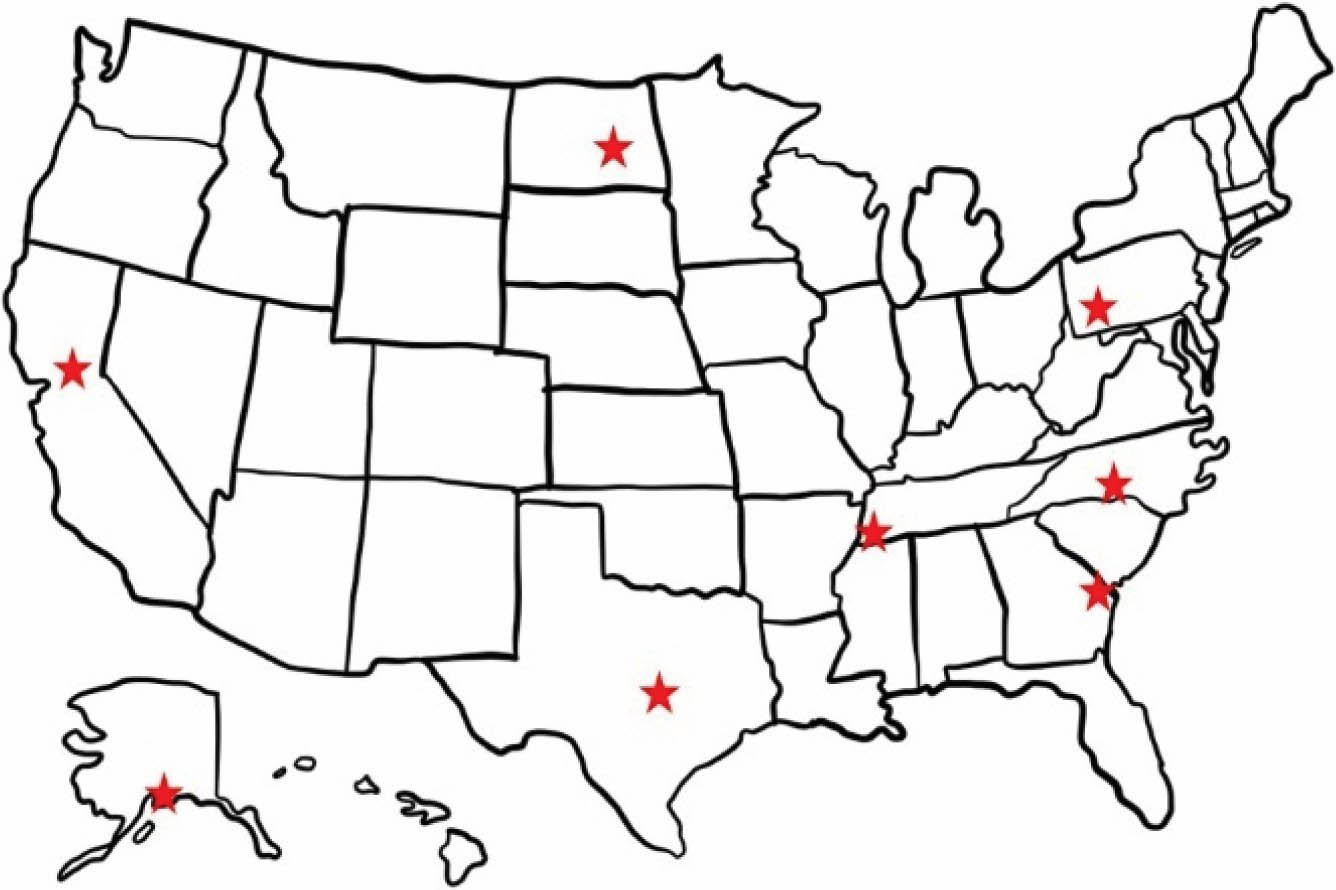
Long Description.
The map shows red stars marked on the following locations: California, Alaska, North Dakota, Texas, Tennessee, North Carolina, Georgia, and Pennsylvania.
Austin–Bergstrom International Airport, Austin, TX
Large Hub
Over the past few decades, Austin, TX, has seen significant growth, which has helped create jobs and spur economic development. Austin–Bergstrom International Airport (AUS) is the primary commercial airport serving the region. Per FAA Operations & Performance Data (FAA n.d.), the airport has seen a dramatic increase in passenger volume and operations in recent years. In 2021, there were 203,389 total operations. The number of total operations increased to 268,830 in 2022 and to 275,779 in 2023 and then decreased to 260,774 in 2024. These totals reflect the rapid growth and popularity of Austin as a destination.
According to the Bureau of Transportation Statistics (BTS) (2025a), 18 airlines and 5 cargo company service providers use the airfield. In 2024, based on enplaned passengers, carrier shares were as follows: Southwest (43%), American (18%), Delta (14%), United (12%), Alaska (3.8%), and others (9.8%). The Airside Operations and SMS team oversee ramp safety for this large hub airport.
Airport communication with ramp personnel, airlines, and service providers is completed in various ways throughout the year:
- Anonymous surveys every 6 months to evaluate the status of ramp safety,
- “Road shows” where leadership walks through ramp areas for on-site reviews,
- Meetings with each tenant and having ramp safety as key topic, and
- Monthly tenant meetings, including airline safety teams.
Monthly tenant meetings cover various safety topics, including current issues, upcoming events (e.g., weather or special events), recent problems, and successes. If issues are found during on-site reviews or because of incidents, then the project team will work to address the issue by
- Conducting root-cause analysis,
- Using meetings for training opportunities and encouraging self-enforcement,
- Involving SMS, airside operations, and tenants in meetings,
- Sending systemwide emails, and
- Providing ramp personnel with recorded videos to use as visual learning aids.
The airport has an internal SMS manual that is not available to the public. The SMS process includes a reporting form for those who want to report a safety issue at the airport. Safety issues can be reported anonymously. The Report of Hazard, Unsafe Condition or Practice Safety Reporting System (SRS) form, linked in Figure 17 and available in full in Appendix H, can be found on the AUS website at https://austin.widen.net/view/pdf/umrtvb7myg/Safety_Reporting_System_Form.pdf. Appendix H can be found at nationalacademies.org/publications by searching for ACRP Synthesis 143.
Human factors considerations related to ramp safety involve the AOA, airlines, and tenant teams. The AUS staff uses team management concepts to improve communication, decision-making, and situational awareness among all members, including ramp workers, ultimately enhancing safety. AUS respondents mentioned that many of the human factors considerations are issues related to a specific job or company, so such issues are addressed through the airline SMS program and by working with GSPs on individual items. Some of the issues raised were heat exhaustion, cold weather, and cell phone use:
- Heat exhaustion: During summer heat events, heat exhaustion was becoming an issue for ramp workers. The issue was identified through team meetings and, after this information was brought to airport attention, hydration stations were installed on the ramp.
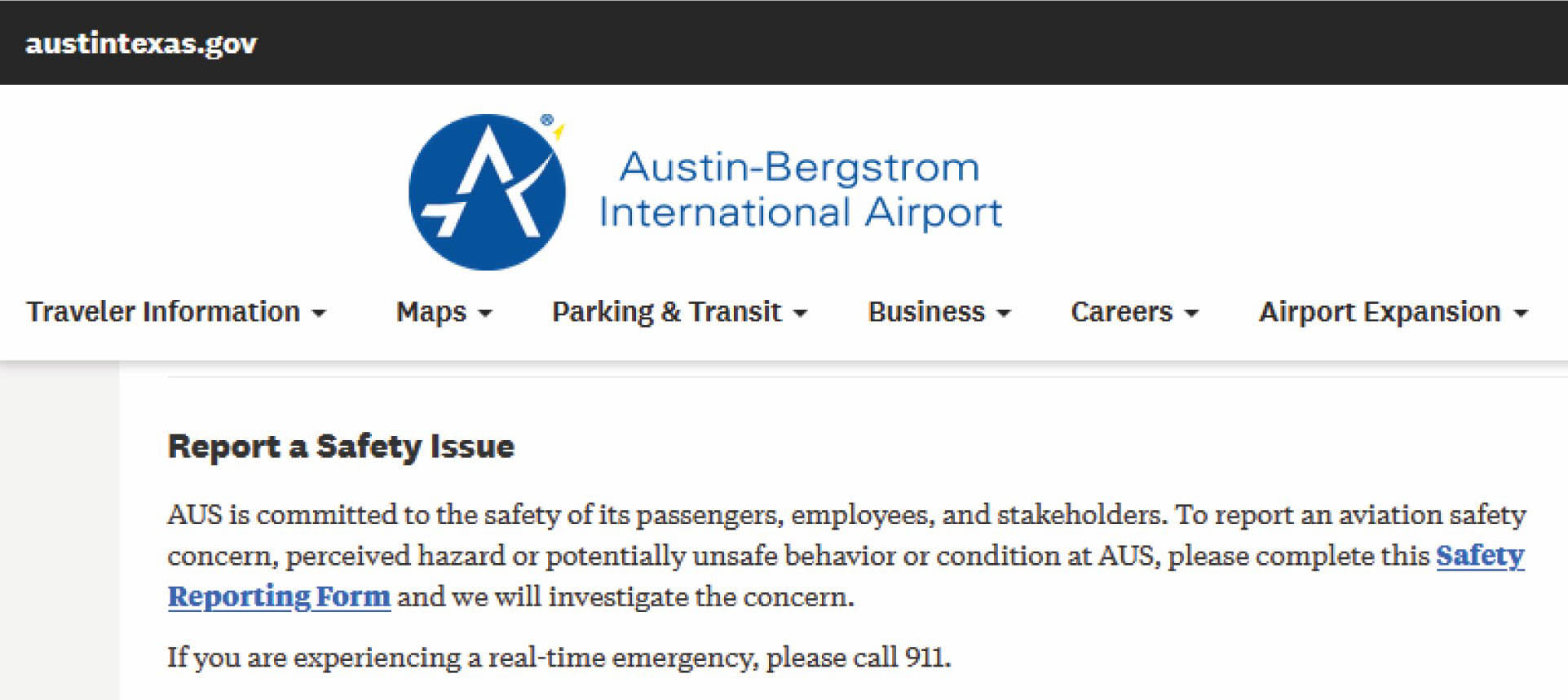
Long Description.
The text in the screenshot reads as follows: Traveler information, maps, parking and transit, business, careers, and airport expansion. The text below reads as follows: Report a safety issue: AUS is committed to the safety of its passengers, employees, and stakeholders. To report an aviation safety concern, perceived hazard, or potentially unsafe behavior or conditions at AUS, please complete this safety reporting form, and we will investigate the concern. If you are experiencing a real-time emergency, please call 911.
- Cold weather factors: In cold weather conditions it was noticed that workers were not using PPE. Cold weather gear (e.g., gloves and hats) is now provided.
- Cell phone use: On-ramp use of cell phones can cause distraction from duties. The restriction on cell phone use is continually reinforced at meetings. In addition, signage was created as reminders to ramp workers.
Another AUS ramp safety program is the FOD program that promotes safety by preventing damage to aircraft and minimizing potential hazards blown by aircraft engines toward ramp personnel. This program highlights the value of the airport coordinating with airlines, vendors, tenants, and ramp users to address requirements. AC 150/5210-24A states (FAA 2015):
The need for an airport to manage FOD is based on the requirements outlined in 14 CFR Part 139, Certification of Airports. The presence of FOD in the airport environment is discussed in §139.305(a)(4), Paved Areas, which states: “Except as provided in paragraph (b) of this section, mud, dirt, sand, loose aggregate, debris, foreign objects, rubber deposits, and other contaminants must be removed promptly and as completely as practicable.” In addition, daily inspections performed at certificated airports (which form the primary means of FOD detection and removal at some airports) are required under §139.327, Self-Inspection Program. Inspections are a key component in airport operations and an effective self-inspection program enables an airport operator to identify and eliminate unsafe conditions.
AUS does quarterly FOD walks with approximately 50 tenants and uses the event to remove FOD and develop buy-in for daily checks of FOD by tenant workers to clear debris before it creates a safety issue.
Charlotte Douglas International Airport, Charlotte, NC
Large Hub
Charlotte Douglas International Airport (CLT), in Charlotte, NC, serves as a major gateway for passenger travel and cargo operations. Per FAA Operations & Performance Data, (https://aspm.faa.gov/opsnet/sys/Airport.asp) CLT is one of the busiest airports in the United States. Annual airport operations in 2021 were 514,782 and reached 589,530 in 2024.
Per BTS (2025b), in 2024, CLT served as a primary hub for American Airlines, which carried 35,597 passengers (a 67.9% share of enplaned passengers). Other air carriersʼ data were as follows: Spirit (1,501 passengers for a 2.9% share), Delta (1,111 passengers for a 2.1% share), United (911 passengers for a 1.7% share), Frontier (884 passengers for a 1.7% share), and other carriers (12,386 passengers for a 23.6% share).
CLT is implementing its full SMS, which was accepted by the FAA in April 2025. The SMS framework at CLT encompasses administrative enforcement procedures, ensuring compliance with safety protocols and corrective action when necessary. The SMS department leads all formal safety assessments, taking charge of identifying, analyzing and mitigating potential hazards throughout airport operations.
In addition to overseeing safety evaluations, the SMS department plays a critical role in construction project reviews. This includes both the planning and design phases as well as ongoing monitoring of active construction sites to ensure adherence to safety standards. An incident in the movement area of the airfield provided additional opportunities for safety procedures to be developed. During the initial stages of the incident, the fire department was present on site and maintained control of the area. However, once their duties were completed and they departed, uncertainty arose regarding which airport personnel were responsible for managing the site and ongoing activities in the still hazardous environment.
The SMS department is responsible for safety outreach and targeted communication initiatives. These efforts are designed to promote a proactive safety culture across all stakeholders, including airport personnel, contractors, and tenants. The airport has many safety activities and has been enhancing the safety components of its ramp operations through buy-in from other operators at the airport. The airportʼs advantages in having one large airline is consistency of leadership and the ability to grow the importance of safety with that leadership. The safety connection builds partnerships which enhance the safety culture at the airport.
Initial outreach efforts to airport tenants have been instrumental in fostering stronger relationships and encouraging participation in safety initiatives. However, working closely with a single airline can present challenges, particularly when union involvement introduces strict limitations on job responsibilities and procedural flexibility. Despite these constraints, collaborative programs (e.g., FOD walks) have improved engagement by all worker groups. These initiatives not only build rapport but also produce tangible results, as demonstrated by the collection of debris, often showcased in bags, as a visual indicator of the programʼs effectiveness and ongoing impact on operational safety.
CLT is a busy airport, and personnel having limited downtime hampers their ability to do prescheduled safety audits, visits, or walks. But the airport has had success in being part of several committees:
- Tenant Safety Committee: Tenants in the AOA, that range up to 100 personnel, meet monthly, SMS airport personnel involved in meeting;
- FAA Users Meeting: Airport heavily involved in these monthly meetings with FAA, engineers and airlines about current and upcoming projects, in addition to safety; and
- Surface Team Meeting: Monthly meetings that can be held as often as biweekly, discussing closures, routing of traffic and safety concerns.
Human factors issues are incorporated at CLT through review of data trends, committee inputs, and input from GSPs. For example, there were tugs on the ramp hitting fuel nozzles which led to a root-cause study that found that a change in procedure by the fueling provider was causing drivers not to be aware of the nozzle locations. Other human factors include headphone use by workers and driving too fast on the ramps. Both issues were addressed through the SMS department in a safety push for “citation-free days” where they educate and inform workers about policies. Both issues improved as the personnel worked to educate and coordinate
with the ramp workers on eliminating headphones on the ramp and keeping driving speeds at acceptable levels.
Memphis International Airport, Memphis, TN
Medium Hub
Memphis International Airport (MEM) in Memphis, TN, serves as a hub for passenger and cargo transport. According to FAA Operations & Performance Data (FAA n.d.), MEM had 215,789 total operations in 2021, decreasing to 202,347 in 2024.
MEM is home to FedExʼs global superhub. FedExʼs operations cover the north side of the airfield, operating under an exclusive area agreement with the airport. The company has their own SMS and usually acts without significant oversight by airport personnel for aviation activities on the ramp. The ramp activity by FedEx is covered under their own SM. Sharing of data by FedEx with the airport is minimal and must balance the proprietary data of the company. Data shared with the airport could become public data and accessible through “sunshine” records requests.
Airfield safety at MEM is managed by the Memphis-Shelby County Airport Authority (MSCAA), which consists of the Airside Operations Section, the Development Section, and the Safety Program Manager. The Authority works with all airlines and GSPs. The airportʼs SMS manual, under review by FAA, is expected to be fully integrated by 2027. MEM is using GIS tools to track workflow, processes, and hazard reporting. MEM tracks and charts notices of violation to enable the airport to identify negative trends early. Airside Operations and the Safety Program Manager work with tenants when a negative trend develops so the airport can mitigate a serious incident or accident before it occurs.
Aviation activity is separated into movement (e.g., runways, taxiways, and safety areas) and non-movement areas (e.g., ramps, aprons and other areas of the airfield such as vehicle service roads). As FedEx activity leaves their exclusive area ramps/aprons into the rest of the MEM AOA, other MEM and FAA regulations are applicable. For example, when FedEx mechanics tug aircraft across movement areas, the mechanics must go through safety training specified by the airport, whereas if they stayed in the FedEx non-movement areas, they would not be subject to airport training. Typical training includes computer-based training modules with MEM-specific information, then oral testing by MEM staff, and finally completion of a practical movement area driverʼs test.
MEM is a busy mix of cargo and commercial airlines, GSPs, contractors, and airport employees. MSCAA is active in meeting with airport constituents to communicate important safety issues and promote safety. The meetings include
- Monthly meetings with FedEx,
- As-needed meetings on special issues such as FOD and weather (snow/ice),
- Commercial airline and tenant manager meetings,
- Outreach with airline corporate SMS and local station managers,
- Monthly safety and SMS meetings, and
- Weekly airfield closure/construction/maintenance coordination meetings.
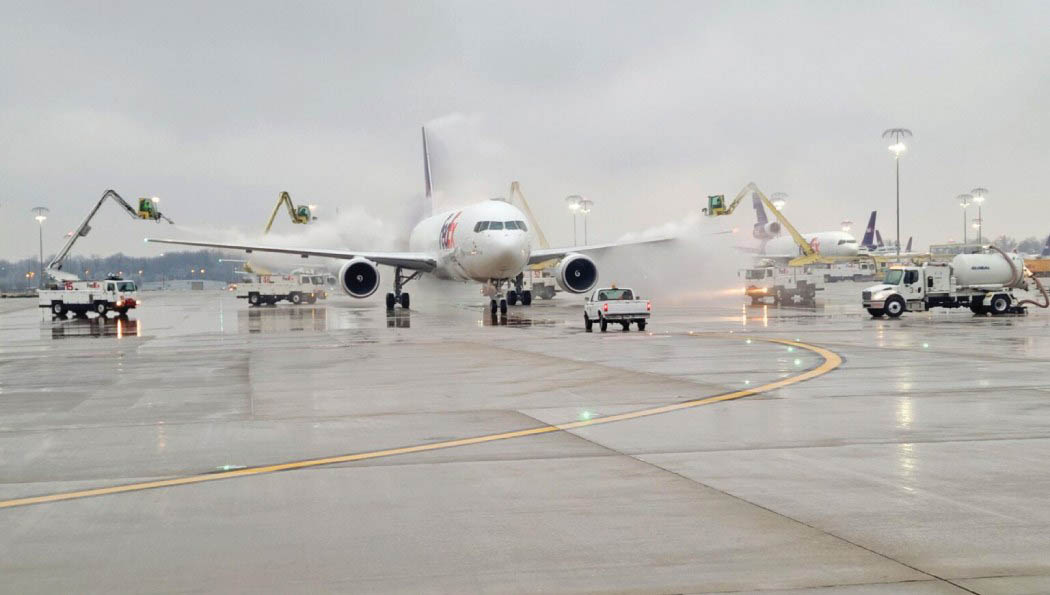
MEM is also home to one of the largest deicing facilities in the world (Figures 18 and 19), providing a dedicated location for airlines to deice. When in operation, the area includes ramp operation personnel on the 12 deicing pads. The space has its own control tower along with electronic message boards to help pilots enter and exit the space.
As the deicing facility came online, the airport working with FedEx and the airlines completed two Safety Risk Assessments of the area and operations. Collaboration is key during cold (e.g., frost and icing) and snow/ice events as the airport manages brooming, clearing, and plowing of movement and non-movement areas while FedEx and the airlines work on the deicing facility.

Sacramento International Airport, Sacramento, CA
Medium Hub
Sacramento, CA, has experienced significant growth in recent years, and Sacramento International Airport (SMF) handles over 13 million passengers annually. According to FAA Operations & Performance Data (FAA n.d.), in 2021, SMF handled 112,801 total operations. This increased steadily in 2022 (130,514 total operations), 2023 (134,809 total operations), and 2024 (144,052 total operations).
The safety program the airport implemented is the Ground Service Equipment Safety Review/Audit. This annual review at SMF includes equipment described by OSHA as Powered Industrial Trucks, which includes various types of machinery and vehicles used to support aircraft operations on the ground. Examples of GSE include belt loaders, tugs, pushback tractors, forklifts, K-Loaders and other specialized industrial trucks powered by electric motors or internal combustion engines. The audit program reviews each companyʼs GSE equipment at least once per year, and the training program for the equipment, the maintenance program, preventive maintenance schedule, and recordkeeping. Other areas of emphasis include monitoring activity such as the use of seatbelts, employee credentialing, reported injuries, and any employee safety complaints.
Many of the airlines at SMF have contractor GSPs and, as part of encouraging safe operations on the ramp, the airport has developed relationships with each airline and GSE subcontractor.
Airport personnel classify the relationship with the ramp employees as helpful and airport personnel are there to assist ramp employees in creating a safe environment. This is emphasized in monthly TSA meetings where safety has been added as an ongoing agenda item.
In addition to the GSE audit program, SMF also protects the safety of the airfield through regular FOD walks. Airport and GSP staff conduct these walks to identify and remove debris that could pose a hazard to aircraft operations. FOD walks are a critical component of the airportʼs SMS, because they help prevent damage to aircraft, minimize safety risks, and ensure smooth operations. This proactive approach enhances the safety of ground handling activities and fosters a culture of vigilance and responsibility among all airport stakeholders. The FOD walks result in the following:
- Close examination of equipment on the ramp,
- Observation of any hazards not obvious in normal operations, and
- Identification of new chemicals on the ramp.
The FOD walks also enable interaction with airport, airline, and GSP representatives to increase communication (e.g., any needed follow-up report). Measures of success (e.g., the amount of FOD picked up and weighed after each walk) are reported to ramp workers, GSPs, airlines, and airport personnel.
Ted Stevens Anchorage International Airport, Anchorage, AK
Medium Hub
Anchorage, AK, home to the Ted Stevens Anchorage International Airport (ANC), has a population of approximately 290,000 residents. ANC plays a pivotal role in the aviation sector, not only for passenger travel but for cargo operations. According to FAA Operations & Performance Data (FAA n.d.), total operations for 2021 were 285,887. In 2022, the number of total operations decreased to 277,121. There was a minor increase in 2023 (278,325 total operations and in 2024, total operations increased to 293,338. ANCʼs geographic location allows it to serve as a refueling and shipping point for cargo flights with the airportʼs infrastructure designed to accommodate substantial cargo volumes.
ANC is implementing an SMS program. The FAA is reviewing the framework. The SMS required under 14 CFR 139 is intended to create a proactive system to identify and address safety concerns through collaborative analysis. This relies on four main pillars: (1) safety policy, (2) safety risk management, (3) safety assurance, and (4) safety promotion.
In the area of safety policy, ANC takes a top-down approach to make sure all levels of the organization are involved and aware of safety expectations. Safety risk management primarily revolves around hazard identification and reporting, for which the airport has a robust reporting tool that is open not only to the ANC employees but to the tenants and the general traveling public. ANCʼs analysis, resolution, and ongoing tracking of identified hazard trends support safety assurance. Finally, all safety communication, safety meetings and training programs fall under safety promotion. Part of the promotion plan includes quarterly meetings with tenants including ground handlers and airlines. The airport is trying to find a balance of information sharing with airlines and GSPs. For example, wanting to (1) share the same information with all constituents, (2) balance transparency of information with proprietary informational needs of airlines, and (3) how to best share safety information and metrics.
ANC collaborates with Denver International Airport (DEN), allowing ANC to benefit from the insights and experiences gained at DEN, which is classified as a large hub primary airport.
Through the sharing of ideas and data, ANC can implement lessons learned from DENʼs safety initiatives to enhance its own processes.
Because of its location, ANC has varied weather and lighting conditions—the summer months may result in 17 hours of daylight each day with little darkness at any time, while during the winter months, the airport may get less than 6 hours of light, cold weather conditions, and snow and/or ice on the ramp. These events require ramp personnel to perform various procedures in areas where snow/ice covers ramp markings which can confuse ramp workers and GSE operators. In the winter months, to reduce the likelihood of driving infractions, personnel need regular notifications of required changes in driving patterns.
As winter approaches, the airport uses the following methods to address potential safety issues:
- Preemptive meetings before the winter months to prepare and train personnel,
- Meetings on changes to driving patterns that may occur because of snow piles and tug road changes,
- Follow-up meetings on lessons learned for operations, and
- Having a reporting system in place for staff to report issues, with options on the form that allow safety managers to follow-up with those submitting reports.
Savannah/Hilton Head International Airport, Savannah, GA
Small Hub
In recent years, the Savannah area has seen population and economic growth. Savannah/Hilton Head International Airport (SAV) serves as the primary airport for the region. The small hub airport plays a crucial role in connecting Savannah to other cities. According to FAA Operations & Performance Data (FAA n.d.), total operations for 2021 were 114,071. In 2022, total operations increased to 116,473, but then in 2023, they decreased to 111,901. In 2024, there were 114,970 total operations.
Regular FOD walks and inspections ensure the safety and efficiency of the airport. The airport reports ten airlines, with one airline using its own ground handler, and six GSPs in use by the other airlines.
The airport is awaiting final acceptance of its SMS plan by the FAA. This comprehensive SMS will help ensure the airportʼs operations are safe and efficient, and airport personnel will use the plan to promote continued safety on the airfield. As part of the new system and the SMS process, SAV is collecting baseline data on safety measures and then identifying where safety improvements can take place. For example, the Drivers Training Program is being implemented because of the qualitative experiences of drivers on the airfield and a documented incursion. The incursion resulted in a root-cause investigation that led to finding of issues, causes, and solutions.
SAV uses a vendor to provide computer-based interactive employee training. The airport also requires in-class training for new airport personnel; this training includes a practical training component. These requirements are reflected in the SMS manual.
The airport encourages airport, airline, and GSP employees to report hazards to the SAV safety officer (rather than to other units in the organization such as HR). The hazard report process was established when issues at SAV were not reported to airport personnel. Eventually, the airport safety manager learned about incidents by “word of mouth” rather than through formal channels. The hazard reporting initiative encourages employees to report hazards through an online form so the proper procedures can be followed for documentation, mitigation, and resolution of the incidents. The form can be found in Appendix I: SAV Airport Hazard Report at nationalacademies.org/publications by searching for ACRP Synthesis 143.
The form has drop-down options for the following hazard types: accident, incident, near miss, hazardous condition, hazardous behavior, environmental hazard, FOD, and “other.” Visibility options are dawn, daylight, dusk, night, smoke, and dust. The form acknowledges the following surface conditions: dry, wet, slippery, icy, and “other.” A submitter provides a detailed description of the incident on the form and can include a name for follow-up purposes or submit the information anonymously. The airport seeks to provide transparency for constituents by using an effective SMS, while ensuring that data sharing does not compromise proprietary information maintained by airlines and companies.
Arnold Palmer Regional Airport, Westmoreland County, PA
Non-Hub
Westmoreland County, PA, home to Arnold Palmer Regional Airport (LBE), has a population of approximately 350,000 residents. LBE has three daily commercial flights by Spirit Airlines and several monthly flights from Sun Country Airlines. In addition, the airport serves multiple fixed-base operators (FBOs) and the general aviation (GA) community. According to FAA Operations and Performance Data (FAA n.d.), total operations for recent years were 34,475 in 2021, rising to 37,630 in 2022, then decreasing to 36,806 in 2023 and then rising to 44,829 total operations in 2024.
LBEʼs executive director and safety director are airport employees. The safety director serves multiple roles at the airport—this mirrors findings from the survey and other case example airports, where the individual assigned as safety director has multiple job duty assignments beyond monitoring the safety of the ramp and airfield.
The airport contracts the ramp workers for the airline, and Spirit Airlines provides recurrent training for ramp personnel. The small number of airline ramp personnel facilitate direct communication of safety items from airport staff during employee check-ins, along with ongoing coordination with Spirit Airlines managers and routine meetings.
LBE has integrated electric ground support equipment (GSE) on the ramp, except for diesel-powered pushback tractors. Given the intermittent nature of commercial aircraft arrivals, ramp personnel can maintain and service GSE. Equipment used for GSE maintenance is checked out from storage/maintenance at the start of the day and then returned. Managers indicated this process helps address equipment issues and promote proactive maintenance. Maintenance personnel put speed limiters on GSE equipment, so ramp personnel cannot disobey posted speeds, and the airport does not have to address that aspect of ramp safety. The airport uses standard apron markings and a red box area that defines the Equipment Restraint Area, for GSE to stage, service, and work on aircraft, so as to ensure safe distances are maintained from the aircraft (Figure 20).
Spirit Airlines corporate safety procedures are used for initial training of ramp personnel as well as refresher training, and the airport is involved in observing ramp operations, oversight of equipment, providing updates of events (e.g., expected weather, snow operations, airfield maintenance, and operational events, such as additional arrivals or airshows). The safety culture at the airport begins at the top and filters down through management, operations, and maintenance, the workers involved in the ramp.
Jamestown Regional Airport, Jamestown, ND
Non-Hub
Jamestown, ND, in Stutsman County, is the site of the Jamestown Regional Airport (JMS), a non-hub airport. JMS provides air service that connects the city to major destinations, supporting both personal and business travel needs. Interviews revealed that the airport employs two staff

Long Description.
The belt loader, along with a large turbine of an aircraft, is visible. The text on the belt loader reads C h a r l a t t e
members who are responsible for operations and maintenance. Ramp safety training is provided for ramp personnel, airport staff, airline employees, and service providers. The airport categorizes the airside areas into “active” or movement zones (that include runways and taxiways) and “non-active” or non-movement zones (such as the ramp areas).
Airline employees service the single commercial airline operating at the airport, SkyWest. The small number of airport employees and airline staff allows for close and continuous communication between these entities. Offices for most personnel are next to the airport managerʼs office. Aircraft maintenance personnel are stationed in other areas of the airfield and called to the ramp area when maintenance issues arise. The proximity of airport and ramp workers as well as the small staff enables sharing of safety messaging directly with ramp workers and supervisors—this supports survey findings that, although smaller airports may collect fewer measures, such airports address safety issues directly.
An example of a safety issue that airport staff address is foot traction to reduce slip-and-fall incidents. During cold weather events, the airport has both ice and snow events, which the airport is responsible for removing. The icy conditions create slip-and-fall issues, creating personnel and liability issues for the airport. The airport has procedures to minimize activity by ramp personnel outside a vehicle during these icy conditions. Communication with those involved in the ramp operations is critical to supporting the airportʼs goal of reducing slip-and-fall incidents during these events. Airline and airport staff meet both before and after the winter season to assess lessons learned during these times.
Winter conditions at the airport require additional personnel to remove the snow and ice. Such removal activities are not frequent but affect both movement and non-movement areas. As part of training and as these snow/ice weather events are anticipated, these intermittent personnel are reminded of the policies, procedures, and rules for traffic on the airfield. The personnel go through the same annual training as full-time staff. During weather events, the full-time airport staff are also on site. The airport manager indicated the value of having consistency of crews year after year, particularly given that many of these intermittent staff have dual work (e.g., Aircraft Rescue and Firefighting service [ARFF]) which contributes to safe operations on the field.


