Carving Our Destiny: Scientific Research Faces a New Millennium (2001)
Chapter: Genetics Meets Genomics: Trends and Implications
11
Genetics Meets Genomics: Trends and Implications
David Schlessinger
National Institute on Aging, Bethesda, Maryland
Throughout the twentieth century, geneticists have functioned in two worlds. One of them is the classical academic endeavor that identifies genes by looking at the inheritance of traits in peas and flies as well as humans. But geneticists have also been among those scientists consistently up front in a second world, that of public discourse.
The recipients of the James S. McDonnell Foundation Centennial Fellowships in human genetics epitomize the cutting edge in both of the geneticists ’ worlds. They also exemplify how both of these roles of geneticists have been changing decisively as the Human Genome Project has shifted into high gear.
THE HUMAN GENOME PROJECT AND THE FIRST WORLD OF GENETICISTS
We have all become accustomed, in a surprisingly short time, to the notion that in the coming few years we will have at our disposal the sequence of all three billion nucleotides of human DNA, along with a complete catalog of genes for our own species as well as a series of model organisms. The assembly of these gene catalogs continues an historical transition in which genes continue to be inferred as genetic factors by observing inherited traits, but are also increasingly thought of as defined sequences of DNA. And that makes a very big difference. This is because
thinking about genetics based on populations and statistical studies requires special quantitative abilities and thereby sharply restricts the pool of geneticists. But anyone can think about sequences of DNA.
Thus, as the catalog of genes is being completed and technology improves, almost all biologists are being recruited to the ranks of geneticists. Some observers have recently suggested that medical schools may have to be renamed genetic schools. In the analysis of genes, there has been a concomitant sharp change as traditional studies, gene by gene, are replaced by systematic surveys across the entire hereditary potential of species. As mapped genes are identified along chromosomes and the corresponding proteins are being studied, there is a rapid transformation of studies of biological function. Traditional genetics is merging with genomics, the systematic study of genes as sequences that produce corresponding proteins. The result is an increasingly extensive functional analysis (Figure 1, left panel and top right). The new “functional genomics” comprises ambitious attempts to understand everything about the genome, including systematic studies of gene expression in cell and tissue physiology and of the consequences of mutational deficiency in each gene.
In this combined genetic and genomic approach, the modern version of the first world of geneticists, the analysis of genes proceeds hand in hand with an increasing understanding of the structure and function of
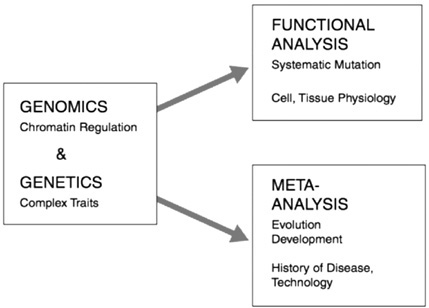
FIGURE 1 Combined genetic and genomic approach.
the cell nucleus where the genes are localized. In Wendy Bickmore’s chapter, she has shown how extensions of fluorescent in situ hybridization can lead from a knowledge of cytogenetic changes in DNA to an analysis of chromosome dynamics during mitosis or chromatin remodeling. These are a vital feature, for example, of the famous cloning of the sheep Dolly. When the nucleus of a mature cell is reintroduced into an egg and is reprogrammed to reinitiate embryonic development, what happens to the chromosomes? Naturally, the cytogenetic analyses must be accompanied by extensive biochemical studies of the protein components and their interactions. But as in the past, we can expect cytogenetic hints to lead the way toward later biochemical and physiological investigations.
If we continue to think about genes as sequences of DNA, but associated with inherited “complex traits,” we come to the discussion of the modern use of genomics in the Human Genome Project to provide a huge and increasing inventory of the repertoire of variation in DNA (Figure 1, left). In Leonid Kruglyak’s chapter, this variation is the raw material that is required for the study of the genetic factor in disease causation. Variant sequences permit one to track down the genes that are participating in a process. Kruglyak provides a first approximation view of the approach that he is helping to create, designed to analyze complex traits with the use of these variant sequences or “markers” coming from the Human Genome Project. As he alludes to in his chapter, such genetic studies have already had many notable successes in explicating many single gene diseases. Although he emphasizes that the approach remains to be fully formulated and tested, I think that he subscribes to the general hope and optimism that the route he outlines will lead to a dramatic augmentation of the power to diagnose, anticipate, and perhaps alleviate complex chronic diseases.
META-ANALYSES AND THE SECOND WORLD OF GENETICISTS
In general, the first world of geneticists now thinks in terms of the convergence of genomics and genetics and the exploitation of the resultant functional analysis. But this view of trends, though it often dominates thinking in the field, is incomplete because, along with pure functional analysis, we now have a parallel enormous surge of meta-analysis of different types. These activities build on comparative studies of long-term changes in systems. An example is referred to by Leonid Kruglyak: the use of genetics and genomics to expand discussions of comparative evolution of all species, including our own. Similar extensions of developmental genomics and genetics are beginning to reveal the details of stages from fetal growth to aging and aging-associated conditions.
Among the most important meta-analyses are the ones that look re-
flectively at the way in which the techniques and changing models of genetics and genomics fit into ongoing transformations of our thinking about biology. This brings us to the second world of geneticists that I referred to above: the world that impacts on social policy and the treatment of patients. Of course the twentieth was indeed the century of Watson and Crick and all of us whose works are footnotes to theirs. One cannot ignore that the twentieth was also the century in which successive waves of immigrants to this country were labeled as genetically defective; in which eugenics movements were closely linked to fascist programs; and in which true geneticists in the Soviet Union were imprisoned or, worse, while Lysenko and his colleagues dictated the results that scientists were required to find in experiments.
A relatively small group of sociologists, ethicists, biological scientists, and historians have had the commitment and the broad base of knowledge to look critically at how heredity and disease are understood. And even fewer have the ability to use that knowledge to illuminate what we might do to ensure that the political and medical use of genetics is optimized for humanity. Keith Wailoo is one of those few contributors. His work and thinking operate at the level of meta-analysis of the exploration of twentieth century biomedicine, analyzing the way in which clinical science has looked at disease; how this has been influenced by new technology, and how the relationship of the science of disease and the experience of illness is changing.
Keith Wailoo’s chapter requires no help from explication by others, but I reiterate that the interplay between the discussions of trends in genetics and trends in its effects on thinking about illness lies precisely at the intersection of the two worlds of geneticists: the analysis of function and its implications for public discussion and policy.
I believe that the research by Bickmore, Kruglyak, and Wailoo could be very useful and provocative in future discussions of genetics and its uses; and this is of course relevant to the purposes of the McDonnell Fellowship Program. I was one of those who enjoyed the privilege of having several discussions with Mr. McDonnell about genetics. He was quite consistent in his thinking about both the centrality and the power of genetics in modern life, and also about the necessity for scientists to combine scientific prowess with the communication skills to inform a free society. The chapters by Bickmore, Kruglyak, and Wailoo are appropriately cogent and also relatively free of the impenetrable jargon that affects most discussions of biology.