Community-Driven Relocation: Recommendations for the U.S. Gulf Coast Region and Beyond (2024)
Chapter: 3 Examples of Relocation
3
Examples of Relocation
This chapter discusses the following:
- A brief history of community relocation in the United States from the late 1800s to the late 1900s as federal involvement increased
- Challenges, opportunities, and lessons related to buyouts, including those gleaned from forced relocations with eminent domain and from the Dutch Room for the River Programme (RftR)
- Case studies of buyout programs and community relocations from the United States and abroad, including in New York and New Jersey, Alaska, Louisiana, Australia, and Japan
INTRODUCTION
The committee examined a variety of relocation efforts during the course of the study. From the late 1800s to today, several community relocation efforts have been documented in the United States. The case studies that the committee recounts in this chapter describe how approaches to relocation developed over time and included community-driven efforts, an array of funding sources and policy shifts, and the use of buyouts as one mechanism to relocate communities to areas of lower environmental risk. The literature also revealed current national and international relocation
efforts. The chapter’s coverage of these case studies and their relevance to this report is structured as follows: a history of relocation efforts in the United States from the 1800s to the late 1990s, followed by a high-level description of the infrastructure of buyouts in the United States and a review of the lessons learned and existing challenges of this approach. The next section covers a set of national and international case studies from the 2000s onward, including the Isle de Jean Charles (IDJC), Louisiana; Newtok, Alaska; Hurricane Sandy in New Jersey and New York; Grantham, Australia; and Tohoku, Japan. The chapter does not present a comprehensive review of relocation cases; rather, the committee chose these cases to illustrate both specific challenges and effective pathways forward for community-driven relocation. Most cases include cross-references to other sections of the report about these challenges and pathways, as relevant to the study charge.
A BRIEF HISTORY OF COMMUNITY RELOCATION EFFORTS IN THE UNITED STATES
The United States has a long history of community relocations that is often forgotten in more recent discussions about the topic (Pinter, 2021a,b, 2022; Pinter & Rees, 2021). Starting with Niobrara, Nebraska, in 1881, there have been over 20 instances of wholesale (i.e., full) or partial relocation in the United States, many of which occurred in Midwestern states such as Illinois, Wisconsin, and Indiana (Pinter, 2021a). Relocations occurring before 1993 “were largely managed by local and state authorities, by private groups such as the Red Cross, and left in significant part to the flood victims themselves” (Pinter, 2021a, p. 2). In 1992, the Federal Emergency Management Agency’s (FEMA’s) Hazard Mitigation Grant Program (HMGP; established in 1988) began funding floodplain property acquisitions, marking a new period of major federal involvement in buyouts and community relocation (Pinter, 2021a).
Early Cases
The relocation of Niobrara, Nebraska, in the late 1800s occurred after the village of almost 500 people was flooded under 2m (about 6 feet) of water due to an ice dam on the Missouri River (Carter, 1991; Pinter, 2021a). The decision to relocate the town was decided by community residents following “intense local debate” within a month of the flood occurring (Pinter, 2021a, p. 2). Houses and commercial structures were physically dragged by horse teams to a site on higher ground 2.4km (about 1.5 miles) away, and most were relocated within a year of the town’s decision (Pinter, 2021a). Although the swiftness of this move may be impossible to achieve when larger communities are relocating and when houses cannot be physically
moved but must be deconstructed and rebuilt, the timeliness of Niobrara’s relocation likely contributed to its success. The multi-year process of buyouts described by community members at National Academies of Sciences, Engineering, and Medicine workshops and in numerous reports is a major deterrent in people choosing to relocate. This topic will be discussed further in Chapter 10.
In 1937, following catastrophic flooding of the Ohio River and a suggestion from President Franklin Roosevelt to move affected towns to higher ground, both Leavenworth, Indiana, and Shawneetown, Illinois, received external funding to assist them in relocating their communities. In the case of Leavenworth, within about a year and a half of flooding, the Works Progress Administration (WPA) “built streets, sidewalks, parking, water and sewer, and a new town hall,” and the American Red Cross assisted the city of about 400 in completing their relocation, assigning residential lots “in keeping with former locations” and groupings of similar type and cost (Bondy, 1938, p. 8, as cited in Pinter, 2021a, p. 6). Shawneetown (pre-flood population: 1,440), which was experiencing “successively larger flood events” and had already discussed relocating 25 years prior, began discussing relocation while still 8–10 feet under water (Pinter, 2021a). Few objected at first, but as the process dragged on, tensions grew between locals and outside engineers and designers from the WPA. Despite this, about half of the residential structures were physically relocated and the rest were rebuilt in the new location 5.6km (3.5 miles) away. The WPA did not cover commercial construction, so the town used discretionary funds to build new commercial properties (Pinter, 2021a). Questions about who pays for what and how decisions are made and by whom are critical to a successful relocation. Community engagement and leadership is discussed further in Chapter 7, and funding sources are discussed in Chapter 9.
In the early 1960s, the U.S. Army Corps of Engineers (USACE) was planning to build a dam upstream of Soldiers Grove, Wisconsin (pre-flood population: 514) and proposed an accompanying levee to protect the town. The town instead decided to relocate structures in the floodplain (about half of the town) using the money that had been earmarked for the levee. The town made a relocation plan and bought a site 800m away, but in 1977 the dam project was canceled, along with the town’s relocation funding. The following year, the town flooded again; but with a relocation plan ready to be deployed, they began construction and relocation of their new town in 1979, “relocating the fire station, two other municipal facilities, 24 homes, and virtually the town’s entire business district, about 36 structures” (Brown, 1993, as cited in Pinter, 2021a, p. 6). They also elevated or flood-proofed 12 homes on the margins of the floodplain and “[a]bout half of the new commercial and municipal buildings incorporated passive solar design” (Pinter, 2021a, pp. 6–7). In 2020 dollars, the partial relocation of Soldiers Grove cost 27.4 million dollars, the largest portion of which came from the
Department of Housing and Urban Development (HUD; 13.3 million dollars), followed by 8.8 million dollars in village borrowing (Pinter, 2021a). Although they lost their initial relocation funding, developing a relocation plan ahead of time allowed Soldiers Grove to act swiftly when the town was ready to relocate. Incorporating relocation options into existing plans (i.e., land-use plans, hazard mitigation plans, and other comprehensive planning efforts) is discussed further in Chapters 8 and 9. Soldiers Grove also demonstrated the potential for community relocation to enhance not only safety but also environmental sustainability (e.g., through the addition of solar panels).
Members of the Bad River Band of the Lake Superior Chippewa (Ojibwe) Nation, like many other Indigenous groups and people of color, live where they do because they were forced out of previous homes. This Ojibwe band moved west from Maine to escape European invaders in the 1800s, settling by the Bad River in Odanah, Wisconsin (Hersher, 2018). Then, a few years before the tribe began reportedly relocating to higher ground in the 1960s, the Indian Relocation Act was passed, which incentivized people living on reservations to move into cities, resulting in widespread tribal collapse. Over three decades starting in the 1960s, the Bad River Band relocated to a new site on higher ground with a majority of funding coming from HUD. The new location meant the town avoided destruction from severe flooding at the old site in 2016; while the Odanah relocation is viewed as a success from an outside perspective, a tribal historian described it as another forced relocation with federal government interference (Hersher, 2018). Understanding the history of the communities faced with the prospect of relocation is key to a just and community-centric relocation process. The importance of history is discussed throughout the report, particularly in Chapter 4.
The Great Midwest Floods of 1993 and FEMA-Supported Relocation
Following three floods between 1943 and 1947, USACE built a levee protecting the town of Valmeyer, Illinois, and 60,000 acres of nearby farmland (Knobloch, 2005). After a few decades of effective flood protection by the levee, in the 1980s, the village council adopted federal floodplain regulations, which allowed residents to purchase federal flood insurance while restricting development in the floodplain, unless it was elevated above base flood elevation (about 10 feet above the ground). Until 1993, “a group of business and political leaders” were attempting to “find a solution to the halt in new construction” (Knobloch, 2005, p. 42). These efforts ended abruptly in 1993, when persistent heavy rains caused river flooding that topped the levee and left the town (pre-flood population: 897; post-flood
population: 1,300) under 16 feet of water, damaging over 90 percent of town structures (Knobloch, 2005; Pinter, 2021a). Although it was FEMA representatives and the regional planning commission who reportedly first suggested the town relocate, about a month after the flood two-thirds of residents were in favor, voting to move to a “cornfield and surrounding woodland 3.4 km away and approximately 120m higher” (Pinter, 2021a, p. 9). In the decade immediately following the move, the town dropped in population and only about a quarter of businesses survived; however, the population bounced back between 2000 and 2010 (Pinter, 2021a).
Much of the town’s success is attributed to “strong leadership and community engagement,” reflected by the development of citizen planning committees and a planning charrette attended by regional architects and planners along with locals (Pinter, 2021a, p. 10). Over 100 residents served on a planning committee, with focus areas including town design, infrastructure and utilities, housing, business, social services, school construction, and finance (Knobloch, 2005). The move cost 54 million dollars in 2020 dollars, with 21.8 million dollars coming from FEMA and 20.9 million dollars coming from the Department of Commerce and Consumer Affairs (Pinter, 2021a). Residents began moving to their new community in 1995, and infrastructure was completed by the end of that year. Construction had been delayed by the review process in which over 25 different federal, state, and local agencies participated following the initial environmental assessment. Delays meant long periods in temporary housing and hit business owners especially hard as they lost not only their homes but also their livelihoods (Knobloch, 2005). Many left the community as a result. Despite the considerable challenges encountered, the town’s resilience was largely due to its strong leadership and engaged community. This collaborative spirit not only helped navigate the complexities of relocation but also played a critical role in building a cohesive and adaptable community in their new environment. The resulting success is a testament to the power of effective leadership and active community participation in overcoming the hurdles of such significant transitions. The importance of community leadership and engagement in a successful community relocation is discussed further in Chapter 7, and governance and policy mechanisms that can support community-driven relocation efforts are discussed in Chapters 9 and 10.
In 1993, Rhineland, Missouri (pre-flood population: 157; post-flood population: 135) and Pattonsburg, Missouri (pre-flood population: 414; post-flood population: 318) flooded numerous times following levee failures (Pinter, 2021a). Over 90 percent of residents in both towns voted to relocate, with Rhineland managing 98 percent with support from its town planning commission. Rhineland physically moved approximately 50 structures to nearby higher ground ($8,000–10,000 per structure), moving
some commercial structures just to the edge of the floodplain to maintain access to Highway 94 (Pinter, 2021a). New parcels of land for residents to relocate to were transferred as a land swap: relocating residents swapped their old properties on the floodplain that were left behind for new land parcels in New Rhineland, using a lottery to identify the new parcels (Pinter, 2021a). Pattonsburg was established along the railroad, but due to frequent inundation from flooding, the population had declined from over 1,000 in the 1940s to just over 400 in the 1990s, during which time the town experienced repeated flooding. In 1993, long-time residents were already in the process of rebuilding when the second flood hit, leading to the almost unanimous decision to relocate. The town acquired 235 flooded properties with 6 million dollars and used their remaining 6.5 million dollars to develop the new site approximately 3km from the river. The old site was later used as a movie set, and energy-saving measures were incorporated into the new town school. The new site was designed with a “‘Main Street’ feel,” and the town’s relocation was deemed one of most successful examples of moving businesses and was credited with boosting the town’s economic health. In 2017, the old site experienced multiple floods (Pinter, 2021a). The success of Pattonsburg’s relocation highlights the importance of planning, not only for immediate needs like housing but also for longer-term needs like economic viability. Planning for relocation is discussed further in Chapters 8 and 9.
In other cases, where new sites were not developed for a community to relocate to, collective buyouts resulted in the effective removal of communities, in which people who received a buyout moved to already-existing communities in neighboring counties. In contrast to a wholesale or partial relocation in which the new site is within the same tax base, “piecemeal buyouts are often opposed by local leaders” because, with each resident who leaves, the tax base of the original community erodes (Pinter, 2021a, p. 11). In some cases, money was received for parts of the relocation process (i.e., buyout and demolition) but not others (i.e., relocation and new site development), resulting in unsuccessful wholesale moves even when they were desired by the town (e.g., Allenville, Arizona, and Olive Branch, Illinois; Pinter, 2021a). More on the importance of funding for the entirety of the relocation process can be found in Chapters 8, 9, and 10. Issues related to eroding tax bases and the need for existing cities and counties to prepare to receive people leaving a town through piecemeal or collective buyouts are discussed in more detail in Chapter 8.
Many of the issues experienced by the people in these cases can inform how community relocation is done in the present and future, and will be elaborated on throughout this report. For example, in many of these cases, the decision to relocate was made by residents immediately following a flood event, in some cases while standing water was still multiple
feet high; furthermore, in some cases, sustainable design measures were incorporated into new structures. Planning for the possibility of relocation in advance of a disaster could allow communities to make the decision to relocate with more confidence while in the throes of disaster recovery and to create a more sustainable new community. On the other hand, some circumstances are markedly different for present communities than these early cases of community relocation. The examples above involved relatively small groups, and many involved moving to a new, undeveloped site within a few miles of the old site. This type of relocation is more difficult today due to the increasing number of people living in vulnerable areas and the decreasing amount of safe, open space, particularly in the Gulf region. Furthermore, because most of the new sites didn’t have already-existing development, these cases do not provide much insight into preparing existing communities to be receiving communities. Additionally, earlier relocations were more often a physical relocation of structures rather than a demolish and rebuild, which brings with it a higher price tag and a need to plan for what will happen to the old site. These topics are expanded upon in Chapter 8 but warrant further investigation than this report is able to provide. Individual home buyouts, which typically facilitate ad hoc relocations and are offered after a disaster has occurred (Carey, 2020), are currently the most common form of relocation supported in the United States and will be discussed in greater detail in the next section and throughout the report.
BUYOUTS: CHALLENGES, OPPORTUNITIES, AND LESSONS
Buyouts (i.e., property acquisitions) of flood-prone properties are the most institutionalized, the most common, and the most studied type of “assisted” relocation in the United States, involving all jurisdictions of government and often the private and nongovernment sectors (Elliott et al., 2020; Environmental Law Institute, n.d.; Greer & Binder, 2017; Urban Land Institute, 2021; see Chapter 9).1 At the most basic level, buyouts are voluntary or sometimes mandatory transactions of properties from owners to the government so that the purchased areas return to their prior undeveloped state and possibly assist in future flood mitigation and other ecosystem services, preserve or revive natural habitats, provide education opportunities,
___________________
1 FEMA, the lead federal agency for disbursing funding for buyouts, uses the term “property acquisitions.” However, the term “buyouts” is more commonly utilized by residents and local government. More information is available at https://www.fema.gov/openfema-data-page/hazard-mitigation-grant-program-property-acquisitions-v1
and serve as commemorative sites such as burial grounds, among others.2 Most generally, the ultimate goal of this process is to decrease suffering, the loss of life, and the loss of infrastructure in areas that have repeated flooding by relocating people, communities, and livelihoods to less flood-prone areas. Governments are increasingly utilizing buyouts as a tool for climate adaptation at the local, state, and regional levels (Greer et al., 2022).
During virtual and hybrid information-gathering sessions, the study committee was presented with a broad array of existing challenges, opportunities, and lessons learned about the buyout process (i.e., planning, implementation, outcomes). Several participants with expertise in the buyout process supplemented their presentations with evidence from the literature (National Academies, 2022c, 2023a); the committee, in turn, examined evidence-based literature to develop the following key takeaways:3
- Buyouts take a long time to implement (Binder et al., 2020).
- Participants in buyout programs do not always move to less hazardous areas (McGhee et al., 2020).
- Counties and neighborhoods with a higher proportion of White households are more likely to receive buyout offers, but households of color within those neighborhoods are more likely to accept buyout offers (Elliott et al., 2020).
- The locations of buyouts are influenced by racialized historic housing policies, such as redlining (Zavar & Fischer, 2021).
- The use of the land after buyouts often has provided little utility for the community or city/county (Zavar & Hagelman, 2016). However, the Riverine Targeted Use of Buyouts Program (TUBs) in Harris County, Texas, is an exception. TUBs utilizes green stormwater infrastructure techniques at strategically selected places adjacent to multiple downstream waterways where buyouts have occurred in Harris County and surrounding counties. The objective of the
___________________
2 As one example of a mandatory buyout program in the Gulf region, Harris County, Texas, operates the Project Recovery Post Disaster Relocation and Buyout Program. More information is available at https://harrisrecovery.org/post-disaster-relocation-and-buyout-program/. One example from the Gulf region of a voluntary buyout program as part of a statewide initiative is the Louisiana Watershed Initiative. More information is available at https://watershed.la.gov/buyouts
3 In addition to the hybrid workshops (National Academies, 2022c,d, 2023a), the committee also engaged virtually with buyout experts from each Gulf state and other regions at the following event: “Managed Retreat in the U.S. Gulf Coast Region: Perspectives and Approaches to Property Acquisitions: Challenges and Lessons Learned.” More information about this event is available at https://www.nationalacademies.org/event/12-13-2022/managed-retreat-in-the-us-gulf-coast-regionperspectives-and-approaches-to-property-acquisitions-challenges-and-lessons-learned
- program is to increase coastal and riparian resilience, reduce sediment and erosion, and enhance hazard mitigation.4
- Because of the sole focus on property owners, to include a house or other buildings and the surrounding land in the exchange of ownership to the government, renters are neglected and renters’ vulnerability to the impacts of climate change increases (Dundon & Camp, 2021).
Several of these issues are examined in more detail in Chapters 8 and 10 and, in the context of communication and participation, in Chapter 7, and further contextualized with testimonials from workshops participants.
Eminent Domain/Forced Relocations
The Uniform Relocation Assistance and Real Property Acquisition Policies Act of 1970 (URA) is a federal law establishing the “minimum standards for federally funded programs and projects that require the acquisition of real property (real estate) or displace persons from their homes, businesses, or farms.”5 It provides for basic human rights in the event of forced relocations, but, for purposes of FEMA buyouts, moves required by climate change and economics do not fall under the act since they are considered voluntary (Howe et al., 2021). Yet, in many situations “voluntary participants” feel forced to move (de Vries & Frasier, 2012). In interviews following past buyouts, many participants did not consider the program fully voluntary as some expressed that they felt they did not have better options due to limited savings, pressure placed on them by other participants, and a lack of communication regarding the rules by program administrators (de Vries & Frasier, 2012). The lack of effective communication may result in greater confusion and heightened frustration for all participants. As discussed in Chapter 4, many affected communities have a history in which residents have been forced by the government to relocate. This history has tinged current perceptions of relocation, particularly for Indigenous communities (Barra, 2021; Ristroph, 2021).
Instances continue in which mandatory buyouts occur through the use of eminent domain.6 For example, USACE projects for flood control must include eminent domain if there is not a “100 percent voluntary participation
___________________
4 More information about TUBs is available at https://houstonwilderness.org/riverinetubs
5 More information about the URA is available at https://www.hudexchange.info/programs/relocation/overview/#overview-of-the-ura
6 More information about mandatory buyouts through eminent domain is available at https://kleinmanenergy.upenn.edu/research/publications/climate-adaptation-strategies-how-do-we-manage-managed-retreat/
plan for acquisition” (USACE, 2016, p. 2). Some communities have agreed to USACE terms on the use of eminent domain for flood control (see Cheng, 2021).
In other cases, states have developed their own buyout programs. The committee heard from workshop participants about negative experiences and negative impacts regarding the ongoing mandatory buyout program in Harris County, Texas, which will use eminent domain if residents reject the county’s offer.7 Among workshop participants, there was an overall negative reaction to mandatory buyouts, especially in this case where residents felt that after the buyout occurred, nothing was done to restore the land, and buildings were left to deteriorate (National Academies, 2022c).
The Dutch Strategy of Bottom-Up, Integrated, and Holistic Flood Risk Reduction
The committee provides this example to showcase how buyouts can be part of a broader risk management strategy and still employ bottom-up proactive planning. Adaptation involves creating opportunities for alternative pathways that can lead to diverse outcomes, including transformational adaptation capable of forging entirely new trajectories. Managed retreat is a potential option within an adaptation pathway for the reduced impact of the effect of climate change (Siebentritt et al., 2014). One such suggested adaptation pathway is the Dynamic Adaptive Pathway Planning method, employing specific water management measures to empower policy makers to explore alternative strategies for changing environmental conditions over time (Haasnoot, 2013; Haasnoot et al., 2013). The post-Hurricane Sandy buyouts in the United States exemplify this cross-scale interaction of transformation and adaptation (van Veelen, 2016). However, the execution of Hurricane Sandy buyouts can still be characterized by a reactive approach to flood risk management.
Examining examples outside the United States provides insights into a proactive adaptive pathway toward managed retreat. An illustrative instance is the Dutch Delta program, acknowledged as a model adaptive pathway for water management (Bloemen et al., 2018). This adaptive pathway encompasses various responses to evolving flooding and sea level scenarios. These responses include dike strengthening and relocation, as well as river widening—each necessitating the relocation of homes and people from vulnerable areas.
Hazard-related property purchase in the Netherlands is managed largely as a part of a broader systematic approach integrated into the existing
___________________
7 More information about eminent domain in Harris County, Texas, is available at https://harrisrecovery.org/wp-content/uploads/2021/07/If-I-Say-No-for-print.pdf
structural and nonstructural strategies for flood risk reduction (Jan Goossen, 2018). Notably, the Delta program actively supports the RftR, a major managed retreat initiative in the Netherlands, with an investment exceeding 2.4 million euros, and which is a prime example of these concerted efforts (Delta Programme Commissioner, 2014). The RftR is a bottom-up approach to the relocation of people and communities out of harm’s way as part of a long-term, managed process; it is one of the most popular buyout-type projects in the Netherlands. This approach to managed retreat is proactive and part of an ongoing integrated water administration strategy rather than a post-event acquisition of properties (Atoba, 2022; Wendland, 2020).
As part of the RftR, the Dutch government spent about 2.3 billion euros to acquire flood-prone residential and agricultural land around the IJssel, Waal, Nederrijn, and Lek rivers, converting them to open space to create room for the river (Atoba, 2022, p. 306, citing Rijkswaterstaat, 2019). Particularly, the Nijmegen project, which acquired about 50 properties, has been lauded in its approach to engaging its residents to support the government’s effort (European Spatial Planning Observation Network, 2017; Yu et al., 2020).
The flexibility in the RftR process, which encourages active citizen engagement, is one of the reasons for the success of the program (Jan Goossen, 2018). For example, to increase local buy-in, the program applied a less bureaucratic, bottom-up approach to determine who qualifies for a buyout rather than the strict programmatic requirements employed by the traditional FEMA HMGP programs (see Chapter 9). This approach encouraged local leadership and engagement of government leaders to cooperate with local stakeholders (Edelenbos et al., 2017). Incentives were created for the program to foster this collaboration between government officials and residents throughout the decision-making process (de Bruijn et al., 2015). Their approach was described as the case where the water management authority “would sit down at the ‘kitchen table’ with residents to look for individual solutions. In addition, families were offered the opportunity to sell their homes at market value (before RftR); and farmers were helped in their search for new farmland” (van Alphen, 2020; see Chapter 10 for further discussion of buyout offers and the cost of replacement housing and Chapter 8 for discussion of identifying suitable land). More discussion of active citizen engagement can be found in Chapter 7 of this report.
The RftR’s management of property acquisition embeds benefit-cost analysis (BCA) in the overall integrated flood risk management strategy of the nation, thus evaluating costs and benefits to balance safety with “hydraulic effectiveness, ecological robustness, and cultural meaning and aesthetics” (van Alphen, 2020, p. 310). This is a major difference from the larger federally funded buyout programs in the United States in which BCA is mostly benefit-cost driven at smaller scales (usually at the parcel level;
Atoba et al., 2020; see Chapter 10). The overarching goal of the Dutch strategy is improving overall spatial quality and reducing flood risk (largely defined as protecting assets), creating robust ecological systems, and enhancing the aesthetics of the existing natural landscape (Klijn et al., 2013).
The Dutch approach to water management has gradually shifted from a mainly top-down approach to a more inclusive participatory planning approach, as shown in the RftR project (Edelenbos et al., 2017). Rather than adhering to a strict one-size-fits-all approach to buyouts, a localized and community-engaged approach may receive more support from residents and lead to more positive outcomes. Importantly, the Dutch approach is anchored in adaptation planning and associated adaptive delta management to reduce flood risk. Key elements of success include (a) long-term programmatic development designed to keep political involvement separate; (b) a clearly stated approach to dealing with uncertainty; and (c) an organizational strategy to allow for adjustments over time as thresholds warrant (Bloemen et al., 2019).
The United States can learn important lessons from the Dutch buyout strategy. One is that beneficial outcomes can result from incorporating flood-prone property acquisition into a proactive and integrated water management system rather than conducting a siloed acquisition of property in small patches. Another is that while BCA is important for property acquisition, the focus of successful flood risk management is to improve overall spatial and environmental quality at larger scales. A third lesson is that successfully achieving this level of incorporation requires active community engagement (i.e., sitting at the kitchen table with residents) and highlights the importance of participatory planning. Elements of longer-term planning are discussed in Chapter 9 while issues of uncertainty and thresholds are discussed in Chapter 8. See Chapter 10 for two more international examples of national policies addressing managed retreat.
CASE STUDIES
Hurricane Sandy in New York and New Jersey
Background
Hurricane Sandy, often referred to as Superstorm Sandy, made landfall near Brigantine, New Jersey, in October 2012 and was the second costliest Atlantic storm on record (Risk Management Solutions, Inc., 2013). New York, New Jersey, and Connecticut were significantly damaged by catastrophic storm surges and inundation (Blake et al., 2013). Damages were estimated to cost 86 billion dollars (Consumer Price Index-adjusted), making it the fifth costliest storm to hit the United States as of August 2023 (National Oceanic and Atmospheric Administration [NOAA] National Centers
for Environmental Information, 2023). Hurricane Sandy forced 23,000 residents into temporary shelters and had a death toll of 159 (Brown, 2014; NOAA National Centers for Environmental Information, 2023). HUD allocated several billion dollars for a “Community Development Fund” to restore infrastructure post-disaster (Disaster Relief Appropriations Act, 2013, pp. 13 and 34). A coordinated effort from federal agencies allocated an estimated 1.4 billion dollars for relief to households, and approximately 1.2 billion dollars was used for housing and property assistance, repair, and temporary relocation.8 Following this disaster, buyout programs emerged to assist residents in vulnerable and at-risk areas in New York and New Jersey, such as New York Rising Buyout and Acquisition Program (NY Rising) and New York City Build It Back Program (NYC Build It Back). In addition, existing programs, like Blue Acres in New Jersey, received federal recovery money to facilitate the relocation of numerous families out of flood-prone areas.9 Some efforts were also sourced from nonprofits; for example, the Red Cross Move-In Assistance Program assisted residents with rent, repairs, temporary housing, and volunteer housing, especially for uninsured families (American Red Cross, 2017). The following section describes the buyout and acquisition of residences in New York City and New Jersey.
New York City
NYC Build It Back, announced by Mayor de Blasio in 2015,10 offered options for purchasing damaged properties and resettling families (i.e., for more resilient redevelopment, for restricted future development, or for assistance in purchasing replacement housing; NYC Build It Back, 2018). Criteria for acquisition and buyout included that the property met redevelopment purposes, was located in a suitable area, was a public health or safety risk, or was contiguous with an acquired site. Because the program offered different options for interested applicants, applications were reviewed for eligibility and other considerations, such as identifying the “most appropriate end-use for the property,” and then routed to the appropriate option (NYC Build It Back, 2018). (The benefit of this type of centralized system for routing interested applicants to the right buyout option is discussed in Chapter 10.) Demolition, preparation, remediation, and maintenance were paid for by Community Development Block Grant Disaster Recovery (CDBG-DR) funding (NYC Build It Back, 2018). As of October 2017, when the “Completing the Built It Back Program” report
___________________
8 More information about federal agency relief is available at https://www.fema.gov/press-release/20210318/remembering-sandy-five-years-later
9 More information is available at https://www.fema.gov/case-study/3-years-long-3-years-strong-new-jerseys-successful-approach-purchasing-homes-along
10 More information about the NYC Build It Back program is available at https://furmancenter.org/coredata/directory/entry/build-it-back
was published, 600 homes (27% of the 2,200 substantially damaged homes that received assistance) were being bought out and the land returned to nature. About 200 were being acquired and redeveloped (Mayor’s Office of Housing Recovery Operations, 2017).
Governor Cuomo supported a New York State buyout program as part of long-term recovery efforts, offering participants in flood-prone areas pre-storm market prices to relocate and transforming affected areas into buffers against future flooding (Binder, 2013, p. 3; Goldstein, 2013). In 2013, using a 4.4 billion-dollar grant from the CDBG-DR program, the NY Governor’s Office of Storm Recovery (GOSR; established by Governor Cuomo) established such a program, calling it NY Rising (Ghorbani & Wolf, 2018).
NY Rising established “Enhanced Buyout Areas” where contiguous parcels in highly flood-prone areas were identified, and property owners could receive incentives for agreeing to a buyout (GOSR, 2015, p. 14). These included a “ten-percent incentive above the pre-storm fair market value” for residents within the enhanced buyout area who agree to a buyout and “a five-percent incentive for participants who would relocate within the same five boroughs of New York City or county to maintain local tax bases” (Spidalieri et al., 2020b, p. 3). McGhee (2017) surveyed 323 post-Hurricane Sandy Staten Island buyout participants and found that almost 82 percent relocated within New York State. Only about 22 percent relocated within their ZIP code, but almost 75 percent stayed in Staten Island.
As of 2018, NY Rising had closed or was processing the buyout or acquisition of over 1,500 properties, about 75 percent of total eligible properties. Residents of the remaining approximately 25 percent chose not to participate (Ghorbani & Wolf, 2018). Notably, instead of requiring municipalities to cover the 25 percent nonfederal match, New York State covered the match, helping to “make buyouts more financially viable for municipalities, since they need to accommodate only the loss in tax revenue” (Freudenberg et al., 2016, p. 28). Nonfederal matches came from CDBG-DR funds, which were administered via the Non-Federal Share Match Program set up by GOSR (2021, p. 13). Rental properties not considered second homes were also eligible for buyouts under NY Rising (GOSR, 2015, p. 23). However, this meant tenants could be displaced if a property owner decided to participate in a buyout. Under the URA, NY Rising was required to “take steps to minimize any displacement of residential tenants” GOSR (2017, p. 1). Thus, renters whose landlords decided to participate in NY Rising may have been eligible for assistance to cover moving expenses, deposits for temporary housing, and cost differences between temporary housing and current rent (GOSR, 2017, p. 1). Barriers caused by nonfederal match requirements and by programs providing for homeowners but not renters are discussed later in Chapter 10.
The Ocean Breeze community on Staten Island faced challenges with buyouts after Hurricane Sandy, especially when those buyouts were executed through FEMA (Misdary, 2022). The chief policy and research officer at GOSR during the Staten Island buyout program stated that “buyout programs are needed in a recovery and resiliency toolbox, but they’re very expensive and can be a lengthy process [… b]ut there’s also a lot of potential for climate adaptation and climate mitigation funding” (Misdary, 2022). Buyout programs are often not well advertised or communicated to residents. As a result, many residents of the Ocean Breeze community only learned about buyouts via word of mouth or spent much of their own time advocating for them.
Conversely, the Oakwood Beach community on Staten Island, which took advantage of the NY Rising program, can be viewed as a successful example of community-driven relocation largely due to strong community leadership and open communication pathways. A group of Oakwood Beach residents organized into a buyout committee to (a) educate residents about the potential for buyouts and, later, state and local officials about the community’s interest in buyouts; and (b) coordinate government-funded buyout efforts and relocation assistance (Spidalieri et al., 2020b, p. 2). The community was poised to advocate for buyouts as they had a history of advocating for better coastal protection and against the continued development of nearby wetlands since at least 1992, when the neighborhood was flooded by a nor’easter (Koslov, 2016). The Oakwood Beach Buyout Committee also spearheaded the surveying of at-risk neighborhoods in their community to decide which areas should be converted back to open floodplains, rather than deferring to outside experts, which further empowered residents (Freudenberg et al., 2016, p. 31, citing Rush, 2015). (The importance of community engagement and leadership as well as risk communication and data access in community-driven relocation is discussed in more detail in Chapter 7.) Concerns from Staten Island residents echoed wider reports of difficulties with FEMA’s process, including having limited windows of opportunity to apply for the buyout program and prolonged service delays up to two years post-application (Misdary, 2022).
New Jersey
New Jersey’s CDBG-DR Action Plan describes the state’s efforts to help cities, households, and businesses to recover following Hurricane Sandy (New Jersey Department of Community Affairs, 2013). This document does not describe a coordinated or proactive effort to relocate individuals whose homes were damaged by Hurricane Sandy to safer locations. Rather, the focus is on keeping individuals and businesses in place to preserve local tax bases. For example, the Homeowner Resettlement Program describes
providing grants to households to cover increasing insurance premiums and so help them to remain in their communities (New Jersey Department of Community Affairs, 2013, p. 48). However, there are elements of this plan that would also be helpful if residents wanted to pursue community-driven relocation. For example, to bolster economic recovery, the New Jersey Economic Development Authority offered grants and “low-cost loans” to impacted small businesses, which could be used for rehabilitation, expansion, new construction, acquisition, mitigation, etc. (New Jersey Department of Community Affairs, 2013, pp. 60–61). Although these grants and loans were not specific to helping businesses relocate away from flood-prone areas, businesses often struggle to survive the long waits accompanying relocation efforts (Pinter, 2021a). Recovery funding targeted toward small businesses during community-driven relocation efforts may help local businesses survive, thus helping to bolster the local economy and preserve community ties.
After the storm, Governor Christopher Christie bolstered the fast-action state-led Blue Acres acquisition program for 1,300 properties in New Jersey (FEMA, 2021b).11 Ten years after the storm, the program had purchased more than 350 acres and converted flood-prone land to “natural flood storage, parkland, and other community benefits.”12 As of 2021, the Blue Acres program had received 273 million dollars in acquisition funds from FEMA’s HMGP, HUD’s CDBG-DR, the U.S. Department of Agriculture Natural Resources Conservation Service, and additional funds from the Garden State Preservation Trust (FEMA, 2021a; Garden State Preservation Trust, 2018).
One community, Woodbridge Township, worked with Blue Acres to facilitate a 120-acre neighborhood-scale buyout with support from state and local government, private and public partnerships, and community members (Spidalieri et al., 2020a). The Woodbridge community used cooperative action, education and outreach campaigns, public meetings, Catholic Charities, and state and local partnerships (i.e., with the Land Conservancy of New Jersey) to facilitate the buyouts (Spidalieri et al., 2020a). Almost 200 households accepted a buyout. To discourage future harmful development, the mayor and City Council rezoned the buyout area to Open Space Conservation/Resiliency. This new zoning fosters recreational amenities (e.g., trails and open space) and enables the land to act as a “natural flood buffer” (Spidalieri et al., 2020a, p. 86). It also requires residents to elevate their properties if, for example, there is a change in tenancy or they do any
___________________
11 More information about the Blue Acres program is available at https://www.fema.gov/case-study/3-years-long-3-years-strong-new-jerseys-successful-approach-purchasing-homes-along
12 More information is available at https://dep.nj.gov/sandy-10/climate-flood-resilience/#blueacres
renovations. The community also worked with local apartment complexes to assist residents with waiting lists for relocation. After participating in the National Flood Insurance Program’s (NFIP’s) Community Rating System (CRS)—a point-based program that rewards communities for flood risk management actions that go beyond the NFIP—residents experienced reduced flood insurance premiums.13 The CRS is discussed further in Chapters 9 and 10.
Follow-Up Research and Resident Testimony
There are a variety of motivations and concerns that drove residents to relocate after Hurricane Sandy, such as cost of living, employment opportunities, and retirement. A survey of 46 households after Hurricane Sandy indicated that some respondents would consider relocation if there were “relocation of job[s] as well; cheaper taxes; lower insurance rates, mortgage payments, and cost of living; retirement; suburban lifestyle; and better job opportunities” (Bukvic & Owen, 2017, p. 117). Another survey found that those who opted to relocate or were eligible for a buyout were less likely to report stress (Koslov et al., 2021, p. 14). Bukvic & Owen (2017) surveyed devastated households in New York and New Jersey communities five months after Hurricane Sandy. They found that those parties interested in buyouts attributed the decision to the promise of “economic growth and recovery” and those cascading impacts of well-being and livelihoods rather than based on “coastal risks, community ties, or […] experienced damage” (p. 116).
The Village of Newtok, Alaska
Experiencing thawing permafrost, erosion, and frequent flooding, Alaska’s Newtok Village has had the goal of relocating their entire community to Mertarvik, “the only high ground in the vicinity, situated on an island nine miles away” since the mid-1990s (Ristroph, 2021, p. 330, citing Agnew Beck Consulting, 2011). In 2003, Newtok was identified as one of four Alaska Native Villages that were “in imminent danger and were planning to relocate” (Government Accountability Office, 2009, p. 1), and in 2006, USACE projected that “the entire village may go underwater by 2027” (Ristroph, 2021, p. 330, citing USACE, 2006). Environmental threats like these are also facing Gulf Coast communities, the scale of which is discussed in Chapter 2. See Figure 3-1 for a picture of permafrost and erosion on the coast of Newtok. These environmental conditions have threatened the community’s land, housing and building stock, infrastructure that provides
___________________
13 More information about the CRS is available at https://www.fema.gov/floodplain-management/community-rating-system

SOURCE: Ristroph, B. (2020). Coast of Newtok, Alaska [Photograph].
services like sanitation, and the resources residents rely on for subsistence and livelihoods. The effects of such environmental conditions in these villages can be compounded by social problems such as addiction, suicide, and a sense of disempowerment, stemming in part from historical trauma, which limits a community’s capacity to respond (Ristroph, 2021, p. 331). The importance of community well-being and its role in implementing community-driven relocation is discussed in Chapters 6 and 7.
Like most Alaska Native Villages, Newtok is home to both Newtok Village (a federally recognized tribe) and Newtok Native Corporation (Ristroph, 2021, p. 332). Newtok Native Corporation, a landholding corporation created by the Alaska Native Claims Settlement Act of 1971 (ANCSA),14 owns land in and around the town site. In the late 1990s, faced with worsening environmental conditions, “Newtok Village and Newtok Native Corporation sought to trade Corporation-owned land for land managed by the U.S. Fish and Wildlife Service at Mertarvik” (Ristroph, 2021, p. 332). Although ANCSA allows uneven land trades that are in the public interest (43 U.S.C. § 1621(f); c.f. 16 U.S.C. § 3192), it took seven years to negotiate an act of Congress to allow the trade due to political complications (P.L. 108–129, 2003; Ristroph, 2021, p. 332). Chapter 8 will discuss
___________________
14 More information about ANCSA is available at https://ancsaregional.com/about-ancsa/
in more detail the multitude of considerations that must be made when a community is selecting and obtaining a new town site, or when they are instead relocating into existing communities.
A new town site was obtained in 2003, and in 2006 the Alaska Division of Community and Regional Affairs worked with the tribal leadership to form “the Newtok Planning Group to facilitate coordination assistance from agencies” (Bronen & Chapin, 2013; Ristroph, 2021, p. 332). The Newtok Planning Group worked as an informal “boundary organization” consisting of numerous governmental and nongovernmental agencies at the federal, state, and tribal levels (Bronen & Chapin, 2013, p. 9322).15 The group met regularly, even through leadership changes, and has been successful in securing technical assistance and raising awareness among agencies about Newtok’s situation (Ristroph, 2021, p. 332). The need for increased technical assistance is discussed further in Chapter 10, and the critical importance of community determination in the relocation process is the focus of Chapter 7.
Following the first structures at Mertarvik (three houses built by residents in 2006), in 2009, Newtok constructed a multipurpose evacuation center and barge landing (Bronen & Chapin, 2013, p. 9322) using 6.5 million dollars from the state legislature (Ristroph, 2021, p. 332). The evacuation center’s multipurpose function has served the community well during resettlement. For example, it served as a school until the community built a new one (Ristroph, 2021, p. 332).
Around 2015, Newtok’s leadership began lobbying for a congressional appropriation for relocation, and by 2018, Congress appropriated 15 million dollars to the Denali Commission for its work with Alaska villages (P.L. 115-141 2018; Ristroph, 2021, p. 333).16 This funding, which was granted to the Alaska Native Tribal Health Consortium,17 supported the construction of numerous facilities (including bulk fuel storage, a landfill, a temporary air strip, roads, a preliminary power plant, and preliminary water and wastewater treatment plants) and 13 houses with partial plumbing (Ristroph, 2021, p. 333; see Figure 3-2). Before and after this, Newtok has managed to piece together numerous grants from HUD and FEMA to pay for houses and infrastructure, using Denali Commission funds toward FEMA’s nonfederal match (Ristroph, 2021). The experience of pulling together funding from different sources with different requirements and
___________________
15 As described in the Key Terms (Appendix D), a boundary organization is “an organization that facilitates production of shared goals through capacity across different cultural knowledge systems and across the science/policy divide” (Robards et al., 2018).
16 More information about the Denali Commission is available at https://www.denali.gov/
17 More information about the Alaska Native Tribal Health Consortium is available at https://www.anthc.org/
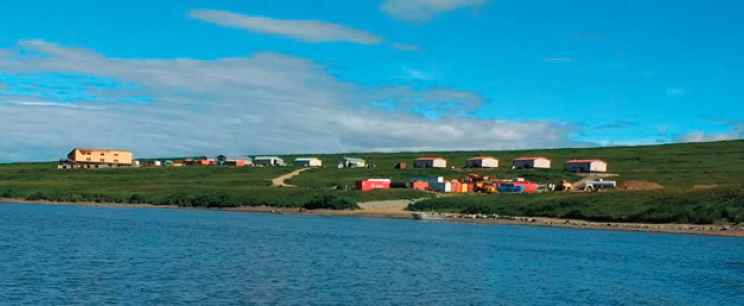
SOURCE: Ristroph, B. (2019). New site for Newtok Village [Photograph].
restrictions is not unique to Newtok’s relocation and is discussed further in more detail in Chapters 9 and 10.
Ristroph (2021) notes, “While each community is different, several factors that have helped Newtok may benefit other communities: strong leadership; unified community vision and policy; a local coordinator serving as a continued point of contact; strong capacity for grant writing; trusted, reasonably priced consultants controlled directly by the tribal government; professional accounting services; and a housing policy to ensure fairness” (p. 337). For example, strong leadership meant there was effective communication (discussed in Chapter 7) between community leaders, residents, and external agencies, which helped to avoid misinformation and to set priorities for the relocation process that aligned with community desires (e.g., housing before plumbing; Ristroph, 2021, p. 335). Additionally, the local relocation coordinator position, funded by the Denali Commission, was held by the same Newtok resident for several years to serve as a “single point of contact” for external entities and provide institutional and local knowledge (Ristroph, 2021, p. 336). The role of coordinators or navigators is discussed in Chapter 10.
It is important to point out that as of 2023, there are a number of households still at the original site in poor conditions, living with the threat of a storm destroying more homes.
Isle de Jean Charles, Louisiana
IDJC is an “island” in Terrebonne Parish, Louisiana, in the Gulf of Mexico’s coastal marshes, about 80 miles southwest of New Orleans. IDJC
is connected to the mainland by a narrow causeway called “Island Road” that was constructed in 1953, but the causeway is increasingly impassable because of high tide flooding, water surges driven by high winds, and flooding.18 The past and present residents of IDJC are primarily of Indigenous ancestry who resettled there while fleeing the series of violent forced removals that accompanied the Indian Removal Act of 1830, together called the “Trail of Tears” (Sand-Fleishman, 2019; see Chapter 4 of this report for further discussion of this history). IDJC once consisted of about 33,000 acres of landmass but has been reduced to less than 400 acres because of the impact of tropical storms, relative sea level rise, subsidence, oil and gas infrastructure, and levee development (Carter et al., 2018; Maldonado, 2019, p. 29; Törnqvist et al., 2008). IDJC was once a protected place within a resilient ecological infrastructure, located amidst complex bayous, swamps, and marshes that mitigated the force of storms; it now is vulnerable and exposed to the nearby Gulf (see Figure 3-3).
In January 2016, through the National Disaster Resilience Competition, HUD awarded 92 million dollars to Louisiana’s Office of Community Development (LA-OCD), of which 48.3 million dollars was allocated to relocate IDJC in the form of CDBG funds (LA-OCD, 2021).19 The purpose of the funds included the development of the relocation site, which became known as “The New Isle,” a 515-acre area of undeveloped rural land about 40 miles north of IDJC in Terrebonne Parish.20 LA-OCD embarked on an extensive community engagement planning process that included interviews, community meetings, an open house, and design workshops where The New Isle would be established so future residents could discuss their vision of their new home and neighborhood (LA-OCD, 2020), as Mark Goodson, a private firm lead for the project told the committee: “[resettlement decision making] is going to take resources, and it’s going to take conversations at kitchen tables to help give folks in those resettling communities the information that they need to get them comfortable with a yes or no decision” (National Academies, 2023a, p. 57). The data-gathering and engagement phase of the IDJC project also included assistance from private firms.21 The majority of eligible households on IDJC decided to relocate (37
___________________
18 More information about IDJC is available at https://islede-jeancharles.la.gov/
19 More information about HUD’s National Disaster Resilience Competition is available at https://www.hud.gov/program_offices/economic_development/resilience/competition
20 More information about “The New Isle” is available at https://isledejeancharles.la.gov/new-isle
21 These firms included Pan American Engineers, Chicago Bridge & Iron Company, and Concordia. More information about this phase is available at https://isledejeancharles.la.gov/sites/default/files/public/IDJC-Final-Report-Update.pdf
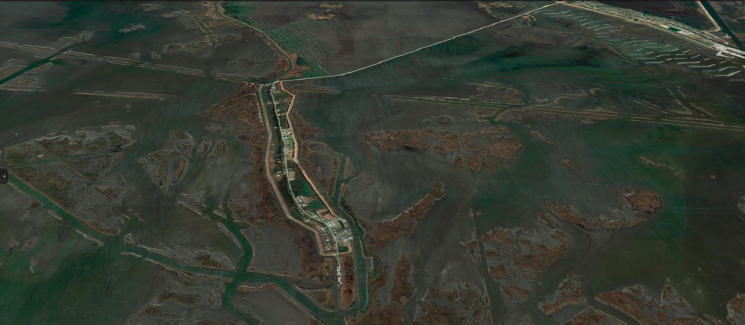
SOURCE: Google Earth. (2023). Isle de Jean Charles, Louisiana, 29°23’39”N 90°28’25”W. https://earth.google.com/web/search/Isle+de+Jean+Charles,+LA/@29.40611415,-90.47644019,-2.61320997a,9848.76718144d,35y,-10.9951822h,34.77168086t,0r/data=CigiJgokCWjLlJZQcj1AES2AkylTYT1AGWsAmkonm1bAIVIYC9IDo1bAOgMKATA
out of 42), and one household decided to move to a location separate from The New Isle (Setyawan, 2021).
In July 2022, the study committee engaged with past and current residents of IDJC during two workshops in southeast Louisiana (National Academies, 2023a). The committee heard differing perspectives on the process and outcomes of the IDJC relocation project. Some past and current residents expressed frustration at the process and outcome, while others were optimistic about their opportunity to relocate. Participants at one workshop relayed that the IDJC project was “an imperfect process, but that it can be used as a benchmark for future projects to do better with gaining increased community input” (National Academies, 2023a, p. 29). One notable policy outcome of the IDJC project, as discussed further in Chapter 8, involved negotiations with HUD and LA-OCD about the right to return to the original IDJC. A solution was reached that allows the original homes of resettled participants to remain intact and guarantees that “they are not used for residential purposes or redevelopment” but as places to use that would facilitate fishing for the previous owners.22 This is an innovative outcome because vacated properties in traditional HUD-funded relocation
___________________
22 More information about island homes after resettlement is available at https://isledejeancharles.la.gov/frequently-asked-questions#q55
programs must be returned to permanent open space.23 If IDJC residents had been required to relinquish all access and the use of their old properties once they resettled in The New Isle, many would not have left (National Academies, 2023a, p. 58).
Across both workshops, the study committee learned that IDJC exposed the complexities and deficiencies of the relocation process. Conflict and disagreements were a common feature among the Indigenous residents and between specific tribes, other stakeholders, and the supervising agencies during the process, and these remain contentious and unsettled. Fundamental questions at the core of the resettlement process were raised during the workshops: How can community, communal, and sacred spaces be preserved after displacement? What economic and political impediments prevent humane and equitable retreat from familiar places to unfamiliar places? Because of this, the question of whether a similar relocation could be effective for a large urban area remains unanswered (Dundon & Abkowitz, 2021; Gibbs, 2016). Furthermore, underpinning these questions is the importance of local history, as this report addresses across the chapters, with particular focus in Chapter 4; the importance of transparency of process and outcome and effective and equitable participation, as discussed in Chapter 7; and the importance of using policy and funding to address the concerns and desires of the communities that are most impacted by relocation (Chapters 8, 9, and 10).
Grantham, Australia: 2011 Flash Flood
Grantham, a rural agriculture community situated in the Lockyer Valley of Queensland, Australia, was severely affected by a devastating flash flood in January 2011, a disaster subsequently described as an “inland tsunami.”24 The catastrophe resulted in substantial human and infrastructural losses, claiming 12 lives and inflicting considerable structural damage to approximately 150 residential buildings located within the floodplain.25 In an attempt to address this calamity, the Queensland Reconstruction Authority (QRA) collaborated with the Lockyer Valley Regional Council (LVRC) to devise a comprehensive recovery strategy termed “Rebuilding Grantham Together.” The strategy was enabled under the Queensland
___________________
23 Ibid.
24 More information about rebuilding Grantham is available at https://www.qra.qld.gov.au/news-case-studies/case-studies/case-study-rebuilding-grantham-together-2011
25 More information about flash flood loss is available at https://www.iag.com.au/sites/default/files/Documents/Aboutus/FinalAppendixA_0.pdf
Reconstruction Authority Act of 201126—an act of recovery and enhanced resilience that was catalyzed by the devastating 2011 flood.27
The LVRC’s proactive leadership was instrumental in kick-starting the recovery program. They first suggested the idea of a land swap, identified the new land parcel, negotiated its purchase, and initiated its development even before any financial support from the state and federal governments was secured (Sipe & Vella, 2014). Within three months of the flood, they procured a 377-hectare parcel of elevated farmland to relocate flood affected residents (Sipe & Vella, 2014). Conventional planning regulations were circumvented in order to expedite the process through a strong collaborative framework involving local, state, and federal governments (Sipe & Vella, 2014). The planning and permitting process was greatly expedited due to the QRA designating Grantham as a reconstruction area (Sipe & Vella, 2014). This allowed the LVRC to bypass many typical land-use planning procedures to secure a safe new area for the community and avoid residents ending up in another flood-prone site (Okada et al., 2014). Further discussion of the complex and multi-level planning required for community-driven relocation is discussed in Chapters 8 and 9.
The LVRC and QRA developed two primary recovery initiatives, the Grantham Master Plan28 and the Land Offer Program,29 and placed a strong emphasis on community engagement. Through a series of regular community consultations, visioning meetings, design workshops, as well as personalized meetings between case managers and affected property owners, the council nurtured a strong sense of trust and confidence within the community (Sipe & Vella, 2014). This community-centric approach facilitated the smooth integration of the Land Offer Program and its lottery-based selection system—a model perceived to be equitable for determining land swap participation (Sipe & Vella, 2014). The value of, and methods for improving, community engagement during the planning and execution of community-driven relocation is discussed further in Chapter 7.
In order to effectively execute these initiatives, the LVRC developed the Grantham Relocation Policy.30 This policy outlines the guidelines of
___________________
26 More information about the Queensland Reconstruction Authority Act of 2011 is available at https://www.qra.qld.gov.au/sites/default/files/2018-10/rebuilding-grantham-full.pdf
27 More information is available at https://www.legislation.qld.gov.au/view/pdf/2017-07-03/act-2011-001
28 More information about the Grantham Master Plan is available at https://www.granthamnh.net/vertical/sites/%7B8E4EE0D6-AAA5-4E63-B5FA-19873AF96E35%7D/uploads/Grantham_Master_Plan_Adopted_2017.pdf
29 More information about the Land Offer Program is available at http://www.floodcommission.qld.gov.au/__data/assets/pdf_file/0005/9599/QFCI_Exhibit_602__Lockyer_Valley_Regional_council__Grantham_relocation_policy_dated_11_May_2011.pdf
30 Ibid.
the Land Offer Program, including eligibility requirements for participation in the land swap, procedures for randomized land allocation, and rules governing the eventual sale of the new properties on the open market. Additionally, all blocks available in the land swap were connected to the municipal water system. Identifying appropriate land with consideration for safety and connectivity to essential services (e.g., water and electricity) is an essential part of community-driven relocation and is discussed in Chapter 8. The first lottery took place in August 2011, marking a significant milestone in the community’s journey toward recovery (Sipe & Vella, 2014).
The enactment of “Rebuilding Grantham Together” aligned planning regulations and infrastructure planning with the Land Offer Program, with the goal of enhancing the long-term sustainability of the communities while promoting self-contained employment opportunities and growth. Recognizing that the local economy is predominantly driven by rural industries and related activities, “Rebuilding Grantham Together” sought to preserve and grow these aspects. It supported the expansion of industries that aligned with the town’s agricultural heritage, such as the processing and packaging of local produce, cottage industries, and small-to-medium-scale incubator businesses. It presented a detailed land-use plan that incorporated coexisting district zones, each designed to cater to a diverse array of community needs and preferences, with a considerable emphasis on flood risk mitigation.
The recovery strategy was further bolstered by an ambitious infrastructure program. The scope of the program included the construction of internal and external roads, establishment of water supply and sewerage systems, implementation of stormwater management strategies, creation of recreational parks, and integration of electricity and telecommunications networks. The program was designed to be self-funded by landowners, thereby ensuring that the new development was fully serviced. A new railway line crossing was constructed to enhance connectivity between the old site and the new development site. Further discussion of the infrastructure needs of receiving communities can be found in Chapter 8.
At the core of the plan was the council’s Land Offer Program. Property owners from flood affected areas were allowed to exchange their land for equivalent-sized parcels in the new town area, with the understanding that they would bear the construction costs. To support this, government funding, insurance payments, and private donations were used for recovery and reconstruction, with state-provided grants available to cover moving costs, utility connections, and initial construction needs (Sipe & Vella, 2014). The LVRC facilitated the process with caseworkers assisting residents with complex legal and financial issues. Moreover, the plan was crafted with a high degree of adaptability to accommodate future changes in technology, economic conditions, sociodemographic trends, and housing preferences.
Finding a comparably sized plot of land that is affordable under the United States’s current buyout system can be difficult, as was described by Houston workshop participant Perla Garcia, who relied on a large plot of land to store trucks for her business (National Academies, 2022c). While the Grantham program was tailored primarily for homeowners, the effects on renters in these areas are not as well known. This opens avenues for further research into the long-term impacts of such policies on tenant stability, relocation options, and the need for more comprehensive support systems for renters which are similar to those available to homeowners.
The LVRC team of six, including the mayor, a chief executive officer, a manager with planning and environmental engineering experience, a project coordinator, a consulting planner, and an engineer, expertly orchestrated the recovery efforts. Despite none being trained planners, their small-team approach expedited decision making and coordination. Through swift action, the LVRC harnessed corporate and community contributions, adding value to the recovery effort (Sipe & Vella, 2014). For example, a local law firm offered free property conveyancing services for the Land Offer Program. This promptness kept costs low, enabling land development to a higher standard than what existed in Grantham previously (Sipe & Vella, 2014). The success of the interdisciplinary LVRC team reflects the value of cross-sector collaboration throughout community-driven relocation, reflected in the broad content of this report from mental and physical well-being to risk communication to land-use planning and federal policy.
Tohoku, Japan: The 2011 Great East Japan Earthquake and Tsunami
On March 11, 2011, a 9.0 magnitude earthquake struck Japan’s Tohoku region, triggering a devastating tsunami that resulted in approximately 20,000 fatalities; destroyed or damaged over a million buildings, predominantly in the Fukushima, Iwate, and Miyagi prefectures (Ranghieri & Ishiwatari, 2014; Reconstruction Agency, 2023); and displaced over 470,000 individuals. To aid in recovery, the equivalent of approximately 265 billion U.S. dollars was allocated to reconstruction and protection efforts; these efforts involved constructing about 145,000 homes, including the infrastructure for entirely new towns, in areas outside the tsunami hazard zone (Pinter et al., 2019).
Japan’s multi-level disaster governance relies heavily on local authorities for executing relief and reconstruction, despite relying on and utilizing national financial assistance. Although not mandatory, Japanese municipalities traditionally develop recovery plans, which may vary at the district level (Thiri, 2022).31 The Basic Recovery Policy for the Great East Japan
___________________
31 A district is made up of one or more rural municipalities within a prefecture.
Earthquake and Tsunami disaster, established on July 29, 2011, was a pivotal step in the national response strategy (Thiri, 2022). This policy advocated a multi-stakeholder approach, in which the national government provided funding, the prefectural government mediated recovery, and municipalities played an essential role as significant participants in the recovery efforts (Thiri, 2022). The policy aimed to not only restore but also transform Tohoku’s structure, industry, and energy sector into a “New Tohoku.” Careful spending and corporate incentives were introduced to attract the younger generation and venture capital, with proposals for self-sustained, renewable energy sources (Thiri, 2022).
Post-tsunami Japan focused on risk reduction and disaster preparedness in its reconstruction, encompassing infrastructure restoration, livelihood support, and housing recovery plans (Miyasada & Maly, 2021; Thiri, 2022). Preserving the social fabric of affected communities was also a core value for Japan’s leadership. The government’s relocation strategy first provided displaced individuals with emergency shelters, followed by temporary and then permanent housing (Hikichi et al., 2017). Emergency and temporary housing provisions consisted of the construction of over 50,000 shelters and the implementation of a system to cover the rental expenses of over 70,000 private apartments designated for temporary accommodation (Miyasada & Maly, 2021). Residents were given several options while still in emergency shelters: choose between collective relocation, where entire communities moved to prefab temporary housing villages, or independent relocation, where individuals moved to public housing via a random lottery; seek accommodation in the open rental market; or build new homes (Maly et al., 2018). These choices allowed residents to choose a relocation option based on their circumstances, such as family size, convenience, or eagerness to leave the overcrowded emergency shelters (Hikichi et al., 2017). Further information on the importance of suitable land and housing for relocation is covered in this report (Chapter 8).
Japan’s recovery strategy also included a significant buyout program as part of collective relocation efforts (Ghezelloo et al., 2023). “Hazardous” areas faced bans on new residential construction, allowing landowners to sell properties to the government and move to safer locations. Collective relocations received greater financial support, with the national government funding 75 percent of the costs, as compared to 50 percent for individual relocations; all are supplemented by local government contributions (Ghezelloo et al., 2023). The repurposing of acquired land played a crucial role, with some areas leased to the private sector for commercial or industrial activities, while others were transformed into green infrastructure for future tsunami protection (Ghezelloo et al., 2023). Moreover, extensive coastal land, particularly in heavily affected prefectures, was converted into memorial parks and museums to serve as places of remembrance and also to
share lessons learned from the disaster and recovery with future generations (Ghezelloo et al., 2023). The study committee’s findings and conclusions related to the use of land post-buyout and collective relocation are covered in Chapter 8 of this report.
To prioritize community well-being and engagement, the Japanese government’s post-disaster strategy took into account local needs and aspirations. Citizens actively participated in developing master plans for each area, ensuring that the restoration of public infrastructure and the creation of safer environments resonated with residents (Pinter et al., 2019). Transparent dissemination of detailed development plans empowered affected individuals to envision their future lives (Reconstruction Agency, 2023). In Kitakami, a remarkable community-led initiative involved a local planning committee collaborating closely with government officials, architects, and researchers. They strategically planned and developed eight new communities on elevated land, located within 3–4km of the original villages. Seven of these communities served as direct replacements, preserving proximity and familiarity, while the eighth was designed as a mixed community to accommodate any tsunami-displaced residents (Pinter et al., 2019).
In service of the government’s focus on preserving the social fabric, initiatives were implemented to ensure a smooth integration of residents into their new communities. Designated community members conducted wellness checks on vulnerable individuals twice a day. Inclusive spaces, like the Ibasho House in Ofunato City, were established as connectivity hubs, encouraging senior citizens to engage in community-led activities and fostering a sense of belonging (Pinter et al., 2019; Thiri, 2022).32 An extensive network of welfare services, including trained social workers and volunteers from nonprofit organizations, was mobilized to support the overall wellbeing of displaced people. This collaborative effort aimed to provide ongoing comprehensive care, guiding individuals along the path to recovery until they could fully resume normal lives (Reconstruction Agency, 2023). The study committee examines the critical importance of the well-being of displaced and potentially displaced individuals and communities in Chapter 6.
To aid homeowners in the transition to higher, safer locations, a comprehensive package of donations, government subsidies, subsidized loans, and buyout payments was provided, covering approximately 40 percent of relocation and rebuilding costs (Pinter et al., 2019). Special emphasis was placed on reviving key industries like fisheries, agriculture, and tourism, which formed the region’s economic backbone (Reconstruction Agency, 2023). Furthermore, extensive public housing was constructed to accommodate low-income and elderly residents who otherwise were unable to bear the additional costs. Despite political unpopularity, a 2.1 percent
___________________
32 More information about the Ibasho House is available at https://ibasho.org/about-ibasho
income tax surcharge was accepted by Japanese citizens to aid in recovery costs (Ranghieri & Ishiwatari, 2014). This collective response was not just a reaction to the massive scale of the tsunami disaster but was also rooted in a shared national history of disaster recovery and shared cultural traditions (Pinter et al., 2019).
SUMMARY
This chapter briefly reviewed a long history of relocation efforts in the United States and took a closer examination of several more recent (post-2000) relocation efforts in the United States and abroad. A comprehensive review of past and present relocation efforts is beyond the capacity of this study; however, among others, see Bower et al. (2023) for a review of flood-related relocation cases, Pérez and Contreras (2022) for a review of relocation and resettlement initiatives with informal communities in Puerto Rico, and the Georgetown Climate Center (2020) for lessons and tools from 17 cases of relocation from the United States that were not covered in this chapter.
This chapter concludes Part 1 of this report. The next chapter starts Part 2, Understanding Relocation and the Gulf Region, by delving into the history of the region, focusing on its long history of adaptation and movement as well as the historical legacies that will shape any community-driven relocation effort in the future.
This page intentionally left blank.


