Meeting Future U.S. Mineral Resource Needs: The Role of the U.S. Geological Survey Mineral Resources Program (2025)
Chapter: 6 Data and Products
6
Data and Products
LABORATORIES AND DATA ACQUISITION
Overview
The U.S. Geological Survey (USGS) Mineral Resources Program (MRP) supports a wide range of high-quality geochemical laboratories, offering broad analytical capabilities supporting itself and programs across the USGS. Strong analytical geochemical capabilities exist at each of the three main USGS campuses—Reston, Denver, and Moffett Field—as well as smaller analytical equipment infrastructure at the other science centers. Essential geochemical equipment, such as electron microprobes, exist on multiple campuses, whereas more specialized equipment, such as the Sensitive High Resolution Ion Microprobe on the Stanford campus, is only funded for one location. Many of the laboratories serve and are partially funded by other programs within the USGS in conjunction with MRP. Two examples of such laboratories are the Ar-Ar geochronology laboratory, which serves MRP and the FEDMAP geological mapping program, as well as the stable isotope laboratory, which serves multiple programs.
In addition to in-house capabilities, some geochemical analyses for USGS or USGS-funded researchers and, in particular, the Earth Mapping Resources Initiative (Earth MRI) are done externally by commercial laboratories accredited and certified by the International Organization for Standardization (ISO). Currently, USGS contracts with a Canadian company for Earth MRI geochemical analyses. While the committee recognizes that externally contracted analyses afford greater efficiency than would be possible if analyses were performed in-house by the USGS, this reliance on outside laboratories relinquishes some USGS control over prioritization and timeliness of sample analysis.
Acquisition of new geochemical instrumentation and upgrades to existing laboratories by request are funded internally when funding is available. The exact mechanism for
laboratory personnel to acquire funding for new instrumentation or upgrades to existing instruments, however, is ambiguous. Additionally, no clear cross-campus strategic plan for analytical geochemistry instrumentation was shared with the committee by USGS leadership or laboratory personnel. The committee sensed that instrument purchases or upgrades were controlled by when funding was available rather than being strategically driven.
Challenges and Opportunities—Laboratories
Geochemical Laboratories
Despite this seemingly ideal environment for laboratory success that includes state-of-the-art equipment with capable operators and sufficient time for staff to conduct research and method development, some laboratories have experienced barriers to productivity. The Denver-based laboratories at the Federal Center recently moved out of an antiquated building to a more modern facility, and they will soon move again to a new building on the Colorado School of Mines campus. These moves each represent an improvement in laboratory space, but each incurs a loss of analysis time while the machines are relocated. However, in the long run, the moves are expected to be positive.
A significant challenge currently facing MRP laboratories relates to data quality and integrity concerns that the USGS Energy and Mineral Resources group dealt with several years ago (OIG, 2016, 2024; NASEM, 2019). In response, the USGS imposed much more rigorous data quality protocols on all Energy and Mineral Resources Mission Area (EMMA) laboratories. The protocol is called the EMMA Quality Management System (QMS). While the incident required a response, the encompassing approach taken in USGS laboratories may not be effective and may not ultimately improve analytical quality. A set of laboratories as diverse as those housed in MRP need to have quality assurance/quality control (QA/QC) protocols tailored to individual instruments and data requirements. Individual laboratory directors and staff are the best people to develop these protocols, in collaboration with their respective analytical communities. Some of the tasks undertaken by the USGS QMS specialist include “continuous improvement, quality culture, risk-based thinking, internal controls (quality controls and management controls), root cause analysis, corrective and preventive actions, implementing and understanding ISO standards and establishing audit programs for private and Federal organizations.”1 In some instances, laboratories that have both EMMA and non-EMMA users have two separate analytical protocols for the same instrument, depending on the user. This is not the best practice for generating high-quality analyses. Some USGS staff feel that the EMMA QMS is burdensome, ineffective, and unevenly applied.
Because the EMMA QMS protocols were implemented relatively recently, an assessment of their value could be timely. Three top-level questions might be as follows:
___________________
1 See, for example, https://www.usgs.gov/staff-profiles/michele-wolf, accessed April 7, 2025.
- What is the additional time burden imposed on laboratory staff in order to operate under EMMA QMS? (See Recommendation 4.)
- Is analytical quality quantitatively (not philosophically) better than it was prior to EMMA QMS?
- Would the current EMMA QMS protocol prevent data falsification?
A final challenge in several laboratories is loss of personnel or difficulty in hiring, as discussed in the section on Staffing and Workforce in the section Staffing, Workforce, and Training in Chapter 5. In some areas, the retirement to new hire ratio is 3:1. Staffing problems are one reason why the National Geochemical Database (NGDB) is many years behind in making data available to the public. MRP’s analytical capabilities would be enhanced by assessing the number of personnel required to run the laboratories and developing a strategy to keep laboratories appropriately staffed.
Continuing to operate high-quality geochemical laboratories would support the wide range of research programs currently active in MRP. However, a strategic vision for replacement/upgrades on analytical equipment and a thoughtful examination and revamping on EMMA QMS protocols could result in greater efficiency and vision within the program while maintaining excellent analytical quality.
The USGS can maintain its strong analytical capabilities by developing a plan to create a balanced and appropriate portfolio for geochemical laboratory equipment, perhaps as part of an overall strategic plan (see Recommendation 6). Part of this plan could create a transparent mechanism and associated funding protocols for laboratory personnel to be able to develop a long-term vision for their laboratories, including upgrades and eventual replacement of existing equipment.
While in-house analytical capabilities are robust, MRP could examine the balance of in-house laboratories versus the use of contract laboratory facilities, building on the current balance. As part of this assessment, MRP could determine what type of analyses could be done appropriately, with suitable quality and efficiency by a contract laboratory and, based on this assessment, examine the economics of in-house versus contract analytical work in an effort to reduce costs. MRP could consider the advantages and disadvantages of contracting out analyses. For example, by helping to support outside capacity, the exacting scientific standards required for the analyses of USGS samples could become the de facto standards for industry.
Petrophysical Laboratories
The USGS currently does not have the capacity or the laboratories for petrophysical measurements (i.e., density, magnetic susceptibility, inductive conductivity, galvanic resistivity, chargeability, and permittivity), which can be important for characterizing areas that are prospective for minerals. In the past, these measurements were undertaken by specialists who have since retired; currently, analyses are conducted on an as-needed basis. Where geochemical analyses can be conducted by an abundance of outside laboratories, few external laboratories in the United States, Canada, or Australia have the capability and expertise to conduct petrophysical analyses on a commercial basis.
While in-house capabilities might be preferred, likely insufficient work exists to equip and staff a USGS petrophysical laboratory economically. This problem is not USGS-specific—for example, Geoscience Australia has no petrophysical laboratory capability, and the Geological Survey of Canada could conceivably close its laboratory when the current laboratory manager retires. The lack of external laboratories to provide this service to the USGS and industry means that the USGS has to rethink how it can help to build and maintain capacity in the United States. Opportunities may be available for coordination and collaboration with industry or other national geological organizations or academia to ensure that expertise in petrophysical measurements will be available on a continuing basis. One example of a collaborative model is the European Petrophysics Consortium, but other models that allow industry participation could also facilitate successful exploration.
Conclusion 6-1: The Mineral Resources Program (MRP) operates robust analytical laboratories with appropriate redundancy and relies on both in-house and contract analyses, but it lacks a clear strategic framework for equipment planning and laboratory staffing. Developing and implementing a strategic plan to examine the portfolio of analytical equipment, guide equipment acquisition, determine which analyses could be conducted more efficiently and more cost-effectively by outside contractors, and review quality assurance/quality control protocols would strengthen MRP’s analytical infrastructure and long-term scientific capacity.
DATA PRODUCTS AND DELIVERY
Overview
Data collection, analysis, and delivery have been the foundation of USGS science since the organization’s inception and continue to be a central part of the MRP science portfolio. Over more than 100 years, MRP and its predecessors have acquired the nation’s most comprehensive data on mineral resources through continuous large-scale data collection and reporting. For industry, USGS data have been essential for decision making and scientific understanding of mineral systems and have been used by government scientists, academics, and mineral explorationists. This section focuses on MRP’s data products and data-delivery efforts—specifically, the challenges associated with growing demand for these data and increasing data size and complexity, efforts to distribute data efficiently to all stakeholders and partners, and opportunities that exist as new technologies for data storage and analysis are developed. Within this report, data collection efforts are primarily described within sections focused on individual programs, whereas this section focuses on the delivery of data products.
Data products from MRP consist of three broad categories: individual datasets (data releases, reports, or similar vehicles), aggregated datasets (databases or compiled datasets), and integrated datasets (geospatial tools incorporating multiple datasets and data types). Individual datasets are most useful for specific projects and domain experts, whereas aggregated and integrated datasets have broader applicability. In addition to the
USGS-wide ScienceBase website,2 individual datasets can be found within the websites of individual projects or linked from thematic USGS websites. The National Minerals Information Center (NMIC) stores data on the NMIC website. Additional aggregated and integrated MRP datasets are listed within the Mineral Resources Online Spatial Data repository, known as MRData,3 which houses many individual geospatial datasets on geology, geochemistry, geophysics, and mineral resources domestically and globally. Many datasets feature interactive maps that present geological frameworks, mineral-deposit locations, geochemical information, and geophysical data.
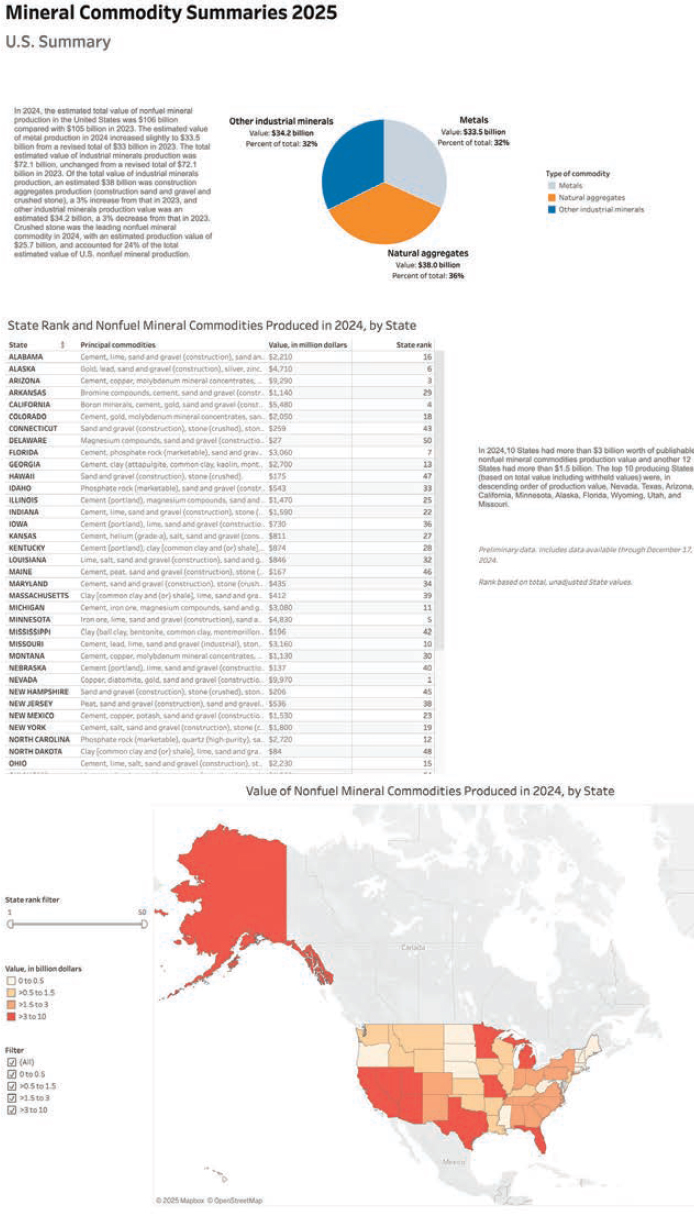
NMIC data are generally not integrated with data from the other parts of MRP. However, these data are among the most widely used and impactful data that MRP produces, including for international partners and agencies, geologic surveys, private analysts, governmental entities, media, and many others. NMIC recently began to release the Mineral Commodity Summaries in web-based interactive format (see Figure 6-1), increasing the accessibility of its data and analysis.
Challenges and Opportunities—Data Products
As affirmed by many individuals, groups, and questionnaire respondents, MRP data are essential to many stakeholders, widely used, and trusted. One state geological survey questionnaire respondent noted the following:
The new geophysical data provided has been instrumental in supporting various mineral, mapping, and energy projects at my survey. The updated mapping efforts have enabled us to remap regions and identify previously unmapped geologic hazards and faults, which have societal implications beyond just minerals. This data is [sic] also being utilized for geohazard assessments and water resource studies. Furthermore, private companies have requested access to our geophysical, mapping, and sampling data, demonstrating the value and utility of MRP products to a broad range of stakeholders.
Responses from the questionnaire on data utilization highlighted the high quality and value of MRP data. However, many respondents identified key areas where improvements to the data storage and dissemination infrastructure would increase accessibility, usability, and impact. For example,
It is extremely hard to find the data itself to download and it tends to have so much metadata that it’s very difficult to work with. The USGS website is very nested and organized by programs/projects rather than by data.
The USGS data strategy for 2023–2033 articulates a vision that includes “maximizing the utility of USGS data based on stakeholder needs, promoting data innovation, coordinating common data practices, modernizing our USGS enterprise data architecture, and enhancing our data-centric culture” (Hutchison et al., 2024). The challenges
___________________
2 See https://www.sciencebase.gov, accessed April 7, 2025.
3 See https://mrdata.usgs.gov/, accessed April 7, 2025.
SOURCE: USGS, 2025.
and opportunities the committee sees for MRP align with the USGS strategy articulated by Hutchison et al. (2024):
- Delivering high-quality, peer-reviewed metadata to support the proper use and interpretation of data products by any user;
- Modernizing the USGS data infrastructure to increase interoperability, scalability, and timeliness of data availability; and
- Continuing to build a workforce of the future that emphasizes a strong data-centric culture, with the skills to responsibly and ethically implement artificial intelligence (AI) and other data analysis tools to move critical mineral science forward.
Below, the committee outlines several examples of how MRP data products and delivery have the potential to improve to meet the growing demands of country-wide, complex data collection and examples of ways that the MRP workforce can be strengthened to meet these demands.
Data Products
Currently, aggregated MRP data are dispersed over multiple databases, often designed and managed by individual scientists or laboratories, or orphaned from completed projects. The MRData website lists dozens of datasets, some of which are integrated with spatial tools and some of which have some search functionality, however many of these databases are static or orphaned despite more recent data collection. While the MRData website may be comprehensive, it suffers from issues of duplication and a lack of integration. For example, certain datasets can be accessed in multiple ways; multiple datasets covering similar data types can confuse users (e.g., eight separate databases contain soil geochemistry data).
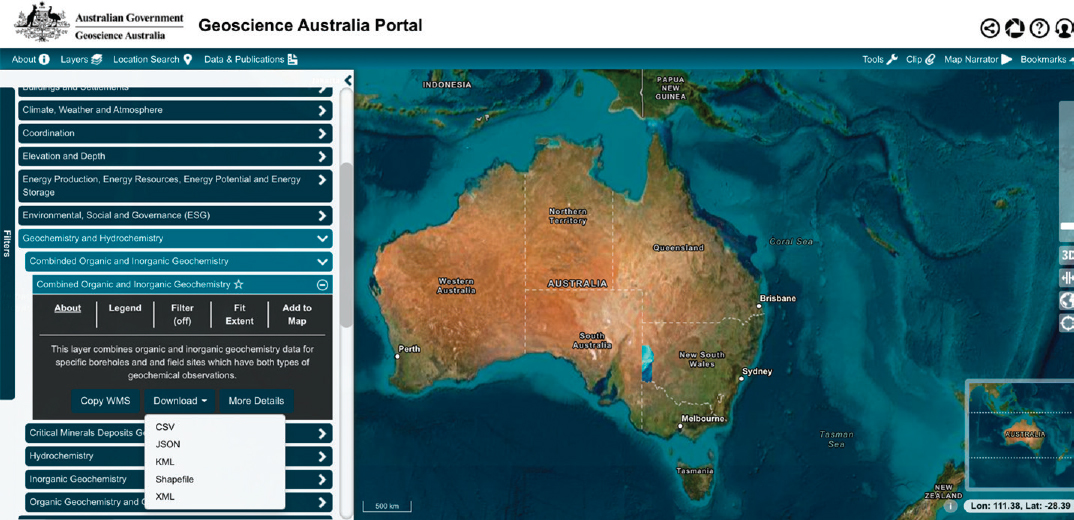
Many questionnaire respondents suggested establishing comprehensive integrated geospatial tools. A more integrated and user-friendly data delivery platform, such as that provided by Geoscience Australia4 (see Figure 6-2), would better distribute data to all users through a centralized data collection and search space and avoid duplication and uncertainty. The committee learned that Geoscience Australia staff are required to use the same data platforms internally as those available to the public; this is an effective practice to promote self-criticism of data delivery tools. This may also prevent legacy data from disappearing and ensure that the datasets are updated continuously as new information is acquired. A central portal for data will also ensure that digitization efforts for historical data are easily integrated with newly collected datasets.
Some effort to integrate datasets more widely appears within the Earth MRI Data Acquisition–Compare with USGS Data tool.5 However, this tool is listed as “currently under revision.” A single integrated portal was part of the original Earth MRI
___________________
4 See https://portal.ga.gov.au/, accessed April 7, 2025.
5 See https://mrdata.usgs.gov/earthmri/data-acquisition/map-us2.html, accessed April 7, 2025.
SOURCE: https://portal.ga.gov.au/, accessed April 7, 2025.
plan (Day, 2019) but has not yet been fully implemented. Prioritizing this work could greatly enhance discoverability and utilization of Earth MRI data and serve as a model for broader integration of MRP data (see Recommendation 4).
Timely Delivery
In the past few years, Earth MRI data generation has accelerated and outpaced the ability to process and release the data, resulting in programs “drowning in data.” During the committee’s site visits, MRP staff expressed that the uncertainty of funding for Earth MRI following fiscal year 2026 has resulted in data collection, rather than processing and interpretation, being prioritized. As a result, the time from data collection to release can be unpredictable, often taking more than a year, and the time to integration within databases can be even longer. For example, the NGDB only includes data that are available to the public and were collected prior to 2009. This sentiment is reflected by some state surveys, with some respondents noting “long delays” in certain types of data or confusion on the timelines of release, which are often “not announced.” While this experience is not universal, improving delivery speed and transparency of data release dates can benefit all stakeholders and should be a priority for MRP (see Recommendation 4).
Some possible methods to accelerate data delivery include the following:
- Streamline QA/QC process. Many MRP staff believe that the EMMA QA/QC process only adds unnecessary administrative burden without improving data integrity.
- Hire non-Ph.D. staff. Steps such as validating data, formatting data, conducting QA/QC, providing metadata, generating publication-quality maps, and copyediting can be accomplished by trained non-Ph.D. staff to relieve the burden of technical and administrative tasks from the scientists.
- Promote a data-centric culture. Data delivery and use provide an opportunity to be at the forefront of mineral science. At all stages, considering how a project’s data can be best distributed and used externally, rather than just “getting it out there,” can help to improve consistency and efficiency of data delivery. Rapid data publication could also be incentivized in the staffing structure and performance review and promotion process.
- Publish preliminary datasets. In this approach, relevant raw data with minimal interpretation can be made publicly available as soon as possible for use by technical experts. This can be followed by a release of more levels of data processing and interpretation for use by the general public. Contractors can also be required to deliver data in more readily publishable formats, further speeding up the process. Such a multi-staged data-release process could fast-track the publication of raw data and progressively refined versions, promoting timely access for industry, researchers, and other users at the stage they require the data.
- Publish partial datasets. Incomplete data acquisition can delay the release of entire datasets. Data release timeliness could be improved by providing data as they become available. For example, with the geophysical data collection over Puerto Rico, the vast majority of data was ready for release, but delays in collecting the last small amount of data resulted in a delayed release of the entire dataset.
Scope of Delivery
To increase the use of data, MRP is encouraged to think about the scope of data delivery more broadly. For example, newly published data are rarely promoted or advertised to stakeholders and partners (see Chapter 7) and are not integrated into live centralized databases for easy discovery. Consequently, potential users are not aware of the vast amount of high-quality data MRP publishes. Some questionnaire responses from state geological surveys and internal MRP staff noted that data releases were not even publicized to collaborators, policy makers, the public, or other scientists. Renewed focus on results with quantifiable metrics showing progress can help demonstrate the value of MRP and its programs, sell its successes, ensure its long-term future, and ensure its data are being used to the greatest extent possible. MRP risks underuse of its valuable resources by not promoting data products effectively, limiting their contribution to scientific innovations and industry applications.
Closer engagement with stakeholders, as described in detail in Chapter 7 and Recommendations 5 and 7, would provide many benefits to MRP, including increased data visibility and use beyond formal scientific partnerships. Put simply, MRP data cannot be used if potential users do not know they exist or cannot easily find them. And if they cannot be used by the relevant stakeholders, then those data lose their impact. Ensuring that MRP data collection directly helps the United States meet its mineral resource needs requires effective distribution of data through efficient digital methods so that all stakeholders remain informed of new data, can easily work with data using modern data science tools, and can find the data easily in internet data portals.
Data Formats
Standardizing data release formats is one of the most difficult challenges in data science and is especially problematic for complex geologic data, particularly when both legacy and modern data are involved. The process of data standardization, sometimes known as schematizing, is a critical step in data storage and analysis as it makes the data uniform, recognizable, and importable to various codes and software that increase the efficiency in the application of AI and data science tools. A set of generalized and well-documented standards for various types of data is missing and, therefore, needed. This includes releasing geochemical data in a standardized table format, releasing geophysical data with all the necessary metadata and intermediate processing steps, and ensuring that legacy data meet the same standards as the newly collected datasets. Integrating and formatting these data is not a glamorous task but will ensure that newly
acquired and legacy datasets meet the requirements of modern machine learning and AI technologies for resource evaluation.
The vast amount of historical data held by the USGS is an invaluable asset. Decades of research and knowledge are stored in old files and nondigitized formats such as maps or data sheets. Digitizing these maps, reports, and documents will make them accessible for modern applications, including machine learning and AI-driven analysis, and unlock their full potential for advanced research and transformative insights. This application of AI is low-hanging fruit with the potential for large returns on investment that could save staff tedious hours of work. Meanwhile, this is also an opportunity to standardize data formats for easier storage, accessibility, and data-driven analysis. Given the vast volume of data that MRP is collecting and planning to collect, a structured ingestion methodology would help to centralize and streamline historical data, ensuring they are ready for diverse applications.
Additionally, making data available in multiple formats can increase accessibility and usability. For example, a geophysicist might want to look at a profile database while a geologist may prefer a map. Reading software into specialist airborne geophysical packages can involve proprietary file formats or those in industry-standard open formats, such as the ASEG-GDF2.6 Having data available in multiple formats can make the data more accessible for users. Data are also more likely to be used if the USGS allows third parties to serve the data, such as occurs with the Geosoft DAP.7
Data Workforce
The current specialized working culture in MRP is increasingly incompatible with the demands of modern data-driven science for mineral resources. The lack of data science and engineering experts, resources, and a data-centric culture for handling large volumes of data poses a challenge to MRP’s data-distribution efforts. Most MRP scientists are not trained in data science methods or computer science, which means that the current workforce and culture are not well suited to building a world-leading data platform. This has resulted in massive amounts of data coming in the door (e.g., Earth MRI) but insufficient capability to process and make those data available in a timely and user-friendly format.
Building a world-class mineral resource platform requires a team of professional data scientists and computer scientists who are trained in the skills necessary to create storage mechanisms efficiently for larger datasets that are easily accessible by all partners and stakeholders, allowing them to analyze those data using the most cutting-edge technology available (see Recommendation 4). It also requires a working culture that encourages close collaboration between the data scientists and domain experts (i.e., geologist, geophysicist, geochemist, and commodity expert) and incentivizes data release and accessibility (Recommendation 4). Specialized software engineering and data science teams for designing and maintaining a user-friendly data platform would
___________________
6 See https://www.aseg.org.au/resources/aseg-techincal-standards/, accessed April 7, 2025.
7 See https://www.seequent.com/help-support/dap/, accessed April 7, 2025.
allow data from individual laboratories to be consolidated into a single access point. Such teams could also assist in many other ways including digitizing historical data, ensuring data quality, and formatting the data in a way suitable for broad utilization. They could also design tools for tracking data use and automating data collection efforts from public data available on the internet (see Chapter 4, Mineral Information and Supply Chain Analysis; Chapter 5, Staffing, Workforce, and Training).
NMIC Data
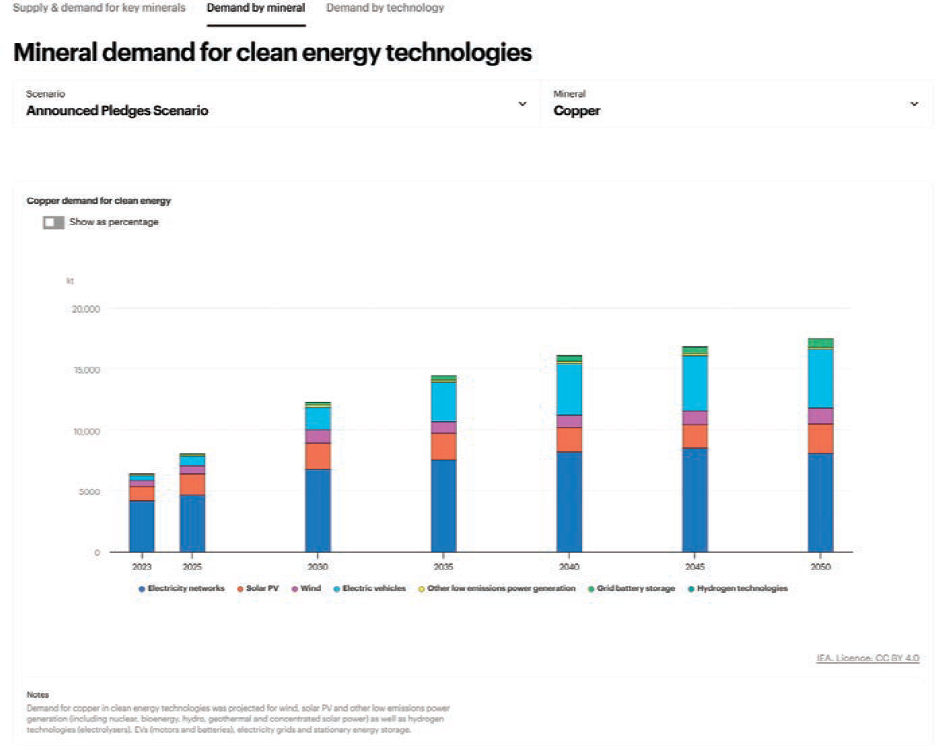
The data and analysis produced by NMIC have distinct characteristics that make them different from the geological data discussed above. In general, specialists are familiar with NMIC data types and schedules, which provide the foundation for assessing the complex economics of critical minerals. Specialized staff at NMIC have made effective use of the new web-based interactive Mineral Commodity Summaries to begin the process of bringing the data to an even wider audience. However, the tool mainly provides data for each individual year, complementing the written report but limiting its broader functionality. A broader tool that looks across years, scenarios, and applications, such as the International Energy Agency’s (IEA’s) interactive Critical Minerals Data Explorer (see Figure 6-3), could further enhance engagement with broad audiences. While continual improvements in data storage, analysis, and dissemination are necessary to ensure that the most advanced methodologies are being used, NMIC is an example within MRP of a group that has embraced big data and is using and communicating them well. Continuing this data-driven culture will be critical as NMIC begins to take on more modeling and forecasting.
Conclusion 6-2: Mineral Resources Program data are essential, widely used, and trusted. Improving data delivery speed, scope, and interfaces is necessary for stakeholders to access data in appropriate forms and will greatly enhance data use. A change in culture to a data-centric organization and the use of dedicated professionals are necessary to accomplish this.
SOURCE: https://www.iea.org/data-and-statistics/data-tools/critical-minerals-data-explorer, accessed April 7, 2025.


