Schrödinger's Rabbits: The Many Worlds of Quantum (2004)
Chapter: 12 Many-Worlds Heroes and Dragons
CHAPTER 12
MANY-WORLDS HEROES AND DRAGONS
As we have seen, the battle between proponents of different quantum interpretations has raged for the best part of a century. To my great delight, it is Oxford that has served as the champions’ arena for the latest, and I believe probably last, stages of the debate. Oxford is home to David Deutsch, principal champion of the many-worlders, and Roger Penrose, internationally famous defender of the classic single-world view. The two principal devisers of experiments to test the foundations of quantum, Anton Zeilinger and Lev Vaidman, have spent extended periods in town as guests of the University. Oxford’s trailblazing Centre for Quantum Computation—now in a sense a victim of its own success, for after an influx of funding it has become a joint Oxford and Cambridge facility, and many new quantum computing centers are springing up worldwide—has attracted researchers whose interest included the practical as well as the theoretical. And so it has been that at conferences and seminars in Oxford, and down the road in London, all the above and many other leading figures have come to speak and defend their views, and to be subjected to polite yet probing questions by their fellow physicists and philosophers of physics such as Simon Saunders, Harvey Brown, and Jeremy Butterfield.
I have given Penrose and Zeilinger chapters of their own. In this chapter I want to focus on the remaining difficulties of many-worlds: How is it that such committed many-worlders as Deutsch and Vaidman, who might seem to outsiders to share extremely similar beliefs, can both describe themselves as in fundamental disagreement about the basic assumptions of the theory? Are the differences as deep as they seem? How much remains to be resolved?
Counting Worlds
There is one acknowledged problem lurking at the heart of many-worlds. It has to do with the relative probability of different quantum outcomes, and the world lines that follow from them.
In simple illustrative cases, we tend to demonstrate the phenomenon of decohering worlds with the quantum equivalent of a coin toss, a measurement with two equally probable outcomes. That situation can be illustrated very simply by a symmetrically branching tree. But in general—carefully contrived experiments excepted—different quantum outcomes are not equiprobable. For example, if we make a photon hit an angled sheet of glass, we can make the probability of reflection anything we like just by adjusting the angle, say, 1/7. If, like me, you are a visual thinker, it seems obvious to illustrate this in many-worlds terms by using a tree with branches of proportional width, as in Figure 12-1a.
But this is only a visual metaphor. What are we actually trying to represent by drawing the branches at different widths? Perhaps 12-1b is a better attempt, but it implies that each branch contains multiple distinguishable worlds, which is not the case either. Only two different, distinguishable, worlds have been created by this one quantum event. And in any case, any attempt to generate integer numbers of worlds to get the correct ratios is doomed. If we tilt the glass so as to make the probability of reflection not a simple fraction, but something like π/4, we will need infinitely large numbers on each side to get exactly the right ratio. Even then we will have problems, because a mathematician will tell you that infinity is just infinity; you cannot have one infinity that is six times as big as another, or indeed any finite ratio.
Infinities always lead to problems. However, let us stomp on one fallacy right away. I have often heard people who should know better say something like this: “If many-worlds implies that an infinity of versions of reality exists, then that must include every conceivable kind of reality, including versions where many-worlds is wrong, or the laws of physics don’t work at all.” Even the first step in this argument does not hold. Just because a set is infinitely large, it does not need to include everything. For example, the set of all even positive integers {2, 4, 6, 8….} is infinitely large, but there are many, many categories of things it does not contain. We can instantly see that none of the numbers 7, −4, or 3.14159 are members, for example; nor is the square root of −1. Similarly the mathematics of quantum might imply an infinity of worlds, but that still means only worlds that follow very specific rules.
But coming back to the problem at hand, how can we generate the “correct” answer, which should tell us that we are somehow six times more likely to end up in the right branch than in the left one? When Everett invented the first many-worlds theory back in the 1950s, he simply proposed a concept called “measure.” Everett posited that when outcomes diverged (he did not use the term “splitting worlds”), your subjective likelihood of ending up in a particular branch was in proportion to its measure. Many physicists feel that this effectively introduces an extra dimension into the many-worlds representation, justifying the representation in Figure 12-1c, where the measures of the branches are indicated by depth as distinct from width.
This greatly troubles some many-worlds supporters, in particular the notion that measure might imply infiite numbers of worlds. They are concerned about the anti-many worlds argument:
“The only possible reason for accepting the many-worlds formulation, with its absurd extravagance of universes, is its economy of assumptions compared to other explanations of quantum theory. OK, we can interpret Occam’s razor to say that we should go primarily for economy of assumptions. Avoiding the need for any new laws of physics is therefore the first priority; ontological economy, postulating the minimum number of worlds, galaxies, universes, or whatever is secondary. So if many-worlds can really explain things with no extra
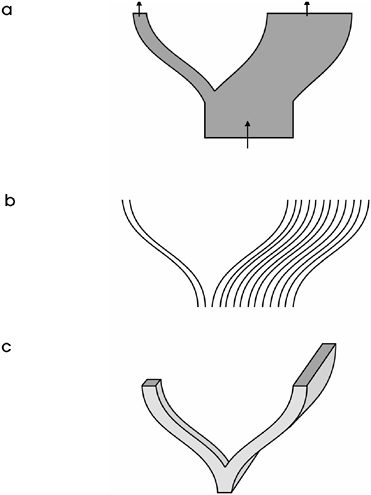
FIGURE 12-1 Branches of unequal probability:
(a) Relative probabilities represented by width of the branches
(b) Realtive probabilities represented by numbers of the branches
(c) Relative probabilities indicated by depth or measure of the branches.
physical rules needed, it wins. But if we do, after all, need some new physical assumptions—postulating a kind of extra depth of dimension to reality, for goodness sake!—then the advantage of many-worlds vanishes. In that case it is much more sensible to choose some other interpretation that might need an extra physical postulate but does not also imply an infinity (or at any rate a vast number) of extra universes.”
This argument became trickier to refute as it became evident that
for Everett’s concept to work properly, it may be necessary to make further assumptions about the way measure behaves. We can illustrate with a simple example, as shown in Figure 12-2, where, after inducing one world-branch by tossing a quantum coin, in one branch only we immediately introduce a second branch, with a second quantum coin-toss.
We might naively reason as follows, “There are two distinct branches where the coin came up tails the first time, and only one, in which it came up heads the first time. So at the start of the experiment, it makes sense to bet money the coin will come up tails on the first toss, even if the odds we are offered are less than even—say, if we have to risk a dollar against the chance of winning 70 cents if it is tails.” Our intuition rejects the idea that this would be a sensible course of action. But why? To justify turning down the bet, we must make certain mathematical-philosophical assumptions about the way measure works.
All the main defenders of many-worlds have thought long and hard about these problems. The issue has divided them, because although they have answers to offer, in general they are not the same answers. So, let us take a look at these supporters and their camps.

FIGURE 12-2 Consecutive branches.
Lev Vaidman
Lev Vaidman is one of the many counterexamples to the stereotype of theoretical physicists as cold and remote. Very much a family man, he ensures that his sister’s violin concerts are advertised in physics department e-mails and occasionally rushes apologetically from a seminar to collect his child from school. Based in Tel Aviv, he recently spent a year as a guest at Oxford University.
Vaidman is a passionate believer in many-worlds and, like David Deutsch, can claim that this way of looking at quantum led him to a technological breakthrough—the Elitzur-Vaidman “bomb tester” was the first zero-interaction quantum measurement device to be constructed. A small, puckish man with a sense of humor, he does not mind telling “Lev” stories that make himself look slightly foolish, if it helps to keep his audience’s attention and to get his point across clearly. But he is a theoretician as well as an experimental physicist and, indeed, the author of the authoritative Stanford Encyclopedia of Philosophy’s article on many-worlds.1 His answer to the probability problem is to propose a slight rewording of Everett’s original measure postulate as follows:
The probability of an outcome of a quantum experiment is proportional to the total measure of existence of all worlds with that outcome.
As regards the practical taking of decisions, Vaidman points out that when world lines decohere, we do not know the details until well after the fact. He highlights the point with a story. In this parable, Lev is asked to make an advance bet on the result of a quantum coin toss (perhaps lighting a red or green lamp, depending on which of two equally probable paths a photon takes). Before the apparatus that makes the coin toss is activated, he is given a sleeping draught. When he is awoken, he is asked, “Before the experiment was done, you decided to make a bet that would make you rich in one measure of future worlds. Now you are in a different situation; you are in a specific world where the outcome of the quantum coin toss is known, although you do not know it yet. Would you like to change your bet?”
Lev’s point is that he has no rational grounds to change whatever bet he decided to make before the quantum coin toss was done, so
there is no practical difference between the classical ignorance interpretation of probability and the quantum all-outcomes-will-actually-happen case. Even in less contrived situations, such as a classical coin toss, it takes time for the different quantum outcomes that are occurring all the time at the microscopic level to be amplified by classical chaos effects to produce sets of worlds sufficiently different that macroscopic events will be different. At a rough guess, the relevant time lag for a difference large enough to make a coin land the other way up might be on the order of 1 minute.
If you bet on the outcome of a classical coin toss and lose, you know that there are worlds containing other versions of you that won—but those other versions had already decohered from your world, about 1 minute earlier. If, on the other hand, you bet in advance on a quantum coin toss that lights a red or green light, by the time you become aware that you have lost, you can assume that you won in worlds that decohered from yours less than a second previously. But your knowledge is always retrospective (because of the finite speed at which neurons fire, and so on), so there is no practical difference between tossing quantum coins and classical ones.
Vaidman could be described as a fundamentalist Everettian, who feels that Everett’s original ideas were spot on, and that later concepts—including decoherence, consistent histories, and some of Deutsch’s results described below—have been unnecessary to its understanding. He has his own particular take on the question, does measure require large, maybe infinite numbers of each world-line to generate the correct probability ratios. Vaidman has no time for infinities. For him, measure has no more meaning than it is postulated to have. You could perhaps (very loosely) think of it as a kind of tag attached to each world-line with a percentage value written on it, but certainly not in terms of huge stacks of each world-line.
David Deutsch
David Deutsch is to be respected for the courage of his convictions as regards many-worlds. Asking some scientists if they really believe in parallel worlds is a bit like asking a modern theologian if he really
believes in miracles; all you discover is that physicists can duck and weave with the best of them. Deutsch does not try to hide behind words or philosophical cop-outs but acknowledges that yes, parallel versions of our world are just as real as our own, including copies in which he himself exists but is doing different things at this moment.
When I first met David Deutsch some years ago, I rather brashly said I wished that he would engage more in the debate between many-worlds and other interpretations. He replied bluntly that he no longer cared to waste time discussing incorrect views. In reality, however, he is a sympathetic man, supportive of his close friend Sarah Lawrence in her work on children’s rights, and as willing to talk to students as to those at his own level of knowledge. His manner can be a little disconcerting; he always gives the impression of being highly mentally focused, but not necessarily on his immediate surroundings. Like most of us, his character embodies a certain contradiction; his personal preference for a mildly reclusive existence where he is free to think is often overcome by a genuine desire to help those who want to understand.
Deutsch has made at least three seminal contributions to many-worlds. The first, back in the 1980s, was to use his perspective on many-worlds to formulate a proper architecture for a quantum computer operating on what are now called qubits of information.2 This led to the foundation of Oxford’s Centre for Quantum Computation, where he has remained ever since.
A second contribution was to place the intuitive notion that many-worlds is truly local—that EPR correlations can be explained without involving any kind of faster-than-light influences—on a firm mathematical footing.3 A third, which we will examine in the final chapter, is a very recent proposal to reconcile quantum theory with the Bekenstein limit, in what he has dubbed “qubit field theory.”4
Back in the 1980s, Deutsch’s original view on the probability question was that it could be satisfied by Everett’s notion of measure if we add the postulate that the universe is composed of a continuously infinite-measured set of universes in each of which there is an “I.” When a measurement occurs, these universes are partitioned into branches according to the outcome of the measurement.
But recently Deutsch has taken a quite new step. His idea is to
start from decision theory, a mathematical way of working out what to do when you are faced with a set of choices. Normally, it is derived from probability theory. But Deutsch has turned the derivation on its head. Starting from very basic assumptions about rational choices (such as that you will be consistent in which results you consider good), he can deduce that you should behave as if you expected outcomes to have relative probabilities in proportion to Everett’s original measure concept.
His work has recently—within the past few months as I write—been refined and improved by a young Oxford researcher, David Wallace.5 I first met Wallace when he was a gifted undergraduate. He has since become one of those polymaths who has mastered all three of the areas: physics, mathematics, and philosophy. He has also found a role working closely with David Deutsch. Wallace and Deutsch have many ideas and attitudes in common; for example, I have heard both independently imply that if we did not live in a multiverse, it would be much more difficult to assign a physical meaning to the concept of probability. A softly spoken man who nevertheless can communicate with sudden and engaging bursts of enthusiasm, Wallace is more willing to attend conferences and engage in roundtable discussions than Deutsch, and the result of their collaboration has been both impressive progress and impressive dissemination of results.
Their joint papers are fiercely mathematical, but Wallace stresses the key result that can be expressed in terms of words: a rational decisionmaker is indifferent as to whether to accept a certain reward or to play a quantum game whose various outcomes equal that reward. We will go a step further and make that statement visual. It means that in a decohering-worlds tree like that shown in Figure 12-2, the cross-sectional area at the top of, say, the left branch is the same as that at the base of the left branch. Taking an extra dummy decision does not really change anything. This generalizes to the proof that the sectional area of any branch of such a tree remains constant as you go up it; breaking it into ever finer twigs never changes its total cross section.
Visually intuitive thinkers might consider this a rather expected result but it is not trivial to obtain mathematically. Figure 12-2 incor-
porates many simplifications. Branches never really split apart completely, but continue to interact with one another (think of them as connected by a thin skin, like fingers of a webbed hand). The emergence of the basic probability rule of quantum, called the Born rule, is a significant result. What is now called the Deutsch-Wallace program extracts Everett’s artificial postulate of measure naturally from the quantum rules, just as it has been found that decoherence does the work once attributed to the artificial concept of splitting worlds, and entanglement does the work once attributed to the artificial concept of quantum collapse.
I do not want to give the falsely rosy impression that all the conceptual problems of many-worlds are solved, however. At least one remains—that the colossal place which is the Hilbert space of the multiverse contains too many possibilities, an embarrassment of riches. Julian Barbour’s viewpoint introduces the problem nicely.
Julian Barbour
The loftiest perspective on the multiverse that I know of, in every sense, is offered by Julian Barbour. A tall man with a dignified, patrician English manner, Barbour is representative of a category of scientist that has always existed but is becoming more common in these days of expanded career choice—the researcher who is highly respected by the academic establishment without holding a formal university post.6
Barbour’s work became known to a wider public a few years ago with the publication of his best-selling book The End of Time. I will never forget a public lecture at the London School of Economics that marked the book’s launch. Aware that he needed a good gimmick to get the attention of nonspecialists in the audience, he had brought along a bag filled with plastic triangles of various shapes, sizes, and colors, to illustrate his view that the geometry of our universe is best described in terms of triangular distance relationships.
At the appropriate point, he announced, “In this bag I have the basic building blocks of the universe. I think you will be surprised at its contents!” He emptied it dramatically across the stage. However, ahead of the triangles, out bounced a bread roll and several pieces of fruit.
Barbour explained apologetically that he had quite forgotten that he had also placed his lunch in the bag, because it was the only one he had with him. To this day, I have been unable to decide whether this was a supremely clever icebreaker, or merely a supreme example of professorial absent-mindedness. I am only sad that Douglas Adams was not in the room; the incident might have given him new inspiration.
To understand Barbour’s timeless perspective on the universe, we must turn again to Hilbert space. We saw earlier how a single point in Hilbert space can represent the state of a system comprising many objects, for example, a single point in a space of about 1081 dimensions could represent the state of an entire classical universe. Representing the state of even a single quantum particle exactly, however, requires an infinite number of dimensions, because the particle’s position and velocity are describable not by simple numbers but by spreadout probability waves. The Hilbert space which describes the whole quantum multiverse can only be described as mind-bogglingly infinite. Nevertheless, mathematicians can conceive of such a space. You could imagine it as a kind of hazy translucent sphere 10 feet or so across. A single point within that space represents a state of our universe at a particular instant in time.7
Some physicists tend to think of this hazy sphere as containing something like a structure of finely branching lines, like those shown in Figure 12-1 which show particular world-histories being traced out in the multiverse. Barbour’s insight is that, just as a cine film is in a sense a large collection of still photographs (when they are displayed on a screen at a rate of 25 per second, the sequence gives the illusion of motion), so it is in a sense more accurate to think of Hilbert space as containing a vast collection of snapshots rather than lines corresponding to histories.
But just a moment! Every possible state of the universe—every placement of its particles—is represented by some point or other in this hazy sphere. Some of those universes, in fact the vast majority of them, are incredibly unlikely ones. States that belong on what we intuitively think of as probable lines, where time’s arrow has triumphed and matter is clumped into stars and planets in an orderly fashion, are a tiny subset of all the points. Tinier subsets still are those patterns
containing the illusion of a past history, with features like fossilized dinosaur bones. Why do we find ourselves in such a remarkably special state?
Barbour suggests that we imagine the hazy sphere as being shaded in with a fractal-like pattern of color; densely colored regions represent high-probability states. We can illustrate this in terms of the tick-tack-toe analogy. Rather than an actual game of tick-tack-toe in progress, Barbour sees the multiverse as a sort of computer printout of tick-tack-toe boards containing every possible pattern of X’s, O’s, and blanks. Boards that embody the history of a legal game, such as shown in the left example below, are much more real (you could think of them as more densely printed) than ghostly boards like that shown in the right example, which of course could not arise in a real game.

So in the real Hilbert space that describes our multiverse, regions that correspond to sensible universe states are much more densely filled in. Universes that encode apparently consistent evidence of a classical history (for example, fossilized dinosaur bones) are in some sense much more probable than random arrangements of matter.
The problem, which Barbour himself highlights, is that it is extremely difficult to see how this probability shading comes about and what it means philosophically. Why do we experience life in a fashion consistent with being parachuted into high-probability regions? His legitimate yet very abstract view of Hilbert space, perhaps the most
general perspective that has yet been attempted, highlights how difficult it is to use human intuition to play tick-tack-toe against the gods in such a place.
Murray Gell-Mann and James Hartle
The problem—that Hilbert space describes far too many options—is even worse than we have just admitted. Even in three-dimensional space we know that the same object looked at from different directions can appear quite different—for example, a cylinder can look like a circle end-on, but a rectangle when seen from the side. In infinite-dimensional space the problem is much worse. How to decide which way to draw the axes needed? Why should the directions of the various axes we choose correspond in any way to the directions of our particular three-dimensional space?
The matter gets even more puzzling if we take into account that, according to the mathematics, half the axes represent imaginary numbers—numbers like the square root of minus one. This problem of deciding a preferred set of axes is called the problem of the preferred basis, and physicists wrangle fiercely over whether a unique preferred basis to map Hilbert space to the geometry of our own space-time arises naturally from the mathematics, or must be put in by hand.
Suppose we could peer into Hilbert space with a kind of endoscope or periscope that can be inserted into the hazy sphere at any position and angle. The worlds we could expect to see include not just unlikely versions of our own universe but surreal possibilities like half the square root of minus one times a dead cat plus a live cat. This makes no more sense to a mathematical physicist than it does to a layperson. It is an open question whether, looked at in the right way, such unorthodox viewpoints might even correspond to whole realms of universes that have laws of physics different from our own.
A landmark paper by Murray Gell-Mann and James Hartle builds on an earlier view developed by Robert Griffiths and Roland Omnes, which they called consistent histories.8 To someone of my views, Griffiths and Omnes’s original formulation of consistent histories is a bit like many-worlds with blinkers. We acknowledge that our world is
continually influenced by histories beginning to diverge from our own, but, having established mathematically that world lines that start to be macroscopically different from our own have sharply diminishing influence due to decoherence, we simply assume that they vanish. To me, as to other many-worlders, this is a violation of the Copernican principle, an arbitrary assumption that our particular world line is somehow special and unique. It is like saying that because we might never be able to travel to the other planets that we can see through telescopes or to touch and taste things on them the way we can with things here on Earth, we should assume that our Earth is the only real world, at the center of the universe.
Gell-Mann and Hartle, by contrast, are willing to admit the reality of the multiverse—and indeed even the possibility that it contains such exotic things as other realms of world lines. By a clever analysis, they distinguish between what they call weak decoherence and strong decoherence. Weak decoherence creates slightly different world lines that continue to interact (ones where a photon might have gone through a left slit rather than a right, for example). Strong decoherence creates steadily divergent world lines. Their analysis claimed to explain why world lines appear to contain consistent records, that is, patterns that are stable records of events that happened in the past, records that do not change whatever measurements we choose to make. Thus sensible history lines emerge from the jumble of possible states.
Their methodology was challenged by two British theorists, Fay Dowker and Adrian Kent, who reckoned that Gell-Mann and Hartle were in effect assuming much of what they were trying to prove. If you go with Dowker and Kent’s viewpoint, Gell-Mann and Hartle’s formulation is a bit like the following instructions for getting to Hawaii: “Jump into the Pacific at random. Grab the fluke of the gigantic white whale in front of you that is proceeding in the correct direction.”
The point of the metaphor is that within the vast sea of Hilbert space, your chance of finding such a good starting point is much smaller than that of jumping into the Pacific at random and hitting an albino whale. Gell-Mann and Hartle have accepted Dowker and Kent’s criticism, but only to a limited extent. The statement in their paper,
[The] persistence of the past is not guaranteed by quantum mechanics alone. Extending a set of histories into the future is a kind of fine graining and this carries the risk of losing decoherence. However, the persistence of the past is critical to the utility of the quasiclassical realm.
now carries the footnote:
Indeed, Dowker and Kent have given examples with special final conditions where a quasiclassical realm cannot be extended at all.
But the question is, are those final conditions really special? Or is it the classical-context cases that are highly special, untypical of general viewpoints in Hilbert space? One defense of Gell-Mann and Hartle’s view is a version of what is called the anthropic principle, which is essentially the statement that intelligent beings like ourselves should expect to find themselves in a place capable of supporting the existence of intelligent beings like ourselves. Out of all the possible realms in Hilbert space, it is not surprising that we find ourselves occupying a slice of reality that can support what they call IGUSes, information-gathering and using systems. There might be countless other ways to slice Hilbert space, but obviously we should not expect to see them.
The issue of how to pare down the possibilities of Hilbert space remains controversial.
Conclusion
What is the layperson to make of all this? Are these fine differences of opinion among many-worlders really significant? Certainly there have been what you might call political consequences, because I suspect that if many-worlders had been presenting a more united front, then the many-worlds view would long ago have triumphed.
For what it is worth, my own guess is that the difficulties will be taken care of when it is recognized that the many-worlds view may in some sense require an extra assumption over current physics—but that this is not an insuperable disadvantage. A good defense of many-worlds could be on the lines of Churchill’s defense of democracy. At Yalta, Stalin famously asked Churchill how he could possibly be in favor of democracy, given its obvious failings, and the Soviet leader
gave a list of disastrous decisions by democratically elected governments. Churchill was at first quite taken aback, but he rallied. “The only thing I can say in defence of democracy, Josef, is this: every other system that has been invented has turned out to be even worse!”
Similarly you could defend the many-worlds view not so much on the grounds of its unique economy as because the alternatives anybody has so far thought of—predestination, cunningly concealed instant links between all parts of the universe, conscious observers with godlike powers to collapse or unmake reality—are all so very much worse. They correspond, at best, to versions of tick-tack-toe that the human mind is ill-suited to play. By contrast, the new many-worlds of Deutsch and his colleagues allows us to play our game with the gods against the backdrop of a universe in which events unfold objectively and locally, in which faster-than-light effects do not operate, and in which quantum probabilities arise naturally, without arbitrariness. The backdrop is a special kind of glass or mirror through which we can see divergent realities clearly enough to use them for measurement and calculation.
Yet as I write, work continues by David Deutsch, David Wallace, Simon Saunders, Harvey Brown and others to see whether even the daunting vastness of Hilbert Space can be conquered and made to yield meaningful probabilities and world lines without extra assumptions, just as the more tractable problem of associating probabilities with branches has been solved. That work is still ongoing, but the emerging picture is already a great enough advance on Everett’s original concept that it needs a name of its own. Several times I have heard people casually use the phrase “the Oxford interpretation” to describe some aspect of the new work. It is time for the term to be given official status.