Schrödinger's Rabbits: The Many Worlds of Quantum (2004)
Chapter: 16 Proving and Improving Many-Worlds
CHAPTER 16
PROVING AND IMPROVING MANY-WORLDS
At the very least, we have established that the many-worlds view is a valuable thinking tool, worthy of its place among interpretations of quantum. Certainly it is the best way to think about the interaction-free measurements described in Chapter 10. With the modest principle, “Interference effects between worlds persist until a measurement of the self-interfering object is made in either world,” we were able to understand the workings not only of the Elitzur-Vaidman and Zeilinger designs, which use photons following different trajectories from the one in our “own” world, but more subtly the Paul-Pavicic monolith experiment that uses a photon that left at a different time than the one in our own world.
I suspect that even considered just as a conceptual model, many-worlds has a great deal of further mileage waiting to be wrung out of it. For example, no one has yet given a clear, simple picture of why particles can “quantum tunnel” forward faster than light, yet not carry information faster than light. The idea that we might (loosely and poetically speaking) have swapped the particle that left a moment later in “our” world for one that left just an instant earlier in a not-yet-decohered other world is at least an interesting try; the principle above
illustrates why tinkering with either particle would have broken the connection, ensuring no message could hop ahead faster than light.
The idea that when we make a measurement on an entangled system we are in some sense “dialing in” to a world in which other parts of the system are likely to have certain values relative to our own explains how we can later find we have obtained spooky correlations with far-flung parts of the system, without any question of being able to cause effects on those parts. (The dialing-in metaphor must be qualified by a restriction like the rule that arrested persons can make one phone call only before being isolated in a cell. You lose even this weak spooky link once you have used it.)
It seems quite likely that extending this “dialing in” or “mix-‘n-match” rule of thumb might help visualize other features of entanglement, for example, giving us better insights into such phenomena as so-called quantum teleportation. If a richer view of many-worlds gives us better insights into how to design such things as quantum computers, the imaginative effort will have been well worth it.
Other worlds are at any rate a useful illusion. But is there any hope of demonstrating that many-worlds is more than just an interpretation, or to put it another way, that those interpretations that do not accord other worlds equal status to our own are falsifiable?
David Deutsch and Lev Vaidman have each proposed hypothetical experiments that would “prove” many-worlds by demonstrating interference with world lines that we would normally think of as having irreversibly decohered from our own. For example, if we could replace the photon or electron normally fired through a two-slit experiment with a capsule containing a conscious observer, the observer might show signs of having been “affected by” both worlds when she emerged from the experiment. She might, for example, say that she clearly remembers that she could see which of the two paths she was going along—but somehow cannot now remember which it actually was.
These experiments would require incredibly advanced and elaborate technology, however. This has two disadvantages. The first is that no such technology is available, nor will it be for the foreseeable future. The second is what I call the “Jurassic Park” argument. Imagine
that two scientists are arguing furiously about whether dinosaurs still exist; they make a large bet on the matter. One guy goes off and by mining Antarctica for deep-frozen dinosaur DNA, etc., he eventually produces a dinosaur. Did he prove that dinosaurs exist or just that it was possible to reconstruct one by heroic feats of data retrieval? In the same fashion a skeptical single-worlder might say that Deutsch’s and Vaidman’s experiments prove nothing more than that you can create a kind of artificial dual–world simulation by creating circumstances that would never arise naturally.
David Deutsch has claimed that the feasibility of quantum computers pretty much “proves” the reality of many-worlds because where else can the resources for all that computation be coming from? So far, unfortunately, any proof that a quantum computer can fundamentally outperform a classical one remains elusive. And even if that proof is obtained, it will, arguably, show only that our world possesses certain extra degrees of freedom—that what Gell-Mann calls weak decoherence can occur—rather than the existence of strongly decohered world lines effectively independent of our own. There is always an understandable temptation for proponents of any particular quantum interpretation to see stronger evidence for it than a particular experiment provides. For example, shortly before this book went to press, an ingenious experiment by Shahriar Afshar was claimed to have “disproved” both the Copenhagen and the many-worlds interpretations.1 In fact, it is exactly consistent with the modern many-worlds view, specifically the idea that interference effects from “other-worldly” photons continue up to the point where a measurement is made. Afshar’s experiment demonstrates wavelike behavior followed by particle-like detection, just like our bomb detectors.

But how satisfying it would be if we could directly prove the existence of other worlds! Max Tegmark has one idea for a relatively low-tech experiment to do so. It is simply an iterated form of the quantum Russian roulette idea we have already met. The idea is that you rig up a kind of machine gun that fires one shot per second. However, each second a quantum randomizing device, the equivalent of a coin toss,
determines whether the gun will fire a live shot or a blank. You could use a photon that is reflected or transmitted by a partly silvered mirror. If the photon is transmitted, the gun fires a blank bullet; if reflected, a live one.
Having set up the device, you give it a test run. You can be confident that the usual laws of statistics will be obeyed—after 100 shots, there will be approximately 50 bullet holes in the dummy target you have set up. You will hear a sequence something like: Click-BANG!, click, click, click-BANG!, click-BANG!….
But now you step in front of the device yourself: Click, click, click, click, click, click, click…. Now you observe a blank every time. Each time the gun operates, you are halving your measure of existence. But of course, you are not aware of those worlds in which you have just ceased to exist. To you, it seems you are invincible. After 10 clicks, you know your chance of survival in a classical world is just less than 1 in a 1,000. After 20 clicks, 1 in a million. After 30, 1 in a billion. At any time, you can prove to yourself the device is working just by stepping aside. Immediately the laws of chance (as seen from your point of view) return to normal. The intermittent live shots start up again.
Tegmark points out a snag with the device (that is, a snag over and above the reservations about quantum suicide listed in previous chapters). He argues that you can convince only one person by the method, namely yourself. Suppose your colleague Professor Cope heroically volunteers to take the stand. You can be virtually certain that after a few shots you will be looking down in horror at the body of the famous physicist.
However, here Tegmark has perhaps not considered quite the whole story. To see why, suppose you invite your secretary in to witness the procedure. “Don’t worry,” you tell her mendaciously, “I have figured out a clever reason why you will see me survive every time.” And you start the device.
Now in most of the resultant worlds, your secretary will very shortly be shaking her head in sadness but not in surprise as her opinion of her boss’s sanity is finally confirmed. But those worlds do not matter to you. In the worlds that do matter, she (and any other witnesses you might have invited, such as philosophers of science) are
gazing at you with an increasingly wild surmise. Those who know their physics know that the laws of quantum do not explain the miraculous sequence of luck they are seeing. And yet it is happening before their eyes. If you are unscrupulous enough to claim that your survival is due to divine intervention, soon quite a lot of the people in the world you end up in will believe you. As you continue to survive every time, despite the most rigorous checking of your equipment by independent experts, even the most hardened skeptics will begin to wonder….
In fact an analogous procedure was suggested in a detective story written decades ago. The basic idea was to send letters to a large batch of randomly selected people claiming that you have inside information and can predict the result of Sunday’s big game. But actually half of the letters you send predict side A will win, the other half side B. After Sunday, you discard whichever half of your address list you sent wrong tips to, but write to the other half a second time with a new prediction for next week’s match. Again you split your prediction, and are left with a quarter of the original batch that is beginning to believe you. After a month, the small batch remaining is convinced that you know what you are talking about, and most of them have profited from your knowledge by placing bets. Now you tell them that your infallible tipster service will continue, but the annual subscription is $10,000 payable in advance….
In the original story, the protagonist unintentionally creates a dangerously fanatical cult of people who believe in him more strongly than he ever intended. That story was written before the days of the Internet, but in the present e-mail era the scam would be perfectly feasible. (Come to think of it, some of the financial-advice spam I get could quite possibly be generated on this principle.) In the quantum-suicide version, however, you end up not with a handful of people to whom you appear infallible, but a whole world.
It would obviously be desirable to have a less dubious method of proving many-worlds. In the mid-1990s, Rainer Plaga of the Max Planck Institute proposed a less dangerous experiment.2 The idea is to first create a miniature Schrödinger’s cat, an ion in a state of quantum
superposition, and then do a separate measurement that causes a clearly signaled world-split, for example, by firing a photon into an apparatus that lights either a green lamp or a red one, depending on whether a photon is reflected by a half-silvered mirror. Plaga’s reasoning is essentially that because the ion in its magnetic cage does not yet know whether the green or the red lamp lit, it remains in effective contact with both worlds. Thus a measurement interaction triggered in one world—by firing a laser beam at the ion, for example—could cause an effect in the other as the quantum superposition is destroyed. For example, it could cause an electron to be emitted at that moment.
If the experiment works, it can be used to convey information from one world to the other in a one-shot kind of way. Here is how it could be used to convince a many-worlds skeptic. Ask him to invent a six-digit number unknown to anybody else and lock it in a safe to which he holds the only key. Explain that the rules of the experiment are that just before midday, a button will be pressed on the green-or-red-lamp device. If the green light shines, he must open the safe and tell you the number. But if the red light shines, he can keep the safe locked—and just after midday, you will tell him the number, transmitted as a signal from the other world where the green lamp shone. The experiment is run; the red light shines. To the skeptic’s astonishment, a few moments later you can tell him his secret number, even though it is still locked in the safe.
Here is how the trick is done. If the green light shines and the safe is opened, you read the number and set a timer that causes the Schrödinger’s-cat ion to be interrogated by a laser beam at exactly the number of microseconds after midday corresponding to the value of the six-digit integer. In the parallel world where the red light shone, the ion emits an electron as its twin is interrogated. By measuring the exact time at which the emission takes places in microseconds past midday, the code number is discovered. Of course half the time you do the experiment, you will end up in the world where the green light shines, and become the transmitter rather than the receiver of the information. But all you have to do is keep repeating the experiment. In half of the runs, on average, you get to show the skeptic information that is known only to himself and persons in the other world.
This would be a repeatable and utterly convincing demonstration of many-worlds. Unfortunately, very few physicists think the experiment would work—Plaga himself put it forward only tentatively. The overwhelmingly majority view is that the worlds would completely decohere at the moment the green and red lamps lit, including divergent versions of the Schrödinger’s-cat ion. To the best of my knowledge, the experiment has not even been tried in the decade since it was proposed.
Last night I had a dream….
I was sharing a lab office with Professor Cope, the impressive old gentleman we met in Chapter 1. This was proving to be quite a trial. As you may remember, Cope had at first been most reluctant to accept the many-worlds theory, but now he was insisting on telling me about his new scheme for transmitting messages between worlds that had completely decohered and gone their separate ways. I managed to tune him out as he told me the details (I now regret to say), but ignoring the banging as he constructed an odd-looking device to be connected to his computer was more difficult. Presently he turned to me with an expectant air.
“Congratulate me!” he announced. “I have connected the camera on top of my workstation so that it will transmit a picture to another copy of my computer screen in a parallel world, and vice versa. Words I speak into my microphone will also emerge in the headphones of my other self in that adjacent world!”
He pointed at his workstation, which was displaying a picture of himself. He waved, and the image mirrored the action.
“But now watch!” he said, throwing a bulky switch. “That simple action established communication between two diverging worlds, in one of which a photon was reflected, in the other transmitted.” He waved his arms about. The picture on the screen continued to copy him exactly. He looked mildly disconcerted.
“Harry,” he said loudly, presumably trying to speak to the other version of himself, “you raise your hands above your head, I will hold mine out to the sides.” He held his arms out to the sides and the image
on the screen duplicated his action exactly. It was obvious that his experiment was a fiasco. He was merely continuing to see his own picture in one world. Eventually he went home in a bad temper, leaving the computer turned on.
The following day I arrived at the lab to be greeted by a sarcastic voice from Professor Cope’s computer. “Well, I see that you’re on time,” it said.
I looked at the screen. It seemed to be showing Professor Cope sitting in his lab chair, but the real chair was empty. The image grinned. “That’s right,” it said. “I’m the Cope in the world next door to you.”
“Very funny,” I replied. “I suppose you’re sitting at your computer at home, getting some fancy graphics software to display you with a background of the lab here. Well, it’s not April First, and I’m not fooled.”
The image shook its head. “No fooling,” it said. “I’m a little ahead of your Professor Cope. In my world an insect blew into the window early this morning, and the bang woke me. Your version seems to have slept in.”
At that moment the lab door opened and Professor Cope himself walked in. “Beat you!” called the image in the screen. Cope looked at it and appeared genuinely flabbergasted.
“I got into work a couple of hours hour ago, so I’ve had more time to think about all this than you,” the image said to the physical Cope cheerfully. “Of course when our worlds started to diverge yesterday, they were incredibly similar, with only one photon’s worth of difference between them. No matter what the two of us did, we couldn’t help acting exactly like the same person. But as time passed, butterfly effects magnified the difference so that we started to act differently. Now there really are two of us, with completely different thought patterns.
“Pull up a chair and listen to the plans I’ve figured out. This thing is incredible—we’re going to be rich.”
And then, of course, I woke up. Communication between parallel worlds is fun to explore as a science-fiction theme. In my opinion the consequences that would follow have not yet been worked out as thoroughly in contemporary science fiction as other hypothetical scenarios—time travel, matter transmitters, and so forth—were explored
back in the golden age of sci-fi. Perhaps one day I will yield to the temptation. But on almost all present indications, parallel worlds that you can interact with remain the stuff of pure fantasy.
It is too soon to be absolutely dogmatic about this. We do not yet understand everything about decoherence, or about the relationship between quantum and general relativity, to name just two areas. It has even been suggested that many-worlds could solve a troubling paradox of modern physics—that general relativity implies that at least one method of time travel is possible. In a single world line, obvious contradictions could arise if you try to change your own past. But from a many-worlds perspective, all you would be doing is creating or entering (depending on which way you look at it) new measures of world lines, diverging from those that produced your original memories.
A more promising line of approach, however, is to strengthen the philosophical case for many-worlds. Let us start by further disparaging the idea that the supposed extravagance of the many-worlds view is a reason for rejecting it.
Deutsch in particular has pointed out that the many-worlds interpretation is very like Bohmian mechanics—the particle-plus-guidewave idea we followed at the start of the book—minus the idea that there are particles riding the waves in just a few particular positions. As he points out, if we accept the reality of the waves, why ever should we assume that all but a few positions on the “sea” are empty? Lev Vaidman has put it more poetically:3
“If a component of the quantum state of the universe, which is a wave function in a shape of a man, continues to move (to live?!) exactly as a man does, in what sense it is not a man? How do I know that I am not this ‘empty’ wave?”
Of course, Bohmian mechanics is not the only alternative to many-worlds. But again, as Deutsch has pointed out, other approaches that allow for some kind of local-fixed-reality are actually even more extravagant. If we forget the worries about backward-in-time paradoxes, and assume that when, for example, we test one photon in a Bell-Aspect experiment it really does communicate with the other via
a faster-than-light signal, just imagine how many such signals must go to and fro. Every time a particle decides what to do, it must consult with all the other particles that it has ever interacted with (and therefore to some degree become entangled with), which in turn must consult with all the particles that they have ever interacted with, and so on. We must postulate an absurd amount of behind-the-scenes messaging going on, which at least rivals the supposed extravagance of the multiverse.
But now let us take a more aggressive approach. Let us demonstrate two possible ways to wield Occam’s razor very strongly in support of the many-worlds view. The first is based on an insight of Max Tegmark’s; the second is my own.
Although we only have one universe to examine, certain of its features are very striking. In particular, the physical laws defining its behavior are remarkably few and algorithmically simple—they can be written on a single sheet of paper. Its starting condition, essentially as a single point, was also simple. This conforms to our intuitive expectation—although perhaps it generates our intuitive expectation—that a universe that can be defined by a small amount of information, however large the volume of space and time it might eventually expand into, is much more likely than a universe embodying a vast set of rules or a quirky set of initial conditions that would require a great deal of information to describe it.
Max Tegmark has identified a troubling problem with this cosy “universe from a tiny package of information” view.4 The universe that we see around us contains a mind-boggling amount of detail. The general pattern of the universe that we see can be explained, we now understand, by the phenomenon called self-organized complexity. Every region of the universe—and indeed of any universe whose rules are sufficiently similar—will contain stars, galaxies, complex organic chemicals that give evolution a potential starting point, and so on. But we also see a great deal of specific detail that cannot be explained by such general rules. Why is the play Hamlet worded exactly as it is, for example, and written in an alphabet using 26 characters? Although the text of that play, like almost any long text written in the English language, can be compressed by a factor of several using clever com-
puter algorithms, the irreducible amount of information it contains—in effect, the length of the shortest computer program that could reproduce the play exactly—is still of the order of 100,000 binary digits. To describe the state of even the planet Earth and its contents exactly, let alone that of the whole visible universe, would take an enormous, perhaps infinite, amount of information. Where did all that information come from?
Tegmark has a simple answer. If we live in a multiverse in which every physically possible quantum outcome occurs, the detail is merely a kind of observer illusion. There are equally valid universes in which the play Hamlet, for example, takes many slightly different forms. And each contains observers who wonder why it took exactly that form. It takes less information to specify a multitude of possibilities than it does to specify a single possibility. To write down a specific sequence of the result of tossing a classical or quantum coin a million times requires a million binary digits. But to tell you that the result is 21,000,000 equal measures of universes in which each of these sequences occurs takes just a single sentence.
Although Tegmark does not use the metaphor, there is a hypothetical library that philosophers are fond of invoking, which sums up his idea very well. It is a library containing every possible book that could ever be written, and yet no useful information! Figure 16-1 shows a simple computer program, storable in fewer than 1,000 binary digits, that can generate the exact text of Hamlet. In fact it can generate alternative versions of Hamlet that are better than Shakespeare’s, and indeed the text of every other book that was ever written or can ever be written that is composed only of standard English letters and the common punctuation marks and less than about a million words long.
The program shown really could—at least, given a very durable computer and a very large supply of paper—generate the hypothetical library the philosophers are fond of describing. The first iteration of the program will simply print out in sequence every possible book that is only one character long—about 100 of them if we allow uppercase and lowercase letters and punctuation marks. The second itera-

FIGURE 16-1 A program cleverer than Shakespeare?
tion will print out around 10,000 books containing every possible pair of characters, and so on. The library produced will be exhaustive, but it will not be very useful. But it does make Tegmark’s point rather well. If a particular Hamlet could arise from the text of a particular version of the play in the library and ask “Why should the sequence of events just described happen to me?” the unsympathetic answer is, “That’s just the way it looks to you. Actually, every typographically describable sequence of events happens to some equally real Hamlet somewhere in the library!”
The multiverse generates every physically possible sequence of events simultaneously—and requires very little information to set it going, just as the book-writing program above is very short. Surely it is more plausible that we are just one of many sets of creatures living in a universe that requires little information to describe it, than that we are a unique set of creatures living in a universe that requires a lot of information to describe it?
Constructing a Local Universe
One great advantage of a multiverse as a visualization tool should be its locality, the avoidance of the need to postulate instant long-range influences. In an earlier chapter we mentioned David Deutsch’s key paper which proves this, and we described some metaphors like “dialing in” to a particular world when you measure an entangled system. But so far we have not really gotten the full benefit of multiverse locality in a way we can feel in our bones. As the philosopher Jim Cushing put it, we need to tell ourselves local stories in order to feel that the universe is working in a commonsense way. We need a story in which space is filled with entities that have effects only on their immediate neighbors, and in a well-defined temporal sequence. The universe I am asking you to visualize is, of course, a hidden-local-variable theory. And I would suggest, very controversially, that Deutsch’s result tells us that such a thing is possible—that it is a legitimate board on which to set out to play tick-tack-toe with the gods, a potentially valid way to look at things. A hidden-local-variable multiverse theory can work where a hidden-local-variable single world line cannot. We know that this is possible in principle. Have we any way to put some flesh on the bones, to deduce the properties of the postulated unobservable cog-wheels whose turning supports the persistent patterns we can see?
The first clue, of course, comes from the fact that the hidden variables are indeed hidden, not directly observable by us. This feature is much more disconcerting to the layperson than to the physicist, because physicists know that if you are anywhere—be it a universe or a multiverse—in which the laws of physics operate in a time-symmetric way, with things bouncing about elastically, there is no reason to expect that any observer should be able to see and record all the goings-on of the variables. On the contrary, making any kind of persistent pattern or “permanent” record is a rather rare and special process.
We can actually find classical systems in which a single region of space supports many independent processes that hardly interact. An earlier illustration we used featured a man-made object of this kind, a computer made of optical fibers through which different wavelengths of light are transmitted by deliberately contrived arrangements of fil-
ters. More convincing would be an example of a volume of empty space that is shared by largely separate processes.
Allow me to introduce you to the Radioheads. They are creatures living in interstellar space who are so tiny, or so ghostlike, that they never affect one another by direct physical contact. They perceive one another because each has a little built-in radio transmitter set to a very precise frequency, and a receiver set to the same frequency. Thus the initial population of Radioheads can all perceive and talk to one another.
Alas, mutation does its work. Each baby Radiohead is born with a receiver-transmitter set to a very slightly different frequency from that of its parents. Although all the parents can see and talk to their offspring, and vice versa, some of the offspring can perceive each other only dimly. As the generations pass, it comes about quite naturally that any one Radiohead perceives only a tiny subset of the total population. As far as he is concerned, most of his distant cousins have passed into invisible ghosthood, their only impact on his existence a faint hiss of background noise. The descendants have split into different species that will never again reunite. They have decohered.
Admittedly I invented the Radioheads. But there is at least one natural cosmological process in which different entities can share the same volume of space with relatively little interaction between them. That is the situation where two galaxies or clusters of stars collide at high speed. Actually “collide” is a complete misnomer for what takes place, because stars are such tiny things in proportion to the vast gulf of space that typically separates stellar neighbors that the chance of physical collision between pairs of stars is virtually negligible. The galaxies pass through one another and continue on their separate ways.
The only interaction is gravitational. You might expect that to be rather significant. In our galaxy, our Sun is more than four light-years from its nearest reasonably massive neighbor, Alpha Proximi. If another similar galaxy were to pass through ours at high relative speed, a number of its stars would be statistically likely to pass the Sun at just a fraction of that distance. However, the direction and magnitude of the tiny gravitational force that Alpha Proximi exerts remains roughly constant over thousands of years, adding up to a significant effect. By com-
parison, the gravity from those stars of the other galaxy that passed near the Sun would exert forces only briefly, and in essentially random directions. Galaxies that pass through one another at high relative speeds have relatively little gravitational effect on one another.5
Allow me to promote you to godhood. You are in charge of creating a universe with three dimensions of space and one of time, just like our own. You can populate the universe with whatever kinds of fields and other things you like, as long as they interact only locally. For bonus points, the rules of your universe should permit interesting patterns to arise.
I put it to you that in general there is no reason to expect that your rules should cause every pattern to continue to interact with every other pattern. That is actually a rather special case. In biology, the laws of evolution naturally cause species to split into subspecies that can no longer interbreed, and diverge thereafter. In chemistry, there are reactions so specific that two or more different chemical processes can be taking place in the same test tube while having virtually no effect on one another. In physics, two water waves can pass through one another and each continue on its way almost unchanged. In just such a way as these, patterns that interact only with a small subset of all the other patterns around should be considered the norm rather than the exception.
Lattice Models
What specific facts can we deduce about our hypothetical hidden variables? Here we must make a diversion into a different area of physics. It is a still-emerging field, the arena of strings and loops and related theories. Not just the fine details, but even their most basic paradigms—the number of dimensions and the very topologies—of the entities involved are still being hotly disputed. But the basic aim was summed up by Richard Feynman when he wrote:
It always bothers me that, according to the laws as we understand them today, it takes a computing machine an infinite number of operations to figure out what goes on in no matter how tiny a region of space, and no matter how tiny a region of time. How can all that be going on in that tiny space?…. I have often made the hypothesis that ultimately physics
will not require a mathematical statement, that in the end the machinery will be revealed, and the laws will turn out to be simple, like the checkerboard with all its apparent complexities. 6
Caricatured in the simplest terms, string theorists are looking for a model of the universe that will be like a cellular automaton, with space divided into cells, each of which contains one bit of information, and which evolves according to simple local rules a little like John Conway’s famous game of Life, as shown in Figure 16-2. The rules of Life are very simple: place counters on a checkerboard. Each turn, remove every counter that has fewer than two or more than three neighbors, but place a new counter on any square that has exactly two neighbors. These rules turn out to be capable of supporting processes of unlimited complexity. Figure 16-2 shows a simple Life position progressing through successive time steps.
Almost no one expects that the fundamental structure of our universe will turn out to be something quite so simple as a cubic lattice with each cube containing one bit of information, as a naive extrapolation from Life would imply. The simplest plausible topology is something like that shown in Figure 16-3, where space is described by some kind of continuously morphing network of locally connected vertices; to conform with special relativity’s prediction that there is no special frame that can be considered stationary, the vertices would not be static, but would vibrate about at the speed of light.
There are many other possibilities. But an essential feature of all these models is that rather than every region of space containing an infinite amount of information—as would be required, for example, to define the exact value of a classical field at every point throughout the region—a given volume of space, say 1 cubic centimeter, requires only a finite number of binary digits to describe its state precisely. Put another way, it would be fundamentally impossible to store more than a certain number of bits of information in a region of space of given size.
But how many bits? What is the notional volume required to store a single bit? Presumably it must be very small. An early guess was based on a unit called the Planck length. Human measures of length like the foot and the meter are arbitrary (the true origins of the English foot
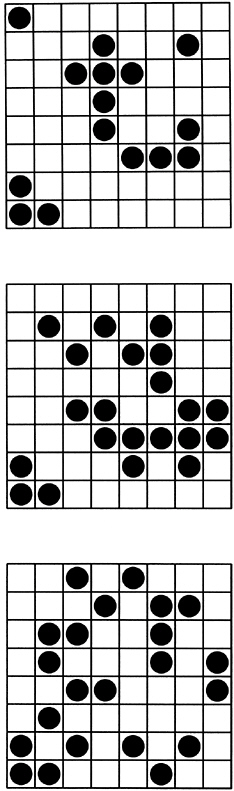

FIGURE 16-3 The idea that the fundamental particles of physics are merely topological features or knots in the fabric of space-time dates back at least to the Victorian notion of ether vortices. But the precise nature of the entities involved continues to be argued. Are we talking one-dimensional strings or two-dimensional membranes, and embedded in a space of how many dimensions? This picture is almost certainly an oversimplification.
are lost in the mists of time; the French meter represents a slightly inaccurate guess at 1 forty-millionth of Earth’s equatorial circumference, intended to make navigational calculations easier). More fundamental units are those based on the constants of nature, the most familiar of which is the speed of light, usually written as c. If you told an alien in a radio message that in Britain, autos are restricted to a top speed of 70 miles per hour, he would have no idea how fast that was, but if you told him the speed limit was one 1-millionth of the speed of light, that is a universally meaningful measure.
Another such fundamental value in our universe is the gravitational constant, defining the warping of space that a given mass will induce. And a third is Planck’s constant, which we met earlier and which defines the ratio between the frequency of a photon of light and the amount of energy it carries. By appropriate multiplication and division we can derive the basic units of mass, length, and time from these values. The fundamental unit of length, the Planck length, turns out to be tiny, roughly 10−35 meter (for comparison, a proton is about 10−15 meter in diameter).
There is a very hand-waving argument that the fundamental in-
formation density of space should be on the order of 1 bit per cubic Planck unit. In 1973, this guess received a curious kind of confirmation. Jacob Bekenstein discovered,7 in work later refined by Stephen Hawking, that the region of space containing a black hole, an event horizon, has a physical quantity called entropy associated with it, which in turn implies a quantity of information. By simple thought experiments involving general relativity (for example, considering the viewpoint of an observer who is in normal space, but accelerating), it can be demonstrated that not just a black hole, but any region of space, can contain only a finite amount of information. But there was a shocking surprise. The amount of information any region of space, however shaped, can contain is proportional not to its volume but to its surface area!
This result has been dubbed the holographic principle. The Nobel Prize winner van ’t Hooft has given a memorable way to visualize this. If you imagine the surface enclosing a region of space as a flexible computer screen, each of whose pixels is exactly 2 × 2 Planck units and can be either black or white, then the surface of the screen encodes all the information that region of space contains.
Of course this is all very counterintuitive. If region A contains amount of information X, and region B contains amount of information Y, then surely joining the regions should give us a storage capacity X+Y? But Bekenstein’s bound tells us that the sum is always less than this. For example, a cube 1 centimeter on a side, the size of a sugar lump, can store approximately 1066 bits; but a crate 1 meter on a side containing a million of those cubes can store only 1070, rather than 1072, bits. Where did all the extra capacity go? I have heard van ’t Hooft, among others, admit that he finds it very baffling.
But suppose that the universe does consist of information at a density of about 1 bit per cubic Planck unit at the finest scale, as Bekenstein’s rule would seem to imply, and that this information evolves via local interactions. What would we expect to observe? Everything we know about the laws of physics gives us a strong hint that the rules of the Planck-scale interactions will be reversible, at least to a good approximation: There will be no intrinsic arrow of time. This means that we cannot possibly expect to store or retrieve information at this scale: The bits will be flickering from one value to another much
too unpredictably. They would represent a kind of subinformation that we would not expect to be able to access directly.
We would expect stable patterns—accessible bits of information as used by IGUSes like ourselves, which can be written, remembered, and read—to exist at best as correlations between the Planck-level bits. Figures 15-2 and 15-3 give us a crude visualization: The pixels printed on each side of the paper represent subinformation, but the pattern which is revealed by the process of comparing them (in this case when the page is held up to the light) contains “real” information. Note that this real information is being stored nonlocally: You could slice the page in two with a sharp razor and take the two sides far apart; then the real information could not be said to be contained in either piece on its own, but it is still present.
If there is anything to my speculation, in reality it probably takes not just two but many bits of subinformation to store one bit of “real” information. A better metaphor will be familiar to all readers, although it usually goes unnoticed: the column of light switches found on a typical stairwell. Using a simple trick invented by the Victorians (no modern electronics is required) the switches are wired up in such a way that toggling the switch on any floor switches the light at the top between on and off, irrespective of the current positions of the switches on all the other floors. Here the position of the switch on each floor, up or down, represents 1 bit of subinformation; the state of the light, on or off, represents 1 bit of real information, a property of the whole system.
Now let us return to the multiverse picture. If a multiverse-computer has a storage capacity of 1 bit per cubic Planck unit, and supports a multiplicity of the reasonably stable entities we have dubbed local worlds, obviously not all of the worlds can make independent use of the same storage. A problem will arise rather like that of sharing a finite amount of radio waveband between different users; the more transmitters, the more unavoidable cross-talk there is as each extra user contributes to the general background of noise. The amount of multiverse-information a region of space can store does indeed increase with the cube of its linear dimension, but if the number of stable processes in which that region participates also increases—say, in proportion to its linear dimension, the time light takes to cross the re-
gion—then that explains why its available information storage capacity, from the point of view of any one world process, increases only with the square of the dimension, just as we observe. Perhaps a cube 10100 Planck units on a side can indeed store about 10300 bits of subinformation or multiverse information, but this capacity has to be divided between 10100 world processes, giving by simple division only 10200 bits of stable “real” information capacity available to each.
I emphasize that this picture of a hidden-variable multiverse is very speculative—I am taking the license traditionally allowed an author in the last chapter of a science book to its limits! But the picture has its temptations. If we took it seriously, it would enshrine our familiar three dimensions of space and one of time as the reality to which Hilbert space is a mere approximation, abolishing the unwanted multitudes of extra states that can be derived from Hilbert space.
And my speculation is not quite so wild as it may appear. The concept of subinformation is not new. Quantum has always seemed to imply that the universe somehow “knows” more behind-the-scenes information than can be measured in any one world line. For example, consider a simple quantum entity, a photon that has passed through a polarizing filter set at 38.123456789 degrees to the horizontal. An experimenter can only read one bit of information about the photon’s subsequent polarization state. But there is a sense in which the universe seems to know the angle of polarization far more exactly, because the photon is certain to pass through a second filter it encounters later only if that filter is also set at precisely 38.123456789 degrees, and not at any other angle.
(Physicist readers may also recognize a certain relationship between this way of looking at things and the work of Ilya Prigogine. However, I am really reversing Prigogine’s argument, which is essentially that in certain contexts, notably the thermodynamics of gases, it is more fundamental to think of matter as a process than as a set of atoms in specific positions, because our ignorance of the atoms’ positions is fundamental to the gas having the properties it does. I am suggesting that we should regard Planck-level subinformation as being as real as we normally consider atoms to be, even though we can never read it directly.)
Let us be clear. The picture I am proposing differs from orthodox quantum mechanics; I am replacing the putatively infinite measures of worlds depicted in Figure 12-1c with something more like the picture of 12-1b, in which huge but finite ratios of numbers of different worlds reproduce (to an extremely close approximation) the outcome probabilities predicted by orthodox quantum mechanics. But this is not some wild defiance of Occam’s razor. In January 2004, just months before I wrote this chapter, David Deutsch published a thought-provoking paper entitled “Qubit Field Theory”8 in which he demonstrated that conventional quantum mechanics places no limit on the information that can be described in a limited region of space. Quantum mechanics must be modified to cope with Bekenstein’s bound.
I would like to propose a program to see if such a hidden-local-variable multiverse theory is indeed possible, and flesh out its constraints and details. The first stage in such a project might be to write a simple computer algorithm or model that makes use of the following suggestions:
-
It must follow a simple deterministic update rule, with the state of each Planck volume of space (probably represented by a single pixel on the screen) changing each time step in a local way determined only by its own state and that of its immediate neighbors.
-
The updating must give rise to an ever-growing multiplicity of divergent stable patterns that interact significantly with their own “worlds” but little with divergent ones. Different world lines should be made distinguishable to the eye by appropriate use of color and perhaps flashing pixels at different rates.
-
Make it possible for a pattern to give rise to a large number of “daughter” patterns as the result of a single branching event; the relative numbers of the daughter patterns should conform to something analogous to the Born rule.
-
Consider the following mechanism for “condensing” an increasing number of stable patterns from time-symmetric rules. A 1-centimeter cube containing a given number of particles is about 1033 Planck lengths on a side. Every second, cosmological expansion increases each side by about 1015 Planck lengths, vastly increasing the
-
amount of information about the particles that we can know from one particular universe viewpoint.
-
As Penrose has pointed out, space-time should curve differently as perceived in different world-lines as masses move to different positions. The presence of a large amount of nearby mass should make local processes proceed more slowly in a given world-line, because time flows more slowly in a gravity well. Can the model replicate these effects?
Feel free to check my Web site for any progress on this program: http://www.colinbruce.org.
If we turn out to live in such a comprehensible place as a multiverse of hidden local variables obeying classically deterministic rules—which in my highly personal opinion would be the ultimate extrapolation of the Oxford Interpretation—things will arguably have turned out the best we could have hoped for in all possible worlds. We will inhabit a universe strange enough to fascinate, yet one capable of being visualized with our simple ape brains, run by a clockwork that scientists of the past such as Newton and Laplace would have understood, a universe in which we can hope to play tick-tack-toe with the gods.
We might even be able to explain definitively why we find ourselves in such a universe. Just as the optical-fiber computer we met earlier could perform thousands of calculations in parallel using no more hardware than required for a single conventional computer, so a slight difference in the laws of physics could make the difference between a universe that can run only one world line and a multiverse that can run a colossal number. If a multiverse represents a vastly more efficient use of resources, in terms of the number of intelligent species or individual beings it can contain per unit of information processed, then is it not statistically almost inevitable that we find ourselves in such a place?9
But now I am treading very close to the line that separates physics from metaphysics, and it is definitely time to bring this book to a close.