The Global Positioning System: A Shared National Asset (1995)
Chapter: Appendix I Report From Mr. Melvin Barmat, Jansky/Barmat Telecommunications, Inc.


Table 1 Table of Potential Spectrum for New GPS Carrier
|
Band (MHz) |
Disposition/Comment |
Discussion |
|
960-1215 |
May be Possible. Needs consultation with aeronautical interests. |
This 255 MHz bandwidth is allocated on a worldwide basis to Aeronautical Radionavigation services. A wide number of civil and military aeronautical systems employ this band including DME, TACAN, JTIDS, TCAS, Mode-S, IFF, etc. However, the use of some of these systems may become obsolete because of widespread employment of GPS. Thus, bandwidth may become available in the future. Moreover, since a C/A code GPS-L4 would only need a few MHz of bandwidth, it would seem in the self-interest of the aeronautical community to make such a small amount of spectrum available. |
|
1215-1240 |
Good Possibility. Needs further study, including GPS interaction and interference effects of radar |
Worldwide allocation to Radiolocation and Radionavigation-Satellite services The GPS-L2 signal is located in this band at 1227.6 MHz. Since the P-code occupies ±10 MHz, the bands 1215-1217.6 MHz or 1237.6-1240 MHz may be available for the GPS-L4 signal. If 1 or 2 MHz of additional spectrum is needed, it may be available in one of the adjacent bands. However, the transmission and reception of two adjacent frequency signals (L2 and L4) often gives rise to intermodulation interference problems. Further study is obviously needed. In addition, it may be possible to operate a C/A-code signal and a P-code signal co-frequency at 1227.6 MHz (L2), as it is done at 1575.42 MHz (GPS-L1). In the U.S., the Radiolocation services are for U.S. government long-range air surveillance radars. Worldwide usage needs investigation. Use of this band has the advantage of not requiring an allocation change via the ITU. |
|
1240-1260 |
Good Possibility. Needs detailed study including effect of radar on GPS signal. |
Worldwide allocations to Radiolocation and Radionavigation-Satellite. The latter covers the L2 channel for Glonass. agreed to move Glonass frequencies down from their current band over the next several years. Thus, it is probable that several MHz at the high end of this band will be cleared out and could be used for GPS L4. However, the use of the co-frequency Radiolocation allocation needs further study to verify sharing potential. In the U.S. this band is assigned to DOD for radars and use may be extensive. However, it is encouraging to note that the band has been acceptable for Glonass L2. An advantage of this band for GPS L4 is that no new ITU allocation would be necessary. NASA uses this band on a secondary basis for earth-exploration satellites. |
|
|
|
However, the Russian gov't has |
|
1260-1300 |
Possible. Needs study, including radar effects. |
Worldwide allocation to Radiolocation (radar). In the U.S., this band is assigned to DOD. Secondary amateur satellite service operates Earth-space in this band and could cause localized interference that would be difficult to uncover. |
|
1300-1350 |
Low Possibility. Needs study, including radar effects. |
This band is allocated worldwide to Aeronautical Radionavigation and is used for surveillance radars in air traffic control (ATC) in the U.S. Transponders on the aircraft are used for identification. It is believed this same use is worldwide. In U.S. and elsewhere, ATC surveillance radars may be partially replaced by Mode S systems in the future. Thus, in the long term it may be possible that several MHz of this band could be set aside for GPS L4. There is a footnote asking administrations to protect the band 1330-1400 MHz for Radioastronomy. Space station emissions are noted to be particularly harmful to these observations. |
|
1350-1400 |
Questionable. Would need much study. |
The band has a worldwide allocation for Radiolocation. The band is used for long range surveillance radars by the DOD and for air traffic control. There is also a Radioastronomy footnote, noted above (RR 718), and the fact that passive space research is conducted in 13701400 MHz (RR 720) would make this a difficult band for NAS to endorse. The U.S.G. is turning control of 13901400 MHz over to non-government use but notes problem of Radioastronomy. Also, the fixed and mobile allocations in Region 1 are potential sources of harmful interference to GPS-L4. Note that GPS L3 at 1381 MHz is in this band but its use is subject to restrictions. |
|
1400-1427 |
Not Feasible |
Primary allocations to Radioastronomy and Space Research (passive) make this band not feasible. |
|
1427-1429 1429-1452 |
Probably not feasible Needs study. |
Mobile and Fixed services are allocated worldwide in these bands. One of the ground rules established in this study is to not attempt to place a GPS receiver on a mobile vehicle where a co-frequency transmitter was possible. However, the U.S.G. will turn over control of 1427-1432 MHz to non-government use in about five years, although some government use will be grandfathered! Note that the adjacent band is allocated on a Primary basis to Radioastronomy. |
|
1452-1492 |
Not Feasible |
The current application of this band to the Broadcasting, Broadcasting-Satellite and Mobile services make this band not feasible for GPS-L4. |
|
1492-1525 |
Not Feasible |
The band is allocated to Mobile services worldwide and to Mobile Satellite (space-Earth) in Region 2. Either allocation would rule out its use for GPS-L4. |
|
1525-1530 1530-1533 1533-1535 1535-1544 1544-1545 |
Not Feasible |
Worldwide allocation to Mobile Satellite (space-Earth). These satellite transmissions would cause unacceptable interference to an L4 GPS receiver in the band. |
|
1545-1555 |
|
|
|
1555-1559 |
|
|
|
1559-1610 |
Not Feasible |
Band used for GPS and Glonass L1 signals. Band edge use would not be acceptable. |
|
1610-1610.6 |
Not Feasible |
Worldwide allocation to Mobile Satellite (Earth-space). Uplink transmissions from vehicle to satellite would cause unacceptable interference to GPS receiver on same or nearby vehicle. |
|
1610.6-1613.8 |
|
|
|
1613.8-1626.5 |
|
|
|
1626.5-1631.5 |
|
|
|
1631.5-1634.5 |
|
|
|
1634.5-1645.5 |
|
|
|
1645.5-1646.5 |
|
|
|
1646.5-1656.5 |
|
|
|
1656.5-1660 |
|
|
|
1660-1660.5 |
|
|
|
|
|
|
|
1660.5-1668.4 |
Not Feasible |
Worldwide allocations to Radioastronomy. |
|
1668.4-1670 |
|
|
|
|
|
|
|
1670-1675 |
Not Feasible |
Worldwide allocations to Metaids, Mobile, etc. would cause unacceptable interference to GPS-L4. In addition, a new air passenger telephone service (ground-to-air) is planned for this band. The U.S.G. is turning over control of 1670-1675 MHz to non-government use and thereby not allowing radiosonde operations in the band. However, the U.S.G. points out the sensitivity of Radioastronomy in the adjacent band. |
|
1675-1690 1690-1700 |
Not Feasible |
Worldwide allocation to Metaids (radiosondes), Metsats (space-Earth) and. Mobile services make use of this band not feasible in the near term. Moreover, the band is allocated to mobile satellite (Earth-space) in Region 2 and there are indications the allocation will be extended worldwide. |
|
1700-1710 |
Not Feasible |
Same as above, except for omission of Metaid allocation. |
|
1710-1930 |
Good possibility. Study needed. |
This 220 MHz band has worldwide allocations for Fixed and Mobile services. However, band usage is in a state of flux. The band 1800-1805 MHz is set aside for air-to-ground link of a new air passenger telephone service. The band 1885-2025 is set aside for a next generation worldwide public land mobile telephone system and the FCC has extended the band down to 1850 MHz for such use in the U.S. The band 1761-1842 MHz is used for a number of USG space services. The U.S. government has announced that it intends to turn over primary use of 1710-1755 MHz to non-government service in 2004, although some U.S.G. use will be grandfathered. 1718.8-1722.2 MHz is allocated to radio astronomy on a secondary basis. The lower end of this band looks promising for GPS L4, although out-of-band emissions of LEO weather satellites need investigation. |
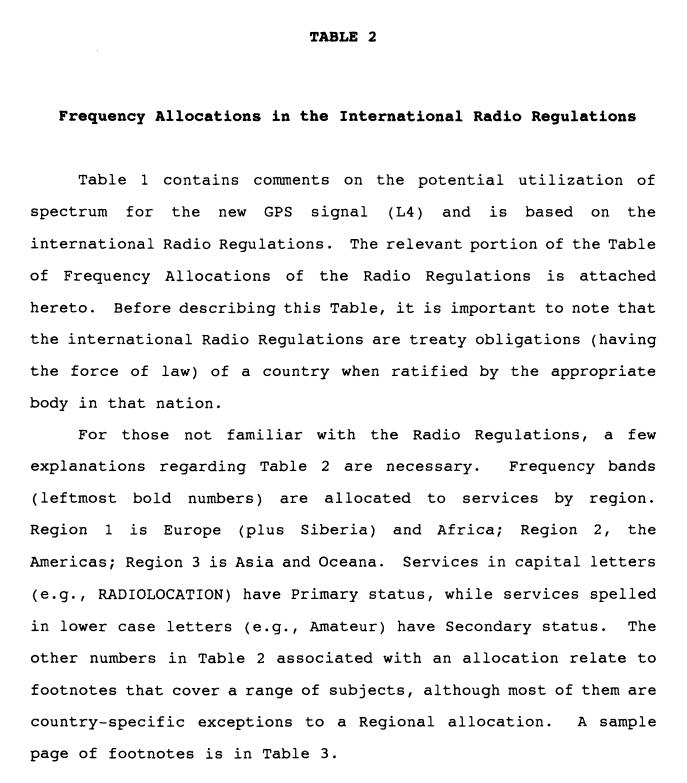
|
|
MHz 890 - 1240 |
|
|
Allocation to Services |
||
|
Region 1 |
Region 2 |
Region 3 |
|
890 - 942 |
890 - 902 |
890 - 942 |
|
FIXED |
FIXED |
FIXED |
|
MOBILE except |
MOBILE except |
MOBILE |
|
aeronautical mobile |
aeronautical mobile |
BROADCASTING |
|
BROADCASTING 703 |
Radiolocation |
Radiolocation |
|
Radiolocation |
700A 704A 705 |
|
|
|
902 - 928 |
|
|
|
FIXED |
|
|
|
Amateur |
|
|
|
Mobile except |
|
|
|
aeronautical mobile |
|
|
|
Radiolocation |
|
|
|
705 707 707A |
|
|
|
928 - 942 |
|
|
|
FIXED |
|
|
|
MOBILE except |
|
|
|
aeronautical mobile |
|
|
|
Radiolocation |
|
|
704 |
705 |
706 |
|
942 - 960 |
942 - 960 |
942 - 960 |
|
FIXED |
FIXED |
FIXED |
|
MOBILE except |
MOBILE |
MOBILE |
|
aeronautical mobile |
|
BROADCASTING |
|
BROADCASTING 703 |
|
|
|
704 |
|
701 |
|
960 - 1 215 |
AERONAUTICAL RADIONAVIGATION |
|
|
|
709 |
|
|
1 215 - 1240 |
RADIOLOCATION RADIONAVIGATION-SATELLITE (space-to-Earth) 710 711 712 712A 713 |
|
|
MHz 1240 - 1452 |
||
|
Allocation to Services |
||
|
Region 1 |
Region 2 |
Region 3 |
|
1240 - 126 |
RADIOLOCATION RADIONAVIGATION-SATELLITE (space-to-Earth) 710 Amateur 711 712 712A 713 714 |
|
|
1260 - 1300 |
RADIOLOCATION Amateur 664 711 712 712A 713 714 |
|
|
1300 - 1350 |
AERONAUTICAL RADIONAVIGATION 717 Radiolocation 715 716 718 |
|
|
1350 - 1400 FIXED MOBILE RADIOLOCATION 718 719 720 |
1350 - 1400 RADIOLOCATION 714 718 720 |
|
|
1400 - 1427 |
EARTH EXPLORATION-SATELLITE (passive) RADIO ASTRONOMY SPACE RESEARCH (passive) 721 722 |
|
|
1427 - 1429 |
SPACE OPERATION (Earth-to-space) FIXED MOBILE except aeronautical mobile 722 |
|
|
1429 - 1452 FIXED MOBILE except aeronautical mobile 722 723B |
1429 - 1452 FIXED MOBILE 723 722 |
|
|
MHz 1452- 1530 |
||
|
Allocation to Services |
||
|
Region 1 |
Region 2 |
Region 3 |
|
1452 - 1492 |
1452 - 1492 |
|
|
FIXED |
FIXED |
|
|
MOBILE except |
MOBILE 723 |
|
|
aeronautical mobile |
BROADCASTING 722A 722B |
|
|
BROADCASTING 722A |
BROADCASTING-SATELLITE 722A 722B |
|
|
722B |
|
|
|
BROADCASTING- |
|
|
|
SATELLITE 722A 722B |
|
|
|
722 723B |
722 722C |
|
|
1492 - 1525 |
1492 - 1525 |
1492 - 1525 |
|
FIXED |
FIXED |
FIXED |
|
MOBILE except |
MOBILE 723 |
MOBILE 723 |
|
aeronautical mobile |
MOBILE-SATELLITE |
|
|
|
(space-to-Earth) |
|
|
722 723B |
722 722C 723C |
722 |
|
1525 - 1530 |
1525 - 1530 |
1525 - 1530 |
|
SPACE OPERATION |
SPACE OPERATION |
SPACE OPERATION |
|
(space-to-Earth) |
(space-to-Earth) |
(space-to-Earth) |
|
FIXED |
MOBILE-SATELLITE |
FIXED |
|
MARITIME |
(space-to-Earth) |
MOBILE-SATELLITE |
|
MOBILE-SATELLITE |
Earth Exploration-Satellite |
(space-to-Earth) |
|
(space-to-Earth) |
Fixed |
Earth Exploration-Satellite |
|
Earth Exploration-Satellite |
Mobile 723 |
Mobile 723 724 |
|
Land Mobile-Satellite |
|
|
|
(space-to-Earth) 726B |
|
|
|
Mobile except aeronautical |
|
|
|
mobile 724 |
|
|
|
22 723B 725 726A |
|
|
|
26D |
722 723A 726A 726D |
722 726A 726D |
|
MHz 1530 - 1545 |
||
|
Allocation to Services |
||
|
Region 1 |
Region 2 |
Region 3 |
|
1530 - 1533 |
1530 - 1533 |
|
|
SPACE OPERATION |
SPACE OPERATION (space-to-Earth) |
|
|
(space-to-Earth) |
MARITIME MOBILE-SATELLITE (space-to-Earth) |
|
|
MARITIME MOBILE- SATELLITE |
LAND MOBILE-SATELLITE |
|
|
(space-to-Earth) |
(space-to-Earth) |
|
|
LAND MOBILE- |
Earth Exploration-Satellite |
|
|
SATELLITE |
Fixed |
|
|
(space-to-Earth) |
Mobile 723 |
|
|
Earth Exploration-Satellite |
|
|
|
Fixed |
|
|
|
Mobile except |
|
|
|
aeronautical mobile |
|
|
|
722 723B 726A 726D |
722 726A 726C 726D |
|
|
1533 - 1535 |
1533- 1535 |
|
|
SPACE OPERATION (space-to-Earth) |
SPACE OPERATION (space-to-Earth) |
|
|
|
MARITIME MOBILE-SATELLITE |
|
|
MARITIME MOBILE- SATELLITE (space-to-Earth) |
(space-to-Earth) |
|
|
Earth Exploration-Satellite |
Earth Exploration-Satellite |
|
|
Fixed |
Fixed |
|
|
Mobile except |
Mobile 723 |
|
|
aeronautical mobile |
Land Mobile-Satellite (space-to-Earth) 726B |
|
|
Land Mobile-Satellite |
|
|
|
(space-to-Earth) 726B |
|
|
|
722 723B 726A 726D |
722 726A 726C 726D |
|
|
1535 - 1544 |
MARITIME MOBILE-SATELLITE (space-to-Earth) |
|
|
|
Land Mobile-Satellite (space-to-Earth) 726B |
|
|
|
722 726A 726C 726D 727 |
|
|
1544 - 1545 |
MOBILE-SATELLITE (space-to-Earth) |
|
|
|
722 726D 727 727A |
|
|
MHz 1545 - 1613.8 |
||
|
Allocation to Services |
||
|
Region 1 |
Region 2 |
Region 3 |
|
1545 - 1555 |
AERONAUTICAL MOBILE-SATELLITE (R) |
|
|
|
(space-to-Earth) |
|
|
|
722 726A 726D 727 729 729A 730 |
|
|
1555 - 1559 |
LAND MOBILE-SATELLITE (space-to-Earth) |
|
|
|
722 726A 726D 727 730 730A 730B 730C |
|
|
1559- 1610 |
AERONAUTICAL RADIONAVIGATION |
|
|
|
RADIONAVIGATION-SATELLITE (space-to-Earth) |
|
|
|
722 727 730 731 |
|
|
1610 - 1610.6 |
1610 - 1610.6 |
1610 - 1610.6 |
|
MOBILE-SATELLITE |
MOBILE-SATELLITE |
MOBILE-SATELLITE |
|
(Earth-to-space) |
(Earth-to-space) |
(Earth-to-space) |
|
AERONAUTICAL |
AERONAUTICAL |
AERONAUTICAL |
|
RADIONAVIGATION |
RADIONAVIGATION |
RADIONAVIGATION |
|
|
RADIODETERMINATION- |
Radiodetermination-Satellite |
|
|
SATELLITE |
(Earth-to-space) |
|
|
(Earth-to-space) |
|
|
722 727 730 731 731E 732 733 733A 733B 733E 733F |
722 731E 732 733 733A 733C 733D 733E |
722 727 730 731E 732 733 733A 733B 733E |
|
1610.6 - 1613.8 |
1610.6 - 1613.8 |
1610.6 - 1613.8 |
|
MOBILE-SATELLITE |
MOBILE-SATELLITE |
MOBILE-SATELLITE |
|
(Earth-to-space) |
(Earth-to-space) |
(Earth-to-space) |
|
RADIO ASTRONOMY |
RADIO ASTRONOMY |
RADIO ASTRONOMY |
|
AERONAUTICAL |
AERONAUTICAL |
AERONAUTICAL |
|
RADIONAVIGATION |
RADIONAVIGATION |
RADIONAVIGATION |
|
|
RADIODETERMINATION- |
Radiodetermination-Satellite |
|
|
SATELLITE |
(Earth-to-space) |
|
|
(Earth-to-space) |
|
|
|
|
|
|
722 727 730 731 731E 732 733 733A 733B 733E 733F 734 |
722 731E 732 733 733A 733C 733D 733E 734 |
722 727 730 731E 732 733 733A 733B 733E 734 |
|
MHz 1613.8 - 1656.5 |
||
|
Allocation to Services |
||
|
Region 1 |
Region 2 |
Region 3 |
|
1613.8 - 1626.5 |
1613.8 - 1626.5 |
1613.8 - 1626.5 |
|
MOBILE-SATELLITE |
MOBILE-SATELLITE |
MOBILE-SATELLITE |
|
(Earth-to-space) |
(Earth-to-space) |
(Earth-to-space) |
|
AERONAUTICAL |
AERONAUTICAL |
AERONAUTICAL |
|
RADIONAVIGATION |
RADIONAVIGATION |
RADIONAVIGATION |
|
Mobile-Satellite |
RADIODETERMINATION- |
Radiodetermination-Satellite |
|
(space-to-Earth) |
SATELLITE |
(Earth-to-space) |
|
|
(Earth-to-space) |
Mobile-Satellite |
|
|
Mobile-Satellite |
(space-to-Earth) |
|
|
(space-to-Earth) |
|
|
722 727 722 722 727 731E 731F 733 731F 732 733A 733B |
730 731E 730 732 733A 733 733E 733F 733B 733E |
731 731F 732 731E 733 733C 733D 733A 733E |
|
1626.5 - 1631.5 |
1626.5 - 1631.5 |
|
|
MARITIME MOBILE- |
MOBILE-SATELLITE (Earth-to-space) |
|
|
SATELLITE |
|
|
|
(Earth-to-space) |
|
|
|
Land Mobile-Satellite |
|
|
|
(Earth-to-space) 726B |
|
|
|
722 726A 726D 727 730 |
722 726A 726C 726D 727 730 |
|
|
1631.5 - 1634.5 |
MARITIME MOBILE-SATELLITE (Earth-to-space) |
|
|
|
LAND MOBILE-SATELLITE (Earth-to-space) |
|
|
|
722 726A 726C 726D 727 730 734A |
|
|
1634.5 - 1645.5 |
MARITIME MOBILE-SATELLITE (Earth-to-space) |
|
|
|
Land Mobile-Satellite (Earth-to-space) 726B |
|
|
|
722 726A 726C 726D 727 730 |
|
|
1645.5 - 1646.5 |
MOBILE-SATELLITE (Earth-to-space) |
|
|
|
722 726D 734B |
|
|
1646.5 - 1656.5 |
AERONAUTICAL MOBILE-SATELLITE (R) |
|
|
|
(Earth-to-space) |
|
|
|
722 726A 726D 727 729A 730 735 |
|
|
MHz 1656.5 - 1675 |
||
|
Allocation to Services |
||
|
Region 1 |
Region 2 |
Region 3 |
|
1656.5 - 1660 |
LAND MOBILE-SATELLITE (Earth-to-space) |
|
|
|
722 726A 726D 727 730 730A 730B 730C 734A |
|
|
1660 - 1660.5 |
LAND MOBILE-SATELLITE (Earth-to-space) |
|
|
|
RADIO ASTRONOMY |
|
|
|
722 726A 726D 730A 730B 730C 736 |
|
|
1660.5- 1668.4 |
RADIO ASTRONOMY |
|
|
|
SPACE RESEARCH (passive) |
|
|
|
Fixed |
|
|
|
Mobile except aeronautical mobile |
|
|
|
722 736 737 738 739 |
|
|
1668.4 - 1670 |
METEOROLOGICAL AIDS |
|
|
|
FIXED |
|
|
|
MOBILE except aeronautical mobile |
|
|
|
RADIO ASTRONOMY |
|
|
|
722 736 |
|
|
1670 - 1675 |
METEOROLOGICAL AIDS |
|
|
|
FIXED |
|
|
|
METEOROLOGICAL-SATELLITE (space-to-Earth) |
|
|
|
MOBILE 740A |
|
|
|
722 |
|
|
MHz 1675 - 1930 |
||
|
Allocation to Services |
||
|
Region 1 |
Region 2 |
Region 3 |
|
1675 - 1690 |
1675 - 1690 |
1675 - 1690 |
|
METEOROLOGICAL |
METEOROLOGICAL |
METEOROLOGICAL |
|
AIDS |
AIDS |
AIDS |
|
FIXED |
FIXED |
FIXED |
|
METEOROLOGICAL- |
METEOROLOGICAL- |
METEOROLOGICAL- |
|
SATELLITE |
SATELLITE |
SATELLITE |
|
(space-to-Earth) |
(space-to-Earth) |
(space-to-Earth) |
|
MOBILE except |
MOBILE except |
MOBILE except |
|
aeronautical mobile |
aeronautical mobile |
aeronautical mobile |
|
|
MOBILE-SATELLITE |
|
|
|
(Earth-to-space) |
|
|
722 |
722 735A |
722 |
|
1690 - 1700 |
1690 - 1700 |
1690 - 1700 |
|
METEOROLOGICAL |
METEOROLOGICAL |
METEOROLOGICAL |
|
AIDS |
AIDS |
AIDS |
|
METEOROLOGICAL- |
METEOROLOGICAL- |
METEOROLOGICAL- |
|
SATELLITE |
SATELLITE |
SATELLITE |
|
(space-to-Earth) |
(space-to-Earth) |
(space-to-Earth) |
|
Fixed |
MOBILE-SATELLITE |
|
|
Mobile except |
(Earth-to-space) |
|
|
aeronautical mobile |
|
|
|
671 722 741 |
671 722 735A 740 |
671 722 740 742 |
|
1700 - 1710 |
1700 - 1710 |
1700 - 1710 |
|
FIXED |
FIXED |
FIXED |
|
METEOROLOGICAL- |
METEOROLOGICAL- |
METEOROLOGICAL- |
|
SATELLITE |
SATELLITE |
SATELLITE |
|
(space-to-Earth) |
(space-to-Earth) |
(space-to-Earth) |
|
MOBILE except |
MOBILE except |
MOBILE except |
|
aeronautical mobile |
aeronautical mobile |
aeronautical mobile |
|
|
MOBILE-SATELLITE |
|
|
|
(Earth-to-space) |
|
|
671 722 |
671 722 735A |
671 722 743 |
|
1710 - 1930 |
FIXED |
|
|
|
MOBILE 740A |
|
|
|
722 744 745 746 746A |
|
TABLE 3
Sample Page of Footnotes from Article 8 of the
International Radio Regulations
|
714 |
Additional allocation: in Canada and the United States. the bands 1240 - 1300 MHz and 1350 - 1370 MHz are also allocated to the aeronautical radionavigation service on a primary basis. |
|
715 |
Additional allocation: in Indonesia. the band 1300 - 1350 MHz is also allocated to the fixed and mobile services on a primary basis. |
|
716 |
Alternative allocation: in Ireland and the United Kingdom, the band 1300 - 1350 MHz is allocated to the radiolocation service on a primary basis. |
|
717 |
The use of the bands 1300 - 1350 MHz. 2700 - 2900 MHz and 9000 -9200 MHz by the aeronautical radionavigation service is restricted to ground-based radars and to associated airborne transponders which transmit only on frequencies in these bands and only when actuated by radars operating in the same band. |
|
718 |
In making assignments to stations of other services, administrations are urged to take all practicable steps to protect the spectral line observations of the radio astronomy service from harmful interference in the band 1330-1400 MHz. Emissions from space or airborne stations can be particularly serious sources of interference to the radio astronomy service (see Nos. 343 and 344 and Article 36). |
|
719 WARC.92 |
In Bulgaria. Mongolia. Poland. the German Democratic Republic. Romania. Czechoslovakia and the U.S.S.R., the existing installations of the radionavigation service may continue to operate in the band 1350 -1400 MHz. |
|
720 |
The bands 1370 - 1400 MHz. 2640 - 2655 MHz. 4950 - 4990 MHz and 15.20 - 15.35 GHz are also allocated to the space research (passive) and earth exploration-satellite (passive) services on a secondary basis. |
|
721 |
All emissions in the band 1400 - 1427 MHz are prohibited. |
|
722 |
In the bands 1400- 1727 MHz. 101 - 120 GHz and 197 - 220 GHz. passive research is being conducted by some countries in a programme for the search for intentional emissions of extra-terrestrial origin. |
|
722A WARC-92 |
Use of the band 1452 - 1492 MHz by the broadcasting-satellite service. and by the broadcasting service. is limited to digital audio broadcasting and is subject to the provisions of Resolution 528 (WARC-92). |