Eclipse: The Celestial Phenomenon That Changed the Course of History (2001)
Chapter: 11. Nantucket, the Astronomically Blessed
11
Nantucket, the Astronomically Blessed
Yf they say the mone is blewe
We must believe that it is true.
A rhyme that first appeared in 1528, from which the commonly used phrase “once in a blue moon” is derived
How often may total solar eclipses be seen? We might say, with some appropriateness, once in a blue moon. That saying is usually taken to have the meaning “hardly ever” or “very infrequently.” How that phrase came into common usage is an example of modern folklore, with a New England connection, as we will eventually learn below.
Even with rare events like eclipses it is possible to beat the odds. That is the subject we are going to consider in this chapter. A quick example to begin. You will recognize from what has gone before that a total solar eclipse might be expected to visit some random point on Earth only every few centuries. Now think about the miners who went to the Yukon Territory in the nineteenth-century gold rushes. Some of them, down on their luck, may have ended up in the northwestern corner of British Columbia, perhaps fossicking for the precious metal in the Stikine River around
the settlement of Telegraph Creek. At the end of July 1851 they could have witnessed such an eclipse. Then again, the August 1869 eclipse would have swept over them, followed by that of July 1878. That makes three totals in less than 30 years. Each occurred at the height of summer, when the chances of clear skies were greatest (indeed the dates are within a spread of just ten days). That the nearest mountains were titled the Spectrum Range seems almost too much of a coincidence. Each of those eclipses, the latter two especially, also passed over at least some part of Alaska, as if to celebrate the purchase of that state by the United States from Russia in 1867.
Back in the nineteenth century this was a pretty remote and inaccessible part of North America. Let’s look instead at a particular spot a bit closer to the major population centers. For reasons that will soon become apparent, I’ll pick Nantucket Island, a dot in the Atlantic merely 14 miles wide, lying just south of Cape Cod. This is a unique place: it is a town, a county, and also an island of course. Actually, it is the only locality in the United States to be so defined. On top of that, Nantucket Island as a whole is classed as both a State Historic District and a National Historic Landmark. But I choose it as a subject for consideration because of its astronomical connections.
MARIA MITCHELL, NANTUCKET’S GREAT ASTRONOMER
The quote concerning the eclipse of 1878 with which Chapter 9 began was from the writings of Maria Mitchell, who was Professor of Astronomy at Vassar College (in Poughkeepsie, New York) from 1865 until 1888. She died the following year in Lynn, Massachusetts, but she had been born in 1818 on Nantucket, and she is still strongly associated with the island.
Mitchell was a woman famed around the world, with due cause. The list of her achievements is phenomenal, especially in the context of her times, when almost all spheres of public life were entirely the provinces of men. She was the first female professor of astronomy, and indeed one of the greatest American scientists of the nineteenth century. In 1848 she was elected the first woman member of the American Academy of Arts and Sciences (and it was 1943 before another woman was voted in, a situation Mitchell herself would have deplored). Two years later, in 1850, the American Association for the Advancement of Science also admitted her to its ranks. In 1869 the American Philosophical Society accepted her as a member, again breaking ground for the female sex. She was presented with numerous awards by a variety of foreign scientific societies and governments. In fact it was a gold medal from the King of Denmark that thrust her into international prominence.
Maria was fortunate to be born into a large Quaker family, in which the parents encouraged the girls as well as the boys in their education and intellectual pursuits. As a result she became first a schoolteacher, and then a librarian, with the time to read books on astronomy and other areas of science. Her father, a cashier at the Pacific Bank on Nantucket, built a small observatory on the roof of their house, adjoining the bank building. This he equipped with a small refractor: a lens telescope with an aperture of four inches. It was installed chiefly for him to collect observations of the positions of stars on behalf of the U.S. Coast Guard. But his daughter also put it to good use (see Figure 11–1).
While scanning the skies on the night of October 1, 1847, Maria came across a comet that was not shown in any of the most recent astronomical information available to her. Her father
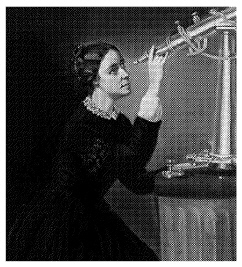
FIGURE 11–1. Maria Mitchell discovers her comet in 1847.
immediately wrote to William Bond, professor of astronomy at Harvard University, concerning his daughter’s discovery. Bond in turn communicated the news to European astronomers, knowing that the Danish king had been for some years offering an award for any comet discovery made through a telescope. Until that time all comets had been found using just the naked eye, and the use of telescopes in searching for new ones was in its infancy.
Of course the delay in delivering a letter across the Atlantic Ocean was considerable in those days, the first transoceanic telegraph still decades in the future. As a result, before the claim reached Europe the same comet had been independently spotted by an accomplished Jesuit astronomer working in Rome, Father Francesco de Vico, and the decision had been made to award him the prize. It was quickly realized that the priority lay with Mitchell, because she had seen the comet two days earlier than de Vico, and so it was arranged that another gold medal be presented to Mitchell a year later.
This brought Maria immediate fame, and her many astro-
nomical attainments were quickly recognized. Soon she was offered a position at the U.S. Nautical Almanac Office, carrying out the complicated celestial calculations that needed to be done by hand in this era long before the first electronic computers were built. In 1856 she began an extended visit to Europe, meeting many prominent astronomers there, and after her return she was appointed to the faculty at Vassar, where she did her utmost to encourage the female students.
The 1878 eclipse was not the only one that Mitchell witnessed. Already in 1869 she had headed to Iowa to make observations of that event. In the later year she took with her as assistants not only her sister, Mrs. Phebe Kendall, but also four Vassar graduates, all of whom had specific assigned duties to ensure that the maximum scientific benefit could be derived from their little eclipse camp near Denver.
As it happened, after a tortuous trip by rail their efforts were almost negated not by clouds, but by the railroad companies, which managed to lose their trunks in Pueblo, where they had changed lines. If those trunks had contained only clothes it would not have been a great problem, as it is easy to find new vestments, but Maria had packed the lenses from her telescopes among the soft materials to ensure they were not damaged along the way. In the end the trunks were found and delivered to Denver, and under a clear blue sky this all-female eclipse party made a series of good measurements. The only hiccup during the actual event was when one of the students was so overwhelmed by the sight of totality that she wavered from her task of counting the seconds aloud, which was necessary so that the others could time their predetermined actions.
In the light of the story of the Shawnee Prophet in Chapter 8,
Mitchell’s comments regarding her sight of the lunar shadow moving off southeastwards across the plains seem somewhat surprising: “We saw the giant shadow as it left us and passed over the lands of the untutored Indian; they saw it as it approached from the distant west, as it fell upon the peaks of the mountain-tops and, in the impressive stillness, moved directly for our camping-ground. The savage, to whom it is the frowning of the Great Spirit, is awestruck and alarmed; the scholar, to whom it is a token of the inviolability of law, is serious and reverent.” As we have seen, often it has been the “untutored savage” who has benefited most from an eclipse, at least in terms of the conduct of battles and wars.
OTHER ASTRONOMICAL CONNECTIONS OF NANTUCKET
The connection between Maria Mitchell and Nantucket did not end with her moving elsewhere or indeed even with her death. In 1902 the Maria Mitchell Association was established on the island, and today the house where she was born is open to the public during the summer. Nearby is the Maria Mitchell Observatory, where a variety of research projects are ongoing, in particular some designed to encourage the involvement of young women. Her spirit lives on in that regard.
Mitchell’s memory lives on in other ways, too. There are various scientific awards that bear her moniker, and there is a crater on the Moon named for her. She is also remembered in the naming of an asteroid, or minor planet, as “1455 Mitchella.” That object was discovered in 1937. Similarly, on the 150th anniversary of her comet discovery, in 1997, the International Astronomical Union approved the naming of minor planet number 7041 as “Nantucket,” citing the connection with Maria Mitchell.
So Nantucket has historical, current, and perennial astronomical connections. But it is eclipses that are of most interest to us here, and so we must turn to the eclipse record of the island.
QUIRKS IN ECLIPSE RECURRENCES
A random spot in the Northern Hemisphere is crossed by the track of a total solar eclipse about once every 330 years, on average. It happens that the frequency is rather less in the Southern Hemisphere (but you’ll have to wait until the very end of this book to find out why).
Nevertheless all sorts of statistical quirks occur. One that is pertinent both because it is indeed in the Southern Hemisphere, and also since it is in process right now, is the case of the town of Lobito in Angola. Many eclipse watchers headed there for totality on June 21, 2001, and all being well they may return less than 18 months later when the eclipse of December 4, 2002, will also pass over that town.
Similarly there is a fair-sized area of Turkey, near the Black Sea coast, that was traversed in August 1999 and will be again on March 29, 2006. That gap of about six and a half years occurs often: as we will see in Chapter 15, southern Illinois will experience total solar eclipses in both August 2017 and April 2024. Even further into the future, the Florida panhandle will get such eclipses in August 2045 and March 2052 (make a note in your diary right away!).
The current 38-year hiatus in total solar eclipses for the continental United States is unusual in the opposite sense, being a rather greater interval than might be expected for such a large target. Even with that large gap, between 1851 and 2050 there are
20 eclipse tracks touching some part of the continental United States, an average of one per decade.
In this book we have explored the way in which eclipses follow certain distinct cycles, set by the clockwork of the heavens, producing the figurative tapestry described in Chapter 3. That does not mean, though, that they follow timetables like buses or trains. You could imagine waiting in one spot for an eclipse for a thousand years, while not a hundred miles away the lucky folk get a couple within a decade.
In the previous chapter we discussed the New York City winter eclipse of 1925. The Big Apple won’t get another until 2079. That, though, represents a waiting time of only 154 years, less than half the norm. On the other hand, looking backwards in time the geographical location where New York City now stands was previously crossed by an eclipse track in 1349, and not for another six centuries thereafter. Indeed, after the 1878 eclipse in the Rockies the New York Times complained that “there has not been a total eclipse of the Sun within a thousand miles of this City since eclipses first became popular.”
NANTUCKET AND ITS ECLIPSES
The eclipses of 1925 and 2079 bring together two very different places: New York City and Nantucket Island. Because we are familiar with major astronomical observatories being sited atop remote mountain peaks, it seems peculiar that Nantucket has so many connections with astronomy. But it does, as we have seen above.
The next connection is through eclipses. That in January 1925 was well observed from Nantucket. It happens that the next total
solar eclipse visible from there is also the next one for New York City. As the Sun rises on May 1, 2079, it will be in eclipse as seen from Philadelphia or Atlantic City, but one would do better to be rather further towards the northeast. Nova Scotia and Newfoundland would be best, unless you fancy Greenland in the spring, but Long Island, Connecticut, Rhode Island, or Massachusetts will do very nicely. Indeed Nantucket will be close to the central line.
Looking backwards in time, though, Nantucket provides a stark comparison with New York, at least for the past century. Ancient times indicate nothing unusual about Nantucket: total solar eclipses in 1079 and 1478, long before European settlement, and then an annular eclipse in 1831 with less than 2 percent of the Sun uncovered. Along the way there have been many deep partial eclipses (the eclipse of May 28, 1900 shown in Figure 10–1 presented Nantucket with 95 percent solar obscuration), but the fun really started with 1925.
Less than eight years later Nantucket had a near miss. On August 31, 1932, an eclipse track came down through the middle of Hudson Bay and then Quebec Province, crossed much of Vermont, New Hampshire, and the southwestern parts of Maine before skimming the Massachusetts coast. While most expeditions went northwards, some people got a good view from Provincetown, on the tip of Cape Cod, where the Pilgrim Fathers first landed in 1620.
Nantucket was a handful of miles off the southern limit of totality in 1932. In fact, the best-selling astronomy computer program I have used for many of the calculations in this book indicates that the eclipse was total in Nantucket, which it clearly was not. That indicates some inaccuracy in the input parameters, but from the perspective of eclipse viewing the question is moot in
any case. On the day in question the island happened to be covered with clouds.
Residents of Nantucket were again teased in 1959 and 1963, eclipse-wise. On October 2, 1959, there was an eclipse at sunrise in eastern Massachusetts, travelling east over the Atlantic and passing just north of Boston. About 2 percent of the Sun was uncovered as seen from Nantucket. On July 20, 1963, a partial eclipse darkened all but 6 percent of the Sun.
This was all leading up to 1970. On March 7 the track of a total solar eclipse touched down in the Pacific Ocean, crossed Mexico and its Gulf, met the United States at Tallahassee (note my earlier comments about eclipses over the Florida panhandle), and then skimmed up the Atlantic seaboard. The regions of Georgia, the Carolinas and Virginia within about 80 miles of the coast were eclipsed. At the entrance to Chesapeake Bay the track went out over the ocean, but Nantucket was in luck.
One might imagine that the island would have welcomed this as providing a tourist boom, but recall that this was only a short while after the Woodstock music festival. Proposals that a similar if smaller celebration should be staged on Nantucket to coincide with the eclipse were vetoed. Nantucket was not the only place to feel this way. The natural place to hold such a festival would have been the little town of Eclipse, Virginia, which happened to be within the track. Again the concept was rejected. The would-be festival organizers ended up taking their idea offshore, chartering a cruise liner to chase out into the Atlantic an eclipse in July 1972 that had passed over Canada. That was the first in what has become a common way of experiencing eclipses.
For a low-lying island barely more than a dozen miles wide, Nantucket did rather well, then, with regard to twentieth-century
eclipses. But the law of averages must be repaid somehow. Nantucket has started the twenty-first century with a statistically freakish period in which no solar eclipses at all may be seen. In the Appendix it is shown that in every calendar year there are at least two solar eclipses of some description, and there may be up to five such events. The Sun is above the horizon for any location on Earth for just over 50 percent of the time, and the lunar shadow sweeps across almost half of a hemisphere during an eclipse (Figure 2–3). Therefore one might anticipate that each point on the Earth would witness about one solar eclipse per year, on the average, the vast majority of them being partial.
In view of that, one would imagine that it would be unlikely that any spot would pass more than four or five years without having at least a slim partial eclipse being visible. Nantucket, the island that argues with averages, is now within a sequence of 13 years with nary a solar eclipse to be peeked. After the partial eclipse on Christmas Day 2000, the island’s residents must wait until November 2013 for their next chance. In the meantime they will have to console themselves with the several lunar eclipses to be enjoyed, as described in Chapter 15.
SOUTH OF THE BORDER
Total solar eclipses provide all sorts of statistical vagaries. Like New York City, England’s capital, London, had to wait 575 years for such an eclipse, from 1140 until 1715 (one of the eclipses we discussed in detail in Chapter 7). Jerusalem had a gap of 795 years between 1131 and 336 B.C., but including the latter event a region near that holy city was crossed by three total eclipses within 54 years in the fourth century B.C. Similar triplets have occurred
elsewhere over the past several millennia—we mentioned one in British Columbia at the start of this chapter—but as you can imagine they are quite rare.
Brownsville in Texas was mentioned in Chapter 10, in connection with the eclipse of May 1900. It happens that there is another triplet due to begin in 50 years’ time, covering a region just south of that town, over the Mexican border. Three total solar eclipse tracks will intersect there on the following dates: March 30, 2052; September 23, 2071; and May 11, 2078. The Laguna Madre would seem to be the prime viewing spot for our great-grandchildren to plan to moor their yachts.
ONCE IN A BLUE MOON
We come at last to the interpretation of the phrase “once in a blue moon.” Often the intended meaning on the part of the speaker as the words are uttered is “seldom, if ever.” But it happens that the saying has a long and mixed up history.
Over just the past few decades the astronomically defined meaning of a “blue moon” has altered, due to a mistaken belief about previous usage. This new meaning was based on the second occurrence of a full moon within one calendar month. Because there are about 29.5 days between two lunar oppositions, in a calendar month with 30 or (much better) 31 days there is a small chance that two full moons will occur. The second of these full moons started to be referenced as being a “blue moon” only during the past few decades. That is, it’s a new piece of folklore. My lengthy discussion in the Preface was based on that modern meaning. I won’t repeat the details here.
It is the earlier usage of the term, which is a little more com-
plicated, that we need to clarify. As I wrote at the head of this chapter, this has a New England connection. For many years the Maine Farmers’ Almanac would indicate the full moons that were to be regarded as being “blue,” and the rule had nothing to do with calendar months. Unfortunately, times change and during the 1940s the interpretation of the blue moon rules got a little confused. Let us look further back.
The Church has labels that it attaches to each of Sundays closest to the full moons in a year, because all the moveable feasts are phased against Easter. Similarly, farmers’ activity during the year can be somewhat affected by the seasonal dates of full moons. Before the advent of artificial lights on gigantic combine harvesters, having a full moon at the time that the crops were ready to be brought in out of the fields was a huge boon. Therefore it is not surprising that each full moon was given a name. These are:
Spring season: Egg (or Easter) Moon, Milk Moon, Flower Moon
Summer season: Hay Moon, Grain Moon, Fruit Moon
Fall season: Harvest Moon, Hunter’s Moon, Moon preceding Yule
Winter season: Moon following Yule, Wolf Moon, Lenten Moon
But how were those seasons defined? Some people think of the seasons beginning with the first day of a calendar month, such that spring begins on March 1. Others (like astronomers) may insist that the equinoxes and solstices mark the season starts, so that spring begins with the vernal or spring equinox around March 20. This leads to seasons that are of differing lengths, because the Earth’s speed in its orbit varies during the year.
The farmers’ seasons, however, are defined in another way again. In essence the year is split into four equal seasons, each
lasting 91 days plus a bit. That’s a fairly straightforward way to do things. Three lunar months (synodic months) last for a total of 88.6 days, indicating that although three would be the norm, a fourth full moon could fall within one of those farmers’ seasons. To look at it another way, each calendar year contains at least 12 full moons, but in about one year in three there is a 13th full moon. That means that there is one more to be inserted, beyond the dozen named full moons listed above. And that one is called—you’ve guessed it—the blue moon. In a season with four full moons it is the third of them that is termed the blue moon, according to these rules.
As a result, the blue moon can only occur in February, May, August, and November: that is, close to one lunar month before the next equinox or solstice, although those points are defined slightly differently in this scheme of equal length farmers’ seasons. Consequently the blue moon by this definition can only occur around the 21st or 22nd day of one of those calendar months, and never on the 30th/31st as happens according to the recently evolved version of the meaning of “blue moon.”
By this original rule, the next blue moons will occur in November 2002, August 2005, May 2008, and November 2010. There are gaps between two or three years, then, which gives you another handle on what “once in a blue moon” may be taken to imply.
I wrote that this is the “original rule,” but in fact it is not so ancient in itself. Tracing through such volumes as the Maine Farmers’ Almanac indicates that it sprang into usage in the agricultural community of New England around the middle of the nineteenth century. The couplet with which this chapter began is around
three times as old as that, dating back to before Shakespeare’s era. If we are to ask, “why blue?” then we need to go back a long way.
The answer to that query is that no one really knows. People may have started saying that “the mone is blewe” in 1528, but the following year a similar phrase appeared, with a different color involved: “They woulde make men beleve that ye Moone is made of grene cheese.” Of course everyone knew that the Moon is not made of green cheese. The literal meaning of this piece of doggerel is similar to saying that someone would argue that black is white.
The origin of the blue moon pairing of words is the same, a straightforward example of something that is known not to be true. Yes, under certain atmospheric conditions the Moon in the sky may attain a somewhat bluish tinge, but that is irrelevant. “Once in a blue moon” is a common phrase with ancient roots, and its interpretation in terms of astronomical phenomena has changed over the last century or so. In effect, though, it still means once in two or three years, about the same frequency with which a total solar eclipse occurs in some accessible part of the globe, in fact.
WYOMING REVISITED
Nantucket is a picturesque location from which to witness an eclipse, but there are none due there soon. The next total solar eclipse to pass over the continental United States is in August 2017. In Chapter 15 the path it will take is discussed, and I suggest that the Grand Tetons might be the pick of the places from which to watch it.
Looking back in time, it happens that the eclipse tracks in
1878 and 1889 framed Yellowstone National Park rather nicely, the Grand Tetons also lying within their crossing zone. In 2017, however, the track edge only shaves the southern border of Yellowstone, leaving the Grand Tetons as the only choice up in that corner of Wyoming. If you do go there to see that eclipse, recall its nineteenth-century siblings, watched by all and sundry when the West was far wilder than it is now.