Advancing the Art and Science of Decision-Making: A Guide (2026)
Chapter: Be Savvy to Politics and External Forces

Be Savvy to Politics and External Forces
Agency executives are the bridge between ostensibly nonpolitical organizations governed by data, engineering standards, and protocol, and the world of big-P Politics embodied by governors, legislators, and local officials and the people who can influence them. Politics has a reputation of sometimes getting in the way of what would be considered good decisions according to factual or objective standards, but politics is a natural and healthy part of the public sector ecosystem. Agency leaders must know how to navigate the political side of their decisions.
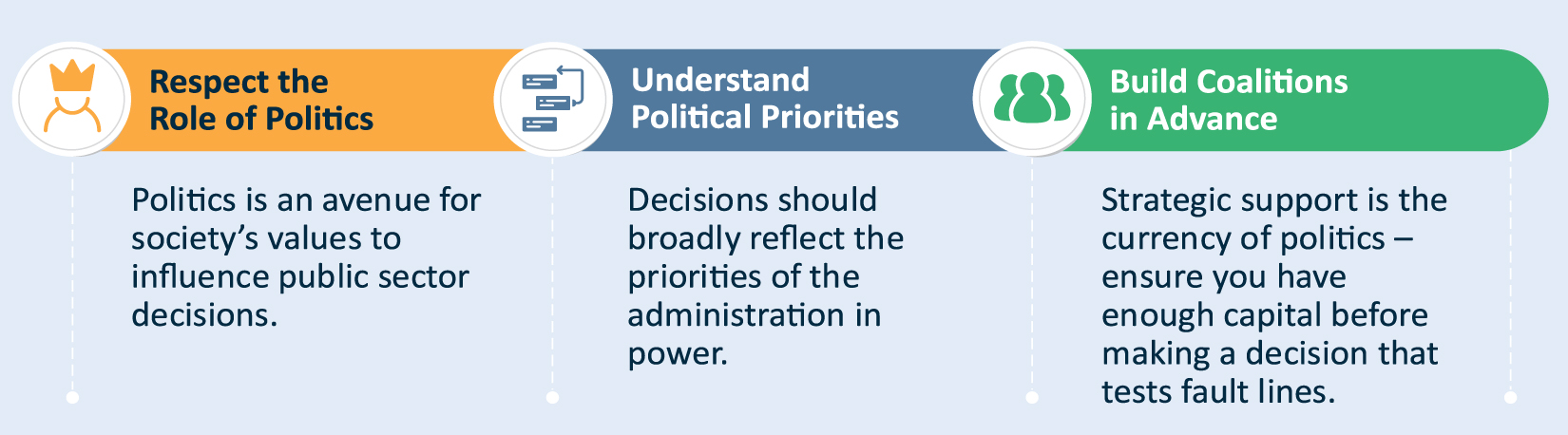
Long Description.
The text in the infographic reads as follows:
1. Respect the Role of Politics: Politics is an avenue for society’s values to influence public sector decisions.
2. Understand Political Priorities: Decisions should broadly reflect the priorities of the administration in power.
3. Build Coalitions in Advance: Strategic support is the currency of politics – ensure you have enough capital before making a decision that tests fault lines.
Who is a Political Stakeholder?
A broad range of people can have a big influence on political dynamics, including
- Elected or appointed officials,
- Industry representatives,
- Community leaders,
- Business leaders,
- Advocacy groups, and
- The public.
Strategies
Recognize Political Entities as Stakeholders
Every public agency has a link to politics. Agency CEOs must avoid catering their decisions to seek political favor while also being prepared for the reality that every politician with a connection to a decision is a legitimate stakeholder. Politiciansʼ opinions and values represent a community, as they are elected to speak for their constituents. Politics are a natural and healthy part of public sector decisions.
No one voted for us, so our decisions need to respect the political environment that we operate in.
—Marc Williams
CEO, Texas DOT
Seek Help in Navigating the Political Landscape
Seek a knowledgeable mentor to help identify the fault lines of key topics and the entities to pay attention to. This is especially important if you are new to the agency or region, lack direct exposure to politics, or if there are significant influences from outside your familiar world. This will also help inform you about relevant history from before your time. An ideal mentor could be an executive in another place or someone familiar with your agencyʼs history and dynamics. Just make sure to identify any biases or conflicts of interest.
Build Preemptive Coalitions of Support
As soon as you see a tough decision reception coming, assemble support well in advance. This may include lining up supportive voices to speak up when the time comes or preparing potential critics for what to expect and why you are doing it, in the hope they at least agree to stay quiet. Social mapping can help with this to visually identify assumed supporters and detractors. Broadening the coalition early can do a lot to dampen vocal opposition groups if they feel that their input is respected.
We knew we needed to go back to the original objectors.
—Shawn Wilson
former Secretary, Louisiana Department of Transportation and Development
No Surprises! Communicate Early and Often
Few things are as unpleasant to politicians as unexpected negative attention. As soon as you catch wind of potential fallout, reach out to give key political stakeholders enough background to prepare them. Gather their input before decisions are too far along to change course. Keep regular contact outside of urgent issues to keep tabs on political trends and priorities.
Understand That Influence May Not Come with a Title
The most influential people to pay attention to on a given issue may not have a formal title or position. Pay attention to who people consult with or listen to on a topic and make sure you know where they stand on relevant decisions.
Explain Your Context
Be sure to share the context and reality behind the decision with potential supporters or detractors. When there are financial, regulatory, legal, or other reasons a desired outcome cannot be accomplished, ensure stakeholders are aware of these factors to help them understand your choices.
Reality Test the “Best” Technical Solutions
Agency leaders with technical backgrounds may instinctively pursue the most practical and seemingly sound solutions from a technical perspective. Recognize, however, that even the most advanced quantification or prioritization still introduces some level of bias and leaves out other important considerations. Make decisions that ensure these less concrete priorities are considered and balanced with the technical.
Ignore politics at your peril.
—Everyone
Find Your Line in the Sand
Politics forces leaders to consider other peopleʼs values: the governorʼs, influential legislatorsʼ, industryʼs, and the publicʼs. This may require compromising on your individual values to find what is best for a situation. But always know where your own personal line in the sand is—the point past which you will not compromise. Ask yourself, “What will I not do?” and know the answer before you are faced with it.


