Advancing the Art and Science of Decision-Making: A Guide (2026)
Chapter: Communicate Your Decision

Communicate Your Decision
How a leader shares the decision after it is made and with whom are important to how the decision is received. Peopleʼs initial reactions will be based on when they heard, when others heard relative to them, how the information was delivered, the emotional tenor of the message, how involved they had been in the decision, and how far in advance they knew about potential ramifications.
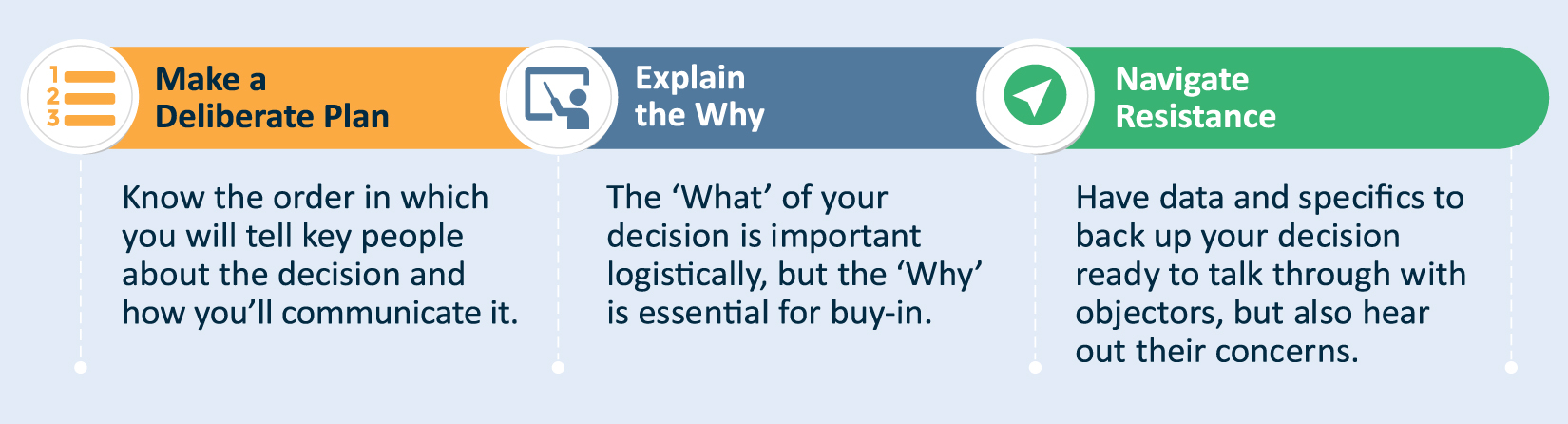
Long Description.
The text in the infographic reads as follows:
1. Make a Deliberate Plan: Know the order in which you will tell key people about the decision and how you will communicate it.
2. Explain the Why: The ‘What’ of your decision is important logistically, but the ‘Why’ is essential for buy-in.
3. Navigate Resistance: Have data and specifics to back up your decision ready to talk through with objectors, but also hear out their concerns.
Special Considerations
- Timing: Communicate your decision as soon as possible to prevent the appearance of secrecy. Only wait to communicate if there is a strategic reason, such as informing people who need to know in advance or if there is an event before which it would be disruptive.
- Questions: People will have many questions following a new decision: how it affects them, whether new work is involved, and whether they will need to do anything differently.
Strategies
Plan Who You Tell When and How
Have a plan for who you will communicate with and when. Determine who gets a call and who finds out from the press release. Perhaps you have a cascading call list, with the individuals who have the most invested in the decision being approached first. Candidates for being at the top of the call list might be your boss, those who will have a strong reaction to the decisions, those most affected by it, or those most integral to its implementation.
People will make stuff up in the absence of information.—Joyce Taylor
Chief Engineer, Maine DOT
Announce the Decision to Your Team Together
After making strategic calls, turn inward to your team. There may have been a few members of your team who warranted early calls, but, outside of this, try to let the entire team know at the same time. If individuals feel left out, they may be harder to convince that the decision is the
right one and be less willing to implement it. There are times when making the final decision in front of everyone involved is helpful to ensure they are all in the know and find out at the same time.
Explain Your Reasons
Be clear about the rationale behind your decisions, whether the decision was made by consensus or an executive call. Explain the different options that were considered and how the chosen option was superior to the others. Share any relevant data or evidence, who was consulted in the process, trade-offs that were made, and how this will create the most benefit to the agency and the public.
Adjust the Context of the Conversation Appropriately
Understand the array of perspectives regarding a decision. Major decisions will impact team members differently, depending on their role within the organization. Leadership will likely question how the decision will affect the organization or even society, while managers and front-line staff might be more interested in how the decision will alter their current day-to-day reality. Keep these different perspectives in mind when communicating the impacts of decisions.
Navigate Resistance Openly
Stand your ground with well-researched arguments when facing opposition but recognize that some staff or stakeholders may need time to understand and accept the decision. Clearly communicate what the final decision is, make yourself available to staff or stakeholders with opposing views or questions afterwards, and be willing to address their concerns. Simply being heard can make people more willing to accept the decision, and this dialogue provides invaluable opportunity for you to explain your reasons to them directly.
Take Charge of the Public Narrative
As news of the decision spreads into the public domain, make sure that the key points about the decisionʼs impact and the rationale for the decision are clearly and repeatedly communicated to prevent distortions of the story from taking hold. Enlist your agencyʼs communications professionals to help get a consistent message out.
Repeat Your Message
An important part of ensuring your decision takes hold is to repeat again and again why you came to that decision. A leader cannot communicate it once or only in one setting. Talk about the decision a lot to make sure people hear it more than once and truly understand the why behind the decision. You may be sick of hearing it, but everyone around you has heard it only a fraction of the times you have said it, and there is a good chance they were not listening to some of them.


