Advancing the Art and Science of Decision-Making: A Guide (2026)
Chapter: Introduction to the Guide

Introduction to the Guide
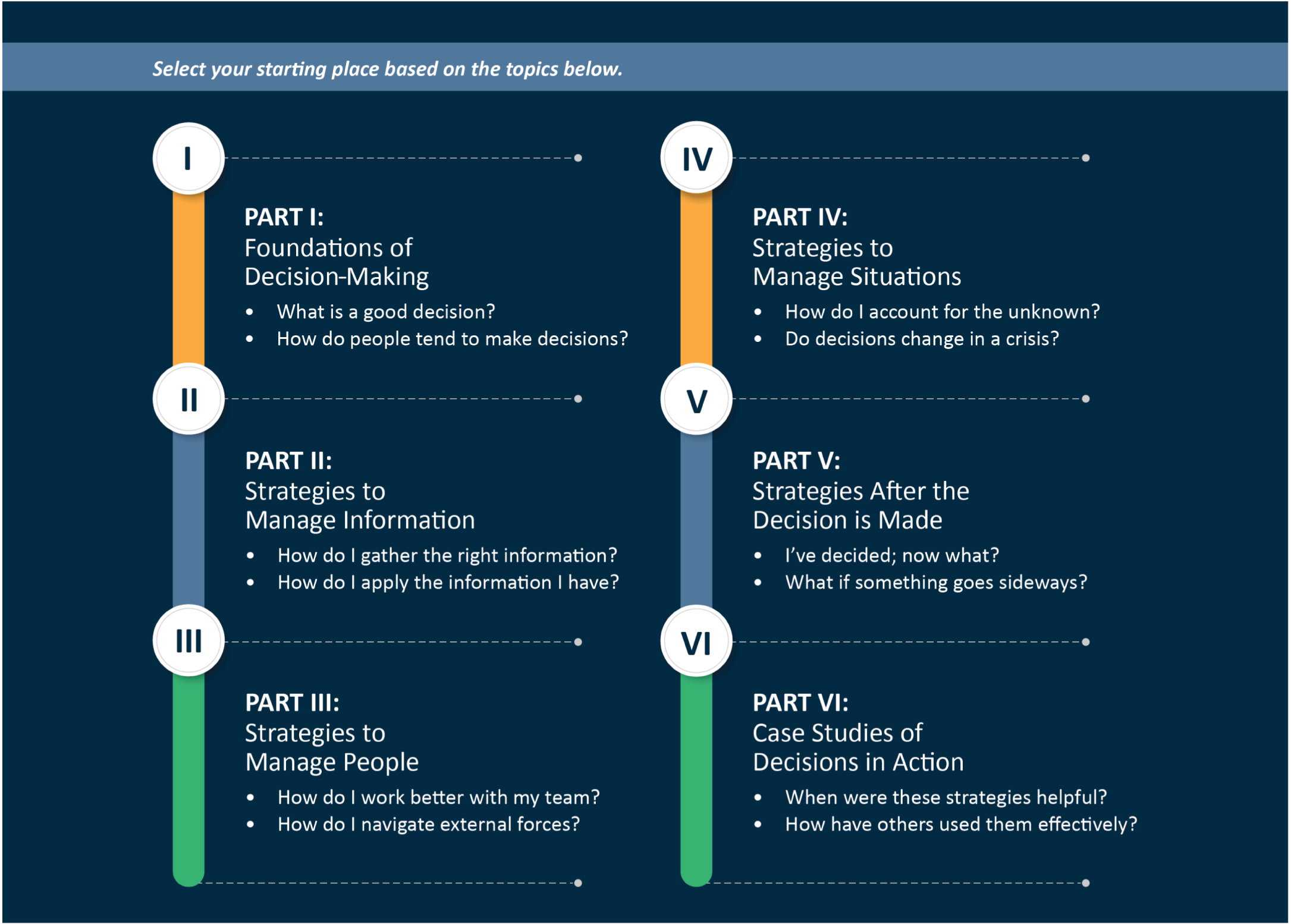
This document combines practical advice and experiences from transportation agency executives with the latest findings from cognitive science research to supplement leadersʼ toolboxes for good decision-making. This begins with defining the foundations of “good” decisions and understanding the human forces that influence how we all make decisions. It ends with case studies of real-world decision situations faced by agency leaders and a closer look at how they handled them. In between are several sections of strategies for navigating common challenges and unique situations. These strategies serve as tools to deploy in select instances, as circumstances require, rather than as steps in a defined process to follow at all times.
Long Description.
The data given in the illustration are as follows: Part 1, Foundations of Decision-Making: What is a good decision? How do people tend to make decisions? Part 2, Strategies to Manage Information: How do I gather the right information? How do I apply the information I have? Part 3, Strategies to Manage People: How do I work better with my team? How do I navigate external forces? Part 4, Strategies to Manage Situations: How do I account for the unknown? Do decisions change in a crisis? Part 5, Strategies After the Decision is Made: I've decided; now what? What if something goes sideways? Part 6, Case Studies of Decisions in Action: When were these strategies helpful? How have others used them effectively?

