Advancing the Art and Science of Decision-Making: A Guide (2026)
Chapter: Connect with Staff and Internal Forces

Connect with Staff and Internal Forces
Implementing decisions will require the buy-in and efforts of the organizationʼs staff. But a transportation agencyʼs staff includes many different spheres of expertise and attending perspectives on each issue—not to mention the wide range of personalities and informal influence structures that sway opinions. Leaders must learn to constructively handle the personalities in an organization and bring their people around to even unpopular decisions.
Long Description.
The text in the infographic reads as follows:
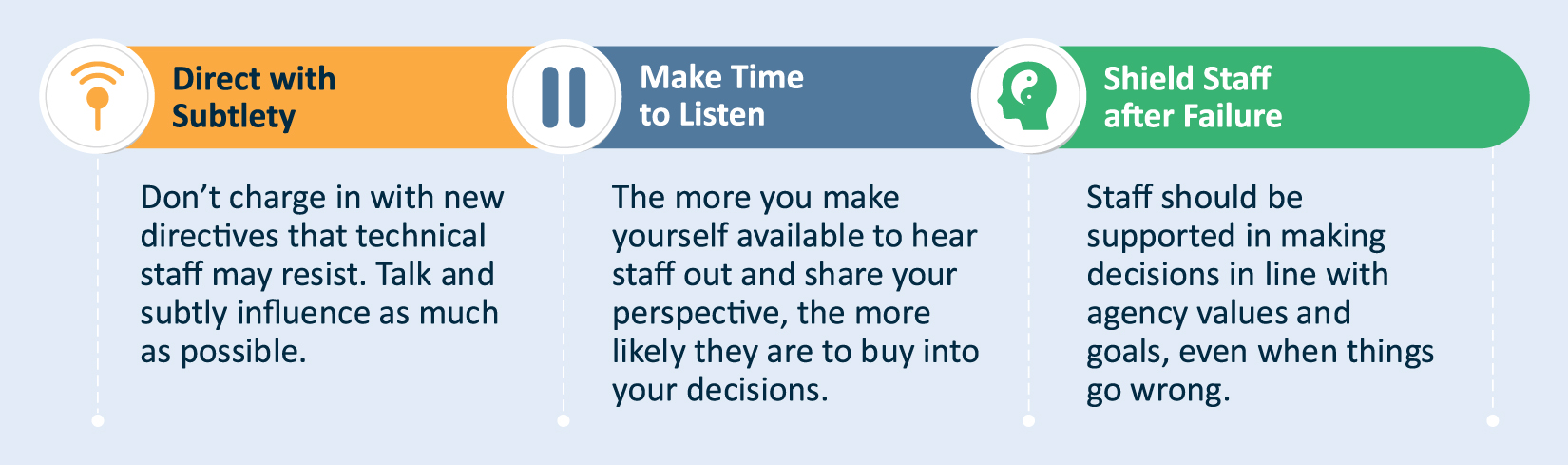
1. Direct with Subtlety: Don’t charge in with new directives that technical staff may resist. Talk and subtly influence as much as possible.
2. Make Time to Listen: The more you make yourself available to hear staff out and share your perspective, the more likely they are to buy into your decisions.
3. Shield Staff after Failure: Staff should be supported in making decisions in line with agency values and goals, even when things go wrong.
Special Considerations
- Public agencies were designed to change slowly, which will limit how much you can get done, even as the top executive.
- Many staff at transportation agencies have seen leaders come and go. They are unlikely to be impressed with fast-talking and “innovative” ideas right out of the gate.
Strategies
Come in Humble
Ask questions about your staff to understand their situation before exerting your will. You may have a sense of urgency—that you are going to fix things or “mix things up”—but that can bring a sense of fear. People may be less forthcoming with information if you are too focused on undoing processes. Instead, come in with respect for the time that staff have served the agency and see if there are things they can teach you. The quality of your decisions and ability to get things done will hinge on their willingness to trust you.
The staff were there before you, and theyʼll be there after you leave.
—Anonymous DOT Executive
Direct Without Being Directive
It can take time for a new leader to be seen as an authoritative voice, particularly for very technical spheres in which the leader does not have a background or for someone new to the
agency. In these situations, telling technical staff what to do or overruling them on key decisions may alienate the people necessary to implement decisions. Instead, engage in sustained conversation with these staff and pose questions until you and they can arrive at the same place. Strive to establish real partnerships to make staff feel included in decisions.
Make and Manage Time to Listen to Staff
Your staff have to feel that they have access to you, both to ask about what is happening in the agency and to offer their perspective on issues. Some leaders keep an open-door policy—an admirable practice that can have benefits—while others find it overwhelming to have irregular interruptions in their day. Instead, you can strategically set up regular times when staff have an opportunity to bring input and questions. When your schedule allows, go out into the agency to talk with staff informally. This provides low-stress opportunities to share your perspective with staff in advance of big decisions and hear their input.
Seek Out Influencers
Internal leaders are not necessarily the heads of a division, office, or team. Look for the people whom other staff seem to listen to, turn to for advice, or seek out when problems arise. Make sure to seek input from these individuals, explain your perspective to them on key decisions, and give them opportunities to make decisions directly.
Have the Staffʼs Back If They Fail
If youʼre looking for staff to support your decisions, they need to know that youʼll support them in their decisions even if everything does not go perfectly. As much as possible, create a safe space for people to fail by limiting the risks involved in delegated decisions and ensuring staff have what they need to get the right information or resources. If something goes wrong, explore why. If decisions were made within the purview of your agencyʼs values or in pursuit of the goal you set before them, help staff learn rather than jumping to criticism.
If you make a mistake but followed our three values doing it, we got you.
—Carlos Braceras
Executive Director, Utah DOT
Be Ready to Put Your Foot Down
When it comes down to it, you may need to flat out say no to staff bringing unworkable ideas or push back on staff who are intentionally obstructing the decision you have made. Youʼll never be able to win everyone over. Just make sure you have exhausted all other options, if time allows, before putting your foot down.

