Advancing the Art and Science of Decision-Making: A Guide (2026)
Chapter: Balance Multiple Objectives

Balance Multiple Objectives
Public-sector organizations are charged with advancing several different broad societal goals, and there is no single, clear answer to the question of which objectives an agency should prioritize or how the diversity of stakeholder interests should be prioritized. DOT leaders also will need to weigh in on clashes between different offices or teams within their organization.
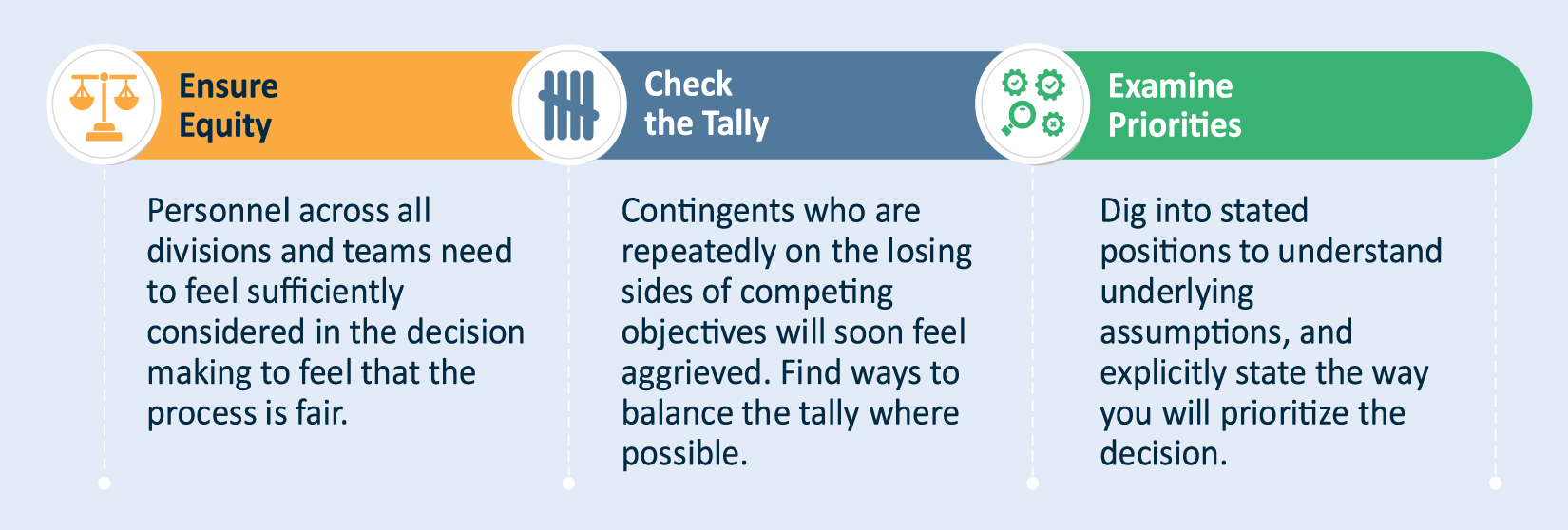
Long Description.
The text in the infographic reads as follows:
1. Ensure Equity: Personnel across all divisions and teams need to feel sufficiently considered in the decision-making to feel that the process is fair.
2. Check the Tally: Contingents who are repeatedly on the losing side of competing objectives will soon feel aggrieved. Find ways to balance the tally where possible.
3. Examine Priorities: Dig into stated positions to understand underlying assumptions and explicitly state the way you will prioritize the decision.
Common Competing Interests Under One Agency
- Project cost efficiency versus community or environmental enhancements;
- Governorʼs priorities versus those of key stakeholders;
- Plannersʼ perspective versus operational or engineering team concerns; and
- Which districts, programs, or locations get additional funds.
Strategies
Get Everyone Aligned Toward a North Star
Day-to-day quibbling between sibling offices and differing perspectives on how to achieve an outcome are unavoidable and healthy parts of finding the best path. However, you want everyone to agree to and work toward the same big-picture outcomes. Make sure you have clearly established the agencyʼs top goals, values, or priorities that should govern every decision. Define the top priorities for the decision with stakeholders at the start of the process. Tying the decision back to these priorities that everyone agreed to will help smooth over competing objectives that arise in the interim.
Encourage Staff to Value Other Work
It is normal for staff to have a perspective that conflicts with that of their colleagues, but they should still learn to value othersʼ views or accept that diverse viewpoints are needed. Have departments share their efforts and priorities with peers to help staff better understand the value of other things happening throughout the agency.
Give All Sides a Chance to Make Their Case
Make sure that agency division leaders or opposing outside advocates are given equal access to information and opportunities and that you are giving each contingent equal airtime to make their case. If one group continually has the opportunity to speak with you about issues and another group feels excluded, any decision not to the second groupʼs liking will immediately be cast as unfair and biased because “you donʼt listen to us.” If you see a tension arising between agency departments or state priorities, get in front of perceptions of unfairness by spending significant time listening to all sides.
If you properly engage a broader group, you can turn people from agitators on the outside to part of the solution.
—Ricardo Martinez
former NHTSA Administrator
Check the Historical Scorecard
While you do not want to encourage anyone in the agency to keep a scorecard, you can be sure that someone is keeping a running tally of which teams or areas have gotten extra resources or more favorable decisions. If there is already a history of one set of priorities coming out on top more often than others, try to avoid adding to lopsided outcomes and see if there is an opportunity to balance things out. If you believe the best decision lies with the historical winner, you will have to do more legwork to talk with the side that will feel unfairly excluded to hear them out and explain your rationale. If this keeps happening, examine why and look for biases in yourself or the process.
Map What Is Behind Stated Priorities
What assumptions are people making when they assert their position or priority? Can you dig further to understand the root of concerns or stated requests? Doing this can help clarify exactly what each side is trying to achieve and can help you, the decision-maker, determine which of these unstated issues are most in line with your primary goals.
Explicitly Outline What You Are Using to Prioritize
Consider the importance of the project prioritization process to your agencyʼs stakeholders. Each district, division, office, metropolitan planning office, and local official wants to know up front how the agency is going to prioritize the potential projects—which criteria will be used and who will score them. Even when such a formal prioritization process is not required, being explicit about what you are using to prioritize an issue will help those with competing perspectives understand and accept the final tally.
This page intentionally left blank.


