Unknown Quantity: A Real and Imaginary History of Algebra (2006)
Chapter: Photos, Illustrations, and Drawings
Visit
NAP.edu/10766
to get more information about this book, to buy it in print, or to
download it as a free PDF.
Previous Chapter:
Index

Suggested Citation:
"Photos, Illustrations, and Drawings." John Derbyshire. 2006. Unknown Quantity: A Real and Imaginary History of Algebra. Washington, DC: Joseph Henry Press.
doi: 10.17226/11540.
—Before Universal Arithmetic—
Otto Neugebauer (1899–1990) found algebra in old Babylonian tablets.
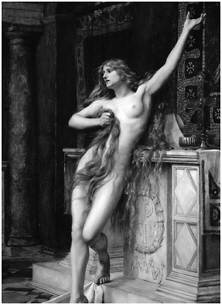
The last moments of Hypatia (c.370–415), in the Victorian imagination.
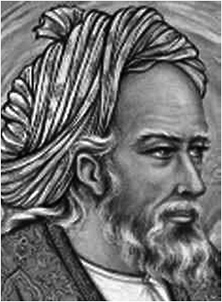
Omar Khayyam (1048–1131) wrote poetry and tackled the cubic equation.
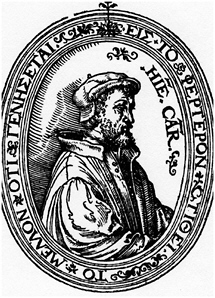
Girolamo Cardano (1501–1576) found a general solution for the cubic.
Suggested Citation:
"Photos, Illustrations, and Drawings." John Derbyshire. 2006. Unknown Quantity: A Real and Imaginary History of Algebra. Washington, DC: Joseph Henry Press.
doi: 10.17226/11540.
Suggested Citation:
"Photos, Illustrations, and Drawings." John Derbyshire. 2006. Unknown Quantity: A Real and Imaginary History of Algebra. Washington, DC: Joseph Henry Press.
doi: 10.17226/11540.
Suggested Citation:
"Photos, Illustrations, and Drawings." John Derbyshire. 2006. Unknown Quantity: A Real and Imaginary History of Algebra. Washington, DC: Joseph Henry Press.
doi: 10.17226/11540.

Suggested Citation:
"Photos, Illustrations, and Drawings." John Derbyshire. 2006. Unknown Quantity: A Real and Imaginary History of Algebra. Washington, DC: Joseph Henry Press.
doi: 10.17226/11540.


Suggested Citation:
"Photos, Illustrations, and Drawings." John Derbyshire. 2006. Unknown Quantity: A Real and Imaginary History of Algebra. Washington, DC: Joseph Henry Press.
doi: 10.17226/11540.
Suggested Citation:
"Photos, Illustrations, and Drawings." John Derbyshire. 2006. Unknown Quantity: A Real and Imaginary History of Algebra. Washington, DC: Joseph Henry Press.
doi: 10.17226/11540.

Suggested Citation:
"Photos, Illustrations, and Drawings." John Derbyshire. 2006. Unknown Quantity: A Real and Imaginary History of Algebra. Washington, DC: Joseph Henry Press.
doi: 10.17226/11540.


Subscribe to Emails from the National Academies
Stay up to date on activities, publications, and events by subscribing to email updates.