Human Factors Guidelines for Road Systems: Third Edition (2025)
Chapter: 26 Older Road Users

CHAPTER 26
Older Road Users
Older Driver Crash Risk, Crash Causation Factors, and Fitness to Drive
Older Driver Considerations for Markings, Signs, and Lighting
Older Driver Considerations for Curves and Merging Behavior
Older Driver Considerations for Work Zones—Signs
Older Driver Considerations for Work Zones—Markings and Channelization
Older Driver Considerations for Intersections—Left Turns
Older Driver Considerations for Intersections—Roundabouts
Older Driver Considerations for Intersections—Signs
Older Driver Considerations for Intersections—Pavement Markings and Signals
Note: The guidelines presented in this chapter have been drawn primarily from reference sources focused on designing roadways for the older road user, which generally refers to road users aged 65 or older. These sources include research studies that have examined older road user behaviors and performance with a range of design, operational, and traffic engineering elements. In many instances, the guidelines do not present any new information relative to what can be found in standard reference sources such as the MUTCD. However, the guidelines always highlight some design feature that is linked in some way to known limitations of older road users (e.g., vision, cognition) and (following Brewer et al., 2014), reflect the most conservative design value among present options in the existing reference sources.
Although the focus and terminology in this chapter are on the older road user, much of the content may apply to drivers with other impairments, such as those related to illness or injury.
OLDER DRIVER CRASH RISK, CRASH CAUSATION FACTORS, AND FITNESS TO DRIVE
Introduction
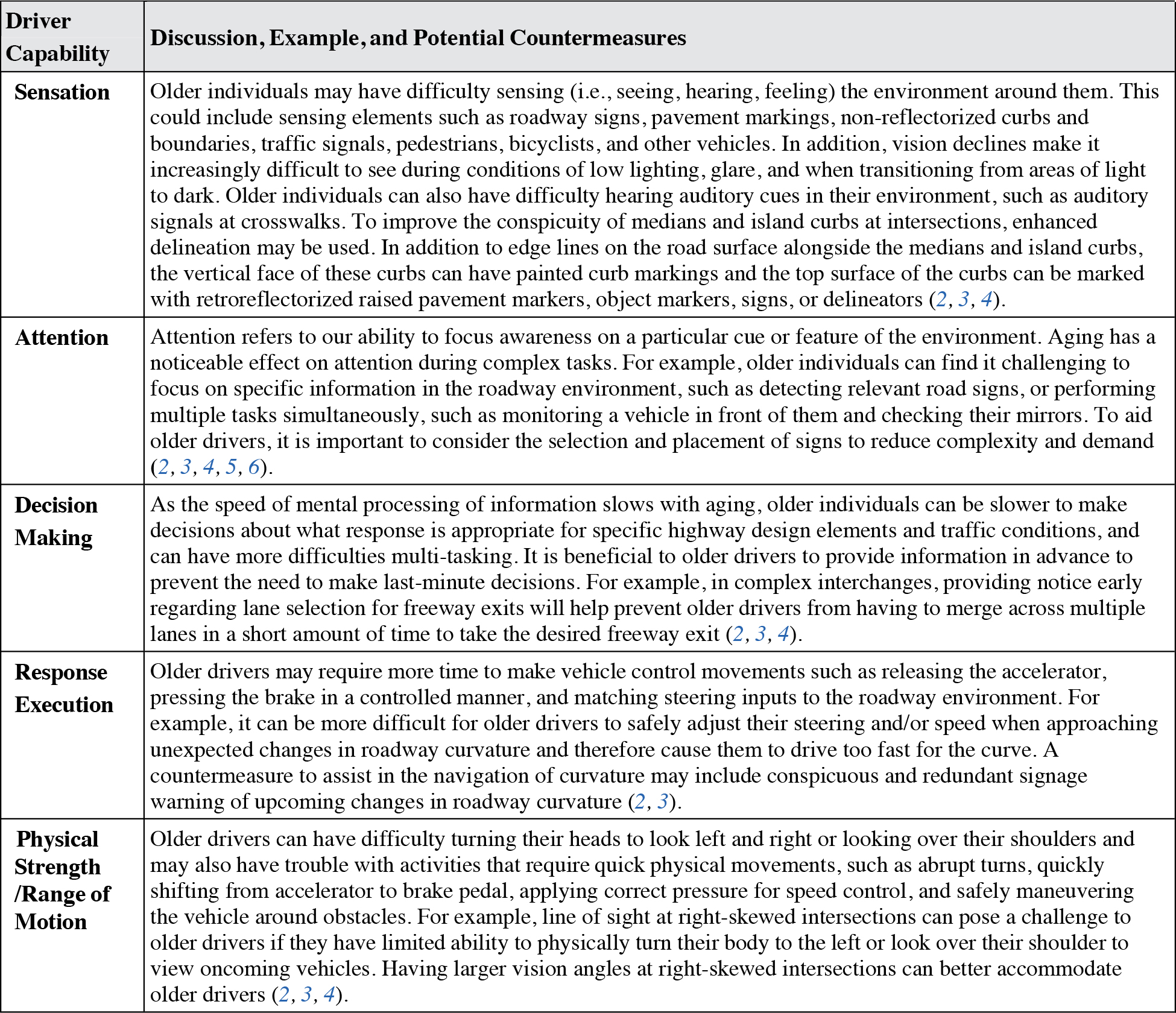
This guideline provides an overview of older driver crash statistics and crash characteristics and describes how changes in driversʼ functional capabilities as they age contribute to reduced capacity to meet the demands of the driving task. This guideline also discusses how well older drivers self-assess their fitness to drive and regulate their driving to reduce crash potential and risk.
In 2021, there were 55.8 million people 65 years old and older in the United States, comprising 17% of the total population (1), and this number is expected to increase to 72.1 million by 2030 (2). Importantly, older drivers made up approximately one-fifth of all licensed drivers in 2021 (1), and as people age, their ability to drive safely can decrease due to perceptual, motor, sensory, and physiological changes.

Discussion
Crash Statistics for Older Drivers. From 2012 to 2021, the number of people 65 and older in the United States increased by 29% (1). There were 7,489 people aged 65 and older killed in traffic crashes in the United States in 2021, accounting for 17% of all traffic fatalities and 11% of all people injured (1). This was a 14% increase in the number of fatalities of people aged 65 and older from 2020 (1). Older drivers specifically accounted for 13% of drivers involved in fatal traffic crashes in 2021 (1).
Common Older Driver Crash Configurations and Characteristics. Studies have found that older drivers are more likely to be involved in accidents due to: weather and road surface factors; when driving on highways, at intersections and interchanges, and through curves; and when performing lane change maneuvers, merging, left turns and U-turns (1, 2, 3, 4, 7). In addition, failure to yield right-of-way and disregarding signs or signals are common crash factors in crashes with an older driver fatality (8), and older driver functional limitations lead to higher probabilities of head-on collisions (7).
Older Driver Assessment of Fitness to Drive. Some drivers may have imprecise knowledge of their age-related functional decline, but generally, they are able to self-regulate or modify their driving patterns to cope with their functional declines in specific driving skills, and performance strongly influences their adoption of compensatory driving behaviors (4, 9, 10, 11). However, some older drivers do not adjust their driving, and it has also been found that older drivers rate their fitness to drive with respect to functional ability more highly than ratings provided by their family members and are often unable to accurately judge their own driving ability (5, 10, 12). 34% of older drivers are concerned about their own driving; the most frequently mentioned driving concerns were other drivers, driving at night, visual ability and awareness, and other drivers being aggressive or reckless (13).
Design Considerations
The roadway environment coupled with individual differences (e.g., for the older road user) will often present different demands and unique performance implications based on transportation modality and as such, require different types of countermeasures to reduce crash potential for all road users (i.e., drivers, pedestrians, bicyclists, and transit users). For example, at intersections with high pedestrian volume and high turning vehicle volume, a leading pedestrian interval of three seconds or more can be helpful because it allows slower walkers to cross at least one roadway lane before conflicting turning vehicles are released (3). In a multimodal transportation network, countermeasure selection and implementation can include tradeoffs between countermeasure efficacy, safety benefits, unanticipated outcomes, and feasibility for all road users.
Cross References
Sign Design to Improve Legibility
Key References
1. National Center for Statistics and Analysis. (2023). Older Population: 2021 Data. (Traffic Safety Facts. Report No. DOT HS 813 491). Washington, DC.
2. Brewer, M., Murillo, D., and Pate, A. (2014). Handbook for Designing Roadways for the Aging Population (No. FHWA-SA-14-015). Washington, DC: FHWA, Office of Safety.
3. FHWA. (2003). Travel Better Travel Longer: A Pocket Guide to Improve Traffic Control and Mobility for Our Older Population (FHWA-OP-03-098). Washington, DC: FHWA, Office of Operations.
4. Baldwin, C. L., Lewis, B. A., and Greenwood, P. M. (2019). Designing Transportation Systems for Older Adults. Boca Raton: CRC Press.
5. Harada, C. N., Love, M. C. N., and Triebel, K. L. (2013). Normal cognitive aging. Clinics in Geriatric Medicine, 29(4), 737–752.
6. Wagner, J. T., and Nef, T. (2011). Cognition and driving in older persons. Swiss Medical Weekly, 141(0102), w13136.
7. Du, Y., and Chan, C. Y. (2014). Older driver crash risk modeling by AdaBoost. 93rd Annual Meeting of the Transportation Research Board.
8. Hirth, V. (2010). A comparison of motor vehicle crashes between older and middle-age drivers in South Carolina. 89th Annual Meeting of the Transportation Research Board.
9. Choi, H., and Feng, J. (2018). Older driversʼ self-awareness of functional declines influences adoption of compensatory driving behaviors. In Proceedings of the 95th Transportation Research Board Annual Meeting, Washington, DC.
10. Li, G., et al. (2017). Longitudinal research on aging drivers (LongROAD): study design and methods. Injury Epidemiology, 4, 1–16.
11. Molnar, L. J., Eby, D. W., Zhang, L., Zanier, N., Louis, R. M. S., and Kostyniuk, L. P. (2015). Self-regulation of driving by older adults: a synthesis of the literature and framework. Aging, 20, 227–235.
12. Insurance Institute for Highway Safety. (June 2023). Older Drivers. https://www.iihs.org/topics/older-drivers#driving-environment.
13. Allen, H. K., Beck, K. H., and Zanjani, F. (2019). Driving concerns among older adults: Associations with driving skill, behaviors, and experiences. Traffic Injury Prevention, 20(1), 45–51.
OLDER DRIVER CONSIDERATIONS FOR MARKINGS, SIGNS, AND LIGHTING
Introduction
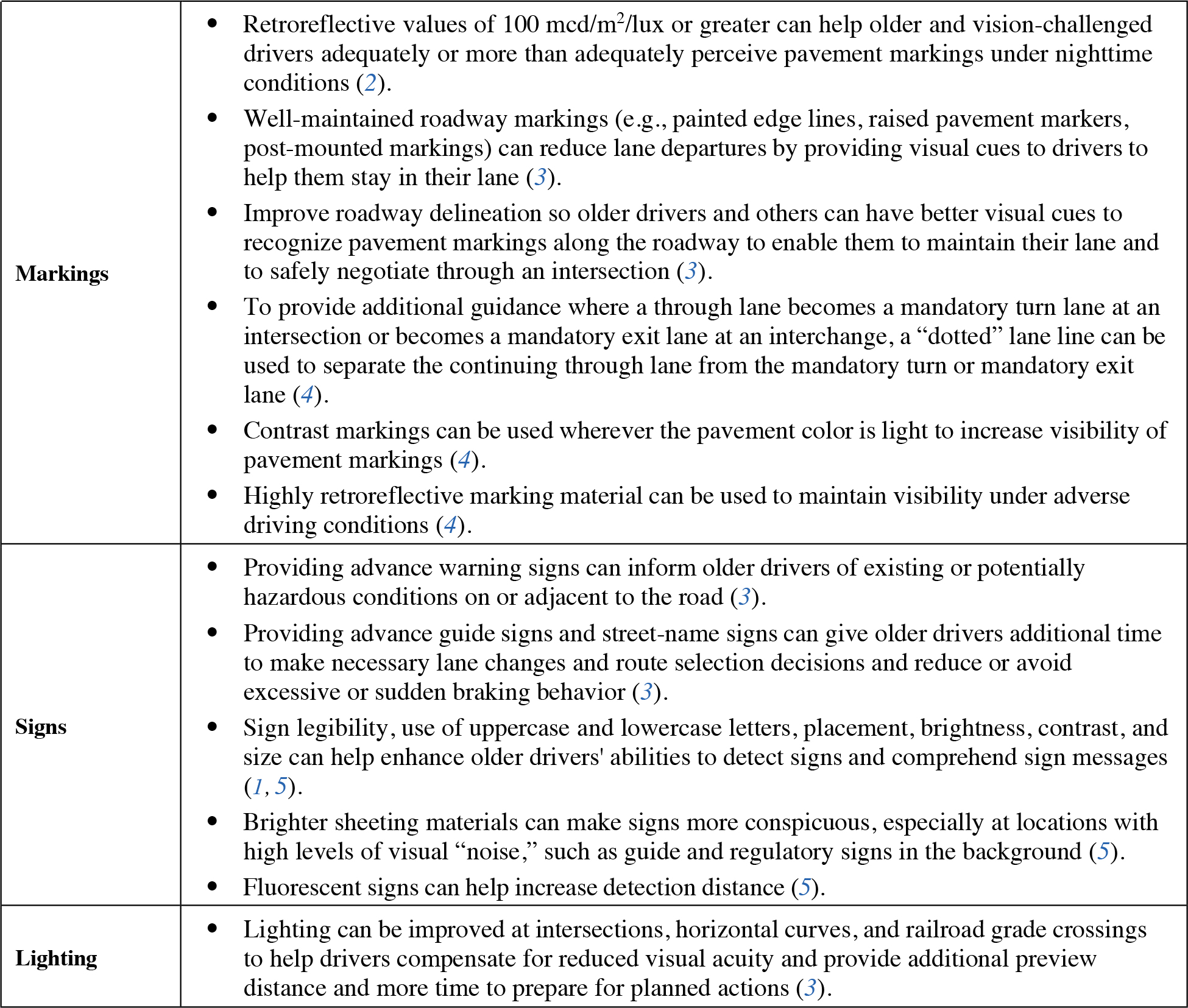
As people age, their ability to drive safely can decrease due to sensory changes such as vision decline. Markings, signs, and lighting are important to consider with respect to aging driver needs because older and visually impaired individuals may have difficulty seeing the environment around them, posing risks to their safety (1). Age-related vision impairment and contrast sensitivity declines can affect a driverʼs ability to read and detect signs or lane markings, especially under low-light conditions and in the presence of fog or glare (1). This guideline discusses road-based countermeasures specific to markings, signs, and lighting to support older drivers and the unique challenges they may face.

Discussion
Older adults may face a number of challenges with respect to perception and cognition. For example, information processing is generally slowed for older adults, who may have difficulties reading signs clustered together at an intersection (3). Improvements in sign placement and design can help older drivers respond more quickly and make important driving decisions (3). Furthermore, contrast sensitivity has been found to be a better predictor of the ability to read road signs than overall visual acuity, but this generally declines with age, making it potentially more difficult for older adults to detect objects in low light (e.g., nighttime) and in the presence of fog or glare (1).
According to data from the FHWA, many state departments of transportation (DOTs) report using extra-wide longitudinal pavement markings, high-contrast, black-on-white and black-on-yellow markings, and oversized glass beads to improve visibility and conspicuity of their lane lines and centerlines (5). These oversized glass beads in traditional paint markings and preformed pavement marking tape designed for rumble strip applications can help increase the retroreflectivity and thus the visibility of pavement markings at night and in wet weather conditions (4, 5). According to the Handbook for Designing Roadways for the Aging Population, preformed pavement marking tape is used statewide in Iowa, on Detroit-area freeways in Michigan, and on all interstate routes in Virginia (4). Routine use of such contrast markings such as duplicate black markings applied immediately upstream or downstream from broken line longitudinal markings (staggered markings), or black contrast markings surrounding either side of broken or continuous longitudinal markings are used in Arkansas, Colorado, Georgia, Idaho, Missouri, North Carolina, Oklahoma, Pennsylvania, Texas, Utah, Virginia, Wisconsin, and the District of Columbia (4). Any treatment that improves the contrast and consequently the detectability of lane, gore, other longitudinal pavement markings (broken or continuous), and road edge boundaries will have a larger benefit to older drivers (4). The continuous guidance information offered by treatments that enhance the contrast of pavement markings is especially helpful to aging drivers under adverse visibility conditions and when there is only a brief preview of changing roadway geometry downstream (4).
Furthermore, older drivers may be at higher risk of failing to detect advance warning signs posted at the side of the road due to loss of visual sensitivity in the periphery, a narrowing of their field of view, or a reduced ability to engage in a search of the visual periphery when, for example, environmental conditions increase demands for path guidance information (4). If an aging driver does experience any of these limitations, they should glean an extra benefit from advance warning messages presented as pavement markings if these markings are applied and maintained at contrast levels sufficient to ensure legibility (4).
Design Considerations
In-roadway crosswalk warning lights alerting drivers to the presence of pedestrians can provide safety benefits such as increasing the detection of pedestrians (6), decreasing vehicle speeds (7, 8), and increasing the proportion of drivers yielding to pedestrians (6).
Cross References
Characteristics of Lighting that Enhance Pedestrian Visibility
Sign Design to Improve Legibility
Key References
1. Baldwin, C. L., Lewis, B. A., and Greenwood, P. M. (2019). Designing Transportation Systems for Older Adults. Boca Raton: CRC Press.
2. Ethen, J. L., and Woltman, H. L. (1986). Minimum retroreflectance for nighttime visibility of pavement markings. Transportation Research Record, 1093, 43–47.
3. Molnar, L. J., Eby, D. W., and Miller, L. L. (2003). Promising Approaches for Enhancing Elderly Mobility. University of Michigan Transportation Research Institute.
4. Brewer, M., Murillo, D., and Pate, A. (2014). Handbook for Designing Roadways for the Aging Population (No. FHWA-SA-14-015). Washington, DC: FHWA. Office of Safety.
5. FHWA. (2010). Spotlight on Senior Mobility. https://highways.dot.gov/public-roads/janfeb-2010/spotlight-senior-mobility.
6. Katz, Okitsu and Associates. (2000). Illuminated Crosswalks: An Evaluation Study and Policy Recommendations. (Prepared for the City of Fountain Valley, California). Tustin, CA. Retrieved from https://xwalk.com/app/uploads/2019/11/Fountain-Valley-Study.pdf.
7. Dougald, L. (2004). Development of Guidelines for Installation of Marked Crosswalks (VTRC 05-R18). Charlottesville: Virginia Transportation Research Council.
8. Whitlock and Weinberger Transportation. (1998). An Evaluation of a Crosswalk Warning System Utilizing In-Pavement Flashing Lights. Retrieved June 20, 2011, from http://www.safezonealert.com.au/files/evaluationcrosswalkwarningsystemutilizinginpavementlights.pdf.
OLDER DRIVER CONSIDERATIONS FOR CURVES AND MERGING BEHAVIOR
Introduction
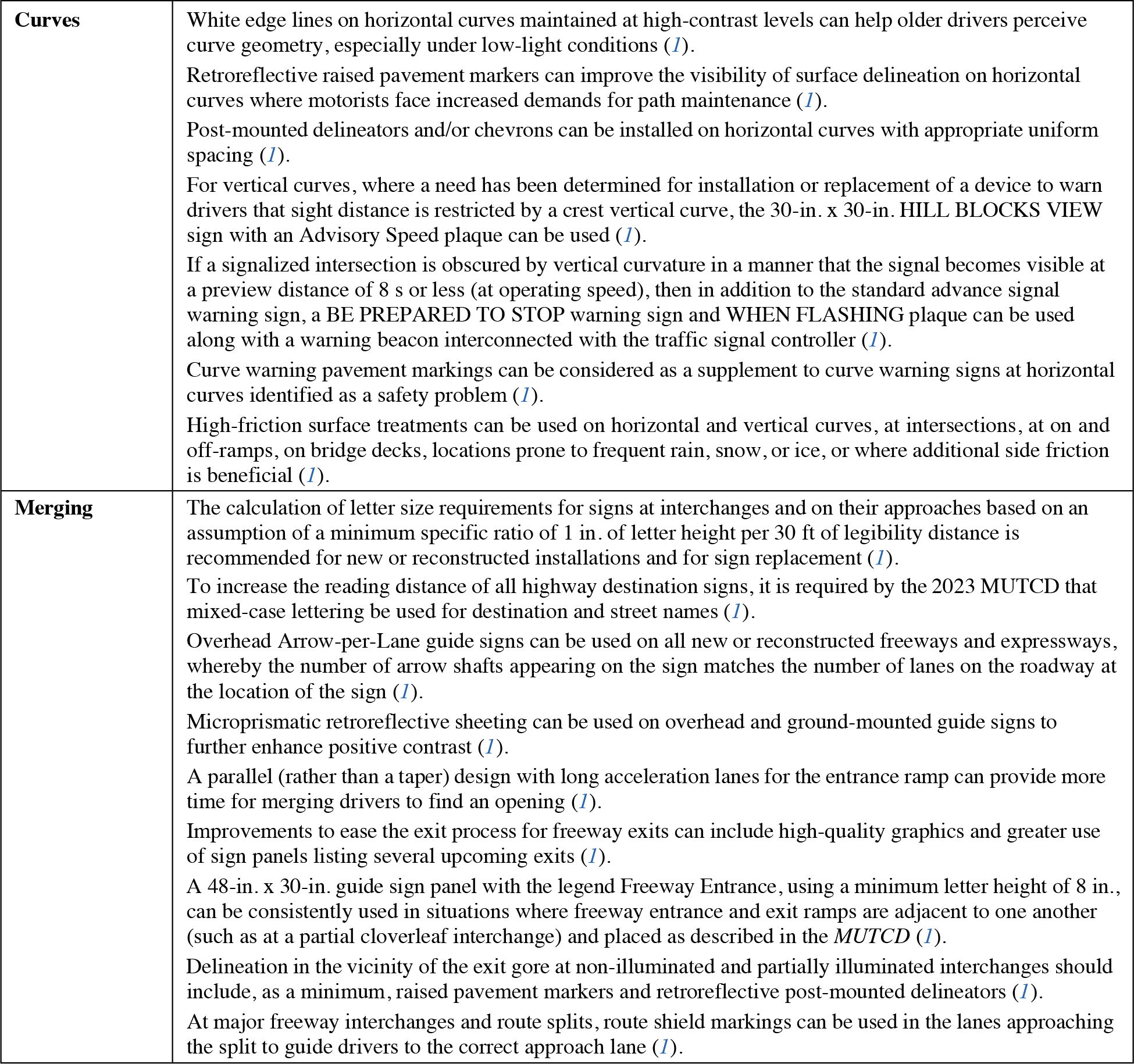
Curves and requirements to merge into a traffic stream present some of the most challenging environments to navigate for older and vision-challenged drivers. This guideline discusses road-based countermeasures specific to curves and merging (e.g., changing lanes, freeway interchanges) to support older drivers.

Discussion
Older drivers can have trouble negotiating curves because declining vision changes their ability to see the roadway and judge speed-distance relationships; declining strength makes it more difficult for them to abruptly change directions and shift gears; increased reaction time makes it more difficult for them to safely adjust their driving when approaching unexpected changes in roadway curvature; decreased ability to process large amounts of information makes it more likely that they will miss important warnings about curves ahead; and older drivers with slow reaction times and diminished cognitive abilities might approach curves at excessive speeds (2). Studies have demonstrated that aging drivers are involved in crashes on horizontal curves as a result of driving too fast for the curve or because they were surprised by the curve alignment. However, they are also involved in loss-of-control crashes resulting from an inability to maintain a lateral position throughout the curve because of excessive speed, inadequate deceleration in the approach zone, poor anticipation of vehicle control requirements, and inadequate perception of the demands of the curve (1).
Another major challenge that older drivers face is merging into traffic on fast-moving roads (such as interchanges) and changing lanes while also focusing attention on other vehicles and objects (3). Changing lanes is among the most dangerous driving behaviors overall, with over 250,000 crashes attributed to lane changes each year in the United States (3). Age-related diminished capabilities that primarily contribute to aging driversʼ difficulties at freeway interchanges include losses in vision and information processing ability, which, along with decreased physical flexibility in the neck and upper body can impair visual search, and slowed reaction time to execute vehicle movements, particularly when a sequence of movements such as braking, steering, and accelerating to weave and then exit a freeway is required (1). National database analyses demonstrate that older drivers are disproportionately involved in crashes attributable to highway lane changes, and age-related changes in the ability to control attention have been found to be a stronger factor in lane change errors than age-related changes in vision or stress management (3). One study conducted a statewide analysis of crash involvement ratios and types of violations for drivers in four age groups (26 and younger; 27–55; 56–75; 76 and older) and found that drivers 76 and older were overrepresented as the driver at fault in merging and weaving crashes near interchange ramps and were cited most frequently for failing to yield and for improper use of lanes (1). Similarly, another study evaluating pre-crash maneuvers and contributing factors in aging driver freeway crashes indicated that aging drivers were much more likely than younger drivers to be merging or changing lanes, or passing/overtaking prior to a crash, and that aging driversʼ failure to yield was the most common contributing factor (1). Lastly, in a survey of 692 aging drivers, 25% reported that they stop on a freeway entrance ramp before merging onto the highway, and 17% indicated they have trouble finding a large enough gap between vehicles in which to merge (1).
Design Considerations
According to the Handbook for Designing Roadways for the Aging Population, the intersection of interchange entrance and exit ramps with surface streets can create an environment that is unfriendly and sometimes unsafe for pedestrians (1). Motorists tend to have a low yield rate at these locations and can be traveling at moderately high speeds, which puts vulnerable pedestrians in a compromised state when crossing at these locations (1). Furthermore, there is a need for more research to be performed on specific roadway treatments for pedestrians at interchanges (1).
Cross References
Older Driver Considerations for Markings, Signs, and Lighting
Older Driver Considerations for Intersections—Signs
Older Driver Considerations for Intersections—Pavement Markings and Signals
Key References
1. Brewer, M., Murillo, D., and Pate, A. (2014). Handbook for Designing Roadways for the Aging Population. (FHWA-SA-14-015). Washington, DC: FHWA, Office of Safety.
2. FHWA. (2003). Travel Better Travel Longer: A Pocket Guide to Improve Traffic Control and Mobility for Our Older Population. (FHWA-OP-03-098). Washington, DC.
3. Baldwin, C. L., Lewis, B. A., and Greenwood, P. M. (2019). Designing Transportation Systems for Older Adults. Boca Raton, LA: CRC Press.
OLDER DRIVER CONSIDERATIONS FOR WORK ZONES—SIGNS
Introduction
Construction and work zones are important to consider with respect to aging driver needs because of their potential to violate driver expectancy, which is a key factor that affects the safety and efficiency of all aspects of the driving task (1). Research has shown that older adults respond much more slowly to stimuli that are unexpected, suggesting that they can be particularly disadvantaged by changes in roadway geometry and operations such as those found in construction zones; they are more likely to respond to new traffic patterns in an automatic fashion based on prior experiences, which can lead to more frequent driver errors (1). This guideline discusses road-based countermeasures specific to signage to support older drivers navigating through construction/work zones.

Discussion
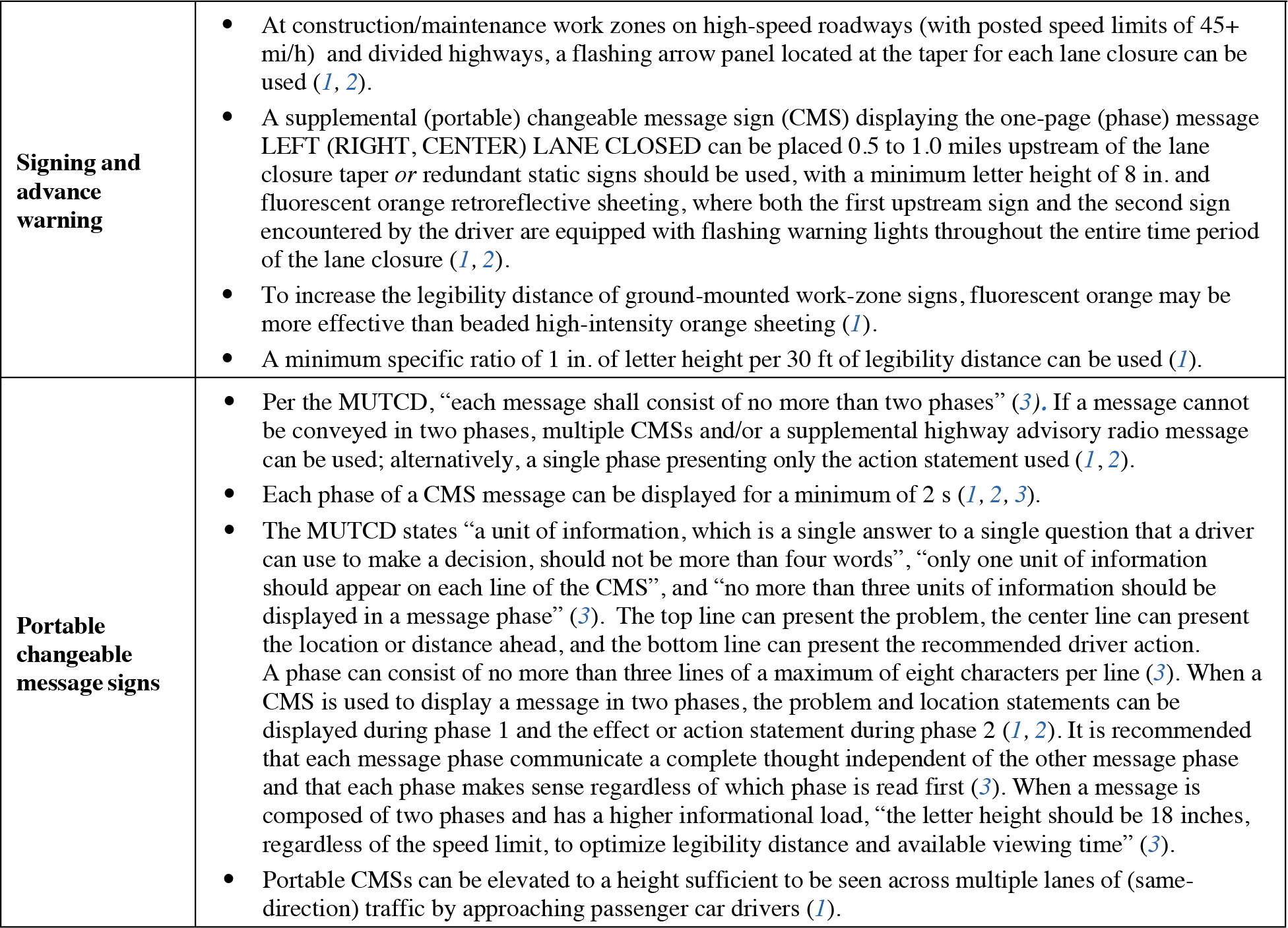
Challenges of navigating construction/work zones. Construction/work zones can pose a specific challenge for older drivers because they are often unexpected and may involve complicated driving maneuvers (2). To safely navigate through a construction zone, drivers must be aware of the conditions ahead and understand the necessary changes in driving behavior (2). Older drivers can find it difficult to read and interpret traffic control devices and react quickly and safely to changing roadway conditions due to functional deficits such as decreased ability to focus attention on important messages when a variety of stimuli are present, increased time necessary to process information from traffic control devices, impaired vision making it difficult to see and read traffic control devices, and increased reaction time making it difficult to react safely when coming upon unexpected traffic conditions (2). In addition, a mail survey of 1,329 American Association of Retired Persons (AARP) members aged 50 to 97 found that 21% of the respondents indicated that they have problems with accurately judging distances in construction zones and they reported additional problems with negotiating congestion/traffic, a lack of adequate warning, narrow lanes, lane closures and lane shifts, and difficulty staying in their lane (2). Further, a crash analysis at 20 case study work-zone locations found that among the most frequently listed contributing factors were driver attention errors and failure to yield the right-of-way, and aging drivers are most likely to demonstrate these deficits (1).
Signing and advance warning in construction zones can be particularly beneficial to older drivers. Increased viewing time leads to reductions in response uncertainty and decreased reaction time for aging drivers (1). Increasing sign conspicuity with treatments such as flashing warning lights, fluorescent orange reflective sheeting, and increased letter height can help older drivers with visual deficiencies as well as help them focus on important information for the environment ahead (2). In addition, providing advance warning signs can help improve driver expectancy by providing adequate notice to drivers describing the condition ahead, the location, and the required response (4).
Portable changeable message signs. The purpose of CMSs is to communicate real-time traffic regulatory, warning, or guidance messages to drivers (4). The conspicuity, content, timing, phasing, and placement of changeable message signs in construction zones are key factors in the attainment of CMS information for older drivers (1, 2). Single-phase messages can reduce the time needed to read and glance away from the roadway (3). In addition, signs that contain too much information, are complicated, or have unfamiliar messages may be difficult for them to read and understand (2). Furthermore, older drivers may not be able to process large amounts of information as efficiently as younger drivers and may need additional time to read and understand the information presented, thereby demonstrating the need for longer viewing time of each message phase presented on a CMS (1, 2).
Design Considerations
Temporary traffic control zones may affect not only older drivers but also older pedestrians. If a construction zone affects the movement of pedestrians, “adequate pedestrian access and walkways shall be provided” with clear delineation (3).
In doing so, construction zones can minimize conflicts between vehicle, equipment, and pedestrian movements and incorporate advance signing when possible (3). Additionally, where pedestrians are routed on temporary pedestrian pathways, providing information in nonvisual formats (such as accessible pedestrian signals with audible tones and/or speech messages, and vibrotactile surfaces) can aid pedestrians with visual disabilities in more safely navigating the temporary pathway (3).
Cross References
Older Driver Considerations for Work Zones—Markings and Channelization
Presentation to Maximize Visibility and Legibility
Key References
1. Brewer, M., Murillo, D., and Pate, A. (2014). Handbook for Designing Roadways for the Aging Population. (FHWA-SA-14-015). Washington, DC: FHWA, Office of Safety.
2. FHWA. (2003). Travel Better Travel Longer: A Pocket Guide to Improve Traffic Control and Mobility for Our Older Population (FHWA-OP-03-098). Washington, DC: FHWA, Office of Operations.
3. FHWA. (2023). Manual on Uniform Traffic Control Devices for Streets and Highways (11th ed.). Washington, DC.
4. Molnar, L. J., Eby, D. W., and Miller, L. L. (2003). Promising Approaches for Enhancing Elderly Mobility. University of Michigan Transportation Research Institute.
OLDER DRIVER CONSIDERATIONS FOR WORK ZONES—MARKINGS AND CHANNELIZATION
Introduction
Construction and work zones are important to consider with respect to aging driver needs because of their potential to violate driver expectancy, which is a key factor that affects the safety and efficiency of all aspects of the driving task (1). Research has shown that aging adults not only respond much more slowly to stimuli that are unexpected, suggesting that they can be particularly disadvantaged by changes in roadway geometry and operations such as those found in construction zones, but also are more likely to respond to new traffic patterns in an automated fashion, often resulting in more frequent driver errors (1). This guideline discusses road-based countermeasures specific to markings and channelization to support older drivers navigating through construction/work zones.

Discussion
Challenges of navigating construction/work zones. Construction/work zones pose a specific challenge for older drivers because they are often unexpected and may involve complicated driving maneuvers (2). To safely navigate through a construction zone, drivers must be aware of the conditions ahead and understand the necessary changes in driving behavior (2). Older drivers can find it difficult to read and interpret traffic control devices and react quickly and safely to changing roadway conditions due to functional deficits such as decreased ability to focus attention on important messages when a variety of stimuli are present, increased time necessary to process information from traffic control devices, impaired vision making it difficult to see and read traffic control devices, and increased reaction time making it difficult to react safely when coming upon unexpected traffic conditions (2). In addition, a mail survey of 1,329 AARP members ages 50 to 97 found that 21% of the respondents indicated that they have problems with accurately judging distances in construction zones and they reported additional problems in negotiating congestion/traffic, lack of adequate warning, narrow lanes, lane closures and lane shifts, and difficulty staying in their lane (2). Further, a crash analysis at 20 case study work-zone locations found that among the most frequently listed contributing factors were driver attention errors and failure to yield the right-of-way, and aging drivers are most likely to demonstrate these deficits (1).
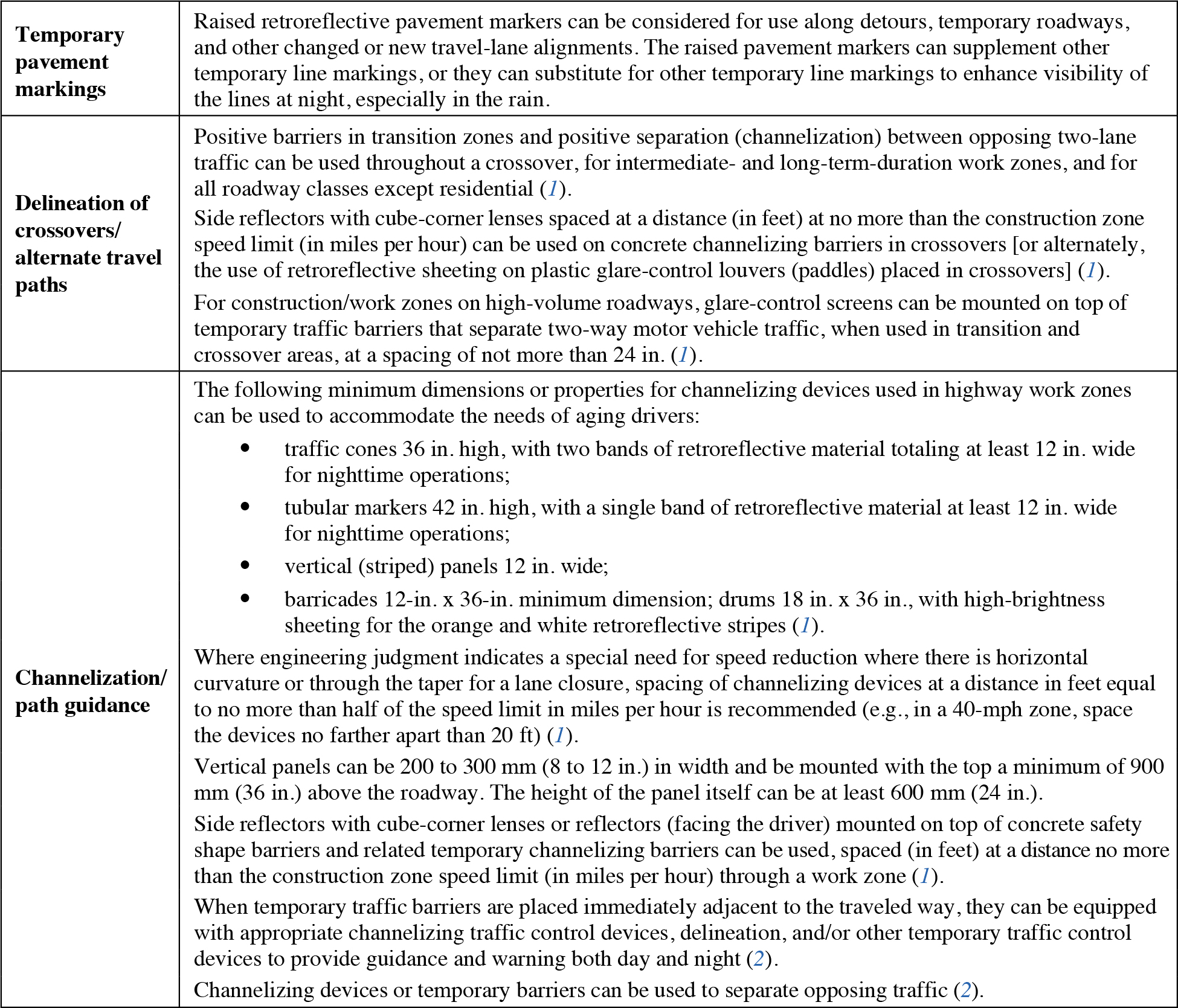
Temporary pavement markings. The roadway pavement itself is a primary source of information for drivers, which suggests that there is a need for unambiguous pavement delineation patterns in work zones to provide clear guidance, especially at night and under adverse weather conditions, and to accommodate drivers with visual limitations associated with normal aging (1, 2). Research has found that raised pavement markers used for delineation of the centerline and edge lines in construction zones can provide improved wet-weather and nighttime reflectivity and are especially useful when lanes divert from their original paths (1).
Delineation of crossovers/alternate travel paths. Declining functional capabilities of aging drivers can affect their performance as they approach and negotiate a crossover in a work zone (1). A crossover requires a change in direction and perhaps a reduction in speed, which may benefit from advance warning of the lane and speed reduction, conspicuous and unambiguous delineation/channelization in the transition zone, and conspicuous separation of opposing traffic via the use of positive barriers, device spacing, reflectors, and/or glare-control screens (1).
Channelization/path guidance. Countermeasures for channelization systems, such as cones, tubular markers, vertical panels, barricades, and drums, can assist older drivers navigating construction zones. Because of decreased visual capabilities, challenges processing large amounts of information, and decreased physical capacity to perform abrupt driving maneuvers, older drivers need conspicuous and unambiguous traffic control devices to help guide them through temporary traffic control zones (2).
Design Considerations
Blocked routes, alternate crossings, and sign and signal information should be communicated to visually impaired pedestrians by providing devices such as audible information devices or barriers and channelizing devices that are detectable to the pedestrians traveling with the aid of a long cane or who are visually impaired (4). When channelization is used to delineate a pedestrian pathway, a continuous detectable edging should be provided throughout the length of the facility such that pedestrians using a long cane can follow it (4).
Cross References
Older Driver Considerations for Markings, Signs, and Lighting
Key References
1. Brewer, M., Murillo, D., and Pate, A. (2014). Handbook for Designing Roadways for the Aging Population. (FHWA-SA-14-015). Washington, DC: FHWA, Office of Safety.
2. FHWA. (2003). Travel Better Travel Longer: A Pocket Guide to Improve Traffic Control and Mobility for Our Older Population. (FHWA-OP-03-098). Washington, DC.
3. Molnar, L. J., Eby, D. W., and Miller, L. L. (2003). Promising Approaches for Enhancing Elderly Mobility. University of Michigan Transportation Research Institute.
4. FHWA. (2023). Manual on Uniform Traffic Control Devices for Streets and Highways. (11th ed.). Washington, DC.
OLDER DRIVER CONSIDERATIONS FOR INTERSECTIONS—LEFT TURNS
Introduction
According to the FHWAʼs Handbook for Designing Roadways for the Aging Population, the single greatest concern in accommodating aging road users, including drivers and pedestrians, is the ability of these individuals to negotiate intersections safely (1). Intersections pose a particular safety problem for older drivers because of the need for rapid decision-making, quick reactions, and accurate judgments of speed-distance relationships, all of which become generally more difficult as people age (1, 2). Accident data is congruent with this, as it demonstrates that drivers 65 years and older are involved in a higher percentage of injury and fatal accidents at intersections than other age groups (1, 2). In addition, left turns at intersections pose specific challenges to aging individuals (1, 3). This guideline discusses road-based mitigation strategies to support older drivers navigating left turn maneuvers at intersections.

The figures below show examples of positive offset for left-turn lanes and intersection angle (1, 2).
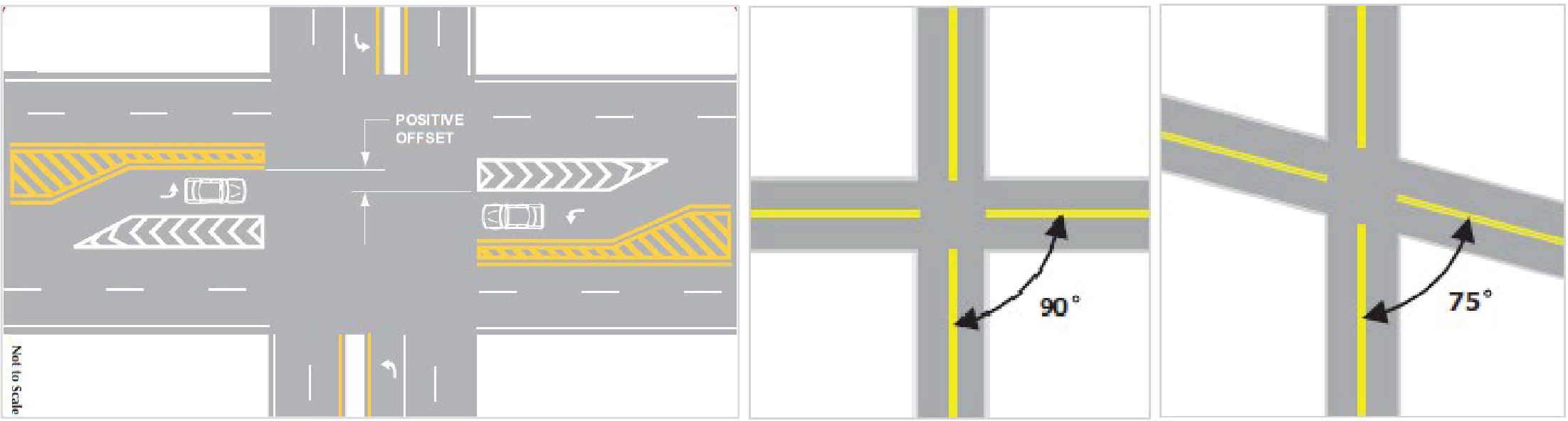
Long Description.
The first illustration shows a positive offset for left turn lanes. The second illustration shows an intersection with a 90-degree angle. The third illustration shows an intersection with a 75-degree angle.
Discussion
Challenges of navigating intersections and left turns. Because of the perceptual, motor, sensory, and physiological changes associated with aging, there are difficulties that older roadway users experience when maneuvering through intersections, particularly when making left turns (2). Older drivers experience numerous operational problems when navigating intersections, including incorrect positioning in the turn lane or positioning in the wrong lane during intersection approach, inability to accurately judge the distance of oncoming vehicles, confusion and vision problems increasing potential wrong-way maneuvers on left turns, indecision about which lane to use at unfamiliar or complicated intersections, lack of understanding when it is safe to cross the roadway at signalized intersections, and limited head mobility to view intersecting traffic (1, 2).
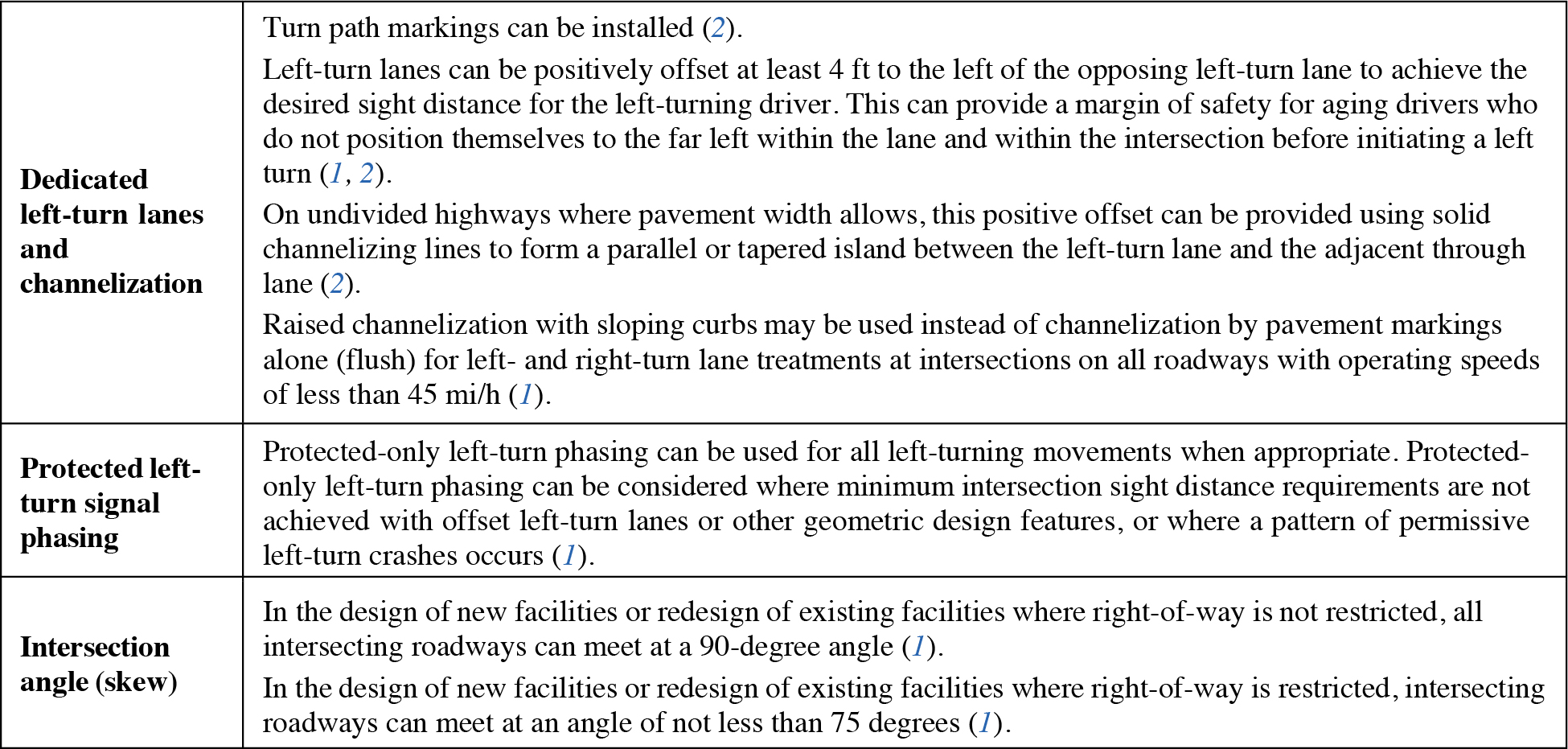
Dedicated left-turn lanes and channelization can be effective countermeasures for the challenges intersections pose for older drivers (1, 4). One study found that adding a dedicated left-turn lane resulted in a 13% greater reduction in injury crashes among licensed drivers 65 and older compared to drivers aged 25–64 (5). Having multiple left-turn lanes at an intersection and, relatedly, providing offset left-turn lanes at intersections, can reduce the potential for crashes between vehicles turning left from a major road and through vehicles on the opposing road because of a driverʼs restricted view of oncoming traffic (1, 6). Left-turn lanes with raised channelization with sloping curbs can also be beneficial (1), however, to realize the safety benefits channelization can provide, it is important to ensure the visibility of raised surfaces for aging drivers with diminished vision so that these road users can detect the channelizing devices and select their paths accordingly (1). Another benefit of channelization in general, for drivers and pedestrians, is that it serves to simplify a complex situation, and the channelization of an existing intersection might enhance the safety and mobility of aging pedestrians and drivers (1).
Protected left-turn signal phasing at large and/or complex intersections can support all driversʼ driving performance by halting oncoming traffic and providing more time to complete the turn (1, 6). Extant literature has found that older drivers prefer to turn left on a protected arrow phase, rather than making permissive-phase turns (1, 6). Further, one study found that the most challenging aspect of intersection negotiation for older drivers is performing left turns during the permissive signal phase (1).
Intersections with acute intersection angle (skew) pose particular problems for aging drivers, as these intersections require drivers to turn their heads further than would be required at right-angle intersections, which can be difficult for older drivers with diminished physical capabilities, making it more difficult for them to recognize conflicts and determine appropriate gaps (1, 6). Decreasing the intersection angle (skew) can make detection of and judgments about potential conflicting vehicles on crossing roadways much more difficult for drivers (1). In addition, the amount of time required to maneuver through the intersection increases for both vehicles and pedestrians due to the increased pavement area (1). While there is some inconsistency concerning the degree of skew that can be safely designed into an intersection, the research findings reinforce the desirability of providing a 90-degree intersection geometry or at least a minimum of 75 degrees (1, 6).
Design Considerations
Turning vehicles at intersections can also pose challenges for aging pedestrians due to the loss of peripheral vision and the increased likelihood of not detecting approaching and turning vehicles from the side (1). Further, one study found that aging pedestrians were overrepresented in both right- and left-turn vehicle–pedestrian crashes (1).
Cross References
Left-Turn Lanes at Non-Signalized Intersections
Sight Distance at Left-Skewed Intersections
Sight Distance at Right-Skewed Intersections
Key References
1. Brewer, M., Murillo, D., and Pate, A. (2014). Handbook for Designing Roadways for the Aging Population. (FHWA-SA-14-015). Washington, DC: FHWA, Office of Safety.
2. FHWA. (2003). Travel Better Travel Longer: A Pocket Guide to Improve Traffic Control and Mobility for Our Older Population. (FHWA-OP-03-098). Washington, DC.
3. Baldwin, C. L., Lewis, B. A., and Greenwood, P. M. (2019). Designing Transportation Systems for Older Adults. Boca Raton, LA: CRC Press.
4. Insurance Institute for Highway Safety. (2023). Older Drivers. https://www.iihs.org/topics/older-drivers#driving-environment.
5. Bagdade, J. S. (2004). Low-cost intersection improvements reduce crashes for senior drivers. Proceedings of the ITE 2004 Annual Meeting and Exhibit Institute of Transportation Engineers.
6. Molnar, L. J., Eby, D. W., and Miller, L. L. (2003). Promising Approaches for Enhancing Elderly Mobility. University of Michigan Transportation Research Institute.
OLDER DRIVER CONSIDERATIONS FOR INTERSECTIONS—ROUNDABOUTS
Introduction
Reconfiguring existing or new intersections as roundabouts can help reduce the frequency and severity of crashes at intersections due to lower vehicle speeds, safer merges, more opportunities to correctly judge and enter gaps, reduced conflict points, and eliminating some of the most complicated aspects of traditional intersections (e.g., left turns) (1, 2, 3, 4). Roundabouts can be an effective treatment for at-grade intersections (3) and can meet an extensive range of traffic conditions because they are adaptable in size, shape, and design (5). Further, the FHWA considers roundabouts to be a “Proven Safety Countermeasure” (1, 3). This guideline discusses road-based mitigation strategies to support older drivers and pedestrians navigating through roundabouts.
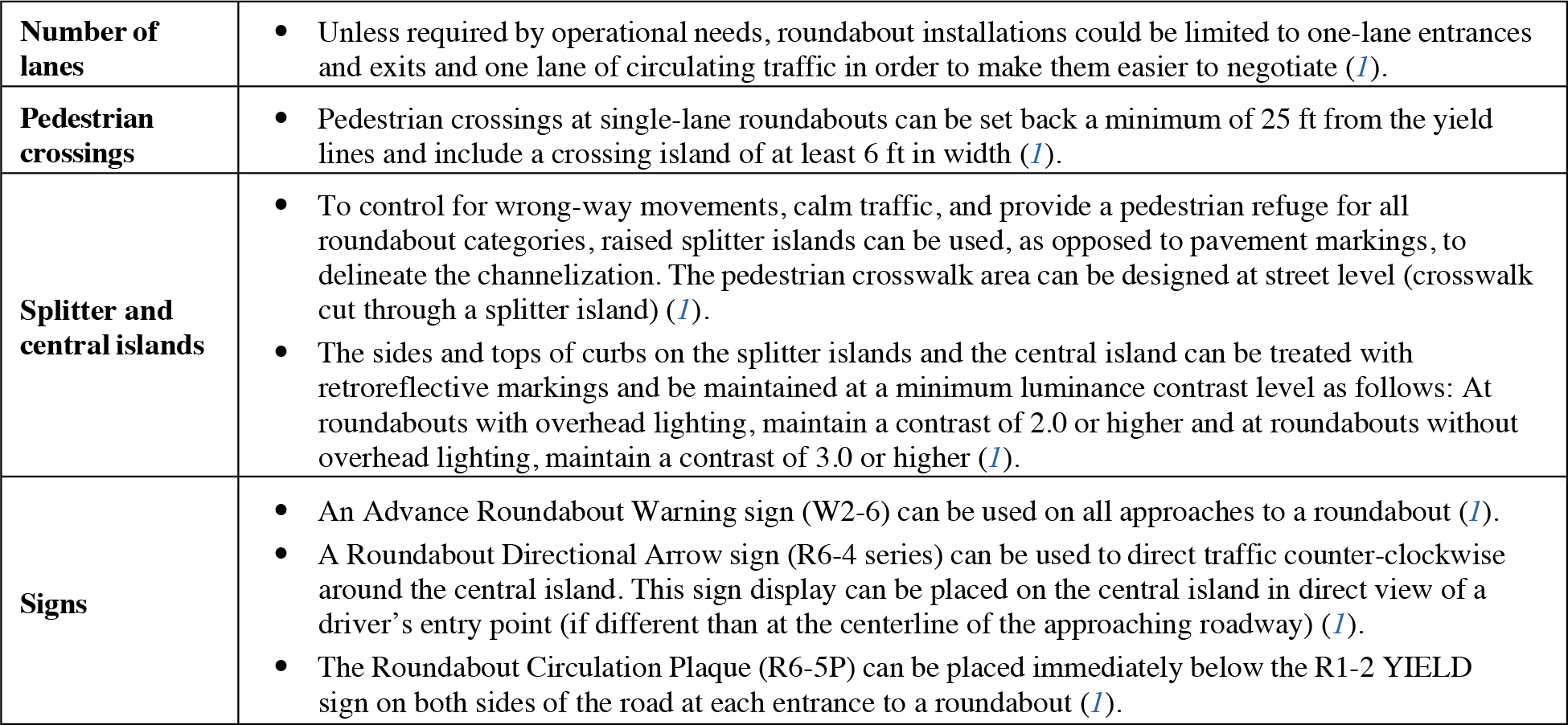

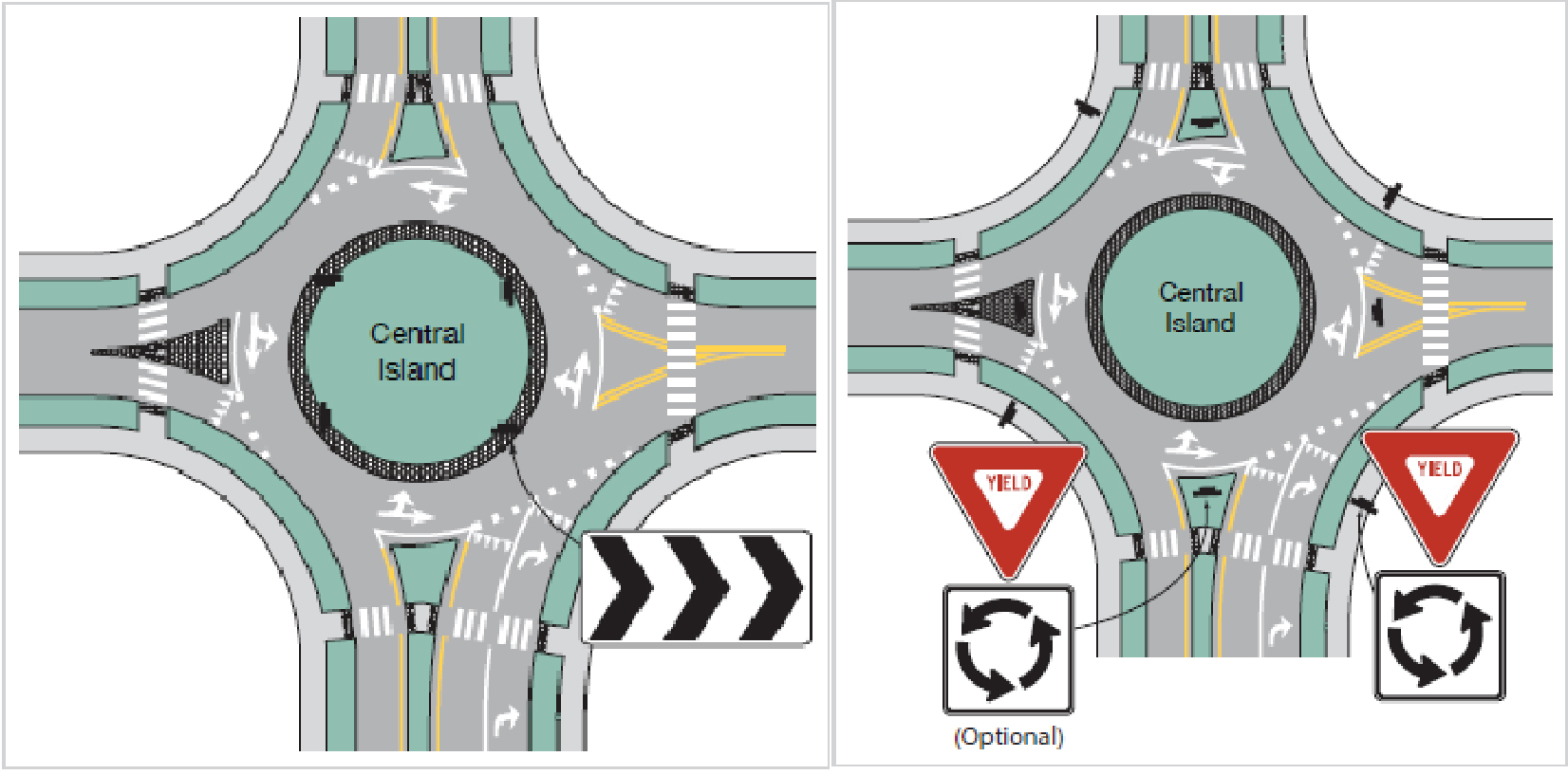
The figures below demonstrate examples and placement of a roundabout directional arrow sign and roundabout circulation plaques (1).
Long Description.
In the first illustration, the roundabout arrow signals are placed around the central island. The second illustration shows two signs placed on both sides of an exit road; a sign in between the approaching lanes with three curved arrows representing the roundabout that is labeled as optional, and a yield sign on the side of the road approaching the roundabout.
Discussion
While research to date is limited, extant literature suggests that roundabouts can provide solutions to aging drivers who may have difficulty judging speeds and gaps, understanding operational rules at complex intersections, and maneuvering through turns (1). For older drivers, the advantages of roundabouts include providing more time to judge, adjust speed, make decisions, and react, which simplifies decision-making due to one-way operation and yield-at-entry, reducing the need to look over oneʼs shoulder and to judge closing speeds and gaps in fast traffic, eliminating the left turn, improving maneuverability due to a larger curb radius, reducing vehicle speed entering the roundabout, and reducing conflict points (1, 4). Roundabouts can provide drivers with shorter braking distances and longer timeframes to make decisions, and even if a driver makes a mistake and chooses a gap that is too short, potential collisions are easier to avoid (1). Single-lane roundabouts exhibit some of the fewest total and severe crashes compared with other intersection forms (4). Pedestrian safety may also be improved, especially with single-lane roundabouts, due to shorter crossing distances, increased driver ability to react and yield to pedestrians, fewer potential conflicts with vehicles, and lower vehicle speeds (1, 4).
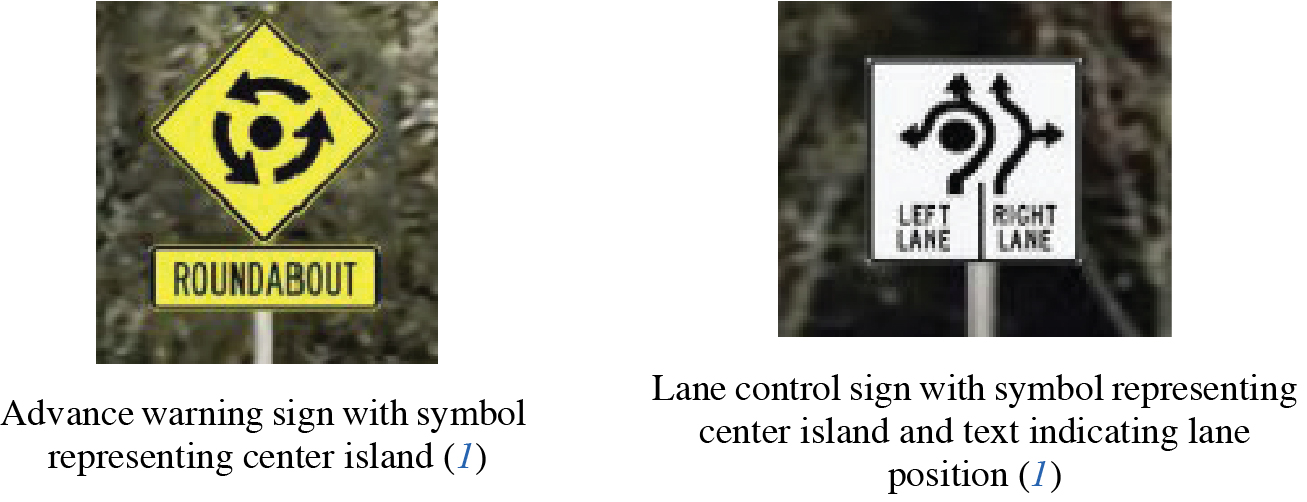
Splitter islands—raised or painted areas that physically separate entering traffic from exiting traffic and define the entry angle—are geometric features that deflect and slow entering traffic and can also serve as a safety zone for pedestrians (1). Splitter islands provide drivers with advance detailed information about what to expect in the roundabout and contribute to the safety of roundabout navigation (1). One study presented in the FHWA older driver handbook found that the use of the roundabout advance warning sign, augmented with a symbol representing the center island, would help aging drivers feel more comfortable, confident, and/or safe in roundabout navigation (1, 2). Results indicated that aging drivers also preferred the use of lane control signs designating the intended destinations for each lane (for multilane roundabouts) that were accompanied by a black solid circle representing the central island and text indicating lane position (see figures below) (1). The researchers suggested that for multilane approaches to roundabouts, signs should be designed to ensure that drivers choose the proper lane for their destination before reaching the roundabout, and once in that lane, they should be able to navigate the roundabout and exit to their destination without having to change lanes while in the circular roadway of the roundabout (1).
Long Description.
The left lane shows a curved arrow around a circle with exiting arrows. The right lane shows a curving road with exiting arrows.
Design Considerations
Roundabout implementation has accelerated in the last 30 years in the United States, with an estimated 8,800 roundabouts installed through 2021 (4). However, limited naturalistic research examining roundabouts in general, and their use by older drivers in particular, has been conducted to date. This topic would benefit from further research to assess the efficacy of various elements of roundabouts, such as lane-use control signs, directional signs, yield signs, and exit signs.
Cross References
Key References
1. Brewer, M., Murillo, D., and Pate, A. (2014). Handbook for Designing Roadways for the Aging Population. (FHWA-SA-14-015). Washington, DC: FHWA, Office of Safety.
2. Insurance Institute for Highway Safety. (2023). Older Drivers. https://www.iihs.org/topics/older-drivers#driving-environment.
3. Baldwin, C. L., Lewis, B. A., and Greenwood, P. M. (2019). Designing Transportation Systems for Older Adults. Boca Raton: CRC Press.
4. Kittelson & Associates Inc., Sunrise Transportation Strategies LLC, Texas A&M Transportation Institute, Kimley-Horn and Associates Inc., and Accessible Design for the Blind LLC. (2023). NCHRP Research Report 1043: Guide for Roundabouts. Transportation Research Board, Washington, DC.
5. FHWA. (2023). Roundabouts. https://highways.dot.gov/safety/intersection-safety/intersection-types/roundabouts.
OLDER DRIVER CONSIDERATIONS FOR INTERSECTIONS—SIGNS
Introduction
Revisions to traffic engineering elements can be made to assist older individuals in navigating intersections more comfortably. This guideline discusses road-based mitigation strategies specific to signs at intersections.

Discussion
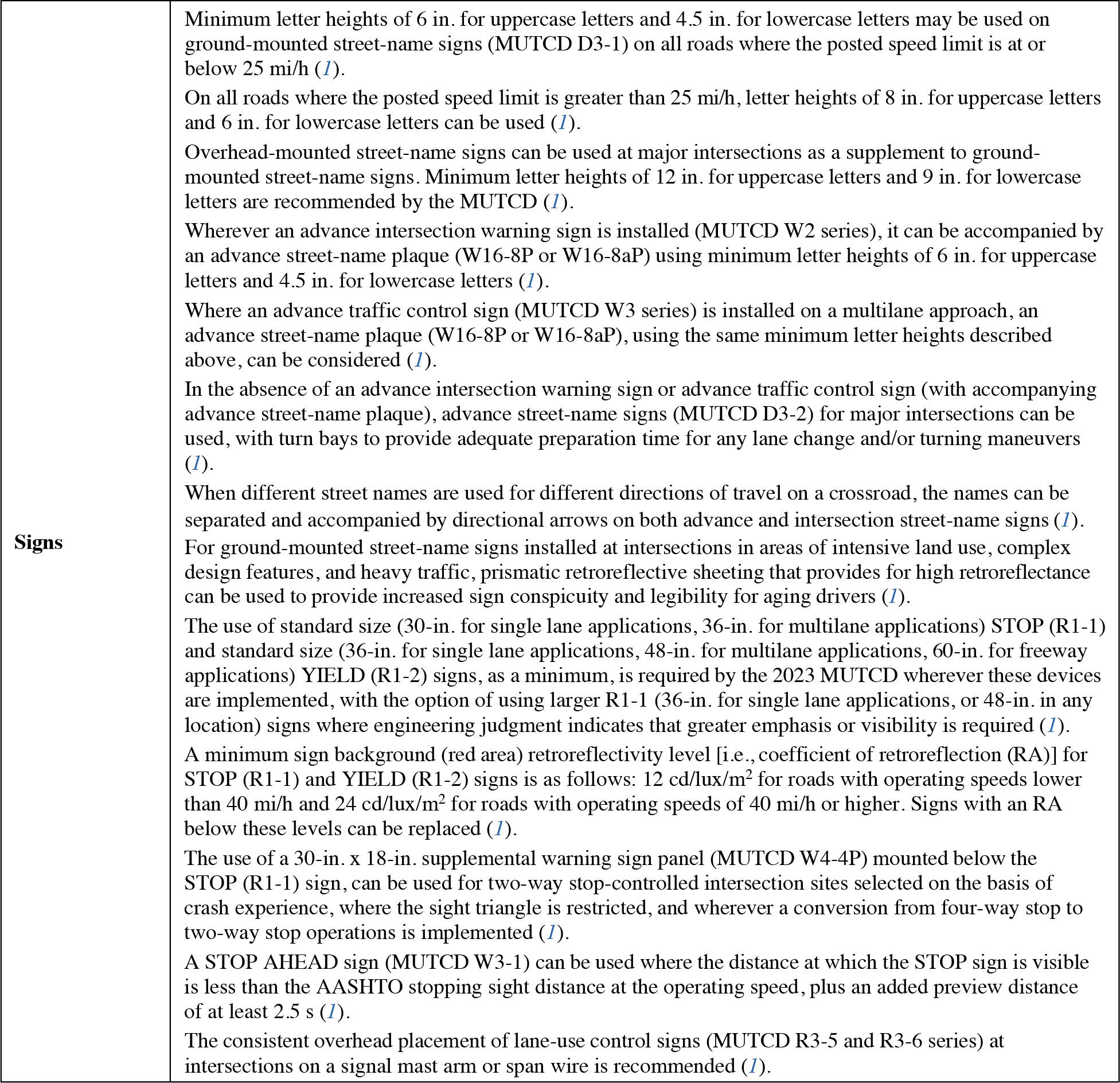
Multiple sign treatments, such as size, placement, brightness, and redundancy, can be made to assist older drivers in navigating intersections (1, 3). Increasing the conspicuity of ONE WAY, WRONG WAY, and DO NOT ENTER signs by using larger-than-standard (MUTCD) size signs, and using retroreflective sheeting on these signs that provides for high brightness at the wide observation angles typical of the sign placements and distances at which these signs are viewed will be of benefit to drivers, especially those with reduced visual and attentional capabilities (1). At intersections with wide medians or offset left-turn lanes, large signs can be used for greater legibility and emphasis for messages warning against wrong-way traffic movements (2). The LEFT TURN YIELD ON GREEN sign may be used to remind drivers of the right-of-way rule for left turns at signalized intersections (2), and educational plaques can be installed at signalized intersections to help explain the traffic signal operation and present a warning to watch for turning vehicles (2). At intersections where drivers might have trouble positioning themselves in the correct lane, intersection lane control signs can be mounted overhead on a signal mast arm or span wire and be placed over the lane (or a projection of the lane) to which it applies (1, 2). Lastly, advance street-name signs and lane-use signs assist left- or right-turning drivers by confirming locations well before the turn and providing early guidance to drivers so that they do not find their vehicle in the wrong lane at an intersection (3). Advance street-name signs placed upstream of the intersection at midblock locations are also recommended (2).
Design Considerations
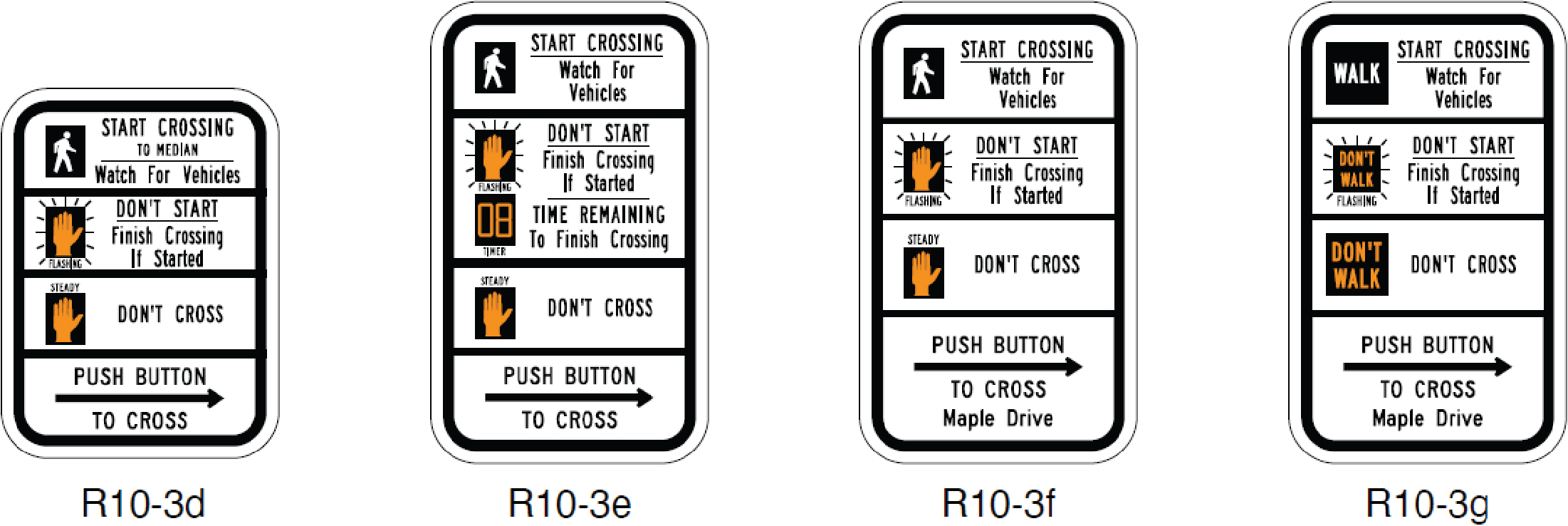
Educational signs and plaques can be used at signalized intersections to help improve pedestrian understanding of signals (2, 4). These signs can be installed at crosswalks to help explain the traffic signal operation, present a warning to watch for turning vehicles, inform pedestrians of clearance time, and tell them which button to push to cross the street; see the figure below for examples of signs included in the MUTCD (1, 2, 4).
Long Description.
The first sign, R 10–3 d has four sections. The first has a graphical pedestrian walk signal and reads Start Crossing to median, Watch for Vehicles. The next section has a flashing pedestrian don’t walk signal. It reads Don’t Start; Finish Crossing if Started. The next section has a steady pedestrian don’t walk signal. It reads Don’t Cross. The next section reads Push Button to Cross and shows an arrow. The second sign, R 10–3 e has five sections. The first has a graphical pedestrian walk signal and reads Start Crossing, Watch for Vehicles. The next section has a flashing pedestrian don’t walk signal followed by a sign displaying the number 08. It reads Don’t Start; Finish Crossing if Started; Time remaining to finish crossing. The next section has a steady pedestrian don’t walk signal. It reads Don’t Cross. The next section reads Push Button to Cross and shows an arrow. The third sign, R 10–3 f, has four sections. The first has a graphical pedestrian walk signal and reads Start Crossing to median, Watch for Vehicles. The next section has a flashing pedestrian don’t walk signal. It reads Don’t Start; Finish Crossing if Started. The next section has a steady pedestrian don’t walk signal. It reads Don’t Cross. The next section reads Push Button to Cross Maple Drive and shows an arrow. The fourth sign, R 10–3 g, has four sections. The first has a walk signal displaying the word Walk and reads Start Crossing, Watch for Vehicles. The next section has a flashing pedestrian don’t walk signal that displays the words Don’t Walk. It reads Don’t Start; Finish Crossing if Started. The next section has a steady pedestrian don’t walk signal. It reads Don’t Cross. The next section reads Push Button to Cross Maple Drive and shows an arrow.
Cross References
Signalized Intersections, Chapter 11
General Principles for Sign Legends
Key References
1. Brewer, M., Murillo, D., and Pate, A. (2014). Handbook for Designing Roadways for the Aging Population. (FHWA-SA-14-015). Washington, DC: FHWA, Office of Safety.
2. FHWA. (2003). Travel Better Travel Longer: A Pocket Guide to Improve Traffic Control and Mobility for Our Older Population. (FHWA-OP-03-098). Washington, DC.
3. FHWA. (2010). Spotlight on Senior Mobility. https://highways.dot.gov/public-roads/janfeb-2010/spotlight-senior-mobility.
4. FHWA. (2023). Manual on Uniform Traffic Control Devices for Streets and Highways (11th ed.) Washington, DC.
OLDER DRIVER CONSIDERATIONS FOR INTERSECTIONS—PAVEMENT MARKINGS AND SIGNALS
Introduction
Revisions to traffic engineering elements can be made to assist older individuals in navigating intersections more safely. This guideline discusses road-based mitigation strategies specific to pavement markings and signals at intersections.

Discussion
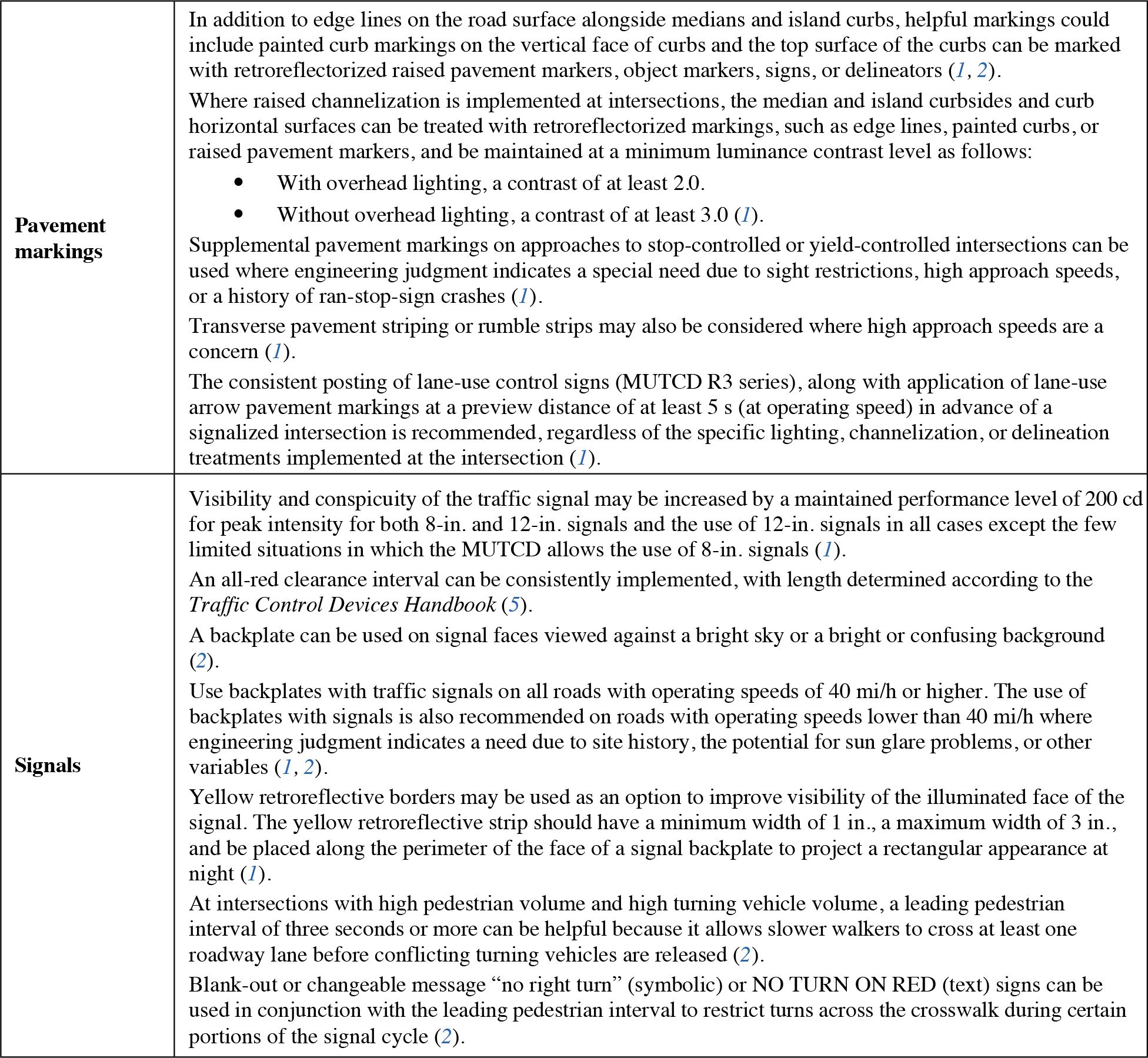
Pavement markings at intersections become more important to drivers as they age (1) and can be used to improve the conspicuity of various roadway elements. Materials and devices typically used to identify roadway edges, curbs, medians, and obstacles include retroreflective paint or tape, raised pavement markers (RPMs), post-mounted delineators, object markers, and chevron signs (1). To enhance safety at intersections for older drivers, turn path markings should be installed, especially for complex situations such as single and dual left-turn lanes at intersections; intersections with acute angle turns, especially left turns; side-by-side entrance and exit ramps at partial cloverleaf interchanges; acute angle entrance ramps at diamond interchanges; and other locations where crash experience or operational observations suggest that older drivers may experience difficulties negotiating turning movements (2). In addition to edge lines on the road surface alongside the medians and island curbs, helpful markings could include painted curb markings on the vertical face of curbs, and retroreflectorized RPMs, object markers, signs, or delineators on the top surface of the curbs (1, 2). Lastly, advance pavement-marking messages can be particularly beneficial to aging drivers whose peripheral vision and sign-reading skills may be limited, but who may still respond to messages painted on the pavement (3).
Traffic signal visibility and conspicuity are often associated with their intensity (daytime and nighttime), size, color, backplate, depreciation, and placement (1, 3). Using a larger signal lens provides motorists with more time to determine the signal color and make the correct response (1). In addition, placing or relocating signals to be overhead near the center of the travel lane can increase a signalʼs conspicuity by placing it within the useful field of view, which can decrease as people age (3). To enhance the visibility and conspicuity of traffic signals, a backplate could be used on signal faces viewed against a bright sky or a bright or confusing background (1, 2, 3). Lastly, providing longer clearance intervals at signalized intersections and/or an all-red clearance interval could be implemented to accommodate slower perception-reaction times of older drivers (1, 4).
Design Considerations
Aging pedestrians also face a variety of challenges when navigating through intersections, including decreased visual acuity; increased risk of falls; slower gait, shorter steps, and slower reaction time requiring longer time for pedestrian crossing; greater likelihood to spend more time at the curb, delay before crossing, a need for longer gaps between vehicles, and more time to cross the road; and a diminished ability to detect approaching vehicles in enough time to take evasive action (1, 2). Countermeasures to assist older pedestrians at intersections can include providing more crossing time, a leading pedestrian interval of at least three seconds and an adjacent pedestrian refuge island conforming to MUTCD (6) and AASHTO (7) specifications, and allocating a crosswalk where the right turn is channelized approximately one car length from the yield line for the intersection (1, 2). Countdown pedestrian signals can be installed at all signalized intersections where pedestrian signals are warranted (1) and the TURNING TRAFFIC MUST YIELD TO PEDESTRIANS sign may also be used if pedestrian crosswalks are marked (2).
Cross References
Design Challenges for Older Pedestrians
Key References
1. Brewer, M., Murillo, D., and Pate, A. (2014). Handbook for Designing Roadways for the Aging Population. (FHWA-SA-14-015). Washington, DC: FHWA, Office of Safety.
2. FHWA. (2003). Travel Better Travel Longer: A Pocket Guide to Improve Traffic Control and Mobility for Our Older Population. (FHWA-OP-03-098). Washington, DC.
3. FHWA. (2010). Spotlight on Senior Mobility. https://highways.dot.gov/public-roads/janfeb-2010/spotlight-senior-mobility.
4. Molnar, L. J., Eby, D. W., and Miller, L. L. (2003). Promising Approaches for Enhancing Elderly Mobility. University of Michigan Transportation Research Institute.
5. Seyfried, R. K. (Ed.). (2013). Traffic Control Devices Handbook. (2nd ed.) Washington, DC: ITE.
6. FHWA. (2023). Manual on Uniform Traffic Control Devices for Streets and Highways. (11th ed.). Washington, DC.
7. AASHTO. (2011). A Policy on Geometric Design of Highways and Streets (6th ed.). Washington, DC.


